
Image: Organized Homebrewing Workspace with Brewing Equipment
Published: September 25, 2026 at 4:12:40 PM UTC
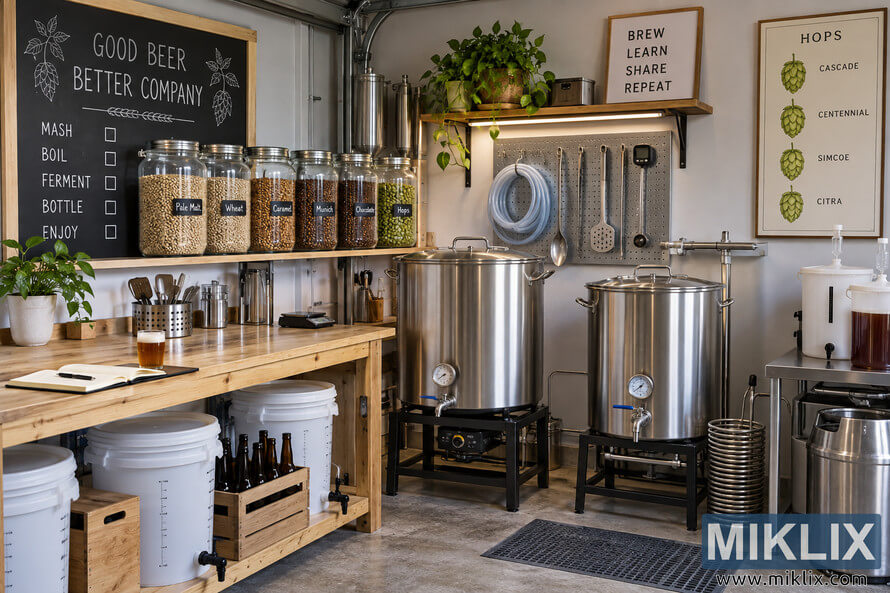
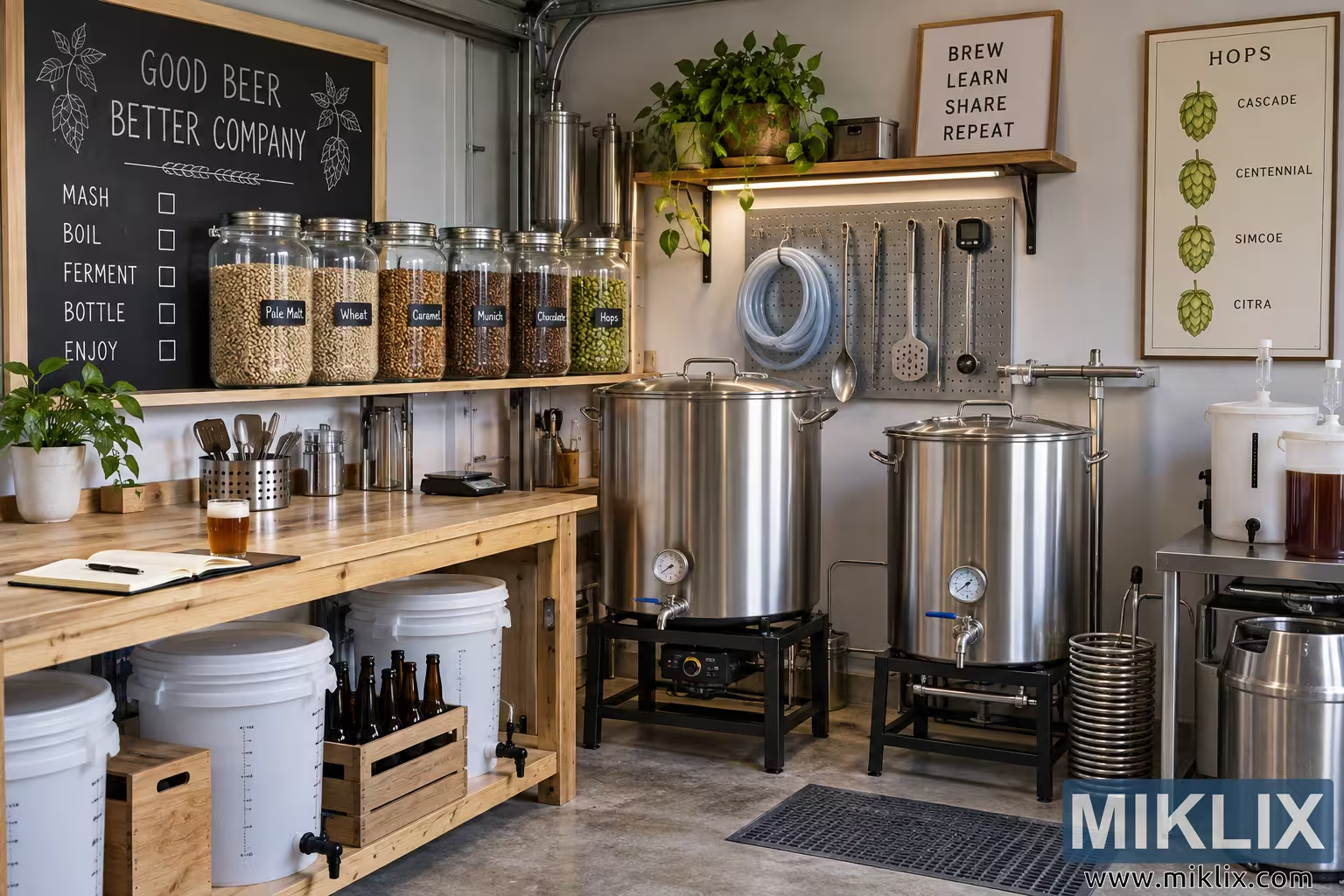
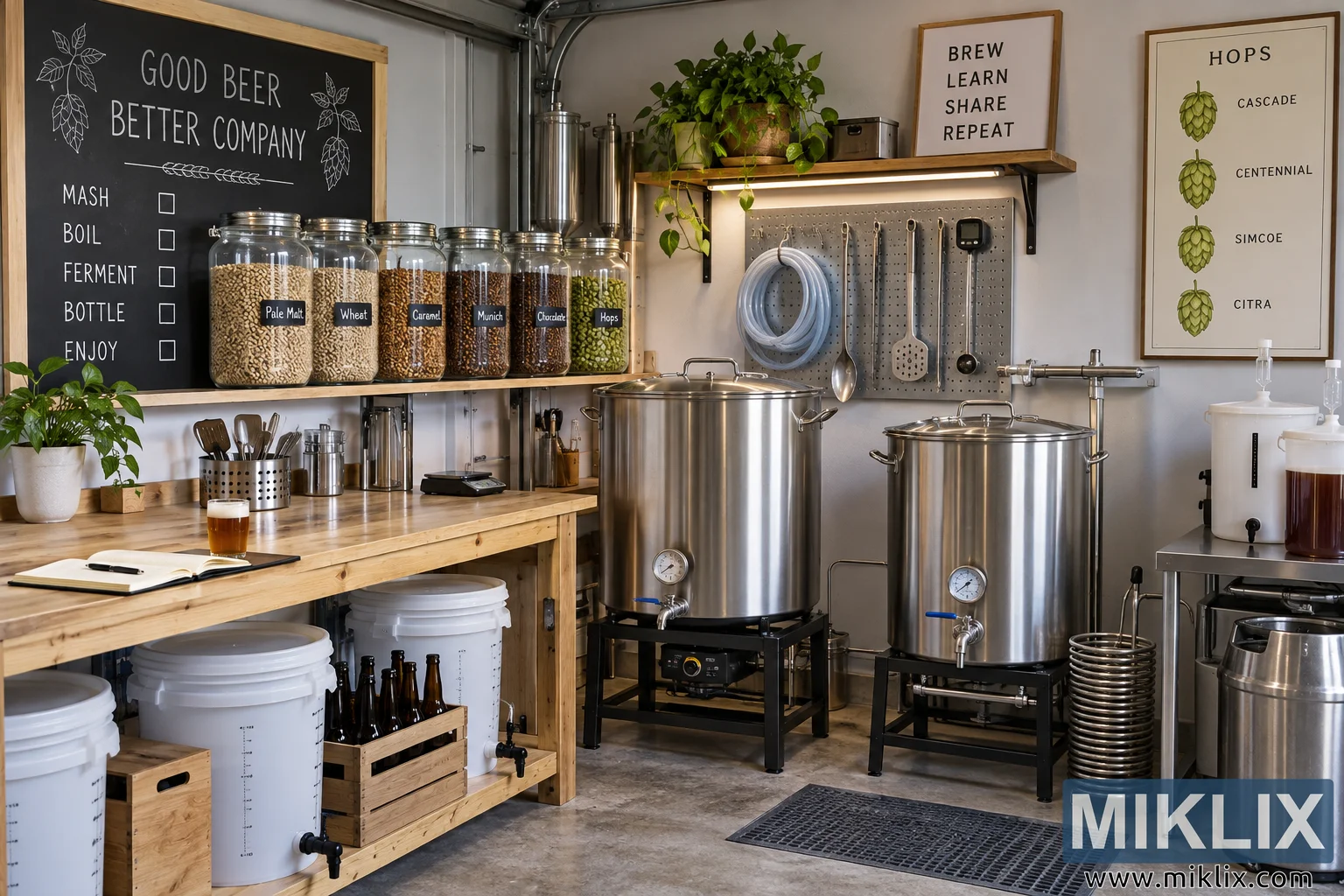
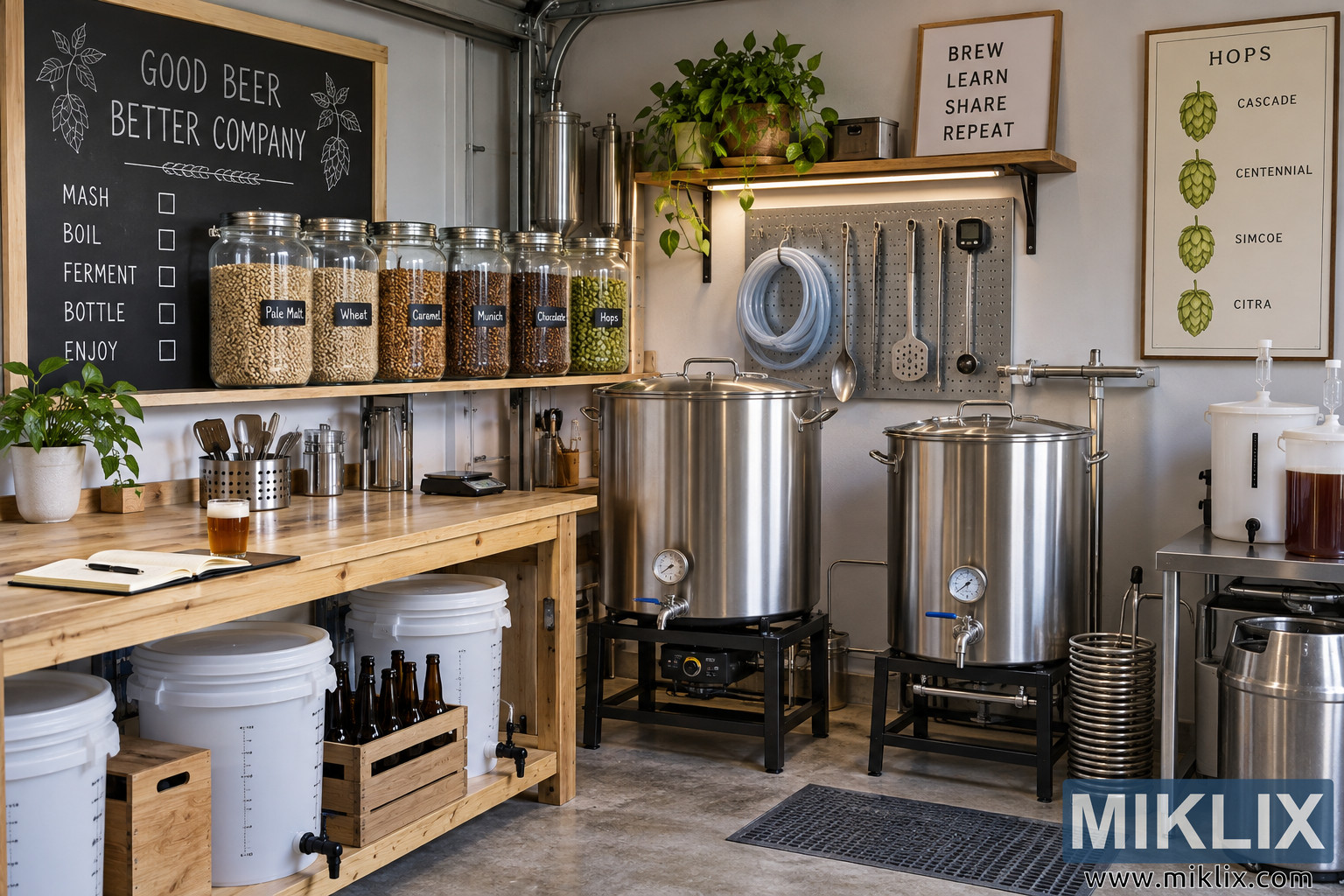
An organized homebrewing workspace featuring stainless steel kettles, fermenters, brewing ingredients, bottles, tools, wooden workbenches, and neatly arranged equipment.
Available versions of this image
The image files available for download below are less compressed and higher resolution - and as a result of that, higher quality - than the images embedded in articles and pages on this website, which are more optimized for file size in order to reduce bandwidth consumption.
Regular size (1,536 x 1,024)
Large size (3,072 x 2,048)
Very large size (4,608 x 3,072)
Extra large size (6,144 x 4,096)
Comically large size (1,048,576 x 699,051)
- Still uploading... ;-)
Image description
A wide, landscape-oriented photograph depicts a meticulously organized homebrewing workspace arranged in a clean garage or basement workshop. The room combines practical brewing equipment with warm natural wood, stainless steel surfaces, neutral walls, greenery, and understated decorative elements, creating an atmosphere that feels both highly functional and inviting. The composition is photographed from a slightly elevated, straight-on perspective, allowing most of the workspace and its equipment to be visible at once. Soft, warm illumination from overhead and under-shelf lighting complements natural-looking ambient light, producing gentle highlights across the polished metal brewing vessels and emphasizing the textures of wood, glass, grain, concrete, and stainless steel.
On the left side of the image, a substantial wooden workbench runs from the foreground toward the center of the room. Its pale butcher-block-style surface is clean and carefully arranged. Near the front edge lies an open notebook with a dark pen resting across its pages, suggesting that brewing recipes, measurements, or observations are being recorded. Beside the notebook is a small clear glass containing an amber-colored beverage topped by a thin pale head. Farther back on the workbench, stainless steel containers hold wooden and metal utensils, while additional cylindrical tools and small pieces of brewing equipment are arranged neatly against the wall. A leafy green plant in a light-colored pot adds a softer domestic touch to the otherwise workshop-oriented setting.
Above this bench is a long wooden shelf supporting a row of large transparent glass storage jars. Each jar contains a different brewing ingredient, including several shades and varieties of grain as well as green hop material. Dark rectangular labels identify the contents with generic ingredient names such as pale malt, wheat, caramel, Munich-style malt, chocolate-colored malt, and hops. The variation in the ingredients is visually prominent: some grains are very pale beige, others golden or toasted brown, while the hops appear distinctly green. The jars are evenly spaced and aligned, reinforcing the overall sense of order and careful preparation.
Behind the ingredient jars, a large black chalkboard with a natural wood frame occupies much of the upper-left wall. White hand-drawn lettering and botanical hop illustrations decorate its surface. The board presents a brewing-themed message along with a vertical checklist representing major stages of the brewing process, including mashing, boiling, fermentation, bottling, and enjoyment. The chalkboard gives the room the character of a dedicated hobby space while also functioning visually like a simple process reference. Its matte black surface contrasts strongly with the pale timber shelf and the reflective metal equipment elsewhere in the room.
The central portion of the image is dominated by two large cylindrical stainless steel brewing kettles positioned on sturdy black metal stands. Both vessels have fitted lids, side handles, lower valves, and round analog gauges mounted near their bases. The kettle on the left is taller and narrower, while the vessel on the right is slightly broader. Their polished surfaces reflect the warm room lighting without appearing mirror-like. Plumbing connections, valves, and other practical fittings emphasize that these are working pieces of brewing equipment rather than decorative objects. Behind them, additional tall stainless vessels and tubing extend upward, adding depth and suggesting a more complete brewing system beyond the immediately visible kettles.
Mounted on the wall above the kettles is a rectangular perforated metal tool board. Brewing and kitchen tools hang from hooks in a deliberately orderly arrangement, including a long spoon, a perforated paddle or skimmer, a ladle, a small digital device, and a neatly coiled length of translucent flexible tubing. A wooden shelf runs above the tool board and is illuminated from below by a slim linear work light. On the shelf sits a lush trailing green plant as well as a compact metal storage box. The plant's vines spill gently over the shelf edge, adding organic shapes and rich green tones among the otherwise industrial materials.
Two framed pieces of brewing-themed wall art appear above and to the right of the work area. One uses simple stacked typography encouraging brewing, learning, sharing, and repetition. The other is an educational-style botanical poster showing several illustrated hop cones arranged vertically with generic variety labels. The cream-colored backgrounds and narrow wooden frames coordinate with the room's warm wood surfaces. These decorative pieces help establish the space as a purpose-built homebrewing room without introducing commercial branding or recognizable corporate logos.
On the far right, a stainless steel utility table supports a large white fermentation vessel fitted with a clear airlock and a dark spigot near its lower edge. Beside it is a tall transparent container holding dark amber liquid, also topped with a clear airlock. Below the table and along the right edge are additional metal brewing vessels, including a compact stainless keg-like container. A large spiral stainless steel immersion chiller stands upright near the main kettles, its tightly wound tubing forming a prominent metallic coil. Pipes, hoses, and fittings remain visible but are carefully positioned rather than appearing tangled or cluttered.
The lower-left portion of the workspace contains several large white food-grade fermentation buckets stored beneath the wooden workbench. The buckets have fitted lids, measurement markings, and dark spigots. Between them sits a wooden crate filled with unlabeled brown glass bottles, reinforcing the homebrewing theme while avoiding any visible commercial branding. Additional wooden storage boxes fit beneath the bench, making efficient use of the available space. Everything appears intentionally placed, with clear working areas and accessible equipment.
The floor is smooth gray concrete, appropriate for a garage or workshop environment and practical for cleaning. In front of the kettles is a dark rectangular rubber drainage or anti-fatigue mat with an open grid texture. The neutral floor and pale gray walls provide a subdued backdrop that lets the warm timber, green plants, amber liquids, colorful brewing ingredients, and silver equipment stand out. Overhead garage-door hardware is subtly visible near the ceiling, reinforcing the impression that the room has been converted from a domestic garage into a sophisticated hobby brewing area.
Overall, the image presents homebrewing as an organized, methodical, and enjoyable craft. The scene balances professional-looking equipment with approachable domestic details: polished brewing kettles stand beside simple plastic fermentation buckets, precision gauges coexist with a handwritten notebook, and industrial metal surfaces are softened by natural wood and healthy houseplants. There are no recognizable commercial brands or logos. The workspace appears clean, practical, well maintained, and ready for an active brewing session, while the warm lighting and thoughtful arrangement give it the inviting atmosphere of a dedicated personal workshop.
The image is related to: Fermenting Beer with White Labs WLP380 Hefeweizen IV Ale Yeast