
Image: Hefeweizen Fermentation Brewing Journal
Published: September 25, 2026 at 4:12:40 PM UTC
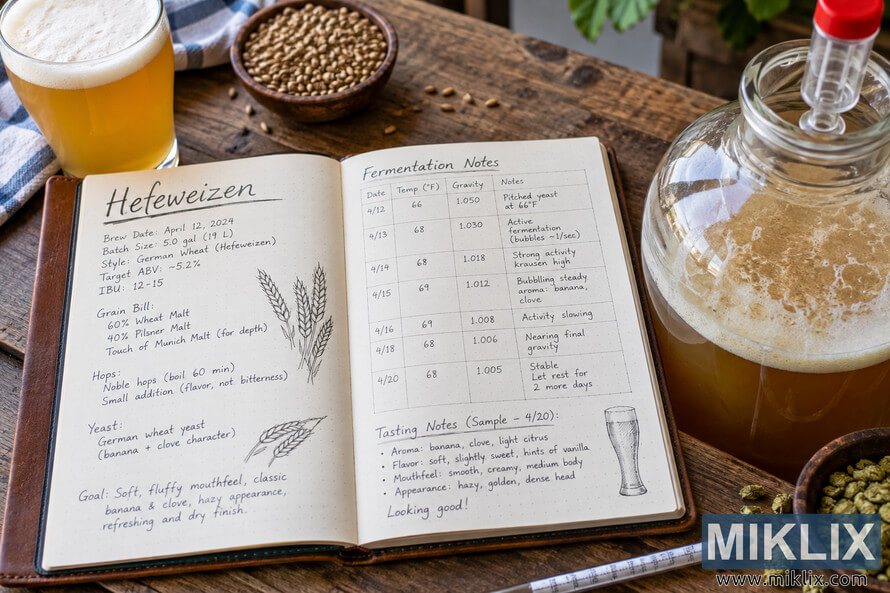
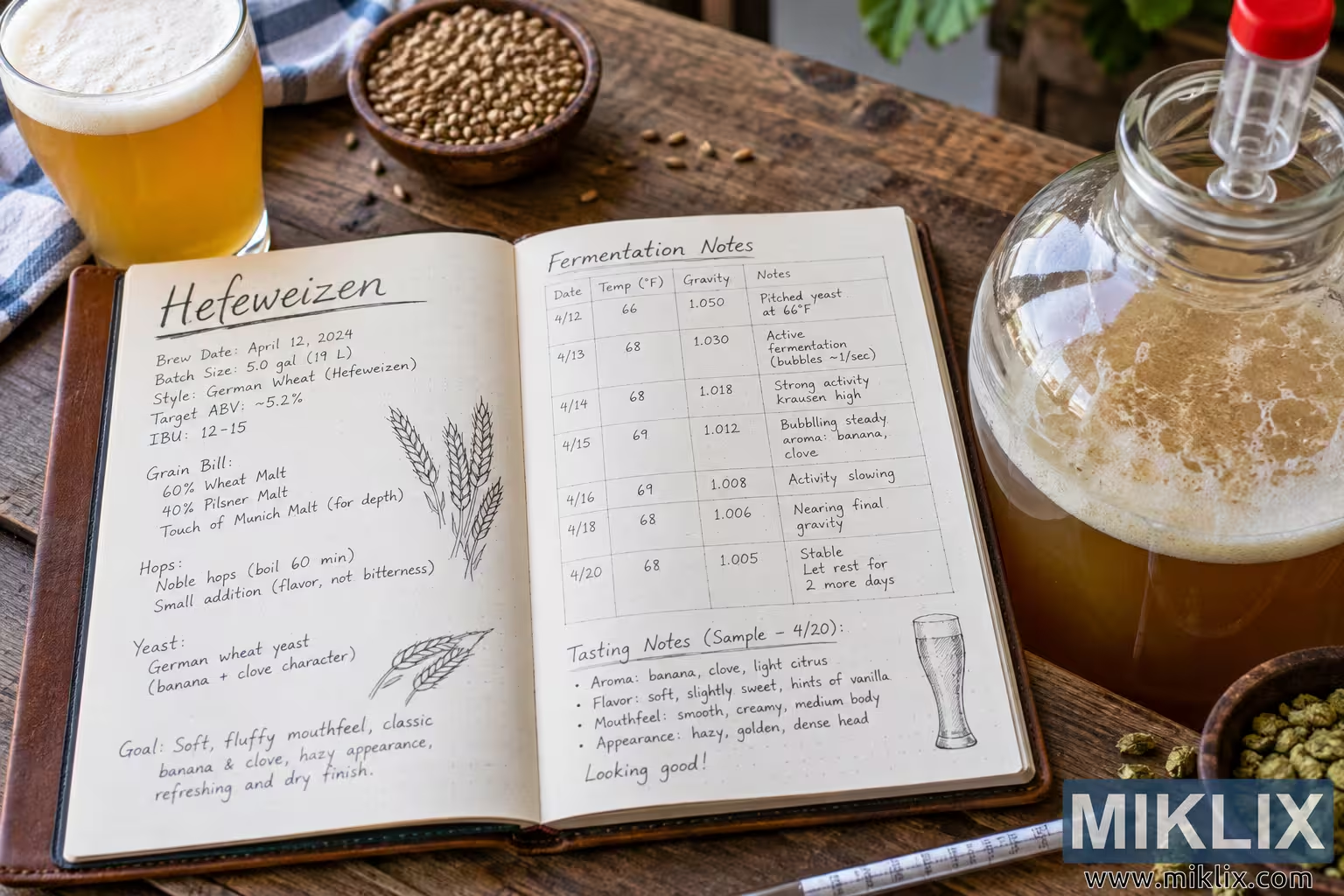
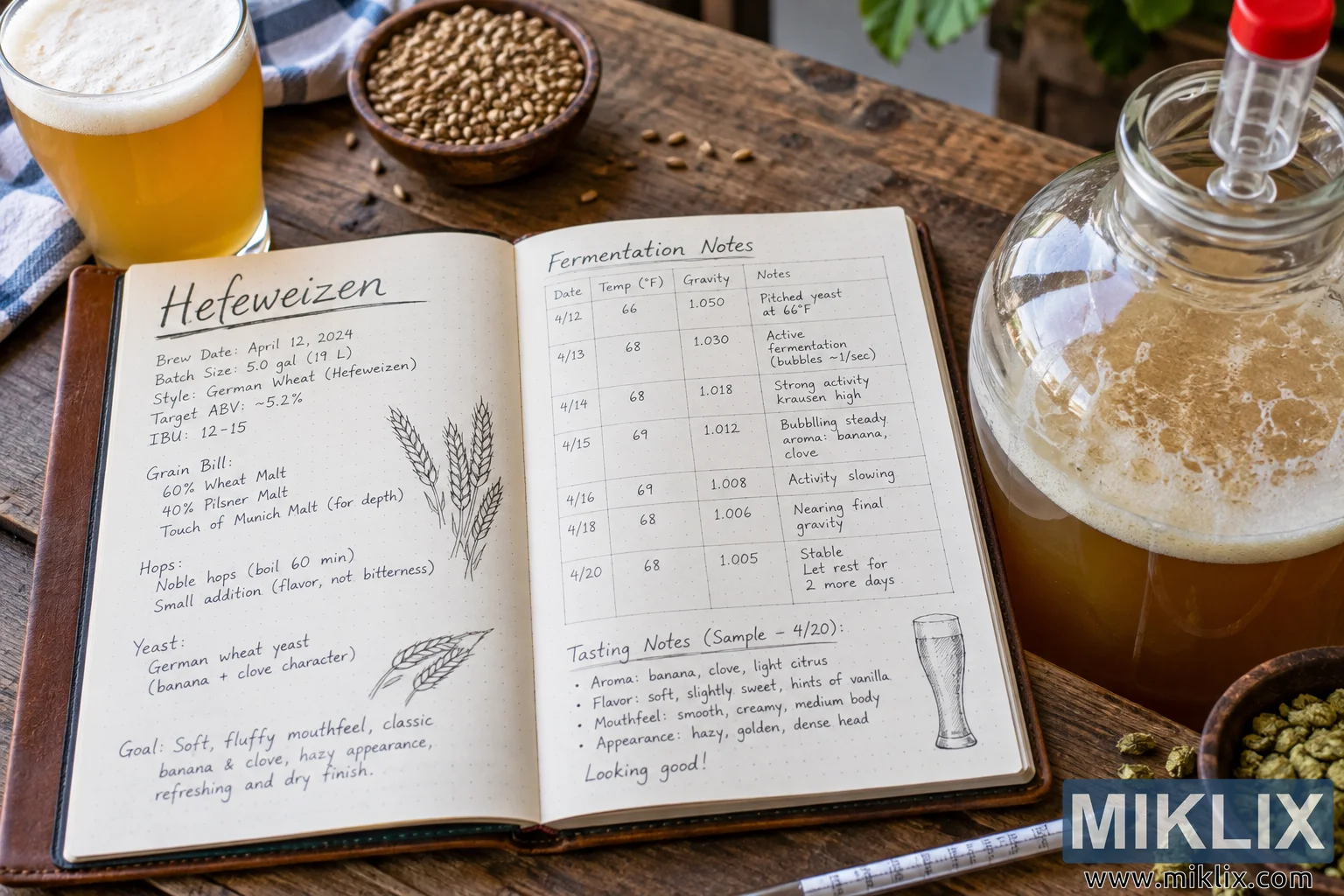
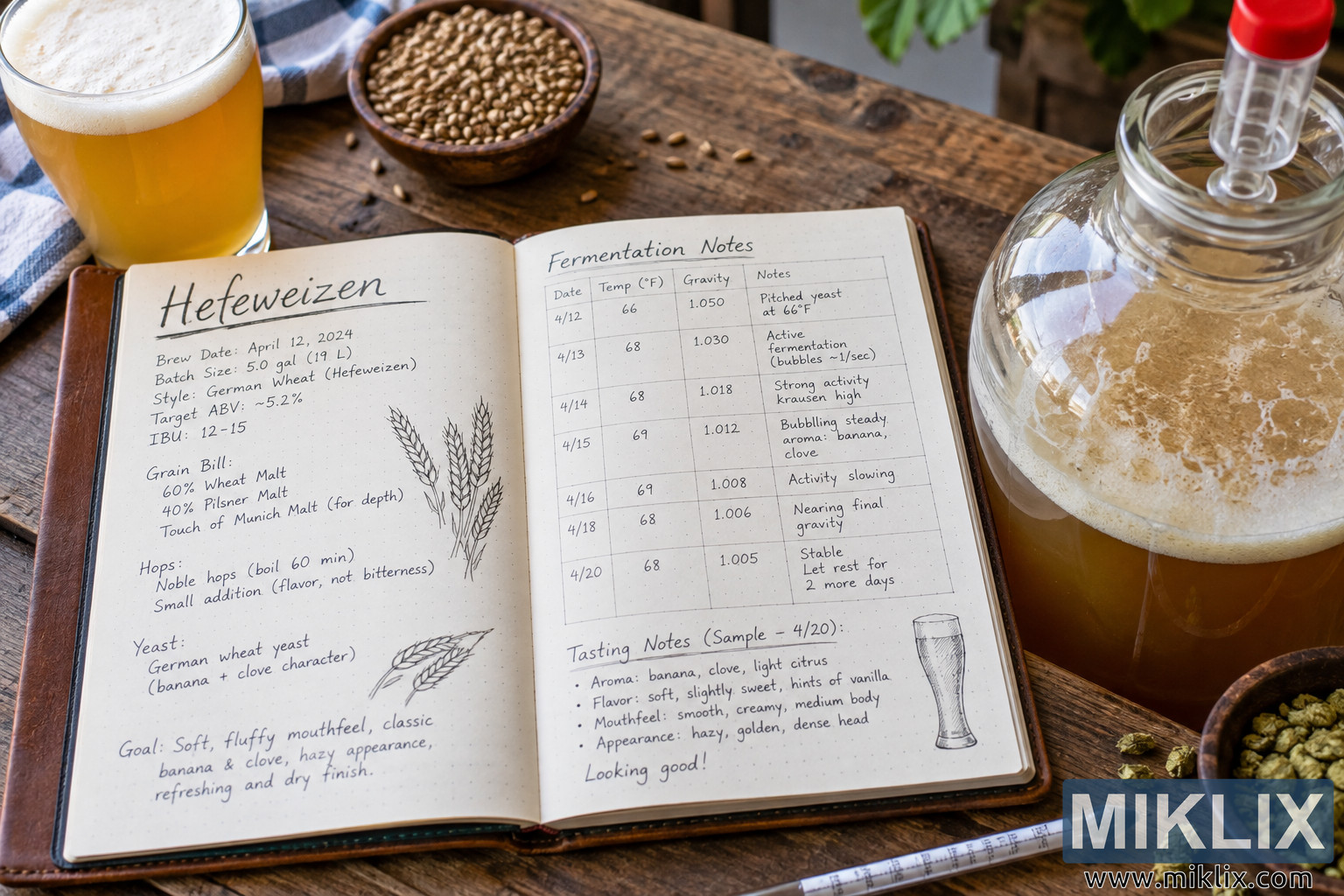
Photorealistic homebrewing scene featuring an open hefeweizen brewing journal with fermentation notes, gravity readings, wheat beer, grain, hops, and an active glass fermenter.
Available versions of this image
The image files available for download below are less compressed and higher resolution - and as a result of that, higher quality - than the images embedded in articles and pages on this website, which are more optimized for file size in order to reduce bandwidth consumption.
Regular size (1,536 x 1,024)
Large size (3,072 x 2,048)
Very large size (4,608 x 3,072)
Extra large size (6,144 x 4,096)
Comically large size (1,048,576 x 699,051)
- Still uploading... ;-)
Image description
A warm, photorealistic landscape-oriented tabletop scene documents the process of fermenting a homemade hefeweizen. The composition is photographed from a slightly elevated overhead angle, allowing the viewer to see an open brewing journal in the foreground while also taking in the ingredients, finished beer, and active fermentation vessel arranged around it. The setting is a rustic wooden workbench with pronounced grain, knots, scratches, and natural variations in the timber. Soft daylight illuminates the scene and creates a comfortable, handcrafted atmosphere associated with small-batch home brewing.
The open journal is the central subject and occupies much of the lower and middle portion of the image. Its cream-colored, dotted pages are held inside a dark brown leather-style cover. The left-hand page is headed “Hefeweizen” in large handwritten lettering. Beneath the heading are brewing details written neatly in dark ink, including a brew date, a five-gallon batch size, the German wheat beer style, a target alcohol level, and an IBU range. Additional sections describe the grain bill, hops, yeast, and the intended character of the beer. The grain bill identifies wheat malt and Pilsner malt, with a small amount of Munich malt suggested for additional depth. The hop notes describe a restrained addition intended more for flavor than bitterness. The yeast section references German wheat yeast and its characteristic banana and clove qualities. Near the bottom of the page, the brewer has written a goal describing a soft, fluffy mouthfeel, classic banana-and-clove character, a hazy appearance, and a refreshing dry finish. Delicate hand-drawn sketches of wheat stalks decorate the page and reinforce the artisanal notebook aesthetic.
The right-hand journal page is headed “Fermentation Notes” and contains a ruled table with columns for date, temperature, gravity, and observations. Several entries chronicle the progression of fermentation over multiple days. The earliest entry notes that yeast was pitched at approximately 66 degrees Fahrenheit, followed by active fermentation and visible bubbling. Later entries record strong activity, a high krausen, steady bubbling, and aromas reminiscent of banana and clove. As the dates progress, the recorded gravity decreases and the notes indicate that fermentation activity is slowing and approaching final gravity. The last entry records a stable reading and suggests allowing the beer to rest for two additional days. Below the table is a tasting-notes section describing banana, clove, light citrus, a soft and slightly sweet flavor, a smooth and creamy medium-bodied mouthfeel, and a hazy golden appearance with a dense head. A small hand-drawn beer glass appears beside the tasting notes, and the handwritten phrase “Looking good!” provides a casual finishing touch.
To the upper left of the journal sits a clear glass filled with hazy golden-yellow wheat beer. A thick, creamy white foam cap rises to the rim, visually communicating the dense head associated with the style. The beer is positioned partly on a folded blue-and-white checked cloth, which introduces a domestic kitchen or workshop feeling without drawing attention away from the brewing journal. Slightly behind the notebook, near the upper center of the image, a small round wooden bowl contains pale tan brewing grain. A few individual kernels have spilled onto the workbench, making the arrangement feel naturally used rather than carefully staged.
On the right side of the image stands a large transparent glass fermentation vessel filled with amber-golden beer. A substantial pale layer of foam and fermentation residue is visible at the surface. The neck of the vessel is fitted with a clear airlock capped in red, immediately identifying it as an actively fermenting homebrew setup. Reflections and highlights on the curved glass add depth and realism, while the liquid inside appears slightly cloudy, consistent with a wheat beer during fermentation. The fermenter is partially cropped by the right edge of the frame, making it feel large and physically close to the viewer.
In the lower-right corner, a dark wooden bowl holds green hop pellets, with several pellets scattered loosely across the tabletop nearby. A slender brewing instrument, resembling a hydrometer or thermometer, lies diagonally along the lower edge of the composition in front of the journal. These objects complement the written gravity and fermentation records and connect the journal entries to the practical process of measuring and monitoring the beer. In the softly blurred background, hints of green plant leaves contribute a fresh, natural quality to the scene.
The overall color palette consists of warm browns from the wood and leather, golden and amber tones from the beer, creamy off-whites from the notebook paper and foam, muted greens from the hops and background foliage, and subtle blue accents from the cloth. Natural directional light produces gentle shadows and realistic reflections without creating harsh contrast. The shallow depth of field keeps the journal, beer, ingredients, and fermenter visually prominent while allowing the background to recede softly. The image conveys careful observation, experimentation, and the tactile pleasure of keeping a detailed brewing journal throughout hefeweizen fermentation. No commercial branding or recognizable brand logos are visible; the emphasis remains entirely on the generic homebrewing process, handwritten fermentation records, raw brewing ingredients, and the developing wheat beer.
The image is related to: Fermenting Beer with White Labs WLP380 Hefeweizen IV Ale Yeast