
Image: Belgian Saison Fermenting Through Stainless Steel Tank Window
Published: March 15, 2026 at 7:17:48 PM UTC
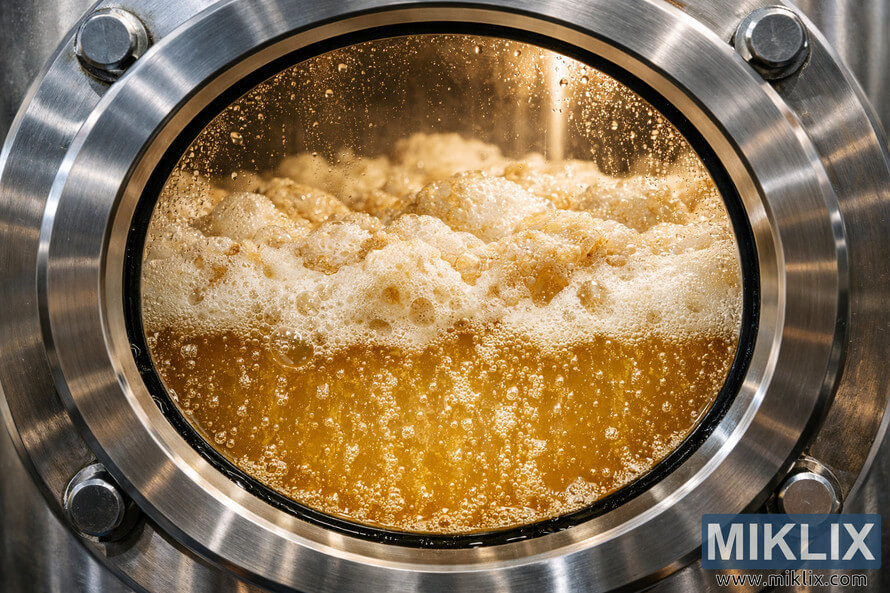
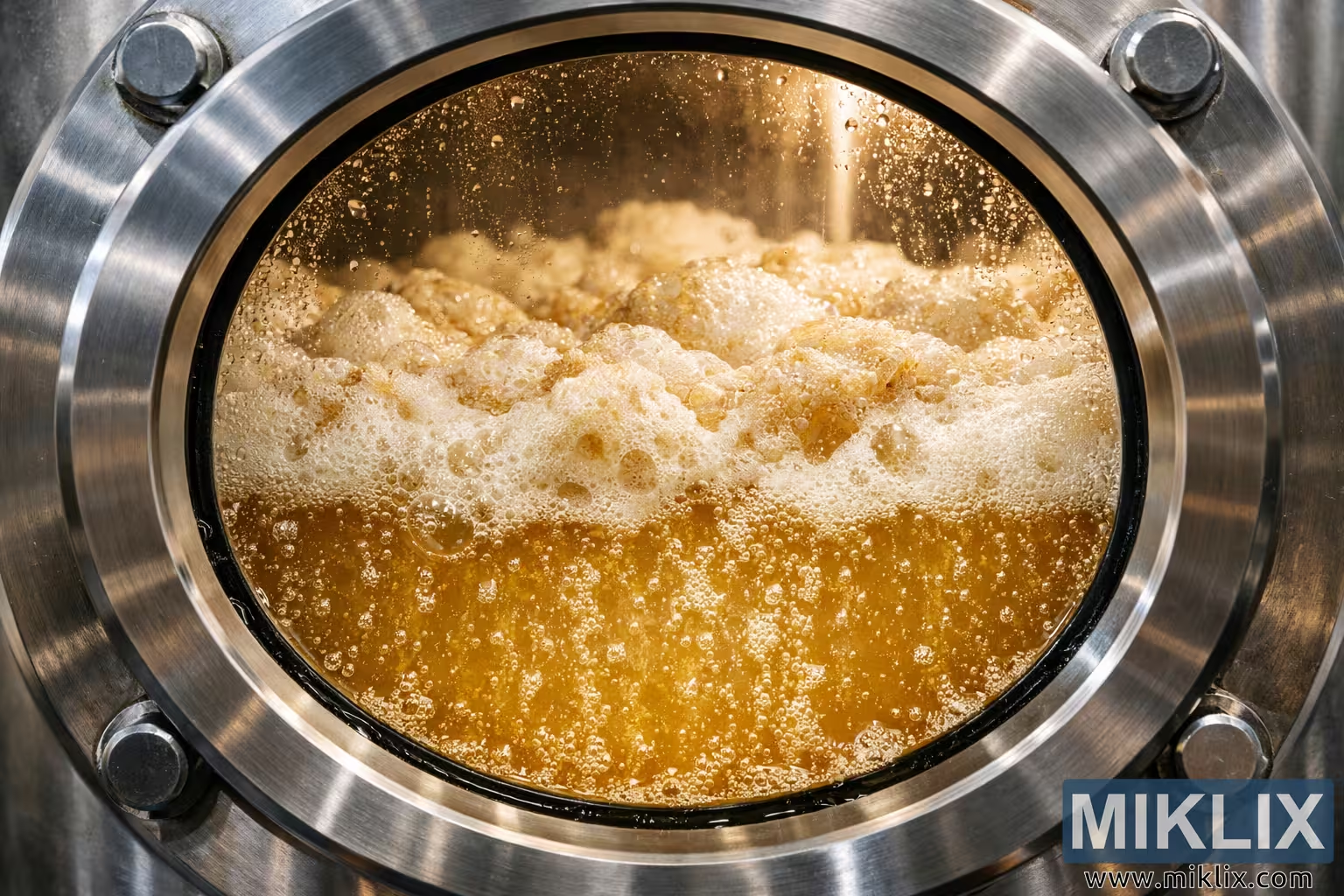
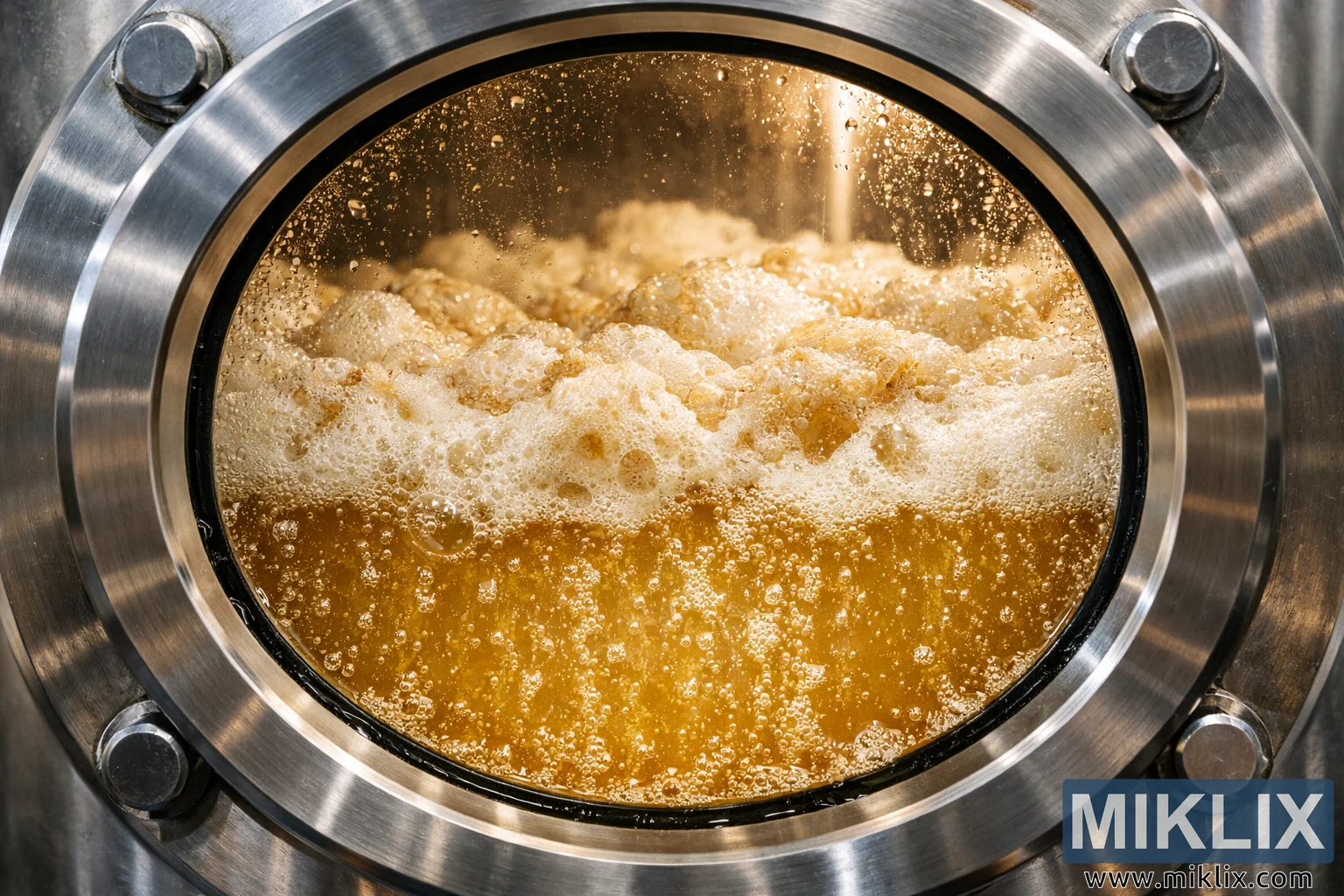
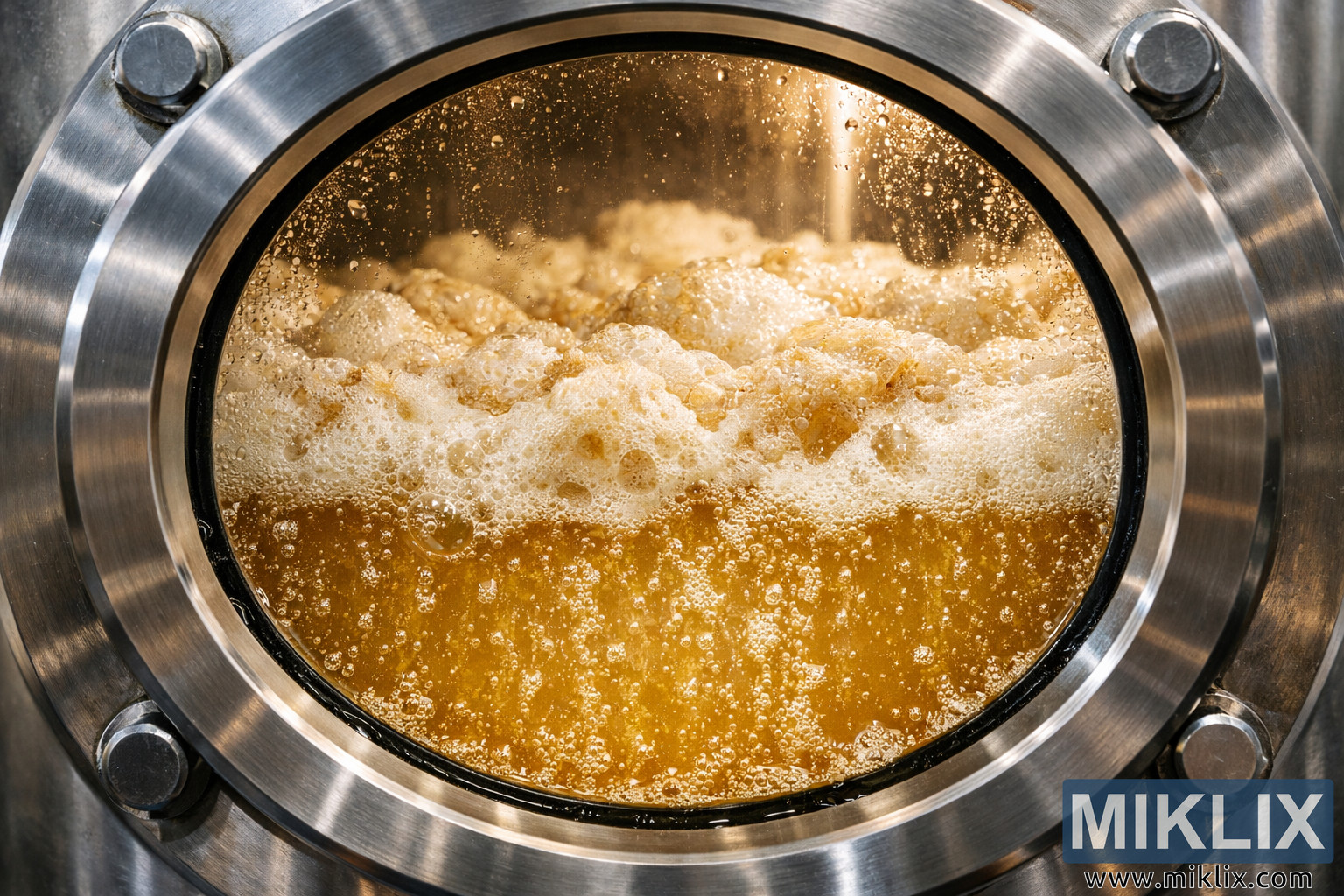
High-resolution landscape image of a Belgian saison actively fermenting, seen through a round glass window set in a polished stainless steel fermentation tank, with visible bubbles and foam.
Available versions of this image
The image files available for download below are less compressed and higher resolution - and as a result of that, higher quality - than the images embedded in articles and pages on this website, which are more optimized for file size in order to reduce bandwidth consumption.
Regular size (1,536 x 1,024)
Large size (3,072 x 2,048)
Very large size (4,608 x 3,072)
Extra large size (6,144 x 4,096)
Comically large size (1,048,576 x 699,051)
- Still uploading... ;-)
Image description
This high-resolution landscape photograph presents an intimate, close-up view of a Belgian saison actively fermenting inside a stainless steel tank, observed through a thick circular glass window. The composition centers on the round porthole-style sight glass, which is framed by brushed stainless steel and secured with evenly spaced industrial bolts. The metallic surface reflects soft ambient light, creating subtle highlights and emphasizing the clean, engineered precision of professional brewing equipment.
Behind the glass, the beer is alive with motion. The saison displays a hazy golden hue, glowing warmly under the interior tank lighting. Countless streams of carbonation rise from below, forming a dense constellation of tiny bubbles that shimmer against the amber liquid. The fermentation is visibly vigorous, with a thick, creamy krausen crowning the surface. This foam layer appears textured and slightly uneven, with clusters of larger bubbles forming creamy peaks and pockets, suggesting an active yeast culture at work.
Condensation beads cling to the interior surface of the glass, creating small droplets that catch the light and add depth to the scene. Some droplets merge and streak downward, subtly distorting the view of the beer behind them. The glass itself is thick and slightly curved, reinforcing the sense of looking into a pressurized, working vessel. The circular frame draws the eye inward, almost like a portal into the fermentation process.
The contrast between the warm, organic tones of the fermenting saison and the cool, industrial sheen of the stainless steel tank enhances the visual impact. The steel’s brushed texture and visible bolts convey durability and craftsmanship, while the golden liquid and lively foam embody transformation and vitality. The image captures a moment of biochemical change—yeast converting sugars into alcohol and carbon dioxide—rendered visually through constant bubbling and the formation of foam.
Overall, the photograph blends artistry and industry, presenting brewing not merely as production but as a living process. The close perspective, combined with the clarity and detail of the bubbles, foam, and condensation, immerses the viewer in the dynamic interior of the fermentation tank. It is both a technical and sensory portrayal of beer in its most active state, frozen in time yet clearly full of movement and energy.
The image is related to: Fermenting Beer with White Labs WLP565 Belgian Saison I Yeast