
Image: Beer Samples Comparing Mash Temperature and Attenuation
Published: October 5, 2026 at 4:26:46 PM UTC
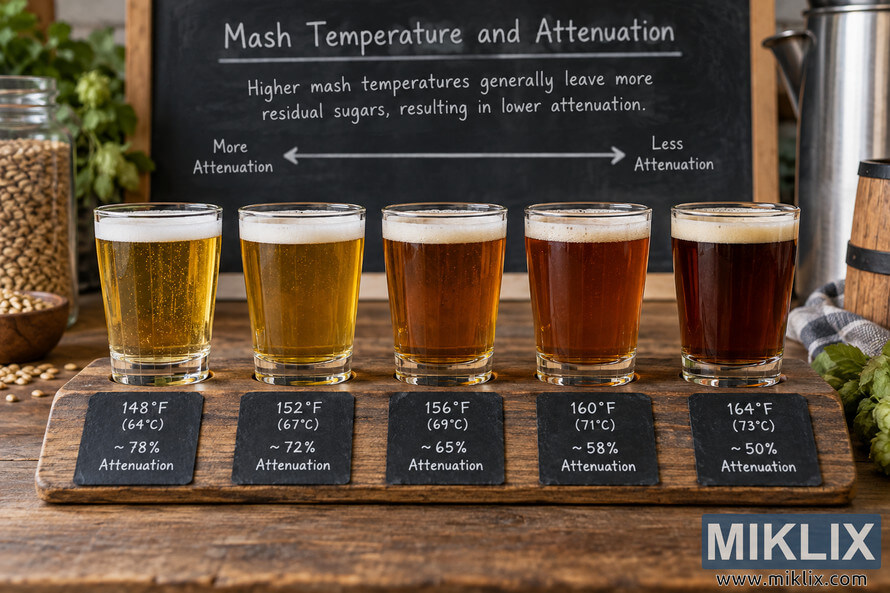
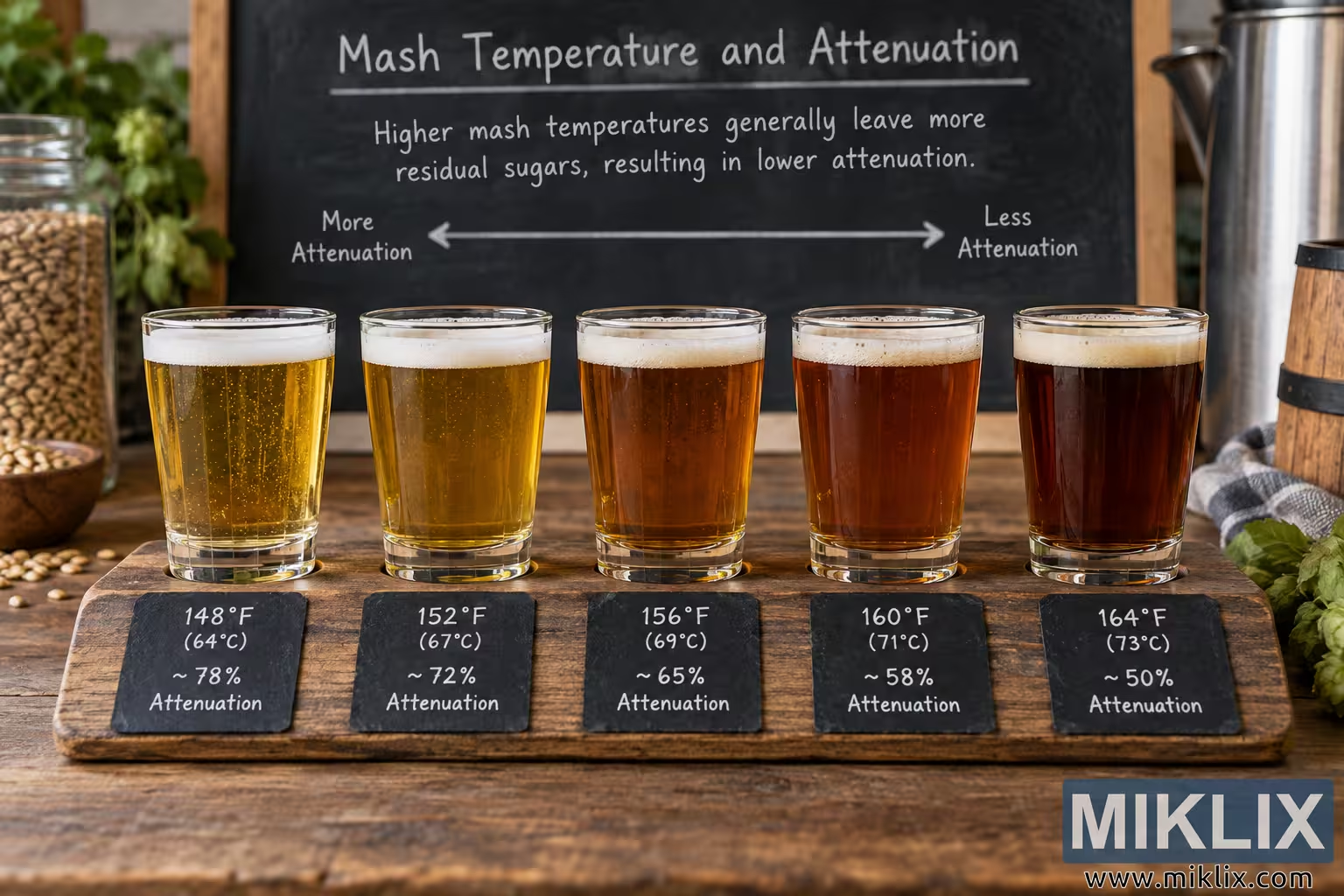
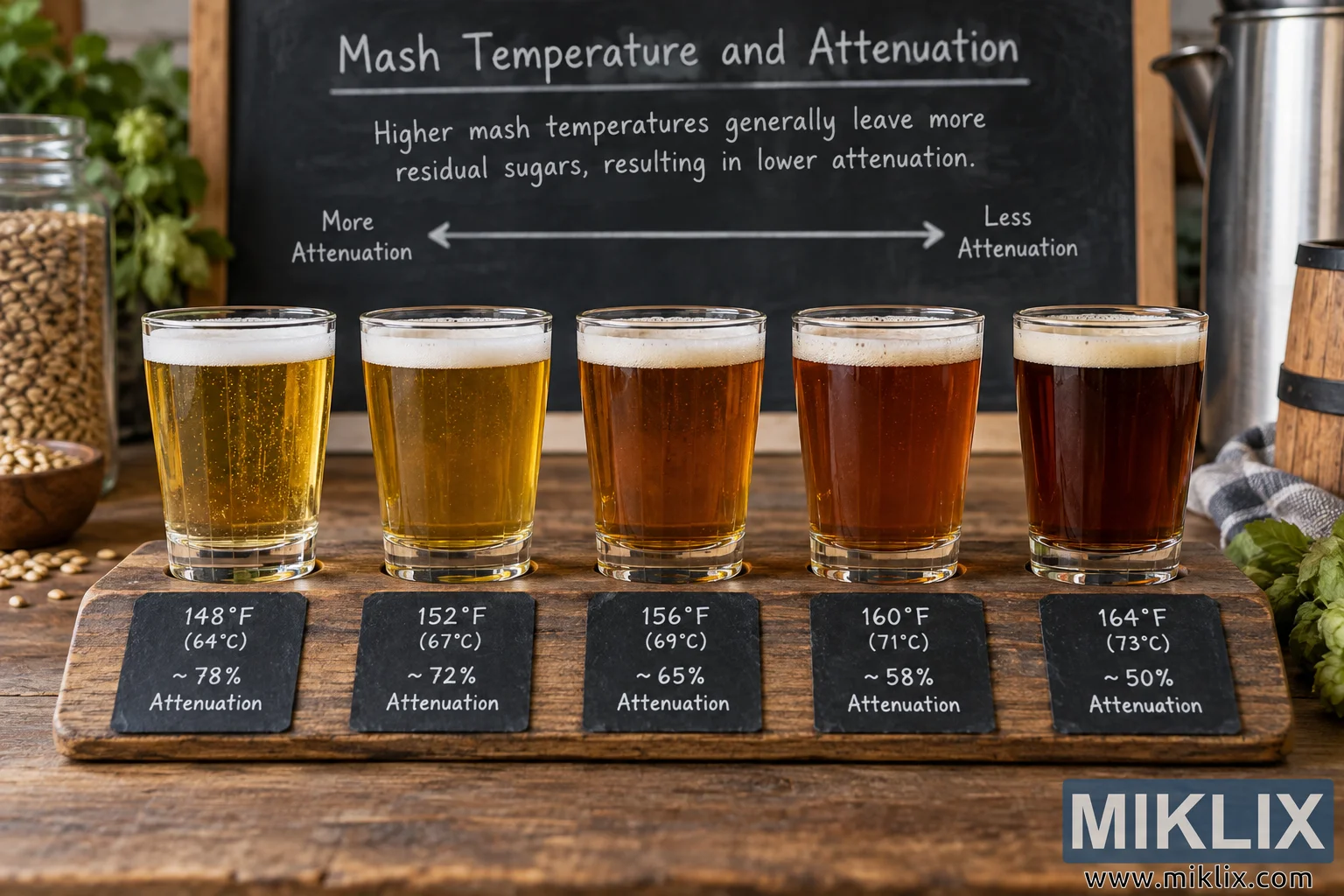
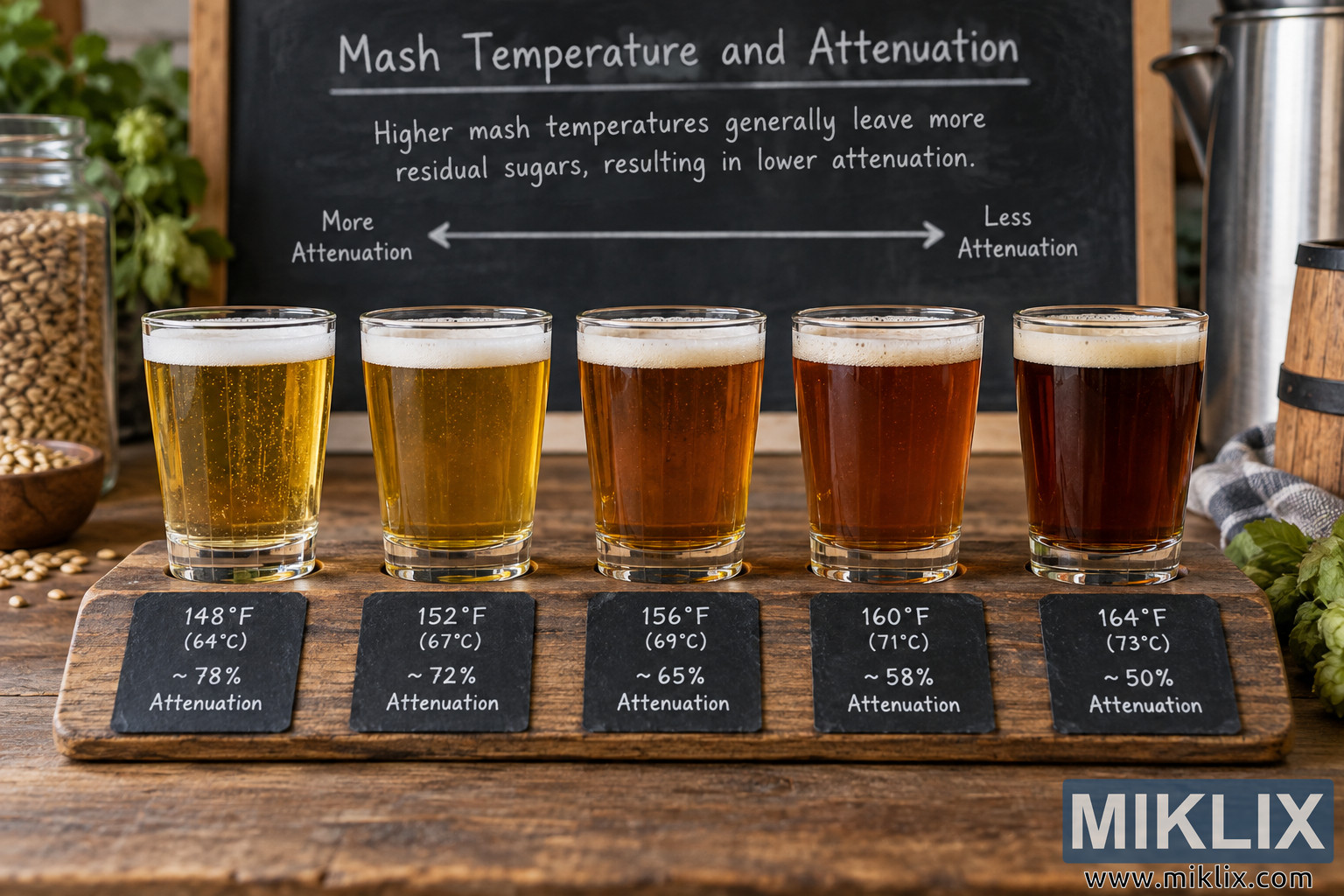
Five beer samples illustrate the relationship between mash temperature and attenuation, with higher temperatures corresponding to lower displayed attenuation.
Available versions of this image
The image files available for download below are less compressed and higher resolution - and as a result of that, higher quality - than the images embedded in articles and pages on this website, which are more optimized for file size in order to reduce bandwidth consumption.
Regular size (1,536 x 1,024)
Large size (3,072 x 2,048)
Very large size (4,608 x 3,072)
Extra large size (6,144 x 4,096)
Comically large size (1,048,576 x 699,051)
- Still uploading... ;-)
Image description
A landscape-oriented, photorealistic tabletop scene shows five clear pint-style glasses of beer arranged in a straight horizontal row on a thick rustic wooden serving board. The samples progress visually from light golden yellow at the left through deeper gold and amber to dark reddish brown at the right. Each glass has a narrow off-white foam head, with small bubbles visible in several of the beers. Five rectangular dark slate labels are positioned on the board directly in front of the corresponding glasses. From left to right, the labels read: "148°F (64°C) ~ 78% Attenuation", "152°F (67°C) ~ 72% Attenuation", "156°F (69°C) ~ 65% Attenuation", "160°F (71°C) ~ 58% Attenuation", and "164°F (73°C) ~ 50% Attenuation". Behind the glasses is a large black chalkboard in a natural wood frame. White handwritten-style text at the top reads "Mash Temperature and Attenuation", followed by a horizontal underline. Below it, the board reads "Higher mash temperatures generally leave more residual sugars, resulting in lower attenuation." A horizontal double-ended arrow appears beneath this statement, with "More Attenuation" written on the left and "Less Attenuation" on the right. The composition presents the samples as an educational comparison, with the glasses centered prominently in the foreground and middle ground and the chalkboard occupying most of the background. The setting has warm, earthy colors and natural materials. On the far left is a large clear glass jar filled with tan grain kernels, with a small wooden bowl of similar grain in front of it and scattered kernels on the tabletop. Green leafy plant material is visible behind the grain jar. On the far right are brewing-related objects, including a tall reflective stainless-steel vessel and part of a wooden vessel or barrel with dark bands. A folded gray-and-white patterned cloth lies on the tabletop nearby, along with green leafy plant material that appears consistent with hops, although its exact identity cannot be confirmed solely from the image. The wooden tabletop, serving board, chalkboard frame, glassware, slate labels, grain, metal vessel, fabric, and greenery create a rustic brewing-workshop atmosphere. Lighting is warm and even, with highlights and reflections on the glasses and metal surfaces. No people, logos, or identifiable commercial brands are visible.
The image is related to: Fermenting Beer with White Labs WLP644 Saccharomyces brux-like Trois Yeast