
Image: Wild-Fermented Ale in a Rustic Glass Carboy
Published: September 30, 2026 at 3:22:33 PM UTC
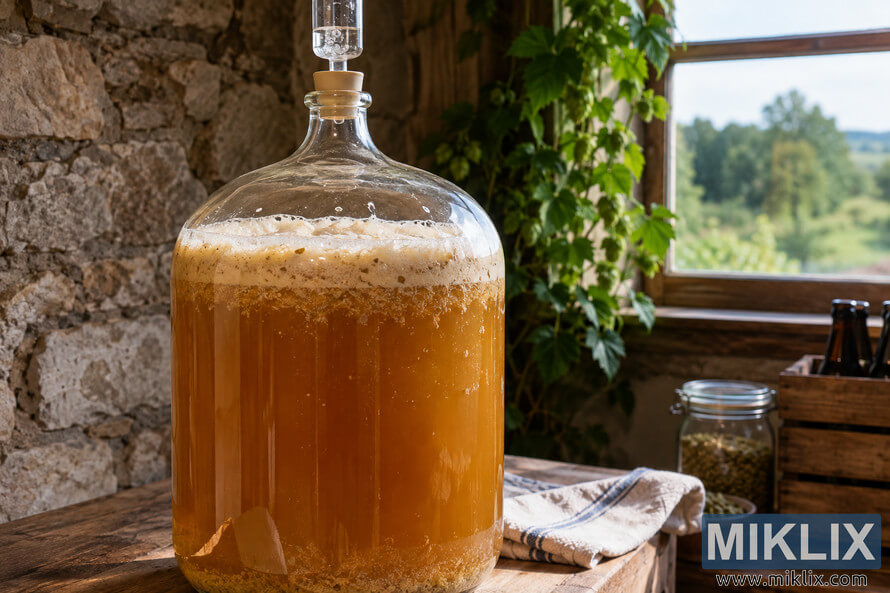
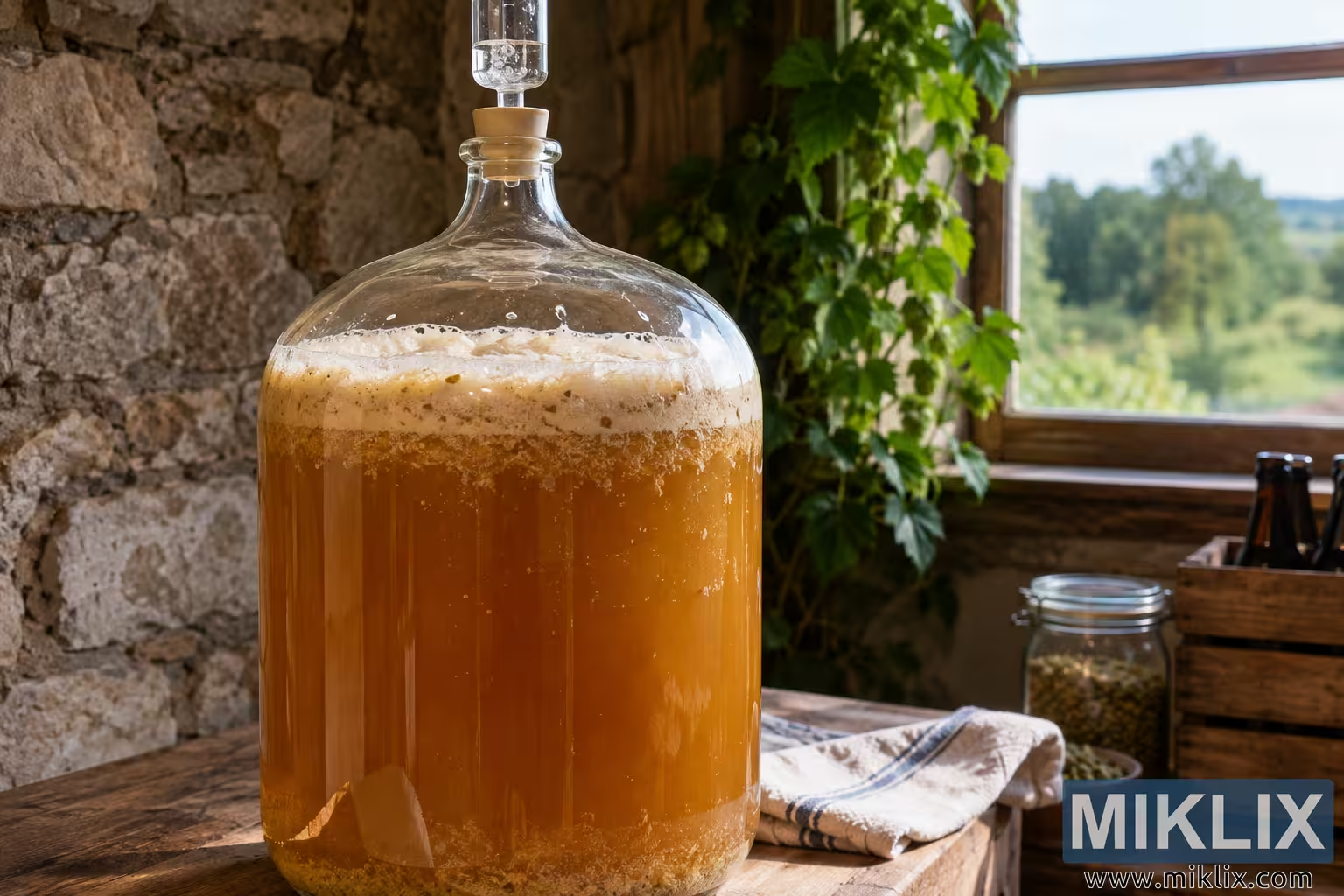
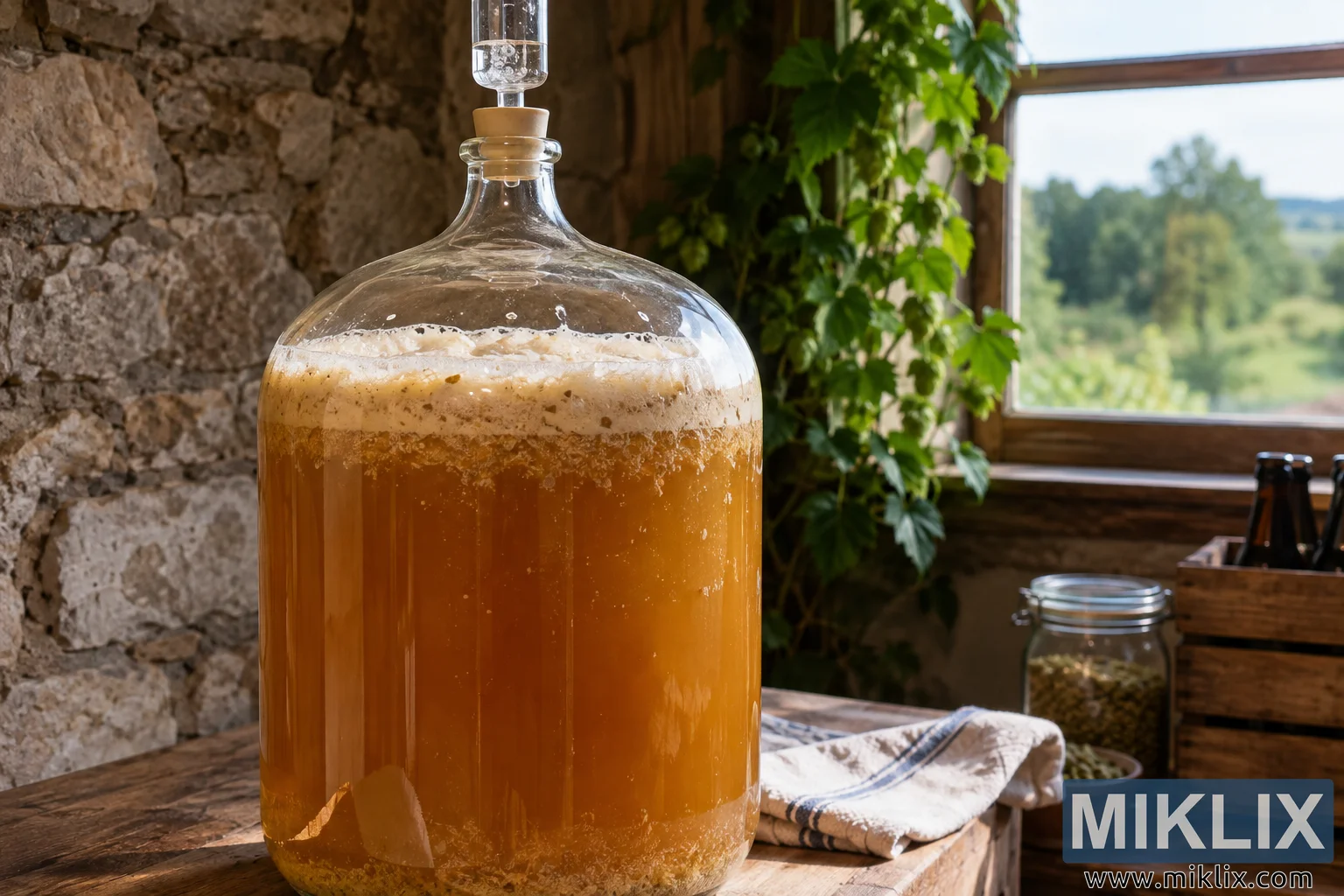
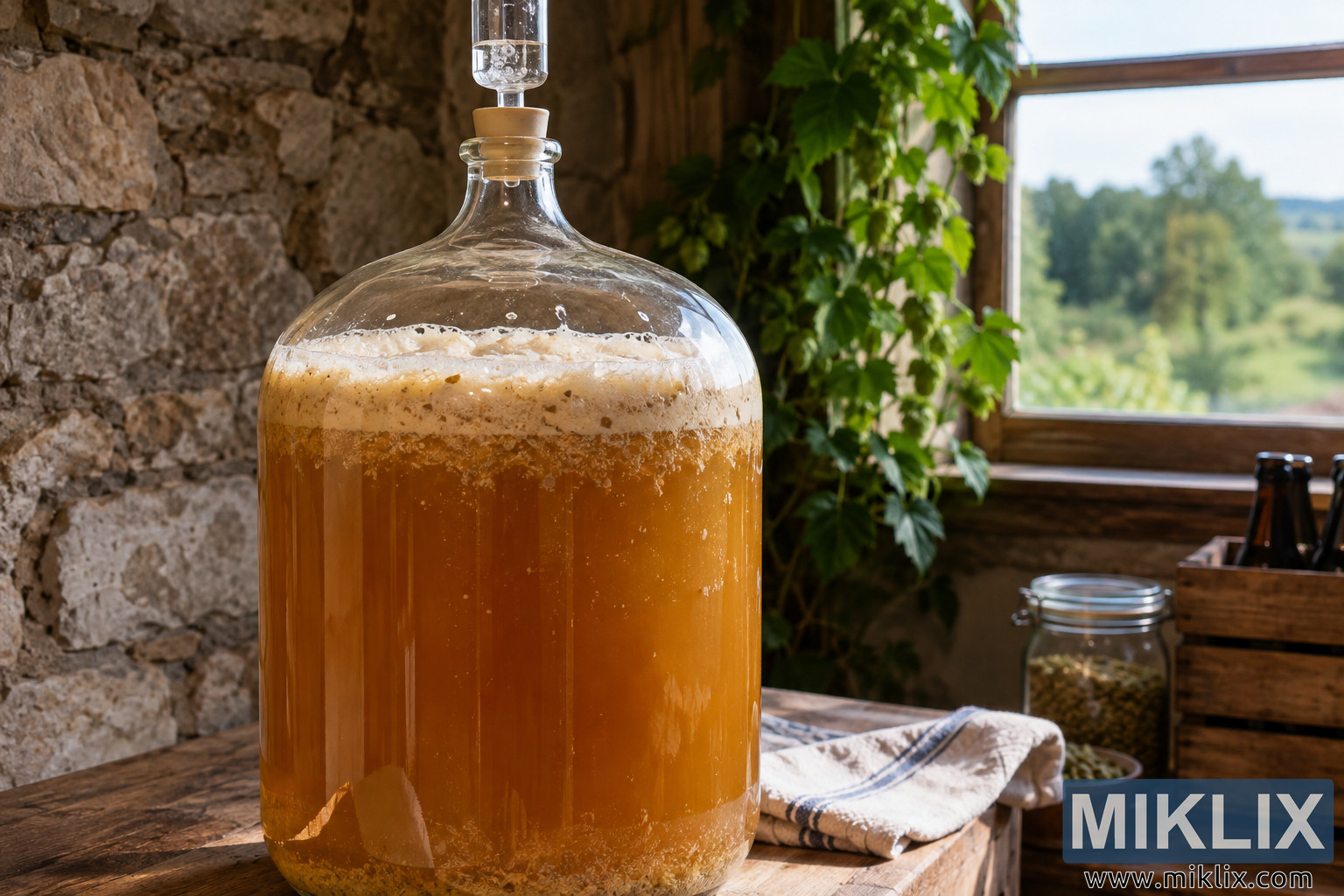
Rustic landscape photograph of wild-fermented amber ale bubbling in a glass carboy, surrounded by natural brewing ingredients in a warm farmhouse setting.
Available versions of this image
The image files available for download below are less compressed and higher resolution - and as a result of that, higher quality - than the images embedded in articles and pages on this website, which are more optimized for file size in order to reduce bandwidth consumption.
Regular size (1,536 x 1,024)
Large size (3,072 x 2,048)
Very large size (4,608 x 3,072)
Extra large size (6,144 x 4,096)
Comically large size (1,048,576 x 699,051)
- Still uploading... ;-)
Image description
A high-resolution landscape photograph depicts a rustic indoor brewing scene centered on a large transparent glass carboy filled with actively fermenting wild ale. The carboy dominates the foreground and occupies much of the left and central portions of the composition. Its clear, thick glass catches the warm ambient light and produces subtle reflections, highlights, and gentle distortions around the liquid inside. The ale is a rich, cloudy amber-gold color, with variations in opacity that emphasize its unfiltered, actively fermenting character. Countless tiny suspended particles and small bubbles are visible throughout the liquid, giving the beer an organic, lively appearance. Near the surface, a substantial layer of pale cream-colored foam and fermentation residue forms an uneven ring. The frothy layer has a naturally irregular texture, with clusters of bubbles, patches of yeast, and darker flecks distributed across its surface. Along the bottom of the vessel, a visible layer of sediment has accumulated, consisting of yeast and other fermentation material. This sediment forms a mottled golden-beige deposit that contrasts with the warmer amber liquid above it.
The neck of the carboy narrows toward the top and is sealed with a light-colored stopper fitted with a clear fermentation airlock. The transparent airlock extends upward from the stopper and contains a small amount of liquid. Tiny bubbles and droplets can be seen inside it, visually reinforcing the impression that fermentation is underway. The upper portion of the airlock approaches the top edge of the photograph, making the vessel feel large and prominent within the frame. No labels, logos, commercial markings, or recognizable brands appear anywhere on the brewing equipment or surrounding objects.
The carboy stands on a heavy, weathered wooden table whose surface displays prominent grain, scratches, knots, irregular edges, and signs of age. Warm sunlight falls across the tabletop, creating soft highlights and emphasizing the tactile character of the wood. To the right of the carboy lies a casually folded off-white kitchen cloth with narrow blue-gray stripes. Its creases and soft woven texture provide a visual contrast to the smooth reflective glass of the fermentation vessel and the rough wooden table beneath it.
Behind the cloth, toward the right side of the image, is a clear glass storage jar with a metal clasp and lid. The jar contains dried botanical or brewing ingredients with muted green and brown tones, suggesting hops, herbs, or another natural ingredient used in brewing. A small bowl containing additional dried plant material sits nearby. Farther to the right, partially cropped by the edge of the frame, is a simple wooden crate holding several dark brown glass bottles. The bottles are unmarked and free of labels or branding. Their deep brown surfaces reflect small areas of the surrounding light while remaining visually subordinate to the much larger carboy in the foreground.
The background creates the atmosphere of an old farmhouse, cellar, workshop, or traditional rural brewing room. On the left is a rough exposed stone wall built from irregular pale beige and gray stones. The mortar and uneven stone surfaces introduce a strong rustic texture and make the setting feel established and handcrafted rather than modern or industrial. Behind the carboy, vertical wooden boards in warm brown tones continue the natural material palette. A vigorous green climbing plant grows near the center-right background, with broad leaves and trailing stems reaching upward and across part of the wall. The leaves are illuminated unevenly, with some catching bright daylight while others remain in soft shadow, adding depth to the scene.
A large wooden-framed window occupies the upper-right portion of the photograph. Bright natural daylight enters through the glass, illuminating the brewing vessel and surrounding workspace. Beyond the window is a softly blurred rural landscape composed of green vegetation, distant trees, open fields, and a faint horizon. The shallow depth of field keeps the exterior scenery indistinct, ensuring that attention remains focused on the fermenting ale while still establishing a peaceful countryside environment. The combination of warm interior surfaces and fresh green scenery outside gives the image an inviting late-summer or early-autumn feeling.
The lighting is naturalistic and warm, appearing to come primarily from the window on the right. It produces luminous amber tones in the beer and creates realistic reflections along the curved glass surface of the carboy. The left side of the scene is comparatively shaded, allowing the rugged stone wall to retain rich texture without distracting from the central subject. Highlights on the fermenter, airlock, cloth, jars, and tabletop are balanced by soft shadows, giving the photograph a convincing sense of volume and depth. The overall color palette combines amber, honey, cream, warm brown, stone gray, and leafy green.
Compositionally, the photograph places the fermenting carboy clearly in the foreground as the principal subject. The vessel's large scale, bright amber contents, and sharply rendered glass make it the immediate focal point. Secondary objects such as the towel, ingredient jar, bowl, bottle crate, climbing plant, and window provide context without competing for attention. The photograph communicates small-batch, traditional fermentation through visual cues rather than text or branding. Its atmosphere suggests patience, craftsmanship, natural ingredients, and an artisanal approach to brewing. The active foam, suspended bubbles, and sediment make the fermentation process visually evident, while the rustic architecture and countryside view reinforce the wild, farmhouse-inspired character of the ale. The result is a detailed, realistic still-life photograph of wild-fermented ale developing inside a glass carboy in a warm, tranquil rural brewing environment.
The image is related to: Fermenting Beer with White Labs WLP653 Brettanomyces Lambicus Yeast