
Fermenting Beer with White Labs WLP920 Old Bavarian Lager Yeast
Published: March 18, 2026 at 8:39:47 PM UTC
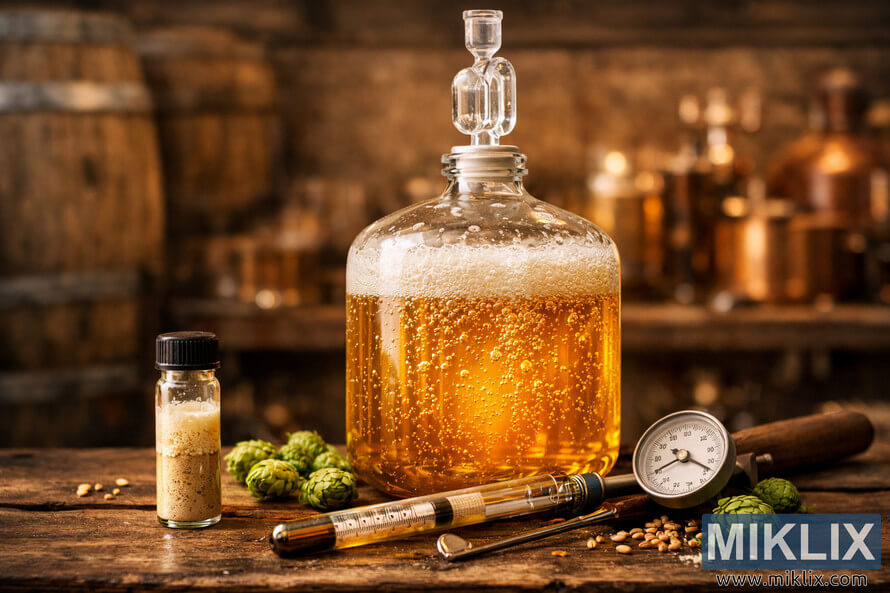
White Labs WLP920 Old Bavarian Lager Yeast is a premium choice for traditional Bavarian lagers. It offers a malty finish with a hint of ester. The yeast's core specs include an attenuation range of 66%–73%, medium flocculation, and an alcohol tolerance of 5%–10%.
Click or tap the image for more information and higher resolutions.
This lager yeast review provides practical tips on fermenting with WLP920. It covers temperature ranges and expected flavor profiles. The ideal fermentation temperature of 50°–55° F (10°–13° C) enhances malt character while minimizing esters.
For homebrewers and craft brewers in the United States, availability is crucial. White Labs offers WLP920 in various forms, including SKU WLP920NG for home use. This review will delve into handling, storage, and shipping considerations in the full article.
Key Takeaways
- White Labs WLP920 Old Bavarian Lager Yeast favors malty lagers with mild esters.
- Fermenting with WLP920 works best at 50°–55° F (10°–13° C).
- Expect 66%–73% attenuation and medium flocculation in most batches.
- Alcohol tolerance is moderate (about 5%–10%), so adjust for higher-gravity beers.
- WLP920 is available as WLP920NG for homebrewers; handle cold chain shipping carefully.
Overview of White Labs WLP920 Old Bavarian Lager Yeast
White Labs WLP920 originates from Southern Germany, known as a classic Bavarian strain. This brief overview is designed to assist brewers in crafting recipes and matching styles. The strain's background promises a malt-forward fermentation, adhering to traditional lager techniques.
WLP920 excels in cool fermentations, resulting in a clean, malty finish. Its flavor profile features a gentle ester note, adding subtle fruitiness. This enhances the malt and hop balance without overpowering it. Key characteristics include an attenuation range of 66%–73%, medium flocculation, and a medium alcohol tolerance of 5%–10%. It ferments best at 50°–55° F (10°–13° C) and is STA1 negative.
When selecting yeast and shaping recipes, brewers should consider these points.
- WLP920 origin: Southern Germany; suited to traditional Bavarian lagers.
- Old Bavarian strain background: emphasizes malt character with restrained esters.
- lager yeast flavor profile: malty finish with slight fruitiness that complements Munich and Vienna malts.
- WLP920 suggested styles: Amber Lager, American Lager, Bock, Dark Lager, Doppelbock, Marzen, Pale Lager, Schwarzbier, and Vienna Lager.
Click or tap the image for more information and higher resolutions.
Why Choose White Labs WLP920 Old Bavarian Lager Yeast for Your Lager
Choosing the right lager yeast is crucial for flavor, attenuation, and conditioning time. White Labs WLP920 offers a balanced profile, helping brewers achieve target gravities and preserve malt character. This strain is favored by both homebrewers and professionals for its consistent results.
Reliable fermentation is key for scaling recipes or managing a tight production schedule. WLP920 exhibits steady attenuation in the 66%–73% range and medium flocculation. These traits ensure a predictable finish gravity and conditioning behavior, making it a reliable lager yeast.
Versatility is another significant advantage. Brewers seeking a single strain for various styles, from pale lagers to bocks, find WLP920 adaptable. It maintains a malty backbone, accommodating varied mash temperatures and gravity targets. This versatility solidifies its reputation as a go-to lager yeast.
East Village Brewing's adoption of WLP920 as a house strain exemplifies its performance in commercial settings. Head brewer Aaron Justus tested multiple strains before choosing WLP920. The reasons included consistent fermentation, tolerance of higher alcohol, and the ability to withstand regular repitching.
The practical benefits for operations with diverse tap lists or high throughput are evident. WLP920 reduces the need for multiple lager strains, simplifying inventory and reducing risk during large batches. For brewers considering options, the case for WLP920 is clear: it offers predictability, flexibility, and reuse potential.
Click or tap the image for more information and higher resolutions.
Fermentation Temperature and Environment for Optimal Performance
The fermentation temperature of WLP920 significantly impacts flavor and fermentation speed. Aiming for the right temperature range is crucial. It helps preserve the yeast's malty character and keeps ester production in check. Small temperature adjustments can dramatically alter mouthfeel and attenuation, often exceeding brewers' expectations.
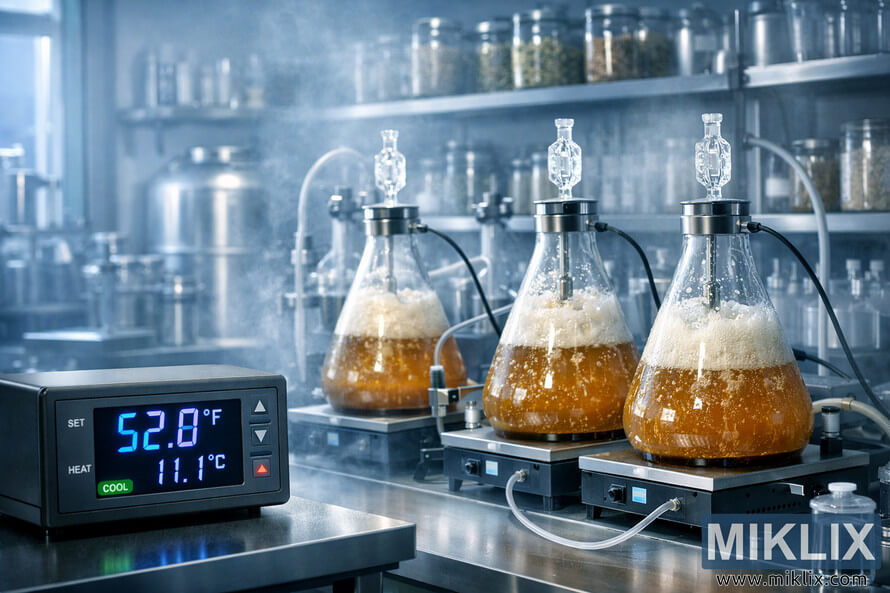
Recommended temperature range: 50°–55° F (10°–13° C)
White Labs suggests a temperature of 50–55°F for WLP920 to achieve its desired profile. At 50°F, the strain produces a clean lager finish with minimal esters. Moving to 55°F introduces a hint of fruitiness and quicker attenuation. This range maintains the balance needed for optimal results.
Temperature control tips for homebrewers
- Utilize a dedicated fermentation fridge or a temperature-controlled chamber for consistent lager temperature.
- For kegs and carboys, refrigerated glycol systems offer professional-grade stability for frequent fermentations.
- A budget-friendly option is a chest freezer paired with an external temperature controller, providing precise results without a high cost.
- For short-term needs, water baths with ice packs can be used, but ensure monitoring with a reliable thermometer to prevent temperature fluctuations.
Impact of temperature on attenuation and ester production
Cooling to 50°F tends to decrease esters, resulting in a cleaner profile. This can be beneficial if aiming to reduce esters in WLP920. On the other hand, fermenting near 55°F encourages the yeast to express its slight ester character and slightly accelerates attenuation. Maintaining a balance between a clean character and the yeast's fruity notes is key through careful temperature control.
Click or tap the image for more information and higher resolutions.
Attenuation, Flocculation, and Alcohol Tolerance Data
Understanding yeast performance is crucial for brewers aiming to achieve the desired beer profile and conditioning time. Key technical points for brewers using White Labs WLP920 are essential. They impact the beer's body, clarity, and its ability to handle higher gravities.
White Labs reports WLP920's attenuation at 66%–73%. This means the yeast typically leaves a modest amount of malt sweetness. This characteristic is beneficial for styles like Märzen, Oktoberfest, and Vienna lager.
Flocculation behavior is described as medium. Expect steady settling that yields good clarity after cold conditioning. However, it doesn't drop out too quickly during active fermentation.
Alcohol tolerance for WLP920 falls in the medium range, roughly 5%–10% ABV. The strain comfortably handles most classic lagers and many bocks.
- For beers near the upper tolerance, increase pitch rate and oxygenate well to avoid stalled fermentations.
- Consider staggered nutrient additions or blending with a higher-tolerance lager strain for beers above 10% ABV.
- Allow adequate diacetyl rest and extended cold conditioning to take full advantage of the flocculation medium character.
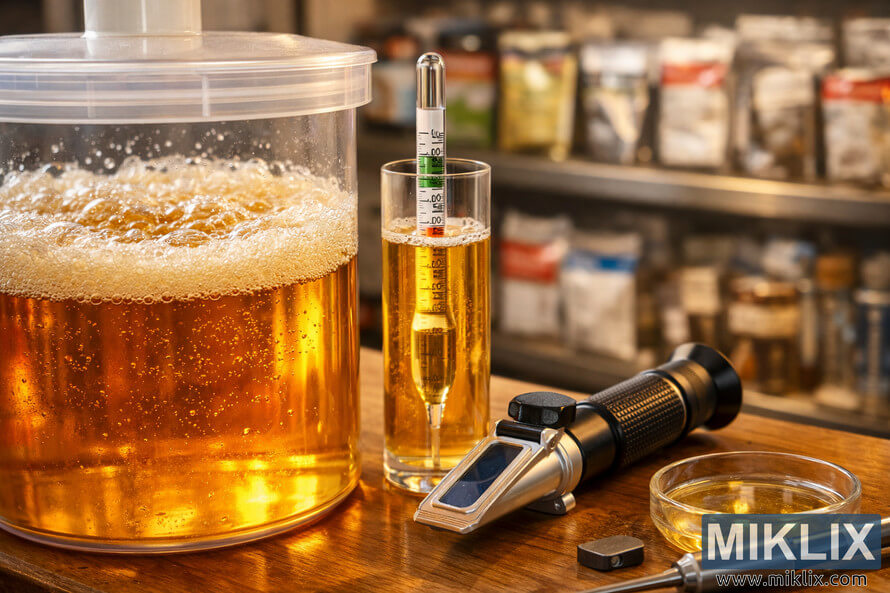
Click or tap the image for more information and higher resolutions.
Pitching Rates and Starter Recommendations
The pitch rate for WLP920 is crucial for fermentation speed, attenuation, and flavor. A reliable calculator is essential. Plan for starters at higher gravities and match pitching to batch size. This ensures clean lager fermentation.
White Labs offers a pitch calculator for precise cell counts. Simply input original gravity and batch volume. The calculator helps size starters or determine the number of vials or packs needed. It eliminates guesswork, providing clear guidance for lagers.
The timing for making a WLP920 starter depends on pack age, gravity, and reuse history. For most homebrew 5-gallon lagers, a single fresh pack might suffice. However, for higher OG lagers or older stock, a starter is necessary to boost yeast counts.
- Standard 5-gallon, moderate gravity: use the White Labs pitch calculator and consider a small starter or two packs for insurance.
- High-gravity lagers or beers near alcohol tolerance: scale the starter larger, oxygenate well at pitch, and consider multiple packs.
- Repitched yeast after several generations: refresh with a larger starter to restore vitality and cell count.
For high cell targets, favor stepwise starter builds. Begin with a 500–750 mL starter, then expand as needed. This method keeps yeast healthy and reduces lag time in cold lager fermentation.
When calculating WLP920 pitching rate, consider ferment temperature and oxygenation. Cold lager pitches require robust cell counts to avoid slow starts. If your recipe approaches attenuation or alcohol limits, slightly overshoot the calculator target and provide extra oxygen for optimal results.
For practical pitching by batch size and gravity, follow this checklist:
- Run numbers through the White Labs pitch calculator for precise cell counts.
- Decide if a starter is needed based on when to make starter WLP920 guidance: pack age, gravity, and reuse.
- Size the starter or add packs so the WLP920 pitching rate meets or slightly exceeds targets for cold lager conditions.
These steps enhance fermentation reliability and maintain flavor consistency. Proper planning of pitch rate and starter size reduces yeast stress. This allows WLP920 to showcase its clean, malty character.
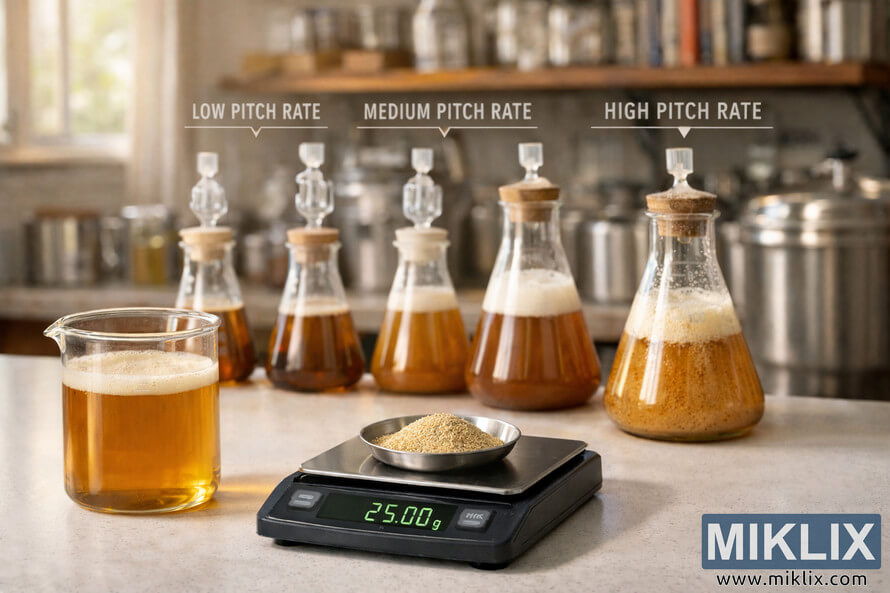
Click or tap the image for more information and higher resolutions.
Using WLP920 in Specific Beer Styles
White Labs WLP920 is versatile across classic lager styles. It offers a malt-forward finish and a restrained ester profile. This allows malt and roast notes to take center stage. Small tweaks to mash temperature, pitch rate, and lagering time can enhance body and clarity. These adjustments do not overshadow the yeast's subtle character.
Oktoberfest and Marzen beers require rich Munich and Vienna malt bills. Aim for a mash that preserves dextrins to maintain body. This also allows the yeast to reach its full attenuation. Ferment at slightly cooler temperatures, between 50°F and 55°F, to keep esters soft.
Conditioning and extended lagering will refine the finish. They will also enhance malt depth in WLP920 Marzen or WLP920 Oktoberfest recipes.
Bock and doppelbock beers need careful cell mass and nutrient management. For high-gravity beers, build a robust starter or pitch extra yeast. Oxygenate well at generation and consider staggered nutrient additions to support fermentation. Monitor temperature closely to prevent elevated ester production with WLP920 bock yeast during the active phase.
Dark lagers and Schwarzbier benefit from a clean yeast backdrop. This preserves roast and chocolate notes. Ferment on the lower end of the strain's range for a dryer, cleaner profile. Longer cold conditioning improves clarity and settles out phenolic or roast-derived compounds.
Using Schwarzbier yeast WLP920 keeps roast flavors focused. It maintains drinkability while preserving the beer's character.
- Adjust mash temp to control body for Oktoberfest and Marzen.
- Increase pitch and oxygenation for Bock/Doppelbock fermentations.
- Lower fermentation temp and extended lagering for dark lagers and Schwarzbier.
Managing Ester Profile and Mouthfeel
WLP920 adds a rounded malt complexity to lagers without emphasizing fruity esters. It's perfect for Oktoberfest, Vienna lagers, and bocks where subtlety is key. Brewers can fine-tune fermentation and handling to align WLP920 esters and mouthfeel with their style goals.
How WLP920’s slight ester character affects final beer
The strain's gentle ester contribution softens malt edges and adds a subtle sweetness. This enhances malt flavors while maintaining a clean profile. The result is a nuanced beer that preserves traditional lager balance.
Techniques to minimize or enhance esters
- To minimize esters WLP920: ferment near 50°F (10°C), pitch a healthy cell count, and oxygenate wort properly. Follow with a diacetyl rest and extended cold lagering to tighten flavors.
- To enhance esters: move fermentation toward 55°F (13°C) or allow a slightly warmer initial ramp. Monitor for off-flavors and avoid excessive oxygen late in fermentation.
- Consistent sanitation and proper pitching help prevent stress-induced esters that stray from intended character.
Mouthfeel considerations from medium flocculation and attenuation
Medium flocculation and 66%–73% attenuation result in a moderate residual body. This balance supports a satisfying lager mouthfeel WLP920 while maintaining drinkability. For a fuller body, slightly raise mash temperature to leave more dextrins. For a lighter body, ferment a touch warmer or aim for more complete attenuation.
Yeast Handling, Storage, and Viability
Proper handling is key to maintaining yeast performance. Treat White Labs packs as perishable goods. Plan storage, transfers, and shipments to ensure high cell counts. Small steps at purchase and reception can prevent stressed yeast and off ferments.
Product forms and SKU notes (WLP920NG availability)
WLP920 is available in various formats, including White Labs PurePitch-style vials and pouches. A common SKU, WLP920NG, is priced around $14.99 and often marked in-stock for quick shipment. Some listings mention PurePitch Next Generation in White Labs documentation. It's important to check the product form before ordering, whether you prefer vials, pouches, or larger commercial formats.
Storage best practices and shelf life
Keep liquid yeast refrigerated between purchases and use it before the expiration date. Stable refrigeration is better than frequent temperature swings for viability.
Avoid freeze-thaw cycles and store away from warm appliances. For homebrew stock, rotate older packs to the front and label receipt dates to track shelf life.
Shipping and cold chain considerations (ice packs, insulated mailers)
When shipping liquid yeast, maintain a cold chain from retailer to your fridge. Retailers often provide protective options like an ice pack insulated mailer. They also offer larger ice & insulated mailer choices to protect against heat during transit.
- For short, cool-window shipments, a single ice pack may suffice.
- During summer or long transit, choose the heavier ice pack insulated mailer option to protect viability.
- Confirm shipping policies; some items may be pre-order only or freight ship, which affects delivery time and cold chain planning.
Preparing for Multiple Generations and Repitching
Breweries and seasoned homebrewers achieve consistent results by planning for multiple yeast reuse cycles. They track performance meticulously and handle yeast with care. Below, we outline steps for assessing viability, clean propagation, and clear retirement triggers for your strain.
Assessing viability across generations
Keep an eye on fermentation lag time, attenuation, and aroma in each brew. A sudden increase in lag or a drop in attenuation can indicate weakening cells or contamination. Use a microscope and hemocytometer or flow cytometry to count viable cells and track yeast generations WLP920 in your charts.
Record any sensory changes during conditioning. If off-flavors emerge or attenuation drifts after several batches, it's a sign the culture is aging and may need replacement.
Sanitation and propagation practices for repitching
Sanitize all propagation equipment before starting a starter. Clean glassware, wort pots, and transfer lines between uses to prevent bacteria and wild yeast from contaminating.
Adhere to strict yeast propagation practices: make starters in small, oxygenated wort, step up cell mass gradually, and minimize aero-exposure after growth. Harvest yeast from healthy, active fermentations and store harvested slurries cold and sealed until reuse.
When to retire a yeast line
Establish retirement rules based on performance or a generation cap informed by your records. Common triggers include persistent off-flavors, falling attenuation, significant contamination, or repeated viability loss.
For commercial operations, maintain a backup bank and plan for periodic fresh WLP920 batches from White Labs. Retirement is a strategic step to protect beer quality and preserve brand consistency.
Nutrients, Oxygenation, and Fermentation Health
Healthy lager fermentations begin with the right nutrients and oxygen. WLP920 thrives when wort has balanced free amino nitrogen and sufficient dissolved oxygen at the start. Small, targeted interventions help avoid stress and maintain flavor during the long, cool fermentations typical of classic lagers.
Consider nutrient additions if your mash or extract wort lacks free amino nitrogen or if brewing high-gravity lagers. For WLP920 yeast nutrients, start with measured doses early in the brewing process. Servomyces for yeast is a popular choice among brewers, added to starters or post-boil wort to enhance micronutrients and support healthy cell growth.
Oxygenation recommendations for lager fermentations
Lagers require more oxygen at pitch than ales. Aim for dissolved oxygen levels suitable for your pitch rate and original gravity. For high cell counts and stronger lagers, target the higher end, using pure oxygen with a diffusion stone for precision. For starters, vigorous aeration is effective in priming the yeast.
Signs of stressed fermentation and corrective actions
- Slow or stalled activity, long lag times, or incomplete attenuation suggest stress.
- Strong sulfur or solvent notes and pronounced diacetyl point to nutrient or viability issues.
To address stressed fermentation, gently raise the temperature within the strain’s safe range. Verify the pitch rate and viability, and add nutrients for sluggish high-gravity ferments. Avoid oxygenating mid-ferment; oxygen is only for pre-pitching. These steps help restore fermentation health WLP920 and minimize off-flavors.
Practical checklist for a healthy WLP920 fermentation
- Test and adjust wort FAN when brewing concentrated or adjunct-heavy recipes.
- Oxygenate at pitching: use pure oxygen and stone for consistency in lagers.
- Keep Servomyces for yeast or similar micronutrients on hand for starters and stressed batches.
- Monitor gravity and aroma early; act quickly if signs of stress appear.
Crucial Equipment and Tools for Brewing with WLP920
Successful lager brewing with WLP920 requires a few essential tools. Focus on precise temperature control, strong starters, and safe yeast transport. The right equipment saves time and ensures yeast health during pitching and repitching.
Temperature control gear for lagers
Keep temperatures between 50°–55° F (10°–13° C) with precise equipment. Homebrewers can use a dedicated fermentation refrigerator for consistent results. For those on a budget, a chest freezer with an Inkbird controller is a cost-effective, accurate cooling solution.
Commercial brewers can benefit from glycol chillers for multiple tanks. Use reliable thermometers or digital probes for continuous monitoring. Proper temperature control minimizes off-flavors and ensures predictable attenuation.
Stir plates and starter equipment recommendations
Healthy starters are crucial for WLP920 performance. A compact stir plate for starters accelerates yeast growth and keeps cells suspended. Models cost around $43–$49. Use sanitized Erlenmeyer flasks that match your starter volume.
Wort whippers and oxygenation stones enhance dissolved oxygen levels, ideal for large starters and high-gravity batches. Follow White Labs' pitch guidelines for optimal culture volumes. These tools boost yeast vitality and reduce fermentation lag.
Accessory items: ice packs, insulated mailers, and Servomyces
Protect yeast during shipping and storage with quality accessories. Small Ice Pack & Insulated Mailer options start at $4.99, with larger ones around $8.99. These items maintain cold chain integrity for viable yeast cells.
Servomyces yeast nutrient supports stressed lagers and promotes healthy cell walls during propagation. A six-pack of Servomyces yeast nutrient capsules is a popular choice for homebrewers. Add oxygenation stones and diffusion gear for large starters and high-gravity batches.
Troubleshooting Common Fermentation Issues
Even seasoned brewers encounter issues with WLP920 fermentation. This guide aims to help you identify and solve common problems. It offers practical solutions to avoid guesswork.
Slow fermentation despite correct temperatures
- First, check the viable pitch rate. Old or poorly stored yeast can lead to low cell counts. Use a microscope or a reliable calculator to measure. Prepare a starter when necessary.
- Ensure adequate oxygen at pitch. Lager yeast needs oxygen for sterol and membrane synthesis. Aerate or oxygenate just before pitching to avoid a slow start.
- Verify wort composition. High dextrins, heavy adjuncts, or inhibitory hop compounds can slow fermentation. Consider a lower mash temp to boost fermentability in future batches.
- If you need a quick fix, add a fresh, healthy starter of WLP920 or a complementary lager strain to restart activity.
Off-flavors and their likely causes
- Fruity esters often come from warm fermentation. Keep the fermenter within the recommended 50°–55° F range to reduce excess esters.
- Sulfur notes are common with lager strains early on. Extended cold conditioning and time in the lager cellar will usually clear sulfur compounds.
- Diacetyl results from incomplete fermentation or skipping a diacetyl rest. Raise the temperature by a few degrees near the end of primary to allow yeast to reabsorb diacetyl, then resume lagering.
- Use targeted actions when treating lager off-flavors WLP920 produces. Adjust temperature profile, give a proper diacetyl rest, and lengthen lagering before drawing final conclusions.
Underattenuation and steps to correct it
- Confirm your final gravity reading and hydrometer or refractometer calibration. Instrument error can mask true attenuation.
- Assess yeast health and viability. Low viability leads to underattenuation. A fresh starter or repitching viable WLP920 will often finish the job.
- Adjust mash schedule for fermentability. Lowering mash temperature by 2–4°F produces a more fermentable wort and reduces the need for extreme yeast management.
- When looking for underattenuation solutions, ensure proper pitching rates, oxygenation, and consider a short warm period to let yeast clean up and finish attenuation.
Pairing WLP920 with Malt, Hops, and Mash Schedules
WLP920's clean, malty character makes it easy to match malt, hops, and mash choices to your desired lager style. Use grain and hop decisions to support the yeast’s natural finish and to reach the attenuation and mouthfeel you want. Below are practical options for malt bills, hop selections, and mash temp ranges that work well as lager recipe guidance.
- Base malts: Pilsner for pale lagers, Vienna or Munich for richer amber lagers.
- Specialty malts: Light CaraMunich or Biscuit to add caramel and bready notes without overwhelming the yeast.
- Dark styles: Use limited amounts of roasted or dark crystal in bock and dunkel recipes to preserve malt depth.
- Example balance: 60–80% base (Pilsner/Munich), 10–25% Vienna or Munich, 5–10% specialty crystal.
Hop choices and bitterness handling
- Traditional nobles such as Hallertau, Saaz, and Tettnang suit classic lagers and keep bitterness restrained.
- For modern pale lagers, clean, low-resin hops like Sterling or Pacific Jade can add aroma without masking malt.
- Adjust IBUs to match body: lower IBUs for bock and dunkel, moderate IBUs for Märzen, higher but clean bitterness for pale lager.
- When planning hops for WLP920 lagers, target a balance that highlights malt character while allowing subtle hop support.
Mash temperature guidance to match attenuation
- To push fermentability and a drier finish, mash in the 148–152° F (64–67° C) range. This helps WLP920 reach higher apparent attenuation.
- For a fuller mouthfeel, use 153–156° F (67–69° C) to retain more unfermentable dextrins and boost body.
- Staggered or step mashes can add complexity: a short protein rest followed by a fermentable saccharification rest suits traditional lagers.
- Keep mash temp WLP920 targets consistent across batches to achieve repeatable attenuation and mouthfeel.
Use these elements together. Design a malt bill WLP920 that supports the style, choose hops for WLP920 lagers that complement rather than compete, and set mash temp WLP920 to match the attenuation you expect. This lager recipe guidance will help you produce clean, balanced lagers that showcase WLP920’s strengths.
Conclusion
White Labs WLP920 Old Bavarian Lager Yeast stands out as a reliable Southern German strain. The summary of White Labs WLP920 reveals a malty finish with light esters. It also shows predictable attenuation of 66%–73%, medium flocculation, and a medium alcohol tolerance of 5%–10%. To achieve these results, aim for a fermentation temperature of 50°–55° F (10°–13° C).
For brewers looking for a single lager strain, WLP920 is an excellent choice. It excels in Oktoberfest, Märzen, bock, and darker lagers, offering consistent performance. Homebrewers should focus on proper pitching rates, well-made starters, oxygenation, and tight temperature control to avoid fermentation issues.
Acquiring and handling WLP920 is straightforward. It's available at retail, and shipping is safe with insulated mailers and ice packs. Brewers should use a stir plate, adequate nutrient like Servomyces when needed, and follow good repitching hygiene for reliable results. This WLP920 review conclusion highlights why many craft brewers and hobbyists choose it for malty, clean lagers with subtle character.
FAQ
What is White Labs WLP920 Old Bavarian Lager Yeast and where does it come from?
WLP920 Old Bavarian Lager Yeast is a liquid lager strain from White Labs. It originates in Southern Germany. This yeast is marketed as a vault strain for authentic Bavarian-style lagers. It delivers a malty finish with a slight ester character, perfect for traditional Oktoberfest/Marzen, bocks, Vienna, and other malty lager styles.
What are the core technical specifications for WLP920?
WLP920’s specs include attenuation of 66%–73%, medium flocculation, and a medium alcohol tolerance of 5%–10% ABV. It ferments best at 50°–55° F (10°–13° C). Additionally, it tests negative for STA1, indicating no diastaticus activity.
What flavor and ester profile should I expect from beers fermented with WLP920?
Expect a malt-forward finish with a slight, restrained ester note. This note rounds out malt flavors without becoming fruity. The strain preserves malt depth while adding subtle complexity, making it well-suited for Oktoberfest, Marzen, Vienna Lager, and bock styles.
Which beer styles are recommended for WLP920?
White Labs recommends WLP920 for Amber Lager, American Lager, Bock, Dark Lager, Doppelbock, Marzen, Pale Lager, Schwarzbier, and Vienna Lager. Its balance of malt character and restrained esters makes it versatile across traditional German and malt-forward lagers.
How reliable and predictable is WLP920 in fermentation?
White Labs lists consistent attenuation (66%–73%) and medium flocculation. These traits support predictable finish gravities and conditioning behavior. Brewers report reliable fermentations and repeatable results with proper pitch rates, oxygenation, and temperature control.
Can WLP920 be used as a single house lager strain in a brewery?
Yes. East Village Brewing Company selected WLP920 as a house strain after testing many strains. They cite reliability, predictable attenuation, ability to handle relatively high alcohol and bitterness, and suitability across many styles as reasons it works well for multi-beer programs and repitching.
What is the recommended fermentation temperature range and why?
Ferment between 50°–55° F (10°–13° C). The lower end (near 50° F / 10° C) limits ester production for a cleaner lager profile. The upper end (55° F / 13° C) produces slightly more esters and can speed fermentation. Staying in range balances clean character with the strain’s subtle ester signature.
What practical temperature control options work for homebrewers?
Use a dedicated fermentation fridge or temperature-controlled chamber. Low-cost options include a chest freezer with an external controller (e.g., Inkbird), water baths with ice packs for short runs, or insulated coolers. For kegs and commercial setups, glycol chillers offer precise control. Always monitor with an accurate probe or thermometer.
How does temperature affect attenuation and ester production?
Cooler fermentation (around 50° F) suppresses esters and favors a cleaner finish. Warmer within the 50°–55° F range enhances subtle esters and can slightly increase attenuation speed. Temperature interacts with pitch rate and oxygenation—control all three to hit desired attenuation and ester level.
What attenuation and flocculation behavior should I plan for?
Expect 66%–73% attenuation and medium flocculation. That means a moderately attenuated finish that preserves some malt sweetness and a reasonable settling rate. Plan for a diacetyl rest and extended cold conditioning to clarify and finish the beer.
What is WLP920’s alcohol tolerance and how does that affect high-gravity beers?
Alcohol tolerance is medium, roughly 5%–10% ABV. WLP920 handles many bocks and typical lagers well but may struggle at very high gravities (strong doppelbocks). For beers above ~10% ABV, increase pitch rate, oxygenate thoroughly, use staggered nutrient additions, or consider blending with a higher-tolerance strain.
When should I build a starter for WLP920?
For most 5-gallon (19 L) homebrew lagers and mid-to-high original gravities, prepare a starter to ensure sufficient viable cells—especially if using a single WLP920 pack or older yeast. Build larger starters for higher OG beers or when repitching aged harvests.
How many packs or what starter size should I use for a standard 5-gallon lager?
For typical lager gravities (OG 1.044–1.060), a moderate starter or two packs (WLP920NG retail packs) is often sufficient. For higher gravities, scale starter size up and oxygenate well at pitch. Use White Labs’ pitch rate calculator for precise cell counts based on batch size and OG.
How should I handle oxygenation for WLP920 fermentations?
Oxygenate wort at pitch to support healthy growth—use pure oxygen and a diffusion stone for higher OG and lager pitches. Target dissolved oxygen appropriate for your pitch rate and gravity; lager fermentations and large starters often benefit from 8–12 ppm depending on cell count needs.
What yeast nutrients are recommended when brewing with WLP920?
Use yeast nutrients when free amino nitrogen is low or for high-gravity fermentations. Products like Servomyces yeast nutrient (capsules) are useful. Nutrients help ensure healthy fermentation, reduce stress-related off-flavors, and support repitching longevity.
How do I enhance or minimize esters with WLP920?
To minimize esters: ferment at the lower end of the range (≈50° F / 10° C), ensure healthy pitching rates and oxygenation, perform a diacetyl rest, then cold lager. To enhance esters slightly: ferment toward the upper range (≈55° F / 13° C) and allow a warmer initial phase while watching for solvent or fusel off-notes.
What mash temperatures work best with WLP920 to match its attenuation?
For a drier finish aligned with 66%–73% attenuation, mash ~148–152° F (64–67° C). For fuller body and residual sweetness, mash ~153–156° F (67–69° C). Adjust mash schedule to hit your target final gravity and mouthfeel for styles like Marzen or Bock.
Which malts and hops pair well with WLP920-fermented lagers?
Pair WLP920 with Munich, Vienna, and Pilsner bases plus specialty malts that add bready, caramel, or toasty character. For hops, noble varieties (Hallertau, Saaz, Tettnang) suit traditional styles; cleaner modern hops work for lighter lagers. WLP920 tolerates higher bitterness, so set IBUs to match malt body for the style.
How should I store WLP920 and handle shipping for home delivery?
Store refrigerated and use before the manufacturer’s expiration date. Maintain a consistent cold chain and avoid freeze-thaw cycles. For shipping, use insulated mailers and ice packs—retail items list accessories like Ice Pack & Insulated Mailer or larger insulated options to protect viability during transit.
What product forms and SKUs are available for homebrewers?
WLP920 is sold in White Labs retail liquid yeast formats. The homebrew SKU commonly encountered is WLP920NG. Retailers often stock single packs suitable for 5-gallon batches; check in-store or online availability and shipping terms.
How viable is WLP920 for multiple generations of repitching?
WLP920 has been used successfully across multiple generations in commercial settings. To repitch reliably, monitor lag time, attenuation consistency, sensory cues, and cell counts. Maintain strict sanitation and periodically refresh your yeast bank with fresh packages to avoid drift or contamination.
What are the key steps for safe yeast propagation and repitching?
Propagate starters with sanitized equipment, oxygenate starters and wort properly, and follow sterile practices when harvesting. Track generation counts, viability (microscope/hemocytometer or lab service), and fermentation performance to decide when to retire the line.
When should I retire a WLP920 house line?
Retire when viability or attenuation declines, lag times lengthen, off-flavors or contamination appear, or your in-house generation limit is reached. Commercial brewers commonly maintain a yeast bank or periodically inject fresh WLP920 packs to reset their house line.
What are common signs of stressed fermentations with WLP920 and how do I fix them?
Signs include long lag times, slow/stuck fermentation, excessive sulfur or solvent notes, and diacetyl. Corrective actions: verify pitch rate and viability, increase temperature slightly within range, ensure proper oxygenation before pitching, add nutrients for high-gravity worts, and consider adding fresh healthy yeast if necessary.
How do I address underattenuation when using WLP920?
Check FG calibration first. If yeast is the cause, build a fresh starter or add a vigorous lager strain to finish fermentation. Also inspect mash temperature for fermentability, confirm oxygenation and pitch rate, and consider diacetyl rest or gentle warming to reactivate yeast metabolism.
What equipment and accessories improve success with WLP920?
Effective gear includes a fermentation refrigerator or chest freezer with temperature controller (Inkbird), glycol chillers for commercial setups, accurate thermometers/probes, a magnetic stir plate for starters, oxygenation stones and regulators, insulated mailers and ice packs for shipping, and yeast nutrients like Servomyces.
What troubleshooting steps help when fermentation is slow despite correct temperature?
Verify viable pitch rate and yeast age, confirm adequate oxygenation at pitch, check wort gravity and possible inhibitory compounds, and ensure yeast wasn’t exposed to temperature abuse during storage. If viability is low, build a larger starter or pitch fresh yeast.
What off-flavors are likely with WLP920 and how are they resolved?
Excess esters from warm fermentation can be reduced by cooling; sulfur often diminishes with extended lagering; diacetyl requires a proper diacetyl rest at warmer temps before cold conditioning. Address causes with temperature profile changes, nutrient and oxygenation management, and time in cold conditioning.
How did East Village Brewing Company apply WLP920 and what can brewers learn?
East Village chose WLP920 after testing over 60 strains for its reliability, alcohol handling, bitterness tolerance, and versatility. They used it across a high-volume, diverse program and found consistent results. The lesson: test strains against your recipes and operating constraints—WLP920 is a pragmatic choice for a broad lager program.
Are there any special considerations for brewing bock or doppelbock with WLP920?
Build adequate cell mass and oxygenate thoroughly for higher gravity bocks. Consider staggered nutrient additions and stricter fermentation control to avoid ester or solvent production. For very high OG doppelbocks near or above WLP920’s tolerance, scale starters up significantly or consider blending strains.
How long should I cold condition beers fermented with WLP920?
Cold conditioning time varies by style and gravity. Plan for a diacetyl rest at warmer temps, then several weeks of cold lagering to clarify and smooth flavors—longer lagering benefits bocks and darker lagers for clarity and sulfur reduction.
Where can I buy WLP920 and what should I check before purchase?
Purchase from White Labs-authorized retailers and homebrew shops. Check SKU WLP920NG availability, expiration date, retailer shipping policies, and whether insulated shipping options (ice packs, insulated mailers) are recommended—especially in warm weather or for longer transit times.
Further Reading
If you enjoyed this post, you may also like these suggestions:
- Fermenting Beer with Wyeast 1098 British Ale Yeast
- Fermenting Beer with Fermentis SafAle S-33 Yeast
- Fermenting Beer with Mangrove Jack's M42 New World Strong Ale Yeast