
Fermenting Beer with Wyeast 1214 Belgian Abbey Style Ale Yeast
Published: February 13, 2026 at 4:28:24 PM UTC
Wyeast 1214 Belgian Abbey Style Ale Yeast is a favorite among homebrewers for creating dubbels, tripels, and strong ales. This yeast is known for its high alcohol tolerance, rich ester profile, and subtle spicy phenolic notes.
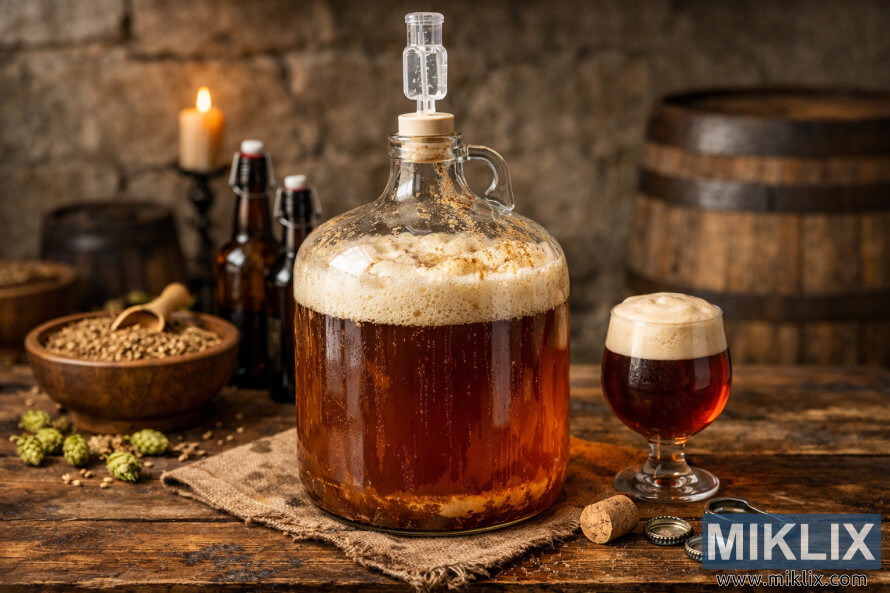
Click or tap the image for more information and higher resolutions.
This review aims to provide practical insights on Wyeast 1214. It covers availability, performance metrics, and the best styles for use. Expect a classic Belgian character without extreme phenolics, making it ideal for a range of Belgian ales, from Witbier to Belgian Dark Strong Ale.
Key Takeaways
- Wyeast 1214 Belgian Abbey Style Ale Yeast (YT-WYBABBEY) is widely sold in U.S. shops like Midwest Supplies.
- The strain shows 74–78% attenuation, medium-low flocculation, and 68–78°F fermentation range.
- It’s alcohol tolerant to about 12% ABV and suits dubbels, tripels, and strong Belgian ales.
- Packs commonly cost near $6.95 and vendors often offer satisfaction guarantees and fast shipping.
- Slow to start — use a starter or healthy pitch to avoid long lag times and ensure clean fermentation.
Why Choose Wyeast 1214 Belgian Abbey Style Ale Yeast for Homebrewing
The Wyeast 1214 reputation among hobbyists is built on its reliable performance and distinct flavor. Wyeast offers this strain with comprehensive learning resources and a satisfaction guarantee. This confidence boost encourages many homebrewers to explore Belgian styles. Retailers like Midwest Supplies make it accessible, showing its widespread adoption in the U.S.
Wyeast 1214 excels in various Belgian yeast applications. It excels in Dubbel, Tripel, Belgian Dark Strong Ale, and even lighter styles like Witbier. Its alcohol tolerance near 12% ABV is ideal for high-gravity batches. Homebrewers value strains that can handle stress while still producing esters, perfect for specialty and spiced beers.
The strain's fruity esters and spicy alcohol character are notable. These traits contribute to a classic Belgian ale flavor profile. This profile complements dark malts, candi sugar, or subtle spices. The manufacturer's assurances and positive retail feedback indicate dependable results, especially with proper oxygenation and a starter for slow starts.
When comparing Wyeast 1214 to other strains, its unique position becomes clear. It falls between highly flocculent, fast-fermenting strains and very phenolic, slow strains. With medium-low flocculation and 74–78% attenuation, it offers a balanced body and finish. Brewers often choose 1214 for its ester-forward profile, alcohol tolerance, and predictable attenuation.
Practical considerations for selection are key. If a brewer desires bold esters and reliable performance for both strong and lighter Belgian styles, Wyeast 1214 is a top choice. For those seeking faster starts or a different phenolic balance, exploring other Belgian strains may be beneficial. The strain's reputation, documented uses, and widespread availability make it a favorite in homebrewing circles.
Strain Profile: Characteristics of Wyeast 1214 Belgian Abbey Style Ale Yeast
Wyeast 1214 is a favorite among homebrewers for its perfect balance of predictable attenuation and lively Belgian character. It tends towards a drier finish, making it ideal for strong ales. The strain's fermentation personality rewards careful temperature and oxygen management. Here are key points on its behavior, flavor, and handling to guide your brewing expectations.
Flocculation, attenuation, and alcohol tolerance
This strain has medium-low flocculation, meaning the yeast stays suspended longer. This results in a fuller mouthfeel and slower clearing compared to strains with high flocculation.
Wyeast 1214's attenuation is in the mid-70s, ranging from 74–78%. This level of fermentability leads to a dry finish, perfect for Belgian dubbels and tripels.
The yeast's alcohol tolerance is around 12%. Many batches reach this level with proper starters and oxygen. However, beers over 12% require careful nutrient management and staged feeding.
Aroma and flavor contributions: esters and spicy notes
This strain produces classic Belgian esters, adding fruity aromas like apple, pear, or light stone fruit. These esters provide a versatile base for many Abbey styles.
Slight spicy phenolics and warm alcohol notes complement the fruitiness, creating a complex flavor profile. The spice enhances the beer's depth without overpowering malt or hop flavors.
Typical fermentation temperature range and behavior
The recommended temperature range for Wyeast 1214 is 68–78°F (20–24°C). Lower temperatures result in subtler esters and more residual sweetness.
Warmer temperatures increase esters and phenolics, speeding up attenuation. However, the strain starts slowly. A starter or good oxygenation can reduce lag and improve reliability.
Preparing a Starter for Wyeast 1214 Belgian Abbey Style Ale Yeast
Wyeast 1214 can be slow to show activity when pitched directly into wort, especially in high-gravity or open fermentations. A well-made Wyeast 1214 starter boosts cell count, improves yeast health, and helps reduce lag phase so fermentation begins on schedule.
Why a starter improves performance with slow-starting strains
Liquid strains age in transit and retail shelves. Making a starter restores vigor by increasing live cells and metabolic activity. Retailers like Midwest Supplies recommend starters for liquid yeast to confirm viability and benefit from yeast starter benefits in tricky batches.
For open or long fermenters, more active yeast prevents bacterial entry and offsets medium-low flocculation, giving a cleaner, more reliable fermentation in Belgian ales.
Step-by-step starter preparation and recommended volumes
Follow these basic steps for how to make a yeast starter that yields reliable results:
- Sanitize a flask or jar, measure water and DME for a starter gravity at 1.030–1.040.
- Boil the wort for 10 minutes, cool to pitching temperature, then pour into the flask.
- Pitch the Wyeast 1214 pack or vial, aerate by shaking or using an aquarium pump, and loosely cap with a sanitized closure.
- Allow the starter to ferment at room temperature, swirl daily to resuspend yeast, and watch for peak activity.
Starter size depends on batch gravity and volume. For typical 5-gallon ales with moderate gravity, aim for a starter that produces target cell counts shown in online calculators. For stronger beers, increase starter volume or use a two-step approach to reach needed cells.
Timing: when to make the starter relative to brew day
Plan the starter so it hits peak krausen 24–48 hours before pitching. Small starters can peak within 24 hours. Larger starters may need 48–72 hours. Start early enough to let the yeast settle a bit, then decant most of the spent wort and pitch the slurry or the whole starter as appropriate.
Proper timing reduces lag phase and ensures yeast arrive active and ready to ferment your wort on schedule.
Pitching Rates and Yeast Management for Best Results
Optimizing pitching rates for Wyeast 1214 is crucial for fermentation quality and flavor. It's essential to achieve balanced yeast cell counts and handle the yeast with care. This involves preparing starters or using multiple packs correctly. This guide will help you understand recommended cell counts, how to calculate pitching rates for stronger beers, and best practices for handling liquid yeast to avoid contamination.
The target cell counts vary based on gravity and beer style. For standard-strength Belgian ales, aim for 0.75–1.5 million cells per mL per degree Plato. For higher gravity beers, increase the target. Use yeast cell counts Belgian ales as a planning metric to decide starter size or number of packs.
- Session or lower-strength ales: aim for the lower end of the range to preserve ester character.
- Dubbels and Tripels: use mid-range cell counts for steady attenuation.
- High ABV (approaching 12%): raise counts significantly and consider multi-step starters.
To calculate pitching rates, use your batch volume and original gravity. Convert gravity to degrees Plato when possible, then multiply by target cells per mL. Many homebrewers use online calculators from reputable vendors to speed this step. For high-ABV pitching adjustments, plan a larger starter volume or multiple generations of propagation to reach the higher cell numbers needed for healthy fermentations.
Correct handling of liquid yeast is key to reducing contamination risk and preserving viability. Sanitize work surfaces and equipment, use sterile flasks and transfer tools, and avoid temperature abuse during storage and transport. When working with Wyeast packs, check the product label for part number YT-WYBABBEY and follow retailer shipping and storage guidance to keep the culture strong.
If you suspect underpitching, consider oxygenating wort more aggressively or feeding nutrients early in fermentation. For slow-starting strains like Wyeast 1214, an adequately sized starter shortens lag phase and supports consistent attenuation. Keep careful notes of yeast cell counts and starter volumes for future batches to refine your approach over time.
Fermentation Temperature Control for Optimal Flavor
Temperature is key for Wyeast 1214 Belgian Abbey Style Ale yeast. It influences the beer's aroma, mouthfeel, and how dry it is. Aim for a temperature within the ideal range to control ester and phenolic development. Even small temperature changes can dramatically alter the beer's flavor, from subtle to bold.
The recommended temperature range is 68–78°F. For a cleaner taste, choose a temperature closer to 68°F. This will result in tighter esters. On the other hand, temperatures closer to 78°F enhance fruity esters and spicy phenolics, leading to fuller attenuation and a drier taste.
Temperature impacts esters, phenolics, and attenuation in a predictable manner. Cooler temperatures result in subtle esters and a softer alcohol presence. Warmer temperatures, however, introduce banana, stone fruit, and clove-like flavors. They also promote faster sugar uptake and higher apparent attenuation.
For homebrewers seeking consistency, temperature control is crucial. Match your beer style to a target within the 68–78°F range. Hold that temperature during primary fermentation for stable flavor.
- Fermentation fridges with digital controllers offer precise control within the 68–78°F range.
- Swamp coolers, when used with a thermostat, are a budget-friendly option for maintaining the ideal temperature.
- Dedicated fermentation chambers from suppliers like Midwest Supplies are ideal for those who value automated staging and consistent results.
Temperature ramps can refine the beer's character. Start with a cooler temperature to limit aggressive esters. Then, gradually increase the temperature towards the end of fermentation to finish sugars and enhance attenuation. Monitor gravity and aroma to determine the best time for a temperature increase.
Keep detailed records of your set points, ambient conditions, and results. Over time, you'll fine-tune the fermentation temperature control needed to achieve the desired balance of esters and phenolics with Wyeast 1214.
Recipe Ideas Suited to Wyeast 1214 Belgian Abbey Style Ale Yeast
Wyeast 1214 brings classic Belgian esters and a spicy phenolic character. It works well with a variety of recipes. Below are practical ideas for brewers looking to use this strain in both strong and lighter Belgian styles.
Belgian dubbel recipes benefit from rich caramel and sugar notes. Aim for a Dubbel recipe Wyeast 1214 with an original gravity of 1.070–1.080. Use Belgian candi syrup or dark candi sugar to enhance color and flavor. Let the yeast's 74–78% attenuation set realistic final gravity and alcohol.
For Tripel builds, aim for higher Tripel gravity targets. Typical OG is near 1.075–1.090, depending on desired ABV. Keep the malt bill light and use simple sugars to drive attenuation. The yeast will generate spicy phenolics while cleaning up complex sugars, delivering a dry, strong finish.
- Belgian Dark Strong Ale and winter spiced beers: pair dark Munich and chocolate malts with toasted specialty grains. Add holiday spices like cassia, clove, or orange peel late in the boil for subtle aroma that complements Belgian Dark Strong Ale 1214 character.
- Spiced winter ale recipes work best when spices are balanced and restrained. Let the yeast’s alcohol warmth and phenolics carry flavor; use nutrients and proper oxygenation for high-gravity batches.
- Witbier and lighter styles: choose softer pilsner and wheat ratios and drop fermentation temp toward the cool end. Witbier yeast choice 1214 will add gentle esters and spice without overwhelming citrus and coriander when managed carefully.
Pitching rates and temperature control matter. For higher OG beers, increase cell counts and oxygenate well. For lighter Belgian styles, pitch normally and ferment at the lower end of Wyeast 1214’s range to tame phenolics and preserve drinkability.
- Example Dubbel outline: OG 1.072, dark candi 1–2 lb, Belgian aromatic malt, 74–78% expected attenuation.
- Example Tripel outline: OG 1.085, simple sugar adjuncts, low specialty malts, watch Tripel gravity targets to hit desired ABV near 8–9% or higher.
- Example winter ale: OG 1.080–1.090, robust dark malts, restrained spice additions, condition longer for smoothing.
Adjust mash temps to control body and final gravity, and plan a starter for larger beers. These recipes and techniques help Wyeast 1214 shine across Dubbel, Tripel, Belgian Dark Strong Ale, and lighter Belgian formats.
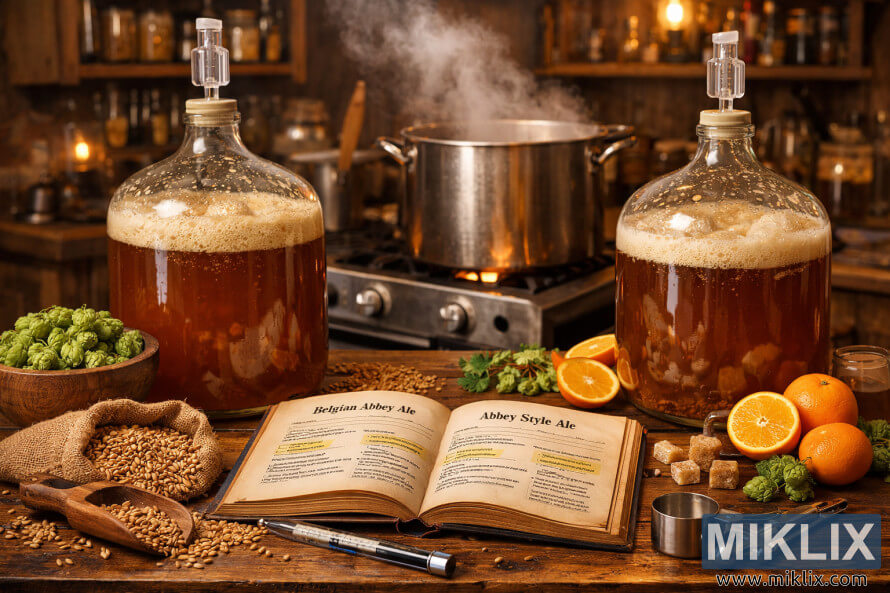
Click or tap the image for more information and higher resolutions.
Wort Composition and Mash Strategies to Complement the Yeast
Creating the perfect wort is key to unlocking Wyeast 1214's spicy and estery flavors. It's about balancing sweetness and alcohol notes. The malt bill, hop choices, and mash schedule are crucial. They shape the beer's body, color, and fermentability to highlight the yeast's strengths.
For the right body and color, choose the right malt. Lighter styles benefit from Pilsner or pale ale malt. Dubbels and Dark Strong Ales need Munich and darker crystal malts for caramel and toffee flavors. Specialty malts should be used sparingly to avoid cloying sweetness.
Medium-low flocculation means focusing on mouthfeel. Adding dextrin malt or higher crystal levels helps retain body. This approach ensures the beer has enough sweetness to balance esters while allowing the yeast to attenuate properly.
For balanced estery and spicy yeast character, moderate hopping is best. Use noble or European aroma hops like Hallertau, Styrian Goldings, Saaz, or Tettnang. These hops add subtle floral and spicy notes that enhance yeast phenolics without overpowering them.
In Belgian styles, keep bitterness in check. Hops should support the palate rather than dominate it. Use hop additions to frame yeast-driven fruit and spice, and reserve late additions or whirlpool hops for a gentle aroma lift.
Mash for Wyeast 1214 with a purpose to influence attenuation and mouthfeel. Lower mash temperatures, around 148–152°F, result in a more fermentable wort. This leads to a drier finish that complements the strain's ester production.
Higher mash temperatures, near 154–158°F, retain more dextrins for fuller mouthfeel. This suits stronger Belgian ales, where weight and balance against higher alcohol and rich malts are desired.
When brewing, consider the mash schedule's impact on attenuation. A single infusion at a chosen temperature offers predictable results. Lower temperatures help reach about 74–78% attenuation. Raise the mash step for extra body in style or aging.
Make straightforward adjustments rather than complex multi-step systems. Small changes to base malt and mash temperature produce reliable shifts in fermentability. These adjustments help Wyeast 1214 deliver the desired profile.
Fermentation Timeline and Signs of Healthy Activity
Wyeast 1214 may start slowly compared to other ale strains. Expect a noticeable lag phase unless you prepare a starter or provide strong oxygenation. Homebrewers who treat it like a slow to start yeast often avoid stress by planning extra time before raising alarms.
Watch for these practical checkpoints to judge activity and progress.
- Day 0–3: Look for krausen formation, CO2 release, or gentle bubbling. If nothing appears by 48–72 hours, the strain may still be within its extended lag window.
- Day 4–10: Primary fermentation length for typical Belgian ales often falls here when gravity and temperature are correct. Stronger worts may take longer.
- Beyond day 10: If gravity stalls or shows little change, consider intervention rather than waiting indefinitely.
Use a gravity check schedule to confirm attenuation toward the expected 74–78%. Take readings every 48–72 hours once activity begins. This gives clear data on whether the yeast is finishing or remaining dormant.
When activity lags past the expected window, try gentle remedies. Rouse yeast by swirling the fermenter or gently stirring a sanitized dip tube. Raise fermentation temperature a few degrees within the recommended 68–78°F range to encourage metabolism.
If rousing and warming fail, prepare an active starter and repitch. Bringing in fresh, vigorous cells can rescue stuck batches. Treat repitching as a last step after verifying oxygenation and nutrient levels.
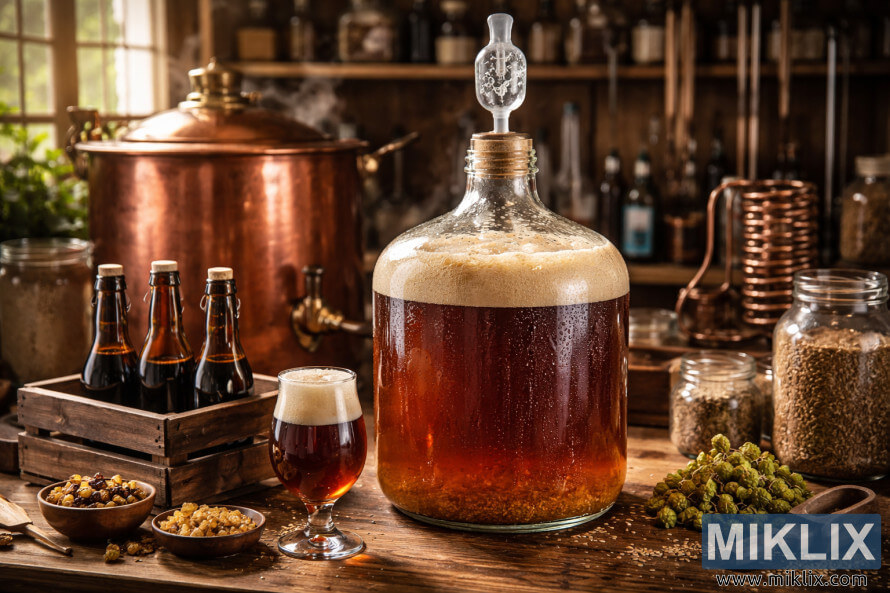
Click or tap the image for more information and higher resolutions.
Attenuation Expectations and Final Gravity Targets
Understanding attenuation is key to setting realistic FG goals for Belgian-style ales with Wyeast 1214. By observing strain behavior and mash fermentability, you can estimate the final gravity and alcohol content of Dubbels, Tripels, and Dark Strong Ales.
The observed attenuation for this strain is near 74–78%. This range serves as a practical starting point for calculating the expected FG of Belgian beers. For instance, an OG of 1.080 with 76% attenuation results in an FG around 1.019. This method allows brewers to set FG targets for Tripels and Dubbels.
When brewing a Tripel, aim for a lower FG target to achieve a drier profile. For high-gravity Dubbels and Dark Strong Ales, set a slightly higher FG target to retain body and malt complexity. Use the 74–78% attenuation range to convert OG into expected FG Belgian numbers and predict ABV.
Attenuation is influenced by several factors, including mash fermentability, pitch rate, fermentation temperature, and oxygenation. Yeast health and starter viability are crucial for reaching the middle of the reported attenuation window. The composition of the wort, such as unfermentable dextrins from specialty malts or adjuncts, will also affect FG.
- Mash: a well-saccharified, lower-temperature mash increases fermentability and lowers FG.
- Pitch and oxygen: adequate cell counts and oxygen at pitch improve attenuation.
- Temperature: warmer, controlled fermentation tends to increase attenuation for this strain.
- Wort makeup: simple sugar additions drive lower FG; complex sugars lift FG.
To hit FG targets for Tripels and Dubbels, calculate using the 74–78% attenuation Wyeast 1214 range, then adjust your recipe or process. Monitor gravity readings during fermentation to confirm your expected FG Belgian values are near your calculations.
Alcohol Tolerance and Brewing High-Gravity Beers
Wyeast 1214 is renowned for its ability to approach the limits of strong Belgian styles. For those aiming to brew beers with 12% ABV, careful planning is essential. The practical ABV limit for Wyeast 1214 is around 12%. Therefore, it's advisable to adopt a staged approach rather than a single, aggressive pitch.
Begin with a robust starter, sized appropriately for the wort's gravity. This approach helps reduce stress on the yeast and enables them to reach the 12% ABV limit more effectively. For larger batches or barrels, consider repitching healthy yeast from a previous batch. This step can significantly bolster the yeast population.
Ensure thorough oxygenation at the time of pitching. Oxygen is crucial for the synthesis of sterols and membranes, which yeast require to survive high alcohol levels. However, it's important to measure the aeration carefully. Excessive oxygen introduced late in fermentation can lead to unwanted off-aromas.
- Utilize yeast nutrients specifically designed for high-gravity beers to provide essential nitrogen, vitamins, and minerals.
- Implement staggered feeding by adding small sugar doses or wort increments during active fermentation. This helps avoid osmotic shock.
- Regularly monitor the gravity to promptly address any issues if fermentation stalls near the Wyeast 1214 ABV limit.
Progressive nutrient additions are vital for maintaining yeast metabolism during extended fermentation periods. Fermentis or White Labs products are popular choices. They offer free amino nitrogen and trace elements necessary for yeast health.
Temperature management is critical when brewing to 12% ABV. Maintain the yeast's preferred temperature range initially, then allow a gentle increase to aid in completing attenuation. Avoid sudden temperature changes, as they can stress the yeast and lead to stuck fermentation.
If fermentation slows, gently rouse the yeast or slightly warm the fermenter. Alternatively, pitching a fresh, active culture or a nutrient-fed slurry can rescue a stuck batch. This approach helps preserve the complex Belgian character of the beer.
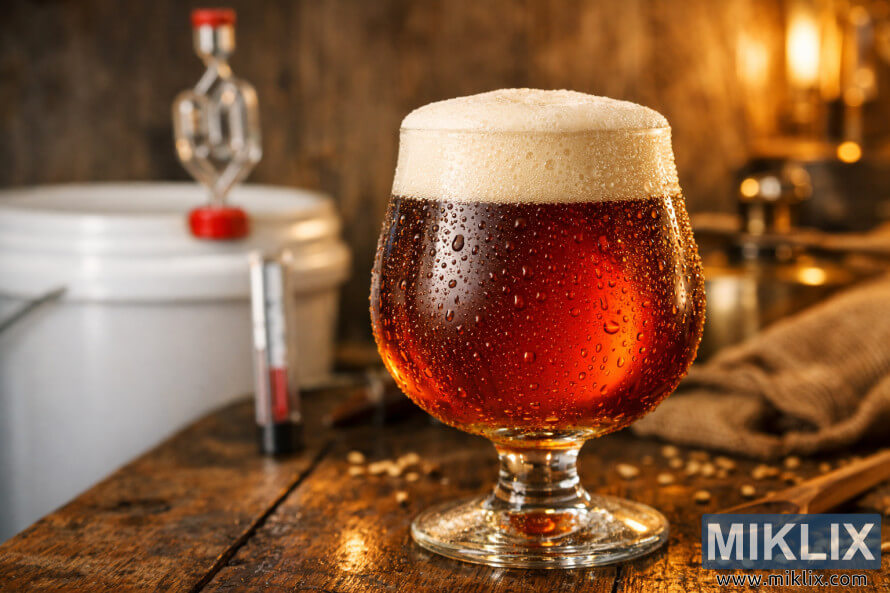
Click or tap the image for more information and higher resolutions.
Flocculation Behavior and Clarification Techniques
Wyeast 1214 exhibits medium-low flocculation, leading to longer yeast suspension during conditioning. This results in slower natural clearing and a richer mouthfeel in many Belgian ales. Grasping yeast settling behavior is crucial for planning conditioning and packaging. It ensures the beer retains its character without excessive haze.
Clarification methods must align with the beer's style and gravity. Strong Belgian beers benefit from extended flavor development, suggesting a gentle clearing approach. Employ targeted steps to enhance clarity while safeguarding esters and phenolics that are hallmark of the style.
- Extended conditioning time: allow several weeks for natural settling with higher gravity beers, especially around 13% ABV targets where yeast activity and conditioning take longer.
- Cold crash Wyeast 1214 to 35–40°F for a few days before packaging to speed sedimentation, then return to serving temperatures as needed.
- Fining methods for Belgian yeast: use gelatin or isinglass near packaging to pull out suspended yeast without stripping flavor. Test on a small batch first.
- Gentle filtration for kegged beers can clarify while retaining mouthfeel. Avoid aggressive polishing filters that remove delicate esters.
When handling beers with medium-low flocculation Wyeast 1214, perform transfers slowly and discard trub. For clearer beer sooner, combine cold crashing with a short fining treatment. Monitor yeast settling behavior over multiple batches to refine timing and achieve consistent results.
Common Fermentation Issues and Troubleshooting
Wyeast 1214 is known for its tolerance, yet brewers may encounter slow starts, off-flavors, or stalled fermentation. A thorough examination of gravity, yeast health, and fermentation temperature is crucial. This approach helps identify the root cause. By following practical steps, brewers can address slow fermentation while maintaining the beer's Belgian essence.
Addressing slow starts is often the first step in resolving early fermentation issues. Creating a healthy starter in advance can significantly increase cell count. It's essential to ensure rapid starter oxygenation at the time of pitching and maintain a consistent wort temperature between 68–78°F. If fermentation activity is sluggish, a brief warming of the fermenter can stimulate yeast activity without causing undue stress.
Here's a quick reference guide for immediate action:
- Verify the original gravity against the current reading with a hydrometer.
- Gently stir the yeast by swirling the fermenter.
- Introduce a nutrient or perform controlled oxygenation only when fermentation activity is vigorous.
Belgian ales can sometimes develop off-flavors that overshadow their intended esters and spicy notes. Look out for solventy fusels, sulfur, or oxidation. Fusels, often a sign of fermentation at too high a temperature or prolonged fermentation at high gravity, can be particularly problematic. Sulfur notes may indicate underpitching or yeast stress. Oxidation and cardboard-like flavors typically result from oxygen exposure post-fermentation, during transfers or bottling.
To avoid these off-flavors, adhere to fundamental practices: ensure adequate cell pitching, control temperature, and maintain strict sanitation. Minimize transfers and avoid splashing after primary fermentation to prevent contamination.
If corrective actions do not yield results and gravity readings remain unchanged, it may be time to repitch. Opt for a robust, alcohol-tolerant strain that complements the Belgian style or a fresh Wyeast culture to avoid drastic flavor shifts. Test yeast viability if possible and pitch a healthy, well-fed starter instead of dry yeast directly into high-alcohol wort.
When blending strains to rescue a batch, proceed with caution. Blending can preserve character if the attenuation and flavor profiles match. Document gravity and flavors before any addition to track the impact. Treat repitching as a measured remedy, not a routine solution.
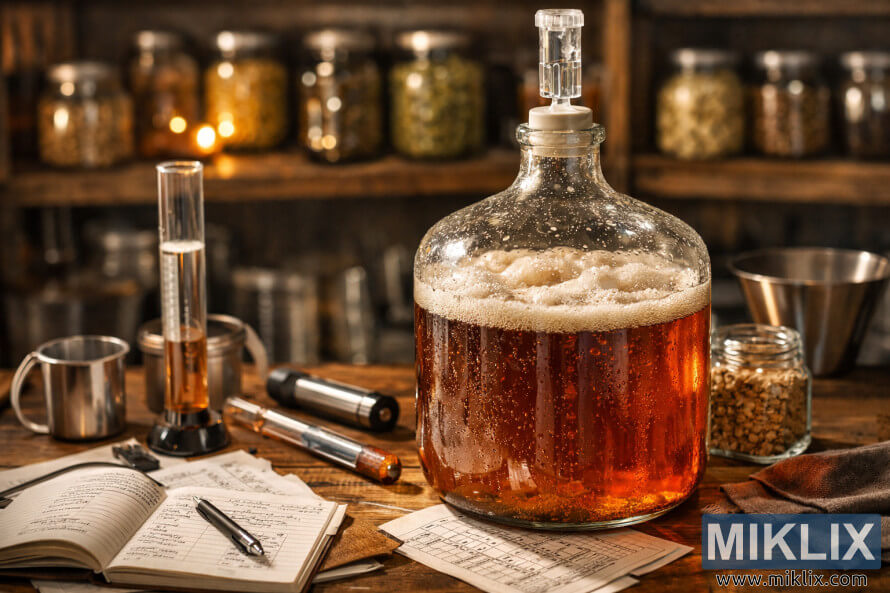
Click or tap the image for more information and higher resolutions.
Packaging, Conditioning, and Carbonation with Wyeast 1214
Wyeast 1214 excels in both bottle conditioning and kegging, offering brewers flexibility in presentation and mouthfeel. The choice between methods depends on desired clarity, carbonation control, and conditioning time. Patience is key for strong Belgian ales, as esters and spicy phenolics need time to blend.
- Bottle conditioning vs kegging: Bottle conditioning is ideal for gentle secondary fermentation, natural carbonation, and gradual flavor development. Kegging, on the other hand, offers a polished pour with precise carbonation, making it perfect for events or taproom service.
- When to pick each: Bottle conditioning is best for cellared Dubbels and Trappist-style ales that improve with age. Kegging is ideal for events or when quick, repeatable carbonation is necessary.
Carbonation levels vary by style. Belgian Dubbel and darker strong ales require lower carbonation. Tripels, however, need higher sparkle to enhance spicy esters and delicate phenols.
- Tripel: Aim for 2.6–3.0+ volumes CO2 to enhance brightness and effervescence. This level keeps the beer lively and accentuates yeast-driven aromas.
- Dubbel: Target roughly 2.2–2.8 volumes CO2 for a rounded mouthfeel and restrained lift. Slightly lower carbonation lets malt richness come forward.
- Other Belgian styles: Witbier and saisons can range from 2.3 to 3.0 volumes depending on desired dryness and bubble size.
Conditioning time varies with gravity and style. Lighter beers need a few weeks after carbonation stabilizes. High-gravity or dark Belgian yeast-forward beers benefit from extended aging to smooth harsh alcohol notes.
- Short conditioning: 2–4 weeks for standard-strength ales that have clear fermentation and stable carbonation.
- Extended conditioning: 2–6 months or longer for Dubbels, Dark Strong Ales, and Tripels at high original gravity. Extended time allows ester and spicy alcohol notes to integrate.
- Practical tip: If you plan to bottle condition Belgian ales, use fresh yeast or prime carefully and store bottles at consistent cellar temperatures to avoid overcarbonation.
When kegging Belgian beers, carbonate to target volumes with CO2 at serving temperatures. Force-carbonation offers speed and control. For hybrid workflows, bulk-condition in a keg then transfer to bottles for aging and tradition-driven presentation.
Keep records of CO2 volumes, conditioning time, and serving temperature. These notes help reproduce success with Wyeast 1214 and refine aging time before release.
Where to Buy and Cost Considerations in the United States
Locating Wyeast 1214 in the United States is simple once you know the right places to look. Wyeast's product pages and major homebrew retailers detail availability, shipping deals, and satisfaction guarantees. Be aware of shipping thresholds for free shipping and seasonal stock fluctuations before making your purchase.
Most retail listings feature the part number YT-WYBABBEY and a standard price of $6.95 per liquid yeast pack. This price is crucial when comparing different vendors. Midwest Supplies and other well-known homebrew retailers offer both single and multi-packs. Keep an eye out for sales if you plan to buy Wyeast 1214 US in bulk.
Liquid yeast requires cold-chain handling and must be used promptly. The importance of shipping liquid yeast and maintaining viability cannot be overstated. Many U.S. sellers opt for overnight or expedited shipping to ensure viability. If shipping time or storage is a concern, consider the pros and cons of liquid versus dry yeast for convenience and shelf life.
Liquid yeast packs preserve the strain's fidelity and characteristic flavor profile associated with Wyeast 1214. Dry alternatives, while more resilient in transit, may not replicate the same esters and phenolics. If you plan to propagate a starter, note that producers often recommend refrigeration and prompt propagation for optimal results when purchasing Wyeast 1214 US.
When buying live yeast, the vendor's reputation and guarantees are paramount. Wyeast and reputable retailers provide support resources, return policies, and sometimes satisfaction guarantees. Product pages frequently include customer feedback, with some listings featuring dozens of reviews. These can be invaluable in making informed decisions when checking Wyeast 1214 reviews and vendor guarantees.
- Check the YT-WYBABBEY price at multiple sellers before purchase.
- Prioritize overnight shipping where possible to protect yeast viability shipping.
- Read vendor reviews and confirm any batch guarantees or return policies.
Conclusion
Wyeast 1214 summary: This liquid Belgian Abbey strain is perfect for dubbels, tripels, and dark strong ales. It offers a classic ester-forward and gently spicy profile. It has medium-low flocculation and reliable attenuation of 74–78%. It performs best in a 68–78°F fermentation window.
It can handle high-gravity recipes up to 12% ABV with proper care. Decide to choose Belgian Abbey yeast like Wyeast 1214 for authentic Abbey character without excessive phenolics. Success depends on good practices: build an adequate starter, hit recommended pitching rates, oxygenate wort, and control temperature during active fermentation.
These steps reduce lag, support complete attenuation, and preserve the fruity-spicy esters that define the style. Availability and cost are straightforward in the United States. Many homebrew retailers such as Midwest Supplies stock Wyeast 1214 (part number YT-WYBABBEY) at typical retail prices near $6.95, with standard shipping and vendor support.
That accessibility, combined with robust manufacturer guidance, makes it practical for homebrewers to source and use this strain reliably. Wyeast 1214 verdict: for brewers aiming for authentic Belgian ales, this strain offers a dependable path to classic flavors. Follow those fundamentals and Wyeast 1214 will deliver the complex, rounded profiles that define Belgian Abbey styles.
FAQ
What is Wyeast 1214 Belgian Abbey Style Ale Yeast and what styles is it best for?
Wyeast 1214, known as YT-WYBABBEY, is a liquid yeast strain. It's known for its pronounced ester profile and slightly spicy alcohol notes. It's ideal for Belgian Dubbels, Tripels, and Belgian Dark Strong Ales. It's also great for specialty spiced/Christmas beers and can be used in Witbier or lighter Belgian styles when fermented cooler.
What are the key strain characteristics like attenuation, flocculation, and alcohol tolerance?
1214 has an attenuation of 74–78% and medium-low flocculation. This means it leaves more yeast in suspension, resulting in a fuller mouthfeel. It can handle up to 12% ABV, making it suitable for many high-gravity Belgian ales. However, careful yeast management is necessary near this limit.
How does fermentation temperature affect flavor with 1214?
The ideal fermentation temperature for 1214 is 68–78°F (20–24°C). Cooler temperatures restrain esters and spicy notes, resulting in a cleaner profile. Warmer temperatures near the upper end enhance fruity esters and spicy alcohol character. Temperature also affects attenuation and perceived dryness.
The strain is said to be slow to start. How should I prepare to avoid a long lag phase?
To avoid a long lag phase, make a properly sized starter. This increases viable cell counts before pitching, especially for high-gravity beers. Ensure good wort oxygenation at pitch and consider ordering yeast with minimal transit time. Retailers like Midwest Supplies and Wyeast recommend planning starters 24–72 hours before brew day.
How large should my starter be for a 5–10 gallon high-gravity Belgian?
Starter size depends on target gravity and batch volume. Use a pitching-rate calculator from vendors or Wyeast charts to hit recommended cells/mL/°P. For beers approaching 12% ABV, plan a larger starter or multiple-step propagation to reach higher cell counts than for a standard-strength ale.
How do I calculate pitching rates and adjust for high-ABV beers?
Calculate base pitching rates (commonly 0.75–1.5 million cells/mL/°P for ales) and increase targets for higher OGs. Use online calculators or seller charts, account for pitch viability, and size your starter accordingly. Consider staggered nutrient additions and oxygenation strategies to support yeast in very high gravity worts.
What handling and sanitation steps are important with liquid Wyeast packs?
Store yeast refrigerated and avoid temperature abuse during shipping. Sanitize surfaces and starter equipment, boil and cool starter wort (1.030–1.040 gravity typical), and use sterile transfer techniques where possible. Follow vendor shipping and storage guidance to preserve viability.
How long is primary fermentation with 1214 and when should I check gravity?
Primary fermentation length varies with gravity and pitch rate. A normal active phase may last several days to a couple of weeks. Check gravity periodically after active fermentation settles—use readings to track toward the expected 74–78% attenuation and avoid premature packaging.
What if fermentation stalls or is extremely slow after pitching?
First, verify gravity readings and confirm pitch viability. Remedies include gently rousing the yeast, raising temperature a few degrees within the strain’s range, or adding an active starter or fresh, alcohol-tolerant yeast. Avoid quick fixes that risk contamination; consult gravity and yeast health before repitching.
How should I target mash and wort composition to work with 1214’s attenuation and mouthfeel?
For drier finishes, match 1214’s 74–78% attenuation with a lower mash temperature (148–152°F) to boost fermentability. For fuller mouthfeel or darker ales, mash warmer (154–158°F) and include Munich, darker crystal, or specialty malts to balance body and residual sweetness given the strain’s medium-low flocculation.
What hop and spice choices pair well with the yeast’s esters and spicy notes?
Use moderate hopping with European or noble varieties that complement fruity esters without overpowering them. For spiced or winter beers, cinnamon, clove, and orange peel can harmonize with the yeast’s spicy alcohol notes; use spices sparingly and balance with malt complexity.
How do I clarify beers fermented with medium-low flocculation yeast like 1214?
Expect slower natural clearing. Improve clarity with extended conditioning, cold crashing for a few days at 35–40°F, and optional fining agents (gelatin, isinglass) if you don’t want to strip character. Time-based conditioning often preserves flavor while gradually improving clarity.
What carbonation levels and conditioning times suit Belgian styles fermented with 1214?
Tripels commonly target 2.6–3.0+ volumes CO2, while Dubbels are often 2.2–2.8 volumes. Strong dark ales can benefit from longer bottle or keg conditioning—weeks to months—to let esters and spicy alcohol notes meld and mellow. Bottle conditioning also develops complexity in traditional Belgian presentations.
Is Wyeast 1214 available in the United States and how much does it cost?
Yes. It’s widely stocked by U.S. homebrew retailers such as Midwest Supplies and other online stores. The product is commonly listed under part number YT-WYBABBEY and frequently retails around $6.95 per liquid pack, though prices and shipping promotions vary by vendor.
Should I buy liquid yeast like 1214 or use a dry alternative?
Liquid yeast offers strain fidelity and the specific ester/phenolic profile homebrewers expect from Wyeast 1214. However, liquid requires cold-chain shipping and starter prep for slow strains. Dry alternatives can be more robust in shipping and storage but may not replicate 1214’s exact Abbey character.
What are common off-flavors associated with misuse of 1214 and how can I avoid them?
Underpitching and poor oxygenation can produce solventy or harsh fusel notes. Fermenting too warm can exaggerate hot alcohols. Prevent problems with correct pitching rates, adequate oxygen at pitch, appropriate fermentation temperatures, and nutrient use for high-gravity worts.
How should I approach high-ABV beers near the strain’s 12% tolerance?
Plan larger starters or multi-step propagation, use yeast nutrients, consider staggered sugar additions, and oxygenate well at the outset. Monitor fermentation closely and be prepared to support yeast health to avoid stuck fermentation as you approach the upper tolerance limit.
Does Wyeast or vendors offer support or guarantees for 1214 purchases?
Wyeast markets 1214 with learning resources for new brewers, and many retailers offer satisfaction guarantees, shipping promotions, and vendor guidance. Check individual store policies and reviews when purchasing to confirm shipping, returns, and support.
Where can I find starter kits, calculators, and more brewing resources for using 1214?
Major homebrew retailers such as Midwest Supplies offer starter kits, calculators, and how-to guides. Wyeast and other vendor pages also provide strain notes and best-practice recommendations for starter sizing, pitching rates, and fermentation control.
Further Reading
If you enjoyed this post, you may also like these suggestions:
- Fermenting Beer with Wyeast 2352-PC Munich Lager II Yeast
- Fermenting Beer with Fermentis SafAle BE-134 Yeast
- Fermenting Beer with CellarScience Cali Yeast