
Fermenting Beer with White Labs WLP940 Mexican Lager Yeast
Published: February 3, 2026 at 5:23:08 PM UTC
White Labs WLP940 Mexican Lager Yeast is a top choice for brewers aiming for clean, crisp lagers. It's sourced from Mexico City and works best at 50°–55°F (10°–13°C). This temperature range ensures the yeast produces light, balanced lagers, with malt and hop flavors clearly defined.
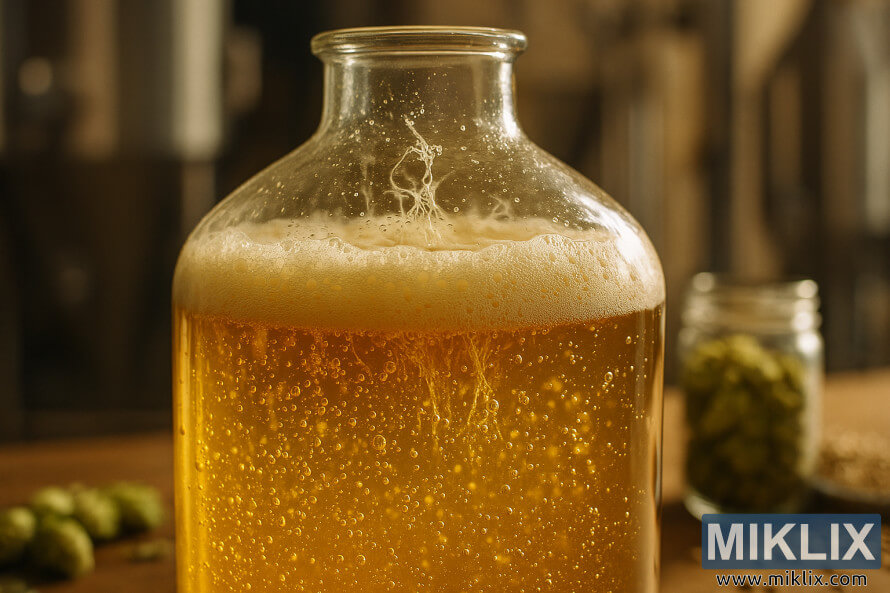
Click or tap the image for more information and higher resolutions.
When fermenting with WLP940, brewers might notice subtle spice or ester notes if temperatures exceed the recommended range or if the pitch rate varies. Modern lager techniques include cold fermentation, warm-pitch methods, or fast-lager approaches like pressure fermentation. Each method influences the yeast's aroma and mouthfeel.
White Labs describes WLP940 as having an attenuation of 70%–78% and medium flocculation. It's available in PurePitch formats and organic options. This versatility makes it ideal for both homebrew and small-scale commercial Mexican lager fermentation. Clarity, consistent attenuation, and approachable alcohol tolerance are key.
Key Takeaways
- White Labs WLP940 Mexican Lager Yeast excels at clean, drinkable lagers when kept at 50°–55°F.
- Fermenting WLP940 warmer can add subtle spice or esters; temperature control is important.
- Attenuation (70%–78%) and medium flocculation suit light lagers and Vienna styles.
- Pitching strategy—cold lager vs warm-pitch—affects required cell count and flavor.
- White Labs provides PurePitch options and resources like a pitch rate calculator for reliable results.
What is White Labs WLP940 Mexican Lager Yeast
White Labs WLP940 Mexican Lager Yeast originates from Mexico City. Its lineage is rooted in commercial brewing lines of major Mexican breweries. This background provides a clean base and subtle spice, making it a favorite among brewers. The consistency and reliable data from the White Labs strain are highly valued.
The yeast's characteristics include a crisp finish and moderate attenuation. It has medium flocculation. Official specs indicate attenuation at 70%–78%, flocculation as medium, and a recommended fermentation temp of 50°–55°F (10°–13°C). Lab reports confirm STA1 QC as negative, ensuring dextrin fermentation is not a concern for most recipes.
Community posts and comparative trials suggest WLP940 is close to Grupo Modelo lineages. Brewers note changes in ester and phenolic expression when temperatures are pushed. This aligns with the strain's heritage, making some brewers experiment with warm-pitch methods while others stick to classic cold lagering.
White Labs recommends WLP940 for Pilsner, Pale Lager, Mexican lager styles, Vienna Lager, Helles, Marzen, and lighter Amber or American Lagers. The best beers for WLP940 are known for their drinkability and clarity. This makes it a popular choice for Mexican lager styles and other crisp lagers where malt and hop notes are secondary.
Why Choose White Labs WLP940 Mexican Lager Yeast for your Brew
WLP940 offers a clear, focused character that many brewers aim for in light lagers. Its flavor profile is clean, with a crisp finish. White Labs designed this strain to enhance malt and hop flavors while minimizing unwanted metabolites. This is achieved when fermented within the recommended temperature range.
Some tasters detect a subtle spice note when fermentation occurs at warmer temperatures. However, this Mexican lager yeast flavor is typically well-controlled under cool, traditional lager conditions. Brewers who experiment with higher temperatures or underpitching may encounter esters or spice. This can alter the beer's character from its typical clean profile.
WLP940's drinkability is a significant advantage. It supports moderate attenuation, resulting in a dry, sessionable mouthfeel. This yeast strain keeps the balance between malt and hop flavors in check. As a result, the beer remains refreshing, with bitterness and malt sweetness playing a subtle background role.
Use these quick comparison points when selecting strain and method.
- WLP940 comparison to W-34/70: WLP940 tends to emphasize a crisper finish and may show more spice at warmer temps, while W-34/70 often tolerates slightly warmer lagers with predictable ester profiles.
- WLP940 vs WLP800: WLP800 series strains include options tuned for pressure or heavier lagers; WLP940 focuses on a clean, Mexican-style lager outcome under classic cold fermentation.
- Practical WLP940 vs W-34/70 and WLP800 choice: pick WLP940 when you want a crisp lager yeast character and top-tier WLP940 drinkability for session beers.
Temperature and pitch rate are the key factors in shaping the Mexican lager yeast flavor. To achieve a clean, low-ester profile, keep fermentations cool and pitch adequately. For brews seeking more aromatic complexity, a controlled warm pitch can be employed. However, this may result in a less balanced malt-hop flavor and a more pronounced spice.
Ideal Fermentation Temperature Range and How to Manage It
White Labs recommends fermenting WLP940 between 50°–55°F (10°–13°C). This range supports the clean, crisp finish typical of Mexican lagers. Brewers fermenting at these temperatures can expect predictable attenuation and minimal ester formation. This is true when pitch rate and oxygenation are properly managed.
Lab-recommended range: 50°–55°F (10°–13°C)
The suggested range is narrow for a reason. Ideal temperatures for WLP940 limit unwanted metabolites and allow steady sugar consumption. It's crucial to maintain stable temperatures rather than experiencing wide swings. Consistency in temperature is as important as the temperature itself in controlling diacetyl and sulfur compounds.
Warm-pitch vs traditional cold fermentation approaches
Warm-pitch WLP940 involves starting warmer to shorten lag and boost early cell growth, then cooling into the lab range. Some brewers report success with a 60–65°F pitch followed by a drop after fermentation begins. Cold fermentation WLP940, on the other hand, involves pitching directly into the 48–55°F zone for a slower, cleaner primary.
Choosing between warm-pitch and cold fermentation comes down to personal preference and goals. Warm-pitch can reduce starter size and speed up fermentation. However, it risks extra esters or spice if temperatures climb above 60°F. Cold pitching reduces these risks but requires a healthy pitch and patience.
Practical tips for home brewers on temperature control
- Use a dedicated fridge or chest freezer with a reliable controller for homebrew temp control. This is the easiest path to hit the recommended WLP940 fermentation temperature and keep it steady.
- Monitor with a probe attached to the fermenter, not just room air. Fermenting wort can run warmer than ambient air during active yeast growth.
- If trying a warm-pitch WLP940 routine, plan a controlled step-down after signs of krausen or within 12–24 hours. That limits ester carryover while preserving the faster start.
- For small lots, consider insulating blankets or a water bath to smooth temperature swings if a controller is unavailable.
- When experimenting, change only one variable at a time. Pitch rate and temperature interact; adjusting both at once makes results hard to interpret.
- Pressure-fermenting or spunding can let some brewers ferment warmer with fewer off-flavors, but use pressure-capable gear and follow safety guidelines.
Controlling fermentation temperature for WLP940 is a practical skill. Consistent temperatures in the lab-recommended range yield the most repeatable results. Use the methods above to match your goals, whether you choose cold fermentation WLP940 for a pristine lager or a warm-pitch WLP940 approach to accelerate the process.
Attenuation, Flocculation, and Alcohol Tolerance Explained
Understanding WLP940's fermentation behavior is key to predicting mouthfeel, clarity, and alcohol content. Its lab numbers guide your recipe choices and conditioning steps. This ensures you reach the desired final gravity without surprises.
Attenuation expectations and effect on final gravity
White Labs reports WLP940 attenuation at 70%–78%. This range results in a moderate to fairly dry finish, depending on original gravity and mash profile. When planning a Mexican lager, calculate the expected FG from your starting gravity and target attenuation. This helps dial in the body and drinkability.
Attenuation is influenced by pitch rate and temperature. Proper pitching and steady fermentation near the recommended range increase the chances of hitting the expected FG.
Medium flocculation behavior and clarification techniques
WLP940 flocculation is medium, leading to steady yeast settling but potentially leaving beer hazy. For a clear Mexican lager, cold lagering or cold crashing speeds up sedimentation and brightens the beer.
- Use fining agents like gelatin or isinglass for faster clearing.
- Filtration or extended conditioning gives clearer results when yeast flocculation medium is only moderate.
- Be aware that pressurized conditioning can slow settling; allow more time if carbonating under pressure.
Alcohol tolerance and recipe planning
White Labs rates WLP940 ABV tolerance as medium, roughly 5–10%. When designing stronger lagers, respect the WLP940 alcohol limit. Typical Mexican lagers sit well below this ceiling, making WLP940 ABV tolerance suitable for those styles.
For high original gravities or targets above about 10% ABV, increase pitch rates, oxygenate well, or build a starter to avoid stress. In recipe planning Mexican lager, keep OG and mash choices aligned with expected attenuation and the strain's tolerance. This prevents sluggish fermentations.
Pitch Rate Guidance and When to Adjust
Choosing the right pitching rate is crucial for the fermentation timeline and flavor of a Mexican lager with WLP940. Start with industry guidelines, then adjust based on original gravity, yeast type, and desired flavor. A pitch rate calculator from White Labs or other tools ensures accurate starter or PurePitch orders.
For lagers, aim for 1.5–2.0 million cells per mL per °Plato. For worts up to 15°Plato, use ~1.5 million cells. For worts above 15°Plato, increase to ~2.0 million cells. PurePitch or high-viability packs allow for fewer cells while maintaining performance.
Industry lager pitch rate guidelines and Plato considerations
Before calculating cell needs, measure your gravity in Plato or convert from specific gravity. The 1.5–2 million cells/mL/°Plato rule adjusts with volume and strength. Use the White Labs pitch rate calculator or a trusted tool to avoid errors when making a starter or ordering PurePitch.
When to use lager vs warm pitch methods for WLP940
Opt for the traditional cold lager pitch for a clean, delicate flavor. This method requires a higher lager pitch rate and longer conditioning. Warm pitching, at 60–65°F (15–18°C), speeds up the lag and growth phases. It's used when time is short, starter size is limited, or PurePitch is necessary.
Decide based on equipment, schedule, and flavor goals. Both methods work with WLP940, but consistent cell counts help isolate temperature effects.
How underpitching or overpitching affects flavor
Underpitching leads to a long lag phase, yeast stress, and higher fusel esters or diacetyl. These issues worsen with warm fermentation. Overpitching, on the other hand, speeds fermentation and reduces ester production. However, it can flatten complexity and alter mouthfeel.
Monitor WLP940 pitch impact by tracking gravity, aroma, and yeast activity. If you see extended lag or unusual esters, reassess cell counts, oxygenation, and temperature. Avoid changing multiple variables at once.
Oxygenation, Yeast Health, and Viability Considerations
Ensuring proper oxygenation and handling is crucial for a successful lager fermentation. Brewers who adhere to best practices for oxygenation give WLP940 a healthy start. This reduces stress on cells and minimizes the risk of off-flavors. This guide will cover essential steps before pitching, methods for assessing yeast viability, and tips for yeast harvesting for future batches.
Many homebrewers oxygenate their wort after chilling. It's important to introduce oxygen gently and evenly. This allows the yeast to complete early cell divisions efficiently. For warm-pitching, sufficient oxygen at pitching is key for quick biomass buildup and vigorous fermentation.
When oxygenating, follow simple guidelines. Use pure oxygen briefly and check dissolved oxygen levels if possible. For shaking or splashing, avoid excessive foam to prevent contamination. Keeping records of oxygenation helps diagnose fermentation vigor later.
PurePitch offers consistent glycogen reserves and predictable performance. Packaged PurePitch often has higher viability than bulk slurries. White Labs suggests lower pitch counts for consistent results. Always test viability before reusing to ensure live cells.
To assess WLP940 viability, use a quick viability test or a hemocytometer count. Track live cells per milliliter and generations for repitching. Underestimating viability can lead to lagging or stressed fermentations, causing off-flavors and slow attenuation.
When harvesting yeast, target the middle of the cake after a cold crash. Use clean tools and store the yeast cold and oxygen-free. Note the batch number, days in beer, and generations seen before reusing lager yeast.
- Check viability before reuse with simple stains or a cell count.
- Limit generations to avoid mutation and loss of performance.
- Consider propagation for larger brews rather than relying only on repitch WLP940 straight from a small harvest.
Repitching strategies vary for lagers versus ales. Lagers often require fresher yeast or stepped propagation for target counts. Monitor yeast viability and adjust pitch rates based on measured counts, not assumptions.
Keeping records improves outcomes. Note oxygenation time, method, viability results, and any PurePitch advantages observed. Good records facilitate replicating success and recognizing when reusing lager yeast is suitable for quality and consistency.
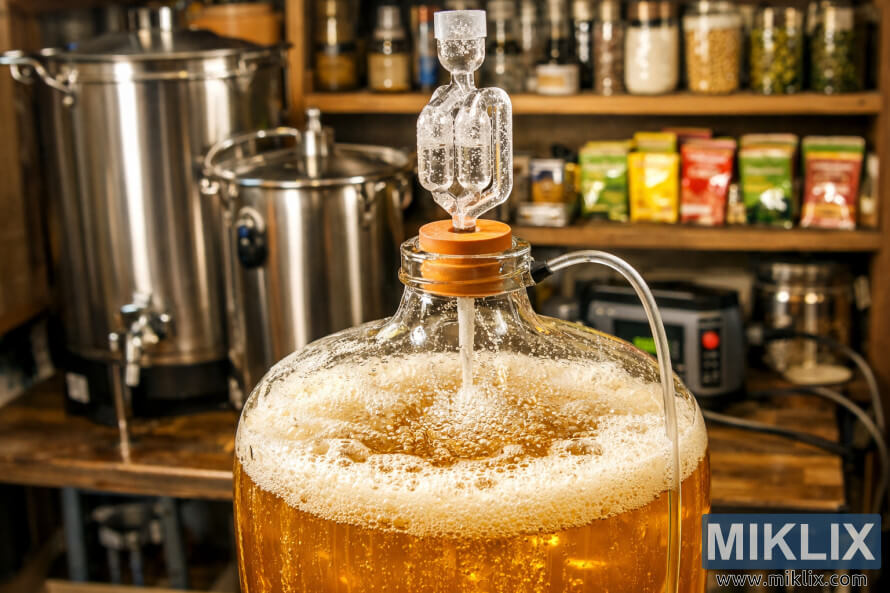
Click or tap the image for more information and higher resolutions.
Fermentation Schedules and Diacetyl Rest Strategies
Establishing a precise WLP940 fermentation schedule is crucial for brewers aiming to control flavor and clarity. Begin fermentation within the White Labs recommended range of 50°–55°F (10°–13°C). Monitor gravity daily to adjust if fermentation deviates from the planned lager timeline.
Typically, allow a free rise as activity slows, aiming for 50–60% attenuation before a rest. WLP940 ferments quickly at about 15°C, so monitoring gravity is more important than adhering to a strict calendar. Adjust the lager timeline based on observed attenuation and flavor checks.
Correctly performing a diacetyl rest is key to avoiding buttery off-flavors. Raise the temperature to about 18°C (65°F) once primary attenuation nears the target. Maintain this temperature until sensory checks and gravity confirm diacetyl has diminished. The diacetyl rest schedule can vary from two to six days, depending on yeast activity.
For a successful diacetyl rest with WLP940, ensure a steady gravity for 24–48 hours before cooling. If necessary, gently rouse the yeast to reabsorb diacetyl. Regular sampling during the rest is essential for determining when to proceed.
Post-diaceyl rest, gradually lower temperatures for cold conditioning. Aim to reduce by about 2–3°C (4–5°F) per day until near 2°C (35°F). This lagering schedule promotes yeast flocculation and enhances clarity. Extended cold conditioning refines the clean, crisp profile associated with this strain.
Effective lager diacetyl management requires patience during the cold phase. Pressure-fermented beers may clear more slowly, necessitating an extended lagering period if haze or residual flavors persist. Align your cooling plan with both gravity readings and sensory evaluation.
- Quick checklist for performing diacetyl rest:
- Start rest at ~18°C after ~50–60% attenuation.
- Hold 2–6 days, check gravity and aroma daily.
- Only begin cooling when diacetyl is not detectable.
- Cooling and conditioning:
- Drop temperature 2–3°C per day to ~2°C for lagering.
- Maintain cold conditioning for weeks to months as needed.
Adhere to a written lagering schedule WLP940 based on gravity targets, not fixed days. This approach minimizes guesswork and enhances consistency across batches fermented at varying lager temps.
How Fermentation Temperature Influences Flavor with WLP940
The temperature you choose for White Labs WLP940 significantly impacts its flavor profile. Staying within the lab-recommended range, WLP940 typically showcases a clean lager taste and a crisp yeast character. However, if you elevate the temperature or employ warm-pitch methods, esters and spice can become more pronounced.
Opting for low-temp fermentation with WLP940, around 50°–55°F (10°–13°C), minimizes metabolite production. This results in fewer esters and lower diacetyl levels. Such conditions support a bright, clean lager flavor and a crisp yeast profile. This allows malt and hops to take a backseat.
Conversely, fermenting WLP940 at warmer temperatures, above 60°F, can alter this balance. Fruity esters and light peppery spice become more apparent. Some brewers embrace these flavors for hybrid lagers, while others seek to avoid them for traditional Mexican-style lagers.
The effects of warm-pitching WLP940 depend on several factors, including pitch rate, oxygen levels, and timing. Underpitching or inconsistent oxygenation can enhance esters and spice. However, controlled warm-pitch methods aim to balance yeast activity, keeping esters in check. Yet, results can vary from batch to batch.
Community results and experiments with WLP940 reveal mixed outcomes due to variable conditions. Many xBmt and forum threads highlight the complexity of interactions between pitch rate and temperature. Consistent pitch, oxygenation, and sugar levels in tests provide clearer insights.
- Try a controlled split-batch: same wort, split yeast and temp. This isolates WLP940 warm-pitch effects.
- Record pitch rate vs temperature to track trends across brews.
- Use low-temp fermentation WLP940 for the clean lager flavor most recipes expect.
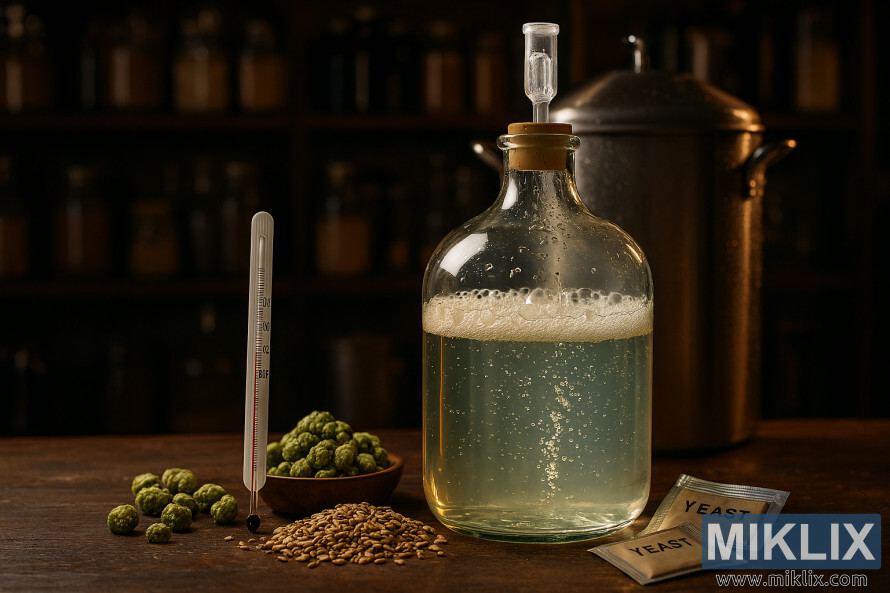
Click or tap the image for more information and higher resolutions.
Using Pressure and Fast-Lager Techniques with WLP940
Fast-lagering by trapping CO2 can alter how WLP940 behaves. Brewers often test spunding WLP940 to create a high-pressure lager environment. This method holds fermentation gases near the yeast. It's a practical approach with expected gains and cautions for fermenting under pressure.
High-pressure basics and theory
Spunding captures CO2 to increase tank pressure, usually around 1 bar (15 psi). This higher pressure limits yeast growth and reduces volatile metabolite production. It can blunt ester and fusel formation seen at higher temperatures.
For some strains, a controlled high-pressure lager run speeds up attenuation while keeping flavors clean.
Potential benefits for warmer fermentations
Pressure fermentation benefits include shorter primary times and lower ester output. This allows for warmer fermentation without off-flavors. Homebrewers report fermenting WLP940 at 18–20°C under set pressure, then cooling for conditioning.
Results are mixed; some see clear WLP940 benefits from spunding, while others note different curves compared with W34/70.
Practical cautions on clarity and conditioning
Clarity under pressure is a concern. Beer fermented under pressure tends to clear slower. WLP940’s medium flocculation means moderate settling, not instant brightening.
Plan extra time for WLP940 conditioning and extended lagering when spunding.
- Monitor gravity closely; pressure can change fermentation curves and slow apparent attenuation.
- Use a pressure-capable fermenter and safety relief to avoid equipment issues.
- Be prepared for longer cold conditioning to reach desired clarity under pressure.
Balancing risks and rewards
Pressure fermentation cautions include altered yeast behavior and the potential need for different transfer techniques. Spunded beers can trap CO2-soluble proteins and yeast, which may demand careful racking. Some brewers pair spunding with more flocculent strains; others accept longer conditioning for a bright finish.
Start with small batches, track temps and pressure, and compare mouthfeel and ester levels. If you want to ferment warmer without off-flavors, spunding WLP940 can be useful. However, expect variable results and allow time for proper WLP940 conditioning.
Recipe Building: Malt, Hops, and Water Profiles for Mexican Lager
Creating a Mexican lager with White Labs WLP940 requires a well-thought-out malt, hop, and water strategy. The goal is to achieve a light, crisp body that showcases the yeast's clean fermentation. This body should highlight subtle malt flavors and a restrained bitterness. Below are practical choices and adjustments to match WLP940’s strengths.
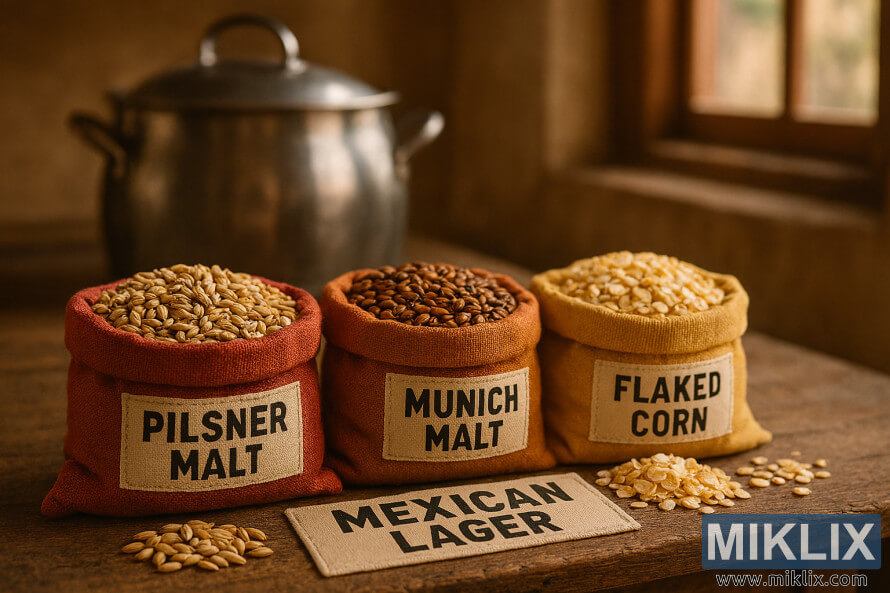
Click or tap the image for more information and higher resolutions.
Malt choices for light, Vienna, and pale lagers
For a pale, dry Mexican lager, use a base of well-modified pilsner malt. This keeps the malt bill light and fermentable. For Vienna-style beers, blend Vienna lager malt with pilsner at 10–30% to add toast and color without heavy sweetness.
For amber or Märzen variants, add small amounts of Munich or light caramel malts. Keep specialty malts low to preserve WLP940’s clean finish. Adjust mash temperature down slightly for drier outcomes that match the yeast’s attenuation.
Hops selection to support WLP940’s clean profile
Choose hops that stay in the background and support drinkability. Noble hops Mexican lager cooks well with Saaz, Hallertauer, or Cluster for subtle aroma. Use neutral bittering hops like Magnum or Perle for clean bitterness.
Limit late additions and dry hopping to avoid masking the yeast’s crisp character. Pick hop choices WLP940 that favor low-to-moderate IBUs and let the malt bill and water shine through.
Water chemistry notes to accentuate crispness
Water adjustments influence perceived dryness and hop bite. Aim for a chloride sulfate ratio lager that favors sulfate to accentuate crispness and hop snap. For light pale lagers, keep mineral additions modest to avoid harshness.
For Vienna-style or slightly fuller beers, raise chloride a bit to enhance malt perception while still using water for WLP940 that supports a clean finish. Match mash pH and carbonate levels to the base water and the chosen malt profile for balanced results.
- Example pale lager base: 100% pilsner or 90% pilsner + 10% Vienna lager malt for color.
- Example Vienna: 70–80% pilsner + 20–30% Vienna lager malt, small Munich for complexity.
- Hops for Mexican lager: Saaz, Hallertauer, Cluster for aroma; Magnum or Perle for bittering.
- Water chemistry Mexican lager: target moderate sulfate, low-to-moderate chloride; adjust to mash pH 5.2–5.4.
- Set OG to match pitch rate guidance and expected attenuation for a drier finish.
- Use a mash temperature near 148–152°F (64–67°C) for lighter body when brewing pale lagers.
- Keep late hops minimal and emphasize bittering and first-wort hops for balance.
These guidelines help you assemble a Mexican lager malt bill, select noble hops Mexican lager styles favor, and dial in water chemistry Mexican lager needs. This way, WLP940 can produce its signature clean, drinkable profile.
Troubleshooting Common Issues with WLP940 Fermentations
WLP940 can produce clean, crisp lagers with proper management. This guide helps identify common problems and offers practical solutions. Use the fermentation troubleshooting checklist to quickly find and fix issues, ensuring your beers stay on track.
Slow or stuck fermentation causes and fixes
Slow fermentation often stems from low pitch rates, cold wort, or poor yeast viability. First, check the pitch rate of WLP940 and confirm cell counts using a calculator or viability test.
If fermentation stalls, try rousing the yeast and gently increasing the temperature into the lager range. Oxygenate and add nutrients if the brew shows signs of stress. For severe cases, consider a healthy starter or repitch with fresh White Labs yeast as part of stuck fermentation fixes.
Off-flavors: diacetyl, esters, sulfur — identification and remedies
Diacetyl manifests as buttery or butterscotch. To remedy diacetyl, raise the temperature for 2–6 days to allow yeast to reabsorb it.
Esters and spicy notes occur when fermentation is warm or yeast are stressed. To reduce esters, maintain the recommended temperature range, increase the pitch rate, and ensure proper oxygenation at pitching.
Sulfur issues are common early in lager ferments. Extended cold conditioning and time usually reduce these aromas. If sulfur persists, verify oxygen and yeast health during primary fermentation and allow additional maturation.
When to check pitch rate, oxygen, and temperature
- Check pitch rate WLP940 before brewing. Underpitching at low temps is a frequent cause of WLP940 slow fermentation and uneven attenuation.
- Measure dissolved oxygen right after cooling and prior to pitching. Know when to check oxygen: any time a batch shows delayed start or sluggish gravity drop.
- Monitor temperature continuously. Small deviations above 60°F can create WLP940 off-flavors; small controlled increases help recover stuck ferments.
Use the fermentation troubleshooting checklist to log gravity, temperatures, pitch details, and oxygen levels. Compare batches to spot patterns and refine routines. Careful records and timely fixes keep Mexican lager brews clean and consistent.
Case Studies and Community Results Using WLP940
Homebrewers and small breweries have conducted in-depth tests on White Labs WLP940 Mexican lager yeast. These tests range from tightly controlled experiments to casual forum trials. The summaries below compile xBmt WLP940 results, community trials Mexican lager yeast notes, and hands-on observations. They aim to provide a comprehensive overview without making definitive conclusions.
- Controlled xBmt findings: Several xBmt WLP940 results indicate mixed outcomes when temperature and pitch rate are altered together. Some trials report clear sensory shifts, while others see minimal difference when variables are isolated. These accounts highlight the need for matched cell counts and consistent oxygenation in WLP940 experiments.
- Warm ferment notes: WLP940 warm ferment anecdotes describe faster attenuation around 15°C with acceptable clarity after a diacetyl rest. Other brewers note esters and a touch of spice above 60°F. These sensory notes suggest a temperature threshold where character shifts become noticeable.
- Community trials: Community trials Mexican lager yeast often contrast lab guidance with practical shortcuts like warm-pitch methods. Forum reports emphasize matching pitching rates to temperature to avoid confounding variables. The community data include Mexican lager warm pitch outcomes and examples where pressurization did not consistently change results.
- Pitching lessons from forums: Forum learnings WLP940 frequently recommend normalizing pitch rate when testing temperature. Many users argue that unequal pitching confuses comparisons, urging either equal cell counts or warm-pitch equivalence. This allows for clearer interactions between pitch rate and temperature WLP940.
Practical takeaways from these postings include replication of tests, careful recording of variables, and use of sensory panels for cross-checking. Forum learnings WLP940 and pitching lessons both stress the importance of repeatable methods when exploring WLP940 experiments.
Several threads collate xBmt WLP940 results alongside tasting notes and protocol details. Brewers sharing community trials Mexican lager yeast data tend to include fermentation profiles, yeast handling steps, and outcomes labeled as Mexican lager warm pitch outcomes. This allows for method comparison.
Anecdotal reports and structured experiments together form a useful evidence set. WLP940 warm ferment anecdotes and sensory notes warm WLP940 entries supply descriptive detail. Pitch rate vs temperature WLP940 remains a common test axis in these community conversations.

Click or tap the image for more information and higher resolutions.
Equipment and Sanitation Checklist for Lager Fermentations
A detailed checklist is essential for maintaining consistency and cleanliness in lager batches, especially when using WLP940. It emphasizes the importance of reliable temperature control, the use of pressure-capable tanks for advanced techniques, and rigorous sanitation to safeguard the yeast's character. Investing in the right equipment can prevent common issues and preserve the crisp flavor that many brewers aim for.
Temperature control equipment is paramount. Fermentation fridges or freezers with a temperature controller are necessary to maintain a temperature range of 50°–55°F (10°–13°C). A glycol chiller provides even more precision, ideal for kegerator setups and multi-fermenter systems. Even those using warm-pitch methods benefit from a controlled temperature step-down.
Pressure-capable fermenters open up new possibilities not available in open vessels. A pressure fermenter WLP940 or a spunding fermenter allows for fast-lager methods and warmer fermentation temperatures, reducing ester production. However, expect slower clearing and plan for additional conditioning time.
- Ensure the tank's pressure ratings match your needs and use a reliable spunding valve for pressurized fermentation.
- Opt for a closed fermenter for lager to prevent oxygen ingress and protect the yeast's clean profile.
- For traditional lagers, open buckets or conicals are suitable, but they cannot support spunding techniques.
Sanitation is crucial in lager brewing. Use no-rinse sanitizers like Star San for all equipment and tools. Only rinse when a sanitizer's instructions require it. Minimize splashing after fermentation starts to avoid oxidation.
Proper yeast handling is vital for maintaining culture viability and flavor. Follow White Labs' storage guidelines for PurePitch or wet yeast vials. Store yeast in sanitized containers, limit air exposure, and keep a log of generations when repitching.
- Sanitize all surfaces that come into contact with beer. Wipe and drain; avoid re-contamination with unclean hands or tools.
- Check seals, gaskets, and tri-clamp fittings for leaks before pressurizing any vessel.
- Install a reliable temperature controller for fermenter sensor close to the wort or jacket for accurate readings.
- Schedule a glycol chiller maintenance check if it's crucial for tight temperature control.
Combine this equipment and routine with meticulous record-keeping. Track fermentation curves, pressure events, and sanitation steps to reproduce successes and identify issues. Strong equipment choices and meticulous sanitation practices ensure predictable and clean WLP940 lager fermentations.
Scaling Up: From Homebrew to Small Commercial Batches
Transitioning from a five-gallon setup to small commercial volumes requires a different approach with WLP940. The yeast that performed well at home needs careful planning for scaling. It's essential to align recipe targets with WLP940's known behavior and plan propagation and controls in advance.
- Use professional calculators to convert Plato and volume into a target commercial pitch rate. This prevents underpitching at cold lager temperatures, where higher cell counts are often required.
- Plan step-up starters or propagated cultures rather than a single large starter. A staged yeast propagation lager approach improves cell health and reduces stress on WLP940.
- Consider White Labs PurePitch or lab-grown slurries for reliable viability and consistent counts when scaling.
Consistent temperature management at larger volumes
- Install glycol jackets or industrial chillers to provide commercial temperature control. Large tanks have more thermal mass and respond slowly to setpoint changes.
- Map tank temperatures and maintain scaling temperature consistency across vessels. Uniform control avoids batch variation and helps WLP940 hit expected attenuation.
- Account for gradual step-downs for diacetyl rests and longer lagering times so fermenter cooling for lagers stays predictable.
Quality control: gravity tracking, viability checks, and sensory panels
- Implement gravity tracking throughout fermentation. Regular specific gravity readings validate progress and guide diacetyl rests and lagering windows.
- Perform yeast viability monitoring before pitching and prior to repitching. Use hemocytometers and viability stains or trusted lab services to confirm cell counts.
- Run sensory panels on pilot batches to compare mouthfeel, ester levels, and clarity. QC brewing WLP940 benefits from structured tasting notes and repeatable protocols.
Document each batch with pitch records, temperature logs, and gravity curves. This information aids in troubleshooting and ensures consistent results as batch sizes increase. Adhering to good yeast propagation lager practices, strict commercial temperature control, and routine QC ensures that scaled WLP940 beers meet their intended profile.
Additional Resources and White Labs References
Below are curated resources to help brewers work confidently with WLP940. Use official data and community reports together when planning batches. Start with manufacturer specs and extend learning through calculators and forum experiments for practical context.
Official pages give the baseline details every brewer needs. The WLP940 product page lists attenuation, flocculation, alcohol tolerance, and recommended fermentation temperature. White Labs yeast bank entries and catalogs include related lager strains and R&D articles that expand on pitch strategies and lager techniques.
- Pitch guidance: consult the White Labs pitch rate calculator for target cell counts. Compare results with the yeastman calculator to size starters or adjust for PurePitch WLP940 packets.
- PurePitch: White Labs’ PurePitch WLP940 offers high viability and predictable performance. Documentation explains how to alter pitch rates for PurePitch versus slurry or harvested yeast.
- Technical references: White Labs yeast bank material and product notes provide STA1 status, part numbers, and lab-verified behavior to use in recipe planning.
Community experiments illuminate real-world behavior beyond lab numbers. WLP940 community threads and xBmt WLP940 posts show warm-pitch trials, spunding reports, and pitch-rate outcomes that help refine methods. Treat forum findings as anecdotal evidence to test at small scale before wider adoption.
- Reading list: seek White Labs R&D articles and broader lager brewing resources for guidance on diacetyl rests, temperature ramps, and pressure techniques.
- Tools: use both the pitch rate calculator and yeastman calculator alongside lab specs to set reliable starter volumes or cell counts per °Plato.
- Discussion: monitor WLP940 community threads for updates on performance, troubleshooting notes, and experimental designs from other brewers.
Combine manufacturer information, calculator outputs, and community reports to tailor fermentation plans. This layered approach helps dial in yeast handling, choose appropriate pitch rates, and adapt lager brewing resources to the goals of each recipe.
Conclusion
White Labs highlights WLP940 as a clean, crisp Mexican lager yeast. It thrives at 50°–55°F (10°–13°C). Lab data reveal 70%–78% attenuation, medium flocculation, and a moderate alcohol tolerance of 5–10%. This makes it ideal for light lagers and Vienna-style beers.
Experiences from the brewing community and controlled trials emphasize the importance of fermenting WLP940 correctly. Paying attention to pitch rate and temperature is crucial. Warmer pitches or higher temperatures can introduce subtle spice or ester notes. However, strict cold fermentation and proper oxygenation are key to maintaining a neutral, highly drinkable character.
When brewing with WLP940, brewers have various options. They can opt for traditional cold lagering, warm-pitch methods, or pressure-assisted fast-lager techniques. Following White Labs’ pitch rate guidance, monitoring viability, and controlling temperature are essential. This ensures the clean, crisp results WLP940 is renowned for.
FAQ
What is White Labs WLP940 Mexican Lager Yeast and where does it come from?
WLP940 Mexican Lager Yeast is a core strain from White Labs (Part No. WLP940). It originates from Mexico City and is linked to Grupo Modelo lineage. White Labs describes it as a clean, drinkable lager strain. It's suitable for traditional and light-style lagers, available in PurePitch and organic options.
What are the lab-specified fermentation temperature and sensory expectations for WLP940?
White Labs recommends fermenting WLP940 between 50°–55°F (10°–13°C). This range helps achieve a clean, crisp finish with malt and hop flavors in the background. Fermenting in this range minimizes esters, resulting in a highly drinkable beer.
What attenuation, flocculation, and alcohol tolerance should I expect?
Expect 70%–78% attenuation and medium flocculation with WLP940. It has a medium alcohol tolerance, roughly between 5%–10% ABV. This attenuation produces a moderate-to-dry finish, depending on OG and mash profile. Medium flocculation typically requires cold conditioning or fining for bright clarity.
For which beer styles is WLP940 recommended?
White Labs recommends WLP940 for a wide range of lagers. This includes Pale Lager, Pilsner, Vienna, Amber Lager, Marzen, Helles, Mexican lager styles, Schwarzbier, Bock, and Doppelbock. It's particularly suited to lighter, highly drinkable lagers where a crisp finish is desired.
How does fermentation temperature influence WLP940’s flavor?
At lab-recommended cool temperatures (50°–55°F), WLP940 produces a clean, restrained profile. Warmer fermentations, especially above ~60°F (15–16°C), can increase ester and subtle spicy notes. The strain's expression is sensitive to the temperature-pitch interaction, so control and consistency matter.
What is the difference between warm-pitch and traditional cold fermentation for WLP940?
Traditional cold fermentation starts in the 48–55°F range with higher pitch rates for a cleaner result and fewer metabolites. Warm-pitch methods involve pitching warmer (60–65°F / 15–18°C) to shorten lag time and cell growth, then cooling to lager temps. This reduces required cell counts but can risk more esters if not managed carefully.
How should I set pitch rates for WLP940?
Industry lager guidance recommends about 1.5–2 million cells/mL/°Plato for cold lagers. Use higher end for OGs >15°Plato. White Labs provides a pitch rate calculator and PurePitch options; PurePitch products often require lower cell counts because of higher viability and glycogen reserves. Match pitch strategy to whether you use traditional cold or warm-pitch methods.
What happens if I underpitch or overpitch WLP940?
Underpitching can extend lag, stress yeast, and raise ester or diacetyl risk—effects that are amplified at higher temperatures. Overpitching shortens fermentation and reduces ester production but may yield a less complex profile. Maintain consistent cell counts when running comparisons or experiments.
How important is oxygenation and yeast viability before pitching?
Proper oxygenation after chilling wort is essential for healthy yeast growth and to avoid stressed fermentations that produce off-flavors. Check viability with a hemocytometer or viability stain when repitching. PurePitch yeast typically has higher viability; still verify cell counts if propagating or repitching.
What are practical temperature-control tips for homebrewers using WLP940?
Use a dedicated fermentation fridge or chest freezer with a reliable controller to hold 50°–55°F. If trying warm-pitch, pitch at 60–65°F then step down after ~12–24 hours. Monitor temps closely and oxygenate appropriately. For spunding/fast-lager techniques, use pressure-capable vessels and rated fittings.
How should I handle diacetyl rest and lagering with WLP940?
Perform a diacetyl rest by raising fermentation to ~65°F (18°C) when you hit ~50–60% attenuation for 2–6 days to allow yeast to reabsorb diacetyl. Afterward, cool gradually (2–3°C per day) down to around 35–40°F (2–4°C) for extended lagering to clarify and mellow flavors, enabling WLP940’s crisp finish.
Can I ferment WLP940 faster using spunding or pressure fermentation?
Spunding (fermenting under pressure) can suppress yeast growth and reduce some metabolite production, theoretically allowing warmer, faster ferments with fewer off-flavors. Community results are mixed for WLP940: some brewers succeed, others see varied curves or slower clearing. Use pressure-capable gear, monitor gravity, and expect possibly longer conditioning for clarity.
What clarification techniques work well given WLP940’s medium flocculation?
For bright beer, combine cold lagering or cold crashing with fining agents (gelatin, isinglass) or filtration. Allow extended conditioning time if you spund, as pressurized beers can clear more slowly. Time and gradual cooling are often sufficient for moderate clarity.
How should I design a malt, hop, and water profile to suit WLP940?
For light Mexican or pale lagers, use pilsner and pale malts; for Vienna or amber lagers add Vienna or small amounts of Munich. Select restrained hops (Saaz, Hallertau, Cluster) and keep late additions minimal to preserve drinkability. Favor sulfate for dryness and crispness for pale styles; slightly more chloride can support malt perception in amber lagers.
What common fermentation problems occur with WLP940 and how do I troubleshoot them?
Slow or stuck fermentations often trace to underpitching, low oxygenation, poor viability, or excessively low temps. Resolve by checking pitch rates, aeration, and raising temps if needed, or making a starter/reculturing yeast. Off-flavors: perform diacetyl rest for diacetyl, increase pitch/oxygen or lower temps for esters, and allow cold conditioning for sulfur.
How do community experiments and xBmt threads characterize WLP940?
Community reports show WLP940 reliably produces clean lagers at recommended temps but can display subtle spiciness or esters when warmed or stressed. Many users stress matching pitch rates and oxygenation when testing temperature effects. Results vary, so controlled trials are recommended to isolate variables.
What should I consider when scaling WLP940 to commercial volumes?
Scale pitch rates by Plato and volume using professional calculators. Plan step-up propagation or PurePitch orders for high cell counts, and ensure glycol-chilled tanks for tight temperature control. Track gravity, viability, and sensory panels for QA, and expect longer thermal transition times in large tanks when planning diacetyl rests and lagering.
Where can I find official White Labs specs and tools for WLP940?
White Labs’ product pages list WLP940 specifications (50°–55°F, 70%–78% attenuation, medium flocculation, medium 5%–10% ABV tolerance, STA1 negative) and offer a pitch rate calculator, PurePitch options, and purchasing details. Community threads, yeastman.com, and brewing literature provide complementary pitching and method guidance.
Further Reading
If you enjoyed this post, you may also like these suggestions:
- Fermenting Beer with White Labs WLP565 Belgian Saison I Yeast
- Fermenting Beer with Wyeast 2124 Bohemian Lager Yeast
- Fermenting Beer with Mangrove Jack's M84 Bohemian Lager Yeast