
Fermenting Beer with Wyeast 1028 London Ale Yeast
Published: February 12, 2026 at 6:35:14 AM UTC
Wyeast 1028 London Ale Yeast is a trusted choice for brewers seeking reliable results. As an English ale yeast, Wyeast 1028 has clear performance markers. It ferments best between 60–72°F, with an attenuation of 73–77%. It has medium-low flocculation and can handle alcohol up to 11% ABV.
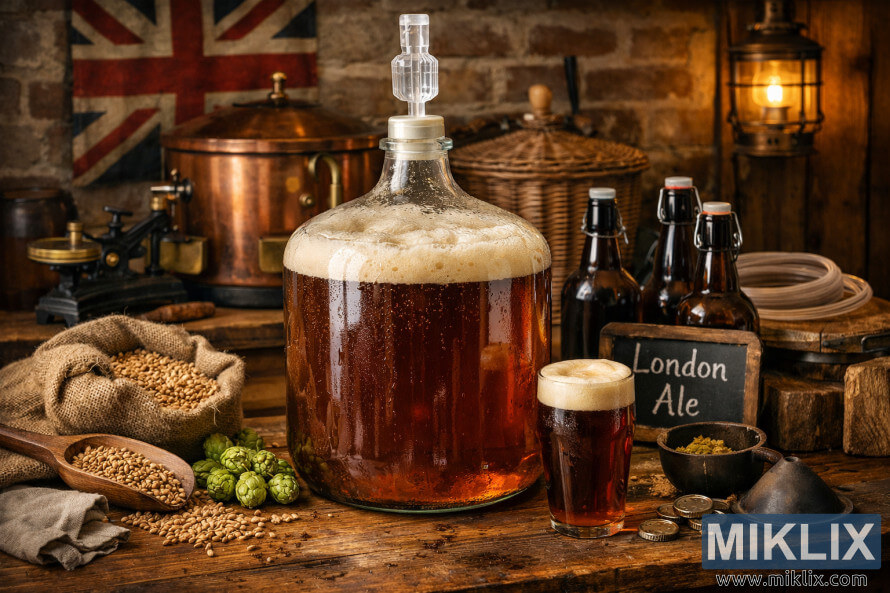
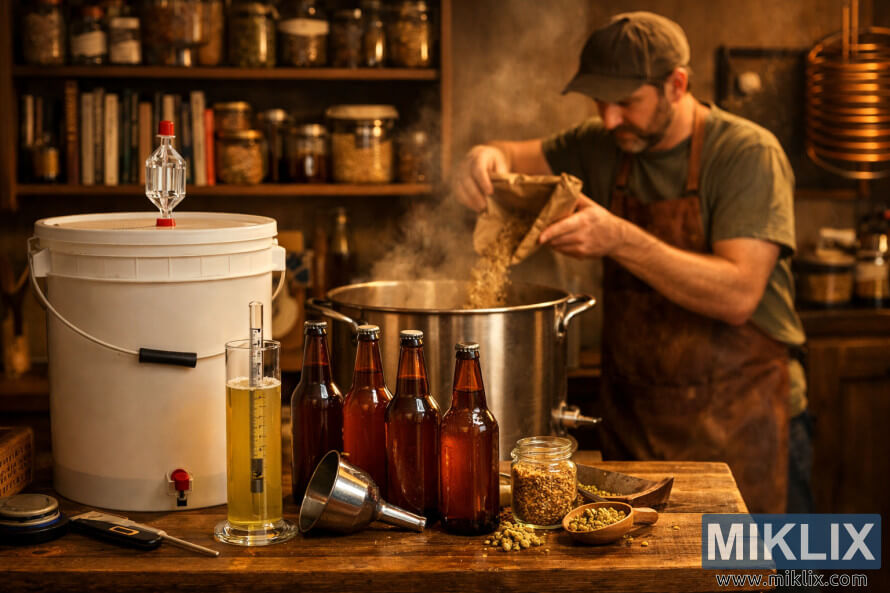
Click or tap the image for more information and higher resolutions.
Homebrewers often praise Wyeast 1028 for its higher attenuation in traditional English ales. It's also versatile for pale ales, IPAs, brown ales, and barleywines. This yeast review shows it balances malt accentuation with attenuated finishes, making it a dependable choice for those seeking English character and stylistic flexibility.
Key Takeaways
- Wyeast 1028 London Ale Yeast comes as a 100 billion cell pack with strong retailer support and customer reviews.
- Key specs: 60–72°F range, 73–77% attenuation, medium-low flocculation, ~11% ABV tolerance.
- Use this English ale yeast when you want slightly higher attenuation in traditional British ales.
- Versatile for pale ales, IPAs, browns, stouts, and barleywines when managed for temperature and pitch.
- Easy to source and suitable for brewers who prefer predictable, review-backed yeast performance.
Overview of Wyeast 1028 London Ale Yeast
The Wyeast 1028 strain has become a staple in many brewers' cellars. It is widely available and supported by retailers, making it a top choice for those aiming for a classic English character. This consistency is a hallmark of its appeal.
Wyeast 1028's lineage is rooted in traditional London Ale brewing, not tied to a specific brewery. It is known for its versatility, performing well across various temperatures. This versatility allows brewers to create a spectrum of flavors, from clean to fruity. Its widespread use in traditional recipes and commercial production underscores its reliability.
Strain background and origin
Wyeast 1028 comes from a commercial lineage preferred for English ale styles. Its availability and support from retailers solidify its reputation as a dependable yeast. Although its exact origin is unclear, its connection to British brewing traditions is evident.
Typical flavor profile and ester production
The flavor profile of Wyeast 1028 varies with fermentation temperature. Cool fermentation yields a cleaner finish, while warmer temperatures enhance fruity and biscuit esters. Its high attenuation rate is notable, contributing to a drier beer and altering its mouthfeel.
Common beer styles where the strain excels
- Northern English Brown and Mild, where malt and subtle esters are welcome.
- Porter and Robust Porter, which benefit from balanced attenuation and roast support.
- Dry Stout and English Barleywine, where higher attenuation helps manage sweetness in big malts.
- Old Ale and Foreign Extra Stout, where the strain handles higher gravities when managed with proper pitch and temperature.
Key Fermentation Characteristics of Wyeast 1028 London Ale Yeast
Wyeast 1028 is a reliable choice for brewers aiming for consistent results in English and modern ales. This section provides insights into attenuation, flocculation, and alcohol tolerance. These details help brewers set realistic final gravity targets and plan for conditioning or yeast management.
Attenuation for this strain is typically high, aiming for the mid-70s. This results in a drier finish, unlike many traditional English strains.
High attenuation impacts the beer's finish. Brewers should adjust final gravity expectations downward. This is crucial for malt-forward styles, where body is key.
Flocculation behavior influences beer clarity post-fermentation. The flocculation is medium-low, leading to slow yeast settling. Beers may retain a slight haze from the fermenter.
Given the slow settling, brewers should plan for extra conditioning time. Alternatively, use gentle clarification techniques. This approach ensures clarity without compromising flavor or body.
Alcohol tolerance is a critical factor. Wyeast indicates a tolerance of 11% ABV. This means the strain can handle many high-gravity projects, provided there's proper nutrition and a sufficient pitch size.
For high-ABV brews like barleywine or imperial stout, consider staged feeding and larger starters. Monitor fermentation closely. Adjust oxygen and nutrient additions as needed to achieve target attenuation without stress.
- Attenuation: mid-70s range, yielding drier finishes and lower final gravities.
- Flocculation: flocculation medium-low; expect slower clearing and possible haze.
- Alcohol tolerance: alcohol tolerance 11% ABV; suitable for high-ABV ales with care.
When planning your mash profile, mash thickness, and fermentability, consider these parameters. Adjustments in mash and pitch rate can help maximize 1028 attenuation while preserving the desired malt character.
Optimal Temperature Range and Fermentation Control
Mastering the temperature for Wyeast 1028 is crucial for achieving a clean English ale or one with distinct fruity esters. The recommended temperature range for Wyeast 1028 provides a practical guideline. It's essential to align your desired beer profile with the chosen fermentation temperature. This ensures steady fermentation control within the 60–72°F range.
The ideal fermentation temperature for Wyeast 1028 is between 60–72°F. Lower temperatures result in cleaner attenuation and fewer esters. Higher temperatures, on the other hand, enhance the mild English ester character, ideal for bitters, brown ales, and porters. Adhere to the fermentation control 60–72°F guidelines when planning your brew's schedule and conditioning.
Choosing between cool and warm fermentation impacts the beer's ester balance and mouthfeel. Cooler temperatures reduce fruity notes, emphasizing malt and contributing to a drier finish. Warmer temperatures, however, increase ester production, enhancing the English character. This is beneficial for traditional styles that desire a soft fruitiness.
Home brewers can employ simple temperature management techniques. Insulation wraps or a moving-blanket can help stabilize temperatures. For gentle warming, wrap a towel around the fermenter and replace a hot water bottle twice daily to maintain a target temperature of around 68°F. These methods are suitable for hobbyists without access to a dedicated fermentation chamber.
- Monitor with a reliable thermometer placed at fermenter midpoint.
- Use a temperature controller with a chest cooler or space heater for finer control.
- Employ insulation and timed hot water bottles for short-term boosts.
When planning your brew, consider whether ester control or attenuation is more important. For a beer with subtle fruitiness, aim for midrange temperatures. If you prefer a clean, malt-forward ale, aim for the lower end of the Wyeast 1028 temp range. Use the homebrew temperature tips provided to maintain steady fermentation control within the 60–72°F range.
Pitching Rates and Yeast Management
Starting with the right yeast involves cell counts and a solid plan for fermentation. A fresh, hydrated Wyeast 1028 pack contains approximately 100 billion cells. This number helps determine if a direct pitch is sufficient or if a boost is needed for higher gravities.
For a 5-gallon ale, simple math guides the way. A standard pack might suffice for moderate-gravity beers. However, beers over 1.070 require a larger cell population. Creating a 100 billion cells slurry offers flexibility. You can save part of the pack for later or build a starter to increase cell count.
For high-gravity beers, prepare a yeast starter. A one- or two-liter starter on a stir plate can multiply cells. Pitch this starter 12–24 hours after activity peaks for optimal results. If time is tight, consider pitching two packs or a pack plus a starter to mitigate risks.
Be vigilant for signs of underpitching early on. Look out for long lag times, sluggish bubbling, and off aromas like elevated esters or harsh phenolics. These symptoms indicate stress from an underpowered yeast population, necessitating recovery measures.
- Oxygenate wort well before pitching to support yeast growth.
- Gently rouse yeast or swirl the fermenter to resuspend settled cells.
- Make and pitch a vigorous starter if fermentation stalls.
- Keep fermentation in the 60–72°F band to encourage healthy activity.
In emergency situations, a fast starter is often the best solution. Prepare a high-gravity starter with fresh yeast nutrient, then add it to the stuck ferment. If you have a 100 billion cells slurry, dilute and oxygenate it before pitching. This approach boosts viable counts without shocking the beer.
Monitor activity and gravity readings closely, rather than relying solely on airlock motion. This method confirms whether your interventions have successfully boosted yeast activity and reached expected attenuation. Proper pitching and timely starters are crucial for preserving flavor and finish in beers fermented with Wyeast 1028.
Water Chemistry and Mash Considerations for English Styles
Wyeast 1028 excels when the mash and water align with its malt-forward, fruity essence. Adjusting the water and grain ratio enhances the vintage English flavors in brown ales, porters, stouts, and pale ales. Focus on simple, practical targets rather than complex profiles.
For brown ales, porters, and stouts, aim for a touch of carbonate and moderate hardness in the water. This mineral profile supports a mash pH of 5.2, boosting malt sweetness, body, and roast integration. If the base water is very soft, add calcium carbonate or a small amount of baking soda.
In pale ales and IPAs, reduce carbonate and target mash pH between 5.2 and 5.4. This approach prevents harshness and preserves hop clarity. Use gypsum to enhance hop bite, aiming for a more assertive bitterness and sulfate-forward profile.
The malt bill for 1028 should focus on English base malts and complementary specialty grains. Maris Otter, British pale malt, and small amounts of crystal, brown malt, or chocolate malt are common. Roast and crystal additions should be measured to allow the yeast's subtle esters to shine.
- Brown ales: 80–90% Maris Otter or British pale malt, 5–10% crystal, 3–5% brown malt for nuttiness.
- Porters and stouts: 75–85% base malt, 8–12% crystal or caramel, 3–6% chocolate or roasted barley for color and roast.
- Pale ales/IPAs: 85–95% pale malt, 3–6% light crystal, with adjuncts like flaked barley for body if desired.
To adjust water for stouts and pale ales, choose additions that align with the beer's character. Add calcium chloride to enhance malt fullness and mouthfeel in English bitters. Use gypsum to elevate hop presence in pale ales and IPAs, keeping chloride levels low. Balance carbonate additions in dark beers with acid if mash pH rises too high.
Before brew day, test mash pH with a meter or strips and taste your source water. Make small adjustments in mash thickness, around 1.25–1.5 qt/lb, to reflect real conditions. Keep records of additions for easier tuning in future batches.
Fermentation Timeline and Monitoring
Understanding the 1028 fermentation timeline is crucial for a successful brew day. Wyeast 1028 typically attenuates between 73–77%, resulting in a dry finish. Fermentation can last from a few days to two weeks, influenced by gravity, temperature, and pitching rate.
Typical timeline from pitch to terminal gravity
For standard-strength English ales, expect vigorous activity within 12–48 hours after pitching. Krausen peaks around day 2–5, then starts to collapse. Most batches reach near-terminal gravity in 3–7 days. Beers with higher original gravity may stay active for 10–14 days.
How to track fermentation activity and signs of a healthy ferment
Monitor fermentation through visual cues and tools. Look for krausen formation, steady airlock bubbling, and foam collapse. Use a hydrometer or refractometer to log gravity daily during active stages.
- Healthy signs: steady krausen, consistent gravity drops, pleasant ale aromas.
- Problem signs: no krausen after 48 hours, stalled gravity for several days, strong solvent or sour notes.
When to check gravity and when to transfer or package
Check gravity after primary activity slows—typically 3–7 days for average-strength ales. Record readings over 2–3 days. Only consider packaging when gravity is stable across that window. This is the best way to avoid over-carbonation and bottle bombs.
- First check: once krausen has fallen and bubbling slows.
- Second check: 24–48 hours later to confirm stability.
- Package step: when two or three readings match and expected attenuation fits the recipe.
Deciding when to keg or bottle depends on stability, not the calendar. By monitoring fermentation closely and verifying stable gravity, you reduce risk and preserve the intended flavor profile of beers fermented with Wyeast 1028.
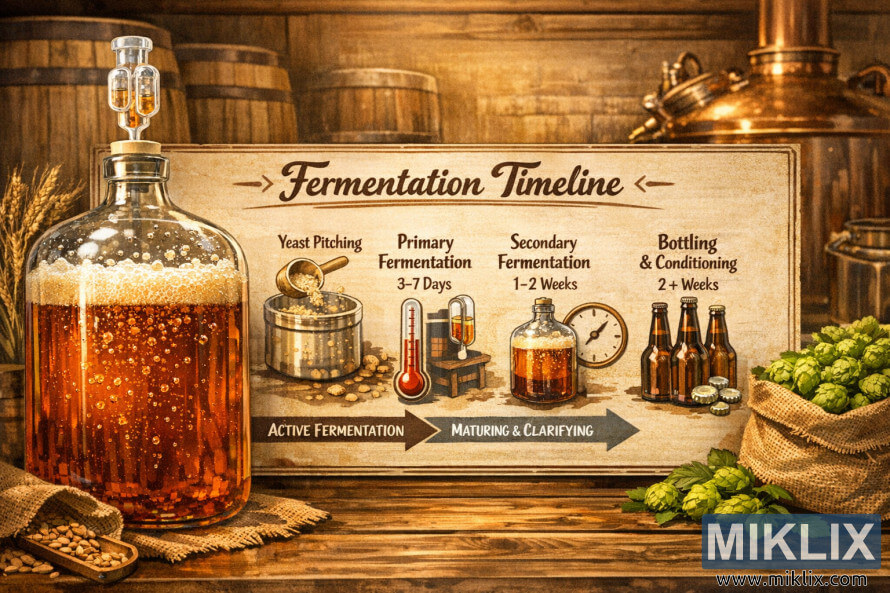
Click or tap the image for more information and higher resolutions.
Using Wyeast 1028 for Different Beer Styles
Wyeast 1028 is versatile for English ales. It's favored for beers that highlight malt and for strong ales needing reliable attenuation. Below, we delve into three style groups and practical tips for maximizing this strain's potential.
Northern English Brown and Mild — accentuating malt and esters
For Northern English Brown and Mild, aim for warmer fermentation temperatures. This enhances fruity esters and smooths out malt flavors. Use a moderate yeast pitch and avoid excessive oxygenation to maintain a soft, malty profile.
Choose mash bills rich in crystal and brown malts to complement the yeast's focus on malt. Small yeast nutrient additions are usually not needed for these lower-gravity beers.
Porter, Robust Porter, and Dry Stout — tips for roasty beers
In brewing porters and stouts, control temperature to balance harsh roast notes with depth. Warm fermentation can soften the edges of dark malts.
- Oxygenate wort well at pitch for healthier fermentations in robust porter and stout recipes.
- Use 1028 porter stout tips like stepped nutrient dosing for higher gravity porters to avoid sluggish finishes.
- Monitor fermentation vigor; if activity lags, a small starter can rescue a slow ferment.
Barleywine and Old Ale — managing high ABV and attenuation
Brewers fermenting barleywine with 1028 should plan a large starter or multiple sequential starters. Strong worts require cell counts that match the gravity.
- Make a starter scaled to target gravity and consider staggered nutrient additions during active fermentation.
- Practice careful high ABV yeast handling: oxygenate adequately at pitch, then limit oxygen exposure after the first 24 hours.
- Allow extended conditioning time so yeast can clean up byproducts and the beer can mellow.
Across styles, focus on tracking gravity and monitoring yeast health rather than relying on calendar days. Wyeast 1028 performs well, from brown ale to strong old ales, with proper pitching, oxygenation, and nutrient strategy.
Flocculation, Conditioning, and Clarification Techniques
Wyeast 1028 exhibits 1028 flocculation medium-low, leading to slower settling and a hint of haze post-primary fermentation. This necessitates extended patience for achieving clarity. Handling the beer gently is crucial to preserve esters while allowing yeast to settle.
Implement these conditioning strategies to refine body and clarity without diminishing the beer's character.
- Cold crash for clarity by dropping temperature 5–10°F below active fermentation temp for 24–72 hours to encourage yeast to flocculate.
- Fining with 1028 can be effective; choose gelatin or isinglass late in conditioning for clearer beer while watching for impact on mouthfeel.
- Allow longer time in a secondary or bright tank when brewing English ales that benefit from some residual haze and fuller body.
Adopt a staged approach to clarity, ensuring desirable malt and ester notes remain intact.
- Give beer a neutral rest for a week after active fermentation finishes to let yeast settle naturally.
- Apply a cold crash for clarity; keep temperature steady and avoid agitation when racking.
- If clarity remains insufficient, use a mild fining with 1028-compatible agents and let beer condition an extra 3–7 days before packaging.
To retain body, employ minimal fining and shorter cold crashes. This balance ensures visual clarity without compromising the mouthfeel cherished in English styles. Fine-tuning timing and fining dose is key to optimizing Wyeast 1028 results.
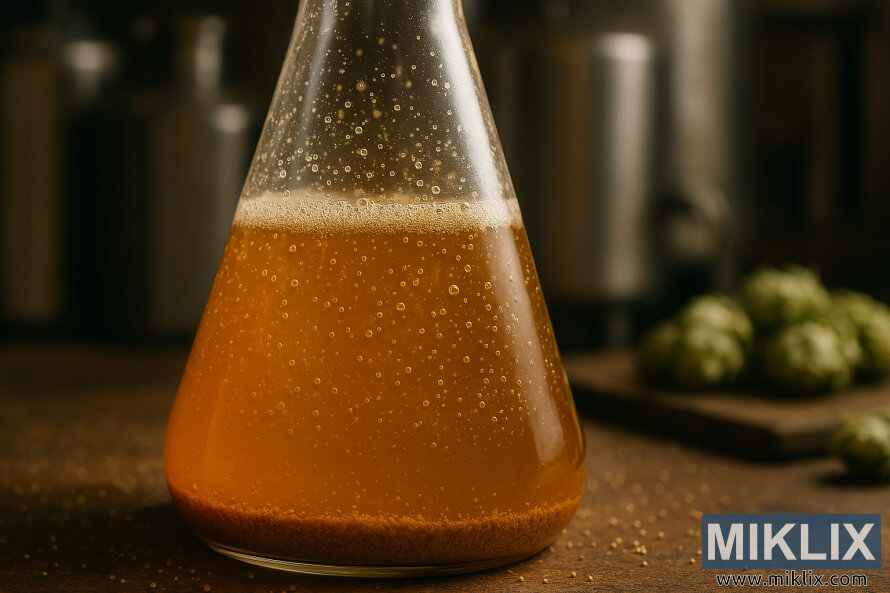
Click or tap the image for more information and higher resolutions.
Packaging Considerations: Bottling and Kegging with Wyeast 1028
Wyeast 1028 ferments towards a dry finish, making packaging timing crucial. Ensure stable final gravity before transferring beer to bottles or kegs. Confirm gravity stability for 48–72 hours to minimize the risk of fermentation after sealing.
Carbonation targets for different English and dark styles
Traditional English ales prefer modest carbonation levels. Light bitters and milds benefit from 1.5–2.0 volumes of CO2. Darker styles, like stouts and porters, are best with lower carbonation, around 1.2–1.7 volumes.
Timing packaging relative to attenuation and conditioning
Wyeast 1028 can reach 73–77% attenuation, leading to a drier beer. Wait for complete attenuation and stable gravity readings for a few days. This ensures the right moment to keg or bottle, reducing bottle surprises.
Tips to avoid over-carbonation in high attenuation beers
Reduce priming sugar for high-attenuation beers compared to standard calculators. This adjustment helps prevent bottle bombs if fermentation restarts. For kegging, carbonate with measured CO2 in small increments for precise control.
- Measure specific gravity twice over 48–72 hours before packaging with 1028.
- Use lower carbonation targets for traditional English ales and darker beers to match carbonation levels English ales demand.
- When to keg: choose kegs if you want quick, predictable carbonation and reduced risk of bottle bombs.
- When bottling, under-prime slightly for beers that have fermented especially dry to avoid excess pressure.
Troubleshooting Common Fermentation Issues
When a batch slows or stalls, or when unexpected flavors appear, systematic checks help diagnose causes and guide fixes. Use the yeast’s known limits — temperature, attenuation, and alcohol tolerance — as a baseline when assessing problems. Below are practical steps to sort slow activity, deal with fermentation off-flavors, and learn how to identify contamination.
Slow or stuck fermentation often starts with underpitching, low oxygen, or a cold ferment. Gently raise the temperature into the recommended 60–72°F range to wake yeast without stressing cells. If gravity barely moves after 48–72 hours, consider adding a healthy starter or fresh active yeast to recover underpitched yeast.
- Check gravity twice, 24 hours apart, to confirm a stall.
- Warm the fermenter by a few degrees; avoid sudden jumps that create off-flavors.
- Rehydrate and pitch a strong ale strain or make a stirred-up starter for complex worts.
High-gravity beers require nutrients and oxygen up front. If working near alcohol tolerance, expect slower finishes and watch for solvent-like notes. Using yeast nutrient and ensuring proper aeration at pitch helps prevent stalled batches and reduces the chance of fermentation off-flavors later.
Temperature mismanagement creates many common faults. Warm ferments can produce fruity esters that are pleasant in English ales, but excessive heat yields harsh fusel alcohols and solvent aromas. Cold-shocked yeast may leave more residual sugar and create a thin mouthfeel.
- Keep fermentation within the strain’s active range to limit excessive esters.
- Avoid fermenting above the yeast’s alcohol tolerance to reduce fusel production.
- Oxygenate wort before pitching, especially for higher gravity brews.
Distinguishing contamination from yeast character matters when you need to decide on salvaging or dumping a batch. Contamination usually shows persistent sourness, film or pellicle formation, unexpected long-term bubbles, or off-aromas that worsen over days. Yeast-derived characters tend to be consistent, predictable, and aligned with the fermentation profile when temperatures or pitching rates vary.
- Smell and taste: a sharp sour or barnyard tang suggests bacteria or wild yeast.
- Visual cues: pellicles, fuzzy growths, or unusual films point to infection.
- Trajectory: flavors that intensify with time rather than mellowing often indicate contamination.
When you suspect contamination, isolate the fermenter, avoid transferring or packaging, and sample carefully. Lab testing can confirm microbes, but pragmatic brewery responses include discarding heavily infected batches and sanitizing equipment thoroughly to prevent repeat problems.
Document each incident: temperature logs, pitch rates, oxygening method, and any nutrient additions. That record helps spot patterns, prevent future 1028 stuck fermentation events, and reduce the chance of fermentation off-flavors. Clear notes speed decisions on how to recover underpitched yeast and how to identify contamination if it arises again.
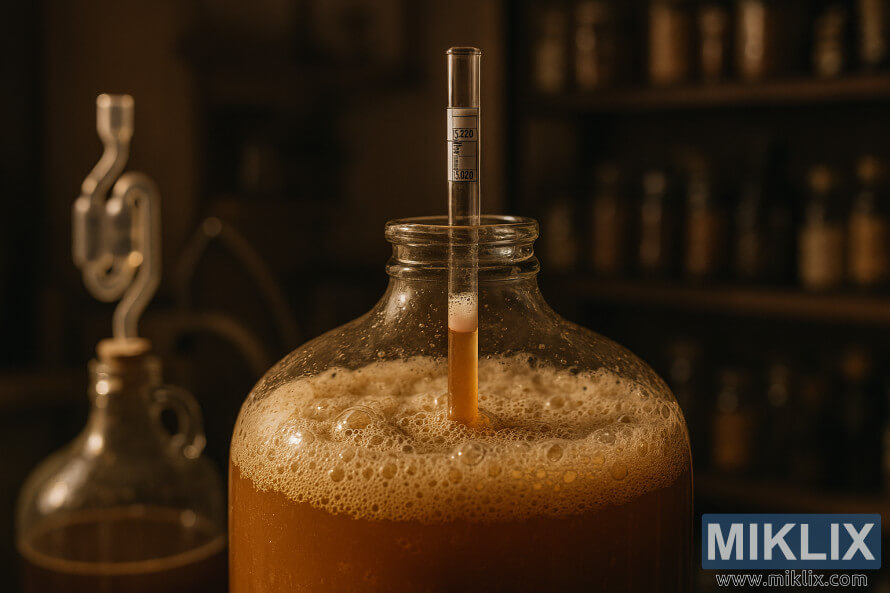
Click or tap the image for more information and higher resolutions.
Comparisons: Wyeast 1028 Versus Other English Ale Strains
Brewers often weigh yeast choices when dialing in flavor and attenuation. Wyeast 1028 sits alongside several liquid and dry English strains in the Wyeast lineup. Its numeric profile makes direct comparisons easy for recipe planning.
How 1028 differs from other Wyeast and dry English strains
- 1028 typically runs warmer in ester expression than some neutral American strains, yet it stays cleaner than classic English strains that push heavy fruit esters.
- Attenuation for 1028 usually falls in the 73–77% band, giving drier finishes than many traditional English strains that ferment to lower gravities.
- Flocculation for 1028 is medium-low, so clarity takes longer than with high-flocculation English strains such as Wyeast 1968 or many dry English ale yeasts.
Choosing 1028 when you want higher attenuation or cleaner profiles
- Pick 1028 vs other English strains when the goal is to reduce residual sweetness while retaining mild English character.
- As a high attenuation yeast, 1028 suits pale ales and IPAs that benefit from a cleaner finish and more hop clarity.
- Use 1028 for beers where a lighter mouthfeel and faster attenuation are priorities during conditioning.
When to pick a different strain for pronounced English character
- Choose an alternative when you want pronounced esters, lower attenuation, and fuller malt presence in brown ales and milds.
- High-flocculation, lower-attenuating strains lock in sweetness and yield a traditional English profile more readily than 1028.
- For recipe authenticity in styles like classic bitters, consider strains known for rich ester production instead of 1028 vs other English strains comparisons.
Practical Brewing Tips from Homebrewers and Pro Brewers
Wyeast 1028 is versatile for both club brewers and commercial operations. Use these practical 1028 brewing tips to shape fermentation outcomes. Match recipe examples to style goals and make sensible homebrew adjustments for American kitchens and garages.
Temperature maintenance is key for clean or characterful results. Wrap a towel around the fermenter and replace a hot water bottle twice daily to keep the yeast near 68°F. For steady control, a small fermentation heater or a temperature-controlled freezer works well when ambient temps swing.
- Use an insulating jacket or moving blanket to reduce swings.
- Place a thermometer on the fermenter, not just room air, to monitor true wort temperature.
- When brewing American pale ales, bias toward the low end of the range for a cleaner ester profile.
Recipe examples that showcase 1028 include northern English brown ales, porters, and Maris Otter–forward bitters. For target hops, try East Kent Goldings for classic character or Target for a firmer English bitterness. Many brewers also use 1028 in American pale ales and APAs with lighter malt bills to highlight hop balance.
- Brown ale: Maris Otter base, crystal malt for sweetness, East Kent Goldings late.
- Robust porter: Dark malts with a strong malt backbone, moderate hopping, full mash temp for body.
- APA: Pale base, restrained crystal, Target or Cascade in measured amounts for balance.
Real-world homebrew adjustments can rescue a lagging ferment or steer flavor. If fermentation slows, raise the fermenter temperature a few degrees for 24–48 hours to help finish. If esters run high, drop temps toward the cooler end and give the beer extra conditioning time to smooth flavors.
When scaling packs or making starters, aim for proper cell counts for gravity and pitch health. For high-gravity batches, build a starter or use multiple packs to avoid underpitching. Keep notes on each batch so recipe examples become dependable templates for future homebrew adjustments.
Click or tap the image for more information and higher resolutions.
Yeast Storage, Viability, and Purchasing Advice
Proper handling is crucial when storing Wyeast 1028 for future brews. Keep fresh packs refrigerated and use them before the expiration date to ensure yeast viability. For slurries, store in a sanitized container in the fridge. Decant spent beer before refreshing with wort when you plan to reuse the yeast.
Simple signs can indicate yeast health. A bright, creamy appearance and a mild yeast smell suggest good viability. If a pack looks watery or has an off odor, test with a small starter or a viability check under a microscope before pitching into a full batch.
- Make a starter when brewing high-gravity beers or if the pack is near its expiration.
- Use yeast starter advice from experienced homebrewers: aim for a healthy, active wort for 12–24 hours before pitching.
- When in doubt, build cell count with a larger starter rather than risking an underpitched ferment.
Buying plans are important when purchasing Wyeast 1028 USA. Shop reputable U.S. homebrew retailers that publish pack age and storage recommendations. Look for shipping promotions like free shipping over $59 or fast free shipping over $99 to save on multiple packs.
- Choose sellers that offer insulated or expedited shipping during warm months to reduce heat exposure.
- Account for transit time and avoid weekend deliveries that leave packs sitting in heat.
- When you must store yeast long-term, freeze a protected culture only with proper protocols; for most homebrewers, refrigeration and timely use are safer.
Follow basic handling steps to preserve yeast viability and get the best results from Wyeast 1028. Proper purchase timing, storage, and yeast starter advice will reduce risks and improve fermentation outcomes for your ales.
Flavor Expectations and Serving Recommendations
Wyeast 1028 often presents a balanced malt profile with restrained esters and moderate bitterness. Brewers find that 1028 leans malt-forward in browns, porters, and milds. Stronger ales and barleywines, however, can finish drier due to higher attenuation. Fermenting cool keeps the beer cleaner, while fermenting warmer brings out more English esters and fruit notes.
Consider the serving temperature to showcase each style's best traits. Traditional ales benefit from a cellar chill, highlighting malt and subtle esters. Aim for a serving temperature of roughly 50–55°F for brown ales and bitters. Stouts, on the other hand, should be served slightly warmer to release roasty aromatics and soften perceived bitterness.
Choosing the right glassware is crucial for aroma delivery and head retention. For everyday bitters and milds, a classic nonic or pub pint is ideal. Richer beers, however, benefit from a tulip or snifter to concentrate aroma and warm the beer in your hand.
- Typical aroma balance: toast, caramel, light fruit esters, mild English hops.
- Serving tips: cellar-chilled ales at 50–55°F, stouts a few degrees warmer.
- Glassware: pint for session ales, tulip/snifter for strong or roasty beers.
Pairing food with beer enhances the experience. Roasty stouts pair well with grilled meats and dark chocolate desserts. Malty browns complement roasted vegetables, pork, and aged cheddar. Hoppier American-style ales, meanwhile, pair well with sharp cheeses and spicy dishes that cut through malt sweetness.
- Brown ale: serve at cellar temperature, tulip or pint, pair with roasted root vegetables and cheddar.
- Porter and stout: slightly warmer pour, snifter or tulip, pair with grilled steak and chocolate desserts.
- Stronger ales and barleywine: warmer serving, snifter, pair with blue cheese and rich stews.
When planning a tasting, arrange beers from lightest to strongest to evolve 1028 flavor expectations. Small pours at correct serving temperatures and in proper glassware for stouts and browns help tasters detect subtle esters and malt balance. Thoughtful food pairings make each sip more revealing and enjoyable.
Conclusion
Wyeast 1028 summary: This yeast is a go-to for U.S. homebrewers, known for its ease of use and strong support from retailers. It boasts a high cell count, a recommended temperature range, and high attenuation. These features make it a favorite for brewers aiming for reliable fermentation and a balanced English character.
Practical brewing applications for 1028 include Northern English ales, milds, and porters. It also works well in pale ales and some IPAs, provided brewers are careful. Key to success is proper pitch rate and temperature control. Simple steps like using starters for high-gravity brews or insulating during cool weather ensure a clean fermentation.
When fermenting with 1028, focus on maintaining the recommended temperature range. Avoid underpitching and allow sufficient conditioning time for body and clarity. By following these tips, 1028 can deliver high attenuation and a balanced malt-ester profile. This versatility makes it suitable for both traditional English recipes and modern brewing experiments.
FAQ
What is Wyeast 1028 London Ale Yeast and where can I buy it?
Wyeast 1028 London Ale is a commercial liquid ale strain sold in 100 billion cell packs. It’s widely available from U.S. homebrew retailers and online suppliers. Look for retailer guarantees and shipping promotions. Buy from reputable shops and consider expedited or insulated shipping in hot weather to protect viability.
What are the key fermentation specs for 1028?
Key specs: 100 billion cell pack, recommended active fermentation range 60–72°F, attenuation about 73–77%, medium-low flocculation, and alcohol tolerance around 11% ABV. These figures inform pitching, temperature control, and suitability for stronger ales.
How does the 73–77% attenuation affect my final beer?
That relatively high attenuation typically yields a drier finish and lower final gravity than many traditional English strains. Expect less residual sweetness and a lighter perceived body. For malt-forward styles, account for a drier final beer when designing the malt bill and priming/carbonation.
What clarity and flocculation behavior should I expect?
Flocculation is medium-low, so yeast will settle more slowly and beers can retain some haze after primary. Plan for longer conditioning, cold crashing, or fining (gelatin, Irish moss) if clarity is important. For certain English styles, leaving some haze can preserve desirable body and character.
How should I manage fermentation temperature to shape ester character?
Ferment toward the lower end (60–64°F) for a cleaner profile with fewer esters. Use the upper end (68–72°F) to encourage English ester expression and fruitiness. Adjust target temperature based on the style you want—clean for APAs/IPAs, warmer for traditional English ales.
What are simple ways to control fermentation temperature at home?
Practical methods include insulating the fermenter with a towel or jacket and using a warm water bottle changed twice daily to maintain ~68°F. Other options are a heated fermentation chamber, temperature-controlled stick-on heater, or storing the fermenter in a temperature-stable room.
Is a 100 billion cell pack enough for a 5-gallon batch?
For typical-strength ales it can be sufficient if the pack is fresh and handled properly. For higher-gravity worts, older packs, or if you prefer faster, cleaner fermentation, build a starter to increase viable cell count. Use the 100 billion figure to calculate desired pitching rate.
When should I make a starter for 1028?
Make a starter for high-gravity beers (barleywine, old ales, imperial stout), for packs stored near expiration, or if you see a slow or long lag time in past brews. Starters improve yeast health, reduce lag, and help reach expected attenuation in strong worts.
What are signs of underpitching and how do I fix it?
Signs: long lag time, sluggish activity, higher-than-expected esters or solvent/fusel notes from stressed yeast. Recovery: gently raise temperature within the recommended range, aerate or oxygenate the wort before pitching, make and pitch a vigorous starter or a fresh yeast slurry, and gently rouse the yeast.
Which beer styles suit Wyeast 1028 best?
1028 is well-suited to classic English styles—Northern English Brown, Brown Porter, Dry Stout, Mild, Old Ale, Robust Porter, English Barleywine, and Foreign/ Russian Imperial Stouts. Brewers also use it successfully in American Pale Ales, APAs, and IPAs when a drier finish or subtle English character is desired.
How should I tweak my mash and water chemistry for darker English beers?
For browns, porters, and stouts aim for moderate carbonate/hardness to support dark malts and maintain mash pH around 5.2. That helps accentuate malt sweetness and mouthfeel. For roasty beers, a slightly higher carbonate level can tame acidity from dark malts.
What adjustments for pale ales and IPAs using 1028?
For hop-forward beers, lower carbonates and target mash pH around 5.2–5.4 to preserve hop clarity and bitterness balance. Add gypsum to accentuate hop bitterness and calcium chloride to round malt character as needed. Ferment cooler in the range to keep the profile cleaner.
How long does fermentation usually take with 1028?
Active fermentation typically runs several days to two weeks depending on original gravity. For standard-strength ales expect primary activity 3–7 days, then conditioning. High-gravity beers can take longer. Verify by stable gravity readings over 2–3 days before packaging.
When should I check gravity and when is it safe to package?
Check gravity after primary activity subsides (around 3–7 days for typical ales) and again a few days later. Only package when gravity is stable over 2–3 consecutive readings to avoid over-carbonation and ensure fermentation is complete.
Any special tips for using 1028 in barleywine or old ales?
Use a large, healthy starter and consider staggered nutrient additions. Monitor fermentation closely, oxygenate adequately at pitch, and keep temperature within 60–72°F. The 11% ABV tolerance allows strong beers, but viability and nutrition matter for full attenuation.
How should I carbonate beers fermented with 1028?
Because 1028 gives high attenuation, expect a drier beer and potentially continued fermentation in the bottle. Use standard carbonation calculators but consider slightly reduced priming sugar for high-attenuation or high-gravity beers. For English ales, lower carbonation levels are traditional; pale ales may be a touch higher.
What common fermentation problems occur and how do I troubleshoot them?
Slow or stuck ferments can result from low pitching rate, low oxygen, low nutrients, or temperatures outside 60–72°F. Remedies: raise temperature gently, pitch a starter or fresh yeast, reoxygenate if early, and add yeast nutrient for very high-gravity worts. Distinguish contamination (sourness, pellicles) from yeast character (esters, fruity notes).
How does 1028 compare to other English ale strains?
1028 tends to attenuate higher than many traditional English strains and has medium-low flocculation, producing drier beers with longer conditioning for clarity. Choose 1028 for higher attenuation and versatility; pick a lower-attenuating, higher-flocculating English strain when you want more residual sweetness and a classic English profile.
Any practical tips from brewers for using 1028?
Brewers recommend temperature control tricks like insulating the fermenter, using warm water bottles (changed twice daily) to hold ~68°F, and making starters for strong beers. Maris Otter is a popular malt base and hops such as East Kent Goldings or Target are commonly paired depending on style goals.
How should I store Wyeast 1028 and check viability?
Store refrigerated and use before the expiration date. If unsure about pack age or viability, make a starter. Signs of low viability include long lag time and sluggish fermentation. For long-term storage of slurries, keep refrigerated and repitch within recommended timeframes, but make starters before big or high-ABV batches.
What flavor and serving recommendations suit beers fermented with 1028?
Expect English-leaning esters when fermented warm and a cleaner profile when fermented cool. Serve darker, roasty beers slightly warmer to showcase flavors; cellar many English ales at 50–55°F. Use pint or tulip/snifter glassware for stronger ales and pair roasty stouts with grilled meats or chocolate desserts, and malty browns with roasted vegetables and cheddar.
Further Reading
If you enjoyed this post, you may also like these suggestions:
- Fermenting Beer with CellarScience Hornindal Yeast
- Fermenting Beer with White Labs WLP565 Belgian Saison I Yeast
- Fermenting Beer with Lallemand LalBrew Nottingham Yeast