
Fermenting Beer with Wyeast 1275 Thames Valley Ale Yeast
Published: December 11, 2025 at 9:55:17 PM UTC
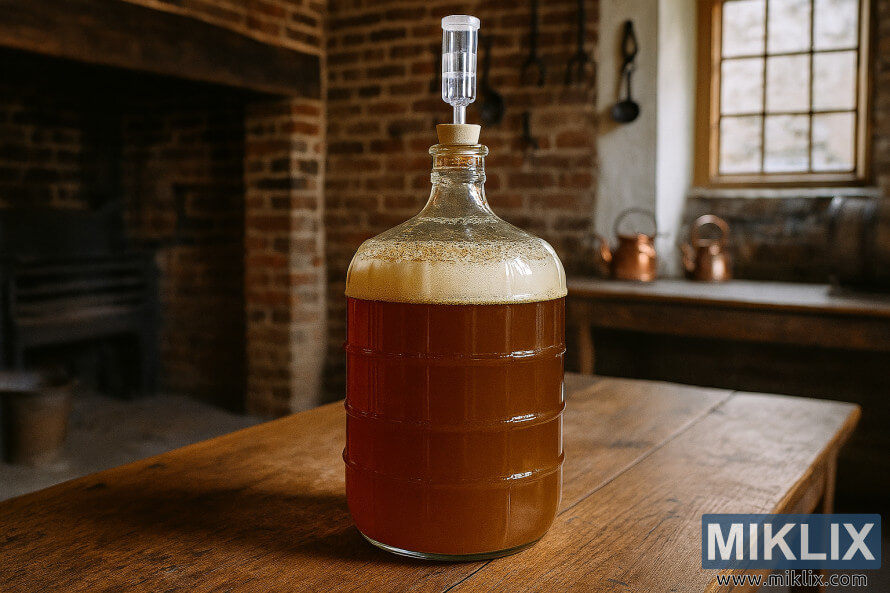
Wyeast 1275 Thames Valley is a historic Brakspear strain, deeply connected to traditional English ales. Its origin with Brakspear links it to double-drop fermentation and beers influenced by Burton-Thames water chemistry. Brewers aiming for that quintessential British house character often turn to this yeast.
Click or tap the image for more information and higher resolutions.
Key Takeaways
- Wyeast 1275 Thames Valley Ale Yeast suits a range of English-style ales and balanced IPAs.
- The review combines strain specs with forum and tasting notes for practical brewing use.
- Focus areas include attenuation, temperature behavior, flocculation, and oxygen needs.
- Comparisons to WLP023 help set expectations for flavor and performance.
- Subsequent sections provide pitching, fermentation, and troubleshooting advice for Wyeast 1275 homebrew.
Overview of Wyeast 1275 Thames Valley Ale Yeast
The Wyeast 1275 strain profile reveals medium-low flocculation and attenuation in the 69–77% range. Temperature guidance is 62–72°F, which helps maintain malty esters and a smooth mouthfeel. Test batches often achieve the classic Thames/Burton balance of malt and subtle fruitiness.
Homebrewers comparing Wyeast 1275 with White Labs WLP023 equivalent strains seek similar Burton-style notes. While WLP023 equivalent preparations yield comparable results, minor variations can occur due to propagation and pitch size. Selecting the right yeast source is crucial to align with your recipe and fermentation plan.
- Heritage: linked to Brakspear and regional brewing practices.
- Character: malt-forward, mildly fruity, suitable for bitters, pale ales, and older bitters.
- Handling: steady temperature control and proper pitching preserve expected flavor.
Consider Wyeast 1275 for your brew if it aligns with your goals. Its rich history and detailed Wyeast strain profile make it a prime choice for crafting classic Thames Valley and Burton-style ales.
Flavor and aroma profile for homebrewers
Wyeast 1275 often presents a fruitiness spectrum from low to moderate. Homebrewers detect subtle banana and pear notes, which complement a robust malt backbone. This combination is a hallmark of its flavor profile.
In brown ales and amber beers, the strain imparts a toffee apples sweetness. It also adds a faint peardrops quality, enhancing caramel malts. This sweetness blends harmoniously with richer malts and mild hops.
Compared to other English strains, 1275 exhibits a restrained mineral character. This characteristic adds authenticity to traditional styles. It works best in malt-forward recipes, enhancing complexity without overpowering.
Some brewers observe a roasted spicy finish in beers with very light grain bills or high roast levels. This finish can feel slightly drying. It pairs well with brown, porter, stout, amber, or IPA recipes, but not with delicate pale ales.
Practical tip: allow the beer to condition for a while. This allows estery notes to blend with malt flavors. In darker, malt-forward beers, the combination of peardrops, toffee apples, and mild mineral character creates depth without sharpness.
Click or tap the image for more information and higher resolutions.
Fermentation performance and attenuation expectations
Wyeast 1275 Thames Valley Ale yeast often exceeds the attenuation listed in datasheets. Wyeast literature suggests around 72–77%, while White Labs estimates 69–75%.
Homebrew logs reveal actual attenuation often falls within the 69–82% range. Final gravity examples include 1.013 from a 1.060 starting gravity (about 78%) and 1.011 from 1.058 (around 81%). Some batches reached 82.6% under favorable mash and fermentation conditions.
Brewers frequently observe a rapid fermentation start, with krausen or airlock activity within 5–24 hours. Primary activity typically subsides by day 3–5. However, yeast can continue conditioning for another week or two.
Multiple factors influence the outcome. Wort strength, mash schedule, fermentation temperature, oxygenation, pitching rate, and yeast health all play a role in attenuation.
Beers fermented between mid-60s to high-60s °F tend to achieve higher attenuation. Adequate oxygen and proper pitching are crucial for full fermentation and reaching the desired final gravity.
When formulating recipes, anticipate higher attenuation than datasheets suggest. Set your target final gravity accordingly. Prepare for a drier finish in most mash and ferment setups.
Pitching and starter recommendations
Strive for a balanced pitch rate to ensure steady fermentation. For many brewers, using one pack for 3 gallons of ~1.060 wort leads to vigorous activity. However, larger or higher gravity batches require more yeast cells.
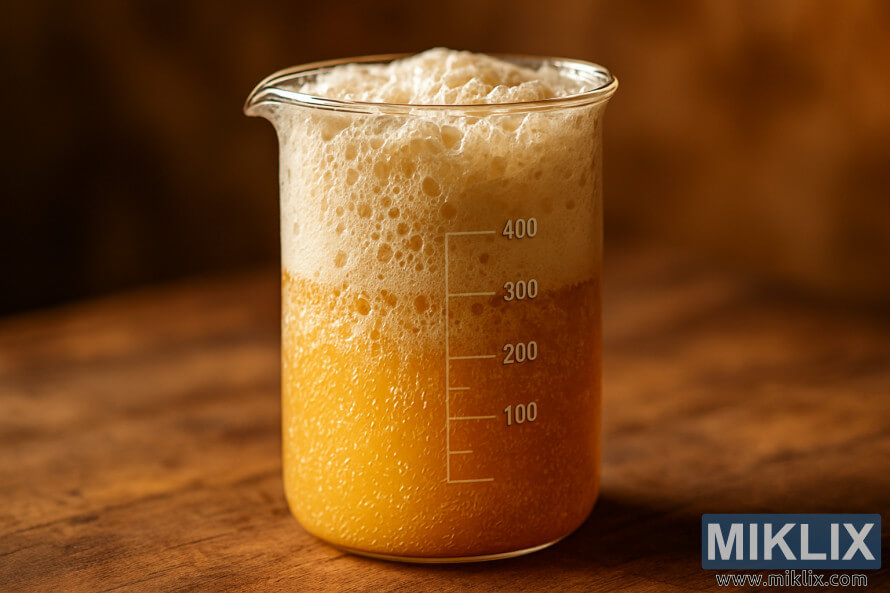
Creating a yeast starter is crucial for 5-gallon batches or when the original gravity exceeds 1.060. A robust starter minimizes lag time, enhances attenuation, and reduces the risk of fermentation getting stuck.
Adopt simple propagation techniques: use fresh yeast, aerate the wort before pitching, and supplement the starter with clean wort of 1.035–1.040 gravity. White Labs and Wyeast confirm this strain can handle repitching, provided sanitation is maintained.
- For standard ales, aim for the standard cells-per-milliliter pitch rate, adjusted for batch size and OG.
- When using one pack for 3 gallons, keep a close eye on fermentation speed. Be prepared to introduce a starter promptly if fermentation slows.
- Older packs or those stored in high temperatures may require a larger starter to restore cell viability.
Effective propagation involves avoiding contamination, using a stir plate if possible, and scaling up starters for high OG beers. These methods ensure Wyeast 1275 ferments quickly and efficiently, with consistent attenuation.
Click or tap the image for more information and higher resolutions.
Temperature control and fermentation schedule
Wyeast 1275 excels in a moderate temperature range. Brewers and strain datasheets confirm fermentation between 62–72°F. Homebrewers often aim for 65–68°F for ales, achieving British character without excessive esters.
Creating a clear schedule from day 1–7 is crucial. Activity is visible within 5–24 hours. Krausen forms between 12–28 hours. By day 3–5, activity subsides, but final gravity may take longer, influenced by wort gravity and oxygenation.
Employ gentle temp ramping to shape esters and finish. Some brewers pitch at 74°F, then cool to mid-60s to control esters. A gradual ramp over days helps yeast finish without stress.
- Day 1: Pitch within recommended range; watch for signs of activity.
- Day 2–4: Maintain stable temps; monitor krausen and aroma.
- Day 5–7: Check gravity; consider extra conditioning if needed.
Cooling after pitching can tame fruity esters and reduce fusel formation. If pitching warm, cool within 12–48 hours to target range. Avoid sudden drops that can shock yeast and stall fermentation.
Monitor gravity from day 4–7 and adjust if necessary. If fermentation slows, a controlled rise of a few degrees for 24–48 hours can reactivate yeast. When gravity stabilizes across two readings, plan for conditioning before packaging.
Consistent temperature control, mindful temp ramping, and a simple schedule day 1–7 lead to predictable results with Wyeast 1275. Keep records to refine timing and signals for consistent beer quality.
Oxygenation, yeast health, and diacetyl management
Wyeast 1275, with its double-drop brewery roots, often requires more oxygen. Treat it as a high O2 demand O3 yeast for fermentation aeration. For 5-10 gallon batches, ensure vigorous aeration at pitch. For larger batches, use pure oxygen and monitor levels to support strong early growth.
Yeast nutrition is crucial in preventing stalls and off-flavors. Add a balanced nutrient, especially for high-gravity worts. Ensure a healthy cell count by adjusting starter or pitch rate. Strong cell health reduces stress compounds that lead to buttery diacetyl.
- Initial oxygenation: give ample dissolved oxygen at pitch.
- Starter or proper pitching rate: avoid underpopulation of yeast.
- Nutrient addition: use a yeast nutrient tailored for complex worts.
If fermentation looks sluggish or gravity lags, an oxygen burst 24 hours after pitch can help rescue activity. A short, controlled oxygen boost early in active fermentation may restore attenuation and lower diacetyl production. Limit intervention to the window when yeast are still actively dividing.
Plan a diacetyl rest toward the end of fermentation to clean up buttery esters. Raise temperature a few degrees for 24–48 hours once primary activity slows. Measure final gravity and aroma before cooling to ensure diacetyl levels have dropped.
- Provide adequate oxygen at the start.
- Watch fermentation pace; consider an oxygen burst 24 hours in if needed.
- Perform a diacetyl rest late in fermentation if buttery notes persist.
Combine these steps with consistent sanitation and good cell management. Proper oxygenation, timely yeast nutrition, and a measured diacetyl rest keep Wyeast 1275 performing cleanly. This reduces the risk of incomplete fermentation or lingering off-flavors.
Flocculation, clarity, and conditioning
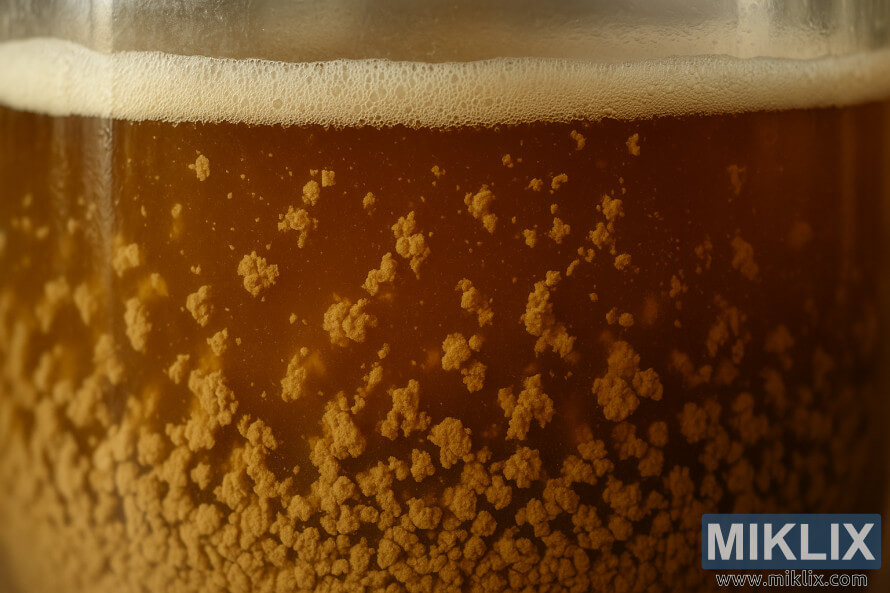
Wyeast 1275 is noted for medium-low flocculation, with homebrewers observing a spectrum from low to medium. Many brewers are surprised by how well the yeast settles. It forms tight, compact lees that drop below the valve in conical fermenters.
Clarification time is influenced by temperature and handling. Some brews clear within days after fermentation ends. However, others remain sensitive to movement, becoming cloudy again if racked too quickly.
Even when gravity stabilizes, a short conditioning period is advisable. This allows flavors to mature and particulates to settle. Cold-conditioning and gentle carbonation enhance mouthfeel and speed up settling.
- Minimize transfer turbulence to avoid disturbing tight compact lees.
- Cold-crash before racking to reduce clarification time.
- Leave a small headspace or use a trub trap when using valves to limit beer loss from compact layers.
The final beer typically has less suspended yeast, reflecting the strain's flocculation nature. For those prioritizing clarity, allow extra time in primary fermentation. Conditioning steps can further refine the beer's appearance and texture.
Click or tap the image for more information and higher resolutions.
Water profile and its interaction with yeast character
The legacy of Burton/Thames water sulfate has significantly influenced how Wyeast 1275 performs. Brewers in Burton-on-Trent and along the Thames adjusted their recipes. They aimed to match a natural mineral character. This brought out the hop bite and spicy yeast notes.
To highlight hop definition and the yeast’s peppery finish, a moderate-to-high sulfate water profile is recommended. High-sulfate pairing is ideal for bitters, brown ales, porters, and many English-style pale beers. These styles benefit from structure and bitterness.
For delicate pale ales or beers that should showcase fragile hop aromatics, softer water is advised. Lower sulfate helps avoid a harsh roasted or spicy aftertaste. This can clash with light malt and floral hops.
- Adjust sulfate/chloride ratios to target mouthfeel and accentuate malt or hop character.
- Use gypsum cautiously to raise sulfates when pursuing a high-sulfate pairing for fuller bitterness.
- Consider calcium and bicarbonate along with sulfates to balance mash chemistry and avoid off flavors.
Mash pH and salt additions impact yeast esters and phenolics. If 1275 shows too much mineral character, reduce sulfate or bump chloride to round the finish. Test small batches before scaling adjustments.
Match water chemistry to style goals. Pair Wyeast 1275 with malty, structured beers when you want the yeast’s spicy notes to shine. Use softer water for subtle, aromatic styles. This keeps the yeast from overwhelming delicate flavors.
Recipe pairing and style suggestions
Wyeast 1275 excels in beers that highlight malt. It's perfect for porter, stout, brown ale, and traditional English bitter. The yeast contributes toffee and gentle fruit esters, enhancing these styles.
For porters or stouts, start with a base of pale malt. Add 8–15% crystal and 5–8% roasted or chocolate malts. Aim for 35–45 IBUs to balance the sweetness of the malt. The finish should be dry, allowing the roast and toffee to stand out.
In brown ales, moderate hopping is key. This lets the estery fruit and caramel from the yeast and malt shine. Hops like East Kent Goldings, Fuggle, or Kentish varieties complement this yeast, creating a classic English taste.
Be cautious with pale ales. Avoid them if possible, as 1275 can introduce a spicy, roasted aftertaste. This might clash with the light, aromatic hop characters found in pale ales.
If you're brewing an IPA with 1275, adjust the water profile. This will help emphasize hop clarity and increase bitterness. Use less crystal malt and more hops to keep the beer hop-forward.
- Porter/stout pairing: robust crystal and roast, moderate bitterness, highlight toffee and roast.
- Brown ale pairing: moderate hopping, caramel malts, showcase estery fruit and toffee.
- English bitter pairing: classic English hops, moderate OG, accentuate malt balance.
When creating recipes, test small batches to fine-tune bitterness and grain balance. This approach helps to fully utilize the porter stout brown ale bitter characteristics without overpowering the beer.
Troubleshooting common fermentation issues
When fermentation goes awry, start with a quick checklist. Check pitch rate, oxygenation at the start, mash schedule, fermentation temperature, and nutrient additions. These steps catch many causes of stuck fermentation and point to low attenuation solutions when gravity stops falling.
If attenuation stalls or the final gravity sits high, consider a yeast restart. Rehydrate and add a vigorous strain or build a healthy starter and pitch it warm. Give a gentle oxygenation boost within the first 24 hours if yeast seem sluggish. These moves often restore activity without harsh interventions.
Diacetyl shows as a buttery or butterscotch note. Perform a diacetyl rest by raising temperature a few degrees for 24–72 hours so active yeast can reabsorb the compound. Keep yeast in suspension long enough to finish cleanup; if yeast are flocculating early, a yeast restart can help.
For low attenuation solutions, review nutrient levels and pitching rates. Underpitched or oxygen-starved yeast commonly leave residual sugars. Add yeast nutrient early in the wort or feed a starter to increase viable cell count. Avoid aggressive aeration after active fermentation begins.
Light beers that pick up spicy, roasted, or burnt notes may suffer from grain or mash issues interacting with yeast. For delicate styles, choose a cleaner-fermenting strain or lower mash temperatures to reduce harsh compounds. Changing strain is often simpler than reworking a full recipe.
Hazy beer can mean weak flocculation or incomplete conditioning. Cold crash or extend conditioning time to settle particles. When racking, leave compact lees undisturbed to reduce turbidity. Fining agents can help but use them after fermentation finishes.
- Verify pitch rate and starter health before blaming the strain.
- Confirm early oxygenation; it prevents sluggish starts and stuck fermentation.
- Use a diacetyl rest if buttery off-flavors persist after primary fermentation.
- Consider a yeast restart when gravity refuses to drop despite good conditions.
These checks and simple fixes reduce wasted batches and give brewers control when fermentation veers off plan. Keep notes and act quickly; small adjustments early save time later.
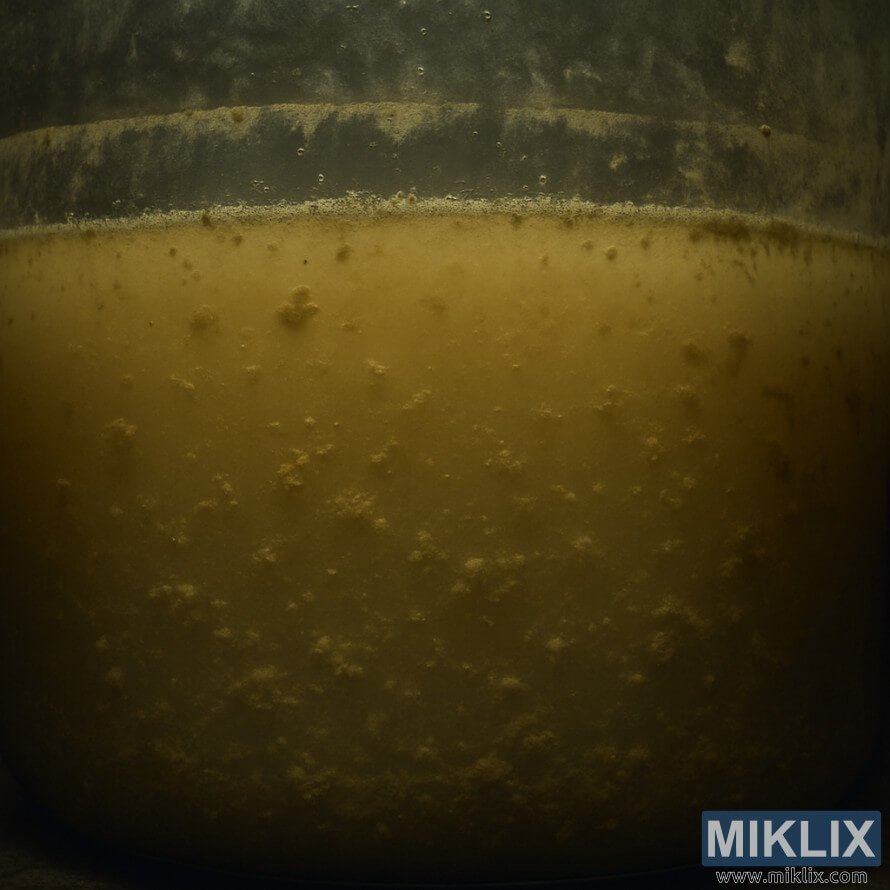
Click or tap the image for more information and higher resolutions.
Comparisons and user testing notes from brewers
Brewers conducting side-by-side tests noted significant differences in aroma and finish. Wyeast 1469 West Yorkshire was found to have a malty balance and a drier finish. In contrast, Wyeast 1275 exhibited more estery top notes, with a distinct mineral and spicy backbone. LalBrew Nottingham, while cleaner in grain profile, lacked aromatic complexity and sometimes showed diacetyl.
Homebrewers reported on fermentation behavior and attenuation. They noted that 1275 starts and finishes faster, similar to Windsor and other English strains. Attenuation ranged from 76.2% to 82.6% across three consistent batches, with consistent results under matched mash and ferment conditions.
- Flavors: 1275 brings British fruit and mineral spice; 1469 stays malt-forward and dry.
- Fermentation: 1275 often starts quickly and can push attenuation higher than expected.
- Off-notes: Nottingham may show lower ester expression and, in some tests, a touch of diacetyl.
Comparisons with White Labs strains are common in forums. WLP023 Burton Ale is often seen as a practical equivalent to Wyeast 1275. Repeated propagation of WLP023 yielded similar sensory outcomes, including a slightly roasted or spicy finish in lighter beers and attenuation that met or exceeded expectations.
Choosing a recipe depends on the desired character. Wyeast 1275 is ideal for those seeking subtle British fruit with mineral spice. Strains like 1469 are better for the cleanest, driest English profile. For a White Labs option similar to 1275, consider WLP023.
Tasting panel notes across multiple sessions highlighted consistency and variance. Panels rated 1469 highest for malt balance, 1275 for aromatic complexity, and Nottingham for clarity of malt character. These sensory results help brewers choose a strain based on aroma priority, finish, and expected attenuation rather than brand alone.
Packaging, aging, and cellaring behavior
Once fermentation is visible, it's tempting to package right away. However, many brewers choose to wait a week or more. This extra time allows the beer to settle, reducing yeast shock and enhancing clarity without affecting flavors.
Before packaging, cold crash the beer to remove yeast and particles. A brief cold crash improves clarity and minimizes the disturbance of sediment. When filling bottles or kegs, do so carefully to avoid stirring up sediment for a clearer final product.
Carbonation plays a crucial role in shaping the beer's mouthfeel and accentuating its dry finish and fruity notes. Both bottle conditioning and keg carbonation are viable options. Ensure there's enough conditioning time for any minor off-flavors, like diacetyl, to be reabsorbed by the yeast.
Cellaring allows the beer's aging profile to develop over weeks, not years. Recipes with a dark, malt-forward profile benefit from short-term aging. Expect the roast, toffee, and estery flavors to blend and soften over this period.
It's important to avoid excessive transfers that leave behind the tight, compact lees. Minimize oxygen exposure during transfers to preserve the beer's aging profile. Beers stored at stable, moderate temperatures will mature more cleanly.
To achieve the best results, monitor carbonation levels post-packaging and taste at regular intervals. This approach will help determine when the beer reaches its perfect balance of mouthfeel and flavor. Proper handling at packaging time is key to a predictable aging process.
Conclusion
Wyeast 1275 summary: This Thames Valley strain embodies the essence of English brewing, thanks to Brakspear's traditional methods and double-drop practices. It offers moderate fruity esters and a mineral or spicy finish. Fermented in the mid-60s°F, it often dries more than the datasheet suggests. Expect brisk fermentations and a consistent profile with proper pitch and temperature control.
Best uses for Thames Valley yeast include porters, stouts, brown ales, bitters, and some English-style IPAs. These beers benefit from its drying finish and estery/mineral complexity. However, use it with caution in delicate pale ales or hop-forward beers. A spicy or roasted aftertaste might clash with subtle hop aromas.
Brewer recommendations: Ensure adequate cell counts by using a starter for high-OG or large batches. Oxygenate well at the start and maintain fermentation between 62–72°F. A short conditioning period and a diacetyl rest may be necessary. Aim for slightly higher attenuation targets to achieve a clean and dry finish.
Further Reading
If you enjoyed this post, you may also like these suggestions:
- Fermenting Beer with Wyeast 1217-PC West Coast IPA Yeast
- Fermenting Beer with White Labs WLP820 Oktoberfest Märzen Lager Yeast
- Fermenting Beer with Wyeast 1187 Ringwood Ale Yeast