
Fermenting Beer with Wyeast 1087-PC Bohemian Ale Yeast Blend
Published: March 22, 2026 at 9:39:54 PM UTC
Wyeast 1087-PC Bohemian Ale Yeast Blend is a top pick for homebrewers seeking clean, malt-forward ales. It boasts medium-high flocculation and 71–75% attenuation. This results in beers with a balanced body and moderate dryness.
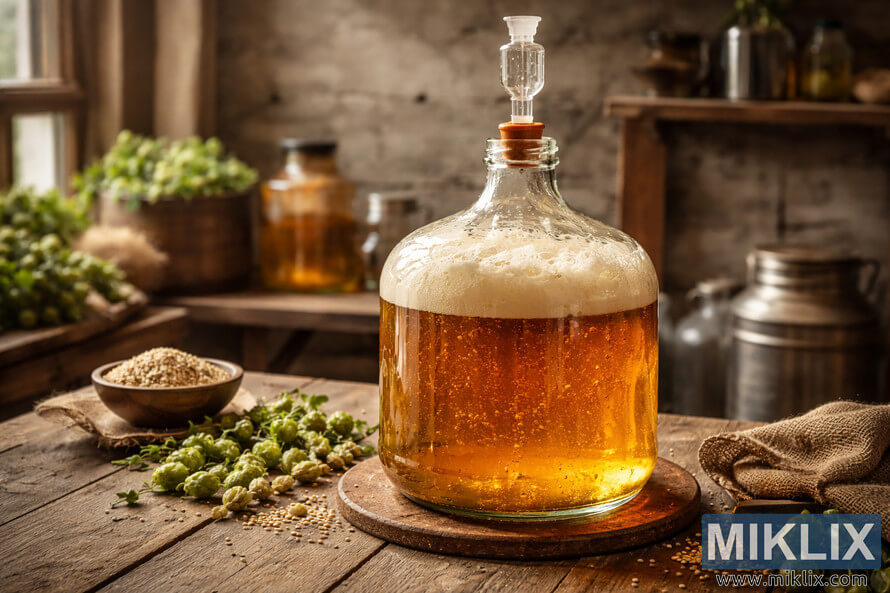
Click or tap the image for more information and higher resolutions.
The strain is non-phenolic, tolerates alcohol up to about 11%, and performs well across a recommended fermentation range of 64–72°F. This profile makes fermenting with 1087 suitable for a wide range of beers, from American Pale Ales and Amber Ales to robust stouts and higher-gravity beers. Wyeast’s active community presence on Instagram and other platforms offers visual references and recipe notes. These complement formal Wyeast 1087 review data.
Key Takeaways
- Wyeast 1087-PC Bohemian Ale Yeast Blend yields clean, malt-focused flavors with medium-high flocculation.
- Typical attenuation of 71–75% creates balanced body and perceived dryness.
- Recommended fermentation range is 64–72°F; alcohol tolerance near 11% supports high-gravity brewing.
- Common retail availability includes in-store pickup and typical pricing around $13.99 per pack.
- Community-shared recipes and photos on Instagram help when fermenting with 1087.
Overview of Wyeast 1087-PC Bohemian Ale Yeast Blend
The Wyeast brand 1087-PC Bohemian Ale Yeast Blend is a versatile choice for homebrewers. It's favored for both English- and American-style ales. This yeast blend offers clean fermentation, enhancing malt and hop clarity.
What the strain is and brand background
Wyeast markets the 1087 strain as a reliable, liquid culture. It's sold through retail channels for around $13.99, with free in-store pickup options. The brand supports a strong social presence, where brewers share tips and real-world performance notes.
Key laboratory specs: flocculation, attenuation, alcohol tolerance
- Flocculation 1087: rated medium-high, so yeast settles well for clearer beer without premature drop-out.
- Attenuation 71–75%: yields balanced dryness while preserving some malt body in most recipes.
- Alcohol tolerance 11% ABV: enables many high-gravity ales when fermentations are managed properly.
Why homebrewers choose this blend
Homebrewing 1087 benefits include adaptability across stouts, porters, pale ales, ambers, IPAs, and barleywines. The clean profile and moderate attenuation of the Wyeast 1087 retain character without cloying the beer. Its alcohol tolerance of 11% ABV is suitable for stronger brews. The medium-high flocculation 1087 aids in achieving finishing clarity.
The combination of Wyeast brand reliability, accessible retail pricing, and a strong online community solidifies the blend as a top choice for hobbyists and small pro brewers.
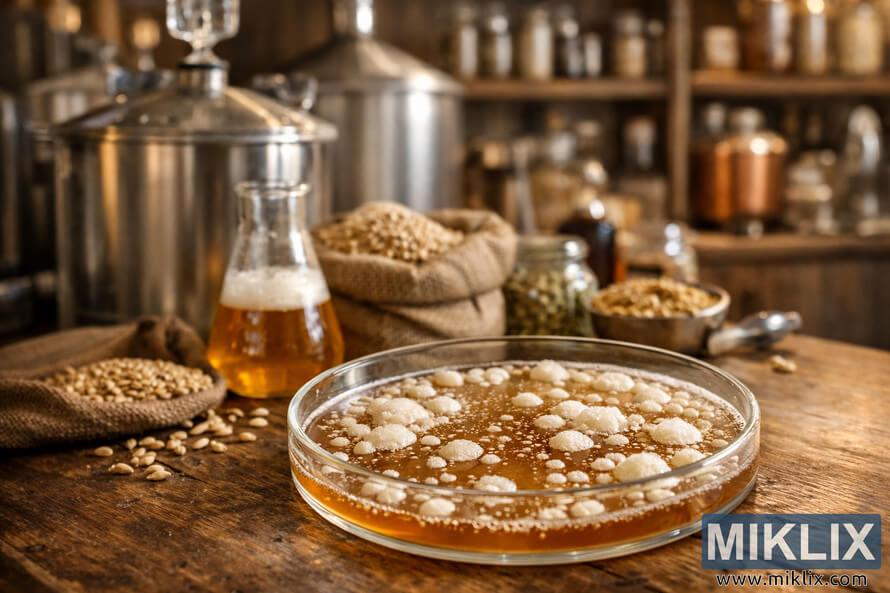
Click or tap the image for more information and higher resolutions.
Flavor Profile and Fermentation Characteristics
The Wyeast 1087-PC strain offers a clean, approachable character. It supports malt and hop ingredients without overpowering them. Brewers find the 1087 aroma to be restrained, with light fruitiness and malt-enhancing notes. This makes it a reliable base for many ales.
Typical aroma and flavor contributions include soft esters and a subtle sweetness. These esters add gentle fruit tones without being aggressive. In darker beers, toffee, caramel, roasty, and chocolate malts remain prominent. In pale, hoppy beers, the yeast stays quiet, allowing hop aroma and bitterness to dominate.
Non-phenolic yeast behavior is a key reason many choose this strain. It produces minimal clove or medicinal spice. This trait makes it a sensible choice for malt-forward beers, such as Sweet Stout or Oatmeal Stout, where grain complexity can shine.
The attenuation effect (71–75%) shapes body and sweetness in a straightforward way. It leaves enough residual sugars for a satisfying mouthfeel without a cloying finish. With a body and FG within 71–75%, you can expect balanced perceived sweetness and moderate drinkability.
- For sweeter, fuller finishes, raise mash temperature or add dextrin malt to increase perceived sweetness.
- For drier results, lower mash temperature and favor more fermentable malts to push attenuation effect higher within the 71–75% range.
- For hop-forward beers, the clean esters and aroma let hop character remain sharp without yeast-derived phenolics interfering.
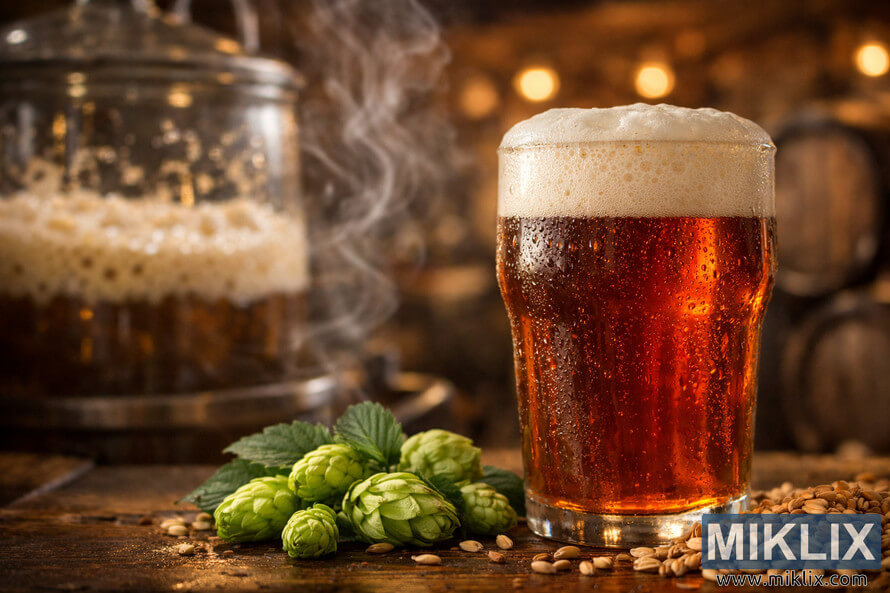
Click or tap the image for more information and higher resolutions.
Compatible Beer Styles for Wyeast 1087-PC Bohemian Ale Yeast Blend
Wyeast 1087-PC excels in a broad spectrum of ales. Its clean, non-phenolic nature allows malt and hops to take center stage. This yeast is ideal for both session beers and strong ales, provided malt and fermentation strategies are meticulously planned.
Best English- and American-style ales to brew
- American Pale Ale: clarity and balanced attenuation make this strain a solid choice for hop-forward builds using American ales yeast.
- American Amber Ale: the yeast preserves malt sweetness while fermenting cleanly, highlighting caramel and biscuit notes.
- American Brown Ale: medium body and restrained esters suit nutty and toasty profiles.
- Cream Ale: light, crisp finish benefits from the strain’s moderate attenuation and neutral profile.
- American Porter: retains roast and chocolate tones without adding phenolic spice.
Using the yeast in stouts, porters, and barleywines
- Sweet Stout and Oatmeal Stout: as an oatmeal stout yeast, 1087 preserves rich malt complexity and silky mouthfeel while finishing fairly dry for balance.
- Foreign Extra Stout and American Stout: the strain’s clean profile lets dark malt roasts and lactose, if used, stand out.
- Imperial Stout: 1087 stouts perform well when pitched strong and fed nutrients to avoid stalls in high gravity brewing 1087 scenarios.
- American Barleywine: suitable for barleywine fermentation when you plan for extended conditioning and staggered nutrient additions.
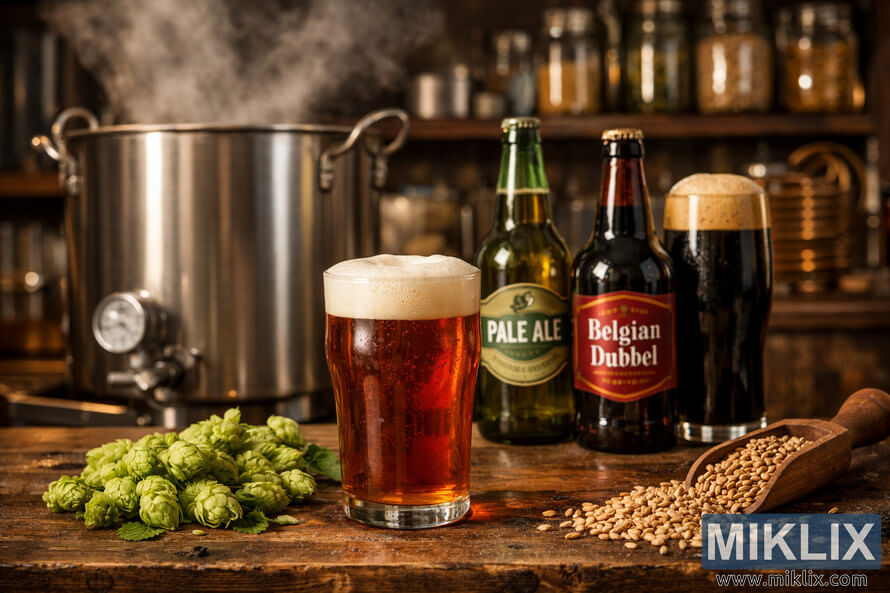
Click or tap the image for more information and higher resolutions.
Brewing high-ABV beers up to 11% tolerance
1087 offers an 11% alcohol tolerance yeast option for bold projects. High gravity brewing 1087 works when you manage yeast health with starters, oxygen, and nutrients. Staggered feeding reduces stress and improves attenuation in heavy worts.
Use careful pitching rates and temperature control to get reliable attenuation at high gravities. These steps help the strain reach its potential in strong ales without producing off-flavors during barleywine fermentation or imperial stout builds.
Optimal Fermentation Temperature Range
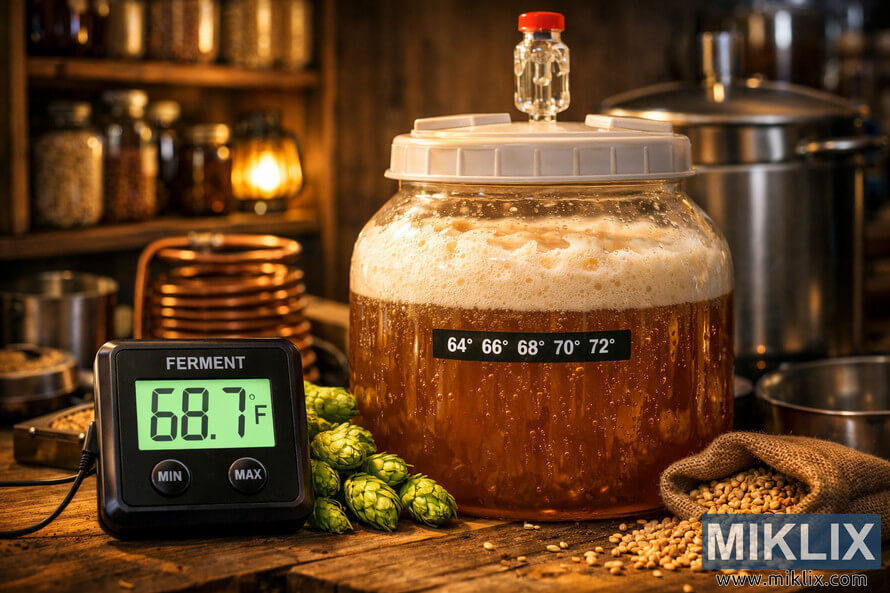
Wyeast 1087-PC thrives in a steady fermentation environment. The recommended temperature range of 64–72°F ensures consistent results. It supports the yeast's non-phenolic nature and aids in achieving the desired attenuation for ales.
Working within the recommended 64–72°F range
Staying within the 1087 temperature range minimizes unexpected outcomes. Opt for the lower end for a cleaner taste. For a faster fermentation and a hint of fruitiness, aim for the higher end.
Effects of temperature on ester production and attenuation
Temperature significantly influences flavor and final gravity. Cooler temperatures, around 64–66°F, reduce ester formation, resulting in a cleaner malt profile. Warmer temperatures, near 70–72°F, enhance ester production, potentially increasing the beer's apparent attenuation.
Temperature control tips for homebrewers in the United States
- Utilize a dedicated fridge or a temperature-controlled fermentation chamber for precise control.
- Consider using simple swamp coolers or insulated closets when refrigeration is not feasible.
- Use an accurate probe to monitor temperatures and log readings to prevent temperature fluctuations that harm yeast health.
- Warm the wort slowly when pitching to avoid thermal shock and ensure even temperature and attenuation.
Consistent temperatures prevent off-flavors and support reliable fermentation and attenuation. Adhere to these temperature control tips to maintain yeast health and ensure the beer's style integrity.
Click or tap the image for more information and higher resolutions.
Pitching and Starter Recommendations
Proper pitching is crucial for a clean, vigorous fermentation with Wyeast 1087-PC. Use standard ale pitching charts as a starting point. Adjust for batch size, gravity, and yeast age. Protect yeast vitality by keeping starter and wort temps close and handling yeast gently.
How to calculate proper pitch rates for various batch sizes
Begin with the common ale guideline of roughly 0.75–1.5 million cells per milliliter per degree Plato. A yeast starter calculation or an online pitch calculator makes this quick for 5-gallon batches. Retail packaging cell counts vary, so verify pack age and size before relying on a single pouch.
When to use a starter versus direct pitching
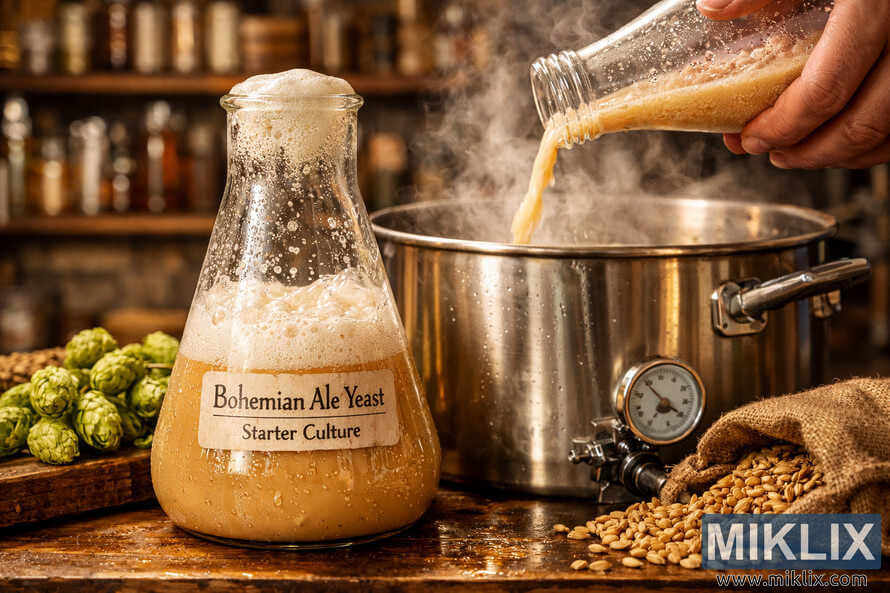
Use a starter for 5-gallon batches, high-gravity beers, or when yeast packs are older. The choice between starter and direct pitching depends on gravity and yeast condition. Direct pitching is suitable for low-gravity beers with fresh, single-use pouches from Wyeast or known suppliers.
- When to make a starter: brewing above average gravity, repitching many times, or using older liquid yeast.
- Skip the starter: small, low-OG batches with fresh, properly stored yeast.
Rehydration and handling best practices
Follow Wyeast rehydration guidance for dry strains and make starters for liquid or slurry yeast under sanitary conditions. Rehydrate dry yeast per manufacturer directions, avoiding hot water. Gently acclimate yeast to wort temperature before pitching.
- Keep yeast refrigerated until ready to use to preserve yeast vitality.
- Sanitize starter flasks and tools to prevent contamination.
- Avoid temperature shock by matching starter and wort temps within a few degrees.
Pitching rates for ales vary with style and intent. Use yeast starter calculation tools when in doubt. Good yeast handling best practices and attention to pitch rate 1087 shorten lag time and lower the risk of stuck or sluggish fermentations.
Click or tap the image for more information and higher resolutions.
Fermentation Schedule and Timeline
Creating a detailed fermentation schedule is crucial for brewers aiming to achieve quality. Wyeast 1087-PC exhibits consistent progress within its recommended temperature range. Below is a guide outlining typical primary fermentation periods, key signs to observe, and the best times for conditioning and packaging.
Typical primary fermentation duration for ales
Primary fermentation for ales usually lasts between 3–7 days for standard-strength beers. Within 48–72 hours, fermentation activity 1087 becomes evident as krausen forms and airlock activity increases. For high-gravity beers, the primary fermentation period can extend to 7–14 days or more, influenced by pitch rate and nutrient additions.
Signs of healthy fermentation with this strain
- Vigorous krausen formation in the first two to three days.
- Steady CO2 release or visible airlock bubbling through the first phase.
- Consistent gravity decline that tracks toward the expected 71–75% attenuation.
- Yeast beginning to flocculate and clear as primary attenuation completes.
Monitoring for signs of healthy fermentation minimizes the risk of premature racking. It also ensures adherence to the 1087 fermentation timeline. Regularly record gravity readings 24–48 hours apart to confirm stability before transferring.
When to rack, condition, and package
- Follow the racking schedule 1087 by transferring after primary gravity stabilizes and active bubbling slows. This timing preserves yeast health and flavor clarity.
- Allow conditioning times ales of 1–3 weeks in secondary or cold storage for flavor maturation and improved clarity. Longer conditioning benefits malt-forward or higher-ABV styles.
- Use a packaging timeline that waits for a stable final gravity and a taste check that confirms the desired profile. Choose bottle conditioning or kegging based on carbonation goals and style requirements.
Sticking to a structured 1087 fermentation timeline and a thoughtful racking schedule 1087 leads to cleaner beer and more predictable results at packaging timeline milestones.
Attenuation and Body Management
Grasping the impact of attenuation on mouthfeel is crucial for brewers aiming to perfect their beer's finish. Wyeast 1087’s typical lab range serves as a foundational guide for selecting mash and grain components. Even minor tweaks in malt composition or mash schedule can significantly alter the beer's perceived dryness and final mouthfeel.
Understanding 71–75% attenuation and perceived dryness
Employ the 71–75% attenuation range as a strategic planning tool. This range indicates the yeast will consume a significant portion of fermentable sugars, leaving a moderate residual. The same attenuation level will impart a drier sensation in a low-OG pale ale compared to a high-gravity stout. This disparity is due to the interplay between attenuation and original gravity in determining perceived dryness.
Malt bill strategies to adjust body and mouthfeel
- To enhance body, incorporate dextrinous malts. Carapils, crystal malts, and flaked oats significantly improve mouthfeel, counteracting thinness. Yeast attenuation remains unaffected.
- To achieve a thinner beer, opt for highly fermentable base malts and reduce specialty malts. This approach allows 1087 to reach its upper attenuation limit, resulting in a lighter mouthfeel.
- Malt bill adjustments offer a swift method to subtly alter texture without altering the fermentation schedule.
Using adjuncts and mash profiles to influence final gravity
Adjuncts like lactose or maltodextrin add unfermentable sweetness and bulk. Lactose is particularly effective in sweet stouts, where 71–75% attenuation might otherwise dry the beer excessively.
Modifying the mash profile's final gravity is achievable by adjusting the mash temperature. Higher mash temperatures yield less fermentable wort, thereby increasing the final gravity. Conversely, lower mash temperatures result in more fermentable wort, supporting a drier finish consistent with the yeast's attenuation range.
By integrating FG control with targeted adjuncts and malt bill adjustments, brewers can achieve the precise balance of sweetness, body, and drinkability desired for their style.
Flocculation and Clarity Expectations
Wyeast 1087-PC exhibits medium-high flocculation effects, aiding in beer clarity without premature fermentation halt. A clear beer is expected after conditioning, with yeast settling in one to two weeks. This is especially true if temperatures are slightly lowered after primary fermentation. Understanding these clarity expectations is crucial for planning the conditioning and packaging phases for a clean pour.
Medium-high settling behavior and finishing beers
The strain's medium-high settling tendency causes cells to move towards the trub as activity diminishes. This results in dense yeast banks at the bottom and clearer beer above. Such natural settling often reduces the need for aggressive interventions in brewing.
Practical yeast flocculation techniques
Early gentle rousing is advised if yeast suspension is needed, followed by undisturbed fermentation to allow flocculation. Monitoring gravity confirms fermentation completion before encouraging sedimentation. These techniques ensure full attenuation and clean finishing clarity.
Cold crash, fining, and time to clarify homebrew
Cold crash fining accelerates clarity. Lower temperatures to near-freezing for 24–72 hours and add finings like gelatin or Whirlfloc for faster particle drop-out. Extended conditioning remains a reliable method for clarifying homebrew, especially when minimal handling is preferred.
Homebrew filtering vs conditioning
Many homebrewers debate filtering versus conditioning. Filtration offers immediate polish but requires additional equipment and can remove subtle malt or hop character. Natural clarification methods, combined with finings and a measured cold crash, often achieve the desired clarity without extra equipment.
- Plan for one to two weeks of settling after fermentation for clarity expectations 1087.
- Use cold crash fining for faster results when packaging deadlines exist.
- Favor natural clarification methods when preserving delicate flavor is a priority.
Alcohol Tolerance and High-Gravity Brewing
Wyeast 1087’s alcohol tolerance allows for brewing up to 11% ABV, provided you prioritize yeast health. For strong ales like Imperial Stout and American Barleywine, careful planning is essential. This includes ample yeast, full oxygenation at the start, and strategies to reduce yeast stress.
Begin with a robust starter, sized for your target gravity. Ensure thorough oxygenation at pitching, possibly using pure oxygen for high OG worts. Staggered feeding of yeast nutrients, split between early and mid-fermentation, is beneficial. This approach supplies nitrogen and trace minerals.
- Build a starter that matches your batch and target ABV.
- Use staggered feeding yeast nutrients rather than a single dose.
- Employ high-gravity fermentation nutrients such as DAP and yeast energizer to support metabolism.
Implement staggered sugar feeding protocols for higher gravity beers, allowing yeast to adapt. Monitor gravity daily to catch stuck fermentations early. Krausen height and airlock activity are simple indicators of fermentation progress.
Act swiftly if you notice stuck fermentations or persistent yeast stress. A few degrees of temperature increase can revive activity. Alternatively, add a fresh active starter of a compatible ale strain or dose targeted nutrients. Repitching healthy yeast is often the best solution for prolonged stalls.
Keep a log to track gravity trends and temperatures during high-gravity batches. Combine careful oxygenation, 1087 high gravity tips, and consistent nutrient strategy to reach attenuation goals. Regular checks help spot trouble before it affects the beer.
Using Wyeast 1087-PC in Hopped Beers and IPAs
Wyeast 1087-PC offers a clean, slightly fruity base that enhances the hop profile in American styles. It's the go-to choice for brewers aiming for a bright hop aroma and firm bitterness. To preserve hop clarity and control ester levels, keep fermentation cool.
How the strain performs in American IPA and Double IPA
In American IPA, 1087 provides a neutral base that showcases citrus, pine, and tropical hop notes. For Double IPA, the same characteristics are present but with a focus on managing gravity and handling oxygen. Its high attenuation and non-phenolic nature ensure a crisp finish, perfect for aggressive late hopping.
Balancing hop aroma with yeast character
Temperature and pitch rate are key to balancing hops and yeast. A cooler ferment reduces esters, allowing hop aroma to shine. Choose 1087 for a hop-forward profile, keeping malt and yeast subtle. Use a restrained malt bill to ensure hop character remains the focus.
Dry hopping timing and its interaction with yeast
Timing is crucial when dry hopping with 1087 to capture volatiles without hop creep. Late primary or short secondary rest are common approaches. Dry hopping can lead to re-fermentation if enzymes in hops act on dextrins. Monitor gravity post-dry hopping and allow stabilization before packaging.
- Best practice: ferment at lower end of 64–72°F to limit ester formation.
- Use late additions, whirlpool hops, and targeted dry hops to maximize aroma.
- Watch for hop creep in heavily hopped beers and hold several days to confirm FG.
Pairing Yeast with Mash and Grain Bills
Choosing grain bills and mash plans that match Wyeast 1087-PC brings out the best in each style. Use malt choices and mash schedule light styles to guide body, sweetness, and roast. Below are practical grain combos and small adjustments you can apply to stay balanced while brewing for different target beers.
Suggested grain bills for Sweet Stout, Oatmeal Stout, and Imperial Stout
- Sweet Stout: Base pale malt with 6–12% crystal and 5–10% chocolate malt. Add lactose at 5–10% of fermentables to support a soft finish and work with grain bill sweet stout goals.
- Oatmeal Stout: 60–70% pale malt, 10–20% flaked oats, and 5–10% roasted barley. Balance roasted notes using oatmeal stout recipe grains to enhance creaminess without harshness.
- Imperial Stout: 75–85% high-quality base malt, 10–20% specialty malts and 3–6% black or roasted malts. Scale the imperial stout grain bill upward and plan a robust mash plus staggered nutrient additions for high ABV.
Grain combinations for American Pale Ale, Amber Ale, and Brown Ale
- American Pale Ale: Clean two-row or Maris Otter base with 5–10% medium crystal. Keep the APA grain bill simple to let hops and malt backbone coexist.
- Amber Ale: Increase crystal malt to 8–15% and use a slightly higher mash temp to add body. These amber ale grain recipes pair well with 1087 for a rounded mouthfeel.
- Brown Ale: Use medium-roast malts, 6–12% crystal, and a touch of roast (1–3%) for depth. Brown ale grains should highlight nutty and caramel notes under a neutral yeast profile.
Adjustments for cream ales and lighter styles
- Cream Ale: Lean grist dominated by pale malt with up to 10% corn or rice adjuncts. A conservative cream ale grain bill and ferment at the lower end of the range to keep flavors clean.
- Light styles: Lower mash temps and leaner grists help 1087 hit terminal gravity and deliver crispness. Follow light ale adjustments like reduced specialty malts and a brisk mash schedule light styles to keep beers drinkable.
Practical mash notes
- For fuller beers, raise mash temp by 2–4°F to retain dextrins.
- For drier beers, lower mash temp and use a step mash if converting large amounts of adjuncts.
- In high-gravity builds, extend conversion time and monitor nutrient additions so the yeast reaches its potential without stalling.
Practical Considerations: Packaging, Storage, and Availability
Wyeast 1087 packaging is available in familiar formats, sold through homebrew shops and online vendors across the United States. Listings often include options for in-store pickup yeast, making it convenient for busy brewers to collect locally.
Packaging varies by retailer but generally adheres to Wyeast standards. It's crucial to check labels for manufacture and expiration dates. When purchasing Wyeast 1087 USA, note the price and stock level. For instance, a local shop offered it for $13.99 with “3 in stock” and free in-store pickup.
Proper storage is essential to preserve yeast vitality. Store packages cold and refrigerate yeast as soon as possible. Avoid temperature swings to maintain cell counts and extend yeast shelf life.
- Keep packs refrigerated until use.
- Use older packs sooner or build a larger starter to make up for reduced cell counts.
- Check the manufacturer-recommended shelf life before pitching.
Homebrew shop availability is extensive, ranging from neighborhood stores to national online retailers. Local shops list stock and in-store pickup, aiding in brew day planning. Social platforms can guide you to reviews and nearby sellers when searching to buy Wyeast 1087 USA.
Compare Wyeast 1087 price across vendors for the best deal. Shipping chilled yeast may increase costs. If choosing local pickup, confirm the store’s cold storage policy to ensure the pack was kept properly before collection.
Troubleshooting Common Fermentation Issues
Small problems during fermentation are common and fixable with quick, targeted action. Check pitch size, oxygenation, nutrients, and temperature first. Addressing these basics often resolves slow starts before stronger measures are needed.
Addressing slow or stuck fermentations
If you notice very low activity, verify gravity and temperature. Slow fermentation Wyeast 1087 usually responds to warming toward the upper 64–72°F range and gentle rousing of the yeast. Early in the run, a cautious splash of sterile oxygen can help. For under-pitched batches, add a vigorous starter or a healthy slurry to restart attenuation.
- Warm fermenter gradually to encourage activity.
- Gently swirl or stir to resuspend yeast and break a krausen ring.
- Add yeast nutrient if fermentation shows signs of nutrient deficiency.
Fixes for off-flavors and unexpected phenolics
Off-flavor fixes begin with diagnosis. Sanitation lapses, temperature swings, and wild contamination all create faults. Non-phenolic yeast unexpected phenolics can come from mash pH issues or wild organisms, not from Wyeast 1087 itself.
- Confirm fermentation temps stayed stable and correct any drift.
- Review sanitation steps; clean and sanitize equipment between batches.
- Check mash pH and adjust future mashes to the recommended range to reduce phenolic precursors.
Recovering stressed yeast and repitching advice
To recover stressed yeast, build a fresh starter from a trusted liquid culture or rehydrated dry yeast with proper nutrients. Use warm, aerated wort and give the starter time to show vigorous activity before repitching.
When you repitch yeast tips matter: pitch a large active starter rather than dry yeast alone for best yeast revival. After repitching, monitor gravity and CO2 activity to confirm recovery. Keep fermentation within 64–72°F to support clean finish and prevent further stress.
Comparisons with Similar Ale Strains
Choosing the right yeast is crucial for aroma, mouthfeel, and final gravity. Wyeast 1087 falls between clean American and more complex English strains. It offers a balance, allowing brewers to achieve malt presence without excessive phenolics.
The performance of Wyeast 1087 varies based on temperature, mash profile, and pitching rate. Brewers should use yeast profile comparisons to predict ester levels and attenuation. This strain is often seen as a bridge, cleaner than many English strains but fuller than some American ones.
Deciding between 1087 and dry yeast depends on convenience versus control. Dry yeasts are ideal for quick, shelf-stable brews and low-maintenance batches. Liquid yeast, on the other hand, offers advantages in starters, precise cell counts, and subtle flavor tuning for high-gravity brews.
- Compare 1087 to other yeasts and note medium-high flocculation and 71–75% attenuation.
- Liquid yeast advantages: make a starter for stressed or high-ABV beers.
- Choose 1087 vs dry yeast when versatility and slightly malt-forward balance matter.
Brewers often debate 1087 vs 1084 vs 1056. Wyeast 1084 has a more English character with gentle fruitiness. White Labs/Wyeast 1056 (and US-05 dry equivalents) are very clean and neutral. The 1087 vs 1084 vs 1056 comparison shows 1087 as a middle ground: clean without phenolics, with a bit more body than pure neutral strains.
Yeast profile comparisons are essential for selecting yeast that aligns with style goals. For an English-style amber ale, 1087 provides malt support without overpowering hops. For an American pale ale, it keeps hop clarity while allowing caramel malts to shine.
Remember, final flavor and attenuation will vary with fermentation temperature and grain choices. Controlled trials are key to comparing strains side by side when exact differences are needed for a recipe.
Brewer Testimonials and Real-World Recipe Examples
Brewers worldwide share their experiences with Wyeast 1087 on forums and Instagram. They praise its clean fermentation, which enhances the flavors of roast and caramel malts. This strain is known for its predictable attenuation, ensuring a balanced beer.
Many brewers find that lactose and flaked oats create a richer mouthfeel in stouts. They appreciate Wyeast for preserving the sweetness of malt in stouts and porters. This results in a beer that finishes drier than expected.
- Example recipes Wyeast 1087 for Sweet Stout: 2-row base, 8–12% flaked oats, roasted barley and chocolate malt, lactose at 5–7% of fermentables.
- Example recipes Wyeast 1087 for Oatmeal Stout: similar base with higher oat content and moderate crystal malt for sweetness.
Here are concise recipe outlines for APA and imperial stouts. These are examples that many homebrewers adapt to their own recipes.
- APA recipe 1087: 2-row pale malt 90%, crystal 10L 6%, dextrine malt 2%; late hop additions with Cascade and Citra; ferment at 64–66°F for cleaner hop expression.
- Imperial stout recipe 1087: high gravity base 2-row plus Munich, heavy roasted barley, chocolate malt, optional flaked oats; target OG to match desired ABV up to 11% and use a robust starter.
Interpreting OG and FG readings helps calculate the actual ABV. This shows the achieved attenuation compared to the expected 71–75% range.
When results don't match expectations, check the pitch rate, temperature, and nutrient regimen. GC results tasting with 1087 often show a clean ester profile and minimal phenolics. This allows tasters to focus on malt, roast, and hop layers.
Homebrew feedback 1087 offers practical advice. For high-gravity batches, ensure good oxygenation. Build a large starter for imperial stouts. Ferment at the lower end of the range for APAs to highlight hops.
Conclusion
Wyeast 1087-PC Bohemian Ale Yeast Blend stands out as a reliable choice for homebrewers. It offers a balanced finish, suitable for a variety of beers. This includes Cream Ales, American Pale Ales, and even big beers like Imperial Stout and American Barleywine. Fermenting within 64–72°F ensures a clean, non-phenolic profile.
Practical considerations are key. Store packs in the fridge, and consider a starter for high-gravity brews. Nutrients or staggered feeding can help when aiming for 11% ABV. Many find value in in-store pickup, with prices often around $13.99.
Community feedback from Instagram and brewing forums is invaluable. It helps refine techniques and recipes. Cold crashes, fining, or gentle filtration can enhance clarity. Monitoring gravity and fermentation activity is crucial to avoid fermentation stalls.
For brewers aiming for a clean, malt-forward base, the Bohemian Ale Yeast Blend is a solid choice. Proper pitching rates, temperature control, and basic nutrient strategies are essential. This ensures the best results from this versatile strain.
FAQ
What is Wyeast 1087-PC Bohemian Ale Yeast Blend and who makes it?
Wyeast 1087-PC Bohemian Ale Yeast Blend is a liquid ale yeast by Wyeast Laboratories. It's known for its versatility in brewing English- and American-style ales. This yeast offers a clean fermentation profile, enhancing malt and hop flavors without spicy yeast notes.
What are the laboratory specs for Wyeast 1087?
The core specs for Wyeast 1087 include medium-high flocculation and 71–75% attenuation. It can tolerate up to 11% ABV. The recommended fermentation temperature is 64–72°F, ensuring a clean fermentation with minimal ester production.
Why do homebrewers choose 1087 for their beers?
Homebrewers prefer 1087 for its clean profile and versatility. It complements malt complexity in stouts and ambers while being neutral for hop-forward beers. Its medium-high flocculation aids in clarity without premature drop-out.
What aroma and flavor contributions should I expect from this strain?
Expect a clean yeast character with subtle esters at warmer fermentation temperatures. It won't contribute significant phenolic clove or spice. In malt-forward beers, it preserves toffee, caramel, roasty, and chocolate notes; in hoppy beers, it lets hop aroma and bitterness shine.
How does the non-phenolic nature affect malt-forward beers?
The non-phenolic nature of 1087 ensures that malt-derived flavors are not masked. Sweet Stouts, Oatmeal Stouts, and Imperial Stouts retain their rich flavors. Brewers can rely on the yeast to present malt complexity without adding spicy or clove-like notes.
How does 71–75% attenuation shape body and sweetness?
This attenuation range typically yields a balanced final gravity, neither overly sweet nor bone-dry. For lighter grists, the beer will taste drier; for richer mash bills, it will retain more body. Adjust mash temperature or add dextrinous malts and adjuncts to increase perceived body if desired.
What beer styles are best suited to Wyeast 1087?
The strain is suitable for a wide range of styles, including Sweet Stout, Oatmeal Stout, Foreign Extra Stout, American Stout, Imperial Stout, American Pale Ale, American Amber Ale, American Brown Ale, American Porter, American IPA, Double IPA, American Barleywine, Cream Ale, and other similar ales. Its clean profile makes it broadly useful.
Can I brew high-ABV beers with 1087?
Yes. The yeast tolerates up to about 11% ABV when handled properly. For high-gravity beers like Imperial Stout or Barleywine, use a large starter, thorough oxygenation at pitch, staggered nutrient additions, and careful temperature control to reduce yeast stress and achieve reliable attenuation.
What fermentation temperature should I use?
The recommended range is 64–72°F. Fermenting at the lower end (64–66°F) produces a cleaner profile with fewer esters. Moving toward 70–72°F can speed fermentation and increase ester expression slightly. Maintain steady temperatures to avoid off-flavors and uneven attenuation.
How do temperature changes affect ester production and attenuation?
Cooler fermentation suppresses esters and yields a cleaner character; warmer fermentation increases ester production and may slightly raise apparent attenuation rate. Temperature swings or inconsistent control can cause off-flavors or stalled fermentation, so stable control within 64–72°F is important.
What pitching rate and starter size should I use?
Follow standard ale pitching targets: roughly 0.75–1.5 million cells per mL per °Plato. Use pitch calculators or charts. For 5-gallon batches and high OG beers, make a starter to build cell mass. For low-gravity, short-storing packs, direct pitching may be acceptable. Increase starter size for older packs.
When should I make a starter versus direct pitching?
Use a starter for 5-gallon batches, any high-gravity brew, or when yeast packs are older. Direct pitching is usually fine for recent, correctly stored single-use pouches and low-gravity recipes. For beers approaching the strain’s 11% limit, a starter is strongly recommended.
What are best practices for rehydration and handling?
For liquid yeast, create a starter in sanitized conditions and match starter temperature to wort before pitching. Store yeast refrigerated until use and avoid temperature shocks. For dry yeast follow manufacturer rehydration guidelines. Sanitation, oxygenation at pitch, and gentle acclimation improve viability.
How long does primary fermentation usually take with 1087?
Active fermentation typically runs 3–7 days, with vigorous activity visible within 48–72 hours at recommended temperatures. High-gravity beers may take 7–14 days or longer. Monitor gravity; allow extra time for strong ales to stabilize.
What are common signs of healthy fermentation for this strain?
Healthy signs include prompt krausen formation, steady CO2 output, and gravity moving toward the expected 71–75% attenuation. After primary, medium-high flocculation will begin to show as yeast settles. If activity is weak or gravity stalls, check pitch rate, oxygenation and temperature.
When should I rack, condition, and package beers fermented with 1087?
Rack or transfer after gravity has stabilized and active fermentation slows—often after primary completes. Condition 1–3 weeks for flavor maturation and clarity; cold storage or secondary conditioning helps clarify. Package once final gravity is stable and the desired flavor profile is reached.
How can I adjust body and mouthfeel given 1087’s attenuation?
To increase body, raise mash temperature or add dextrinous malts like CaraPils, crystal malts, flaked oats, or adjuncts such as lactose. To reduce body, lower mash temperature or use more fermentable base malts so the yeast’s 71–75% attenuation yields a drier finish.
What methods improve clarity with this medium-high flocculating strain?
Natural conditioning with time and cooler storage often yields good clarity. Cold crashing (24–72 hours near-freezing), finings (irish moss, gelatin), and extended conditioning accelerate sedimentation. Filtration is optional but not required for many homebrewers using 1087.
How should I handle oxygenation and nutrients for high-gravity brews?
Oxygenate thoroughly at pitch—consider pure oxygen for very high OGs—and add yeast nutrients and energizers in staggered additions to support sustained fermentation. Proper oxygen and nutrients reduce stress and help the strain reach its attenuation and ABV potential.
What do I do if fermentation stalls or becomes sluggish?
First check temperature and bring it into the upper recommended range if too cool. If early in fermentation, reoxygenation can help. Add yeast nutrient or rouse the yeast gently. If problems persist, prepare and repitch a fresh active starter. Monitor gravity after interventions.
Could this yeast produce unexpected phenolics or off-flavors?
1087 is listed as non-phenolic, so yeast-derived clove or spicy phenolics are unlikely when fermentation is managed properly. Off-flavors that do occur usually stem from sanitation lapses, wild contamination, temperature swings, or oxygen/nutrient issues rather than the strain itself.
How does 1087 compare to other ale strains like Wyeast 1084 or Wyeast 1056?
1087 sits between very neutral American strains and more characterful English strains. Compared with 1084 or 1056, 1087 tends to be cleaner than phenolic English strains, while offering more malt support and slightly different ester behavior depending on temperature. Choice depends on desired finish and project goals.
Are there community resources or real-world notes available for 1087?
Yes. Wyeast maintains social presence and homebrewers share recipes and fermentation notes on platforms like Instagram. Community posts provide practical, crowd-sourced tips on starters, mash profiles, and style-specific approaches for stouts, IPAs and other beers.
Where can I buy Wyeast 1087 and what is typical pricing?
Wyeast 1087 is sold through homebrew shops and online retailers across the United States. Retail listings commonly show in-store pickup options. An example price observed at a local shop was $13.99 per unit with in-store pickup and limited stock, making it accessible to hobbyists.
How should I store 1087 before use?
Store refrigerated and use within the manufacturer’s recommended shelf life. Avoid temperature fluctuations and cold shocks at pitching. Older packs may require larger starters to compensate for decreased cell counts.
What are suggested grain bills or recipe approaches for common styles with 1087?
For Sweet Stout use a base of pale malt with substantial specialty dark malts and lactose to preserve sweetness. Oatmeal Stout benefits from flaked oats and roasted malts for mouthfeel. American Pale Ale and Amber Ale take a clean 2-row base with moderate crystal and late hopping. Imperial Stout requires high OG, staged nutrients and a large starter to reach high ABV targets.
How do I interpret gravity and ABV results relative to the strain’s expected attenuation?
Compare measured OG and FG to calculate achieved attenuation and ABV. If attenuation is significantly below 71–75%, review pitch rate, fermentation temperature, oxygenation and nutrients. Deviations can indicate under-pitching, stressed yeast, or mash/wort fermentability differences.
Any tips for using 1087 in hop-forward beers like IPAs?
Ferment near the lower end of the range to keep esters low and let hops dominate. Use late hop additions, whirlpool hops, and dry hopping timed during late primary or secondary to maximize aroma. Watch for hop creep in heavily dry-hopped beers and confirm stable final gravity before packaging.
What are common troubleshooting steps for off-flavors or unexpected phenolics?
Check sanitation, temperature control, and water chemistry. If phenolics appear, rule out wild yeast or bacterial contamination and correct mash pH and sanitation. Recovering the batch may require repitching with a healthy starter or treating the source issue before future brews.
When should I consider using filtration instead of natural conditioning?
Filtration is useful when you need immediate clarity or want to remove more yeast and haze than natural conditioning provides. For many homebrewers using 1087, time plus cold crash and finings achieves acceptable clarity without filtration. Filtration can strip flavor if applied aggressively.
Further Reading
If you enjoyed this post, you may also like these suggestions:
- Fermenting Beer with Wyeast 3522 Belgian Ardennes Yeast
- Fermenting Beer with Wyeast 1450 Denny's Favorite 50 Yeast
- Fermenting Beer with Wyeast 1084 Irish Ale Yeast