
Image: Close-Up of a Homebrewing Fermentation Setup with Glass Carboy and Brewing Tools
Published: July 19, 2026 at 11:13:43 AM UTC
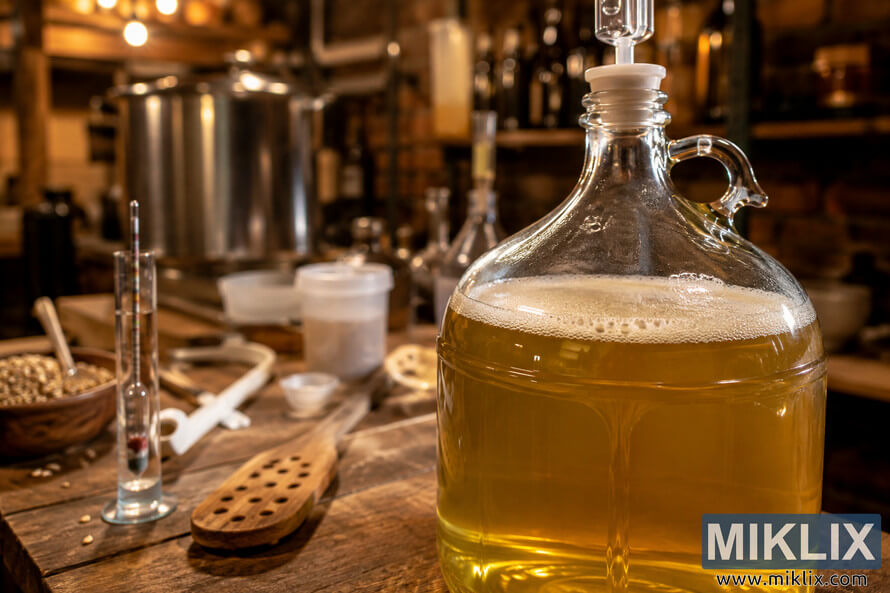
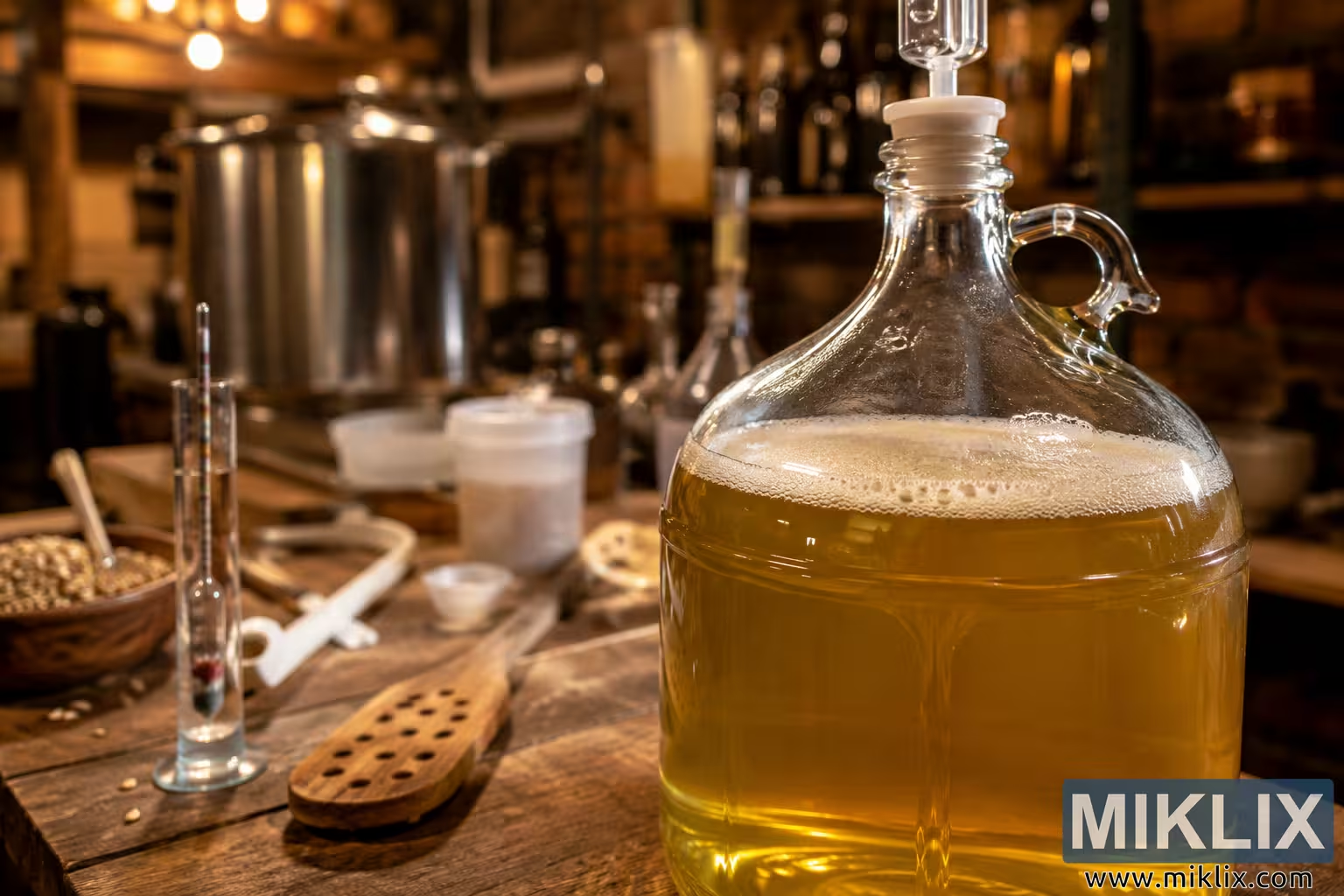
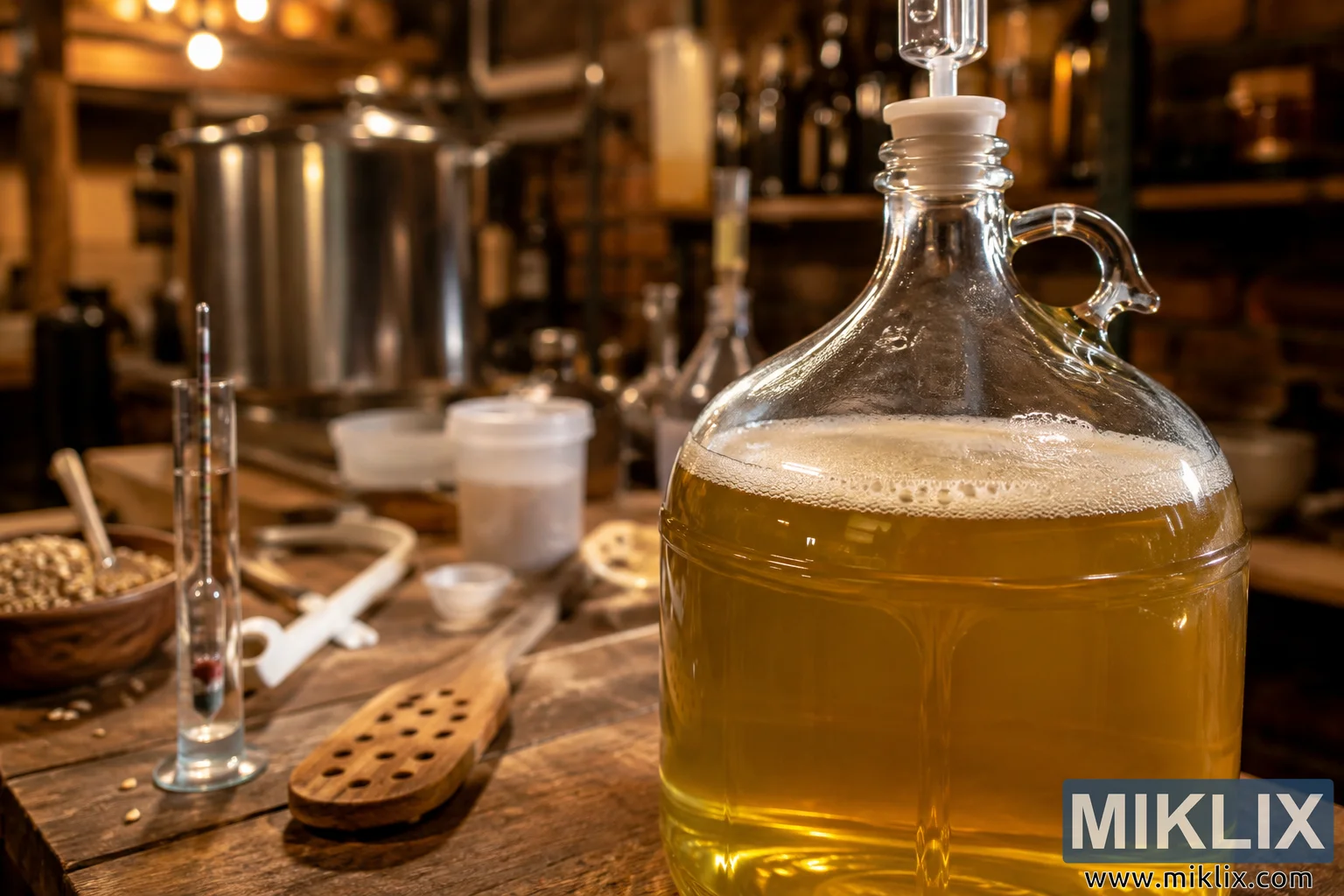
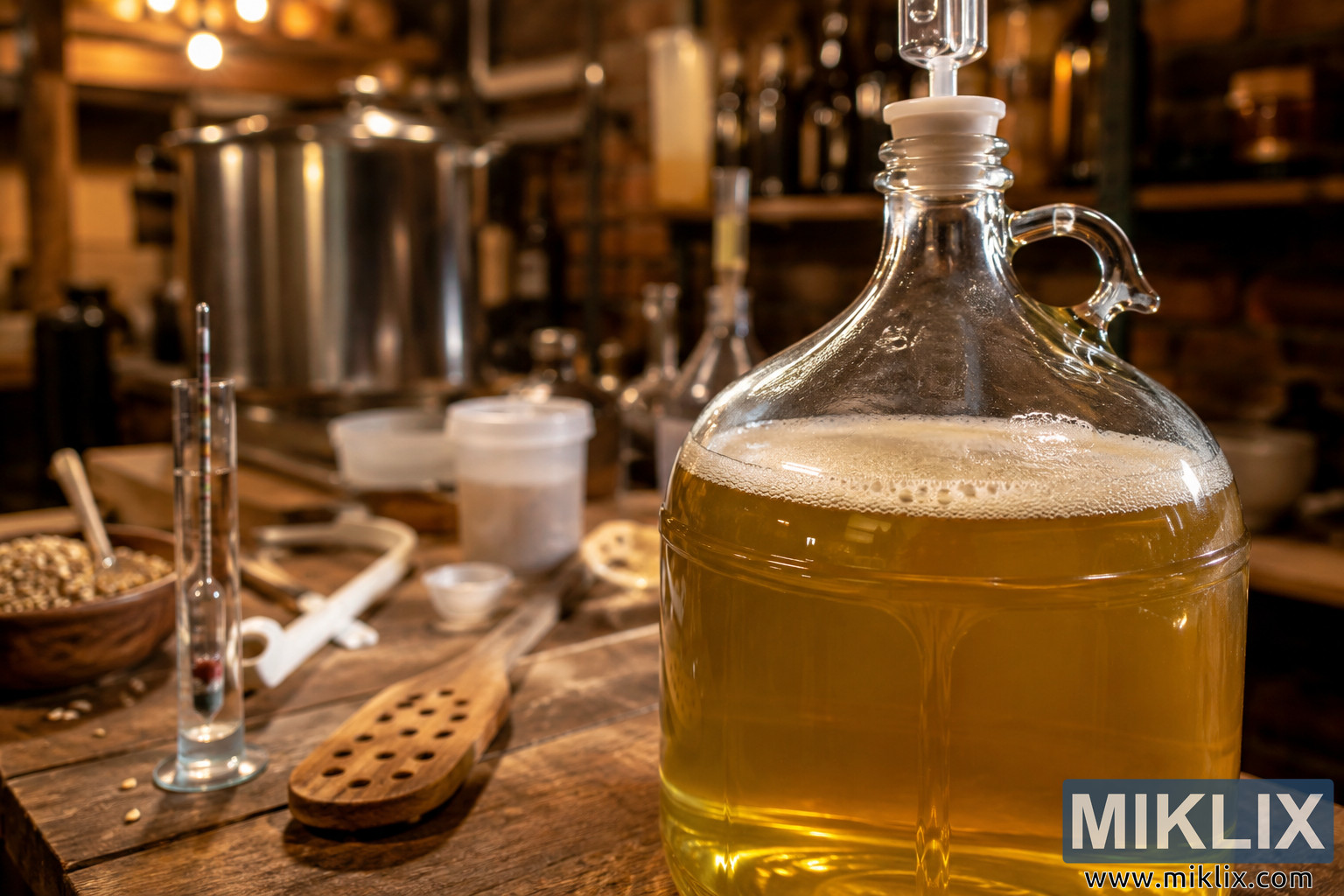
Detailed close-up of a homebrewing fermentation setup featuring a glass carboy with pale golden wort, brewing tools, warm ambient lighting, and a blurred brewing kettle, illustrating yeast pitching and the art of beer fermentation.
Available versions of this image
The image files available for download below are less compressed and higher resolution - and as a result of that, higher quality - than the images embedded in articles and pages on this website, which are more optimized for file size in order to reduce bandwidth consumption.
Regular size (1,536 x 1,024)
Large size (3,072 x 2,048)
Very large size (4,608 x 3,072)
Extra large size (6,144 x 4,096)
Comically large size (1,048,576 x 699,051)
- Still uploading... ;-)
Image description
This image presents a highly detailed, landscape-oriented close-up of a warm and inviting homebrewing workspace centered around the critical stage of beer fermentation. Dominating the foreground is a large, transparent glass carboy positioned slightly to the right of center. The vessel is filled with a pale golden liquid that suggests freshly brewed wort beginning its transformation into beer after yeast has been pitched. The clarity of the glass allows the viewer to appreciate the subtle golden tones of the liquid, while a thin layer of light foam rests near the surface, hinting at the earliest signs of fermentation activity. The smooth curvature of the glass reflects the surrounding warm light, creating delicate highlights that emphasize the cleanliness and craftsmanship associated with careful brewing practices.
Attached to the top of the carboy is a fermentation airlock fitted into a white stopper. The airlock rises vertically and serves as an immediately recognizable indicator that fermentation is underway or about to begin. Although the image is static, the composition naturally evokes the rhythmic bubbling associated with active yeast converting fermentable sugars into alcohol and carbon dioxide. The focus on the carboy effectively communicates the importance of yeast management and pitching rate during this phase of brewing.
The brewing vessel rests upon a sturdy wooden workbench whose weathered grain and rich brown coloration reinforce the handcrafted nature of the brewing process. Spread across the table are several brewing accessories that contribute authenticity to the scene. A glass hydrometer stands upright in a narrow testing cylinder near the front left of the image, suggesting gravity measurements used to monitor fermentation progress. Nearby lies a long wooden stirring paddle with evenly spaced perforations, its smooth finish indicating frequent use. Several clean plastic containers and brewing accessories occupy the middle portion of the table, arranged in a naturally cluttered yet organized manner that reflects an active brewing session rather than a staged display. A bowl containing pale brewing grains or malt sits toward the left edge of the frame, subtly referencing the earlier stages of wort production.
The middle background gradually transitions out of sharp focus through a shallow depth of field. This selective focus draws immediate attention toward the fermenting carboy while preserving enough environmental detail to tell the complete story of the brewing process. Softly blurred brewing equipment occupies the workspace behind the primary subject, including additional glassware and containers associated with sanitation and fermentation preparation. The intentional blur creates a pleasing photographic bokeh effect that adds depth and realism without distracting from the main subject.
Further back, a large stainless steel brewing kettle occupies the left side of the background. Though rendered softly out of focus, its recognizable cylindrical shape suggests that wort production has recently concluded and fermentation preparations have begun. The kettle appears to rest within the same brewing environment, visually connecting the hot-side brewing operations with the cool-side fermentation stage. This continuity reinforces the narrative of a brewer carefully managing each step of the beer-making process from mash to fermentation.
The lighting throughout the scene is exceptionally warm and atmospheric. Soft incandescent illumination bathes the workspace in rich amber and golden hues, complementing the color of the wort inside the carboy. Gentle highlights shimmer across the glass surfaces while subtle shadows define the contours of the brewing tools and wooden table. The lighting creates a cozy, welcoming environment reminiscent of a dedicated home brewery or artisan workshop where precision and patience are equally valued. Rather than feeling clinical, the scene balances technical brewing equipment with an inviting handcrafted aesthetic.
The overall composition successfully conveys the craftsmanship involved in brewing beer, emphasizing sanitation, measurement, fermentation control, and yeast management. Every visible object contributes to the narrative of careful brewing practice without overwhelming the viewer. The image communicates both technical accuracy and artistic warmth, making it suitable for educational articles, brewing guides, fermentation tutorials, blog posts about yeast pitching rates, or promotional material discussing the science and artistry of homebrewing. Its balanced composition, realistic photographic style, shallow depth of field, and warm color palette combine to produce an engaging visual representation of fermentation at one of the most important stages in the brewing process.
The image is related to: Fermenting Beer with Wyeast 1968 London ESB Ale Yeast