
Fermenting Beer with Wyeast 1968 London ESB Ale Yeast
Published: July 19, 2026 at 11:13:43 AM UTC
Wyeast 1968 is a liquid ale strain favored for malty, balanced beers. It's known for restrained esters and moderate attenuation.
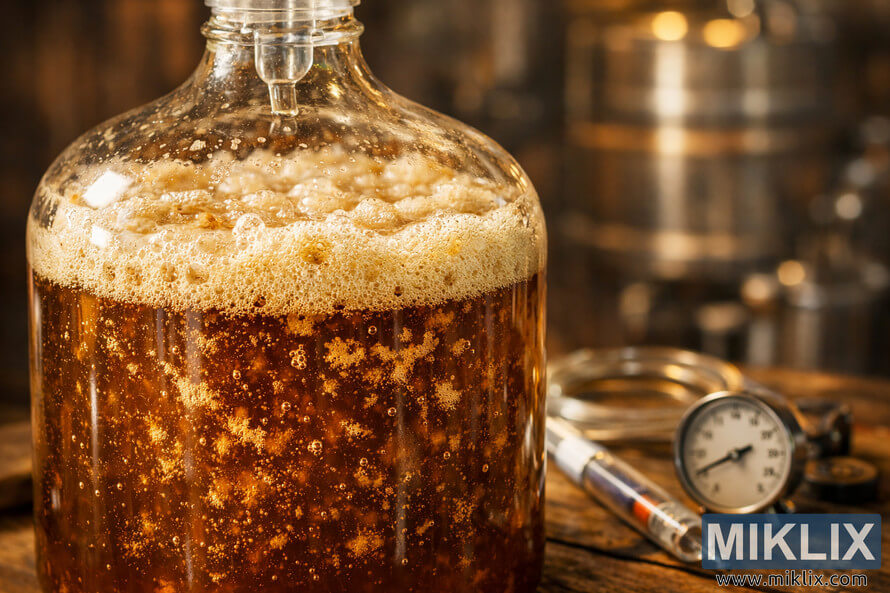
Click or tap the image for more information and higher resolutions.
Wyeast 1968 is a liquid ale strain favored for malty, balanced beers. It's known for restrained esters and moderate attenuation. This introduction outlines the scope: yeast background, starter preparation, pitching rates, temperature control, troubleshooting, recipe design, packaging, advanced techniques, and where to buy and store the yeast.
Key Takeaways
- Wyeast 1968 London ESB Ale Yeast delivers classic English ale yeast character: malty and mildly fruity.
- Use a starter for higher original gravity beers to ensure healthy fermentation.
- Ferment in the mid-60s°F to preserve traditional ESB flavors and keep esters restrained.
- Expect moderate attenuation and medium-high flocculation for good clarity and body.
- Perform a diacetyl rest when necessary to clean up buttery off-flavors.
- This Wyeast review covers handling, pitching, troubleshooting, and recipe tips for reliable results.
Why Choose Wyeast 1968 London ESB Ale Yeast for Your Brew
Wyeast 1968 London ESB Ale Yeast embodies the essence of traditional English brewing. It offers a malty flavor profile with notes of biscuit and bread. Subtle fruit undertones of apple and pear are present, while phenolics remain low to moderate, ensuring malt takes precedence.
The yeast imparts a medium-bodied mouthfeel with a silky finish. This texture is ideal for balancing the malty and hoppy elements in ESBs and bitters. It ensures the beer's hop character is nuanced, maintaining its English authenticity.
Flavor profile and traditional English character
This strain emphasizes the malt backbone, offering a rich biscuit, toasted bread, and caramel presence. Fruit esters are present but never dominant. This balance is perfect for classic styles like mild ales and adds depth to stronger brews.
Performance compared to other English ale strains
In comparison, Wyeast 1968 London ESB Ale Yeast often produces a more rounded malt character than Wyeast 1098 British Ale and White Labs WLP002 English Ale. It shows higher flocculation and less neutral character compared to dry Nottingham. Brewers appreciate its consistent fermentation and predictable attenuation.
Ideal beer styles to highlight this yeast
- London ESB and English bitters benefit from its balance of malt and restrained hops.
- Brown ales and English porters gain richer malt complexity without masking roast notes.
- Scottish ales and mild ale show the yeast’s malt focus in a gentle, drinkable form.
- Barleywine suitability rises when fermentation is managed carefully to preserve desirable esters and avoid excessive alcohol-derived off-flavors.
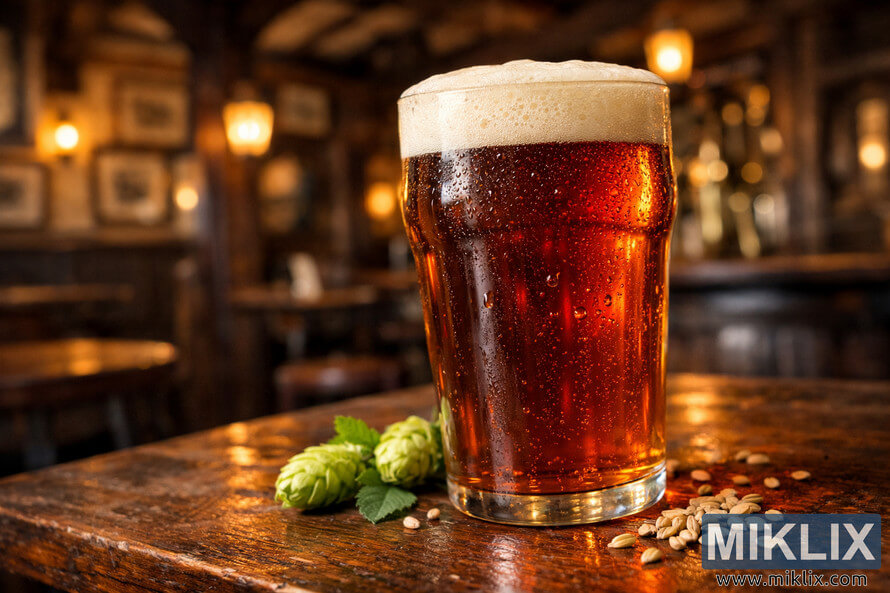
Click or tap the image for more information and higher resolutions.
Wyeast 1968 London ESB Ale Yeast
Wyeast 1968 is a liquid Saccharomyces cerevisiae strain, chosen for its ability to replicate a classic London ESB character. Wyeast Laboratories keeps its liquid cultures proprietary, providing brewers with a strain highly valued for traditional English ales. Insights into Wyeast 1968's origin and lineage shed light on its consistent performance in both home and commercial batches.
Strain origin and lineage
The strain's roots are in English brewing traditions, adapted by Wyeast for consistency. Its lineage connects it to strains used for decades in London-style ales. This history ensures it produces esters and balances malt-forward flavors, familiar to both homebrewers and professional breweries.
Typical attenuation and flocculation numbers
- Apparent attenuation: roughly 68–74%, depending on mash profile and pitching rate.
- Flocculation: medium-high to high, which tends to clear beer sooner and improve presentation.
These attenuation figures suggest a moderate final gravity in many recipes. High flocculation aids in clarity but can lead to a slow finish if yeast are underpitched.
How this exact strain shapes aroma and mouthfeel
Wyeast 1968 introduces mild ester notes like apple and pear, enhancing toasty, biscuity malts. Its aroma profile is characterized by subtle fruit and malt sweetness, avoiding bold esters or phenolics. The presence of residual dextrins and moderate attenuation contribute to a fuller mouthfeel, ideal for ESB and other English styles.
At recommended fermentation temperatures, yeast-derived sulfur is minimal, and diacetyl remains manageable with a short rest near primary's end. Flocculation ensures a cleaner final appearance, preserving the malt-forward aroma and satisfying mouthfeel brewers aim for.
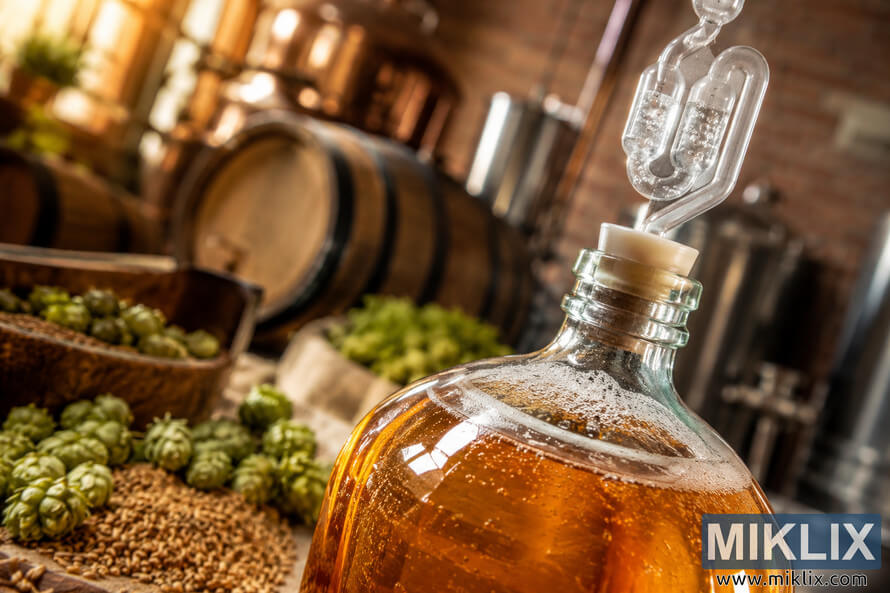
Click or tap the image for more information and higher resolutions.
Preparing a Starter for Optimal Fermentation
Using a yeast starter can significantly impact fermentation speed and quality. This guide covers when to create a starter for Wyeast 1968, how to build a reliable starter, and how to verify yeast viability. This ensures you can propagate yeast effectively for robust batches.
When to boost cell counts
Starters are essential for batches over 1.060 original gravity or when yeast packs are near expiration. For average-strength ales (1.045–1.055), a single Wyeast smack pack usually suffices. However, high-gravity beers, multiple fermenters, or yeast repitched several times require a starter to boost viable cells.
Step-by-step starter recipe and timing
- Target starter gravity: 1.040–1.050 using DME.
- Volume guide: 500–1000 ml per pack for normal-strength ales; scale to 1–2 L for bigger beers.
- Sanitize a flask or jar, combine DME and water, then boil for 10 minutes to sterilize.
- Cool to room temperature, aerate by shaking or using an oxygen source, then pitch the Wyeast starter.
- Keep the starter around 68–72°F and swirl or stir twice daily if no stir plate is used.
- Allow 12–48 hours for small starters, 48–72+ hours for larger builds. A stir plate speeds growth and clarity.
Signs of a healthy starter and viability checks
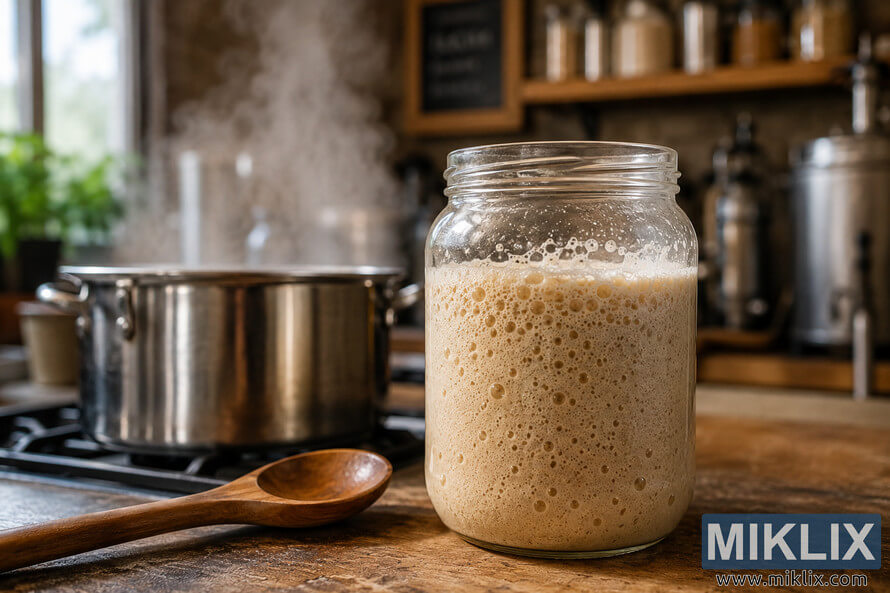
Look for a milky, cloudy appearance and active krausen during growth. Healthy starters have a heavy yeast sediment and a clean, slightly yeasty aroma. Mild esters are acceptable.
For viability checks, observe vigorous activity, smell for clean fermentation notes, and assess sediment volume. Use a microscope or vital stain like methylene blue for precise assessment. Discard and remake a starter if you detect strong solvent or rotten-egg odors.
Click or tap the image for more information and higher resolutions.
Pitching Rates and Temperature Management
Accurate pitching rates and consistent ale fermentation temperatures are crucial for Wyeast 1968's English character. A well-thought-out brewing plan is essential. Even slight adjustments in yeast count or temperature can significantly alter aroma and mouthfeel, rivaling the impact of malt or hops.
Recommended pitching rates for ales
For ales, aim for 0.75–1.5 million cells per mL per °P. A practical guideline for many ales is 0.75–1.0 million cells/mL/°P. This translates to about 150–200 billion cells for a 5-gallon batch at 1.050 OG, ensuring a healthy start.
To achieve this, consider using a starter or multiple Wyeast packs. Tools like MrMalty and Brewer's Friend are invaluable for precise calculations. They help convert cells/mL targets into starter volumes or pack counts.
Underpitching can prolong fermentation and increase the risk of unwanted esters and fusels. If underpitching is suspected, creating a starter or repitching active yeast can alleviate stress on the culture.
Temperature ranges for primary fermentation
For Wyeast 1968, maintain primary fermentation temperatures between 64–68°F (18–20°C). This range preserves a restrained English ester profile, enhancing malt complexity without excessive fruity esters.
For a quicker finish, temperatures up to 70°F are acceptable, but monitor ester levels closely. Temperatures above 70–72°F can elevate fruity esters, altering the desired character.
Lower temperatures reduce ester production and slow fermentation. For less esters, ferment at cooler temperatures while watching for sluggish or stuck fermentations.
Managing temperature swings and their flavor impact
Temperature swings stress yeast, potentially increasing fusel alcohols or off-flavors. Prioritize steady temperature control over large day-to-night variations.
- Pre-warm wort to the pitching temperature to avoid cold shock.
- Employ a fermentation chamber, insulated wrap, or a reliable swamp cooler for consistent temperature control.
- Manage temperature swings within 2–4°F. Minimize swings under this range to limit flavor impact.
After peak fermentation, consider a gentle temperature increase to aid diacetyl cleanup. This ensures a clean finish without overproducing esters.
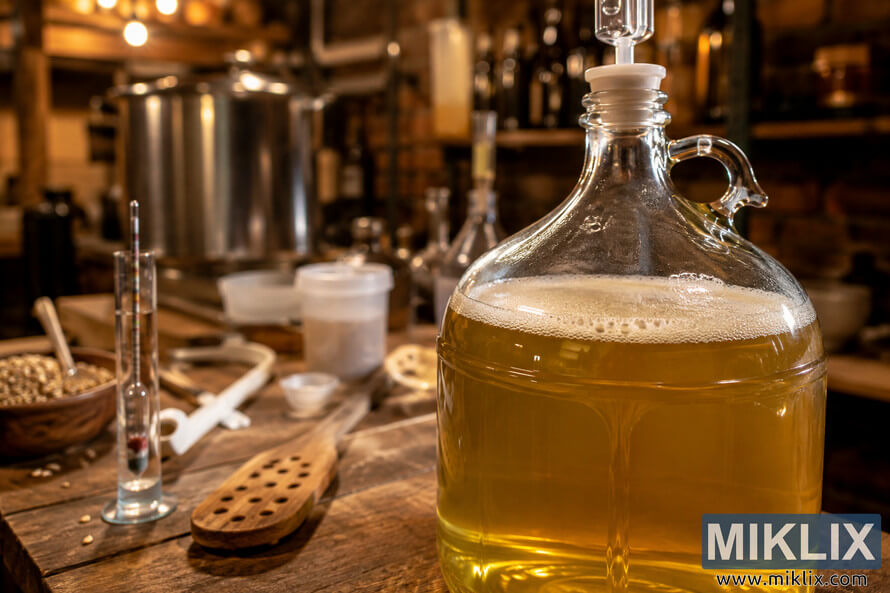
Click or tap the image for more information and higher resolutions.
Fermentation Timeline and Expected Milestones
Tracking a successful batch requires a clear fermentation timeline and attention to simple fermentation cues. Wyeast 1968 can be predictable when you monitor the process with basic tools and regular checks.
The lag phase typically lasts 12–48 hours. A short lag phase indicates a well-made starter and correct pitching rate. Longer lag periods suggest low viability or cool temperatures. Look for krausen, a foamy head, trub movement, and yeast swirling as stronger signs than airlock bubbling.
Primary fermentation for average-strength English ales often completes in 4–7 days with controlled temperature and correct pitch rates. Higher-gravity beers may require 7–14 days or more. Wait for gravity readings to stabilize over 2–3 consecutive days before moving on.
Monitor gravity readings with a hydrometer or refractometer at key points: a reading on day 3–4, then again as activity slows. Compare results to the expected attenuation for Wyeast 1968. If gravity stalls, inspect yeast health, temperature, and nutrient availability.
- Early cues: yeast swirling, rising krausen, subtle aroma changes.
- Mid-ferment cues: steady drop in gravity, foam receding, yeast cake forming.
- Late cues: clearer beer above the yeast cake, minimal CO2 release, stable gravity readings.
If you see stalled gravity, check the yeast cake activity and take temperature readings. A gentle warm-up or a small oxygen or nutrient boost can revive sluggish yeast. Use repeated gravity readings rather than airlock motion to confirm completion of primary fermentation.
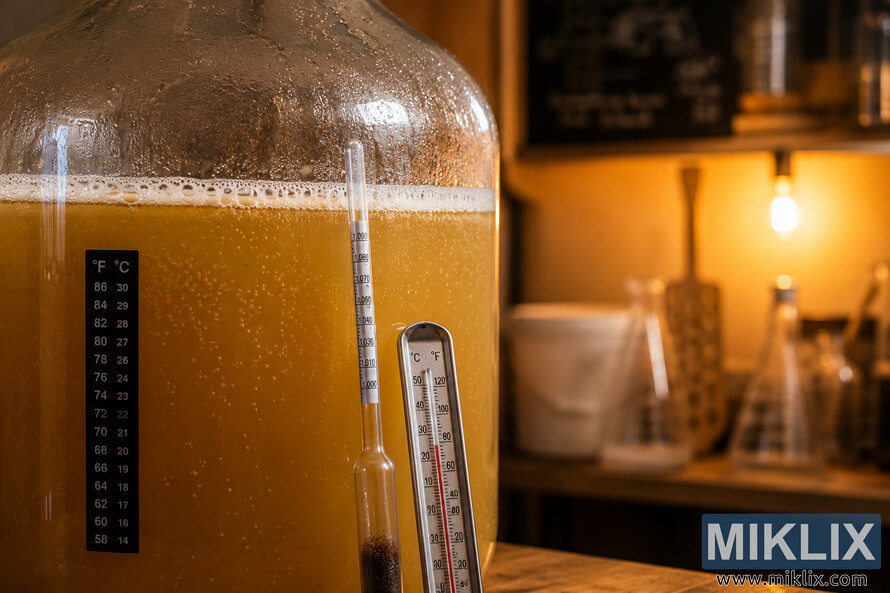
Click or tap the image for more information and higher resolutions.
Attenuation, Mouthfeel, and Carbonation Expectations
Wyeast 1968 London ESB is a prime choice for English ales, balancing moderate attenuation for body and sweetness. Brewers can adjust the mash profile and fermentation to achieve a drier or fuller finish. The final touch comes from carbonation volumes, enhancing the beer's texture from soft bitters to lively pale ales.
How attenuation affects body and sweetness
This strain attenuates between 68–74%, leaving some dextrins for a malty, slightly sweet body. A higher attenuation results in a drier, thinner beer. Conversely, lower attenuation means a fuller, sweeter taste due to more residual sugars.
Carbonation targets for English-style ales
- English bitters and ESB: aim for 1.5–2.2 carbonation volumes for traditional texture.
- Milds and session bitters: target 1.2–1.8 volumes CO2 to preserve a softer mouthfeel.
- Adjust based on serving temperature and glassware; lower volumes emphasize malt character.
Adjusting mouthfeel with mash and fermentation choices
To enhance dextrin production and mouthfeel, raise mash temperatures to 152–156°F (67–69°C). Lower mash temperatures, around 148–152°F (64–67°C), result in a more fermentable wort and drier finish. Adding caramalt or crystal malts increases sweetness and body.
Fermentation temperature and pitch rate significantly impact body through ester and residual sugar changes. Warmer ferments can add fruity esters, softening the dryness. Underpitching slows attenuation, potentially leading to a heavier mouthfeel. Healthy pitching and a robust starter ensure predictable attenuation and cleaner balance.
Common Off-Flavors and Troubleshooting with This Yeast
Wyeast 1968 can deliver true English character when treated well. Small faults happen and knowing how to spot and fix off-flavors will save a batch. The tips below cover early sulfur notes, buttery diacetyl, excessive esters, stuck fermentation, and when to repitch yeast or rehydrate a backup culture.
Sulfur, diacetyl, and esters: causes and fixes
Sulfur often appears early in fermentation as a faint rotten-egg aroma. It usually fades with time and gentle aeration of the fermenter headspace. If it lingers after activity slows, raising the temperature a few degrees for a short period can speed dissipation.
Diacetyl gives a buttery or slick finish. Perform a diacetyl rest by raising the fermenter temperature 2–4°F for 24–48 hours near the end of active fermentation. That lets yeast reabsorb diacetyl and lowers the chance of residual buttery flavors.
High ester levels come from warm fermentations or underpitching. Keep fermentation temps steady in the recommended range and hit proper pitching rates to limit fruity esters. If esters are present after conditioning, time and cooler conditioning often bring them into balance.
Over-attenuation or stuck ferments: remedies
First, confirm a stuck fermentation by checking gravity over 24–48 hours. If gravity is flat and above expected FG, gently warm the fermenter to the yeast’s comfort zone and swirl to rouse the yeast.
- Carefully add oxygen only in the early stage; late oxygen risks oxidation.
- Use yeast nutrient for high-gravity worts to supply missing micronutrients.
- Pitch a fresh active culture when other measures fail. Rehydrated dry yeast or a fresh liquid starter work well to restart activity.
For over-attenuation that leaves the beer too thin, adjust future mashes with higher rest temperatures or add dextrin malts. Once fermentation is complete, blending with a sweeter batch is the only practical fix.
When to repitch or rehydrate yeast
Rehydrate applies to dry yeast; it is not necessary for Wyeast liquid packs. For liquid yeast, use a starter or decanted slurry when you need to repitch yeast into a new batch.
Consider repitching when generations exceed five, viability tests show low cell counts, or fermentation performance drops. Keep equipment sanitized and avoid contamination when handling cultures.
- Sanitize all tools and containers before transfer.
- Stagger generations and track reuse to maintain strain integrity.
- If using dry yeast to restart a batch, rehydrate according to the manufacturer’s instructions before pitching.
Following these steps reduces the risk of lasting off-flavors and improves recovery from stuck fermentation while protecting yeast health for future repitches.
Recipe Considerations for Brewing with Wyeast 1968
Wyeast 1968 excels when its English traits are highlighted. A well-thought-out malt bill, judicious hop choice, and precise water profile are key. These elements allow the yeast to showcase biscuity malt, subtle esters, and a clean finish. Below, we explore practical options for crafting bitters, ESB, porters, and brown ales.
Malt choices that support the yeast
Start with Maris Otter or British pale malt to emphasize malt flavor. Incorporating floor-malted barley or richer British malts adds authenticity. It's crucial to keep specialty malts in moderation, ensuring the yeast's biscuity note remains prominent.
- Crystal malts in the 20–80L range for sweetness and color in bitters and brown ales.
- Small percentages (2–6%) of medium-roasted or chocolate malt for porters and darker beers.
- For ESB, limit specialty grains to preserve yeast-driven aroma and mouthfeel.
Hop selection and timing for traditional flavor
Choose English hops to align with the strain's profile. East Kent Goldings, Fuggles, Goldings, and Challenger impart earthy, floral, and mild spicy notes. These complement the yeast beautifully.
- Target modest IBUs: 20–40 for bitters and ESB depending on style and balance.
- Place most additions late in the boil to preserve aroma without pushing citrus or tropical character.
- Dry hop only sparingly if you want a touch of hop aroma without overwhelming the malt bill and yeast.
Water tweaks for the best results
Adjust your water profile to enhance malt fullness. Aim for moderate hardness and a slightly higher chloride than sulfate. This combination boosts body and sweetness.
- Reference classic English profiles but avoid copying Burton exactly unless brewing a hoppy pale ale.
- Suggested ranges: calcium 50–150 ppm, chloride 50–100 ppm, sulfate 50–150 ppm to start.
- Use a brewing water calculator and test local water to set the ideal sulfate/chloride ratio for your target beer.
By balancing malt bill, hop selection, and water profile, Wyeast 1968 can truly shine. Even small adjustments can lead to distinctly English results, keeping the yeast character at the forefront.
Yeast Handling: Storage, Rehydration, and Repitching
Proper care of your yeast ensures consistent and healthy batches. Small steps in storage and handling significantly impact your brewing. This advice covers cold storage, rehydration, and repitching for homebrewers.
Yeast storage begins with temperature control. Store Wyeast packs at 34–40°F (1–4°C) and keep them upright. Use them before the expiration date to maintain viability. If a pack arrives warm, gradually cool it in the fridge to avoid shocking the cells.
Minimize exposure to room temperature before pitching. For long-term storage, rotate stock to use older packs first. Proper storage reduces the need for chasing off-flavors later.
Rehydration is crucial for dry yeast. It reduces osmotic stress and boosts viability for many strains. Wyeast liquid cultures are activated with a smack pack or starter before direct pitching.
Direct pitching of liquid yeast is simple and effective with adequate cell counts. A starter increases cell numbers for high-gravity beers or large batches. Some brewers prefer dry yeast for its rehydration convenience.
- Follow manufacturer directions for dry yeast rehydration using warm, sanitized water.
- Directly pitch after a starter or smack-pack activation for liquid cultures like Wyeast.
Harvesting yeast from a finished fermenter is cost-effective for repitching. Start by cold crashing to settle the yeast. Then, decant most of the clear beer from the top.
- Cool the fermenter to encourage flocculation.
- Decant beer gently to avoid lifting trub into your harvest.
- Transfer yeast to a sterile jar and store in the fridge for short-term use.
Keep harvested yeast in cold storage and use within a few generations. Track strain identity and generation count to avoid cross-contamination and genetic drift. Limit reuse to roughly three to five generations for reliable performance.
Sanitation is crucial at every step. Sanitize tools and containers before harvesting and during repitching. Refresh harvested yeast with a small starter for higher gravity brews.
Packaging Considerations: Kegging vs Bottling
Deciding on packaging for your beer impacts its taste, service, and shelf life. Wyeast 1968 requires careful attention to conditioning time and carbonation methods. Here are key points to consider when choosing between kegging and bottling for English-style ales.
Conditioning times after fermentation
Allow 1–2 weeks of conditioning in the fermenter for average-strength ales before packaging. Higher-gravity beers require longer rest, typically 2–6 weeks or more for flavors to mature.
Cold conditioning near freezing for 1–4 weeks enhances clarity and smoothness. Shorter conditioning times can result in harsher yeast byproducts in the final beer.
Carbonation methods and target volumes
There are two main carbonation methods: natural carbonation by priming in bottles and force carbonation in kegs. Traditional English ales aim for lower carbonation, roughly 1.2–2.2 volumes of CO2.
- Natural carbonation: Use priming sugar for a 5-gallon batch. Consult a priming calculator for exact grams based on desired volumes and beer temperature.
- Force carbonation: Set PSI against temperature to reach target volumes quickly. For example, at 40°F apply about 10–12 PSI to get near 2.0 volumes. Check a PSI-temperature table for precise settings.
How packaging choice affects flavor evolution
Bottle conditioning leaves active yeast in contact with beer, allowing subtle changes over months. This gentle evolution can round harsh edges and add complexity to English ales.
Kegging with force carbonation preserves freshness and offers rapid serving control. It limits the micro-oxidation and slow maturation that bottled beer experiences.
For presentation, lower-carbonation bottles, cask conditioning, or cellaring mimic traditional pub service better. Kegs tend to give firmer head retention and quicker clarity, which suits tap-focused setups.
Comparing Wyeast 1968 to Similar Yeast Strains
Choosing the right yeast for an English-style ale can significantly impact the beer's character. This section aims to help brewers evaluate yeast strains. It determines if Wyeast 1968 is ideal for their recipe or if dry ale yeast alternatives or other liquid strains are more suitable.
Wyeast 1968 is known for its balanced nature, enhancing malt flavors while keeping esters in check. Brewers often note that it provides a classic ESB mouthfeel. This is complemented by gentle fruity notes and a robust malt backbone.
Comparing WLP002 to Wyeast 1968 reveals subtle yet significant differences. WLP002, from White Labs, tends to be fruitier and more robust. In contrast, Wyeast 1968 is more restrained, which supports the complexity of malt in traditional English beers.
Examining Nottingham vs 1968 further highlights the differences. Nottingham, especially the Lallemand dry version, offers a cleaner, drier finish and higher apparent attenuation. Swapping Nottingham for 1968 in a recipe will generally increase dryness and reduce malt emphasis.
The choice between dry and liquid yeast alternatives depends on priorities. Liquid strains like Wyeast 1968 provide precise, nuanced character but require refrigeration and often a starter. Dry ale yeast alternatives, on the other hand, offer longer shelf life and ease of use. This makes them suitable for many homebrewers and commercial operations seeking consistency.
- Pros of liquid 1968: authentic ESB profile, nuanced esters, classic mouthfeel.
- Pros of dry strains: convenience, storage stability, reliable attenuation for busy brewers.
- Trade-offs: liquid needs more handling; dry may miss subtle flavor cues.
Case studies from brewers show the practical outcomes of comparing yeast strains in similar recipes. Many report that replacing Wyeast 1968 with Nottingham in a bitter reduces malt warmth and sharpens the finish.
Other brewers who compared WLP002 to Wyeast 1968 found WLP002 increased fruitiness and ester presence. This worked well in stronger pale ales but felt out of place in traditional ESB recipes that favor restraint.
When testing dry ale yeast alternatives, homebrewers often praise modern dry strains for closing the flavor gap. However, for strict style fidelity and layered malt expression, a liquid strain like 1968 remains a common choice among experienced brewers.
These contrasts help match yeast choice to recipe goals. Whether prioritizing ease, shelf life, or authentic English character, a clear comparison between strains guides sensible substitutions and better final beer balance.
Advanced Techniques: Temperature Ramping and Diacetyl Rest
Small adjustments during fermentation can significantly alter a beer's balance. Techniques like temperature ramping and diacetyl rest help control ester levels and encourage yeast cleanup. These methods also enhance finishing clarity. Brewers must use precise steps to avoid off-flavors and optimize yeast performance.
When and how to perform a diacetyl rest
Initiate a diacetyl rest when the gravity is close to the final expected value or when bubbling slows. Increase the fermenter temperature by 2–4°F for 24–48 hours. This allows active yeast to reabsorb diacetyl. For instance, raise from 66°F to 68–70°F, then cool for conditioning.
Monitoring yeast activity is crucial. Avoiding high temperatures prevents the production of unwanted fruity esters. Keep the rest brief and check aroma and gravity readings to confirm yeast cleanup.
Temperature ramp strategies to refine esters
Start fermentation at the lower end of the strain’s range, like 64–66°F, to limit early ester formation. Maintain this temperature during peak activity for a clean backbone. Later, increase the temperature slightly to aid in attenuation and diacetyl reduction.
For a London ESB-style, start at 64°F, keep it during active fermentation, then ramp to 68–70°F for the diacetyl rest. For fuller ester character, plan a higher overall schedule, accepting more fruity notes.
Long conditioning and its effects on clarity and flavor
Long conditioning at cold temperatures enhances clarity and smooths out harsh flavors. Condition for 2–4 weeks near freezing to clear the beer and allow flavors to mature. This process reduces sharp esters and rounds out malt character.
Avoid extended warm aging on the yeast pack to prevent autolysis risks. With proper handling and cold storage, long conditioning is safe and effective. It mellow hop bitterness and refines esters.
- Timing tip: begin diacetyl rest when gravity nears final gravity.
- Ramping tip: small, controlled increases limit unwanted esters.
- Conditioning tip: cold, long conditioning helps with clearing beer and flavor polish.
Real-World Brewing Notes and User Reviews
Homebrewers across the United States share practical observations when brewing with Wyeast 1968. Community feedback often highlights a malt-forward profile with biscuity malt, mild apple or pear esters, and a clean finish when fermented in the mid-60s. User reviews tend to praise the strain for replicating classic English character in home batches.
Below are concise recipe sketches and tasting notes gathered from homebrewer notes and forum threads. Use these outlines as starting points for small adjustments based on your water and grain sources.
- Classic ESB (5 gallons): Maris Otter 10–12 lb, Crystal 40L 0.5–1 lb, English hops such as East Kent Goldings for ~30 IBU, OG 1.052–1.056, ferment with Wyeast 1968 at 64–68°F. Expected profile: biscuit malt, gentle fruit esters, medium body.
- Brown Ale baseline: Pale malt 6–7 lb, Brown malt 1–1.5 lb, Crystal 60L 0.5 lb, English hops 20 IBU, OG ~1.050, ferment 64–66°F. Notes: richer malt, subdued esters, clean finish.
- Porter example: Pale malt 7–8 lb, Chocolate malt 0.5–1 lb, Crystal 40L 0.5 lb, hops 18–22 IBU, OG ~1.052, ferment 65–68°F. Expect roast notes with balanced malt sweetness.
Common issues reported by brewers appear regularly in community feedback channels such as HomebrewTalk and r/Homebrewing. Underpitching can cause excessive esters or a stuck fermentation. Old or poorly stored packs sometimes yield slow starts. Early sulfur notes pop up but often dissipate during active fermentation and conditioning.
Community solutions are practical and repeatable. Makers recommend using a starter or fresh packs to avoid underpitching. Maintain stable fermentation temperatures and give the brew a diacetyl rest if buttery notes persist. If a ferment stalls or yeast shows poor vitality, repitching with a fresh culture tends to restore progress.
When evaluating your results, compare your beer to well-known benchmark ESB beers. Aim for the balance and character of Fuller’s ESB or Marston’s Pedigree as reference points. These benchmark ESB beers help set expectations for aroma, body, and finish when using Wyeast 1968.
Read multiple user reviews to gauge variance across batches and recipes with Wyeast 1968. Collecting homebrewer notes and applying tested community feedback will sharpen your approach and improve consistency over time.
Conclusion
Wyeast 1968 conclusion: this London ESB yeast brings the classic English ale character brewers desire. It offers malty and biscuity aromas, with restrained fruity esters. The medium body and dependable flocculation are notable when pitched correctly and fermented under optimal conditions.
For practical brewing, a starter is essential for high-gravity batches. Ferment between 64–68°F for balanced esters. If butter-like notes appear, a diacetyl rest is necessary. Adjust your mash to control mouthfeel and aim for lower carbonation to preserve traditional English presentation. Choose reputable retailers and ensure shipping protects yeast viability.
This yeast review and London ESB yeast summary highlight Wyeast 1968 as a genuine liquid option for ESB, bitter, and other English ales. It's ideal for brewers who value traditional flavor and are comfortable with liquid yeast. To enhance your process, brew with 1968 in a dedicated recipe. Compare your results to benchmark beers like Fuller’s ESB.
Wyeast 1968 conclusion: attempt a trial brew, documenting pitching rates, fermentation temperatures, and recipe adjustments. Use these records to refine subsequent batches. A focused test will reveal how this strain aligns with your brewing objectives and cellar rotation.
FAQ
What character does Wyeast 1968 London ESB Ale yeast bring to traditional English ales?
Wyeast 1968 brings a classic English ale profile. It has a malty backbone with biscuity, bready notes and subtle fruit esters. The mouthfeel is medium-bodied with a smooth finish. It produces low sulfur and restrained phenolics when fermented properly.
This strain emphasizes malt character over flashy ester or hop expression. It's ideal for ESB, bitters, brown ales, and traditional porters.
When should I make a yeast starter for Wyeast 1968?
Make a starter for any batch above 1.060 OG, for multi-generational repitches, or if your Wyeast pack is near or past its printed date. For standard 5-gallon ales around 1.045–1.055, a fresh Wyeast smack pack often suffices.
For higher gravities or to reach precise pitching rates, prepare a starter sized to raise cell counts appropriately. Typically, 500–1000 ml for a single pack, scaling up for stronger beers.
What starter recipe and schedule work well for this strain?
Use a 1.040–1.050 SG DME starter. For a routine build, boil DME and water for 10 minutes, cool, aerate, and pitch into a sanitized flask. Maintain around 68–72°F.
Small starters show activity in 12–48 hours; larger starters may take 48–72+ hours. A stir plate shortens time and yields a healthier slurry. Look for a vigorous krausen and sediment as signs of growth.
What pitching rate should I aim for with Wyeast 1968?
Target roughly 0.75–1.5 million cells per mL per °P for ales. Practically, a 5-gallon batch at 1.050 OG typically needs on the order of 150–200 billion cells. Use a starter or multiple packs to reach that range and consult online calculators (MrMalty, Brewer's Friend) for exact counts based on OG and volume.
What fermentation temperature range best showcases Wyeast 1968?
Hold primary fermentation in the mid-60s°F for classic English character—about 64–68°F (18–20°C). This range balances restrained esters with good attenuation. You can raise to ~70°F briefly for a diacetyl rest or to speed fermentation, but sustained temps above 70–72°F risk increased fruity esters and fusels.
How long will primary fermentation and conditioning typically take?
Primary commonly completes in 4–7 days for average-strength ales when properly pitched and temperature-controlled. Higher-gravity beers can take 7–14+ days. Allow at least 1–2 weeks conditioning in the fermenter for average-strength beers; richer or stronger beers benefit from several weeks. Always verify stability with two or three consecutive gravity readings.
What attenuation and flocculation can I expect from this strain?
Apparent attenuation typically falls around 68–74%, leaving a modest level of residual dextrins for a fuller malt body. Flocculation is medium-high to high, so yeast tends to drop clear earlier than low-flocculating strains. Good clarity is a strength, but high flocculation increases the risk of stalled fermentations if underpitched.
What carbonation level suits ESB and English bitters fermented with 1968?
English-style ales are generally carbonated low. Aim for about 1.5–2.2 volumes CO2 for ESB and bitters. Milds and traditional bitters often sit in the 1.2–1.8 volumes range for a softer mouthfeel. Adjust your priming sugar or keg PSI/temperature to achieve the target volumes.
How do I manage diacetyl and sulfur issues with Wyeast 1968?
Sulfur commonly appears early and usually dissipates with time and proper conditioning. For diacetyl, perform a diacetyl rest when gravity is within ~10% of final: raise fermentation temperature 2–4°F for 24–48 hours near the end of primary to allow yeast to reabsorb diacetyl, then cool. Prevent problems by pitching adequate cell counts and avoiding excessive temperature swings.
What are common causes and fixes for stuck fermentations with this yeast?
Stalls often stem from underpitching, low viability, low oxygen at pitch, nutrient deficiency, or too-high gravity without sufficient yeast. Remedies include gently warming the fermenter into the yeast’s optimal range, rousing the yeast, adding a healthy starter or fresh active yeast, and using yeast nutrient for challenging worts. Avoid aggressive oxygenation late in fermentation.
How should I store Wyeast 1968 packs and what should I check on arrival?
Refrigerate Wyeast packs at about 34–40°F (1–4°C) and use before the expiration date. Order early in the week and choose vendors that ship chilled or with cool packs. On arrival, check the expiration date and feel for a cool pack; if in doubt, make a small starter to verify viability. Replace or contact the vendor if the pack shows off-odors or no activity in a starter.
How does Wyeast 1968 compare to strains like White Labs WLP002 or Nottingham?
Wyeast 1968 tends to accentuate malt character with restrained esters and higher flocculation compared with Nottingham, which is more neutral and often drier. Compared with WLP002, 1968 is generally a touch less fruity and slightly more malt-rounded. Dry strains offer convenience and shelf life, but for authentic ESB character many brewers prefer liquid strains like 1968.
What malt and hop choices best complement this yeast?
Use British base malts—Maris Otter or British pale malt—to showcase biscuity, malty notes. Moderate crystal malts (20–80L) add sweetness and color for bitters and brown ales. Choose traditional English hops such as East Kent Goldings, Fuggles, and Challenger, and favor late additions to preserve a balanced, earthy floral aroma rather than citrus-forward hop character.
How should I adjust mash and water to get the desired mouthfeel with 1968?
Mash higher (152–156°F / 67–69°C) to leave more dextrins and a fuller mouthfeel. Mash lower (148–152°F / 64–67°C) for a drier finish. For water, favor a balanced sulfate-to-chloride ratio with chloride slightly higher to emphasize malt sweetness. Classic English profiles with moderate mineral content work well; use water calculators and test local water to dial in adjustments.
Can I harvest and repitch yeast from a batch fermented with Wyeast 1968?
Yes. Cold crash to settle yeast, decant beer, collect the clean yeast slurry, and store it in a sanitized container in the fridge. Limit reuse to about 3–5 generations to avoid viability and microbiological issues. Refresh harvested yeast with a starter before pitching into a new batch to restore vigor and reduce contamination risk.
Is Wyeast 1968 suitable for high-gravity beers like barleywine?
It can be used for stronger beers, but plan ahead. Make a larger, robust starter or a yeast bank to reach sufficient cell counts, oxygenate well at pitch, and consider staggered nutrient additions. Expect longer ferment times and extended conditioning. Also consider mash and recipe choices to preserve balance; a higher mash temp helps maintain body in big beers.
Where can I buy Wyeast 1968 in the United States and what should I know about shipping?
Trusted suppliers include Northern Brewer, MoreBeer, Midwest Supplies, and many local homebrew shops. Local shops offer immediacy and often fresher stock; online retailers provide broad availability but watch transit times. Order early in the week, choose expedited or chilled shipping when possible, and verify vendor packaging practices for live cultures.
How should I package beers fermented with Wyeast 1968—keg or bottle?
Both methods work. Kegging with force carbonation preserves freshness and is fast; set PSI/temperature to reach lower CO2 volumes appropriate for English ales. Bottle conditioning allows subtle flavor evolution and a traditional presentation; use conservative priming sugar for lower carbonation. Cask or low-carbonation options best replicate pub-style ESB and bitters.
What benchmarks should I use to evaluate my Wyeast 1968 batches?
Compare your beer to commercial references like Fuller’s ESB and Marston’s Pedigree for classic ESB and English bitter character. Evaluate aroma (biscuity malt, mild fruit esters), body (medium, slightly dextrinous), clarity, and the balance between malt and hops. Keep detailed brew logs on pitching rates, temps, and recipe tweaks to track improvements.
Further Reading
If you enjoyed this post, you may also like these suggestions:
- Fermenting Beer with White Labs WLP590 French Saison Ale Yeast
- Fermenting Beer with White Labs WLP400 Belgian Wit Ale Yeast
- Fermenting Beer with Wyeast 3822 Belgian Dark Ale Yeast