
Image: New England IPA Fermenting in a Glass Carboy on a Rustic Homebrewing Table
Published: July 23, 2026 at 5:54:41 PM UTC
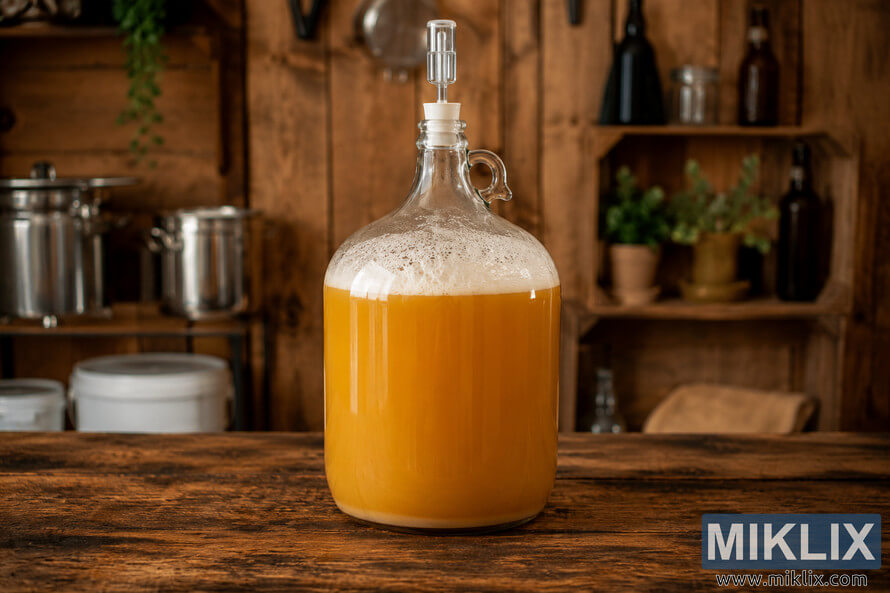
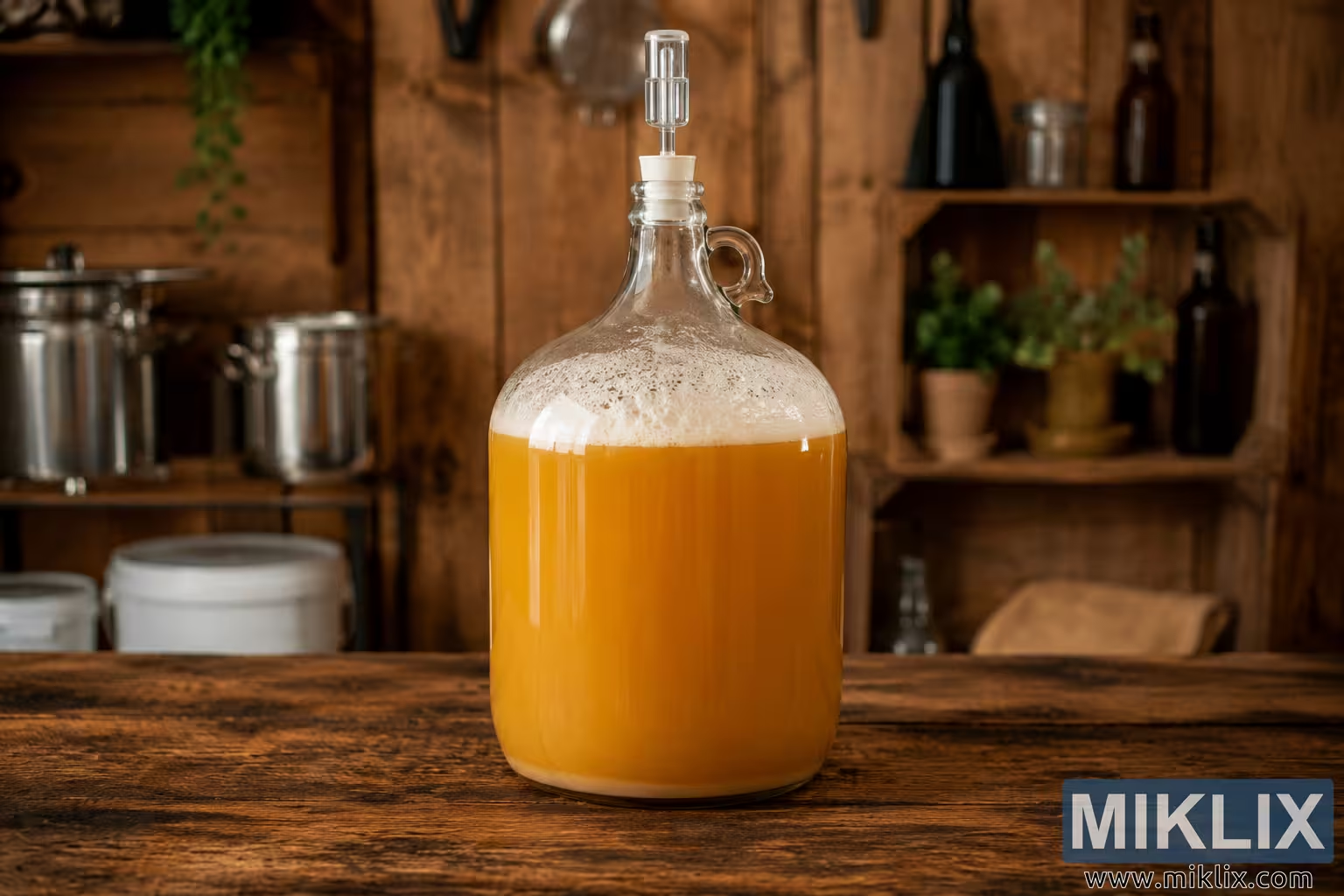
Landscape photo of a New England IPA fermenting in a glass carboy on a rustic wooden table within a cozy traditional homebrewing setting, featuring warm lighting, authentic brewing equipment, and a completely brand-free presentation.
Available versions of this image
The image files available for download below are less compressed and higher resolution - and as a result of that, higher quality - than the images embedded in articles and pages on this website, which are more optimized for file size in order to reduce bandwidth consumption.
Regular size (1,536 x 1,024)
Large size (3,072 x 2,048)
Very large size (4,608 x 3,072)
Extra large size (6,144 x 4,096)
Comically large size (1,048,576 x 699,051)
- Still uploading... ;-)
Image description
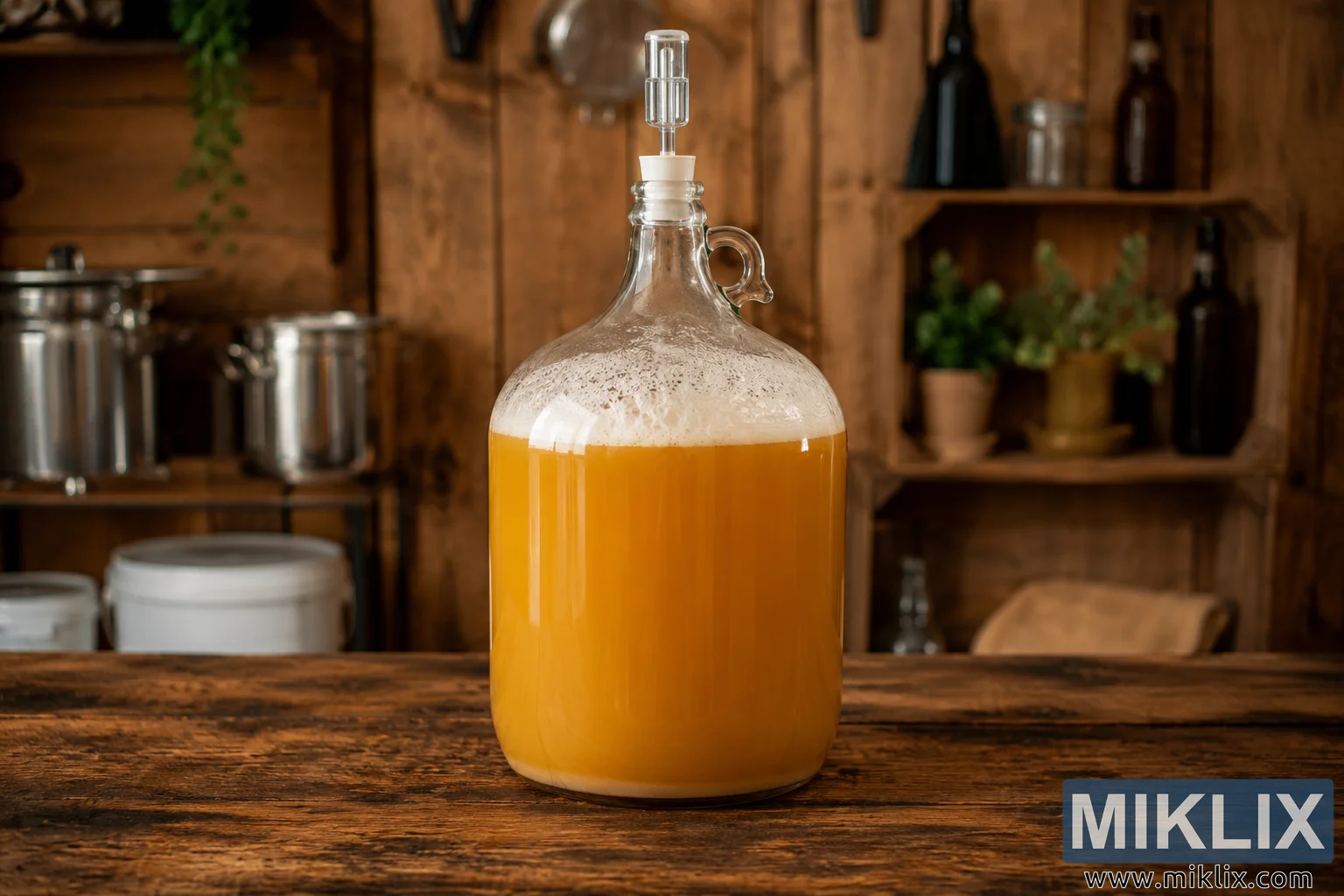
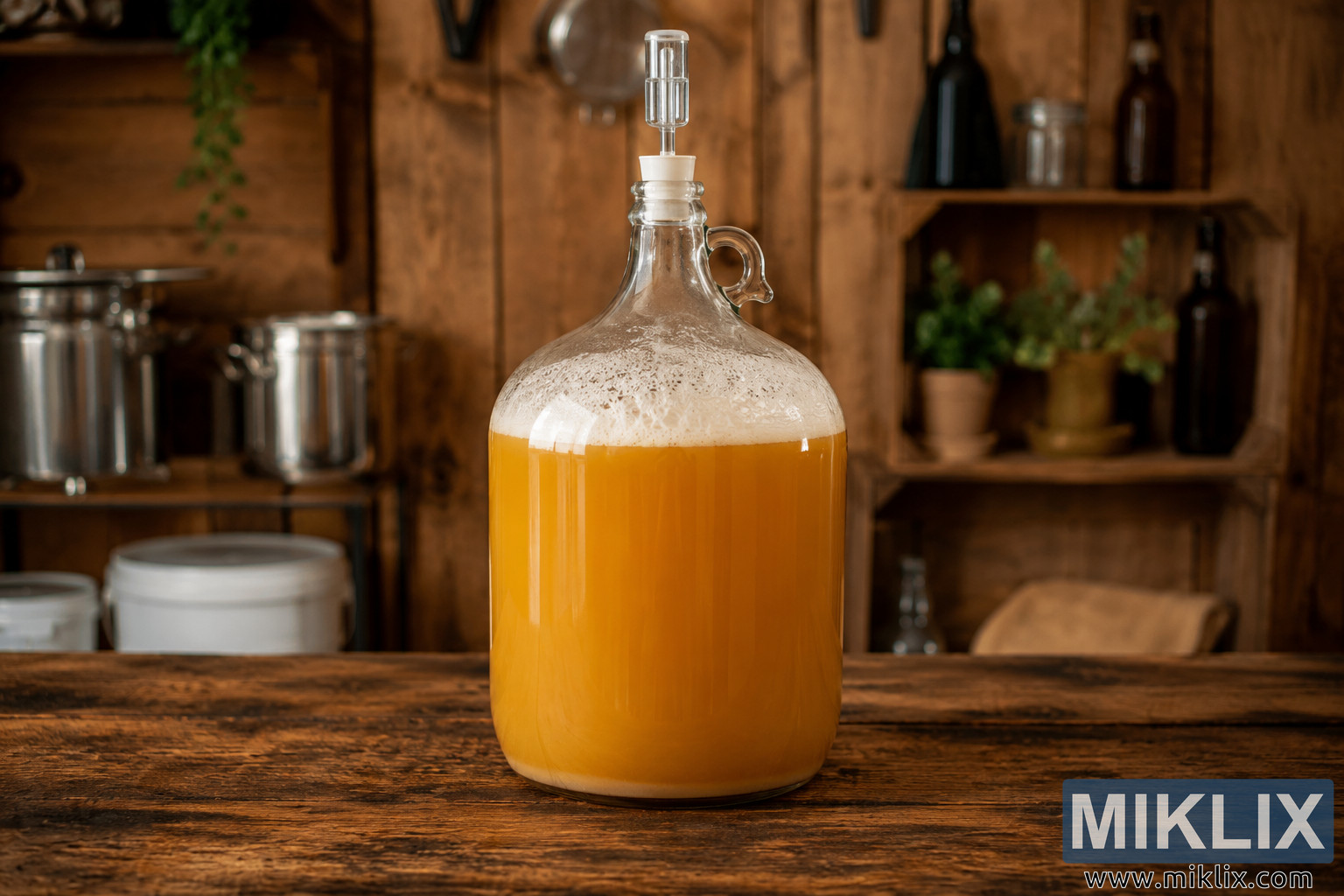
A high-quality landscape-oriented photograph depicts a traditional homebrewing environment centered around a large, clear glass carboy actively fermenting a hazy New England IPA (NEIPA). The carboy occupies the visual focal point of the composition and rests securely on a weathered rustic wooden table whose rich grain, worn edges, and natural imperfections reinforce the handcrafted atmosphere of the brewing space. The beer inside the vessel displays the signature appearance commonly associated with the NEIPA style, presenting a saturated golden-orange hue with a dense, opaque haze that prevents light from passing cleanly through the liquid. A thick cap of creamy fermentation foam, known as krausen, rises near the top of the beer, indicating an active stage of fermentation. Fine bubbles and subtle foam textures suggest vigorous yeast activity while maintaining a clean, visually appealing presentation.
The neck of the glass carboy is sealed with a light-colored stopper that securely holds a transparent fermentation airlock. The airlock stands vertically above the vessel, providing a recognizable visual cue of the fermentation process while adding technical authenticity to the homebrewing setup. The crystal-clear glass catches warm ambient light and creates gentle reflections along its curved surface, emphasizing both the thickness of the glass and the rounded silhouette of the vessel. Soft highlights and delicate reflections contribute to a realistic photographic appearance without distracting from the beer itself.
The rustic wooden table beneath the fermenter exhibits a deep brown coloration with visible knots, scratches, and pronounced wood grain patterns. Its textured surface communicates years of practical use and complements the artisanal character of homebrewing. The warm color palette of the wood harmonizes with the golden tones of the fermenting beer, creating a cohesive and inviting composition.
The softly blurred background reveals a cozy brewing workspace constructed primarily from natural wood paneling. Stainless steel brewing kettles and equipment occupy portions of the left side of the scene, subtly indicating the brewing process without competing for attention. White fermentation buckets are partially visible in the lower background, reinforcing the authenticity of a small-scale brewing environment. Shelving on the right side contains several dark glass bottles with no visible labels or branding, ensuring a clean, neutral presentation free from commercial references. Small potted green plants introduce gentle organic elements that soften the industrial aspects of the brewing equipment and add warmth to the room.
The overall lighting is warm and diffused, creating soft shadows and pleasant highlights across every surface. The illumination resembles natural window light combined with subtle indoor ambient lighting, producing a welcoming atmosphere associated with hobbyist workshops and traditional craft spaces. The shallow depth of field keeps the fermenting carboy exceptionally sharp while rendering the background pleasantly out of focus. This selective focus naturally guides the viewer's attention toward the active fermentation vessel while preserving enough environmental detail to communicate the setting.
The composition is balanced and symmetrical, with the fermenter positioned centrally against the softly blurred backdrop. The warm wood textures, polished stainless steel surfaces, translucent glass, creamy foam, and hazy beer together create a visually rich collection of contrasting materials. No people appear in the scene, allowing the equipment and fermenting beer to remain the exclusive subject. Likewise, there are no visible logos, trademarks, product labels, packaging, signage, or identifiable commercial brands anywhere within the image.
Overall, the photograph conveys craftsmanship, patience, and the traditional process of brewing beer at home. It celebrates the distinctive visual qualities of a fermenting New England IPA through careful lighting, realistic textures, and an inviting rustic environment while maintaining a clean, timeless, and brand-neutral aesthetic suitable for editorial articles, brewing guides, educational materials, blogs, and commercial stock photography where generic homebrewing imagery is desired.
The image is related to: Fermenting Beer with Wyeast 3463-PC Forbidden Fruit Yeast