
Fermenting Beer with Wyeast 3463-PC Forbidden Fruit Yeast
Published: July 23, 2026 at 5:54:41 PM UTC
The Wyeast 3463-PC strain is marketed for its bright, tropical esters and berry-forward aromas. Brewers appreciate its ability to enhance mango, passionfruit, and raspberry notes without heavy phenolics.
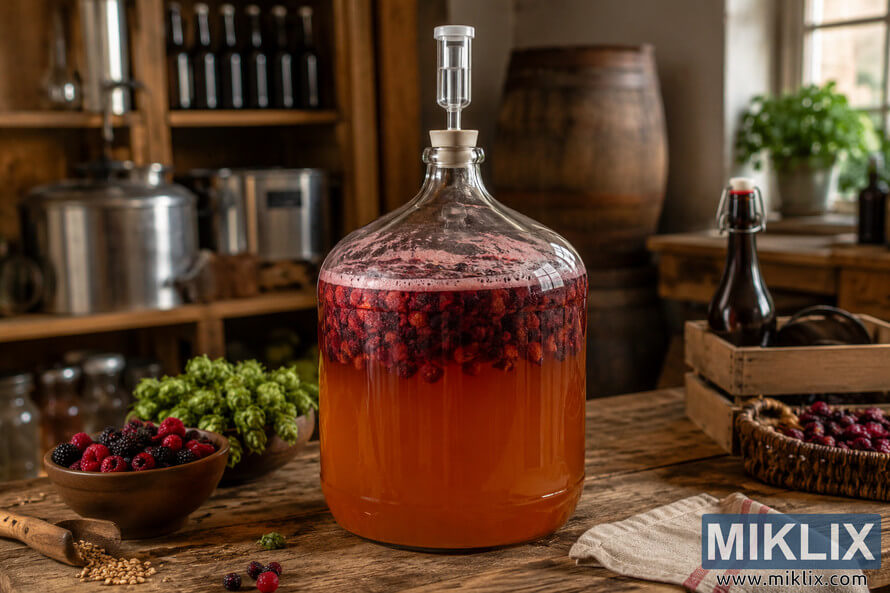
Click or tap the image for more information and higher resolutions.
Key Takeaways
- Wyeast 3463-PC Forbidden Fruit Yeast is a fruity-ester-producing strain suited to experimental and Belgian-style ales.
- This Wyeast 3463 review highlights its sensory profile and practical pitching recommendations.
- Fermenting beer with Forbidden Fruit can emphasize tropical and berry notes when paired with the right grain bill.
- Homebrew yeast selection should consider attenuation, alcohol tolerance, and desired ester production.
- The article provides troubleshooting, recipe ideas, and conditioning tips for reliable results.
Introduction to Wyeast 3463-PC Forbidden Fruit Yeast
The Wyeast 3463-PC strain is marketed for its bright, tropical esters and berry-forward aromas. Brewers appreciate its ability to enhance mango, passionfruit, and raspberry notes without heavy phenolics. It comes as a liquid Wyeast Pack, requiring careful handling to ensure viability and consistent results.
What makes this strain unique
- Designed to amplify fruit additions and showcase juicy esters in beers.
- Marketed as a specialty fruity/Belgian-like strain that favors tropical and berry esters.
- Liquid yeast format means attention to starter size, storage, and pitch timing matters.
Overview of flavor and aroma characteristics
- Typical aromas include tropical fruit, stone fruit, and berry esters with occasional candied notes.
- Mouthfeel trends toward medium body with moderate attenuation, leaving some residual sweetness to support fruit flavors.
- Estery intensity shifts with fermentation temperature and wort composition, so warm fermentations tend to push more tropical character.
Who should consider using this yeast
- Homebrewers aiming to accentuate fruit-forward beers and highlight additions.
- Brewers experimenting with fruited pale ales, saisons, or Belgian-inspired ales seeking a fruity ale yeast profile.
- Commercial operations that want a reliable Wyeast 3463 flavor profile to deliver consistent tropical and berry notes.
- Brewers who prefer neutral fermentation should consider alternative strains, since Forbidden Fruit yeast characteristics favor pronounced esters.
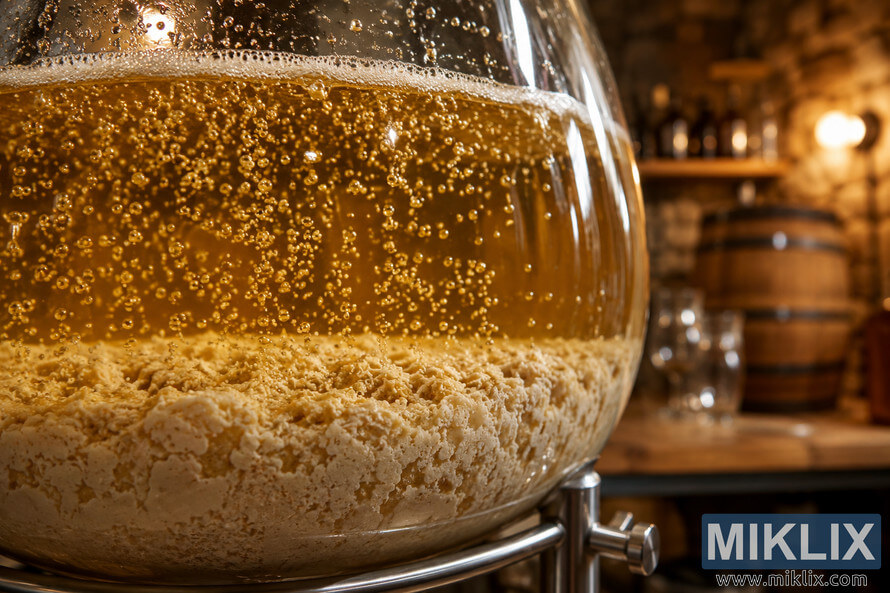
Click or tap the image for more information and higher resolutions.
Understanding the Science Behind Fermentation
Fermentation transforms wort into beer through biochemical steps driven by yeast. Brewers who understand yeast metabolism can influence flavor, body, and alcohol content. This primer covers the essential pathways, the origins of ester formation in beer, and how strain traits affect yeast attenuation and alcohol tolerance of Wyeast strains.
Yeast metabolism basics
Yeast cells break down sugars via glycolysis, converting glucose and maltose into pyruvate. Pyruvate is then split into ethanol and CO2 during anaerobic fermentation. A portion of carbon flows into secondary metabolites: higher alcohols, organic acids, and esters. Cell health is crucial; oxygen uptake during early growth helps build sterols and unsaturated fatty acids. These support robust fermentation and reduce off-flavors.
How yeast strains influence esters and phenols
Ester formation occurs when acetyl-CoA reacts with alcohols, a process mediated by specific enzymes. Genetic differences among strains change enzyme levels, so some yeasts naturally produce more fruity esters. External factors like fermentation temperature, wort gravity, oxygenation, and pitching rate shift enzyme activity and thus the amount of ester formation in beer.
Certain strains carry phenolic off-flavor (POF+) genes that produce clove or pepper notes through conversion of phenolic precursors. Wyeast documentation typically states whether a strain is POF+ or POF-. Brewers should check the vendor spec to confirm Forbidden Fruit's POF status before relying on its phenolic character.
Impact on attenuation and alcohol tolerance
Apparent attenuation measures how much sugar the yeast consumes and predicts final gravity. Strain-specific enzyme expression, transport proteins, and flocculation behavior all affect yeast attenuation. Fruity and Belgian-style strains often show wide attenuation ranges depending on pitch rate and mash temperature.
Alcohol tolerance of Wyeast strains varies by lineage and health. Many Belgian and fruity strains endure moderate to high ABV, but exact limits differ by product. Verify the manufacturer figures when planning a recipe. Mash temperature, adjuncts, and oxygenation can be adjusted to reach target attenuation and achieve the intended ABV without stressing the culture.
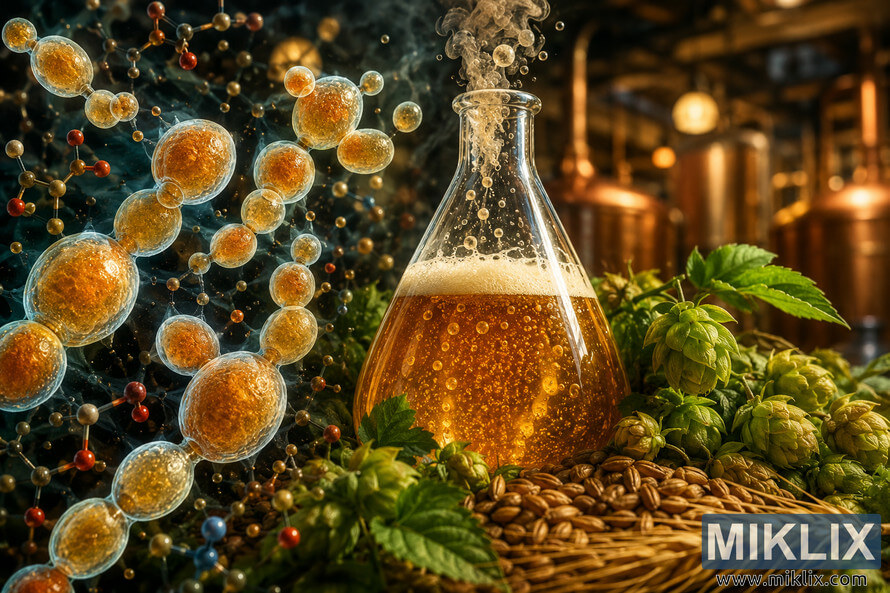
Click or tap the image for more information and higher resolutions.
Wyeast 3463-PC Forbidden Fruit Yeast
This strain is known for its bold fruit character and versatility. It's a must-know for brewers aiming to craft fruit-forward or Belgian-inspired ales. Understanding its origin, flavor profile, and comparison with other fruity yeast strains is crucial.
Strain origin and lineage
Wyeast Laboratories meticulously cultivates yeast strains. The Wyeast 3463-PC is part of their specialty program, designed for home and craft brewers. For a detailed look at its lineage, check Wyeast's product sheets. They provide information on pedigree, POF status, and propagation history.
Typical sensory profile in finished beer
Wyeast 3463-PC is known for its tropical and berry esters, with occasional stone-fruit notes. The beer's mouthfeel is rounded, with medium attenuation. This leaves a hint of residual sweetness, enhancing fruit additions. The aroma and intensity can be adjusted by controlling fermentation temperature, pitch rate, and adjunct use.
Comparison with similar fruity/Belgian strains
Wyeast 3463-PC stands out for its tropical and berry esters, differing from Wyeast 1388 Belgian Strong Ale. Wyeast 3522 Belgian Ardennes offers more complex Belgian spice and phenolic presence. Safbrew and White Labs alternatives may match attenuation or ester power but vary in phenolic expression and fermentation kinetics.
- Choose 3463 if you want prominent fruit esters with a smoother, less phenolic finish.
- Pick 1388 for big alcohol warmth and restrained spice alongside fruity esters.
- Use 3522 when you want peppery phenolics and layered complexity.
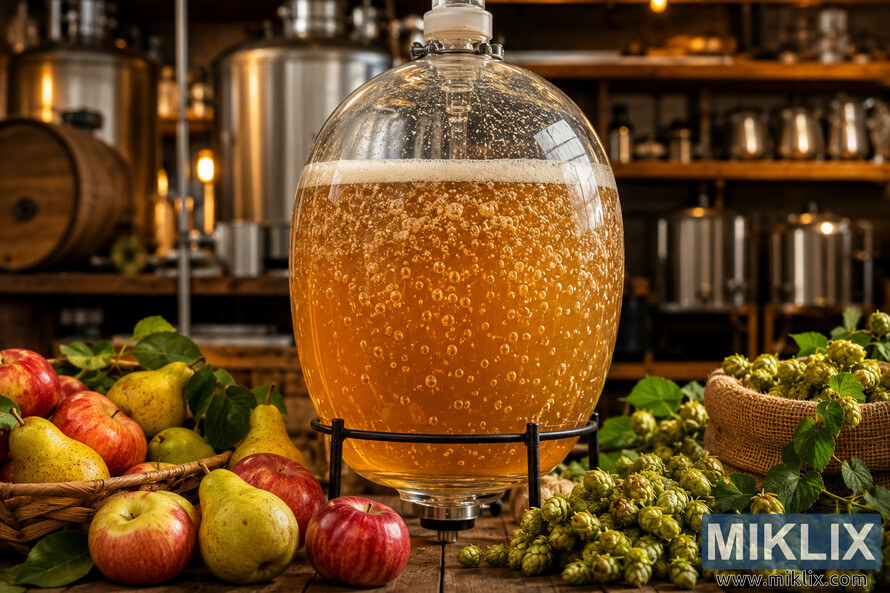
Click or tap the image for more information and higher resolutions.
Choosing the Right Beer Styles for This Yeast
This yeast accentuates tropical and berry esters, making it perfect for beers that highlight fruit and hop flavors. Opt for a light malt base and complementary hops to enhance these esters. Below, find practical tips for brewers looking for recipe inspiration and guidance on when to avoid this strain.
Fruited pale ales and New England–style IPAs are ideal. They benefit from late-hop additions. Hazy IPAs with Citra and Mosaic complement the yeast’s tropical notes, offering strong recipe inspiration for modern hop-forward brews.
Fruit-forward saisons and Berliner Weisse with raspberry or peach additions work well. Light-bodied sours and kettle sours, blended or dosed with fruit, let the esters enhance the profile without masking acidity. Fruit lambics and mixed-fermentation sours can gain another layer when used carefully in blends.
- Fruited pale ales with Citra/Mosaic and late-added mango.
- NEIPAs that highlight soft mouthfeel and tropical esters.
- Saisons with stone fruit adjuncts for complexity.
- Berliner Weisse with raspberry additions for bright, fruity balance.
- Session fruited ales that let flavors stay in the foreground.
Use adjuncts such as oats for body, light pilsner or pale malt as a base, and restrained crystal malts. This approach ensures esters remain prominent. These choices offer clear recipe inspiration for both homebrewers and professionals.
Some styles are poor matches. Avoid using this yeast in beers that rely on clean, neutral fermentation character. German lagers, clean American lagers, and delicate pilsners demand restrained ester and phenolic production. They will clash with this yeast’s signature fruitiness.
Skip it for malt-forward traditional English bitters where subtle malt nuance is essential. Strong phenolics and ester profiles can overwhelm subtle hop or malt details. It is best to avoid with fruity yeast when clarity and restraint matter most.
- Avoid neutral lagers and delicate pilsners that need a clean profile.
- Do not pair with understated English bitters that depend on malt balance.
- Refrain from using in styles where spice or phenolic character would conflict.
For quick recipe ideas, try a tropical hop pale ale using Citra and Mosaic with late mango additions. A kettle-soured Berliner Weisse finished with raspberry purée is another option. A saison dosed with fresh stone fruit at secondary is also a good choice. A session fruited ale with a light malt backbone and oats for mouthfeel gives an easy-drinking vessel for the yeast’s berry notes.
These suggestions highlight how fruited ale yeast styles can create vivid fruit aromas while avoiding clashes in beers that need neutrality. Use this guidance to refine mash bills, hop choices, and adjunct timing for balanced results.
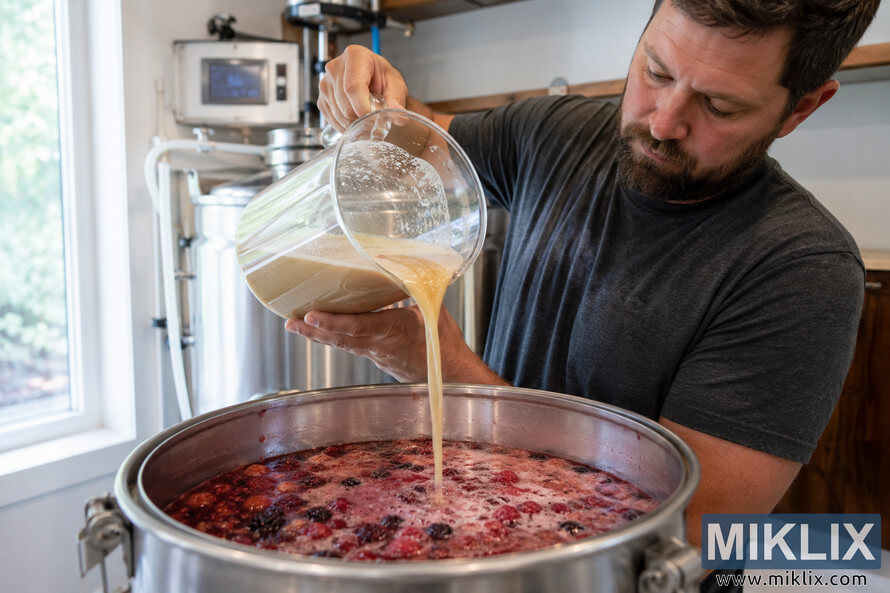
Click or tap the image for more information and higher resolutions.
Preparing and Activating the Yeast
To get Wyeast 3463-PC ready for fermentation, you must first choose the right form. Check the pack date and store it cold. Decide between a Wyeast smack pack or a harvested slurry based on your brew's needs. Proper handling is crucial for yeast viability and reduces lag time.
The method of activation impacts lag, flavor, and cell count. A Wyeast smack pack, with its internal nutrient pouch, starts showing activity within 12–48 hours after breaking. Liquid slurry, whether from a lab vial or a previous batch, may have different viability. It requires tighter cold storage. Always check the manufacture dates and fridge temperatures to estimate shelf life and plan a starter if viability is low.
Consider these points when building a yeast starter for homebrewing.
- Estimate cell needs with an online calculator or spreadsheet before mixing wort.
- Sanitize a clean flask or jar and boil DME to make a 1.030–1.040 starter wort for most ales.
- Typical starter volume is 100–200 ml per degree Plato for many homebrew cases; increase volume for high-gravity beers.
- Cool the wort, aerate with shaking or a sanitized stir bar, then pitch the activated pack or slurry.
- Allow 24–48+ hours at room temperature and look for a krausen or dense trub as signs of growth.
Follow these steps when building a starter: boil DME, cool, oxygenate, pitch, and monitor. If the Wyeast smack pack shows weak activity, repitch into the starter to boost cells. For lab vials and harvested yeast, a starter can revive low viability before you brew.
Choose a pitching rate that matches your gravity and style. Aim for about 0.75–1.5 million cells per mL per degree Plato for most ales. Higher gravity beers need a larger starter or multiple packs. Underpitching will push ester formation up, but it raises the risk of off-flavors and extended lag.
For Wyeast 3463, especially in complex, fruity beers, err on the side of a healthy cell count. Good liquid yeast handling on transfer and during storage protects viability. When in doubt, build a slightly larger starter and save yourself a stuck fermentation.
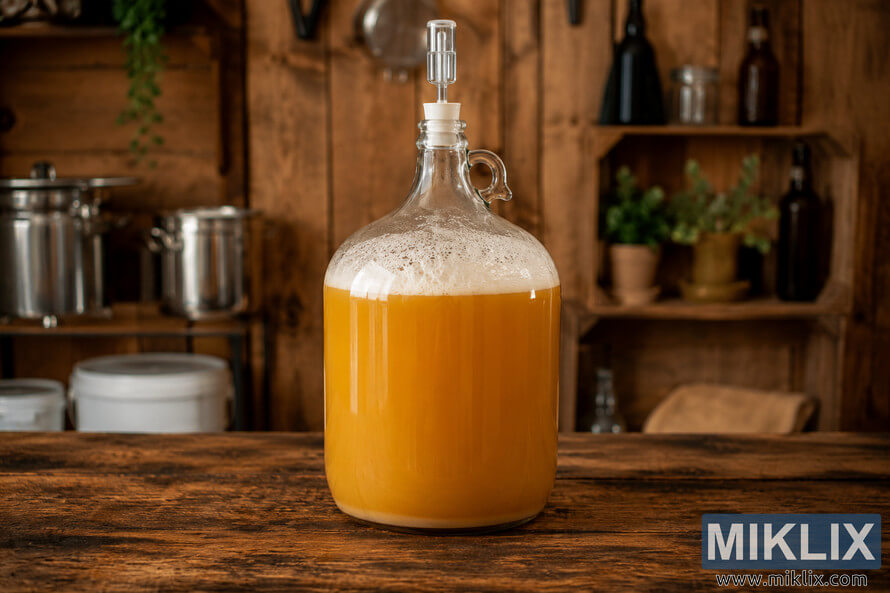
Click or tap the image for more information and higher resolutions.
Optimal Fermentation Temperatures and Schedules
Mastering the fermentation temperature for Wyeast 3463 is key to enhancing fruit notes and balance. This guide provides essential temperature ranges, gentle temperature increases, and monitoring tips to ensure a successful fermentation.
Temperature ranges that promote desired esters
For estery ales, temperatures between the mid-60s and low-70s°F are ideal. Wyeast 3463 thrives between 64–72°F (18–22°C). A lower temperature range produces subtle tropical flavors.
Increasing the temperature slightly can intensify fruitiness. However, avoid exceeding 72°F to prevent the formation of fusel alcohols and solvent-like off-flavors.
Temperature ramping and diacetyl rest guidance
Start fermentation at your chosen temperature and allow vigorous activity for 48–72 hours. Gradually increase the temperature by 2–4°F during this period. This helps the yeast consume intermediate compounds.
If you notice buttery diacetyl, perform a diacetyl rest. Raise the beer a few degrees above the fermentation temperature for 2–3 days. This allows the yeast to reabsorb diacetyl before cooling for conditioning.
Before cold crashing, return the beer to a finishing temperature that preserves esters and aids in clarification. Aim for a gradual temperature drop rather than a sudden one.
Monitoring fermentation progress
Monitoring fermentation closely minimizes surprises. Use a hydrometer or refractometer to track gravity and confirm fermentation activity and completion.
Observe krausen height and decline as a visual indicator. Fermentation typically lasts 3–7 days for ales. If fermentation stalls, check the temperature, oxygen levels, and pitching rate before taking action.
- Record each gravity and temperature reading for consistent results.
- Sanitize sampling equipment to avoid contamination when checking gravity.
- Use a simple log to compare fermentation profiles between batches.
By carefully controlling fermentation temperature for Wyeast 3463, focusing on ester-promoting temperatures, incorporating a diacetyl rest, and monitoring fermentation closely, you can showcase the strain's tropical and berry characteristics without common faults.
Wort Composition and Mash Considerations
Opting for the right malt and mash profile is crucial for Wyeast 3463-PC to display its fruity essence. A clean pale malt base ensures esters remain vibrant. Incorporating small amounts of Vienna or Munich malts adds depth without overpowering the aroma. It's important to avoid heavy roasted malts, as they can obscure delicate flavors.
Grain bill choices to complement the yeast profile
- Begin with Pilsner or two-row pale malt as the main grain to highlight yeast esters.
- Introduce 5–10% Vienna or Munich for added malt warmth in Belgian or pale ale recipes.
- Include 3–8% flaked oats or wheat to enhance mouthfeel in hazy, NEIPA-style beers, emphasizing tropical notes.
- Restrict crystal malts and avoid dark roasted malts to preserve the fruit esters' clarity.
Mash temperature effects on body and attenuation
Mashing at 148–152°F results in a more fermentable wort and drier finish. This approach enhances apparent attenuation and brings out fruity esters. For a fuller body, mash at 154–158°F to increase dextrins and soften the mouthfeel.
Adjust your mash temperature based on desired final gravity and ABV. For beers where ester clarity is paramount, opt for a lower mash temperature. Conversely, a higher mash temperature can balance ester weight with malt, creating a more drinkable ale.
Adjuncts and fruit additions to enhance character
- Fruit purées and concentrates offer intense aroma and predictable sugar levels. Pasteurize or use commercially processed options for sanitation.
- Whole fruit and zest provide fresher, brighter aromas. Add them in secondary to preserve volatile compounds.
- Consider heat-treating fruit if adding post-boil, or add during secondary after most fermentation to avoid excessive yeast reactivation.
- Be mindful that fruit adjuncts timing affects fermentation dynamics. Extra sugars can restart fermentation and lower final gravity. Adjust pitching rates and monitor gravity when adding large doses.
Integrate grain bill, mash temperature, and fruit adjunct timing into a cohesive plan. Each decision impacts ester expression, body, and fermentation behavior in predictable ways. Craft recipes with the yeast's fruity amplification in mind, then fine-tune mash and adjunct timing to shape the final beer.
Water and Mineral Adjustments for Best Results
Water chemistry significantly influences the taste and character of fruity or Belgian-style ales. Even slight changes in mineral content and pH can enhance or diminish esters and fruit notes. Utilize tools like Bru’n Water or a brewery water report to establish baseline targets before making adjustments with brewing salts.
Water profile targets for fruity/Belgian ales
Strive for a moderately soft water profile, rich enough to support yeast health and enzyme activity. Aiming for 50–100 ppm calcium, 50–150 ppm chloride, and 25–75 ppm sulfate is practical. This balance ensures a round mouthfeel and promotes fruity esters without overbearing bitterness.
Opt for a higher chloride-to-sulfate ratio when brewing fruity ales. A higher chloride proportion enhances malt and fruit sweetness. For recipes emphasizing malt or fruit, increase chloride levels while keeping sulfate moderate.
Common salts and their sensory impacts
Select brewing salts with purpose. Calcium chloride enriches mouthfeel and amplifies malt and fruit sweetness. Calcium sulfate, or gypsum, introduces sharper dryness and sharpens bitterness. Magnesium sulfate (Epsom salt) adds magnesium but can taste medicinal if used excessively.
- Calcium chloride: improves mouthfeel and accentuates sweetness.
- Gypsum (calcium sulfate): tightens finish and highlights bitterness.
- Magnesium sulfate: small doses aid yeast; avoid excess.
- Sodium bicarbonate: buffers pH but can give harshness in pale beers.
Be mindful of bicarbonate levels, especially when using light malts. High bicarbonate levels can elevate mash pH, masking delicate fruit esters. Incremental additions of salts and regular water chemistry checks are essential.
Adjusting pH for yeast performance
Aim for a mash pH between 5.2 and 5.6 for optimal enzyme activity and yeast health. This range is crucial for sugar conversion, head retention, and ester development in fruity ales.
Adjust mash pH with lactic acid or phosphoric acid as needed. For mineral adjustments, use small amounts of calcium chloride or gypsum to influence pH indirectly. Always verify pH readings with a calibrated meter or reliable strips before and after adjustments.
Make changes incrementally and test batches consistently. This approach helps understand how the sulfate chloride ratio and brewing salts impact the final beer.
Nutrient and Oxygen Management
Healthy fermentation hinges on balanced oxygenation and timely nutrient dosing. For ales, the right oxygen and nutrient plan minimizes lag time, enhances attenuation, and cuts off-flavors. Keeping records of DO levels brewing and nutrient additions is key to replicating success.
Timing and amount of oxygenation for wort
- Oxygenate just before pitching. Aim for DO levels brewing near 8–10 ppm when using pure oxygen for typical ale pitches.
- For hobby setups without O2, vigorous aeration by shaking, splashing, or air-stir for several minutes works for small batches.
- If using a cylinder and stone, use short bursts: roughly 5–10 seconds of O2 per 5 gallons at 60–70 PSI. Avoid oxygenating once active fermentation has begun.
Yeast nutrient options and dosing guidelines
- Commercial blends include Wyeast Energizer, Fermaid K, and Fermaid O. Diammonium phosphate (DAP) can supplement nitrogen if needed.
- For standard gravity ales use conservative nutrient dosing. For high-gravity or fruit-laden worts plan a base dose plus staggered additions.
- Staggered nutrient additions at 24 and 48 hours help long fermentations. Overdosing can create off-flavors; follow manufacturer ranges and err on the low side for single additions.
Signs of nutrient deficiency during fermentation
- Extended lag time and sluggish fermentation are early warnings.
- Stuck fermentation, pronounced sulfur smells, or strange solvent notes suggest stress or nutrient gaps.
- If deficiency is suspected, oxygenate early before heavy activity and add a measured nutrient dose within the first 24–48 hours.
- Severe or persistent problems may need repitching with a healthy starter rather than more nutrients alone.
Practical tips: match nutrient dosing to gravity and fruit content, measure and record DO levels brewing, and prioritize oxygenation for ales before pitching. Small preventive steps at the start save time and preserve the delicate tropical and berry esters that make fruit-forward strains special.
Primary and Secondary Fermentation Practices
Choosing the right fermentation path is crucial for flavor, clarity, and post-brew day tasks. Below are practical options and timing tips to protect aroma and limit oxygen exposure.
Deciding between single-vessel and two-stage fermentation depends on your goals and risk management. A single-vessel approach, using a conical or sealed fermenter, minimizes transfers. This reduces handling, infection risk, and oxidation during conditioning.
- Single-vessel pros: fewer transfers, simpler sanitation, lower oxidation risk.
- Single-vessel cons: less room for large fruit additions or long secondary aging.
- Two-stage pros: easier fruit or dry hop contact, clearer beer before packaging.
- Two-stage cons: extra transfers raise oxygen pickup and contamination risk.
For most ales, recommend staying in one vessel unless planning heavy fruit additions or extended conditioning. When using a two-stage plan, move only once. Purge headspace with CO2 where possible to prevent oxidation.
The timing of adding fruit or hops is critical for aroma retention. Add fresh fruit after primary gravity has stabilized, typically between day 5 and day 10. This preserves volatile aromatics and reduces the chance of yeast stripping delicate notes.
- Fruit additions: add when primary fermentation slows but before full clearing.
- Dry hops: opt for late dry hop or whirlpool additions to protect volatile oils.
- Mixed or kettle-soured beers: coordinate microbial schedules so fruit or hops do not upset desired cultures.
Techniques to minimize oxygen pickup include careful handling and cold management. Cold-crash before racking to drop solids and reduce splashing. Use short, sanitized lines and clamp fittings for smooth transfers. Purge kegs and bottles with CO2 when possible to further prevent oxidation.
Work quickly but cleanly. Sanitation, minimal headspace, and CO2 blanketing are simple steps. They preserve the yeast-driven character you want and reduce off-flavors tied to oxygen exposure.
Conditioning, Carbonation, and Packaging
Deciding how to finish a beer impacts its flavor, clarity, and shelf life. This section explores the trade-offs between bottle conditioning with Wyeast 3463 and kegging. It also covers setting the right carbonation levels and cold conditioning to enhance clarity and stability.
Bottle conditioning versus kegging considerations
Bottle conditioning with Wyeast 3463 involves leaving live yeast in the bottle for natural carbonation. This method adds a subtle creaminess and supports long-term conditioning. It also simplifies distribution and sampling.
Kegging, on the other hand, offers quick service and precise carbonation control. Force-carbonation minimizes oxygen exposure and shortens the time to consumption. It's ideal for draft systems and large batches where consistency is key.
For bottle priming, calculate the sugar needed based on batch volume and desired carbonation. Use a priming calculator to ensure consistent sugar addition per bottle size. For higher carbonation levels, such as in Belgian styles, kegging and force-carbonation are safer options.
Target carbonation levels by style
- Fruited ales and Belgian-inspired beers: 2.2–2.8 volumes CO2 for enhanced aromatics and lively mouthfeel.
- Saisons and farmhouse ales: 2.5–3.0 volumes CO2 for the right balance of effervescence and dryness.
- NEIPAs and hazy styles: 0.9–1.8 volumes CO2 to preserve creaminess and hop presence.
Carbonation levels should align with the beer's style and serving vessel. Adjust priming sugar or keg pressure to achieve the desired carbonation. Consider style guidelines and personal taste when making these decisions.
Cold-conditioning and clearing the beer
Cold conditioning aids in yeast and protein settling, resulting in clearer beer. Lower the fermentation temperature to near-freezing for 24–72 hours to speed up sedimentation. Short cold-crashes effectively without stripping volatile aromatics.
Finings like Irish moss during boiling, gelatin in secondary, or Polyclar for haze can help. Commercial breweries might use filtration or centrifugation for faster clarity and stability before packaging.
Be cautious with prolonged cold conditioning. Excessive chilling can mute the delicate esters Wyeast 3463 produces. Balance clarity needs with the preservation of fruity aromatics by timing cold conditioning before packaging.
Tasting Notes and Sensory Evaluation
Develop a structured approach to evaluate beers made with Wyeast 3463. Select the right glassware and pour to assess aroma and head retention. Then, take short sniffs before tasting. Small sips help map texture and finish. When possible, compare samples side-by-side.
How to identify signature aromas and flavors
Start with the aroma: look for tropical mango, passionfruit, and fresh berry notes. Note the presence of stone fruit and a hint of candied sugar sweetness. Medium mouthfeel and a rounded finish suggest yeast-derived esters.
Blind tastings help distinguish yeast character from hops or fruit additions. Use clean water and a neutral malt bill to isolate yeast traits. Aroma-only and palate-only rounds can pinpoint yeast-derived flavors.
Common off-flavors to watch for and remedies
Estery strains can veer off course if fermentation control is lax. Be vigilant for fusel solvent notes, indicative of hot alcohol. These often stem from high fermentation temperatures or gravity. To fix, lower fermentation temperatures and avoid overheating the wort.
Excessive phenolics manifest as clove or medicinal notes. This could be due to POF+ activity or phenolic precursors in malt. Tighten mash and sanitation practices and adjust pitch rates to correct.
Buttery diacetyl suggests an unfinished fermentation. Implement a diacetyl rest to allow yeast to clean up. Oxidation, presenting as cardboard or stale flavors, is caused by oxygen exposure. Minimize oxygen during transfers and package promptly.
Recording results for recipe refinement
Maintain a detailed brewing log. Record yeast lot, manufacture date, starter size, and pitch rate. Include fermentation schedule, gravity readings, water profile, and adjuncts used.
- Note tasting notes Forbidden Fruit at first pour and after conditioning.
- Log attempts to identify esters in beer and any perceived off-flavors and fixes applied.
- Track changes over multiple batches to spot trends.
Use the brewing log to refine mash temperature, pitch rate, and fruit addition timing. Small, recorded changes enable more reliable reproduction of the desired profile.
Recipe Examples and Formulas Using This Yeast
Below are practical, ready-to-use frameworks that showcase Wyeast 3463-PC Forbidden Fruit yeast. Each formula highlights the importance of grain choice, hopping, fermentation temperature, and fruit timing in shaping aroma and flavor. Use these templates as starting points and scale ingredients for your batch size.
A tropical pale ale recipe framework
- Pale two-row base: 85–90% of the grist.
- Specialty grains: 5–10% Carapils or light Crystal for color and slight sweetness.
- Malt adjunct (optional): 5–10% flaked oats for silkier mouthfeel.
- Hops: Citra and Mosaic focused in late whirlpool and dry hop to highlight tropical notes.
- OG target: 1.048–1.055; FG will vary with mash and fermentation.
- Yeast: pitch Wyeast 3463 with a healthy starter; ferment 66–70°F to accent esters.
A Belgian-inspired formula to highlight complexity
- Base malt: Pilsner malt for a clean, grain-forward canvas.
- Optional: Belgian candi sugar for added fermentable sugar and dryness.
- Specialty additions: small percentage of Munich or Vienna for depth.
- OG guideline: 1.060–1.070 depending on desired strength and body.
- Fermentation: use the higher end of the yeast’s range to encourage complex esters and phenolics.
- Maturation: allow extended conditioning to marry flavors and mellow harsh notes.
Fruit-forward brewing options and timing tips
- Fruit dosage: 6–15 lbs per 5 gallons when using puree, adjusted by fruit intensity.
- Timing: add fruit after primary activity slows to preserve fresh aromatics and limit fermentation loss.
- Handling: consider pasteurizing, freezing, or using stabilized purée to reduce contamination risk.
- Blends: try raspberry with mango or passionfruit to balance tartness and tropical sweetness; stagger additions for layered aroma.
- Testing: trial small-scale fruit additions before committing to a full batch.
These templates are ideal for brewers looking for practical guidance on using Wyeast 3463. For a tropical pale ale, focus on late hop additions and moderate fermentation temperatures. For a Belgian recipe, use pilsner base malt and warmer fermentation to unlock complexity. When brewing with fruit, prioritize fruit quality and timing to preserve aroma and prevent contamination.
Troubleshooting Common Issues with Wyeast 3463-PC Forbidden Fruit Yeast
When a batch deviates from expectations, swift diagnosis is key to minimizing losses and learning quickly. Below, we outline practical checks and actions for homebrewers and small breweries using Wyeast 3463. It's crucial to keep detailed notes on each brew to identify patterns in yeast health and performance over time.
Sluggish fermentation can arise from several simple causes. Underpitching, low cell viability, insufficient oxygen at pitch, cold wort, or very high gravity all contribute to slow activity. Begin by verifying starter size or pack freshness. Then, ensure the fermenter's temperature aligns with the strain's optimal range. Properly oxygenate the wort before pitching and add a balanced yeast nutrient early in fermentation. If yeast viability is in question, consider building a larger starter or repitching with a vigorous ale strain. When blending with dry yeast, rehydrate the dry strain according to the manufacturer's instructions before adding it to the wort.
- Check pack date and starter gravity.
- Raise temperature gently if activity stalls.
- Add yeast nutrient within first 24 hours.
- Consider repitching if no signs of life after 48–72 hours.
Off-flavors can be broadly categorized into two types, each requiring a different approach. Phenolic notes, such as clove, medicinal, or spicy, often stem from POF+ genetics or wild microbes. Solvent or fusel notes, characterized by hot, nail-polish, or harsh alcohol, indicate high fermentation temperatures, nutrient stress, or very high gravity. Differentiate these by aroma and taste, then take appropriate action.
- To address phenolic issues, check sanitation, avoid wild yeast exposure, and ensure proper aeration and pitch rate.
- To reduce solvent/fusel production, lower fermentation temperature, improve oxygenation at pitch, and ensure sufficient nutrition.
- If contamination is suspected, discard affected fermenters and clean equipment thoroughly before reuse.
Maintaining yeast health is crucial to prevent many problems. Source fresh Wyeast packs and note manufacture dates. Store liquid yeast cold and use within recommended windows. Practice strict sanitation when handling yeast and equipment. For brewers who crop and reuse slurry, maintain a simple yeast bank record with dates, generations, and performance notes. Limit repitches to a safe number of generations and discard slurry that shows off aromas or sluggish performance.
- Buy fresh, store cold, track pack dates.
- Sanitize tools and practice closed transfers when possible.
- Crop yeast periodically and follow repitch limits for quality control.
Use this checklist when troubleshooting Wyeast 3463. Regular attention to pitch rates, oxygenation, nutrient dosing, and sanitation keeps sluggish fermentation fixes simple and cuts risks of off-flavors phenolic solvent. Healthy yeast delivers cleaner, more predictable beers every time.
Conclusion
Wyeast 3463 summary: This strain offers a vibrant tropical and berry ester profile, perfect for fruit-forward ales and certain Belgian-inspired beers. Its strength lies in its expressive aromatics. Thus, brewing decisions—such as grain bill, adjuncts, and timing of additions—significantly influence the final character.
Forbidden Fruit yeast conclusion highlights the importance of fermentation management. It's crucial to check the pack date and specifications before use. Also, building a proper starter or using multiple packs for high-gravity brews is essential. Controlling fermentation temperature is key to coaxing desirable esters while minimizing harsh phenolics. Monitoring oxygenation and nutrients is vital for yeast health.
Best practices for fermenting Forbidden Fruit include careful planning of fruit and adjunct additions to complement the esters. Keeping detailed batch logs is also important. Running small test batches helps in fine-tuning pitching rates and temperature schedules. For brewers aiming for pronounced fruit character, this strain is a valuable asset when used with care and skill.
FAQ
What is Wyeast 3463-PC Forbidden Fruit yeast and what makes it unique?
Wyeast 3463‑PC Forbidden Fruit is a liquid ale yeast known for its pronounced tropical and berry esters. It's packaged as a Wyeast liquid culture, designed to enhance fruit adjuncts. This yeast strain offers mango, passionfruit, or raspberry-like notes, making it unique. Its ester-producing genetics are influenced by temperature, pitch rate, and wort composition.
Who should consider using this yeast strain?
Homebrewers, brewpubs, and craft brewers looking for a strong fruit-forward ester profile should consider it. It's ideal for fruited pale ales, New England–style IPAs with fruit adjuncts, saisons with stone fruit, and Berliner Weisse with fruit. However, brewers seeking a neutral fermentation character should avoid it.
What flavor and aroma characteristics can I expect?
Expect prominent tropical and berry esters, including mango, passionfruit, and raspberry. You may also notice occasional stone-fruit or candied notes. The mouthfeel is medium-bodied with moderate attenuation, leaving some residual sweetness. This enhances fruit perception. The final intensity depends on fermentation temperature, pitch rate, and wort gravity.
Is Wyeast 3463-PC POF+ (produces phenolics) and how do phenols affect beer?
Check the Wyeast product sheets for the POF status of this strain. If it's POF+, it will produce clove/pepper phenolics. These can complement some Belgian styles but clash with delicate hop or malt nuances. If you don't want phenolic character, verify the manufacturer's spec before use.
What are the recommended fermentation temperatures to highlight esters without creating fusels?
Aim for a fermentation temperature of roughly 64–72°F (18–22°C). Lower temperatures yield cleaner esters, while higher temperatures produce stronger tropical character but risk fusel alcohols. Start in the mid‑60s and consider a gentle ramp into the upper range during active fermentation to emphasize esters while avoiding solvent notes.
How should I prepare and pitch this liquid yeast—starter or smack pack?
Check the pack type and manufacture date. For liquid cultures, build a starter sized to your gravity and desired pitch rate. Use boiled DME starter wort, aerate, and allow 24–48+ hours for growth. For ales, target ~0.75–1.5 million cells/mL/°P; underpitching can increase esters but raises risk of off-flavors and sluggish starts. For high‑gravity beers, use larger starters or multiple packs.
How much should I oxygenate and when should I add yeast nutrient?
Oxygenate wort before pitching—aim for ~8–10 ppm DO with pure O2 or vigorous aeration for small batches. Add nutrient for high‑gravity or heavily fruited worts; consider a base dose at pitch and staggered additions when fermenting adjunct-laden beers. Monitor fermentation: long lag times or sluggish activity can indicate nutrient or oxygen shortfalls.
What mash temperatures and grain bills best complement this yeast?
Use a clean pale malt base (pale two‑row or Pilsner) to let esters shine. Add small Vienna/Munich for complexity or oats/wheat for mouthfeel in NEIPA styles. Mash lower (148–152°F / 64–67°C) for a drier, more fermentable wort that accentuates esters; mash higher (154–158°F / 68–70°C) to preserve body and balance intense fruitiness.
Which beer styles should I avoid with Forbidden Fruit yeast?
Avoid styles that require neutral fermentation—German lagers, clean American lagers, delicate pilsners, or malt‑forward English bitters where esters would clash. Also be cautious using it in beers where subtle hop or malt nuances are the focal point.
How and when should I add fruit to maximize aroma and stability?
Add fruit after primary gravity stabilizes—typically day 5–10—to preserve volatile aromatics and reduce loss to active yeast. Use heat‑treated or pasteurized fruit to reduce contamination risk if adding post‑boil. Dosages vary by fruit and form (6–15 lbs per 5 gallons for purée is common); flavor intensity and additional fermentable sugars will affect final gravity and conditioning needs.
How do I monitor fermentation progress and know if it’s stuck?
Track gravity with a hydrometer or refractometer, watch krausen formation, and note active CO2 release. A stuck or sluggish fermentation is indicated by unchanged gravity after several days of active fermentation, weak krausen, or long lag time. Remedies include warming to the target range, oxygenating before heavy activity, adding nutrient, or repitching healthy yeast.
What common off‑flavors should I watch for and how can I fix them?
Watch for fusel/solvent alcohols (from high temps or nutrient stress), excessive phenolics (POF+ expression or contamination), diacetyl (buttery), and oxidation (cardboard). Fixes: lower fermentation temp, ensure adequate oxygen and nutrients at pitch, perform a diacetyl rest if needed, and minimize oxygen exposure during transfers and packaging.
What water profile should I use for fruity/Belgian ales?
Aim for moderately soft to moderate mineral content with a chloride‑forward balance to enhance mouthfeel and perceived sweetness. Rough targets: 50–100 ppm calcium, 50–150 ppm chloride, and 25–75 ppm sulfate. Use tools like Bru’n Water to dial salts and keep bicarbonate low for light malt bills.
How should I carbonate and package beers fermented with this yeast?
Choose bottle conditioning for added complexity or kegging for control and reduced oxygen exposure. Fruited ales and Belgian‑inspired beers often finish around 2.2–2.8 volumes CO2; saisons may be 2.5–3.0. For NEIPA styles, aim lower (0.9–1.8) for creaminess. Cold‑crash and fining can clarify beer but balance with aroma preservation—excessive cold conditioning may mute fragile esters.
How does attenuation and alcohol tolerance affect recipe planning?
Attenuation determines final gravity and perceived sweetness; many estery/Belgian strains show medium attenuation, leaving some residual sweetness that accentuates fruit. Alcohol tolerance varies by strain—consult Wyeast documentation for exact numbers. Plan mash temps, adjunct sugars, and OG targets accordingly to hit desired ABV and body.
Can I compare Wyeast 3463-PC to other estery strains like 1388 or 3522?
Yes. 3463‑PC emphasizes tropical/berry esters and may differ from Wyeast 1388 (Belgian Strong Ale) or 3522 (Belgian Ardennes) in ester intensity, phenolic character, and attenuation. Choose 3463‑PC when you want pronounced fruit esters; choose other Belgian strains for stronger spice or different attenuation and alcohol tolerance. Review product sheets and trial small batches to compare.
What troubleshooting steps help prevent contamination when using fruit additions?
Use pasteurized or heat‑treated fruit when possible, keep additions after primary fermentation to reduce yeast uptake of volatiles, sanitize equipment thoroughly, and consider adding potassium metabisulfite/potassium sorbate for bottle conditioning if microbiological stability is a concern. Maintain strict sanitation and monitor post‑addition gravity and pH.
Are there recommended hop and adjunct pairings for this yeast?
Hops with tropical and citrus character complement the yeast—Citra, Mosaic, and Galaxy are common pairings. Adjuncts like oats or wheat can enhance mouthfeel in hazy styles. Light specialty malts (Carapils, light crystal) add firmness without masking esters. Match hop timing to preserve volatile oils—late additions, whirlpool, or dry hop techniques are effective.
How should commercial brewers manage yeast cropping and repitching with 3463‑PC?
Source fresh packs, track lot and viability, maintain a clean yeast bank, and follow cropping limits to avoid contamination or drift. Record pitch rates, generation count, and testing for viability/vitality. For multiple repitches, practice good slurry hygiene, perform viability checks, and consider occasional fresh inoculations to maintain desired flavor profile.
Further Reading
If you enjoyed this post, you may also like these suggestions:
- Fermenting Beer with Fermentis SafAle F-2 Yeast
- Fermenting Beer with White Labs WLP099 Super High Gravity Ale Yeast
- Fermenting Beer with Wyeast 2352-PC Munich Lager II Yeast