
Fermenting Beer with Wyeast 3638 Bavarian Wheat Yeast
Published: February 6, 2026 at 5:58:36 PM UTC
Wyeast 3638 Bavarian Wheat Yeast is a standout among German wheat yeast strains. It offers a complex ester profile, with notes of banana, apple, pear, and plum. Phenolic clove and a hint of vanilla add depth. Early in fermentation, sulfur may appear but usually clears with proper conditioning.
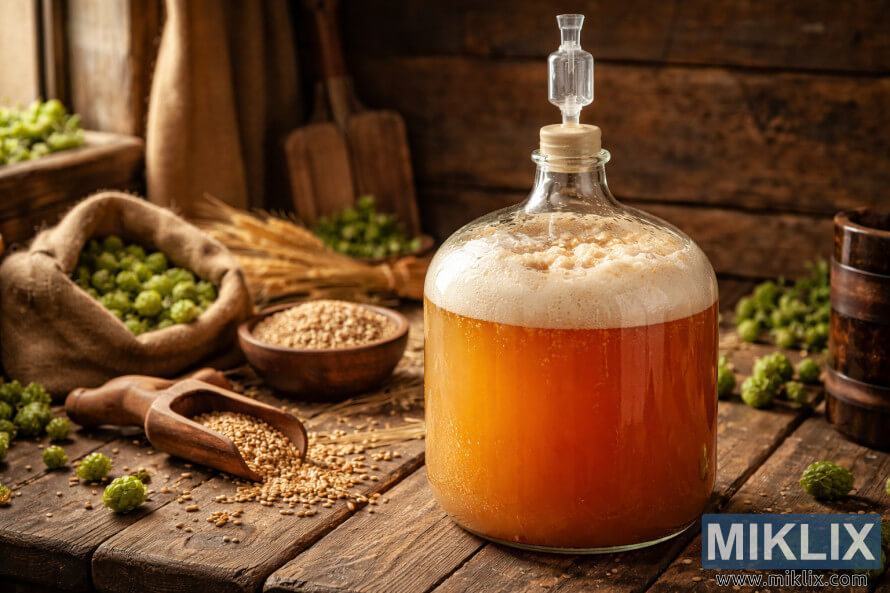
Click or tap the image for more information and higher resolutions.
Technically, Wyeast 3638 exhibits low flocculation and 70–76% attenuation. It ferments best between 64–75°F (18–24°C) and can handle alcohol up to about 10% ABV. Due to its true top-cropping nature, ensure about 33% headspace in the fermenter for krausen and active recirculation.
Homebrew trials and vendor notes confirm that pitching rate and temperature significantly influence the balance of esters and phenolics. Underpitching and warmer ferments tend to emphasize banana and fruit esters. Conversely, heavier pitches can mute these esters, highlighting clove. This versatility makes Wyeast 3638 ideal for Hefe-Weizen, Dunkelweizen, Roggenbier, Weizenbock, and similar styles.
Key Takeaways
- Wyeast 3638 Bavarian Wheat Yeast offers mixed fruit esters—banana plus apple, pear, and plum—balanced by clove phenolics.
- Expect low flocculation and 70–76% attenuation when fermenting with 3638.
- Fermentation range is 64–75°F (18–24°C); temperature and pitch rate strongly shape ester versus phenol balance.
- Top-cropping behavior requires about 33% fermenter headspace to manage krausen and yeast activity.
- Sulfur may appear early but commonly dissipates with adequate conditioning time.
Overview of Wyeast 3638 Bavarian Wheat Yeast and its Flavor Profile
Wyeast 3638 is known for its lively, fruit-forward character, ideal for traditional wheat beers. Its flavor profile is centered on fruity esters, with phenolic spice in balance.
Notable sensory notes include strong banana esters that dominate the aroma. Apple pear plum esters also contribute, adding complexity and a layered fruitiness.
Phenolic contributions are mainly clove with a hint of vanilla. These clove phenolics anchor the fruit, providing bread and toasty notes when supported by malt selection.
Sulfur in wheat yeast is common during fermentation and can be noticeable in young beer. However, brewery practice allows sulfur to dissipate during conditioning. This results in a final palate that showcases fruit and spice, avoiding rotten-egg aromas.
Practical control points that influence the balance include fermentation temperature, wort gravity, and pitching rate. Warmer ferments and underpitching tend to enhance banana esters. Conversely, colder or higher pitch rates can emphasize clove phenolics.
- Dominant fruit: banana esters with supporting apple pear plum esters.
- Phenolic frame: clove phenolics with subtle vanilla tones.
- Conditioning note: sulfur in wheat yeast often fades with time and cold storage.
Strain Origins, Classification, and Typical Beer Styles
Wyeast 3638 comes from traditional Bavarian wheat-brewing lines, classified as a top-cropping Bavarian wheat strain origin. It's prized for a balanced ester-phenol mix, blending the crispness of Weißbier with the richness of Dunkel profiles. This strain exhibits low flocculation and extended suspension, typical of classic wheat yeasts. These traits influence the beer's mouthfeel and haze.
https://www.youtube.com/watch?v=BwJt5w74ez8
Recommended for many German wheat styles, its Bavarian wheat strain origin makes it ideal for traditional Hefe-Weizen and Dunkelweizen. It's also used in Weizenbock for its support of fuller body and in Roggenbier, where its phenolic backbone complements rye spice.
- Hefe-Weizen — soft esters with clove notes.
- Dunkelweizen — darker malt meets fruitier esters.
- Weizenbock — supports higher gravity with balanced complexity.
- Roggenbier — phenolic support for rye spice.
Comparing strains, practical differences are key. Homebrewers note that 3638 leans toward apple, pear, and plum esters with moderate phenolics. In contrast, 3068 Weihenstephan often produces a more banana-forward ester profile. The choice between 3638 and 3068 depends on the desired ester-phenol balance and the beer style.
Choosing suitable beer styles 3638 guides recipe decisions. Lighter wheat bills showcase delicate fruit esters, while richer grain bills emphasize darker fruit and mild clove. Experimenting with pitch rate and temperature can further refine the expression of Wyeast 3638 across styles.
Fermentation Temperature Range and Its Effect on Esters
Wyeast 3638 performs well within a moderate temperature range. However, even slight temperature changes significantly alter its ester profile. Brewers who monitor the 3638 fermentation temperature notice distinct variations in banana, apple, pear, and plum flavors. By adjusting the temperature, you can fine-tune the fruitiness without upsetting the phenolic balance.
The manufacturer suggests a temperature range of 64–75°F (18–24°C) for this strain. Keeping the temperature closer to the lower end tends to suppress esters, emphasizing clove and subtle vanilla notes. On the other hand, temperatures closer to the upper end encourage ester formation, leading to a fruitier and more rounded profile.
The relationship between esters and temperature is straightforward. Warmer fermentation conditions increase yeast metabolism, resulting in higher levels of banana esters and fruitiness. Conversely, cooler conditions slow down ester synthesis, allowing yeast-driven phenolics to become more pronounced.
Practical tips for controlling fermentation temperature with wheat yeast for homebrewers:
- Utilize a fermentation fridge or temperature controller for consistent results.
- To enhance banana and other fruit esters, slightly increase the temperature after fermentation starts.
- For a more clove-like flavor, maintain the temperature at the lower end of the manufacturer's range.
- Combining modest underpitching with a controlled warm ramp can result in a more pronounced ester character.
Even simple setups can provide effective temperature control. Options include a swamp cooler, an insulated box with a thermostat, or a dedicated freezer with an external controller. Monitoring temperatures and tasting notes helps in understanding how temperature impacts your recipes.
When adjusting esters and temperature, remember that other factors also play a role. Variables such as wort gravity, oxygenation, and pitch rate interact with temperature to influence the final flavor. Use temperature as the primary adjustment, then fine-tune the other factors to achieve your desired outcome.
Pitch Rate Strategies: Underpitching vs Overpitching
Adjusting the pitch rate of Wyeast 3638 allows brewers to fine-tune the ester and phenol balance in wheat beers. Even small changes in cell counts can significantly alter the flavor profile. This can shift from fruit-forward esters to clove-like phenolics. It's crucial to monitor yeast health and wort gravity to ensure fermentation remains clean and vigorous.
Underpitching tends to enhance banana and other fruit esters. By intentionally reducing initial cell numbers, yeast must work harder. This results in increased production of isoamyl acetate and related esters. This approach is ideal for brewers aiming for a bold Hefeweizen banana flavor. However, it's important to avoid extended lag or stress, which can lead to off-flavors.
Conversely, overpitching leans the flavor towards phenolic clove character. High cell counts lead to shorter growth phases and lower ester production. This can mute the banana flavor, allowing clove phenolics to stand out. Overpitching is suitable when aiming for a clove-forward Roggenbier or a cleaner, less fruity taste.
- Suggested targets: follow standard pitching calculators like Mr. Malty or Wyeast guidelines as a baseline, then adjust +/- to tune flavor.
- For pronounced underpitch banana impact, reduce recommended cell count by a measured percentage while ensuring viability and oxygenation are sufficient.
- For overpitch phenolic emphasis, increase cell count above baseline, which speeds fermentation and reduces ester generation.
Pitching rates for wheat yeast depend on wort gravity and desired outcome. For low-gravity Hefeweizen, a modest underpitch can create bold esters without undue risk. However, for higher gravity beers, avoid extreme underpitching. Use a healthy, larger starter or multiple packs to meet cell needs and avoid sluggish fermentation.
Practical steps: calculate target cell counts, confirm viability, oxygenate properly at pitch, then adjust up or down to chase either underpitch banana or overpitch phenolic results. Track fermentation behavior and tasting notes across batches to refine pitching rates wheat yeast for your house profile.
Wort Gravity and Its Influence on Ester Production
Wort density significantly impacts the expression of fruit and phenolic esters by Wyeast 3638. Brewers can manipulate gravity, along with temperature and pitch rate, to steer the yeast towards a fruitier or cleaner flavor profile.
Higher starting gravity promotes ester formation
Higher original gravity means more complex sugars and unfermentable dextrins. This denser medium prompts yeast to produce more esters. Homebrewers often observe enhanced banana, apple, and pear flavors as OG increases.
Balancing body and attenuation when designing recipes
Adding specialty malts or dextrin malt boosts body and perceived sweetness, intensifying ester presence. This choice impacts both attenuation and mouthfeel. For a Hefeweizen, aim for a moderate OG. Let fermentation choices manage ester balance.
Recipe adjustments to accentuate or restrain esters
- To accentuate esters: increase starting gravity with Munich, Vienna, or dextrin malts. A slightly higher OG, warm fermentation, and modest pitching rates enhance 3638's ester effects.
- To restrain esters: lower OG with more fermentable Pils or pale malt and tighter fermentation temps. A cleaner attenuation profile minimizes fruity notes, resulting in a crisper beer.
- For stronger styles: in Weizenbock recipes, expect pronounced esters. Balance sweetness with higher attenuation or longer conditioning to tame excess fruitiness.
Practical tuning steps
- Measure target OG and decide if you want ester lift. If yes, increase specialty grain percentage or add dextrin malt.
- Adjust pitch rate and fermenter temp together with gravity. Gravity's interaction with yeast population produces variable sensory results.
- When testing, change only one variable at a time. Small-batch trials help adjust gravity for ester control without upsetting balance.
Attenuation, Alcohol Tolerance, and Expected Final Gravity
Wyeast 3638 fermentation is consistent, aiding brewers in predicting beer body and sweetness. Aiming for 70–76% attenuation is key. This range ensures moderate residual sugars, lively carbonation, and a distinct yeast character in wheat beers.
Typical attenuation and what it means
Attenuation for 3638 falls between 70% and 76%. This balance of dryness and fullness is ideal for Hefeweizen and Dunkelweizen. For a drier beer, aim for the higher end of this range.
Alcohol tolerance and strong beer planning
Wyeast 3638 can handle up to 10% ABV, suitable for most Weizenbock styles. However, fermentation may slow or stop near this limit. Employ staggered nutrient and oxygen additions for high-gravity beers to safely reach the yeast's tolerance.
Estimating final gravity and predicting mouthfeel
To forecast the final gravity with Wyeast 3638, apply the 70–76% attenuation to your original gravity. Higher attenuation results in a drier beer, while lower attenuation leads to a fuller mouthfeel. This is typical of Bavarian yeast.
- For session Hefeweizen, assume mid-range attenuation for a soft, pillowy body.
- For Weizenbock, plan mash and yeast management to reach the upper attenuation limit without exceeding alcohol tolerance 10% ABV.
- When testing, track gravity daily to confirm the strain meets target attenuation and to refine the expected FG Wyeast 3638 for future batches.
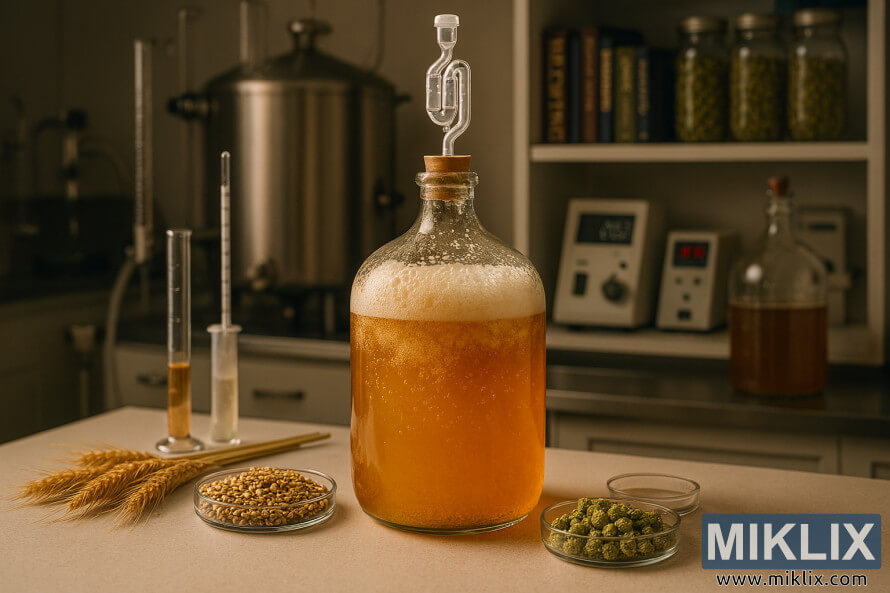
Click or tap the image for more information and higher resolutions.
Flocculation Behavior and Handling Sediment
Wyeast 3638 exhibits minimal flocculation, staying suspended long after primary fermentation. Brewers must adjust their fermentation and packaging strategies to preserve flavor and clarity. The strain's powdery nature demands patience when determining the right time to rack or bottle.
Due to its low flocculation, the yeast will linger in the beer, causing haze that persists for weeks. For those desiring clear beer, cold-crashing, finings, or centrifugation can expedite settling. These methods are effective when dealing with suspended yeast.
- Leave more yeast in the primary when racking to avoid under-attenuation or stalled conditioning.
- Plan for extended conditioning if you want clarity without aggressive fining.
- When packing Wyeast 3638, expect a higher yeast load in packaged beer if you bottle or naturally carbonate.
This yeast is a true top-cropper, benefiting from ample fermenter headspace. Aim for about 33% headspace to accommodate krausen and top-cropping activity. Adequate headspace reduces blowoff risk and helps manage active krausen during vigorous fermentation.
Practical handling tips include minimizing oxygen pickup and yeast loss during transfers. Racking gently above the sediment preserves flavor and yeast for future repitching. If clarity is not desired, embracing the yeast in suspension and adjusting carbonation methods accordingly is key.
- Monitor gravity and flavor before packaging rather than relying on visual clarity.
- If cold-crashing, drop temperature gradually over 24–48 hours to encourage flocculation.
- For bottle conditioning, expect more yeast in the bottle; reduce priming sugar slightly if you want moderate carbonation with residual yeast in suspension.
Handling suspended yeast requires intentional choices. For traditional hazy Hefeweizen styles, accept the cloud and focus on aroma and mouthfeel. For filtered or clear beers, plan extra time or equipment to remove yeast before packing Wyeast 3638 into kegs or bottles.
Managing Sulfur Production and Conditioning Time
Wyeast 3638 often produces a temporary sulfur note during fermentation. Brewers may notice a faint rotten-egg aroma early on. This is normal, especially with wheat strains, and usually clears as yeast reabsorbs volatile sulfur compounds.
The time it takes for sulfur to dissipate varies by beer strength and temperature. In standard Hefeweizen ferments, noticeable sulfur fades within a few days to a couple of weeks. Stronger beers or cooler conditioning may require several weeks for sulfur to fully mellow.
Patience is key when dealing with sulfur in beer. Cold conditioning or gentle lagering aids in the dissipation of volatiles. Keep the beer cold and stable, allow yeast to settle, and avoid premature tasting judgments that might prompt unnecessary interventions.
If sulfur persists beyond expected conditioning times, troubleshoot carefully. Check for oxygen exposure, signs of infection, or a stuck fermentation. Verify yeast health; weak or stressed yeast may fail to reabsorb sulfur compounds.
- Try a warm conditioning burst or gently rousing the yeast to encourage cleanup.
- Consider partial repitch of healthy ale yeast if fermentation truly stalled.
- Avoid harsh treatments that risk oxidation or off-flavors when the issue may still resolve naturally.
Follow these steps in sequence: wait the reasonable conditioning time sulfur, monitor aroma and gravity, then apply targeted fixes only if off-notes remain. This approach balances patience with practical action for brewers working with sulfur Wyeast 3638.
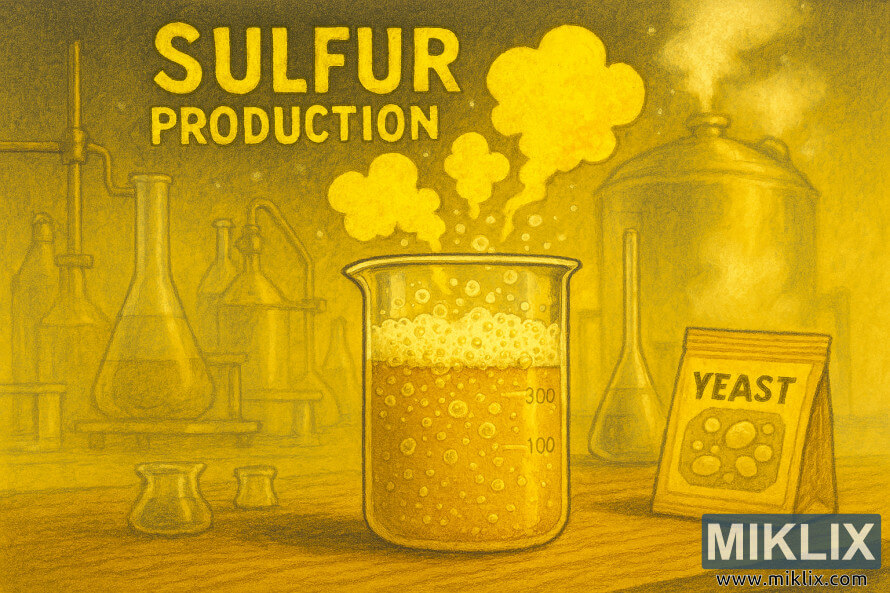
Click or tap the image for more information and higher resolutions.
Yeast Health, Oxygenation, and Nutrient Needs
Ensuring yeast vitality is crucial for achieving consistent esters and phenols in Bavarian wheat fermentations. For optimal yeast health with Wyeast 3638, prioritize viable cell counts at pitching, a stable fermentation temperature, and pristine wort handling. Any stress or aging in the yeast culture can lead to unpredictable sulfur compounds, muted esters, or harsh phenolics.
Oxygenation at the start of fermentation is vital for aromatic development and complete fermentation. Aim for about 8–10 ppm O2 in most wheat ales. This oxygenation supports robust cell walls and sterol synthesis, which stabilizes ester formation. Lower oxygen levels can result in solvent-like off-flavors, especially in high-gravity batches.
Pitching rate and starter size are key factors. Underpitching can enhance fruity esters, while overpitching may mute them and increase phenolics. For heavy or high-gravity weizenbocks, a larger starter and a measured oxygenation routine are necessary to support healthy growth during the early exponential phase.
Yeast nutrient recommendations should align with wort gravity and adjunct content. Use a balanced yeast nutrient with assimilable nitrogen for high OG or adjunct-heavy worts. Timing is critical: add primary nutrients at pitching or early in fermentation. Reserve a small dose for a mid-ferment feed in very strong beers.
- Check viability with a starter or cell-count method before pitching.
- Target 8–10 ppm O2 for typical wheat ales; increase oxygen for very high gravity batches.
- Apply yeast nutrient recommendations when using adjuncts, high dextrin levels, or OG above 1.070.
- Keep fermentation temperature consistent to protect desired ester/phenol balance.
Practical Fermenter Setups and Headspace Considerations
Active wheat strains like Wyeast 3638 create strong, rising krausen that needs room. A proper top-cropping fermenter setup gives that room without stressing the yeast or risking oxygen pickup. Plan your vessel choice and lids before brew day to match fermentation vigor.
Why generous headroom helps
Give about fermenter headspace 33% for top-cropping strains to allow krausen to form and collapse. This extra volume reduces pressure on seals and lowers the chance of sticky messes when foam peaks. Brewers who skip ample headspace often face blowouts or sanitation headaches.
Vessel selection and lid choices
Choose vessels that handle vigorous wheat ferments. Plastic conicals, food-grade fermenting buckets, and open-top conicals with a fitted lid work well. Vessel selection wheat beers should favor smooth interior surfaces to ease cleaning after a heavy krausen.
- Use lids that accept large tubing or a blow-off hose.
- Consider a bucket or wide-mouth fermenter for easy krausen containment.
- Rigid gaskets and sanitary clamps minimize unwanted oxygen ingress.
Blow-off setups and overflow prevention
Fit a blow-off tube to prevent krausen overflow while preserving yeast performance. Route the tube into a water trap or sanitized container to trap foam without exposing beer to air. A larger airlock can work for moderately active ferments but may clog during peaks.
- Start with fermenter headspace 33% and a blow-off tube for first 48–72 hours.
- Monitor the krausen; swap to a standard airlock once activity subsides.
- If space is tight, transfer to a larger secondary vessel as a last resort.
These practical steps let you prevent krausen overflow while keeping yeast healthy and expressive. A considered top-cropping fermenter setup and smart vessel selection wheat beers will cut cleanup time and protect your batch.

Click or tap the image for more information and higher resolutions.
Packaging After Fermentation: Conditioning, Carbonation, and Clarity
After fermentation with Wyeast 3638, the packaging choice significantly influences the beer's final character. Conditioning Wyeast 3638 demands patience, as sulfur compounds and yeast can linger long after fermentation ends. Set your timeline accordingly to achieve the desired clarity and flavor.
Choosing between bottle conditioning and force carbonation is crucial. Bottle conditioning offers natural carbonation and a traditional Hefeweizen feel. However, it results in a cloudy beer due to suspended yeast. On the other hand, force carbonation after cold conditioning produces a clearer beer.
For those aiming for less haze, cold crashing followed by kegging and force carbonation is effective. This method shortens the time to achieve the desired clarity. While some drinkers accept haze, others prefer a clearer beer.
To enhance clarity, employ gentle techniques. Acceptable haze in Hefeweizen comes from wheat proteins and yeast. For a clearer beer, consider cold crashing, using finings suitable for wheat beers, or extended conditioning to allow particulates to settle naturally.
Integrate sulfur management into your conditioning plan. Sulfur compounds diminish over time, and leaving the beer on yeast for additional weeks can reduce off-flavors. Extended conditioning allows for the natural settling of yeast and sulfur, enhancing the aroma without stripping away delicate esters.
- Short timeline: Bottle condition for 2–3 weeks at 68–72°F for drinkable beer with haze and live yeast.
- Medium timeline: Cold condition 1–2 weeks, then force carbonate for clearer beer while preserving some wheat character.
- Long timeline: Age on yeast 4+ weeks to minimize conditioning sulfur and let yeast settle for a softer profile.
When packaging, handle yeast carefully to avoid stirring up sediment. Racking clear beer off the trub can reduce bottle sediment but may compromise authenticity for a true Hefeweizen. Select your method based on the style and the drinker's preferences.
Recipe Building Examples That Showcase Wyeast 3638 Bavarian Wheat Yeast
Wyeast 3638 excels in simple recipes that highlight its fruit esters and subtle phenolics. Below, we present concise, practical recipes for three classic styles. These recipes focus on temperature, pitch rate, and wort strength. They serve as a guide for mash schedules, grain selection, and fermentation techniques.
For a classic Hefeweizen, start with a high wheat content and a neutral base malt. Aim for 50–70% wheat, paired with Pilsner or Vienna malt, and a touch of aromatic malt for color and depth. Ferment in the mid-to-warm range and underpitch slightly to enhance banana and soft esters.
- Grain bill example: 60% wheat malt, 35% Pilsner, 5% carahell or light Munich.
- Mash: single infusion at 148–152°F (64–67°C) for a balanced body.
- Fermentation: 66–70°F (19–21°C) with a modest underpitch for ester emphasis.
- Keyword placement: Hefeweizen recipe 3638 offers a yeast-driven profile that favors fruit esters and mild clove.
Dunkelweizen demands darker malts while keeping the yeast character in the forefront. Incorporate Munich and a small amount of dark crystal to create bready, toasty notes. These notes complement apple and pear esters. Slightly higher OG and warm fermentation enhance esters while controlling phenolics.
- Grain bill example: 55% wheat, 30% Munich, 10% Pilsner, 5% dark crystal or light chocolate malt.
- Mash: 150–154°F (66–68°C) to build a richer mouthfeel.
- Fermentation: 68–72°F (20–22°C) with moderate underpitching to balance fruit esters and clove.
- Keyword placement: Dunkelweizen 3638 recipe tweaks emphasize fruit esters with a clove backdrop.
Weizenbock necessitates higher gravity and careful yeast management. Increase oxygenation at pitch, include nutrient additions, and plan a longer conditioning phase. Expect stronger ester production with elevated OG and monitor attenuation to hit the desired final gravity.
- Grain bill example: 40–50% wheat, 30–40% Munich, remainder Pilsner and specialty malts for color and richness.
- Mash: 152–156°F (67–69°C) to retain body while allowing attenuation.
- Fermentation: 68–74°F (20–23°C) with attentive oxygenation and healthy pitching rates for high-ABV performance.
- Keyword placement: Weizenbock 3638 requires recipe tips Bavarian yeast focused on oxygen, nutrients, and conditioning.
Small-batch trials facilitate refining profiles. Modify one variable at a time: temperature, pitch rate, or wheat percentage. Track results in tasting notes and scale successful combinations for larger batches.

Click or tap the image for more information and higher resolutions.
Comparative Notes: Wyeast 3638 vs Other Wheat Strains
Wyeast 3638 presents a complex ester profile, often preferred over standard wheat strains. It offers apple, pear, and plum notes alongside banana and subtle clove. This unique flavor profile significantly influences recipe design and conditioning strategies.
When planning a brew, consider the yeast's behavior against your style goals. For a straightforward banana-driven Hefeweizen, #3068 Weihenstephan strain is ideal. It delivers a single-note banana dominance. For layered fruit esters and subtle vanilla phenolics, compare 3638 vs 3068 in small batches.
- Flavor focus: 3638 leans toward apple, pear, and plum esters while 3068 emphasizes banana.
- Flocculation: 3638 shows lower flocculation and longer suspension. Plan more conditioning time.
- Sulfur and phenolics: 3638 can produce transient sulfur that drops with time and gentle conditioning.
Experimental notes reveal differences in character between 3638 and 3056. Strain 3056 has produced unexpected berry-like or strawberry notes in some trials. This highlights the importance of strain choice in achieving a signature profile.
When selecting wheat yeast, consider the desired beer profile. Choose 3068 for classic banana-forward results and quicker clearing. Opt for 3638 if you prefer layered esters, clove, and vanilla phenolics, along with a hazy presentation. Use controlled pitching rates and temperature to manage ester balance.
For practical testing, run short split batches to compare mouthfeel, ester complexity, and conditioning needs. A focused wheat yeast comparison aids in predicting handling, carbonation timing, and the time needed for sulfur to dissipate before packaging.
Troubleshooting Common Issues with Wyeast 3638
When a batch with Wyeast 3638 doesn't taste as intended, a few consistent patterns emerge. This short troubleshooting guide highlights likely causes and practical steps to address muted esters, excess phenolic clove notes, and sulfur persistent beer problems.
Muted esters often leave brewers asking what went wrong. The two most common culprits are overpitching and fermentation that runs too cool. Overpitching can flatten banana and fruit esters, producing a muted banana yeast expression despite proper recipe design.
- Check your pitch rate against the target for Hefeweizen or Weizenbock.
- For stronger ester character, reduce pitch slightly and keep fermentation in the mid to upper part of the yeast's range.
- If a batch is already finished, compare aroma and flavor after a warm conditioning period before altering future protocols.
When clove and other sharp phenolics dominate, review both pitch rate and temperature management. Excess clove phenolic can result from inconsistent practice: overpitching can paradoxically let phenolics stand out as esters fall, while high temps can push phenol production in some contexts.
- Lower maximum fermentation temperature and maintain a steady ramp rather than large swings.
- Match pitching strategy to your style goal: a controlled pitch and mid-range temps tend to balance ester and phenol.
- Consider small-scale trials to see how slight pitch or temp shifts affect clove levels.
Sulfur is a frequent early byproduct with this strain and often clears with time. If sulfur persistent beer aromas remain past typical conditioning windows, investigate fermentation health and oxygen management.
- Allow extended conditioning and a gentle warm period to coax sulfur off-gassing and yeast reabsorption.
- Cold crash and then rouse if fermentation seems stuck, giving yeast a chance to clean up off-flavors.
- Review oxygenation at pitch and nutrient additions for future batches to reduce risk of lingering sulfur.
When you need to troubleshoot 3638, document pitch rates, temperatures, oxygen levels, and timing. That log will show which variable changes produce muted banana yeast, excess clove phenolic, or sulfur persistent beer. Use that data to refine your process incrementally and run controlled repeats to lock in the desired Bavarian wheat character.
Homebrewer Experiments and Observed Variability in Performance
Hands-on homebrew experiments 3638 often show a wide range in ester and phenol balance. Small changes in temperature, original gravity, or pitch rate can dramatically alter a beer's flavor. These adjustments can shift a beer from having bright fruit esters to pronounced clove notes. Through small, controlled tests, brewers can capture these differences and make tasting feedback actionable.
Influence of pitching rate and temperature on tasting panel results
Many homebrewers have found that pitching rate significantly impacts tasting results. Low pitch rates tend to enhance fruity esters, while high pitch rates mute them and bring out phenolic notes. Increasing fermentation temperature often intensifies ester flavors, whereas lowering it reduces fruit character.
Reports of unexpected flavors and possible causes
Brewers have reported strawberry ester wheat yeast impressions in some batches. These unexpected flavors have been noted across multiple strains, including accounts from summer 2011. The exact cause is still unclear, but it's believed to involve interactions between pitch rate, temperature swings, and wort composition.
Designing small-batch trials to dial in your target profile
Conduct small-batch yeast trials, changing only one variable at a time. Vary the pitch rate while keeping the temperature constant, then reverse this approach. Use consistent grain bills and sanitation to minimize variables. Record all conditions and collect tasting results from a panel to compare outcomes.
- Plan three to five split batches per variable.
- Document pitch rate, temperature, OG, and time to finish.
- Use blind tasting notes to limit bias.
These small-batch yeast trials and homebrew experiments 3638 generate repeatable data. Detailed notes help distinguish true strain behavior from process effects. This method enhances reproducibility and clarifies whether a strawberry ester wheat yeast note is a curiosity or a controllable outcome.
Conclusion
Wyeast 3638 provides a complex, versatile profile, ideal for both classic German wheat beers and modern interpretations. It offers a mix of banana, apple, pear, and plum esters, complemented by clove and subtle vanilla phenolics. This allows brewers to shape the flavor through temperature, wort gravity, and pitch rate. The practical specs include a fermentation range of 64–75°F (18–24°C), typical attenuation of 70–76%, low flocculation, and tolerance up to about 10% ABV.
Managing fermentation variables is crucial. Underpitching and warmer fermentation enhance fruitiness, while higher pitch rates or cooler temps mute esters and highlight phenolics. Allowing time for conditioning reduces transient sulfur notes. Using about 33% headspace aids in active krausen and top-cropping behavior. These steps are essential for consistent results when fermenting with 3638.
For U.S. homebrewers aiming for authentic Bavarian character, this strain requires deliberate technique. Begin with a gravity and grain bill that aligns with your target style. Control temperature to steer esters and adjust pitching to refine phenolic balance. In essence, Wyeast 3638 is a reliable choice when you plan fermentation and conditioning carefully to achieve the desired flavor.
FAQ
What are the primary flavors and aroma characteristics of Wyeast 3638 Bavarian Wheat yeast?
Wyeast 3638 offers a complex ester profile, with banana being the dominant note. It also presents apple, pear, and plum esters. The balance is achieved with clove-like phenolics and a hint of vanilla. Early fermentation may introduce sulfur notes, which typically fade with conditioning.
What fermentation temperature range does Wyeast 3638 prefer and how does temperature affect flavor?
The ideal fermentation temperature for Wyeast 3638 is between 64–75°F (18–24°C). Higher temperatures enhance ester production, intensifying banana and fruit notes. Conversely, cooler temperatures restrain esters, allowing the clove character to emerge more prominently.
How does pitching rate change the ester/phenolic balance?
Underpitching, or using fewer cells, amplifies banana and fruity esters, especially at warmer temperatures. Overpitching, on the other hand, suppresses ester production, favoring a clove-like flavor. Adjust the pitching rate using standard calculators to achieve the desired flavor profile.
How does wort gravity influence ester formation with this strain?
Higher original gravity encourages greater ester production, adding to the fruity complexity. For Weizenbock and other high-gravity beers, expect more pronounced esters. Lower OG and more fermentable base malts will restrain esters, resulting in a cleaner profile.
What are the strain’s attenuation and alcohol tolerance figures?
Wyeast 3638 typically attenuates between 70–76%, producing a moderate residual body suitable for wheat styles. Its alcohol tolerance is around 10% ABV. For beers above this threshold, ensure yeast health to avoid incomplete fermentation.
What is Wyeast 3638’s flocculation behavior and how does that affect handling?
Wyeast 3638 exhibits very low flocculation, leaving the yeast powdery and often suspended long after attenuation. Expect prolonged clearing times. For clarity, employ cold-crashing, finings, centrifugation, or longer conditioning. Traditional hazy styles can be achieved by keeping yeast in suspension and accepting sediment in bottles.
Why does Wyeast 3638 need about 33% headspace in the fermenter?
As a true top-cropping strain, Wyeast 3638 produces significant krausen and active top growth. About 33% headspace prevents blowouts, allowing the yeast to top-crop normally. Use a blow-off tube or larger airlock to manage overflow without restricting fermentation.
How long does sulfur typically persist and how should I manage it?
Sulfur often appears during active fermentation but usually dissipates during conditioning over days to weeks, depending on style and temperature. Allow adequate conditioning time before judging the beer. If sulfur persists, check for fermentation issues, oxygen exposure, or infection before intervening.
What oxygenation and nutrient practices are recommended for reliable performance?
Ensure healthy yeast by oxygenating wort at pitch—typical ale targets (roughly 8–10 ppm O2) are useful, with higher oxygen and yeast nutrient recommended for high-gravity Weizenbock batches. Use fresh, viable yeast or an appropriately sized starter to avoid stress-related off-flavors.
How should I set up my fermenter and equipment for active wheat fermentations with 3638?
Choose vessels with ample headspace (about 33%), use blow-off tubes or large-capacity airlocks to manage krausen, and consider open-top conicals or bucket fermenters for vigorous top-cropping. Monitor fermentation vigor and be ready to transfer if overflow risk is high.
Should I bottle-condition or force carbonate beers fermented with 3638?
Both methods work. Bottle conditioning preserves traditional yeast-in-suspension haze and natural carbonation. Force carbonation after adequate cold conditioning and fining yields clearer beer for those who prefer less haze. Allow enough conditioning time to reduce sulfur and let yeast settle if clarity is desired.
How do I design recipes to showcase Wyeast 3638’s character for Hefeweizen, Dunkelweizen, and Weizenbock?
For classic Hefeweizen, use a high wheat bill (50–70% wheat), Pilsner or Vienna base, minimal specialty malts, ferment mid-to-warm, and slightly underpitch for banana-forward results. For Dunkelweizen, add Munich/darker malts and consider slightly higher OG. For Weizenbock, plan higher gravity, provide extra oxygen and nutrients, expect stronger esters, and confirm yeast tolerance near 10% ABV.
How does 3638 compare with other wheat strains like Wyeast 3068 or 3056?
3638 offers a more complex fruit profile—banana plus apple, pear, and plum—versus 3068’s classic banana dominance. Flocculation, phenolic intensity, and sulfur tendencies vary across strains; choose 3638 for layered fruit esters and willingness to manage low flocculation and conditioning time.
What common troubleshooting tips apply if esters are muted or phenolics dominate unexpectedly?
Muted esters often point to overpitching or too-low fermentation temperatures. Excessive phenolics can result from overpitching or fermentation stress in some contexts. Review pitching rate, fermentation temperature, oxygenation, and yeast viability. For persistent issues, run small split trials changing one variable at a time and document results.
Are there reports of unexpected flavors with this strain and how should I interpret them?
Homebrew trials have occasionally noted unusual notes (e.g., strawberry with other strains) likely tied to fermentation variables rather than a true strain defect. Expect variability from pitch rate, temperature, gravity, and yeast health. Use small-batch experiments to isolate variables and dial in your target profile.
What practical steps can I take to dial in a banana-forward or a clove-forward profile?
For banana-forward: underpitch slightly, ferment at the warmer end of 64–75°F, and use moderately high OG if appropriate. For clove-forward: pitch closer to or above recommended cell counts (overpitch), ferment cooler within the range, and reduce conditions that boost esters. Always ensure yeast health, adequate oxygenation at pitch, and consistent temperature control.
Further Reading
If you enjoyed this post, you may also like these suggestions:
- Fermenting Beer with CellarScience Hornindal Yeast
- Fermenting Beer with White Labs WLP004 Irish Ale Yeast
- Fermenting Beer with Wyeast 2308 Munich Lager Yeast