
Image: Normal Brett Pellicle vs. Contamination: Visual Comparison
Published: November 4, 2026 at 7:45:17 PM UTC
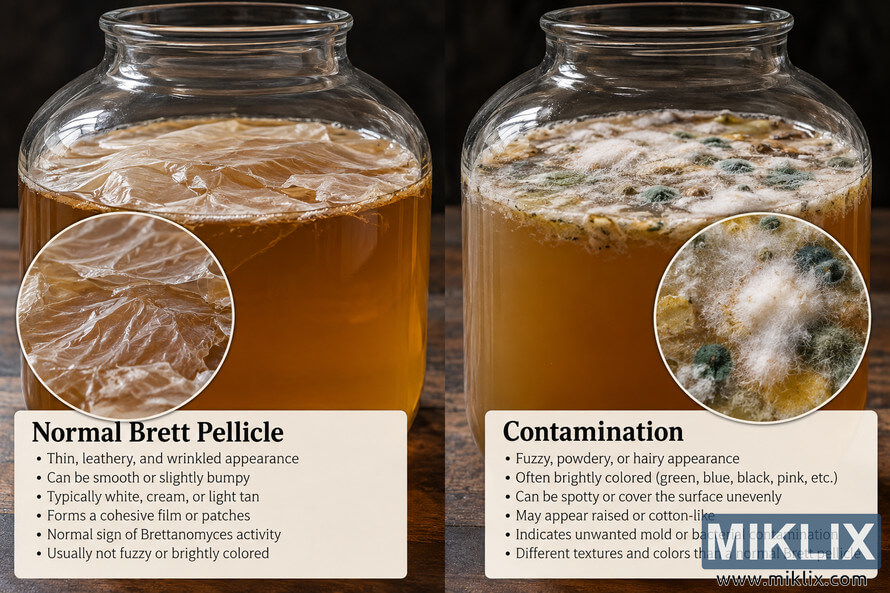
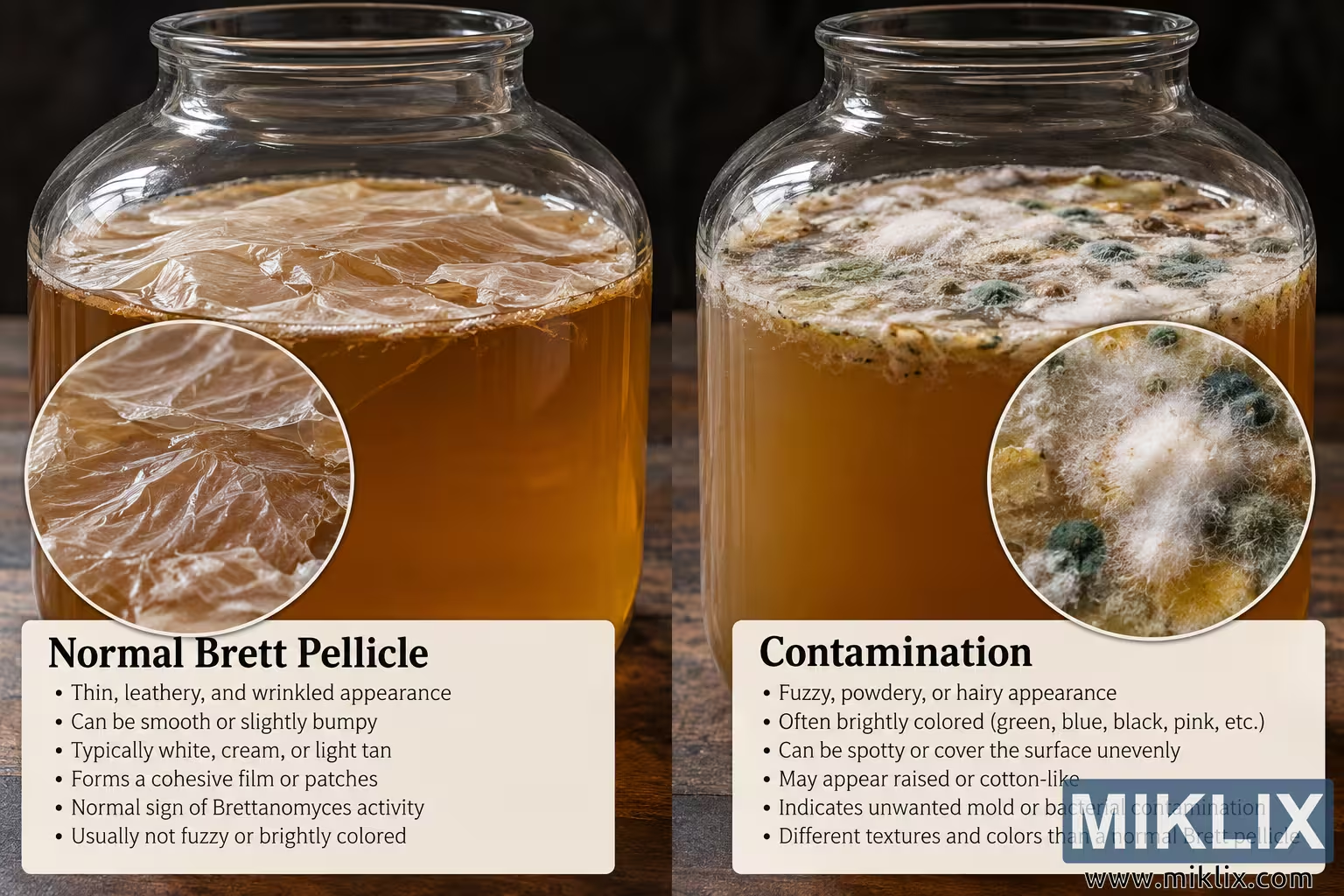
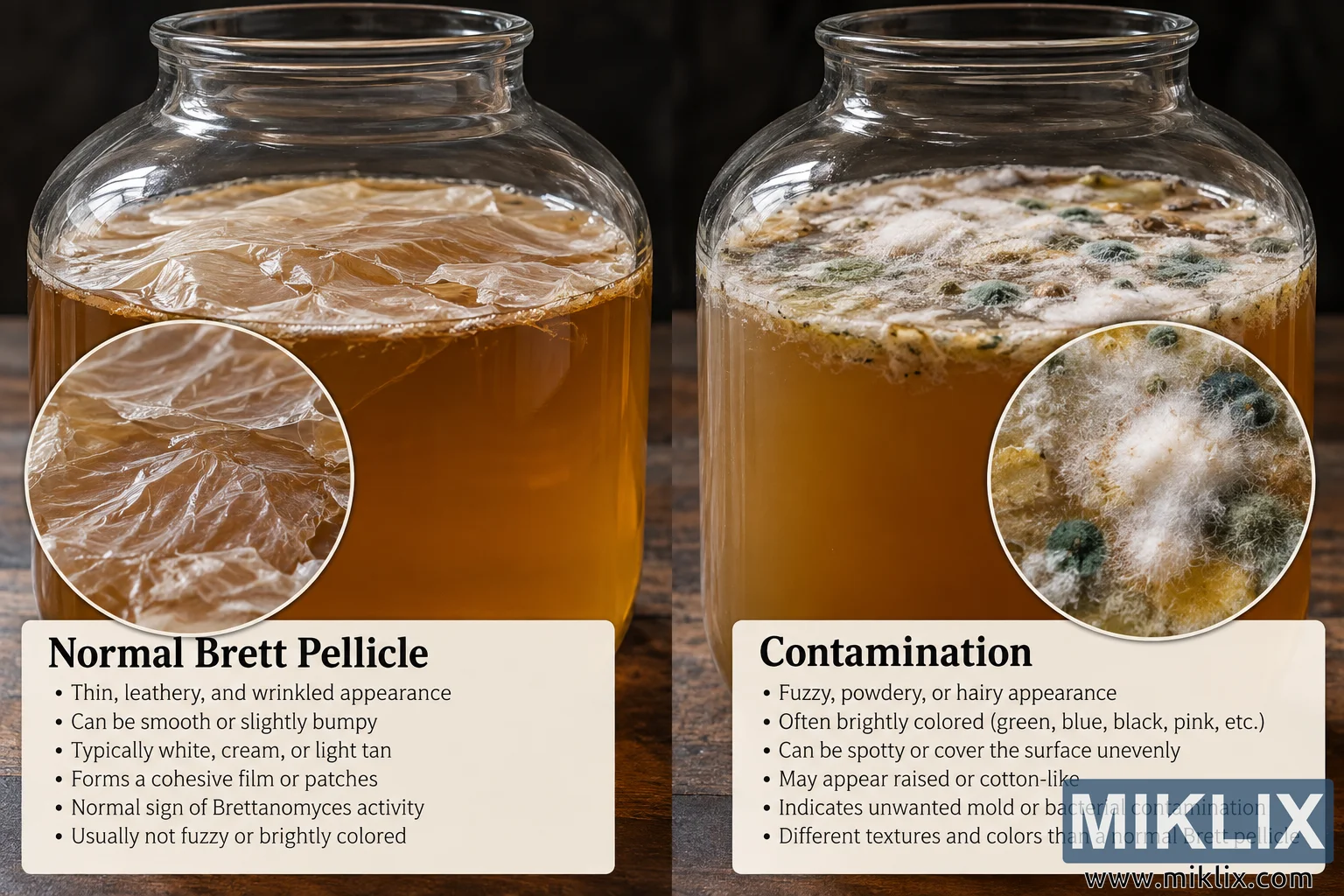
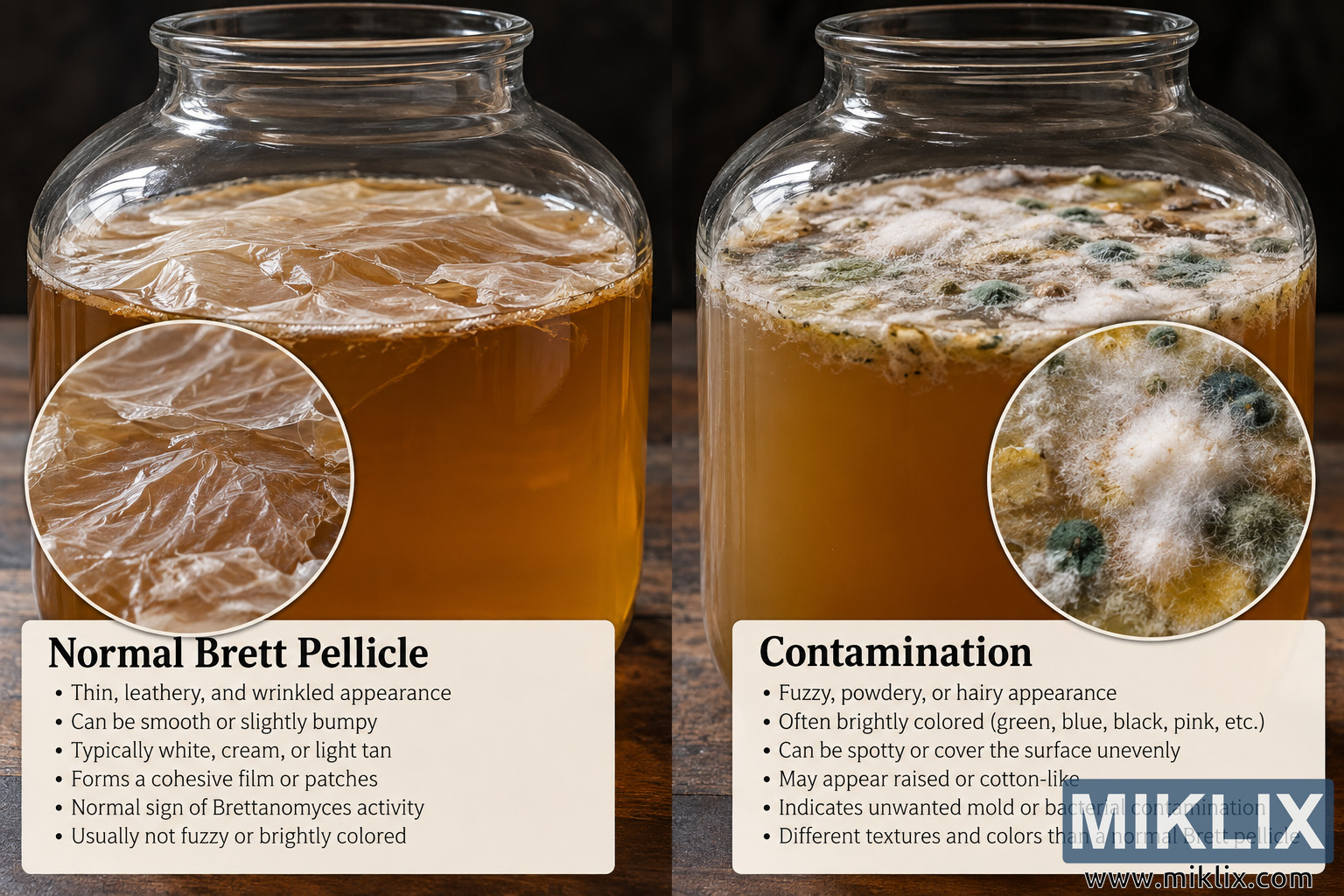
Visual comparison of a normal Brett pellicle and contamination in fermentation, showing differences in surface texture, color, fuzziness, and growth patterns.
Available versions of this image
The image files available for download below are less compressed and higher resolution - and as a result of that, higher quality - than the images embedded in articles and pages on this website, which are more optimized for file size in order to reduce bandwidth consumption.
Regular size (1,536 x 1,024)
Large size (3,072 x 2,048)
Very large size (4,608 x 3,072)
Extra large size (6,144 x 4,096)
Comically large size (1,048,576 x 699,051)
- Still uploading... ;-)
Image description
A landscape-format educational comparison image shows two large, clear glass fermentation jars side by side on a dark brown wooden tabletop against a softly blurred, nearly black background. Both jars are open at the top and contain amber to brown liquid. The left jar is labeled "Normal Brett Pellicle" and contains relatively clear amber liquid with a thin, pale cream-to-tan surface layer. The layer appears cohesive, translucent in places, wrinkled, folded, and slightly uneven rather than fuzzy. A large circular magnified inset overlaps the lower-left portion of the jar and shows the surface film in greater detail, emphasizing its thin, smooth-to-wrinkled, sheet-like texture. Beneath the jar is a cream-colored rectangular information panel with rounded corners. Its heading reads "Normal Brett Pellicle," followed by the bullet points: "Thin, leathery, and wrinkled appearance"; "Can be smooth or slightly bumpy"; "Typically white, cream, or light tan"; "Forms a cohesive film or patches"; "Normal sign of Brettanomyces activity"; and "Usually not fuzzy or brightly colored." The right jar is labeled "Contamination" and contains somewhat cloudier amber-brown liquid. Its surface is covered irregularly with visibly fuzzy and powdery growth, including white cotton-like areas and multiple green, blue-green, gray, and dark patches. A circular magnified inset overlaps the lower-right portion of this jar and highlights dense white filament-like growth and several green or blue-green fuzzy colonies. Beneath the right jar is a matching cream-colored rounded information panel headed "Contamination." The bullet points read: "Fuzzy, powdery, or hairy appearance"; "Often brightly colored (green, blue, black, pink, etc.)"; "Can be spotty or cover the surface unevenly"; "May appear raised or cotton-like"; "Indicates unwanted mold or bacterial contamination"; and "Different textures and colors than a normal Brett pellicle." The composition is symmetrical, with the two jars occupying approximately equal halves of the frame and a narrow dark gap between them. Warm directional lighting creates bright reflections along the rims and curved sides of the transparent glass. The tabletop has visible grain and a worn, rustic appearance. No logos or recognizable commercial branding are visible. The image visually presents the left surface as a thin, cohesive pale film and the right surface as irregular, fuzzy, multicolored growth; the actual biological identity of the depicted material cannot be independently determined from appearance alone.
The image is related to: Fermenting Beer with Wyeast 5112 Brettanomyces Bruxellensis Yeast