
Imatge: Alternative Hop Varieties Arranged for Comparison
Publicat:
Última actualització: 20 de setembre del 2026, a les 9:58:30 UTC
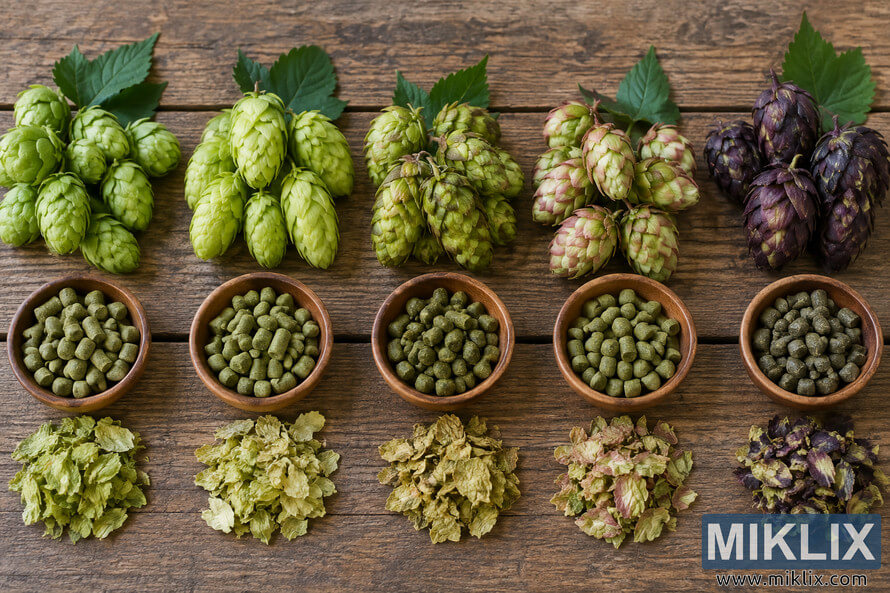
Compare five alternative hop varieties displayed as whole cones, pellets, and dried material in an organized overhead arrangement on rustic wood.
Alternative Hop Varieties Arranged for Comparison
Versions disponibles d'aquesta imatge
Els fitxers d'imatge disponibles per descarregar a continuació estan menys comprimits i tenen una resolució més alta (i, com a resultat, una qualitat més alta) que les imatges incrustades en articles i pàgines d'aquest lloc web, que estan més optimitzades per a la mida del fitxer per tal de reduir el consum d'ample de banda.
Mida normal (1,536 x 1,024)
Mida gran (3,072 x 2,048)
Mida molt gran (4,608 x 3,072)
Mida extra gran (6,144 x 4,096)
Mida còmicament gran (1,048,576 x 699,051)
- Encara s'està carregant... ;-)
Descripció de la imatge
A wide, landscape-oriented overhead photograph presents five visually distinct groups of hop material arranged side by side for comparison on a rustic wooden tabletop. The composition is highly organized and symmetrical, resembling a botanical ingredient study or a visual reference for comparing alternative hop varieties. The entire background consists of horizontal, weathered wooden planks in warm brown tones. Their prominent grain, knots, seams, scratches, and subtle variations in color give the image a natural, handcrafted atmosphere and provide a textured contrast to the greens, yellows, pinks, and purples of the hops.
Across the upper portion of the image are five separate clusters of whole hop cones. Each cluster is positioned above a small round wooden bowl, creating five clear vertical columns. The hop groups differ noticeably in color and appearance, suggesting different varieties or alternative ingredient characteristics. The first cluster on the far left consists of bright, fresh-looking green hop cones. The cones have overlapping, leaf-like scales and range from pale yellow-green highlights to richer medium green shadows. Several dark green leaves sit behind the cones, adding height and reinforcing the fresh botanical appearance.
The second group is also predominantly green but is somewhat lighter and more yellow in tone. Its hop cones appear elongated and tightly layered, with pale lime-green surfaces catching the overhead light. Darker leaves behind this group create a strong tonal contrast. The subtle difference between the first and second groups encourages close visual comparison rather than presenting them as identical ingredients.
At the center of the arrangement is a third cluster with more muted olive-green hop cones. These cones contain darker brownish-green and slightly earthy areas between their scales, giving them a more mature, dried, or robust appearance than the brighter groups to the left. The central position and deeper coloration make this group an effective transition between the vivid green hops and the more unusually colored varieties on the right.
The fourth cluster combines green hop cones with noticeable pink, rose, and reddish-purple accents around the edges of many scales. The cones remain largely pale green at their centers, but the colored tips give them a distinctive variegated appearance. Green leaves extend behind the group. This column introduces a clear visual shift away from conventional green hop coloration while maintaining the recognizable shape and structure of hop cones.
The fifth and rightmost group is the darkest and most dramatic. Its whole hop cones are deep purple, burgundy, and nearly black in shaded areas, with occasional muted green or gray-green highlights. The richly colored cones stand out strongly against both the brown wooden background and the brighter groups elsewhere in the photograph. A large green leaf rises behind them near the upper-right corner, providing a botanical counterpoint to the dark purple cones.
Directly beneath the five groups of whole hops is a horizontal row of five small wooden bowls. Each bowl is round, shallow, and made from warm brown wood with visible grain. The bowls contain compact hop pellets, which are short, roughly cylindrical pieces with slightly irregular surfaces. The pellets vary subtly from one bowl to another. The left and middle bowls contain predominantly olive-green pellets, while some groups appear slightly lighter, darker, or more gray-green. The rightmost bowl contains the darkest pellets, echoing the deeper tones of the purple hop cones above it. The consistent size and placement of the bowls create a controlled comparison format, as though the same ingredient is being shown in multiple processed forms.
Along the bottom of the image, beneath each bowl, is a small loose pile of dried or crushed hop material. These five piles correspond visually with the hop groups above them. The far-left pile is light green with thin, papery fragments and curled pieces. The second pile is pale yellow-green and similarly flaky, with a dry, delicate texture. The center pile is more subdued, combining tan, olive, and muted yellow-green fragments. The fourth pile contains green pieces mixed with pink and reddish accents, reflecting the variegated cones in the corresponding upper group. The far-right pile is the darkest, containing purple, burgundy, green, and near-black fragments that visually connect it to the dark hop cones above.
The image is illuminated with soft, warm, even light that reveals fine surface details without creating harsh reflections. Gentle shadows beneath the hop cones, bowls, pellets, and dried fragments give the ingredients physical depth while preserving the clarity of the top-down arrangement. The focus is sharp across most of the scene, allowing individual hop scales, pellet textures, leaf veins, wooden grain, and dried flakes to be clearly distinguished.
The overall layout communicates comparison and variation. Each of the five columns effectively shows a hop type in three forms: whole hop cones at the top, processed pellets in a wooden bowl in the middle, and loose dried or crushed material at the bottom. Differences in color progress broadly from fresh bright green on the left through yellow-green and olive tones in the center to pink-tinged green and finally deep purple on the right. This gradual visual progression makes the photograph immediately understandable as a comparative presentation of alternative hop varieties or hop characteristics.
There are no people, packages, logos, trademarks, labels, captions, or recognizable commercial brands anywhere in the image. The photograph relies entirely on the ingredients themselves and the orderly arrangement to communicate its subject. The rustic wooden setting and natural materials give it an artisanal, agricultural, brewing, and botanical character, while the precise alignment gives the composition an educational and reference-oriented quality. The landscape format provides enough horizontal space for all five alternatives to be displayed simultaneously, making differences in appearance easy to inspect at a glance.
La imatge està relacionada amb: Hops in Beer Brewing: Columbus