
Imatge: Fresh Rhubarb Selection Guide and Storage Methods Infographic
Publicat:
Última actualització: 7 de juny del 2026, a les 19:13:20 UTC
Comprehensive infographic about fresh rhubarb selection and storage methods, featuring tips for choosing crisp stalks, proper refrigeration and freezing techniques, preparation advice, and food safety information in a clean landscape layout.
Fresh Rhubarb Selection Guide and Storage Methods Infographic
Versions disponibles d'aquesta imatge
Els fitxers d'imatge disponibles per descarregar a continuació estan menys comprimits i tenen una resolució més alta (i, com a resultat, una qualitat més alta) que les imatges incrustades en articles i pàgines d'aquest lloc web, que estan més optimitzades per a la mida del fitxer per tal de reduir el consum d'ample de banda.
Mida normal (1,536 x 1,024)
Mida gran (3,072 x 2,048)
Mida molt gran (4,608 x 3,072)
Mida extra gran (6,144 x 4,096)
Mida còmicament gran (1,048,576 x 699,051)
- Encara s'està carregant... ;-)
Descripció de la imatge
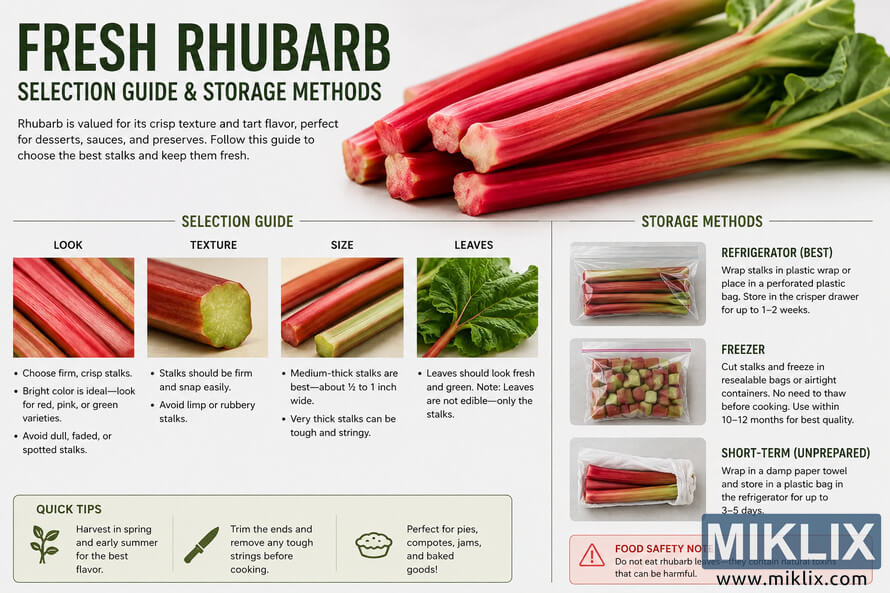
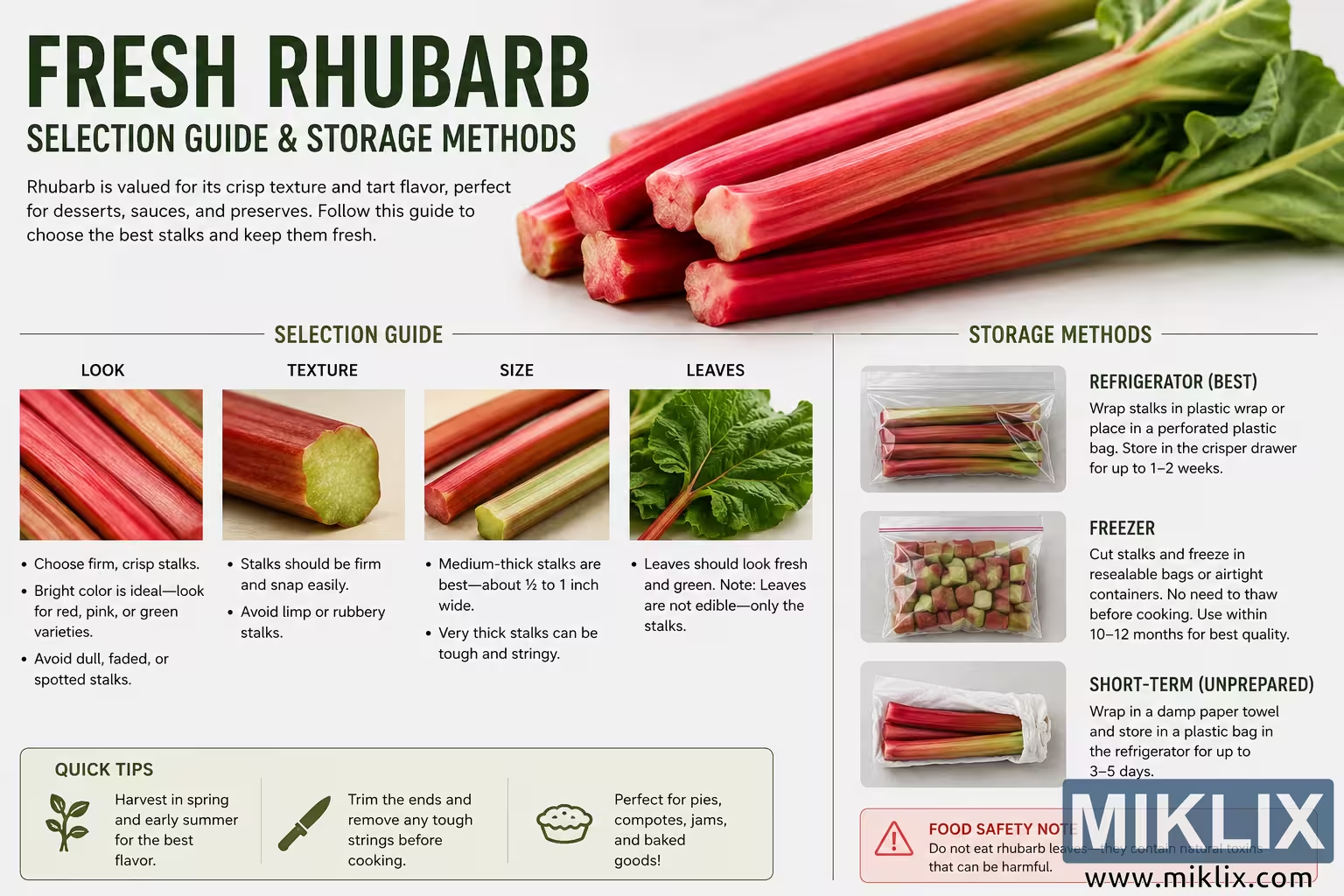
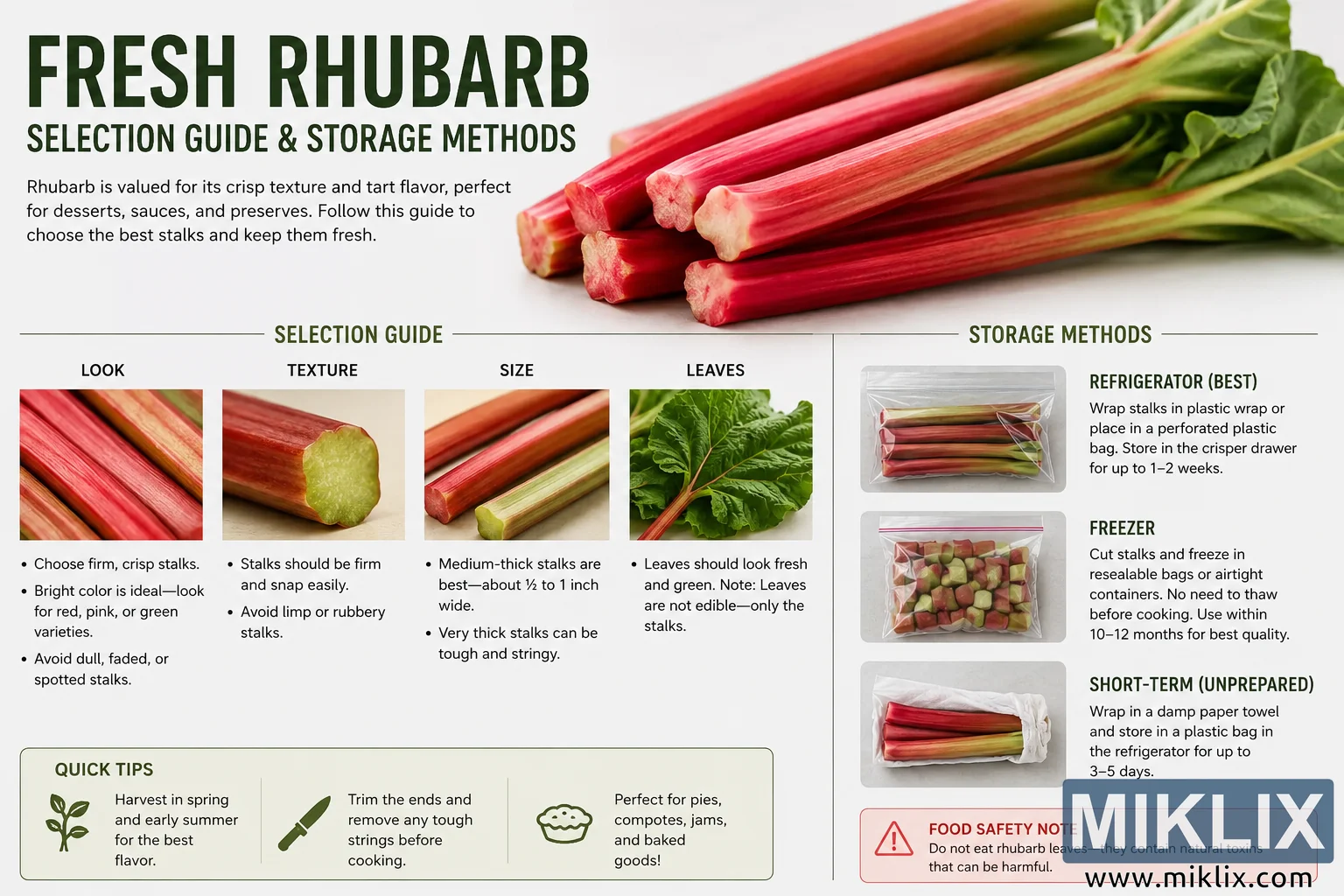
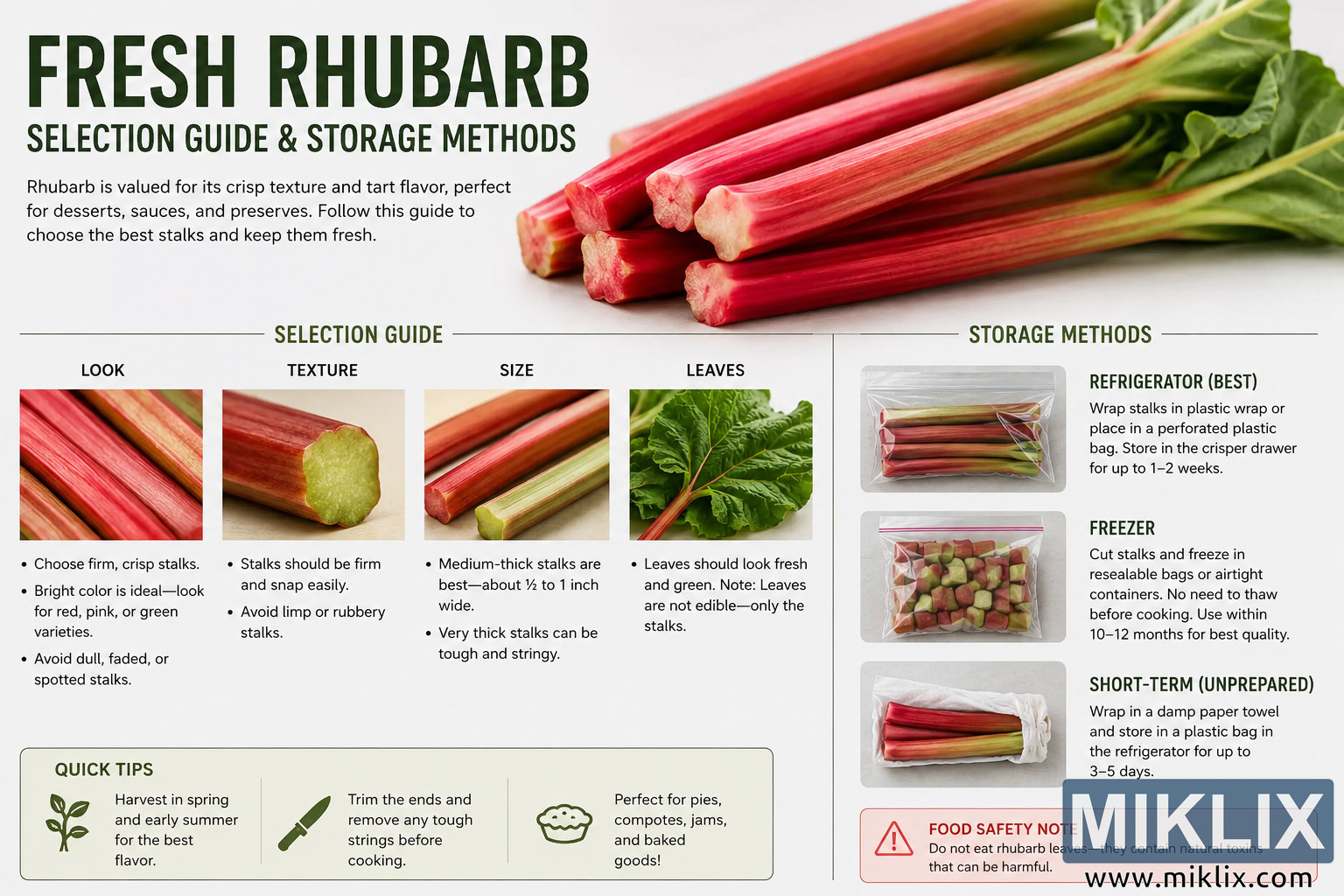
This landscape-oriented infographic presents a comprehensive visual guide to selecting, storing, and preparing fresh rhubarb. The design uses a clean and modern layout with a light neutral background that helps the vivid red and green rhubarb stalks stand out prominently. At the top left of the composition, a large bold title reads “Fresh Rhubarb Selection Guide & Storage Methods” in dark green lettering, establishing the educational theme of the graphic. Beneath the title is a short introductory paragraph explaining that rhubarb is prized for its crisp texture and tart flavor, making it suitable for desserts, sauces, preserves, pies, jams, and baked goods.
Dominating the upper-right portion of the infographic is a large high-resolution photograph of fresh rhubarb stalks arranged diagonally across the frame. The stalks display rich shades of crimson red, pink, and pale green, with visible natural texture and glossy surfaces that communicate freshness. Some stalks retain green leafy tops, creating contrast against the smooth white background. The rhubarb appears freshly harvested, with crisp cut ends and healthy coloration.
The center section of the infographic is divided into two educational categories: “Selection Guide” and “Storage Methods.” Under the “Selection Guide” heading, several square close-up images demonstrate the characteristics of high-quality rhubarb. One image focuses on the appearance and color of the stalks, emphasizing bright red and pink tones with subtle green accents. Another image highlights the cross-section and texture of a rhubarb stalk, showing a firm interior with crisp edges. A third image demonstrates preferred stalk thickness, comparing medium-thick stalks with thinner and thicker varieties. A fourth image displays rhubarb leaves, explaining that healthy leaves should appear green and fresh, while also noting that the leaves themselves are not edible.
Accompanying each selection image are short instructional bullet points. These tips explain that ideal rhubarb stalks should feel firm, crisp, and easy to snap. The guide advises avoiding limp, rubbery, faded, spotted, or stringy stalks. It also recommends choosing medium-thick stalks for the best texture and flavor balance.
On the right side of the infographic, the “Storage Methods” section contains several neatly organized photographic examples of proper rhubarb preservation techniques. One image shows whole rhubarb stalks sealed inside a clear plastic storage bag intended for refrigeration. Another image presents chopped rhubarb pieces prepared for freezing in a resealable freezer bag. A third image illustrates short-term refrigerator storage using damp paper towels wrapped around fresh stalks. The accompanying text explains that refrigerated rhubarb can remain fresh for up to one to two weeks when stored correctly in a crisper drawer. Frozen rhubarb can last up to ten to twelve months and may be cooked directly from frozen without thawing.
Near the bottom of the infographic is a “Quick Tips” section displayed inside a rounded rectangular panel with subtle borders and icon illustrations. The section includes simple visual symbols such as leaves, a kitchen knife, and a pie. These icons support short preparation suggestions, including harvesting rhubarb during spring and early summer for optimal flavor, trimming tough ends and strings before cooking, and using rhubarb in pies, compotes, preserves, and desserts.
At the lower-right corner is a clearly emphasized food safety notice enclosed within a lightly shaded warning box. The notice warns viewers not to eat rhubarb leaves because they contain naturally occurring toxic compounds that may be harmful if consumed. A triangular caution icon reinforces the importance of the warning.
The infographic overall has a polished editorial style that combines food photography with practical educational content. The typography is clean and highly legible, using bold green headings and black body text for strong readability. The composition balances photography, instructional text, and iconography in a structured grid layout that feels both modern and approachable. The visual tone is fresh, informative, and culinary-focused, making the graphic suitable for cooking blogs, recipe websites, gardening resources, kitchen reference materials, or produce market educational displays.
La imatge està relacionada amb: A Guide to the Health Benefits of Rhubarb