
Imatge: Scientific Illustration of Shallot Health Benefits Across Human Body Systems
Publicat:
Última actualització: 5 d’agost del 2026, a les 22:49:38 UTC
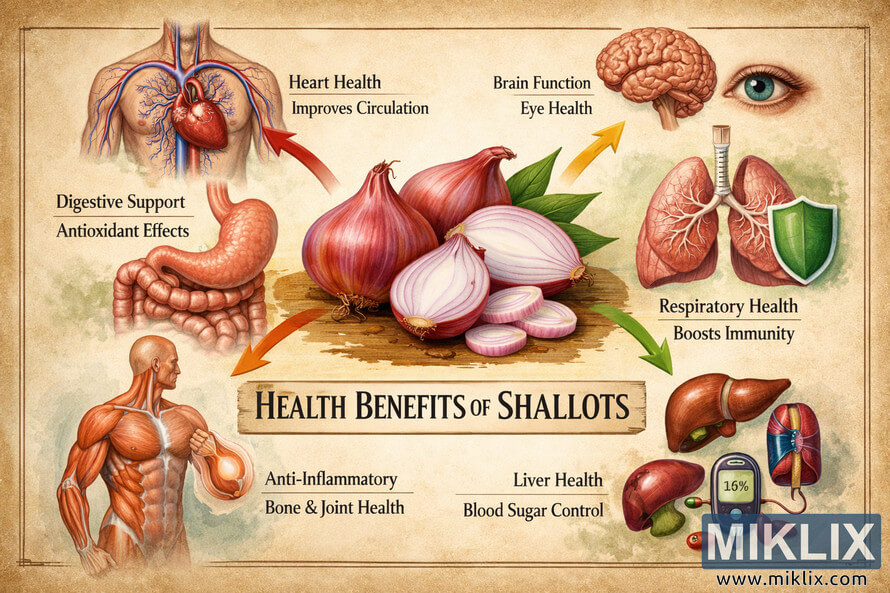
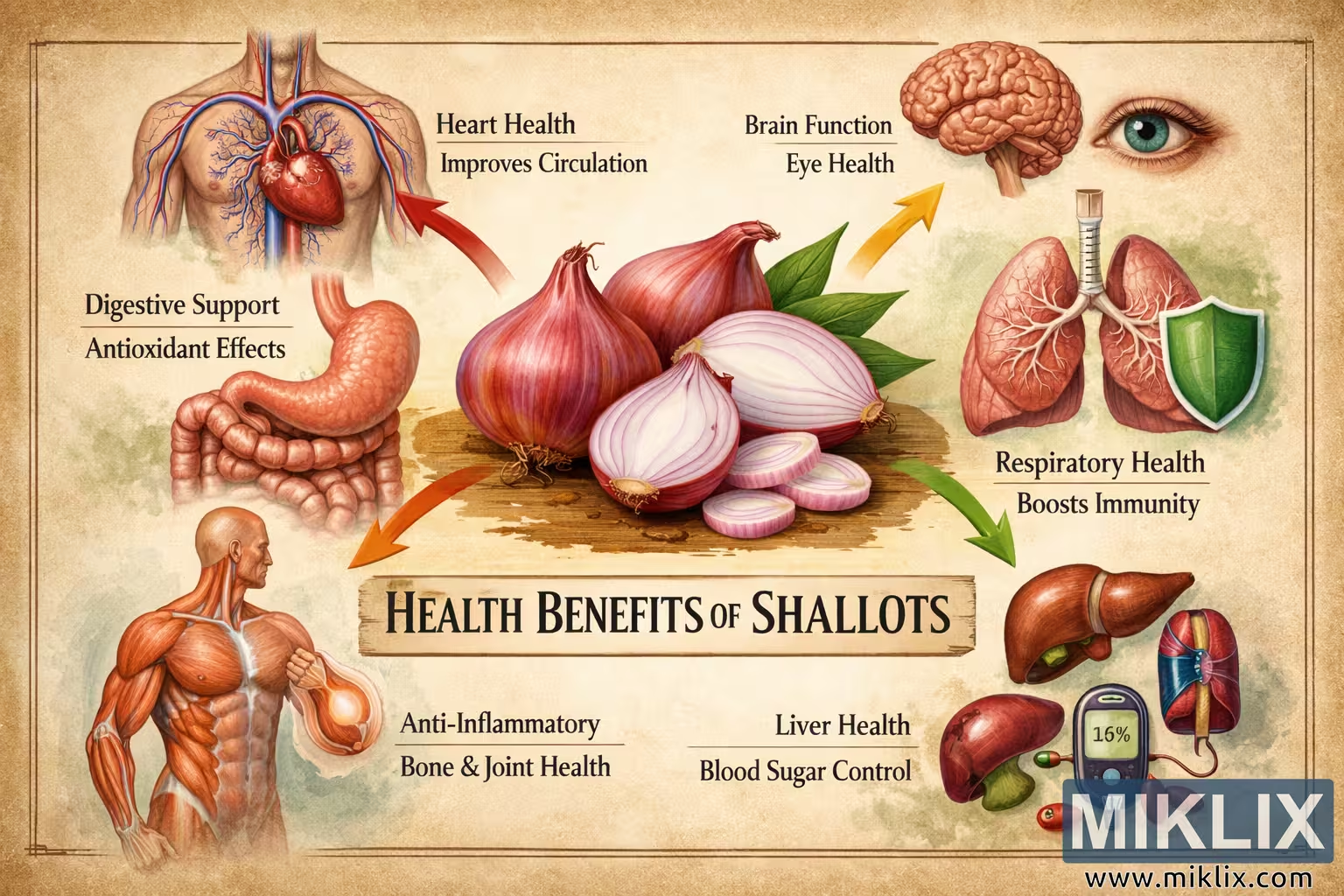
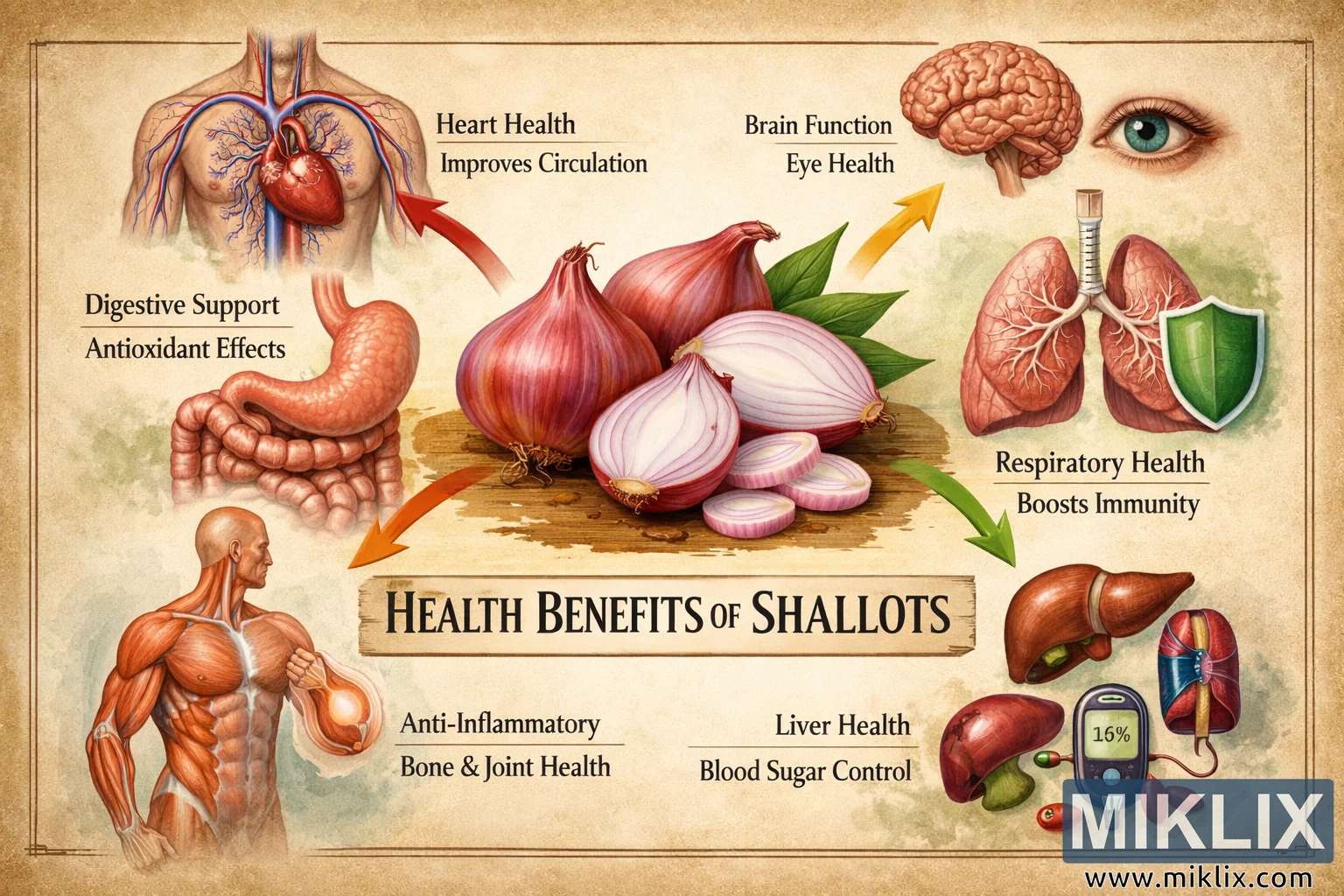
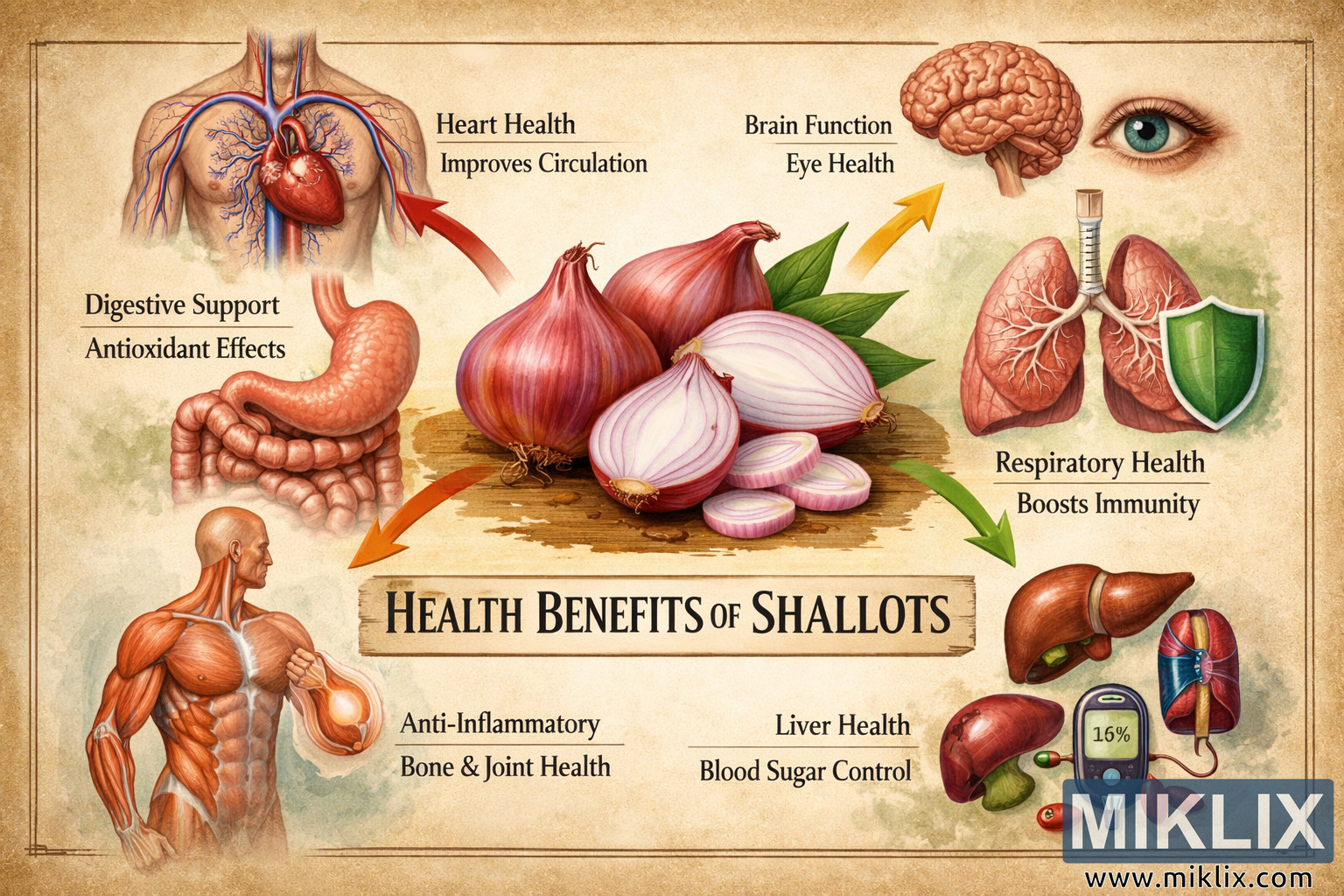
Scientific illustration in landscape format showing the health benefits of shallots across multiple human body systems. Central realistic shallots connect via colored arrows to anatomical diagrams of the heart, brain, eye, digestive tract, lungs, immune shield, muscles, joints, liver, kidneys, and blood sugar monitor. Clear labels highlight benefits including heart health, improved circulation, brain function, eye health, digestive support, antioxidant effects, respiratory health, boosted immunity, anti-inflammatory properties, bone and joint health, liver health, and blood sugar control.
Scientific Illustration of Shallot Health Benefits Across Human Body Systems
Versions disponibles d'aquesta imatge
Els fitxers d'imatge disponibles per descarregar a continuació estan menys comprimits i tenen una resolució més alta (i, com a resultat, una qualitat més alta) que les imatges incrustades en articles i pàgines d'aquest lloc web, que estan més optimitzades per a la mida del fitxer per tal de reduir el consum d'ample de banda.
Mida normal (1,536 x 1,024)
Mida gran (3,072 x 2,048)
Mida molt gran (4,608 x 3,072)
Mida extra gran (6,144 x 4,096)
Mida còmicament gran (1,048,576 x 699,051)
- Encara s'està carregant... ;-)
Descripció de la imatge
This image is a detailed, educational scientific illustration that visually explains the diverse health benefits that shallots provide to multiple human body systems. The composition is arranged in a landscape orientation, with a central focal area featuring realistic shallots, surrounded by clearly separated anatomical diagrams and labeled health effects. The overall style combines medical illustration with infographic design, making the information accessible while still feeling precise and science-oriented.
At the center of the image, there is a realistic depiction of whole and sliced shallots placed on a wooden surface. Two whole shallots with reddish-purple skins are shown, their outer layers rendered with subtle shading and highlights that suggest a natural, slightly glossy texture. One shallot is sliced in half, revealing its white and light purple interior rings, while several thin slices are arranged nearby, emphasizing the layered structure typical of allium vegetables. A few green leaves are placed around the shallots, adding a fresh, natural accent and reinforcing the idea of wholesome, plant-based nutrition.
Directly beneath the central shallot cluster, the title "HEALTH BENEFITS OF SHALLOTS" appears in large, bold, green capital letters. The text sits on a parchment-like background strip that runs horizontally, giving the illustration a slightly classical, academic feel, as if it were part of a page from a scientific textbook or educational poster. The font is clean and legible, designed to be easily read at a glance.
Radiating outward from the central shallots are colored arrows that connect the vegetable to different body systems illustrated around the edges of the image. Each arrow is associated with a specific color, helping viewers visually track which benefits correspond to which anatomical region. A red arrow points toward the cardiovascular system, a yellow arrow toward the brain and eye, a green arrow toward the lungs and immune shield, another yellow arrow toward the digestive system, an orange arrow toward the muscles and joint, and a blue arrow toward the liver, kidneys, and blood sugar monitor. These arrows create a sense of dynamic flow, visually suggesting that nutrients and beneficial compounds from shallots travel through the body to support various functions.
In the top left corner, there is a detailed illustration of the cardiovascular system. A human torso is shown with the heart prominently highlighted in red, along with major blood vessels extending from it. The heart is drawn with anatomical accuracy, including chambers and major arteries, while the surrounding vessels are simplified enough to remain clear in an infographic context. Next to this illustration, the labels "Heart Health" and "Improves Circulation" are written in a clear, legible font. This section communicates that shallots may support cardiovascular function, potentially contributing to healthier blood flow and heart performance.
In the top right corner, the focus shifts to the nervous system and vision. A human brain is illustrated with distinct folds and regions, colored in soft shades that differentiate it from the rest of the body. Nearby, an eye is depicted in a side view, showing the iris, pupil, and surrounding structures. The labels "Brain Function" and "Eye Health" accompany this section, indicating that compounds found in shallots may play a role in supporting cognitive processes and maintaining healthy vision. The yellow arrow connecting the central shallots to this area reinforces the idea of nutritional support for mental clarity and ocular wellness.
On the lower left side of the image, the digestive system is illustrated. A stylized stomach and intestines are shown, with the digestive tract highlighted in warm tones that contrast with the cooler colors used elsewhere. This section is labeled "Digestive Support" and "Antioxidant Effects." The depiction suggests that shallots can aid digestion and provide antioxidant compounds that help protect cells from oxidative stress. The yellow arrow pointing from the shallots to this region visually ties the vegetable to gut health and internal balance.
On the lower right side, the respiratory and immune systems are represented. A pair of lungs is illustrated with branching bronchi, colored in soft blues and pinks to distinguish them from other organs. In front of or beside the lungs, there is an immune shield symbol—often depicted as a stylized shield shape—representing the body’s defense mechanisms. The labels "Respiratory Health" and "Boosts Immunity" are placed near this section. The green arrow connecting the central shallots to the lungs and shield suggests that shallots may help support breathing and immune resilience, potentially through anti-inflammatory and antimicrobial properties.
At the bottom left corner, musculoskeletal health is highlighted. A human figure is shown with visible muscles, and a joint—such as a knee or elbow—is emphasized to represent joint function. The labels "Anti-Inflammatory" and "Bone & Joint Health" appear here, indicating that shallots may contribute to reduced inflammation and support the structural integrity of bones and joints. The orange arrow linking the shallots to this area visually reinforces the idea that regular consumption of shallots could be associated with improved comfort and mobility.
In the bottom right corner, metabolic and detoxification functions are depicted. A liver and kidneys are illustrated with recognizable shapes, colored in distinct hues to differentiate them from surrounding organs. Nearby, a blood sugar level monitor is shown, symbolizing the regulation of glucose in the bloodstream. The labels "Liver Health" and "Blood Sugar Control" accompany this section. The blue arrow from the central shallots to these organs and the monitor suggests that shallots may support liver function and help maintain balanced blood sugar levels.
Throughout the image, the lighting is even and well-balanced, ensuring that every anatomical illustration and text label is clearly visible. The color palette is a harmonious mix of warm and cool tones: warm colors emphasize areas like the heart, digestive system, and muscles, while cooler colors highlight the brain, lungs, and kidneys. This contrast helps viewers quickly distinguish between different body systems. The depth of field is effectively infinite, with all elements rendered sharply and clearly, which is typical for educational diagrams where clarity is more important than photographic blur.
The overall quality of the image is exceptional, with crisp lines, smooth gradients, and carefully chosen colors that make the illustration visually appealing and informative. The central shallots serve as the main focal point, drawing the viewer’s eye first, and then the arrows guide attention outward to each body system. The combination of realistic food imagery and stylized anatomical diagrams creates a compelling visual narrative: it tells the story of how a simple ingredient like shallots can have wide-ranging effects on heart health, brain function, eye health, digestion, antioxidant protection, respiratory function, immune strength, inflammation, bone and joint health, liver function, and blood sugar regulation.
Overall, this scientific illustration functions as both an educational tool and a visually engaging poster, clearly communicating the multifaceted health benefits of shallots across the human body.
La imatge està relacionada amb: Shallots: The Small Vegetable with Big Nutritional Benefits