
Billede: French vs Russian Tarragon Health Benefits Comparison
Udgivet:
Sidst opdateret: 20. juni 2026 kl. 07.51.19 UTC
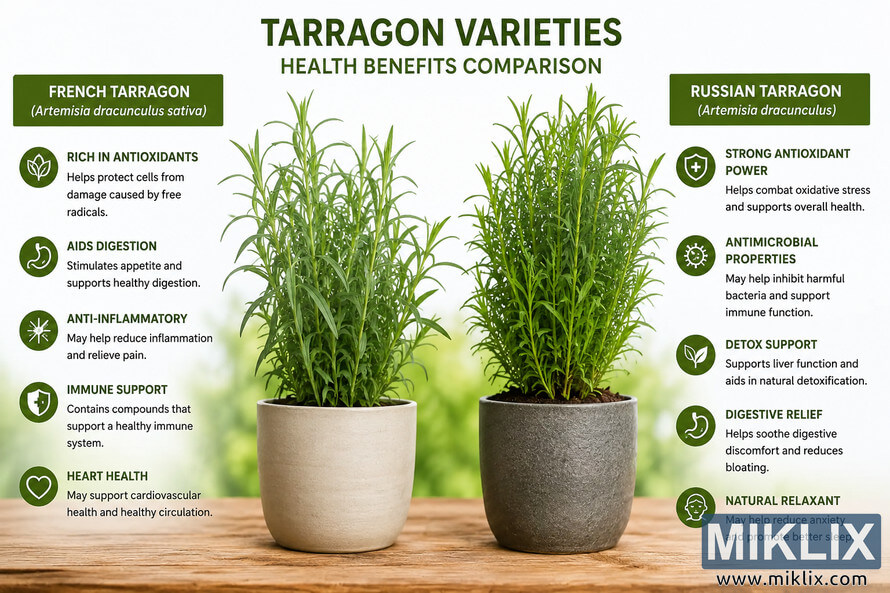
Detailed comparison infographic of French and Russian tarragon varieties featuring side-by-side herb plants and their associated health benefits including antioxidants, digestion support, anti-inflammatory properties, immune support, detox benefits, and relaxation effects.
French vs Russian Tarragon Health Benefits Comparison
Tilgængelige versioner af dette billede
De billedfiler, der kan downloades nedenfor, er mindre komprimerede og har højere opløsning - og dermed højere kvalitet - end de billeder, der er indlejret i artikler og sider på dette websted, som er mere optimerede med hensyn til filstørrelse for at reducere båndbreddeforbruget.
Almindelig størrelse (1,536 x 1,024)
Stor størrelse (3,072 x 2,048)
Meget stor størrelse (4,608 x 3,072)
Ekstra stor størrelse (6,144 x 4,096)
Komisk stor størrelse (1,048,576 x 699,051)
- Uploader stadig... ;-)
Billedbeskrivelse
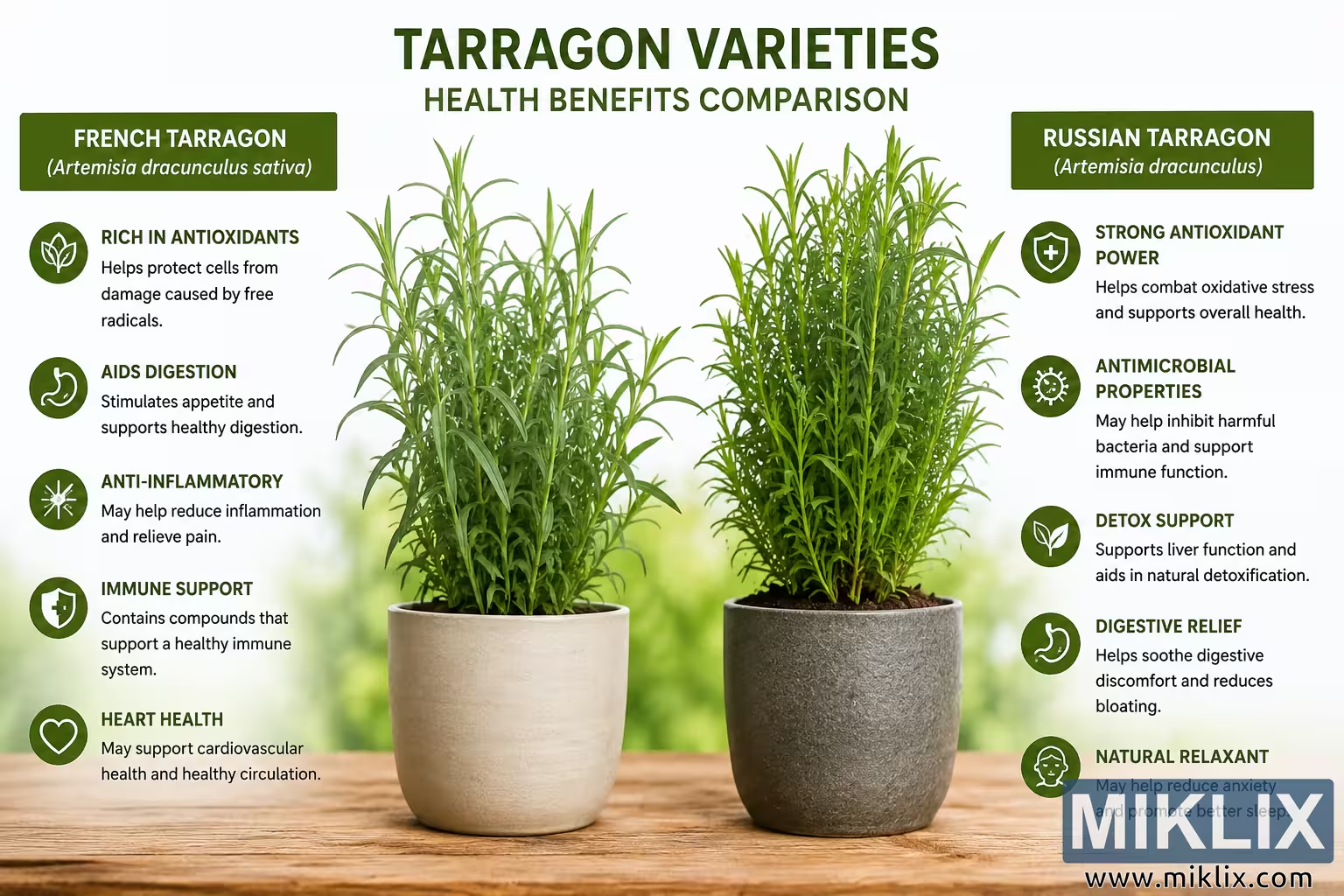
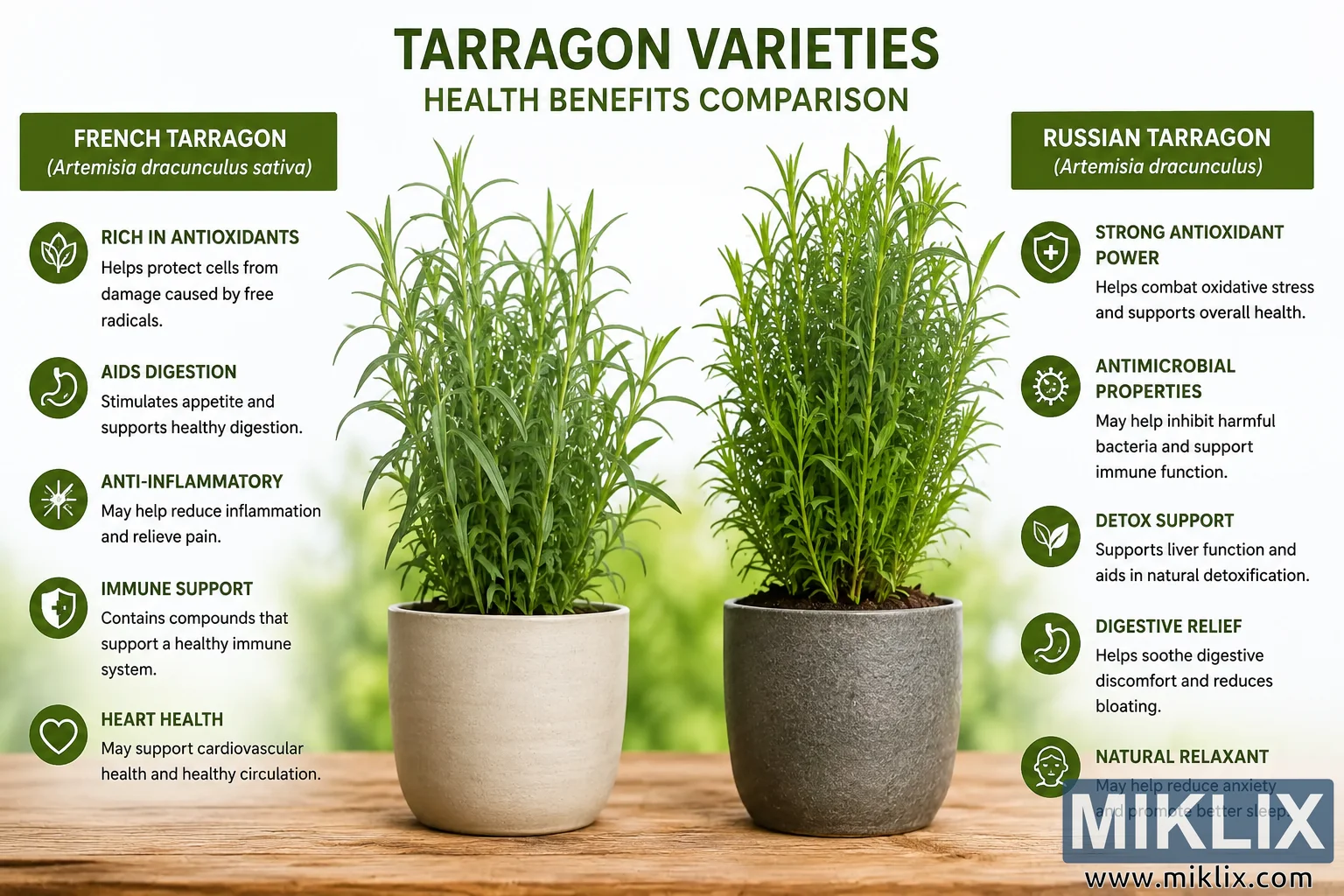
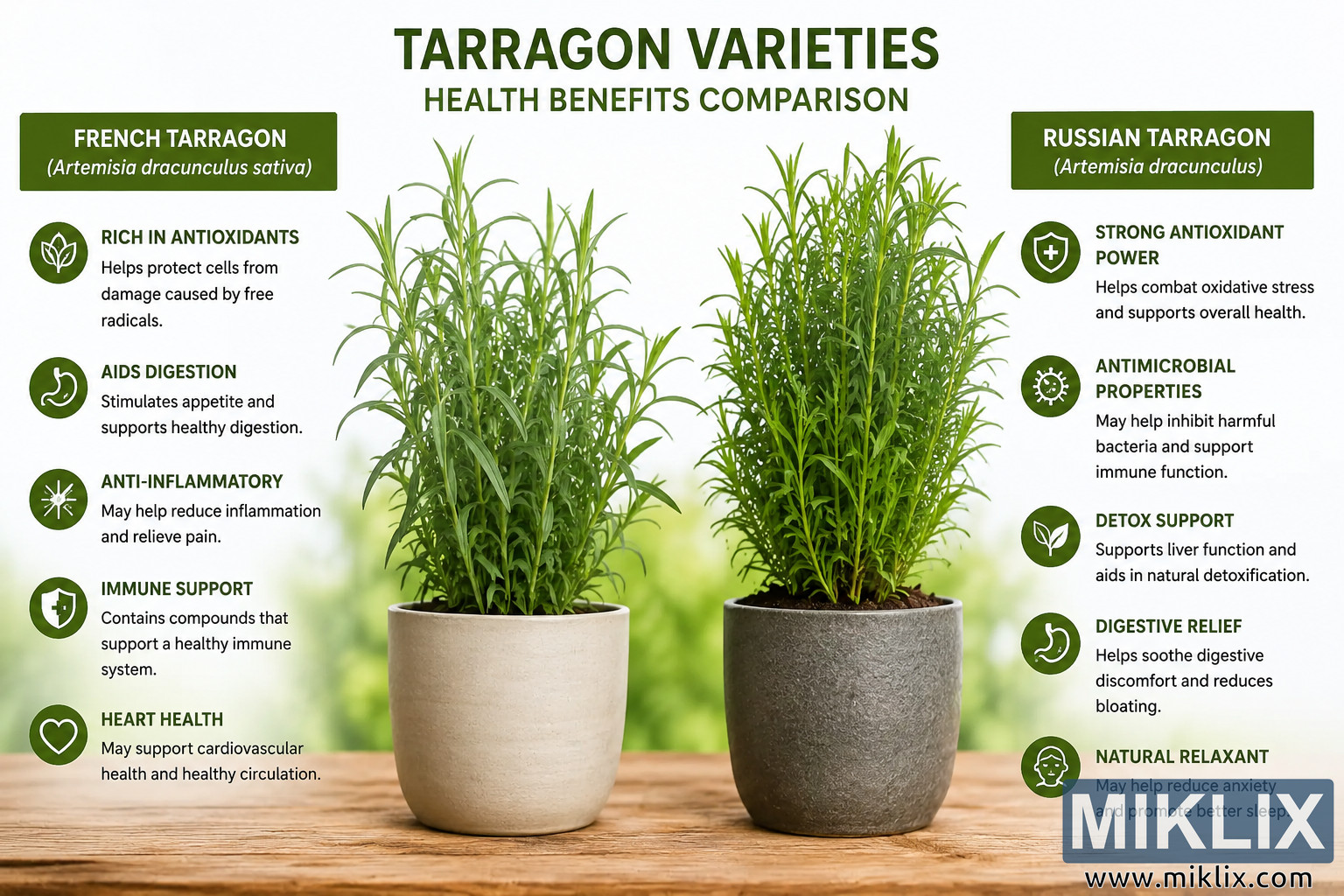
This high-resolution landscape infographic presents a visually balanced side-by-side comparison of two popular tarragon varieties: French tarragon and Russian tarragon. The design uses a clean botanical and educational style with a bright white background, soft green accents, and natural textures to create a fresh and informative appearance. Centered at the top of the image is a large dark green title reading “Tarragon Varieties” with a secondary heading beneath it that states “Health Benefits Comparison.” The typography is bold, modern, and easy to read, reinforcing the infographic’s educational purpose.
The lower half of the composition features two realistic potted tarragon plants placed on a wooden tabletop surface. The tabletop has a warm natural wood grain texture that contrasts softly with the bright background. Behind the plants is a softly blurred green outdoor-style backdrop suggesting a garden or natural environment, helping emphasize freshness and herbal wellness.
On the left side of the image is the French tarragon plant. It appears slightly lighter green with elegant narrow leaves and a somewhat airy structure. The plant sits in a smooth matte beige ceramic pot with rounded edges. Above the plant is a dark green rectangular label identifying it as “French Tarragon” with the botanical name “Artemisia dracunculus sativa” displayed beneath in italicized text. Surrounding the left side of the plant are multiple circular green icons paired with descriptive health benefit text.
The French tarragon section highlights several wellness-related properties. One section labeled “Rich in Antioxidants” explains that the herb helps protect cells from damage caused by free radicals. Another benefit titled “Aids Digestion” notes that it stimulates appetite and supports healthy digestion. A third category labeled “Anti-Inflammatory” states that the herb may help reduce inflammation and relieve pain. Additional information under “Immune Support” explains that compounds within the herb may support a healthy immune system. Finally, a “Heart Health” section mentions potential support for cardiovascular health and healthy circulation. Each category is paired with a simple white line-style icon inside a green circle, including symbols such as a leaf, stomach, shield, and heart.
On the right side of the composition is the Russian tarragon plant. This plant appears denser, bushier, and slightly darker green compared to the French variety. It sits in a textured dark gray ceramic pot that contrasts with the lighter pot on the left. Above this plant is another green label reading “Russian Tarragon” with the botanical name “Artemisia dracunculus” shown underneath in italicized lettering.
The Russian tarragon section presents its own set of highlighted wellness properties arranged vertically along the right side of the image. One heading titled “Strong Antioxidant Power” explains that the herb may help combat oxidative stress and support overall health. Another category labeled “Antimicrobial Properties” suggests that it may help inhibit harmful bacteria and support immune function. Additional text under “Detox Support” states that it supports liver function and assists natural detoxification processes. A “Digestive Relief” section notes that the herb may help soothe digestive discomfort and reduce bloating. The final category labeled “Natural Relaxant” mentions that the herb may help reduce anxiety and promote better sleep. Matching green circular icons accompany each health category, including symbols representing wellness, digestion, protection, and relaxation.
The infographic maintains a symmetrical layout with the two plants positioned centrally and their informational sections aligned evenly on opposite sides. The overall color palette focuses heavily on shades of green, white, beige, and natural wood tones to reinforce themes of herbal health, organic nutrition, and botanical education. The lighting is soft and evenly distributed, creating a bright and welcoming atmosphere without harsh shadows.
The composition combines realistic photography-style plant rendering with polished graphic design elements, making it appear suitable for use in wellness blogs, herbal medicine articles, educational gardening resources, nutrition websites, or social media content focused on natural health remedies. The image contains no visible commercial branding or logos and emphasizes a clean, professional, and universally accessible presentation style.
Billedet er relateret til: A Guide to the Health Benefits of Tarragon