
Εικών: Quince Anti-Inflammatory Effects Comparison Between Inflamed and Healthy Tissue
Δημοσιεύθηκε:
Τελευταία ενημέρωση: 6 Ιουνίου 2026 στις 2:30:21 μ.μ. UTC
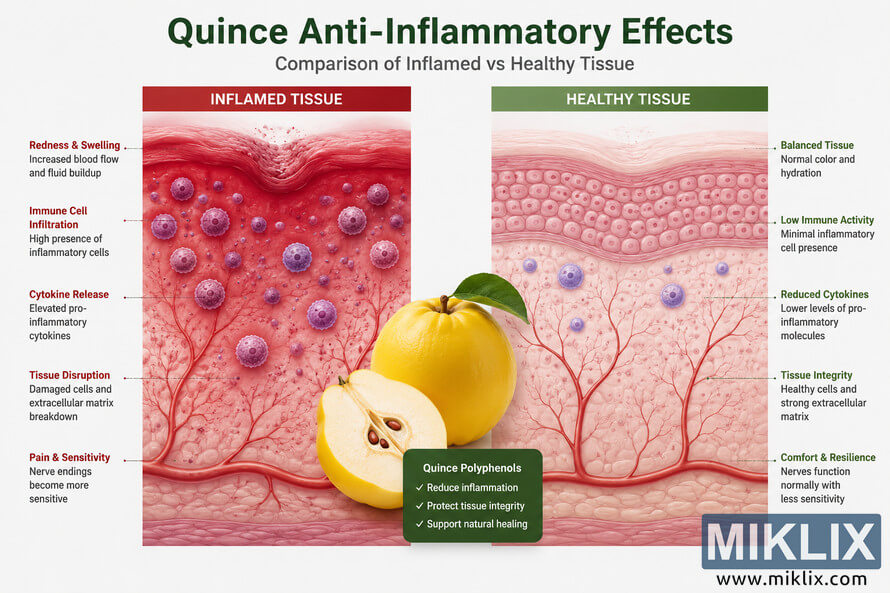
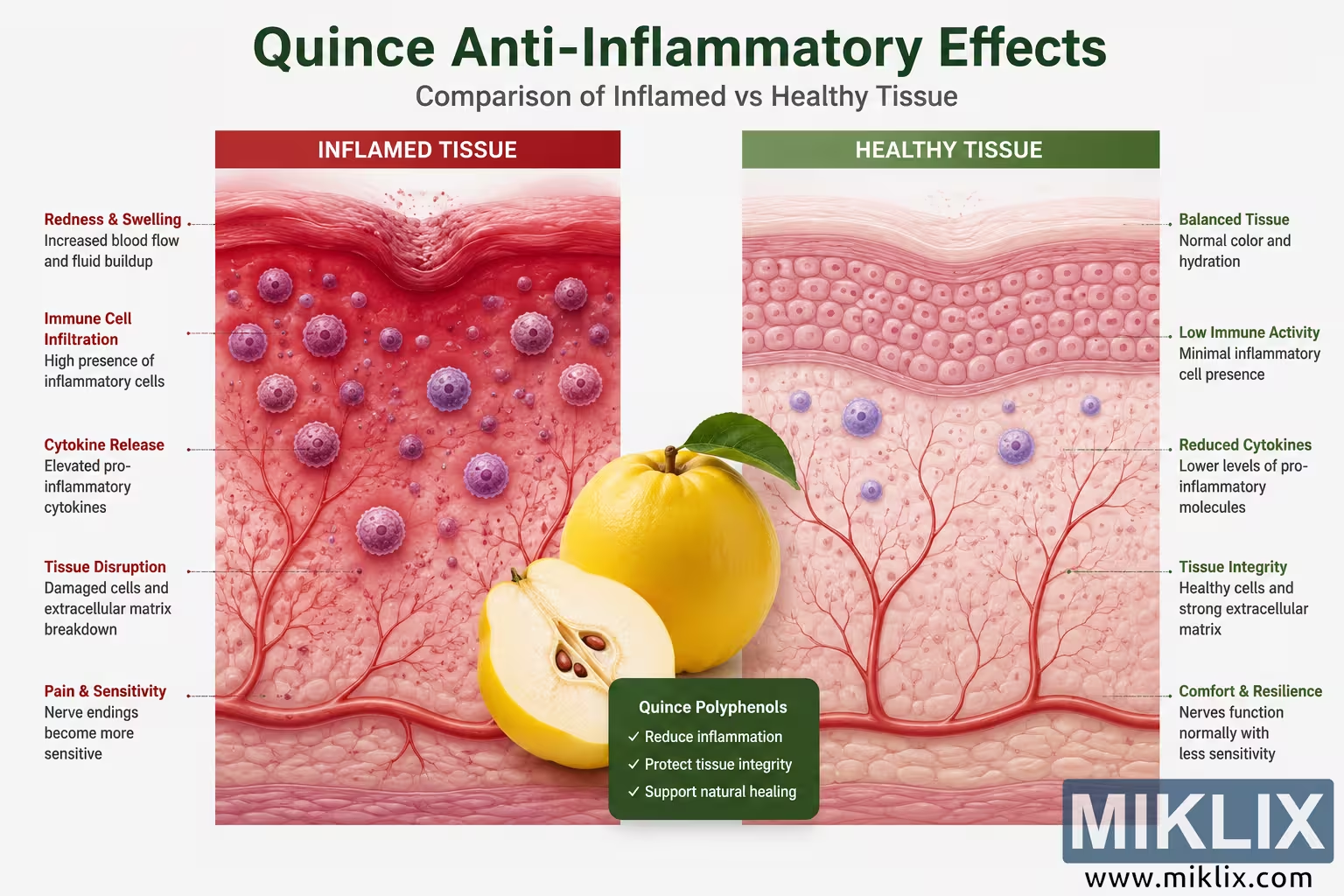
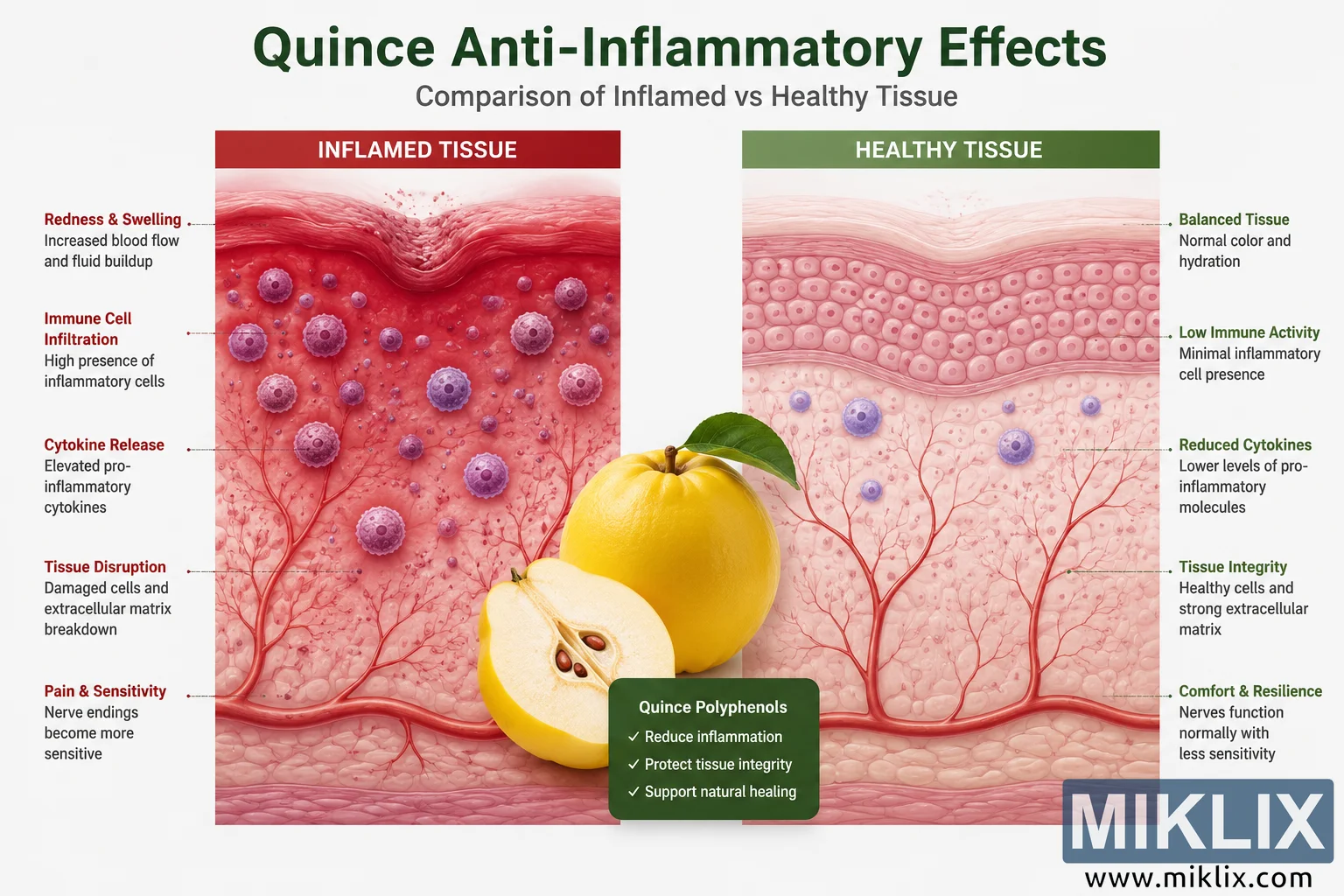
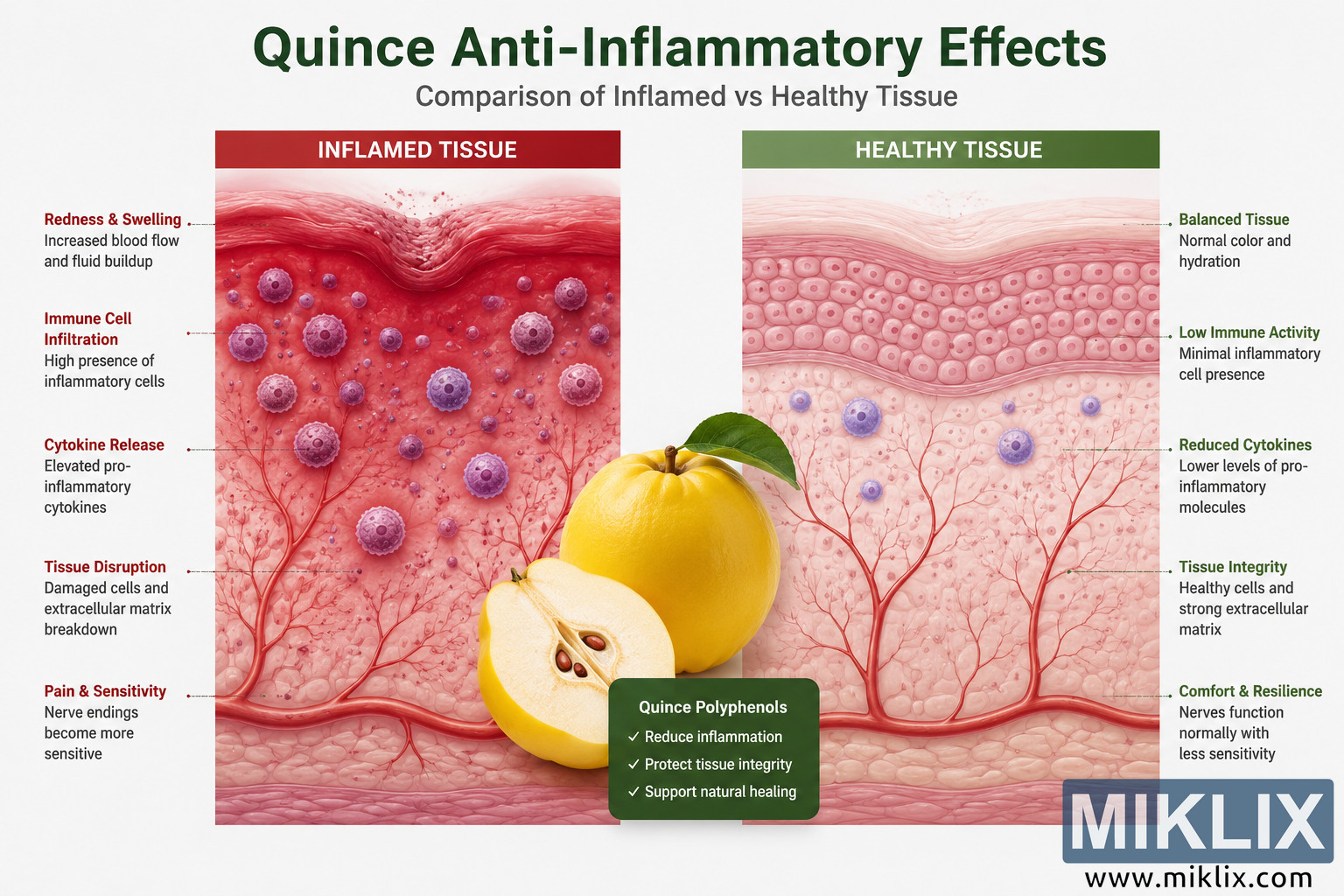
High-resolution medical infographic illustrating the comparison between inflamed and healthy tissue and highlighting the anti-inflammatory properties of quince. The image visually demonstrates reduced immune activity, balanced tissue integrity, and natural healing support associated with quince polyphenols.
Quince Anti-Inflammatory Effects Comparison Between Inflamed and Healthy Tissue
Διαθέσιμες εκδόσεις αυτής της εικόνας
Τα αρχεία εικόνων που διατίθενται για λήψη παρακάτω είναι λιγότερο συμπιεσμένα και υψηλότερης ανάλυσης - και ως αποτέλεσμα αυτού, υψηλότερης ποιότητας - από τις εικόνες που είναι ενσωματωμένες σε άρθρα και σελίδες αυτού του ιστότοπου, οι οποίες είναι περισσότερο βελτιστοποιημένες ως προς το μέγεθος των αρχείων για να μειωθεί η κατανάλωση εύρους ζώνης.
Κανονικό μέγεθος (1,536 x 1,024)
Μεγάλο μέγεθος (3,072 x 2,048)
Πολύ μεγάλο μέγεθος (4,608 x 3,072)
Εξαιρετικά μεγάλο μέγεθος (6,144 x 4,096)
Κωμικά μεγάλο μέγεθος (1,048,576 x 699,051)
- Ακόμα ανεβάζω... ;-)
Περιγραφή εικόνας
This high-resolution landscape-oriented medical infographic presents a visually detailed comparison between inflamed tissue and healthy tissue while emphasizing the potential anti-inflammatory effects associated with quince fruit and quince-derived polyphenols. The composition is arranged symmetrically across a clean light-gray background, creating a professional scientific and educational appearance suitable for medical, wellness, or nutritional content.
At the very top center of the image, a large dark green headline reads “Quince Anti-Inflammatory Effects.” Beneath the headline, a secondary subtitle in gray states “Comparison of Inflamed vs Healthy Tissue.” The typography is modern, bold, and highly legible, contributing to the infographic’s polished clinical aesthetic.
The image is divided vertically into two primary sections. The left section is dedicated to inflamed tissue and uses strong red and crimson tones to communicate irritation, swelling, and immune activation. A dark red header bar at the top of this section contains the label “INFLAMED TISSUE” in large white capital letters. Below the header is a detailed cross-sectional illustration of biological tissue. The upper tissue layers appear swollen and uneven with visible redness and inflammatory distortion. Multiple spherical immune cells in purple and pink hues are scattered throughout the tissue layers, visually representing immune cell infiltration and inflammatory activity.
Fine blood vessels branch through the inflamed tissue and appear enlarged and intensely red, reinforcing the concept of increased blood flow and vascular response. The texture of the tissue appears disrupted and irregular, with subtle indications of cellular stress and extracellular breakdown. The infographic includes explanatory text labels connected to the inflamed tissue through fine dotted guide lines. These labels identify major inflammatory characteristics such as “Redness & Swelling,” “Immune Cell Infiltration,” “Cytokine Release,” “Tissue Disruption,” and “Pain & Sensitivity.” Each label includes a concise scientific explanation describing how inflammatory responses increase blood flow, recruit immune cells, elevate pro-inflammatory cytokines, damage tissue structure, and heighten nerve sensitivity.
The right section presents healthy tissue using soft pink and green color palettes to convey healing, balance, and physiological stability. A green header bar at the top of this side contains the label “HEALTHY TISSUE” in white capital letters. The tissue illustration beneath the header appears smooth, organized, and structurally intact. The cellular arrangement is even and orderly, with fewer immune cells visible compared to the inflamed side. The healthy tissue layers have a hydrated appearance and maintain a consistent texture that communicates normal biological function.
Branching blood vessels are still visible within the healthy tissue, but they appear calmer and less enlarged. The infographic highlights reduced immune activity and restored tissue integrity. Additional labels connected by dotted guide lines describe healthy tissue characteristics such as “Balanced Tissue,” “Low Immune Activity,” “Reduced Cytokines,” “Tissue Integrity,” and “Comfort & Resilience.” These annotations explain that healthy tissue maintains normal hydration, contains fewer inflammatory molecules, supports stable extracellular structure, and allows nerves to function with lower sensitivity.
Positioned prominently in the center foreground between both tissue sections is a large realistic quince fruit rendered in vivid yellow with natural texture and subtle lighting reflections. One whole quince is shown alongside a sliced half that reveals pale cream-colored flesh and several brown seeds inside the fruit core. A green leaf extends from the stem area, adding freshness and reinforcing the natural botanical theme. The quince acts as a visual bridge between inflammation and recovery, symbolizing the fruit’s potential contribution to anti-inflammatory support and natural healing.
Directly beneath the quince fruit is a green informational box labeled “Quince Polyphenols.” Inside the box are several check-mark bullet points describing proposed benefits associated with quince compounds. These include reducing inflammation, protecting tissue integrity, and supporting natural healing processes. The green color of this section visually aligns with the healthy tissue side and strengthens the message of restoration and balance.
The overall design combines realistic medical illustration techniques with infographic-style educational formatting. The lighting is soft and evenly distributed, creating depth while maintaining clarity. The image uses strong color contrast between red inflammatory tones and softer healthy tissue tones to guide the viewer’s attention and improve comprehension. The composition is highly detailed and visually balanced, making it suitable for use in health education materials, nutrition articles, anti-inflammatory wellness content, medical presentations, scientific blogs, or educational websites discussing natural compounds and tissue health.
No commercial branding, logos, or identifiable trademarks appear anywhere in the image. The infographic maintains a clean, professional, and universally applicable presentation focused entirely on biological comparison and the conceptual anti-inflammatory role of quince.
Η εικόνα σχετίζεται με: The Remarkable Health Benefits of Quince: Nature's Forgotten Superfruit