
Fermenting Beer with Wyeast 3944 Belgian Witbier Yeast
Avaldatud:
Viimati uuendatud: 7. juuni 2026, kell 18:56:01 UTC
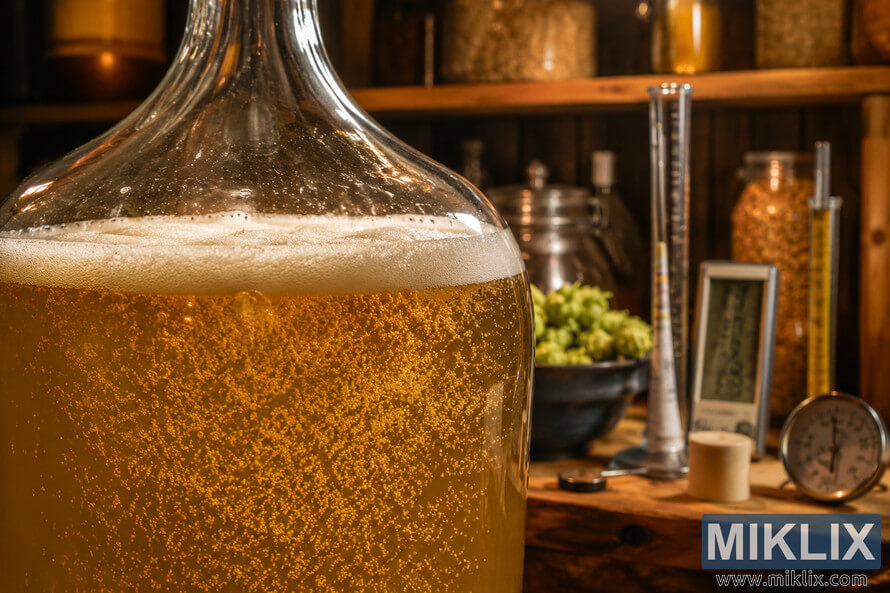
Wyeast 3944 offers a chance to recreate the essence of Belgian white beer in home and craft brewing. This yeast strain from Wyeast Laboratories seeks a balance between soft citrus esters and subtle phenolics. It's designed to complement wheat-forward recipes.
Fermenting Beer with Wyeast 3944 Belgian Witbier Yeast
Klõpsake või koputage pildile, et saada lisateavet ja suuremat resolutsiooni.
Key Takeaways
- Wyeast 3944 Belgian Witbier Yeast excels at producing spicy, citrus-forward characters suited to witbier and related ales.
- The article offers hands-on advice for fermenting witbier, including pitching, temperature, and conditioning steps.
- Expect discussion of flavor trade-offs, attenuation ranges, and flocculation behavior for this witbier yeast strain.
- Practical troubleshooting covers off-flavors, stuck fermentations, and maintaining yeast health for reuse.
- Comparisons to other Belgian ale yeasts help you choose Wyeast 3944 when you want a classic Belgian wit profile.
Overview of Wyeast 3944 Belgian Witbier Yeast
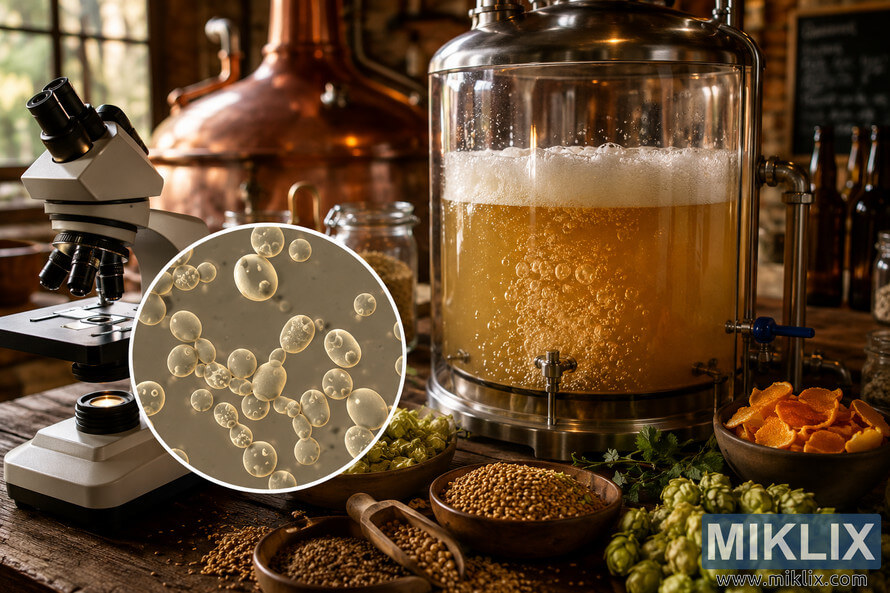
The origin of Wyeast 3944 lies in Wyeast Laboratories’ collection of Belgian ale cultures. It was crafted to emulate traditional witbier strains, focusing on clove-like phenolics and lemony esters. Brewers appreciate its ability to produce a familiar Belgian wheat character, without extreme or unpredictable behavior.
Typical flavor profile and aroma contributions
The Belgian wit yeast profile is characterized by gentle citrus notes, often likened to lemon or orange, alongside mild phenolic spice. This blend enhances coriander and orange peel adjuncts, resulting in a light-to-medium body with a creamy wheat mouthfeel. Expect moderate hop neutrality, allowing spice and citrus to dominate the aroma.
Why brewers choose this strain for witbier and other styles
Yeast selection is crucial for achieving authentic witbier aroma and balance. Brewers opt for Wyeast 3944 for its predictable attenuation and accessible phenolic expression. It emphasizes citrus esters over banana-like esters, ensuring adjunct spices are not overpowered. With temperature adjustments, the strain can also suit saisons and other wheat-forward ales, while maintaining classic witbier characteristics.
Klõpsake või koputage pildile, et saada lisateavet ja suuremat resolutsiooni.
Preparing Your Brewing Equipment for Fermentation
Preparing your brewing equipment before pitching yeast is crucial for beer quality. Follow specific steps for cleaning your fermenter and ensure reliable sanitation to prevent oxygen and microbes. A clean setup minimizes risks during fermentation and enhances Wyeast 3944's performance.
Sanitation best practices for primary and secondary fermenters
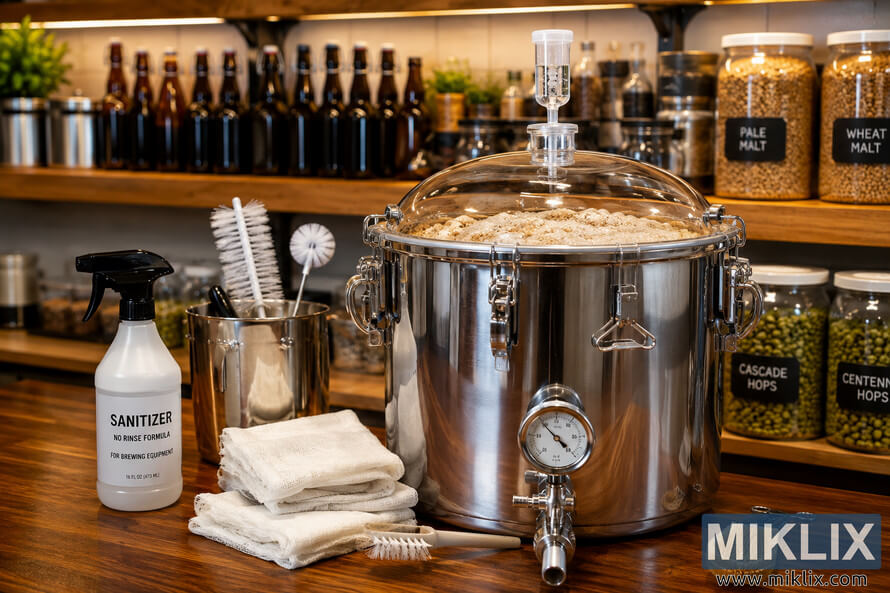
Begin with a detailed clean using PBW or OxiClean Free to remove dirt and proteins. Only rinse when the product label instructs. Apply a no-rinse sanitizer like Star San or iodophor to all surfaces that will come into contact with wort, at the recommended dilution.
Sanitize lids, airlocks, racking lines, siphons, spoons, and any port fittings. For secondary vessels, avoid unnecessary transfers to limit oxygen and infection risks. When transfers are necessary, use sanitized tubing and work quickly to minimize exposure.
Recommended tools for temperature control and monitoring
Accurate temperature control is key to predictable ester and phenol production. Use a digital probe thermometer or a wired probe for continuous readings. Data logging during active fermentation helps detect spikes.
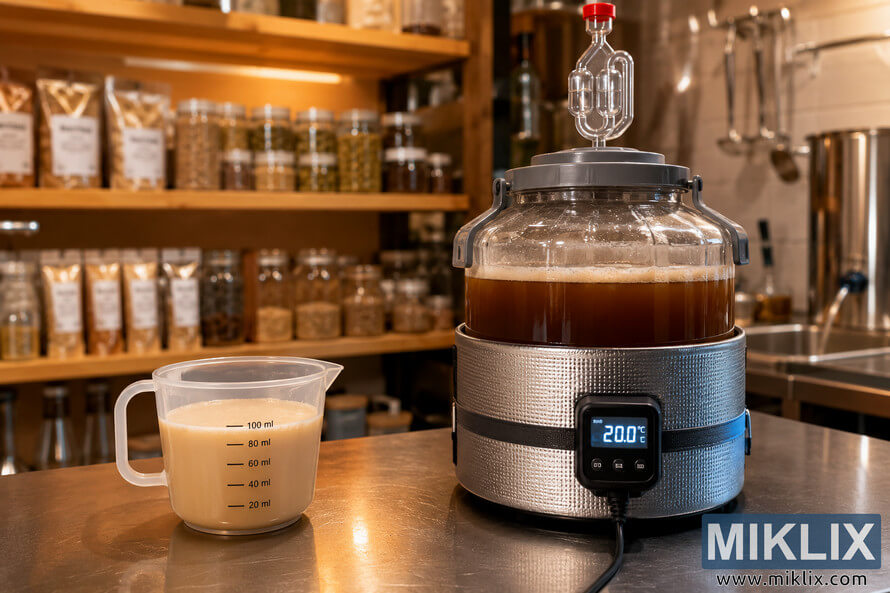
For precise control, pair a dedicated fermentation fridge with an external controller like Inkbird or Johnson. If a fridge is not feasible, consider an insulated fermenter jacket, a heat wrap with thermostat, or a swamp cooler with a reliable float thermometer.
Pitching equipment and oxygenation tools
Key pitch tools include a sanitized measuring cylinder or graduated funnel for liquid yeast and a clean Erlenmeyer flask plus stir plate for starters. Keep these items ready and dry until sanitizing.
- For small batches, vigorous shaking or pump-assisted aeration works well for oxygenation for yeast.
- For larger batches, use a pure oxygen regulator with a diffusion stone to reach target dissolved oxygen quickly and safely.
- Always oxygenate or aerate wort before pitching, especially with liquid cultures like Wyeast, to support healthy cell replication.
Klõpsake või koputage pildile, et saada lisateavet ja suuremat resolutsiooni.
Pitching Rates and Yeast Handling
Optimizing the pitching rate for Wyeast 3944 is crucial for achieving the right aroma, attenuation, and fermentation health. Aim for 0.75–1.5 million cells per mL per degree Plato for ales. For a 5-gallon (19 L) witbier at 1.050 OG, you'll need about 200–300 billion yeast cells. Use a pitch calculator like Brewer’s Friend or MrMalty to ensure the correct amount for your batch size and gravity.
Underpitching can lead to a long lag phase and off-flavors from stressed yeast. Overpitching, on the other hand, may mute the esters and phenolics that define Belgian witbier. Monitor fermentation timing and gravity drops to confirm the target pitching rate Wyeast 3944 achieved the expected activity.
Handling smack packs requires following cold-chain and sanitation best practices. Store them refrigerated and check the expiration date before use. Gently flex the inner ampoule to activate the pack, then allow it to swell. Sanitize the exterior before opening. Pour or pipe the contents into sanitized, cooled wort to avoid contamination and temperature shock.
Slants and vials need similar care. Keep them cold during transport and storage. Use them within the manufacturer’s viability window. Sanitize caps and surfaces before opening. Good liquid yeast storage practices include refrigeration and minimizing freeze/thaw cycles to preserve cell viability.
Creating a yeast starter is essential when pitching high-gravity wort, reviving older packs, or when precise flavor expression matters. A starter boosts yeast cell count and shortens lag time. Use starter calculators like MrMalty to size the starter for your target yeast cell count.
- Prepare 500–2000 mL of starter wort at 1.030–1.040 gravity using dry malt extract.
- Boil the wort, cool it to pitching temperature, then aerate by shaking or using pure oxygen.
- Pitch a portion of the smack pack or an entire vial. Place the starter on a stir plate or shaker for 12–48 hours.
- When krausen falls, cold crash and decant most of the spent wort if you plan to transfer the concentrated yeast to the batch.
Stir plates speed growth and improve viability, but a free-standing starter works if you monitor activity. Store any retained starter slurry refrigerated and use it quickly. Proper yeast starter instructions keep the culture healthy and minimize the risk of contamination.
Tracking yeast cell count is crucial when precise pitching is required. Hemocytometers and lab services are available for accurate counts, or rely on established calculators that estimate needed cells. Careful liquid yeast storage and thoughtful smack pack handling make the difference between a slow, stressed ferment and a lively, clean one.
Klõpsake või koputage pildile, et saada lisateavet ja suuremat resolutsiooni.
Fermentation Temperature and Control
Choosing and maintaining the right temperature is crucial when brewing with Wyeast 3944. This strain exhibits distinct characteristics within a narrow temperature range. Understanding this range is key to shaping the final beer's flavor.
Ideal temperature range for primary fermentation
Begin primary fermentation at 65–72°F (18–22°C). Many brewers aim for the mid- to upper-60s F for balanced esters and phenolics. A short rise to 72–74°F can enhance fruity complexity without overtaxing the yeast.
Effects of temperature on ester and phenol production
Warmer fermentations boost fruity esters and spicy phenols. Cooler temperatures suppress these, resulting in a cleaner beer. Monitoring fermentation temperature closely prevents overpowering peppery or sharp notes in a witbier.
Strategies for maintaining consistent temperatures at home
- Employ a chest freezer or refrigerator with a temperature controller for precise control. This setup is reliable for maintaining consistent fermentation temperatures over extended periods.
- Utilize insulated wrap or a sealed fermenter jacket to minimize temperature swings. Small temperature fluctuations can stress yeast and negatively impact fermentation.
- Consider a staged temperature schedule: maintain mid-range temperatures during active fermentation, then slightly increase for attenuation, or decrease for conditioning. This approach helps control ester production and prevents off-flavors.
- For budget-conscious brewers, a swamp cooler with a thermometer can be effective if closely monitored and temperature shifts are avoided.
Stable conditions and knowledge of the Wyeast 3944 temp range provide brewers with reliable control over ester production and overall beer balance. Small temperature adjustments can significantly impact the final product. Record temperatures and outcomes to refine your brewing process for future batches.
Fermentation Timeline and Signs of Activity
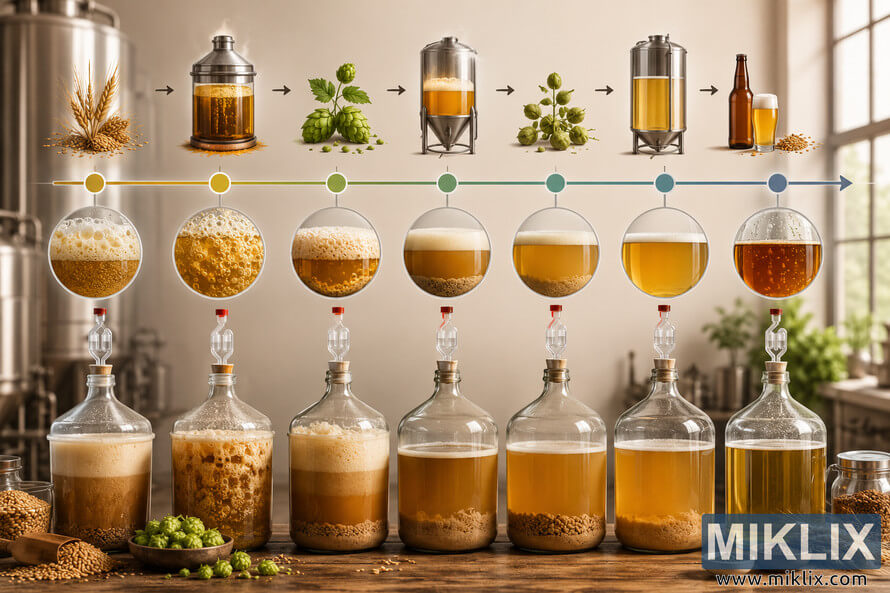
Understanding the journey of a witbier from start to finish is crucial. It sets the stage for what to expect and when to intervene. The fermentation timeline for witbier varies based on several factors. These include the initial yeast amount, the temperature, and the health of the yeast. It's important to monitor the early stages closely. This way, you can spot normal activity and catch any issues early on.
Typical timeline from pitch to terminal gravity
After adding Wyeast 3944, you'll see activity within 12–48 hours. Primary fermentation usually lasts 4–7 days. Most batches reach their final gravity by day 7–10. However, cooler temperatures or a low initial yeast amount can prolong this period.
Don't forget to allow time for conditioning and clarification. These steps can add weeks to your brewing schedule before you can package your beer.
Visual and olfactory signs of healthy fermentation
Look for a creamy krausen that rises and stays for a few days. Steady airlock bubbling or CO2 release indicates gas production. As fermentation progresses, the aroma will shift from sweet to yeasty, then to beer-like scents. You'll notice citrus and spice notes from the yeast.
Over time, the krausen will thin and fall. This is a natural sign of fermentation moving forward.
How to differentiate stuck fermentation from slow attenuation
To track fermentation, use a hydrometer or refractometer. If gravity remains steady for 48+ hours with no activity, it's likely stuck fermentation. Slow attenuation is indicated by a gradual decline in gravity readings over time.
- Check temperature: low temps slow yeast activity.
- Verify pitching rate and yeast viability: underpitching can cause sluggish fermentation.
- Confirm oxygenation at pitch: lack of oxygen impairs yeast growth.
When diagnosing stuck fermentation, start with simple solutions. Try raising the temperature a few degrees or gently stirring the yeast. If necessary, add an active starter or fresh yeast. Recheck the gravity after 24–48 hours before considering more drastic measures.
Klõpsake või koputage pildile, et saada lisateavet ja suuremat resolutsiooni.
Flavor Development with Wyeast 3944
Wyeast 3944 flavor is a delicate mix of fruity esters and soft phenolic spice. Brewers aiming for a classic witbier profile should let the yeast take the lead. Use adjuncts to support, not compete. Small changes in mash, grain bill, and spice timing can alter the presentation of citrus esters and clove-like phenolics.
The creation of spice and citrus notes is a result of yeast metabolism. During fermentation, enzymatic activity produces esters that contribute to citrus esters and fruity top notes. Simultaneously, pathways tied to PAD1 and FER genes generate phenolic compounds, resulting in a mild clove or pepper character. Wyeast 3944 leans towards subtle citrus esters and restrained phenolic spice, complementing traditional witbier adjuncts.
It's crucial to balance wheat, coriander, and orange peel to preserve yeast character. Typical coriander rates range from 4–20 g per 5 gal, while Curacao orange peel is used from 10–30 g per 5 gal. Add spices at flameout for gentle aroma retention or in secondary for brighter citrus oil. Taste restraint is key; if yeast-driven citrus esters are too strong, reduce the peel to avoid clash.
Mash choices and adjustments significantly impact mouthfeel and flavor perception. Aim for a mash temperature near 150–152°F (65–67°C) for a moderate body that carries esters without masking them. Lower mash temps result in a drier finish that highlights citrus esters. For a traditional mouthfeel, use 40–50% wheat; add oats or flaked wheat for silkiness if desired.
- Adjunct timing: whirlpool or flameout keeps oils aromatic but controlled.
- Secondary additions: use small doses to preserve delicate citrus esters.
- Mash adjustments: drop 2°F for a dryer beer, raise 2°F for fuller body.
Run trials with small batches to find your preferred coriander and orange peel balance against Wyeast 3944 flavor. Keep notes on mash adjustments, spice weight, and timing. Iterative tweaks will reveal how yeast-driven citrus esters and phenolic spice play together in your final beer.
Attenuation, Flocculation, and Final Gravity Expectations
When planning fermentation with Wyeast 3944, expect a fairly predictable finish if mash and temps are steady. Typical performance gives a crisp, slightly dry profile that suits classic Belgian witbier. Keep readings and conditioning consistent to judge how the yeast behaved in your batch.
Wyeast 3944 attenuation commonly falls in the 72–78% range. This level of attenuation creates a lighter body and a cleaner finish when the wort fermentables are highly fermentable. If your mash favors dextrins and complex sugars, lower attenuation will leave a fuller mouthfeel and more roundness.
H3: Flocculation behavior of Wyeast 3944 and conditioning implications
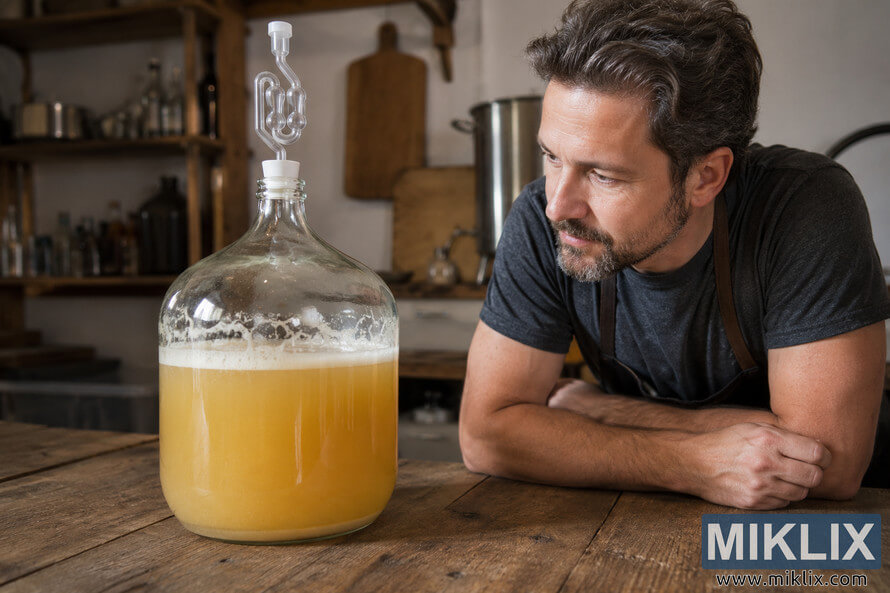
Flocculation Wyeast 3944 is moderate. The yeast will drop out with time or cold-conditioning, though some cells may stay suspended and contribute the traditional haze of a witbier. If clarity matters, plan a longer lagering or a gentle cold crash prior to packaging.
H3: Measuring and interpreting final gravity
Use a calibrated hydrometer or refractometer to track witbier FG. Take two identical readings 24–48 hours apart to confirm terminal gravity. If using a refractometer, apply the proper alcohol correction formula when interpreting post-fermentation readings.
- Compare original gravity to witbier FG to calculate apparent attenuation and ABV.
- Repeated, consistent measurements reduce error and reveal stuck or slow fermentations.
- Adjust conditioning time if final gravity sits higher than expected to allow yeast to clean up byproducts.
Klõpsake või koputage pildile, et saada lisateavet ja suuremat resolutsiooni.
Secondary Fermentation, Conditioning, and Carbonation
Deciding what to do after primary fermentation impacts clarity, flavor, and carbonation. Many homebrewers choose to leave beer on the primary yeast cake until packaging. This method reduces oxygen exposure and minimizes handling. However, if you plan to add fruit or spices, or require extended conditioning, transferring to a secondary fermenter is advisable. When transferring, it's crucial to limit splashing and use a CO2-purged vessel when feasible.
Deciding whether to transfer
Modern brewing practices often favor minimal transfers. Leaving the beer in primary fermentation shortens brew-day tasks and lowers the risk of infection. Opt for a secondary transfer for heavy adjuncts, extended cold storage, or when you need extra clarity for packaging. Ensure transfer time is brief and use gentle siphoning to protect the headspace.
Conditioning and timeframes
After primary fermentation, plan a short conditioning phase. This allows phenolics to integrate and harsh edges to soften. A typical conditioning time for witbier is one to three weeks at cellar temperatures. Cold conditioning at 35–45°F (2–7°C) for one to two weeks can speed up clearing and promote yeast drop.
For greater smoothing of spice and yeast character, extend conditioning to four to six weeks. Longer rests give subtle phenolics time to blend with wheat and spice notes. Monitor clarity with simple gravity readings and visual checks.
Carbonation targets and packaging choices
Witbier benefits from lively bubbles. Aim for a carbonation level near 2.5–3.0 volumes of CO2 for the classic effervescent mouthfeel. For bottle conditioning, calculate priming sugar precisely to hit this range. Use trusted calculators or reference charts for corn sugar or dextrose amounts.
- For kegging, set CO2 pressure for serving temperature. At 40°F, 12–14 psi typically yields about 2.5 volumes.
- Bottling gives traditional, automatic carbonation and a slight yeast conditioning effect in each bottle.
- Kegging vs bottling trades tradition for control: kegs allow precise pressure management and faster serving; bottles offer ritual and slow, steady conditioning.
Choose packaging based on your workflow and goals. If you prize tight control and quick turnaround, kegging is the better choice. If you prefer authentic presentation and natural bottle conditioning, bottling is more suitable. Keep carbonation targets consistent to ensure your witbier showcases the bright, refreshing character brewers aim for.
Common Fermentation Issues and Troubleshooting
Fermentations can go awry for many reasons, from temperature fluctuations to low yeast viability. This guide aims to help brewers identify common problems and apply effective solutions. It's crucial to maintain steady control and conduct thorough checks before making any adjustments.
Off-flavors linked to stress or temperature spikes
High fermentation temperatures often lead to the production of solvent or fusel alcohols. These compounds introduce hot, alcoholic notes. Overheating can also push Wyeast 3944 towards harsh phenolics. Stressed yeast may emit sulfur tones. Short conditioning periods can result in green apple or acetaldehyde notes in the beer.
- Prevent by holding a stable temperature in the recommended range for Wyeast 3944.
- Pitch an adequate cell count and oxygenate wort correctly at the start.
- Maintain strict sanitation to avoid wild microbes that add off characters.
Steps for high diacetyl or phenolic harshness
Diacetyl manifests as buttery or butterscotch notes when yeast fails to reabsorb it. A simple solution is to raise the fermentation temperature by a few degrees for 24–48 hours. This allows yeast to clean up. Afterward, cool back to conditioning temperatures.
Phenolic harshness can stem from wild microbes or yeast stress due to heat or oxygen issues. If wild infection is suspected, consider discarding the batch or intentional souring. If stress is the cause, restore stable, moderate temperatures and extend conditioning time.
- Activated charcoal filtration is not practical for most homebrewers; prevention and patience work best.
- Record temperatures and times to track patterns and avoid repeat problems.
Addressing under-attenuation and stalled fermentation
First, verify gravity readings to confirm the issue. Ensure the fermenter temperature is within the yeast's preferred range. Warming slightly often restarts sluggish activity.
- Gently rouse yeast by swirling or stirring through a sanitized port to resuspend cells.
- If yeast viability is low, pitch a healthy culture such as a Wyeast 3944 starter or a neutral strain like SafAle US-05 to finish attenuation.
- If early in fermentation, add a measured oxygenation to support yeast health; never oxygenate after active fermentation ends.
Keep detailed notes on each batch for better troubleshooting in the future. Consistent pitching, clean equipment, and careful temperature control reduce risks of off-flavors Wyeast 3944, speed diacetyl remediation, and minimize the need for a stuck fermentation fix.
Recipe Examples and Mash Guidelines
A well-defined recipe and a straightforward mash plan are key to achieving the bright, spicy taste of a classic witbier. Below, you'll find practical grain and hop examples. Additionally, guidance on incorporating coriander and orange peel is provided to ensure balanced flavors with the yeast profile.
For a 5-gallon batch, a classic Belgian wit grain bill includes:
- 5 lb (50%) Pilsner or pale ale malt
- 4 lbs (40%) flaked wheat or malted wheat
- 8 oz (5%) rolled oats or flaked barley for mouthfeel
- 2–3 oz (1–3%) acidulated malt only if mash pH needs adjustment
Specialty malts should be kept to a minimum to maintain a pale color and light body. This grain bill supports a soft, bready base. It allows yeast-driven spice and citrus to take center stage.
Witbier brewers often prefer a gentle mash schedule. A single infusion mash at 150–152°F for 60 minutes is ideal. It provides moderate fermentability and a smooth body. For a drier finish, step down to 148–150°F for 60 minutes or use a short mashout at 168°F before sparging.
Hop selection for witbier should be subtle. Opt for low-bitterness, neutral, or noble varieties like Saaz, Hallertauer, Styrian Golding, or East Kent Goldings. Aim for a total bitterness of 8–12 IBU to let yeast esters and spice take precedence.
Typical hop additions include:
- 0.5–0.75 oz at 60 minutes for minimal bittering
- 0.25–0.5 oz at 10–15 minutes for slight flavor support
- Optional tiny whirlpool addition for a whisper of aroma
Adjuncts and spice additions are crucial for witbier's aroma. For a 5-gallon batch, use 10–15 g crushed coriander and 10–15 g bitter or sweet orange peel. Add spices at flameout or in a 10–20 minute whirlpool to retain volatile oils.
Consider a light secondary dry addition—3–5 g coriander and 5–10 g orange peel—to enhance aroma without over-extracting bitterness. For long contact or tinctures, soak peels in neutral spirit and add measured amounts to the keg or bottling bucket. Sanitize equipment and spirits before use.
Alternatives include grains of paradise, lemon zest, or bitter orange for variation. Use small amounts and taste as you go. Sanitize anything that contacts beer after fermentation to prevent contamination.
Comparing Wyeast 3944 to Similar Witbier Strains
Choosing the right yeast is crucial in shaping a witbier. This section explores how Wyeast 3944 compares, focusing on aroma, attenuation, and mouthfeel.
Differences between Wyeast 3944 and other Belgian ale yeasts
Wyeast 3944 offers balanced citrus esters and mild phenolics. In contrast, Wyeast 3655 Belgian Saison has a peppery, dry finish and higher attenuation. White Labs WLP400 produces a fuller clove or banana ester profile, making the beer fruitier. Some wit strains, like Wyeast 3942, emphasize clove or spicy notes more than 3944.
These differences impact the beer's body and aroma. Saison strains tend to leave a thinner mouthfeel due to higher attenuation. Strains with a focus on clove or banana can overpower delicate adjuncts. Wyeast 3944 strikes a balance, enhancing wheat character while showcasing citrus.
How strain selection affects final beer character
Yeast is key in shaping the ester and phenol profile, which defines the beer's personality. A more phenolic strain can introduce spicy notes, potentially clashing with heavy adjuncts. Conversely, a fruit-forward strain can elevate perceived sweetness, potentially hiding wheat nuances.
Attenuation is crucial for body and drinkability. Higher attenuation results in a drier finish, enhancing perceived hop or spice bitterness. Flocculation affects clarity and conditioning needs. Select a strain that aligns with your desired balance between aroma, mouthfeel, and adjunct presence.
When to choose Wyeast 3944 over other options
- When the recipe emphasizes coriander and orange peel and you want those notes to stay prominent.
- When you want moderate phenolics without the sharp pepper of saison strains.
- When aiming for a soft wheat body with citrus-driven aroma rather than a very dry farmhouse character.
Opt for alternative strains for a drier, more aggressive phenolic or farmhouse profile. Use the Belgian yeast comparison and yeast strain flavor differences to match strain to recipe goals. This approach ensures choosing the right wit yeast for your intended beer.
Storage, Reuse, and Yeast Health Management
Effective yeast management is key to brewing success beyond a single batch. Proper harvesting and care of Wyeast 3944 yeast slurry enhance viability. This makes reusing yeast in homebrew practical for several batches. Below are actionable steps and warning signs for homebrewers.
Harvesting yeast for future batches
Start by sanitizing a collection vessel and cooling the fermenter to near-freezing for a cold crash. Once the beer clears, slowly decant the beer to preserve the yeast layer. Scoop the creamy yeast into a sanitized container, avoiding the darker trub layer.
Use sterile technique and minimize oxygen exposure by capping the container quickly. Cell counts vary by batch size. Plan for enough cells to build a starter. Limit reuse to about three to four repitches before monitoring viability closely.
Storing harvested yeast and maintaining viability
- Refrigerate harvested slurry in airtight, sanitized containers for short-term storage. Keep a small "mother" slurry for quick access within a few weeks.
- For longer storage, glycerol stocks and freezing are options in lab settings, but not common for homebrewers.
- Before reusing, build a fresh starter to wake cells and check vitality. Track the number of generations to know when to retire the culture.
Signs a culture should be replaced
Look for sluggish starts, extended lag times, or repeated low attenuation despite correct temperature and oxygenation. Persistent off-flavors, thinning body from poor flocculation, or any contamination signs are red flags.
Replace cultures after three to five repitches or immediately if contamination is suspected. If unsure, source fresh Wyeast packs or use a commercial dry yeast to protect your beer and ensure consistent results.
Conclusion
Wyeast 3944 Belgian Witbier Yeast is renowned for its bright citrus esters and subtle phenolic spice, quintessential to a classic witbier. This review highlights its reliable attenuation and moderate flocculation, making it ideal for brewers seeking a soft mouthfeel and clear spice presence. For a successful fermentation, remember to pitch correctly, ensure good oxygenation, and maintain temperatures between mid-60s to low-70s°F.
Optimal use of Wyeast 3944 involves clean equipment, accurate starters, and precise timing for coriander and orange peel additions. Sanitation and temperature control are crucial to avoid off-flavors. Measured adjunct additions allow the yeast's citrus and clove notes to shine. Follow the storage and troubleshooting tips to maintain yeast health and achieve consistent results.
As a homebrew yeast recommendation, Wyeast 3944 excels for those aiming at authentic Belgian witbier flavors with manageable fermentation. If you desire stronger esters or a different phenolic profile, consider other Belgian ale strains. Experiment with small batches to find your preferred ester and phenolic balance. By following these guidelines, you'll craft a repeatable, flavorful witbier that showcases your dedication to the craft.
FAQ
What makes Wyeast 3944 Belgian Witbier Yeast a good choice for homebrewers?
Wyeast 3944 is designed to mimic traditional Belgian witbier. It produces soft citrus esters and mild phenolic spice. This strain typically results in a light-to-medium body with a creamy wheat mouthfeel. It also offers predictable attenuation, allowing coriander and orange peel to complement the beer without overpowering it.
What pitching rate should I use for a 5-gallon witbier with an OG around 1.050?
Aim for a pitching rate of 0.75–1.5 million cells per mL per °P. For a 5-gallon batch at 1.050 OG, this translates to about 200–300 billion cells. Fresh liquid Wyeast packs usually require just one active pack or a modest starter. However, for older packs or higher gravity beers, a larger starter is recommended to control ester expression.
When should I make a yeast starter for Wyeast 3944?
Create a yeast starter when the pack is older, for higher gravity beers, or when you need vigorous fermentation. Prepare 500–2000 mL of 1.030–1.040 DME wort, aerate, and run on a stir plate or shaker for 12–48 hours. Cold-crash and decant the slurry if necessary before pitching.
What is the ideal fermentation temperature range for Wyeast 3944?
The ideal primary fermentation range is 65–72°F (18–22°C). Many brewers prefer the mid- to upper-60s F for balanced phenolics and citrus esters. However, temperatures above 74°F can increase esters and phenolic intensity, potentially leading to harsh phenols or fusel alcohols.
How does temperature affect ester and phenol production with this strain?
Warmer fermentations enhance fruity esters and phenolic spice. Cooler temperatures suppress both, resulting in a cleaner profile. For Wyeast 3944, maintaining tight temperature control prevents sharp clove-like phenols and minimizes solvent-like fusels caused by heat stress.
What sanitation and preparation steps are essential before pitching Wyeast 3944?
Clean all equipment with an alkaline cleaner (PBW or OxiClean Free), then sanitize with a no-rinse sanitizer such as Star San or iodophor at recommended dilution. Sanitize airlocks, lids, racking tubes, stir paddles, and any funnels. Minimize transfers to reduce oxygen pickup and infection risk.
How should I oxygenate the wort before pitching liquid yeast like Wyeast 3944?
For 5-gallon batches, vigorous shaking or splashing can suffice for smaller runs. For consistent results, especially with starters or higher gravities, use a pure oxygen setup with a diffusion stone and regulator. Adequate oxygen at pitch supports healthy cell replication and reduces stress-related off-flavors.
What are typical fermentation timelines and signs of healthy activity?
Expect krausen formation and vigorous activity within 12–48 hours if pitched correctly. Primary fermentation often completes in 4–7 days, with FG frequently reached by 7–10 days. Healthy cues include steady krausen growth and decline, active CO2 release, and shifting aromas from worty to beer-like with citrus and spice notes.
How can I tell if fermentation is stuck versus just slow?
A stuck fermentation shows no gravity change over 48+ hours and little to no visual activity. Slow attenuation produces gradual gravity decline. Confirm with hydrometer or refractometer readings spaced 24–48 hours apart. Check temperature, pitch viability, and oxygenation history before deciding on interventions like warming, rousing, or adding fresh yeast.
What attenuation and final gravity can I expect from Wyeast 3944?
Typical attenuation is roughly 72–78%, depending on mash profile and fermentation conditions. This generally produces a moderately dry witbier. Measure FG with a calibrated hydrometer or use refractometer correction methods, and confirm terminal gravity with two stable readings 24–48 hours apart.
How flocculent is Wyeast 3944 and how long should I condition the beer?
Wyeast 3944 shows moderate flocculation. It will drop reasonably well with time and cold conditioning but often leaves some haze typical of witbiers. Condition for 1–3 weeks after primary for phenolic mellowing; a cold crash at 35–45°F (2–7°C) for 1–2 weeks improves clarity. Extend conditioning to 4–6 weeks for maximum integration.
Should I transfer to a secondary fermenter?
Modern practice generally favors leaving beer on primary until packaging to minimize oxygen exposure. Transfer to secondary only if adding spices, fruit, or if you need extended conditioning beyond what the primary vessel allows. If you do transfer, avoid splashing and consider CO2 purging to reduce oxidation risk.
How much coriander and orange peel should I use with this yeast?
Typical ranges: crushed coriander 4–20 g per 5 gallons and Curacao or bitter orange peel 10–30 g per 5 gallons. Add at flameout or in a late whirlpool for retained aroma; consider small additions in secondary for boost. Err on the conservative side—Wyeast 3944 contributes citrus and spice itself, so adjunct restraint avoids clash.
What mash temperature best complements Wyeast 3944?
Mash around 150–152°F (65–67°C) for moderate body and mouthfeel that supports the yeast’s creamy wheat character. Lower mash temps create a drier beer that highlights esters, while higher temps add fullness that can balance pronounced phenolics or adjuncts.
What carbonation level should I target for a traditional witbier?
Aim for about 2.5–3.0 volumes of CO2 for the classic effervescent mouthfeel. For bottle conditioning calculate priming sugar accordingly; for kegging set CO2 pressure based on serving temperature (for example, ~12–14 psi at 40°F yields roughly 2.5 vols).
What common off-flavors might appear and how do I fix them?
Common off-flavors include fusel alcohols from excessive temps, harsh phenolics from heat stress, and diacetyl from incomplete conditioning. Fix diacetyl with a short diacetyl rest—raise temps a few degrees for 24–48 hours. For sluggish or stressed yeast, warm the fermenter slightly, gently rouse yeast, and consider repitching with a healthy starter if viability is low.
Can I reuse yeast harvested from a Wyeast 3944 fermentation?
Yes, you can harvest slurry after a cold crash by decanting beer and collecting the compact yeast layer. Use sanitary technique and avoid trub contamination. Store refrigerated and build a starter before reuse. Limit re-pitches to 3–4 generations for best viability and flavor consistency.
When should I replace a harvested yeast culture?
Replace the culture when you notice sluggish starts, longer lag times, consistent low attenuation, poor flocculation, or recurring off-flavors. Also replace after 3–5 repitches or if contamination is suspected. Fresh Wyeast packs or a healthy commercial starter restore performance.
How does Wyeast 3944 compare to other Belgian strains like Wyeast 3655 or White Labs WLP400?
Wyeast 3944 emphasizes balanced citrus esters and mild phenolics, making it well suited for classic witbier. Wyeast 3655 (Belgian Saison) tends to be drier and more peppery, while WLP400 and other wit strains vary in phenolic intensity and ester profile. Choose 3944 when you want approachable spice and citrus without the aggressive dryness or pepperiness of saison strains.
What troubleshooting steps help with under-attenuation?
Confirm gravity readings and fermentation temperature first. If under-attenuation persists, warm the fermenter into the yeast’s preferred range and gently rouse the yeast. If viability is doubtful, pitch a healthy, active starter or a neutral ale strain like SafAle US-05 to finish fermentation. Avoid excessive oxygenation late in fermentation.
Are there specific hop choices that pair well with Wyeast 3944?
Use low-bitterness, neutral or noble hops to keep focus on yeast and spices. Saaz, Hallertauer, Styrian Golding, or East Kent Goldings work well. Target IBUs in the 8–12 range to provide balance without competing with citrus and phenolic character.
Can I ferment other styles with Wyeast 3944 besides witbier?
Yes. Wyeast 3944 suits wheat-forward ales and can be adapted for softer saisons or Belgian-style ales with temperature adjustments. For drier, peppery farmhouse profiles, choose a dedicated saison strain; for classic witbier and related wheat ales where gentle citrus and spice are desired, 3944 is a strong choice.
Lisalugemist
Kui see postitus teile meeldis, võivad teile meeldida ka need soovitused:
- Õlle kääritamine Lallemand LalBrew New England pärmiga
- Õlle kääritamine White Labs WLP540 Abbey IV pärmiga
- Õlle kääritamine Lallemand LalBrew BRY-97 pärmiga