
A Complete Guide to Growing Bat Flower in Your Own Garden
Published: October 10, 2026 at 8:23:29 AM UTC
Growing Bat Flower (Tacca chantrieri) can turn a shaded corner into a conversation piece. Its dark, wing-like flowers and long whiskers look almost unreal. With warm temperatures, rich soil, steady moisture, and high humidity, this unusual plant can thrive at home.
Click or tap the image for more information and higher resolutions.
Start by copying the warm, damp conditions found in rainforests southeast asia. The right site matters more than frequent rescue care.
What Is the Bat Flower?
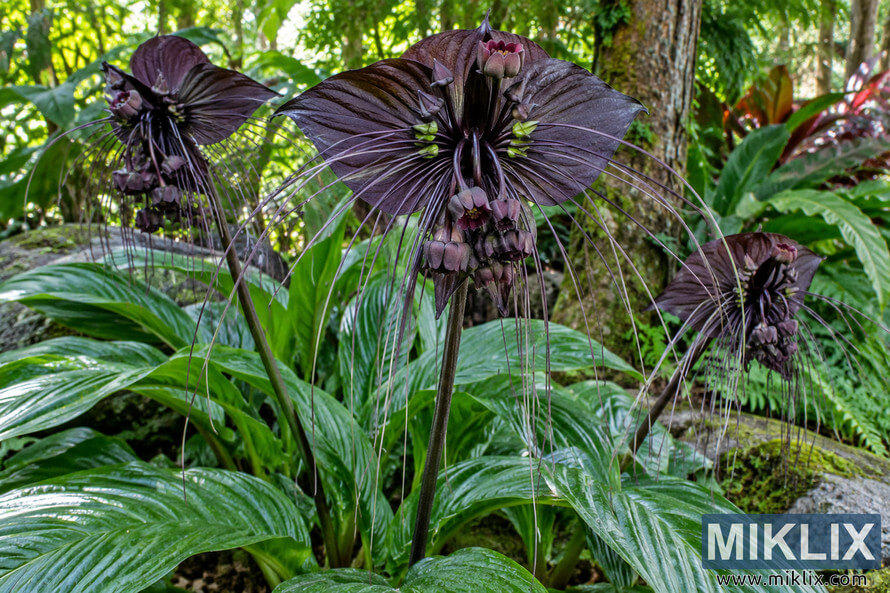
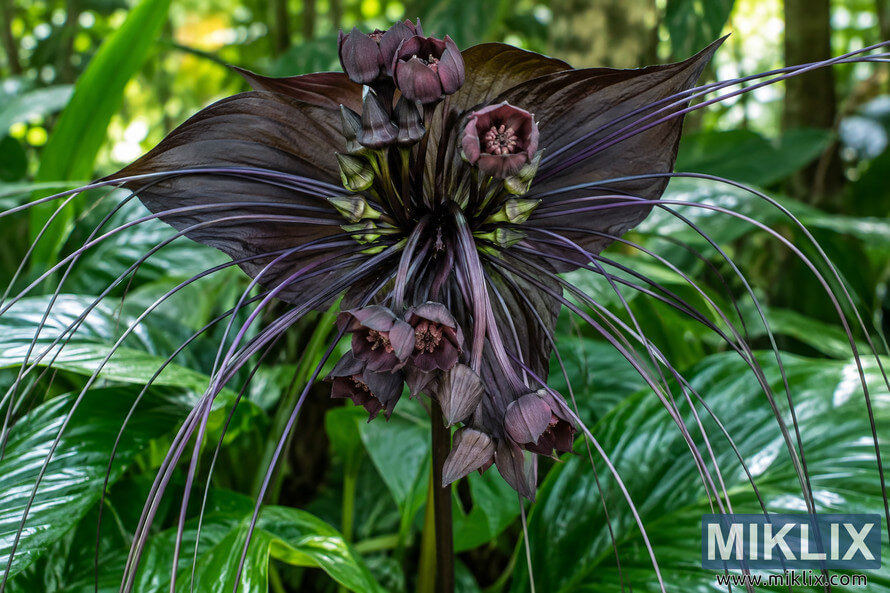
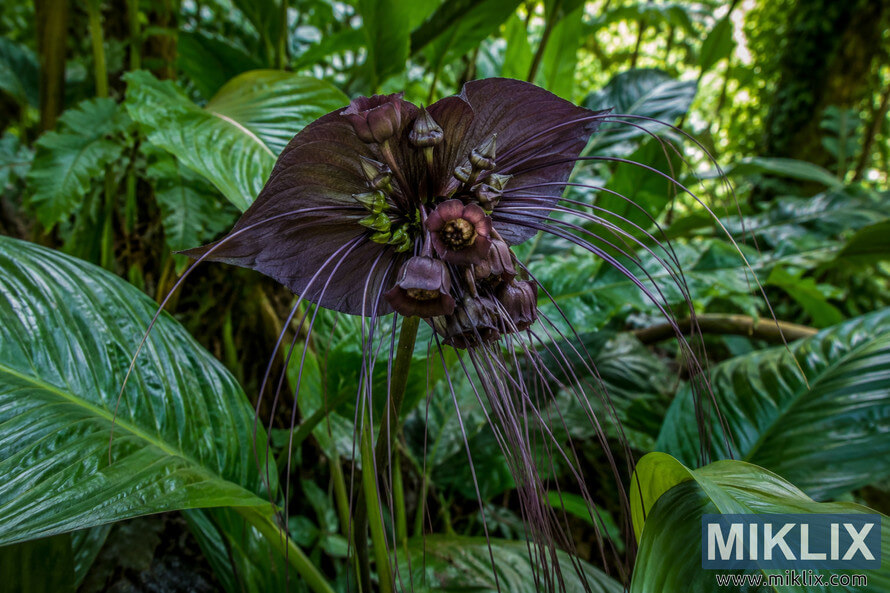
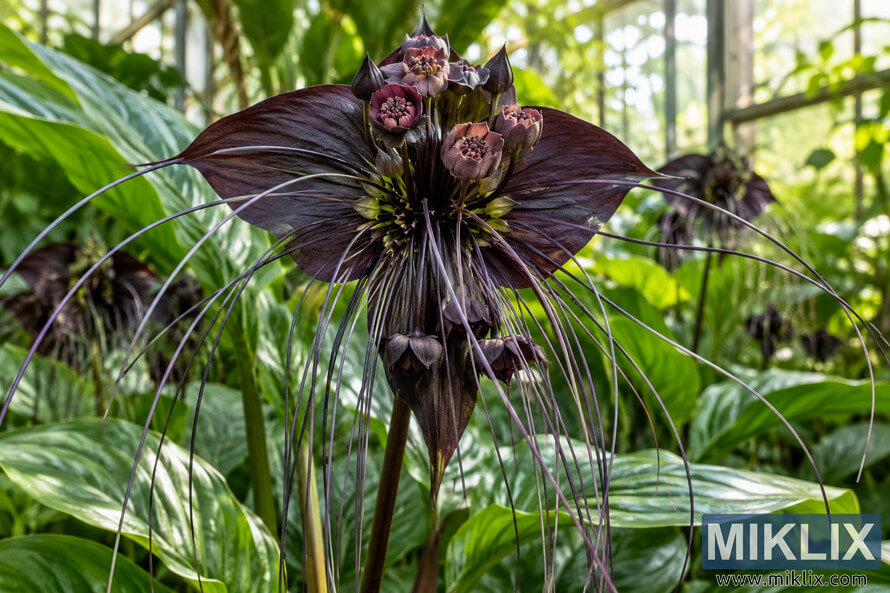
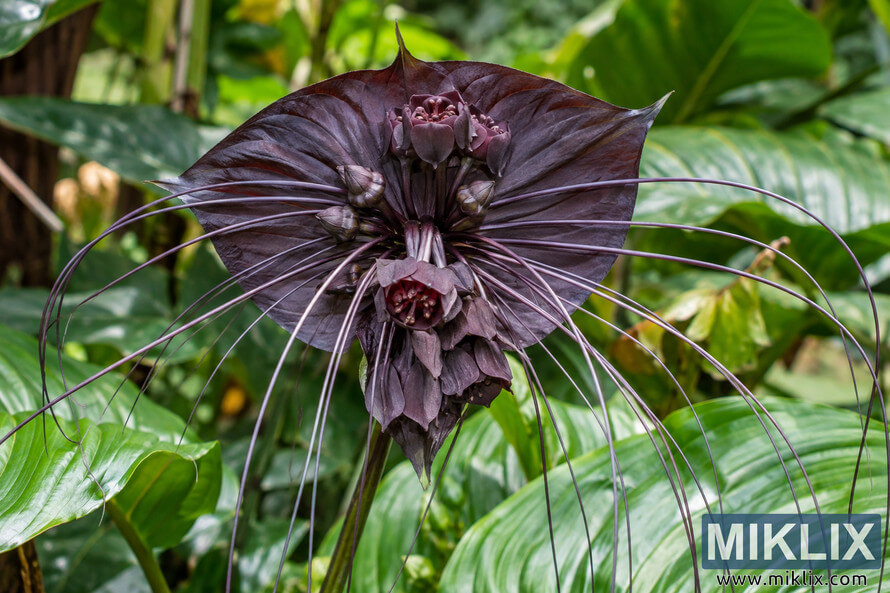
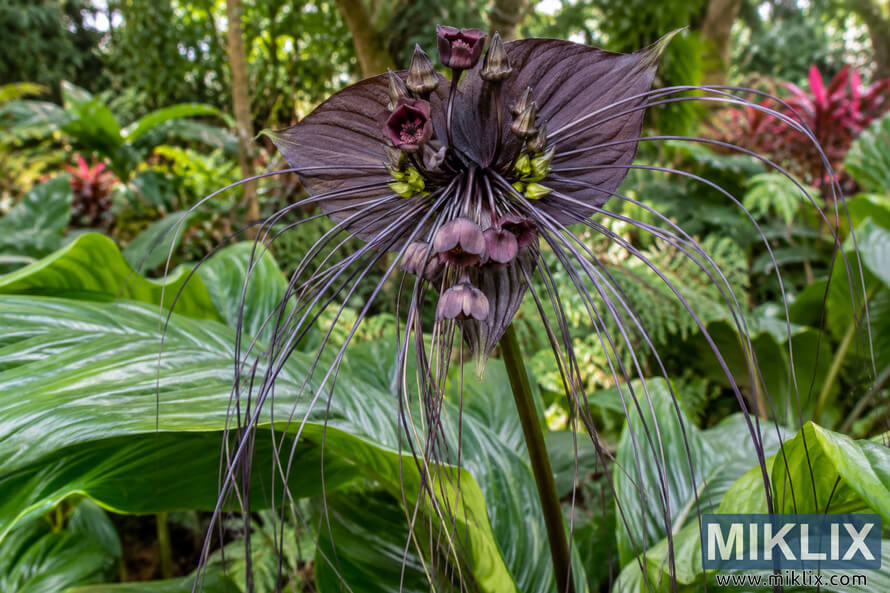
The bat flower is a tropical perennial in the Tacca family. Tacca chantrieri is often called the black bat plant because its large bracts resemble flying bats. Fine, threadlike bracts hang below the main flowers.
The plant grows from underground rhizomes. Its glossy leaves form a low clump, while blooms rise above the foliage on tall stems. Tacca integrifolia, sometimes called the white bat, has pale bracts and a similar shape.
The black bat is distinctive, but it is not a low-maintenance houseplant. Think of it as a moisture-loving tropical plant with specific conditions.
Click or tap the image for more information and higher resolutions.
Climate, Hardiness, and the Best Growing Regions
In the United States, bat flower is best outdoors in USDA hardiness zones 10 through 12. In cooler regions, grow it in containers, a greenhouse, or indoors near bright filtered light. Protect the plant from cold drafts and sudden temperature changes.
Ideal temperatures stay near 65 to 85°F during active growth. Avoid temperatures below 55°F. The plant may slow down in fall, but cold, wet soil can damage the rhizomes.
Light and Shade Requirements
Give the bat flower bright, indirect light or gentle morning sunlight. Deep shade can reduce growth and delay blooms. Strong afternoon sunlight may scorch the leaves, especially when the air is dry.
Outdoor plants do well under tall trees, on a covered patio, or beside a north- or east-facing wall. Indoors, place the pot near an east window or several feet from a bright south window. Rotate containers every few weeks for even growth.
A simple test helps: leaves should look firm and green, not bleached, crispy, or stretched toward one side.
Click or tap the image for more information and higher resolutions.
Humidity and Temperature for Healthy Growth
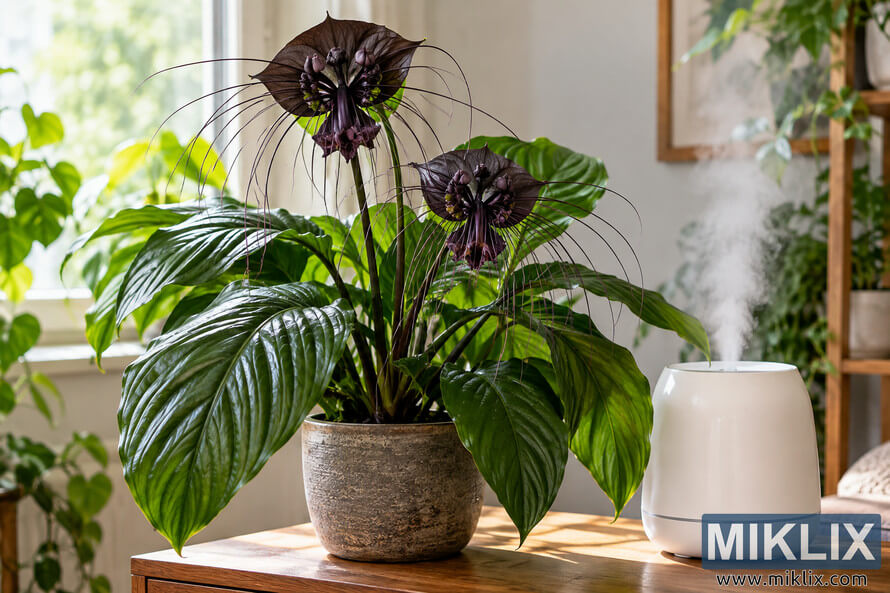
Humidity is central to bat flower care. Aim for 50 to 70 percent humidity, with gentle air movement. A humidifier is useful indoors, especially during winter when heating dries the air.
Set the pot on a pebble tray if needed, but keep the pot above the water line. Crowded, still air can encourage fungal problems, so leave space around the leaves. Avoid placing the plant beside a heater, air conditioner, or open window.
Use a humidifier for stable moisture rather than misting constantly. Stable humidity is easier for the plant and the gardener.
Click or tap the image for more information and higher resolutions.
Soil, Drainage, and the Right Pot
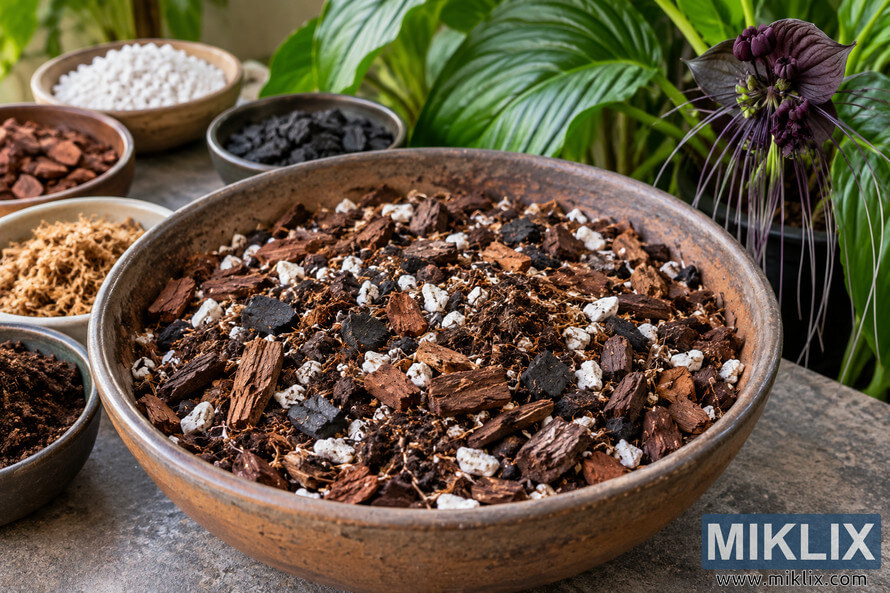
Use rich, loose, well-draining soil that holds moisture without becoming muddy. A useful mix contains two parts peat-free potting mix, one part orchid bark, and one part perlite. Add compost only when it is mature and clean.
Good drainage prevents rhizome rot. Choose a container with several drainage holes. Do not place the pot inside standing water after irrigation. Repot when roots fill the container or the mix breaks down.
The best soil feels airy and springy. If water stays on the surface for several minutes, improve the mix before planting.
Click or tap the image for more information and higher resolutions.
Watering and Feeding the Plant
Water when the top inch of soil begins to dry. Soak the mix fully, then let excess water drain. During spring and summer, this may mean watering once or twice each week, depending on heat and pot size.
Reduce watering in fall and winter, but never let the rhizomes become completely dry for long periods. Feed with a balanced, diluted fertilizer every four weeks during active growth. Stop feeding when growth slows.
Simple rule: moist soil is helpful; constantly wet soil is harmful. Always check the pot before watering.
How to Plant Bat Flower Step by Step
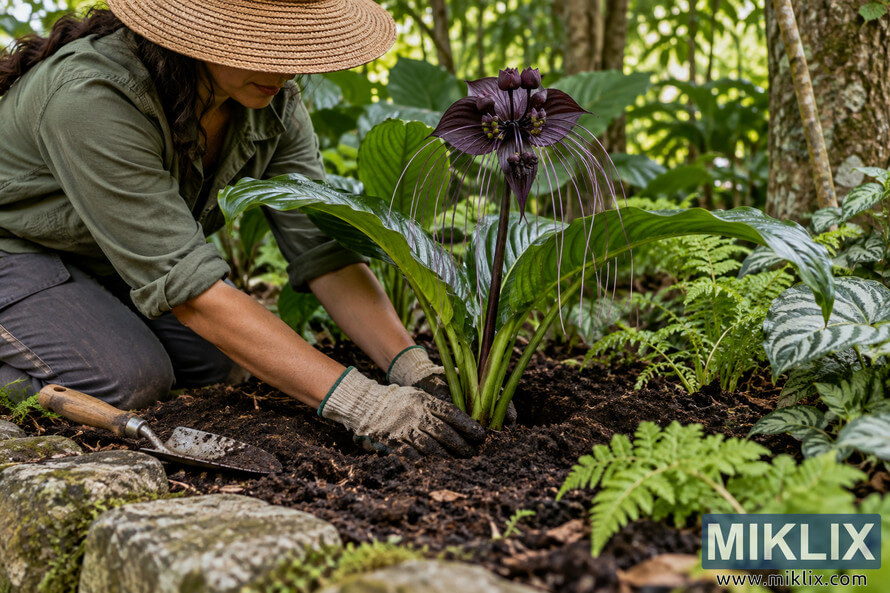
Plant outdoors in spring after the danger of frost has passed. Choose a sheltered site with shade, warmth, and good drainage. Dig a hole slightly wider than the root ball, set the plant at its original depth, and fill with loose soil.
- Moisten the plant before removing it from its pot.
- Loosen circling roots gently.
- Set the crown level with the soil surface.
- Water slowly until the soil settles.
- Add a thin mulch layer, keeping it away from the crown.
Click or tap the image for more information and higher resolutions.
Growing Bat Flower in Containers
Containers make bat flower care easier in zones below its hardiness range. Use a pot that is only a little larger than the root ball. Oversized containers hold excess water and can slow growth.
Move containers outdoors in spring after temperatures are stable. Bring them inside before cold fall nights. A container plant can remain indoors for winter if it receives filtered light, warm temperatures, and humidity.
Greenhouse and Indoor Growing
A greenhouse can provide the warmth and humidity this plant prefers. Use shade cloth to soften sunlight and provide a fan for air movement. Check plants often because warm, damp spaces also favor pests.
Indoors, keep the bat plant near bright filtered light. Grouping plants can raise humidity, but do not crowd them. Clean leaves gently with a damp cloth so light reaches the surface.
Click or tap the image for more information and higher resolutions.
Repotting and Propagating by Rhizomes
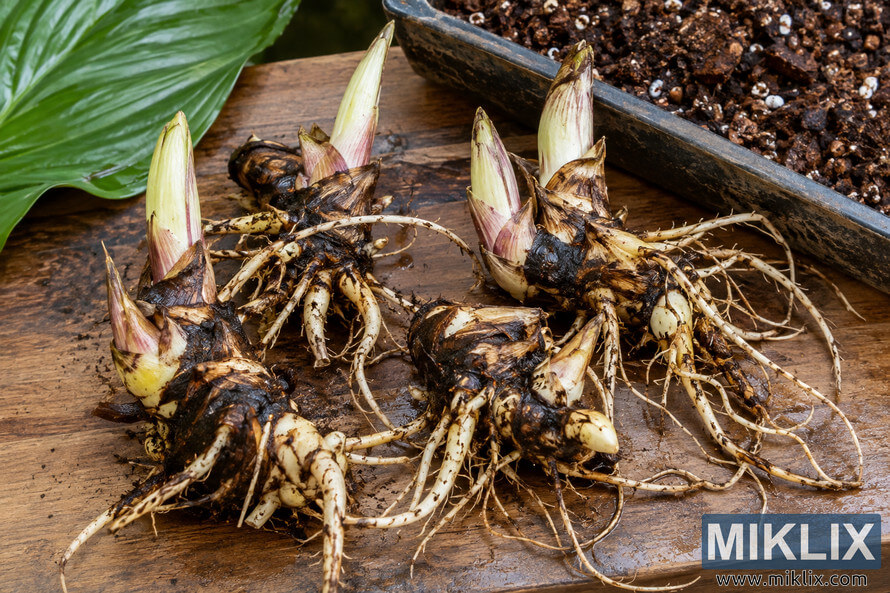
Repot in spring early, before strong new growth begins. Slide the plant out, inspect the rhizomes, and remove soft or damaged sections with a clean knife. Replant healthy pieces in fresh, well-drained soil.
Propagation is usually done by division. Each section needs a firm rhizome and at least one growing point. Keep new divisions warm and lightly moist. New growth may take several weeks.
Click or tap the image for more information and higher resolutions.
Flowering, Blooms, and Seasonal Care
With good care, mature plants may bloom from spring early fall, with flowers appearing in waves. Bright filtered light, steady moisture, warm temperatures, and regular feeding support bloom formation.
Do not move the plant repeatedly when buds appear. Flowers can last for weeks, but dry air or sudden temperature changes may shorten their display. Remove spent flowers after they fade.
A lack of flowers is often linked to low light, cool temperatures, a young plant, or irregular moisture.
Click or tap the image for more information and higher resolutions.
Pruning and Routine Maintenance
Bat flower needs little pruning. Remove yellow or damaged leaves at the base with clean scissors. Cut spent flower stems after blooming so the plant can focus on leaves and rhizomes.
Wipe dust from leaves and inspect under them every week. Turn containers for balanced growth. Refresh the top layer of soil in spring if repotting is not yet needed.
- Use clean tools for every cut.
- Remove fallen leaves from the soil.
- Keep mulch away from the crown.
- Check drainage after heavy rain.
Common Pests and Diseases
Spider mites, aphids, mealybugs, and scale may appear when conditions are dry. Rinse foliage with a gentle stream of water, isolate affected plants, and treat with insecticidal soap as directed on the label.
Root and rhizome rot usually results from poor drainage or excessive watering. Brown spots may point to wet leaves, weak air movement, or fungal stress. Remove affected tissue and correct the growing conditions before applying any treatment.
Always follow the product label. Test sprays on a small leaf area first, especially indoors.
Troubleshooting Yellow Leaves and Poor Growth
| Symptom | Likely cause | Useful action |
| Yellow leaves | Wet soil, low light, or age | Check drainage and move to filtered light |
| Soft crown | Rhizome rot | Remove damaged tissue and replace wet soil |
| Poor growth | Cold, dry air, or weak light | Raise humidity and stabilize temperatures |
| No flowers | Young plant or low light | Give warmth, filtered light, and patience |
Winter Protection and Pet Safety
Before early fall temperatures drop, move container plants indoors or into a heated greenhouse. Reduce water as growth slows, but keep the soil slightly moist. Resume regular feeding in spring when new leaves appear.
Specific toxicity data can vary by source, so treat the plant as unsuitable for eating. Keep leaves, flowers, and rhizomes away from children and pets. Ask a veterinarian or poison-control service if an animal chews the plant.
Final Checklist for a Healthy Bat Flower
Grow bat flower in warm, humid conditions with bright filtered light, rich soil, and reliable drainage. Water when the surface begins to dry, feed during active growth, and protect the rhizomes from cold winter conditions.
Whether it grows in a shaded garden, containers, a greenhouse, or indoors, the plant rewards steady care. Begin with the right site, watch the leaves, and adjust one condition at a time. With patience, the black bat flower can become a memorable part of your garden.
Best practices
- Warm temperatures and high humidity
- Filtered light and well-drained soil
- Moisture without standing water
Avoid
- Cold drafts and harsh sunlight
- Soggy soil and crowded air
- Sudden changes during blooming
Click or tap the image for more information and higher resolutions.
Further Reading
If you enjoyed this post, you may also like these suggestions:
- A Complete Guide to Growing American Lotus in Your Own Garden
- A Guide to the Most Beautiful Clematis Varieties to Grow in Your Garden
- A Guide to the Most Beautiful Lavender Varieties to Grow in Your Garden