
A Complete Guide to Growing American Lotus in Your Own Garden
Published: October 9, 2026 at 10:23:36 PM UTC
American Lotus (Nelumbo lutea) brings large round leaves and warm yellow flowers to still water. It is beautiful, native to much of the United States, and more vigorous than many gardeners expect.
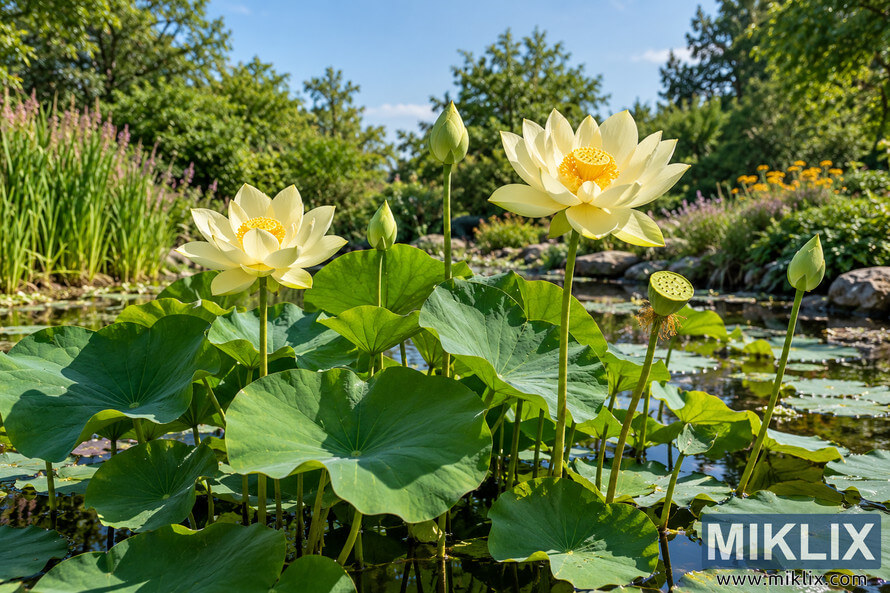
Click or tap the image for more information and higher resolutions.
Give this lotus room, sun, rich soil, and stable water. With the right setup, one healthy plant can become a long-lived feature in a pond or large container.
American lotus is also called yellow lotus. It grows from thick tubers and a spreading rhizome below the waterline. Best for sunny ponds and large water containers.
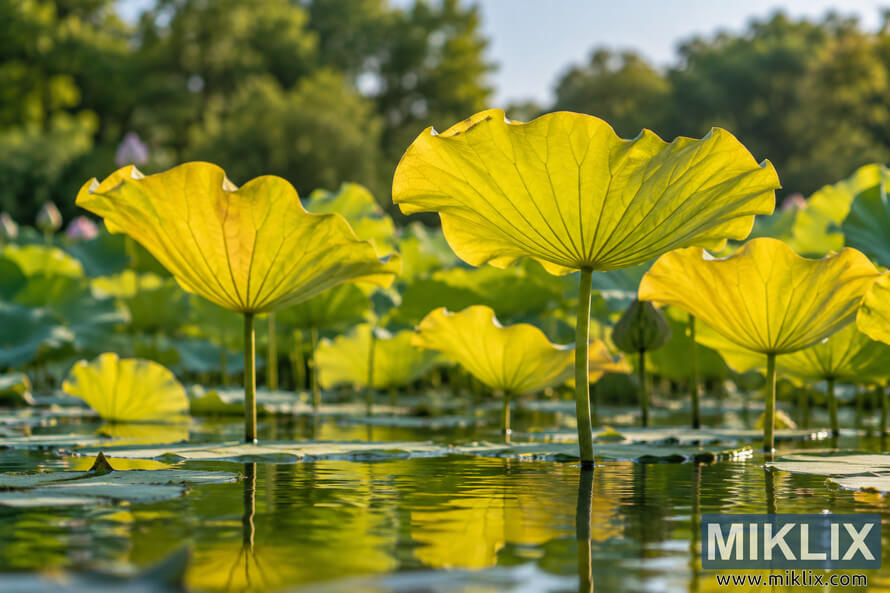
Click or tap the image for more information and higher resolutions.
The leaves may float at first. Later leaves emerge above the surface on firm stems. Expect strong growth during the warm season.
Flowers often appear after the plant has built a strong root system. New plants may need a full year to settle. Patience supports better flowering.
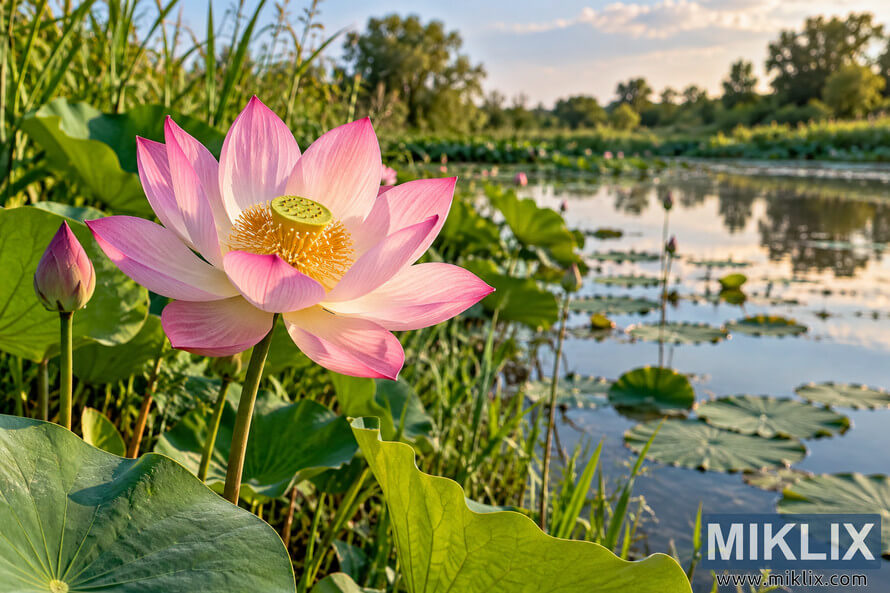
Click or tap the image for more information and higher resolutions.
Choose the right plant, seeds, and growing site
Understand size and hardiness
American lotus is a hardy perennial in much of the United States. Its exact winter behavior depends on local climate, water depth, and whether the rhizome freezes solid.
Choose a site with at least six hours of direct sun. Sheltered ponds are best. Strong shade creates weak leaves and fewer flowers.
Allow several feet of open surface for mature leaves. In a small garden, use a wide container rather than placing the plant directly into a pond.
Buy healthy material
- Select firm tubers with visible growing points.
- Avoid soft, cracked, dried, or foul-smelling rhizomes.
- Buy seeds from a reliable native plant source.
- Confirm that the species is suitable for your state and site.
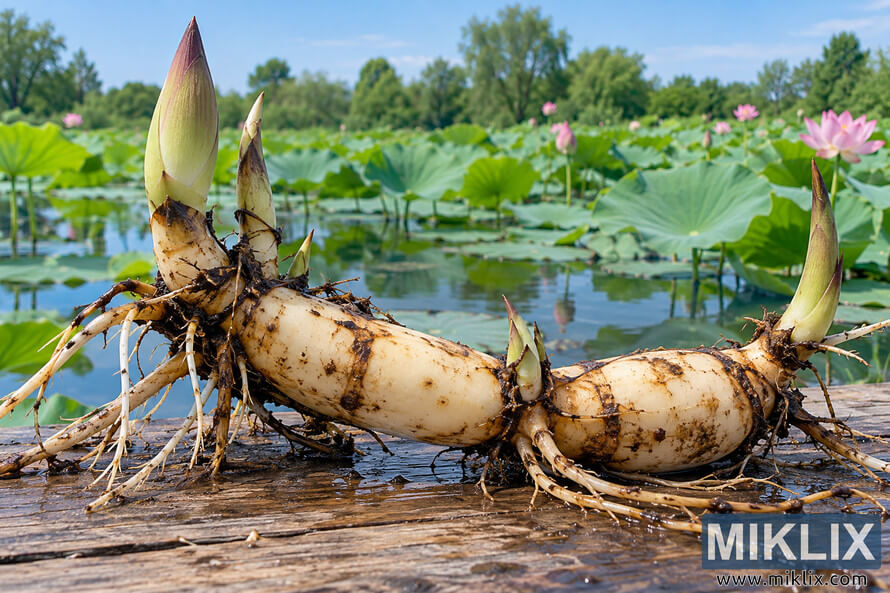
Click or tap the image for more information and higher resolutions.
Seeds can be viable for a long time because the hard seed coat protects the embryo. However, old or poorly stored seeds may fail. A living tuber gives faster results, while seeds offer a rewarding but slower project.
Handle tubers gently. The growing tips break easily and damage can stop growth.
Keep planting material moist, not submerged for long storage.
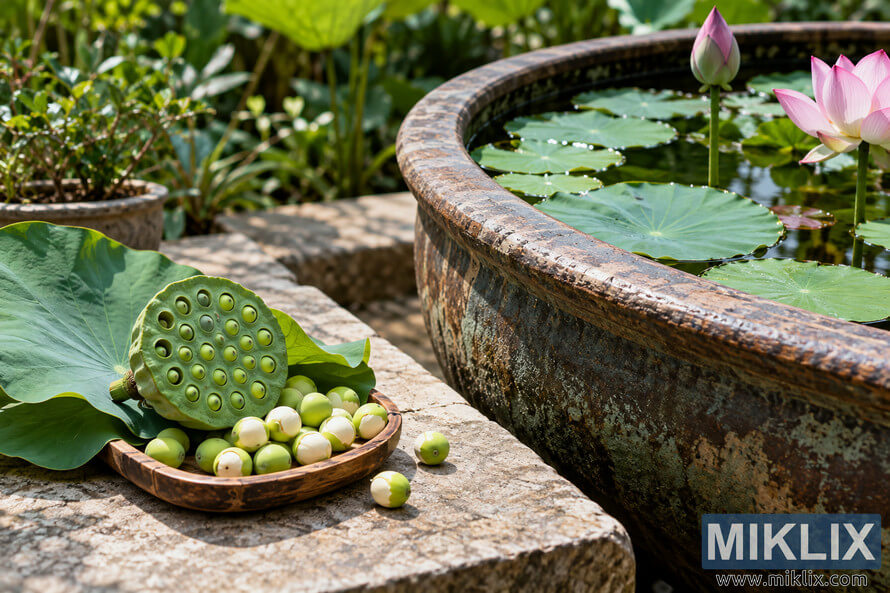
Click or tap the image for more information and higher resolutions.
Viable seeds are hard, dry, and free from mold. A dried seed should not be hollow or badly damaged.
Label seeds by source and date.
Pick a container without drainage holes. A wide pot gives rhizomes room to expand and reduces tipping.
Dark containers help warm the root zone.
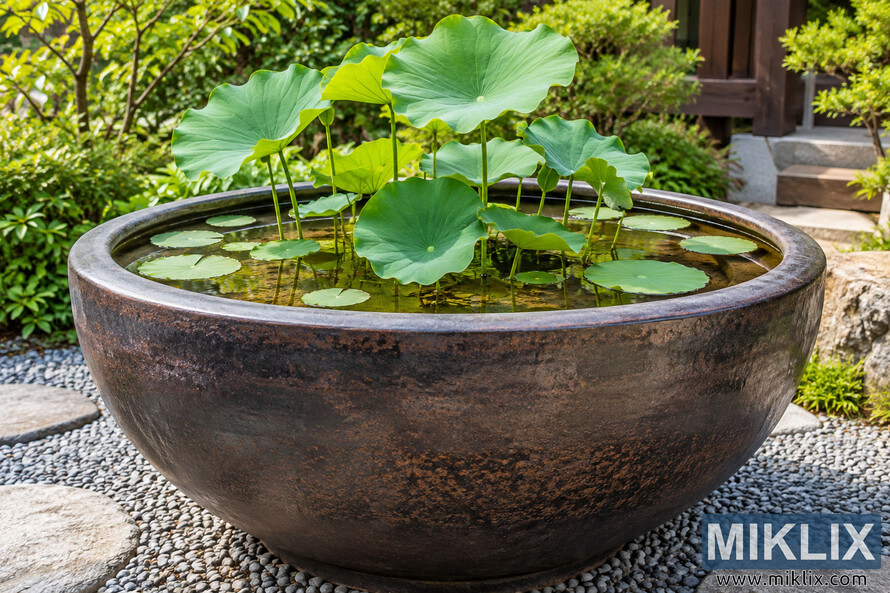
Click or tap the image for more information and higher resolutions.
Plant American Lotus correctly in water or containers
Prepare the soil and pot
Use heavy clay soil or loam. Do not use light potting mix, compost-rich media, or floating soil. These materials can rise into the water and encourage weak growth.
Fill the pot with several inches of soil. Set a tuber horizontally, with the growing tip slightly above the soil surface. Cover the body gently, but do not bury the tip deeply.
In ponds, place the container where the water depth is shallow at first. A depth of about 2 to 6 inches over the soil is a useful starting range. Increase depth as stems grow.
Manage light, water, and feeding
- Give the plant full sun for strong leaves and flowers.
- Keep water clean and mostly still. Avoid strong pump flow over new shoots.
- Maintain a stable water depth. Sudden changes can stress young plants.
- Feed only after active growth begins. Use fertilizer tablets made for aquatic plants.
- Press fertilizer into the soil away from the growing tip and follow the label.
Do not add garden fertilizer directly to the water. It can cause algae and harm fish or other pond life. Too much nitrogen may produce leaves without flowers.
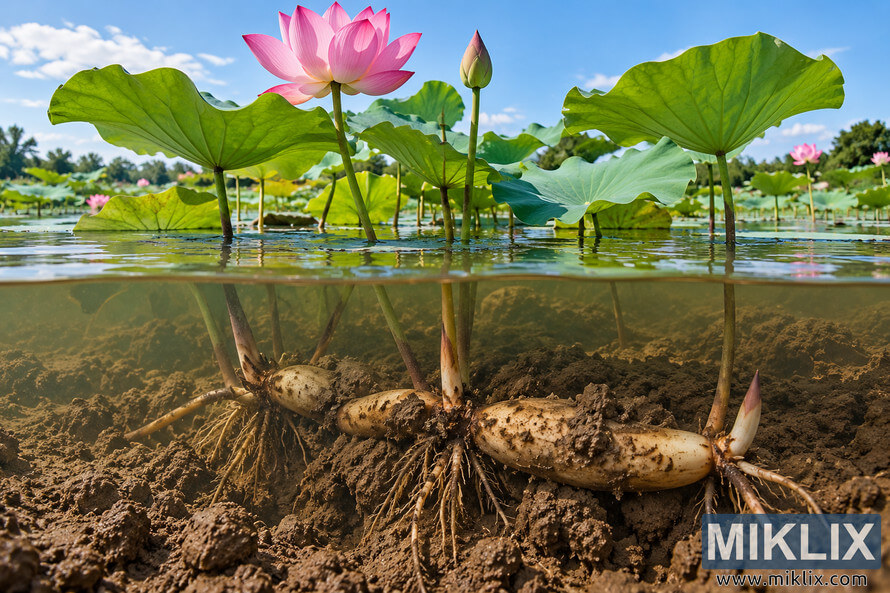
Click or tap the image for more information and higher resolutions.
The rhizome should rest securely in the substrate. Keep the tip exposed enough to grow upward.
Use heavy soil that stays in the pot.
As leaves emerge, raise the container or add water gradually. Young leaves should not be forced to grow through deep water.
Slow depth changes reduce stress.
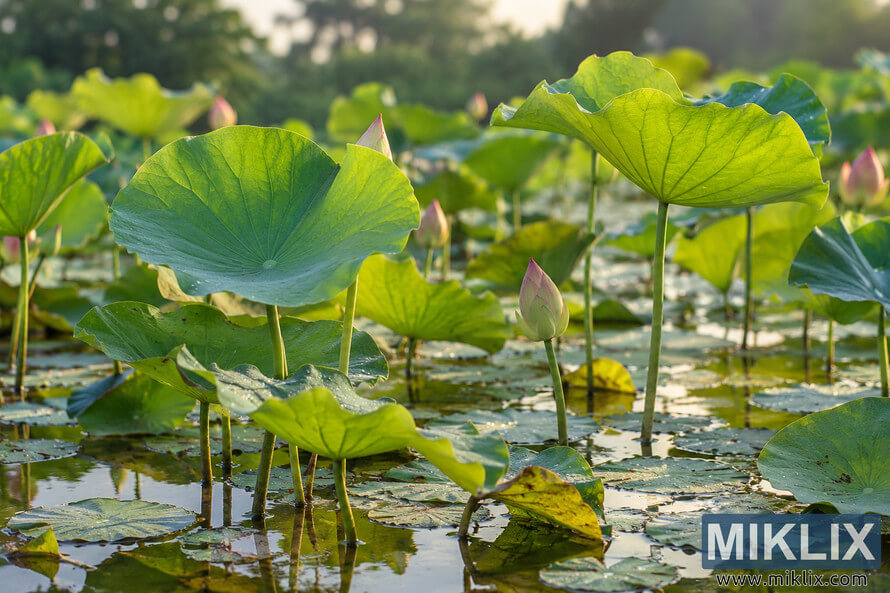
Click or tap the image for more information and higher resolutions.
Fertilizer belongs in the soil, not on the surface. Feed lightly during the growing season.
Stop feeding as growth slows in fall.
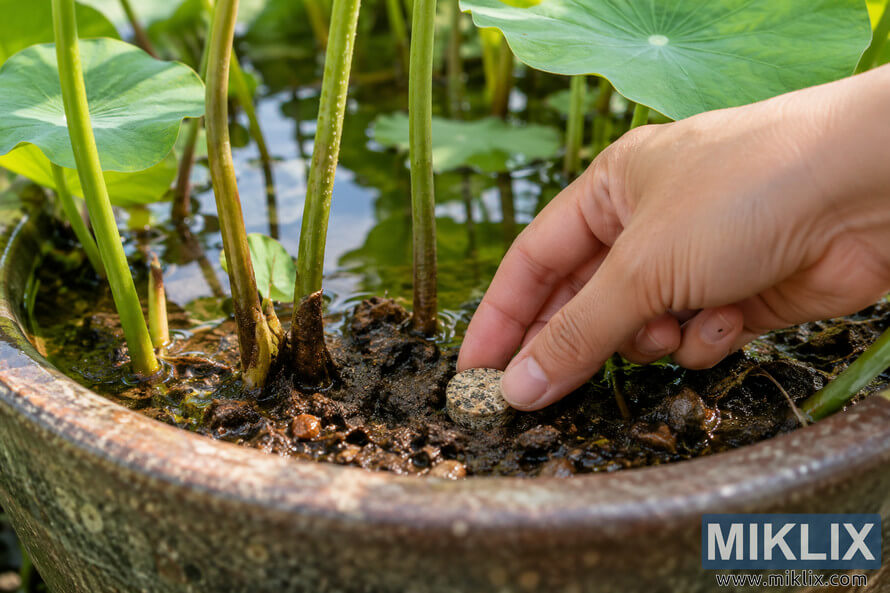
Click or tap the image for more information and higher resolutions.
Propagate, control spreading, and solve common problems
Grow from seeds
Lotus seeds have a hard seed coat. Carefully nick or file one small spot until a lighter inner layer appears. Do not cut into the embryo.
Place the seed in warm water. Change the water daily. Seeds germinate when kept warm and bright. Once a shoot and roots develop, move each seedling into shallow water over heavy soil.
Seedlings can grow quickly during the warm season. Protect them from drying out, cold nights, and curious animals.
Divide tubers safely
Divide rhizomes in spring when new growth begins. Each section needs a healthy growing point and enough attached tuber. Replant divisions immediately.
Never discard unwanted tubers in natural waterways. American lotus is a native plant, but moving it outside its natural range can still create ecological problems.
Address pests and weak growth
- Remove damaged leaves and inspect for aphids, caterpillars, or leaf-feeding insects.
- Improve sun and feeding practices when leaves are pale or stretched.
- Check planting depth when leaves fail to reach the surface.
- Reduce fertilizer when algae grows rapidly.
- Remove fallen leaves before they decay heavily in small ponds.
Seasonal care, overwintering, and practical expectations
Spring and summer
In spring, remove dead material and check the container for exposed rhizomes. Begin feeding only when new leaves are growing. Keep the water depth modest until stems strengthen.
During summer, watch for crowded leaves, water loss, and tipped containers. Flowers may open above the leaves in warm, sunny weather. Do not expect heavy flowering from every first-year plant.
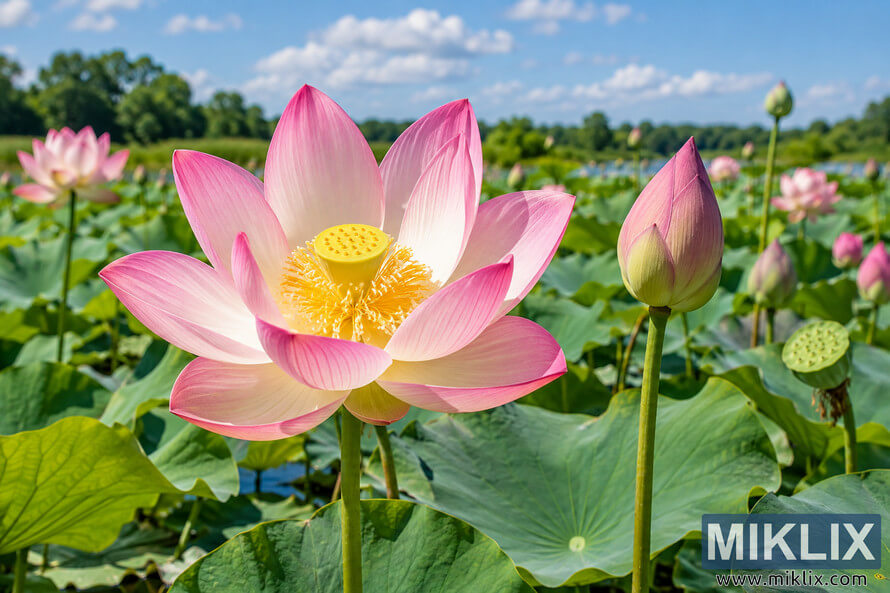
Click or tap the image for more information and higher resolutions.
Fall and winter
Stop fertilizer in fall. Allow natural dormancy as leaves yellow and collapse. In cold regions, lower the container to deeper water or move it to a protected area where the rhizome will not freeze solid.
Keep the soil damp during storage. Do not let the tuber dry out. Return the plant to brighter, warmer conditions in spring.
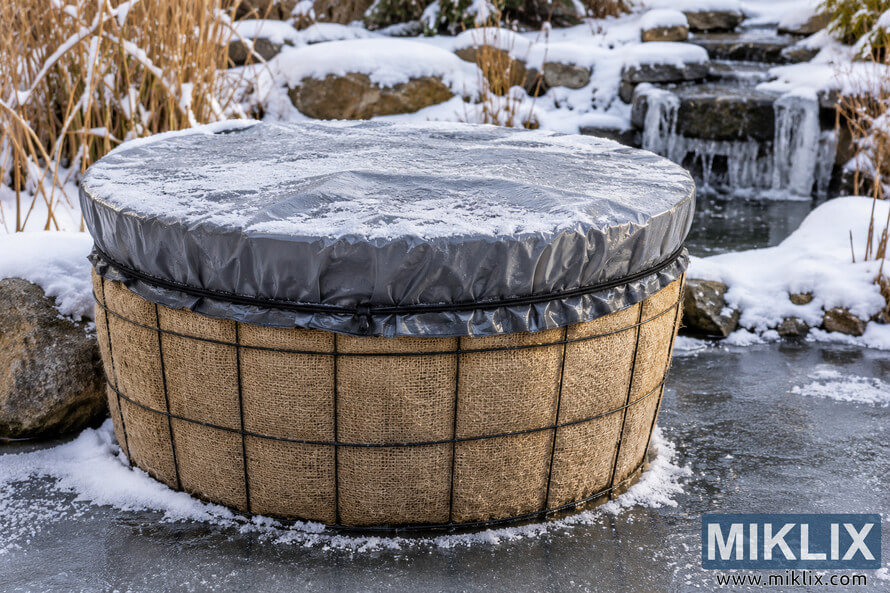
Click or tap the image for more information and higher resolutions.
How much space does American lotus need?
Plan for several feet of surface spread. A wide container is easier to control than an open pond planting.
Why are there leaves but no flowers?
Common causes include too little sun, excess nitrogen, young age, shallow roots, or a short growing season.
Can lotus grow in a pot?
Yes. Use a broad, strong pot with no drainage holes, heavy soil, shallow starting water, and full sun.
Is American lotus safe to plant?
Use responsibly. Confirm local guidance, contain the rhizomes, and never release plants or seeds into natural ponds.
Flowering is influenced by heat, light, plant age, and stable care. Good leaves are a useful first sign.
Give new plants time to establish.
Winter protection depends on climate. The rhizome must remain moist and protected from severe freezing.
Check local hardiness conditions before planting.
Containment makes maintenance easier and reduces unwanted spread into connected water. Responsible planting protects nearby habitats.
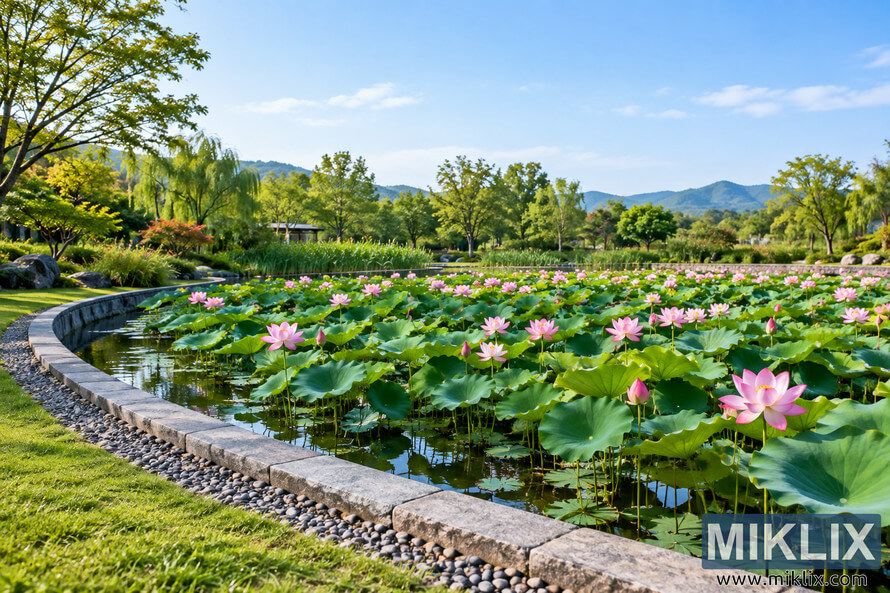
Click or tap the image for more information and higher resolutions.
American Lotus (Nelumbo lutea) rewards gardeners who plan for its size. Choose a sunny site, use heavy soil, control water depth, feed lightly, and protect the rhizome through winter. With patience and responsible containment, this native yellow lotus can become a lasting highlight of a home water garden.
Further Reading
If you enjoyed this post, you may also like these suggestions:
- A Guide to the Most Beautiful Varieties of Bleeding Heart to Grow in Your Garden
- A Guide to the Most Beautiful Sunflower Varieties to Grow in Your Garden
- 12 Beautiful Coneflower Varieties to Transform Your Garden