
A Complete Guide to Growing Chinese Lantern in Your Own Garden
Published: October 1, 2026 at 4:39:15 PM UTC
Chinese Lantern (Abutilon pictum) brings soft foliage and hanging, bell-shaped flowers to a patio, border, or bright indoor space. With the right light, rich soil, and steady moisture, this tropical shrub can flower for much of the warm season.
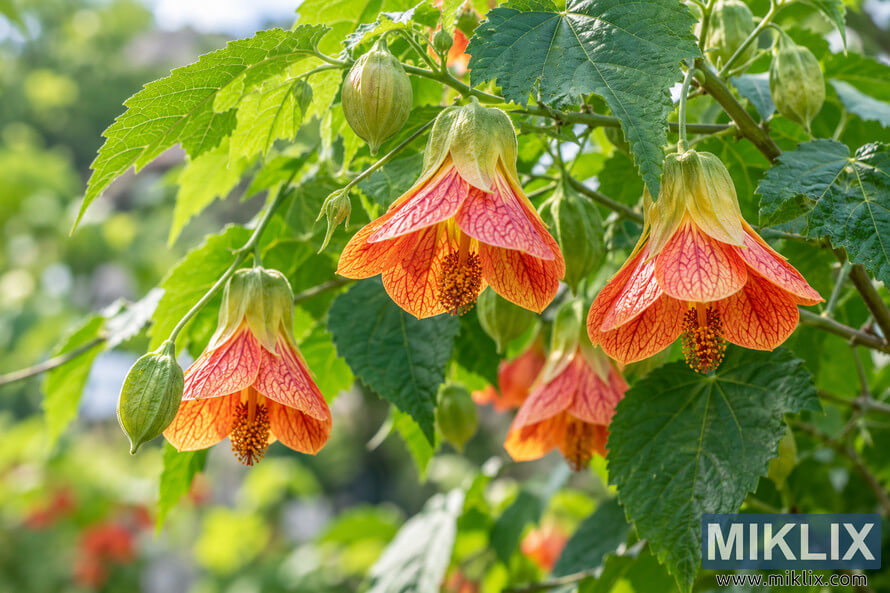
Click or tap the image for more information and higher resolutions.
This guide explains how to choose, plant, train, and protect it in a home garden.
Know the plant before you buy
Names and identity
The common name flowering maple refers to the maple-like leaves, not a true maple. The plant belongs to the genus Abutilon in the mallow family. Common names include redvein abutilon, red vein indian mallow, and chinese lantern. Some nurseries also list it as Abutilon striatum.
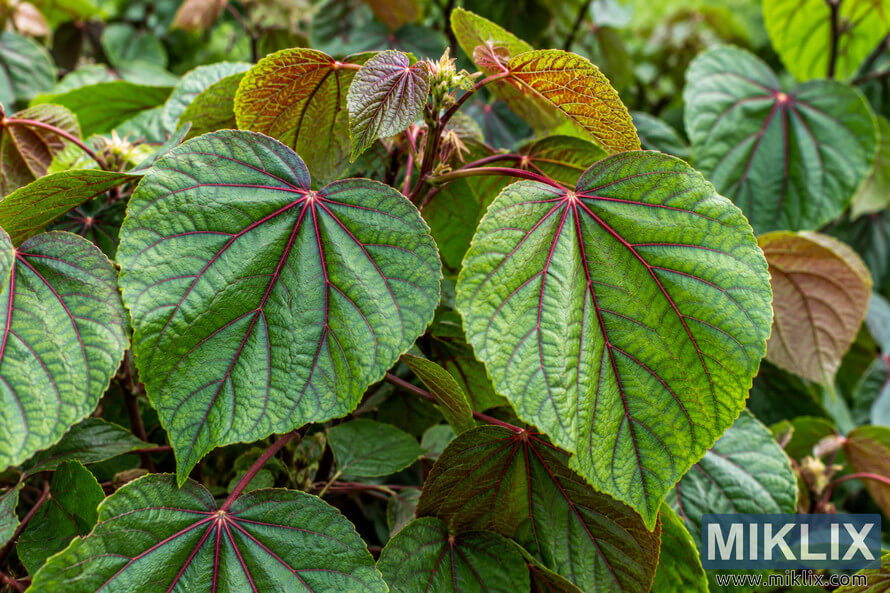
Click or tap the image for more information and higher resolutions.
What to look for
Choose a compact plant with firm stems, green leaves, and several unopened buds. Avoid plants with wilted tips, sticky leaves, webbing, or yellow patches. Check the root ball for a healthy white root system without a sour smell.
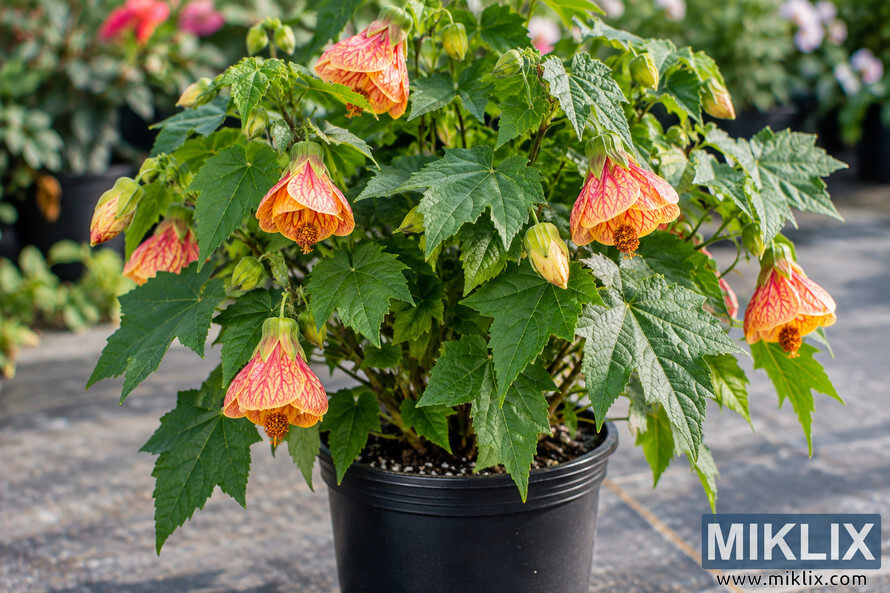
Click or tap the image for more information and higher resolutions.
Garden value
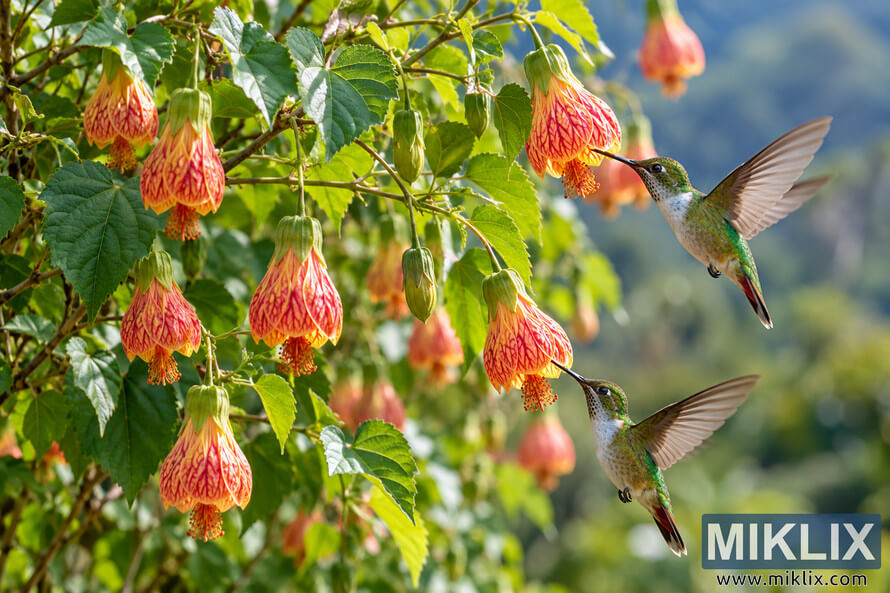
This evergreen shrub can act as a seasonal accent, a container specimen, or a sheltered border plant. Its flowers often attract hummingbirds. In warm climates, it may grow into a small shrub; in cold areas, treat it as a container plant.
Choose the right site, sun, and climate
Give abutilon bright light with protection from harsh afternoon heat. Morning sun and afternoon shade are ideal in hot climates. In mild areas, the plant can handle full sun if the soil stays evenly moist. Too much deep shade causes weak stems and fewer flowers.
Protect it from strong wind, frost, and cold, drying exposure. A sheltered porch, courtyard, or south-facing wall can extend the season. Before planting outdoors, check local frost dates and your USDA hardiness conditions.
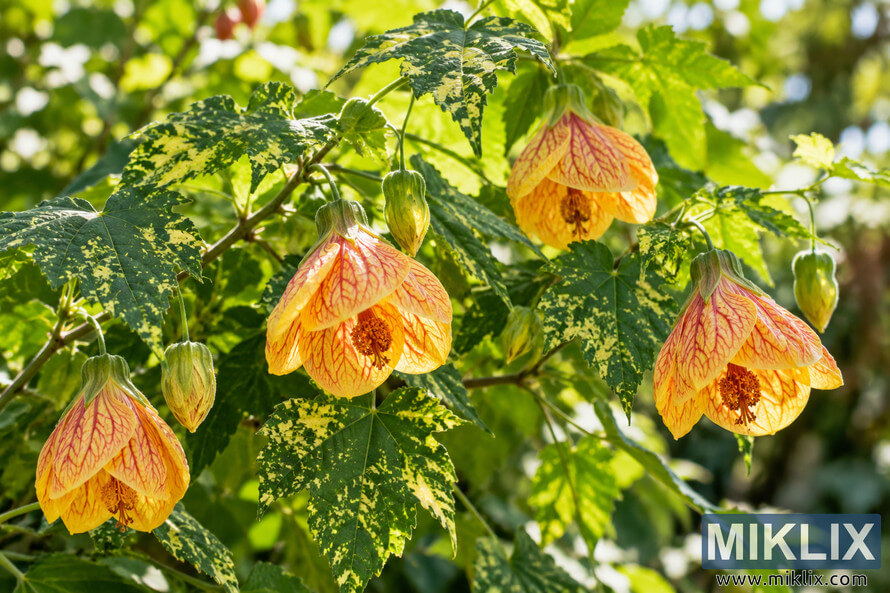
Click or tap the image for more information and higher resolutions.
Confirm your climate fit
Use a trusted regional reference before choosing an in-ground site. This is the most useful next step for gardeners in colder climates.
Prepare the soil and plant correctly
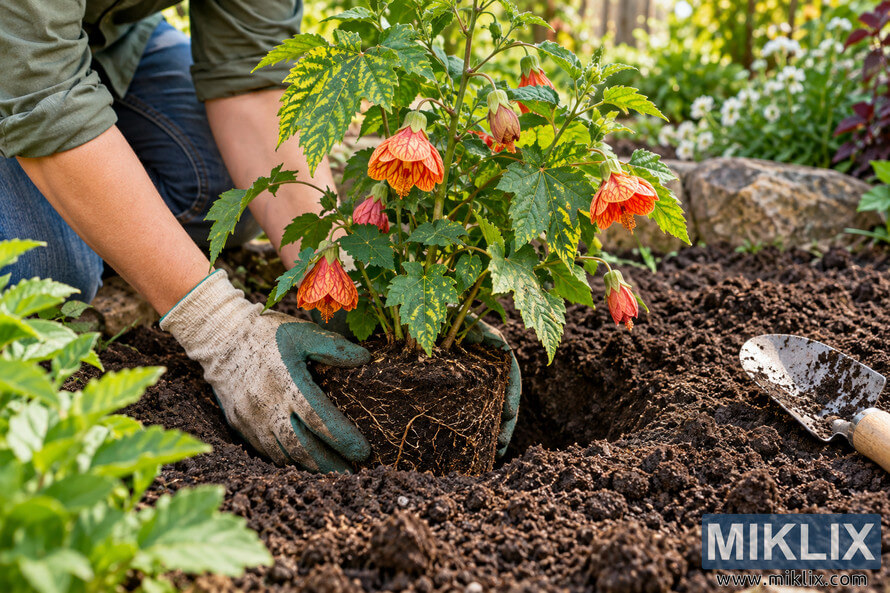
Use fertile soil that drains freely but holds moisture. Mix compost into poor soil before planting. Heavy clay needs better soil drainage, while very sandy soils benefit from compost and leaf mold. Do not place abutilon where water stands after rain.
- Dig a hole twice as wide as the root ball and no deeper than its original level.
- Set the plant so the top of the roots sits even with the surrounding soil.
- Backfill with the native soil, firming gently to remove large air pockets.
- Water slowly until the root zone is fully moist.
- Add a thin mulch layer, keeping it away from the stem.
- Space plants according to their mature size and airflow needs. Spring is the best planting time after frost danger passes. This gives roots time to settle before summer heat.
Click or tap the image for more information and higher resolutions.
Manage water, feeding, and sunlight
Water
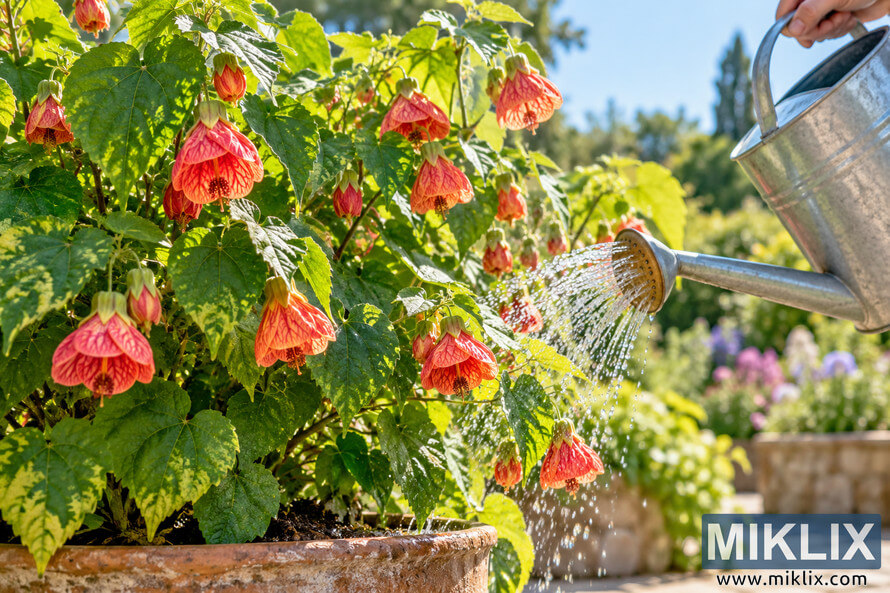
Keep the soil evenly moist during active growth. Water when the top inch feels slightly dry. Containers may need water daily during hot summer weather. Never let pots sit in a saucer of water.
- Water at the soil line.
- Use a drainage hole.
- Reduce water in cool winter conditions.
- Check moisture before every watering.
Feed and observe
Apply a balanced fertilizer in spring and repeat lightly during summer. Excess nitrogen creates leaves but fewer flowers. Watch the leaves: pale growth may signal poor nutrition, while scorched edges often point to heat or dry soil.
- Feed after watering.
- Follow the product label.
- Stop regular feeding in fall.
- Keep roots cool with light mulch.
Click or tap the image for more information and higher resolutions.
Prune, train, and propagate the plant
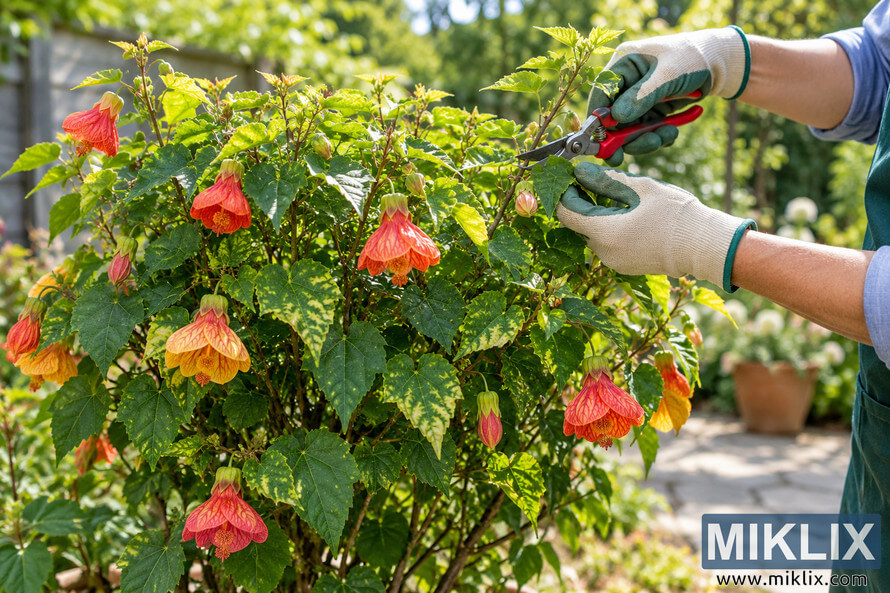
Prune in late winter or early spring before strong new growth begins. Remove weak, damaged, or crossing stems first. Then shorten long shoots by about one-third to encourage branching. Pinch soft growing tips during summer for a fuller form.
Train one strong stem for a small tree shape, or keep several stems for a bushy shrub. Tie branches loosely to a stake. Do not bind tightly, because stems expand quickly.
Propagate abutilon from softwood cuttings in late spring or summer. Take a healthy tip below a leaf joint, remove lower leaves, and place it in a clean, moist rooting mix. Keep cuttings warm in bright indirect light. New growth indicates successful rooting.
Click or tap the image for more information and higher resolutions.
Encourage flowers and control common problems
Good light, regular moisture, and light feeding support flowers from spring through summer. Remove faded flowers if you want a tidier display. Insects such as aphids, whiteflies, spider mites, and scale may gather beneath leaves.
- Rinse leaves with a gentle stream of water.
- Prune heavily infested tips.
- Use insecticidal soap only as directed.
- Improve airflow around the plant.
- Avoid wetting foliage late in the day.
Root rot is the main disease risk in poorly drained soils. Yellow leaves, soft roots, and persistent wilting often point to excess water. Improve soil drainage before adding more fertilizer.
Click or tap the image for more information and higher resolutions.
Grow flowering maple in containers and overwinter it
Container choice
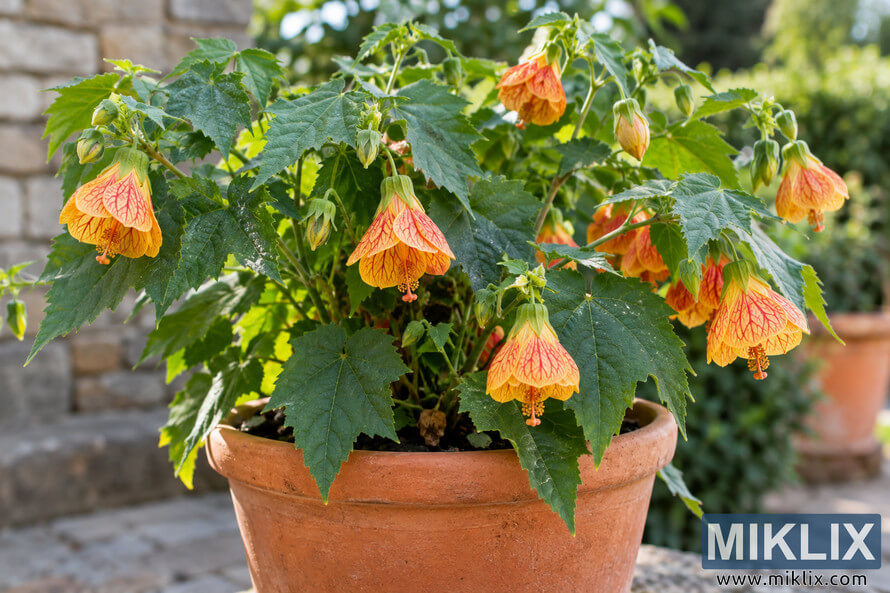
Choose a pot with drainage and only one size larger than the root ball. Oversized containers stay wet too long.
Click or tap the image for more information and higher resolutions.
Summer care
Check containers often, rotate them for even growth, and feed lightly while flowers form.

Click or tap the image for more information and higher resolutions.
Winter move
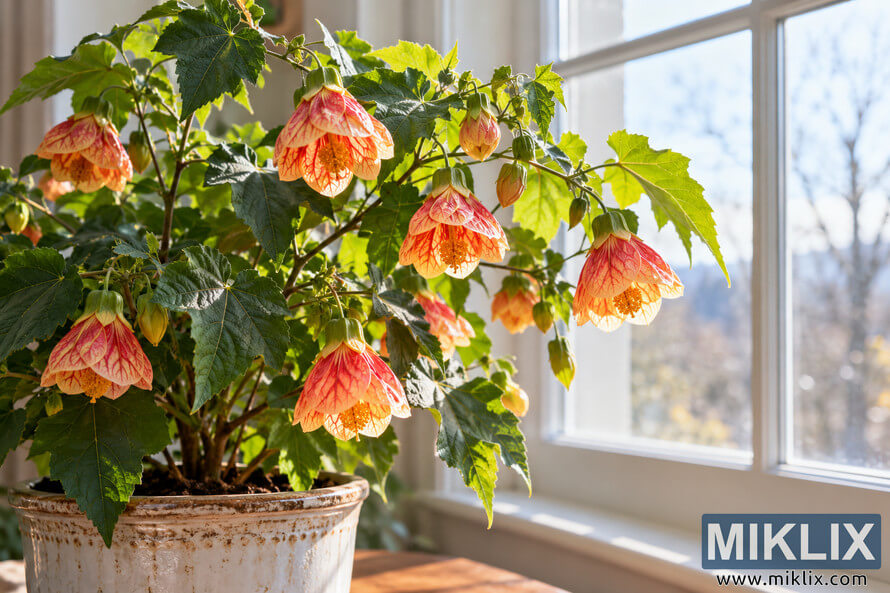
Before frost, inspect for pests and move the plant indoors. Give it bright light, cooler temperatures, and less water.
Prune lightly before moving containers inside. Avoid placing them beside hot vents. Some leaf drop is normal after a change in light, but severe decline usually means cold drafts, dry air, or overwatering.
Click or tap the image for more information and higher resolutions.
Follow a seasonal care plan and fix problems
| Season | Priority care | Watch for |
| Spring | Prune, repot, feed, and plant after frost. | Cold nights and weak new growth. |
| Summer | Water deeply, provide afternoon shade, and remove faded flowers. | Spider mites, wilt, and heat stress. |
| Fall | Reduce fertilizer and inspect plants before moving containers. | Early frost and wet soil. |
| Winter | Keep plants bright, cool, and lightly watered. | Dry air, drafts, and root rot. |
Few flowers: Move the plant to brighter light, avoid excess nitrogen, and check that the root zone is not constantly wet.
Leaf drop: Check for sudden temperature changes, poor light, pests, or watering swings before cutting the plant back.
Help Chinese Lantern thrive for years
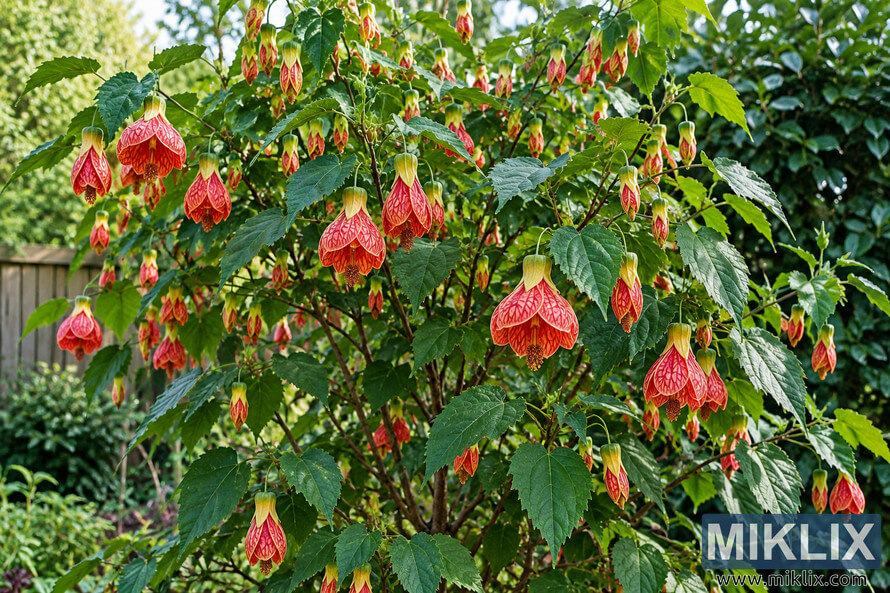
Success with Chinese Lantern (Abutilon pictum) comes from balance. Provide bright light, fertile soil, reliable drainage, and evenly moist roots. Prune to maintain airflow, feed lightly, and move container plants before frost. With seasonal attention, this flowering maple can remain a colorful feature in gardens and containers.
Click or tap the image for more information and higher resolutions.
Further Reading
If you enjoyed this post, you may also like these suggestions:
- A Guide to the Most Beautiful Varieties of Black-Eyed Susan to Grow in Your Garden
- 12 Stunning Delphinium Varieties to Transform Your Garden
- A Complete Guide to Growing Night-Blooming Cereus in Your Own Garden