
A Complete Guide to Growing Peruvian Daffodil in Your Own Garden
Published: October 25, 2026 at 4:07:36 PM UTC
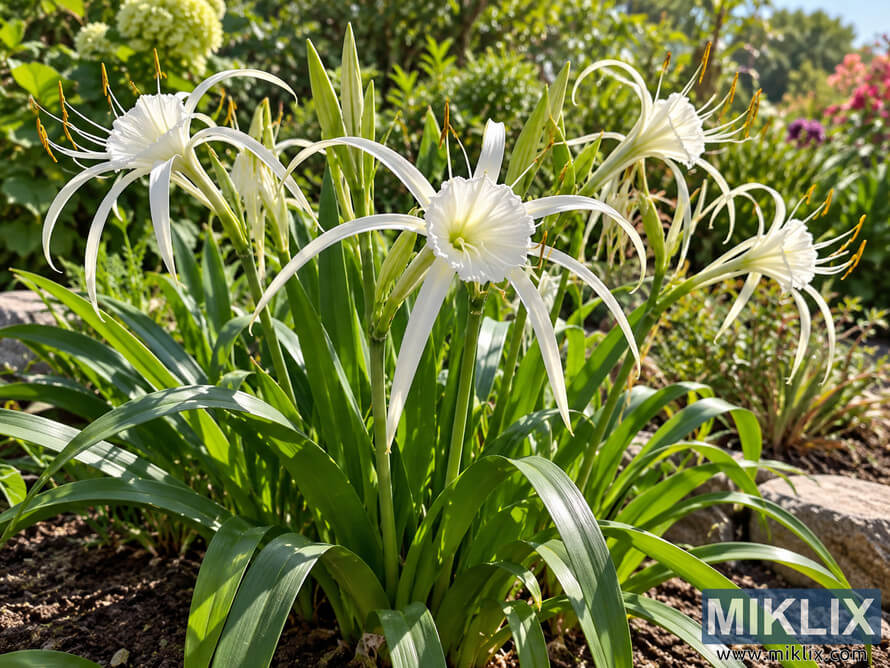
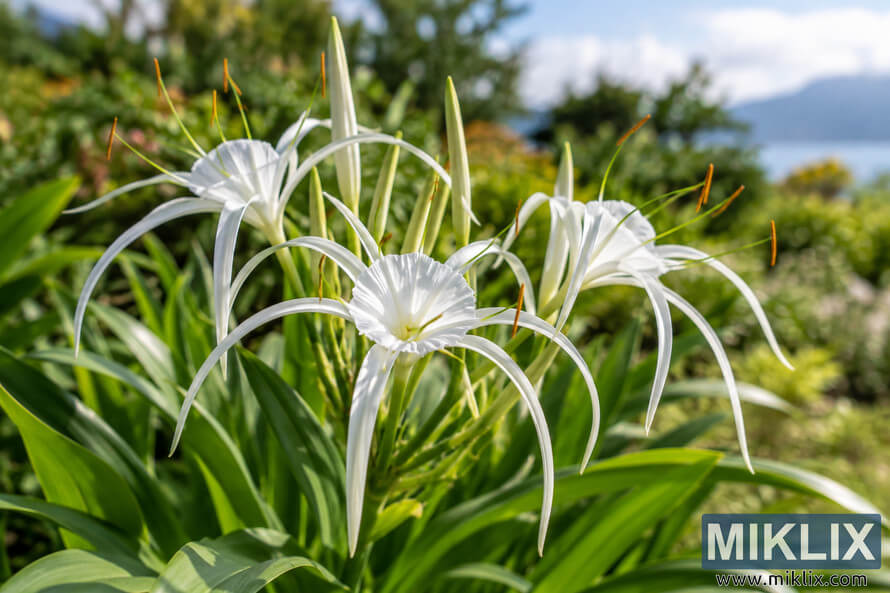
Growing Peruvian Daffodil (Hymenocallis spp.) can bring a strong fragrance and unusual summer flowers to a warm garden. The plant is not a true daffodil - Hymenocallis spp. are bulbous members of the amaryllis family, often called spider lilies or Peruvian daffodils.
Click or tap the image for more information and higher resolutions.
Its long, arching leaves frame white flowers with narrow petals and a central cup. With the right soil, light, and winter plan, this striking plant can return for years.
Know the Plant Before Growing Peruvian Daffodil
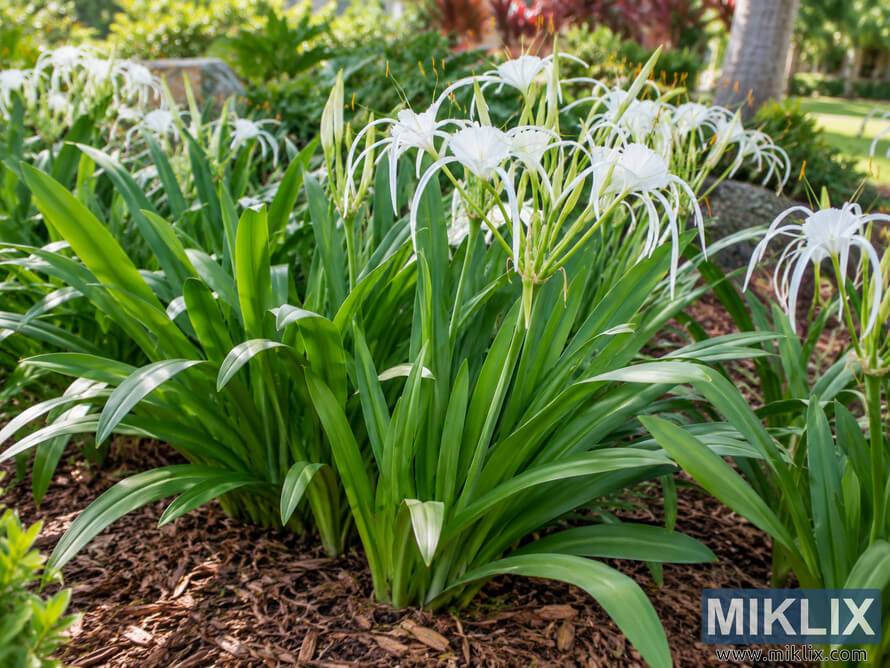
Peruvian daffodil plants grow from underground bulbs. Their foliage is usually strap-shaped, glossy, and green. Mature plants often reach 18 to 30 inches tall and spread about 12 to 18 inches, although size varies by species and growing conditions.
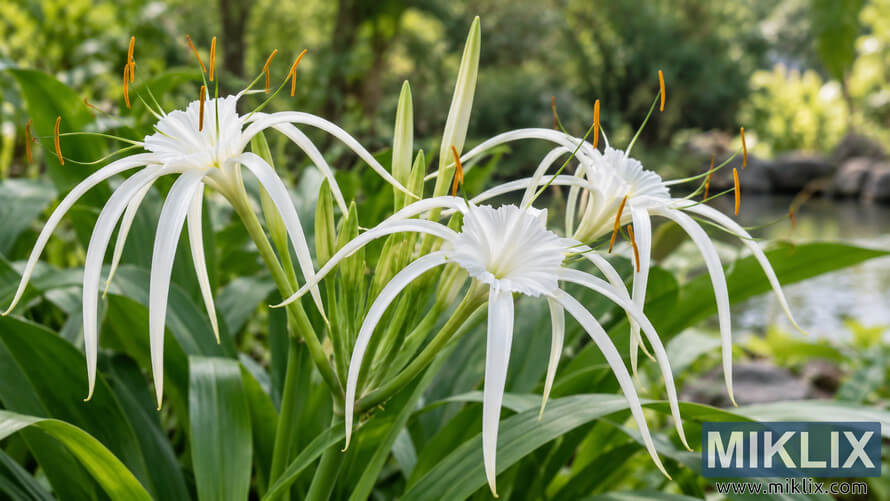
Flowers appear from late spring into early summer or summer. Each flower has a narrow, spider-like shape, a central trumpet, and a sweet fragrance. Blooming may last several weeks when plants receive enough light and steady water.
Many commonly sold forms perform best in USDA zones 8 through 11. In colder areas, keep plants in containers or lift the bulbs before freezing weather. Species and hybrids differ, so check the plant label and local extension information before planting.
Click or tap the image for more information and higher resolutions.
Peruvian Daffodil Is Not Narcissus
True daffodils belong to the genus Narcissus and usually tolerate much colder conditions. Hymenocallis has different foliage, flowers, and temperature needs. Both are grown from bulbs, but they should not be treated as the same plant.
Choose a Suitable Location
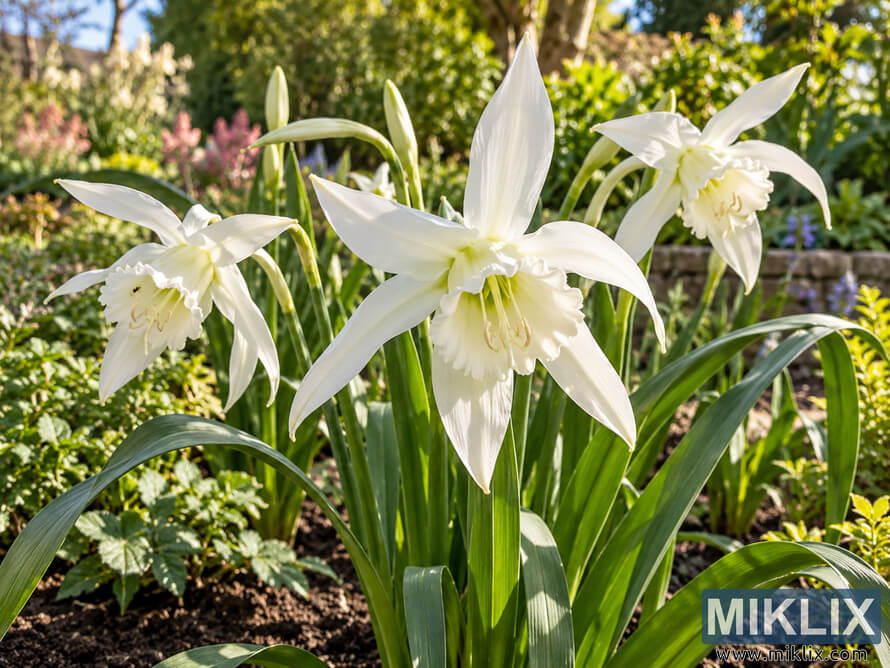
Select a warm, sheltered location with full sun for the best growth and flowers. In very hot areas, light afternoon shade can protect leaves. Morning sun and bright filtered light can work where intense heat is a problem.
A south-facing border, raised bed, patio container, or protected courtyard can be suitable. Avoid low spots where water collects. Good air movement helps leaves dry and lowers disease pressure.
Click or tap the image for more information and higher resolutions.
Planting, Soil, Water, and Fertilizer
Prepare the Soil
Hymenocallis prefers fertile soil that holds some moisture but drains freely. Improve heavy clay with compost and coarse organic matter. In sandy soil, add compost to improve moisture retention. Do not bury bulbs in constantly wet soil.
A slightly acidic to neutral soil is generally suitable. Remove stones and break up compacted areas before planting. A raised bed is useful in regions with heavy rain or slow drainage.
Plant Bulbs in Spring
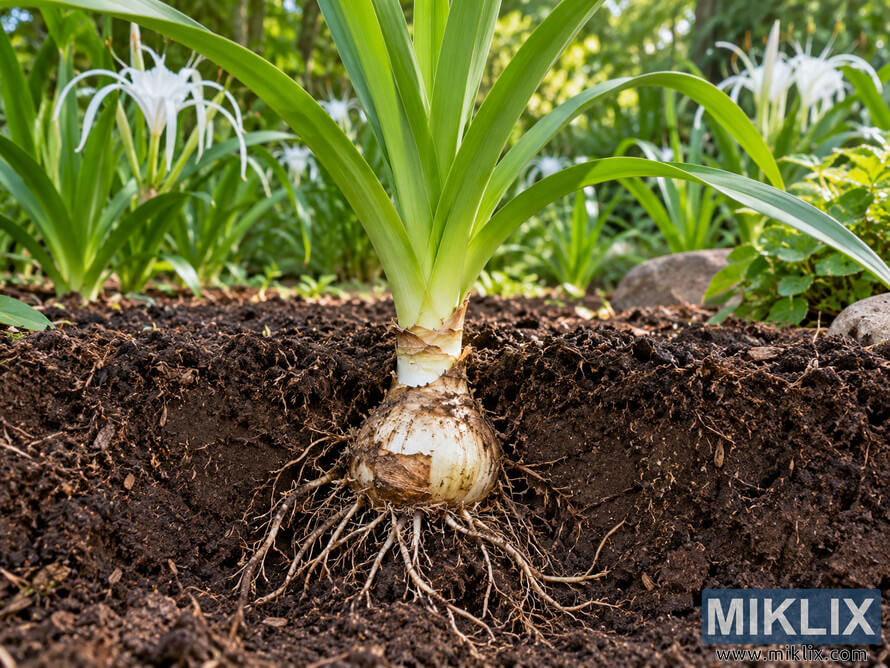
Plant bulbs in spring after the danger of hard frost has passed and the soil has warmed. Set each bulb with its growing tip upward. Cover it with about 2 to 4 inches of soil, following the instructions for the selected variety.
Space bulbs 8 to 12 inches apart. This gives leaves room to dry and allows offsets to develop. Water after planting to settle the soil, but do not leave the bed saturated.
Click or tap the image for more information and higher resolutions.
Use Containers in Small or Cold Areas
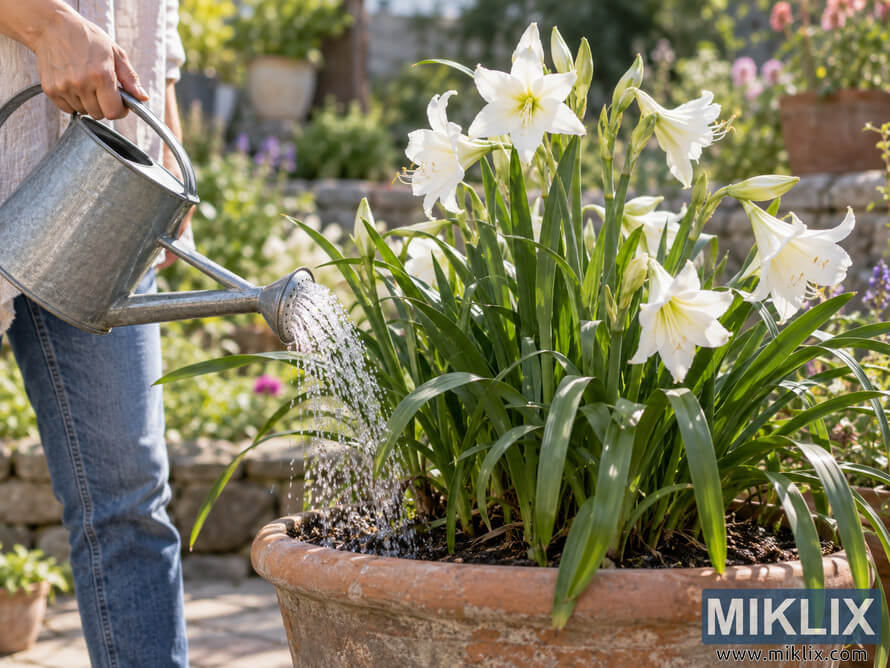
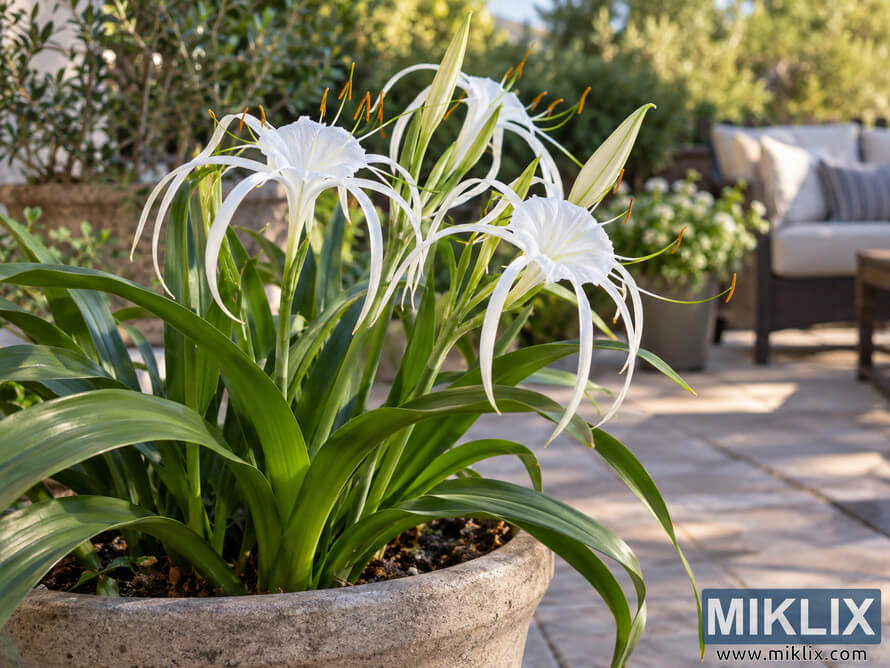
Choose a container with drainage holes and use a quality potting mix. Plant one large bulb per pot or leave enough space between smaller bulbs. Containers dry faster than garden soil, so check moisture often during active growth.
Move containers to a protected place before freezing weather. A sunny porch, greenhouse, or cool indoor area can protect the bulb during winter dormancy.
Water by Growth Stage
- After planting: Water when the upper soil begins to dry.
- Active growth: Keep soil evenly moist, never waterlogged.
- Flowering: Maintain steady moisture to support blooms.
- Dormancy: Reduce water sharply and keep bulbs almost dry.
Follow a Simple Feeding Schedule
Apply a balanced bulb fertilizer when shoots emerge in spring. Feed again near the start of flowering if the label permits. Avoid heavy nitrogen, which can produce leaves at the expense of flowers. Stop regular fertilizer as foliage fades.
Click or tap the image for more information and higher resolutions.
Maintenance, Propagation, and Winter Protection
Maintain Leaves and Flowers
Apply a thin mulch layer to conserve moisture and moderate soil temperature. Keep mulch away from the bulb neck. Remove spent flowers if you want a neater display, but leave healthy leaves in place until they turn yellow naturally.
Leaves collect energy for the next season. Cutting them while green can reduce future blooming. Once foliage has fully faded, remove it with clean shears.
Click or tap the image for more information and higher resolutions.
Propagate by Offsets or Division
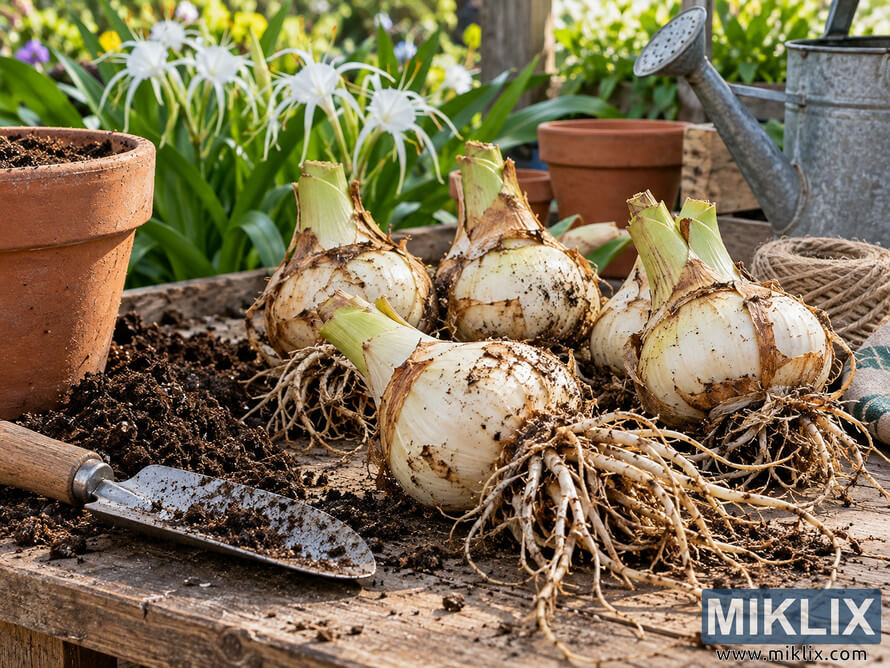
Established bulbs produce offsets over time. Lift the clump during dormancy or divide it when the soil is workable. Separate firm offsets with roots attached, then replant them at the same depth.
Some forms, including Hymenocallis festalis, may respond well to careful division. However, growth speed and flowering time vary. Small offsets can need several years before blooming.
Overwinter in Cold Climates
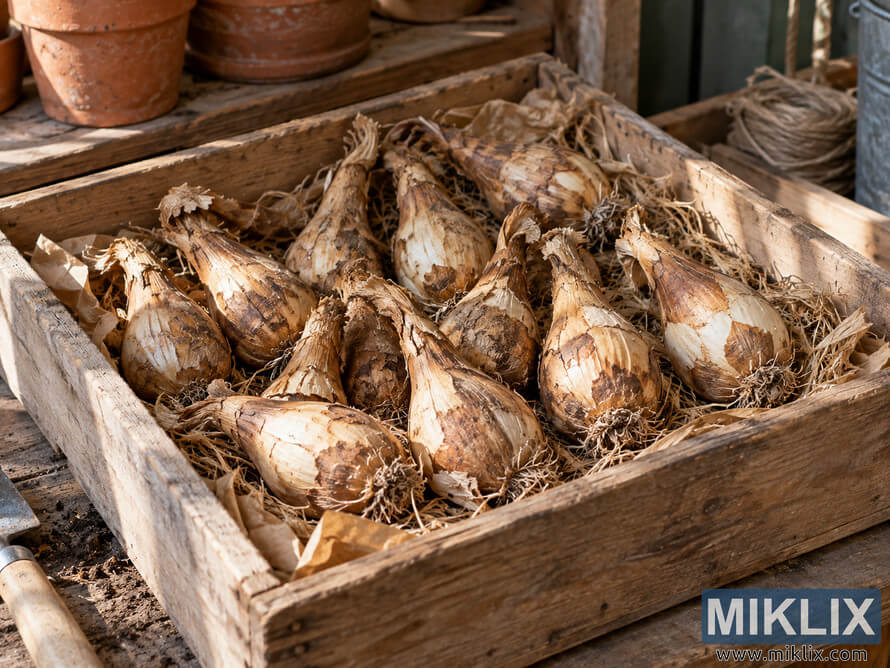
In zones colder than the plant’s recommended range, lift bulbs after frost threatens or after the leaves begin to fade. Dig carefully, brush away loose soil, and let bulbs dry briefly in a shaded, airy place.
Store bulbs in a cool, dry, dark location in a paper bag or ventilated box. Keep them away from fruit, excess moisture, and freezing temperatures. Inspect them during winter and discard any soft or rotting bulb.
Click or tap the image for more information and higher resolutions.
Troubleshooting, Safety, and Garden Design
Common Problems
Symptom
- Yellow leaves may signal dormancy, overwatering, or poor drainage.
- Root rot often causes soft bulbs and a foul smell.
- No flowers may result from low light, young offsets, or excess nitrogen.
Response
- Reduce water only when dormancy begins; otherwise check the roots and soil.
- Remove damaged tissue, improve drainage, and replant only firm bulbs.
- Provide more sun, feed lightly, and allow foliage to mature.
Pests and Disease Prevention
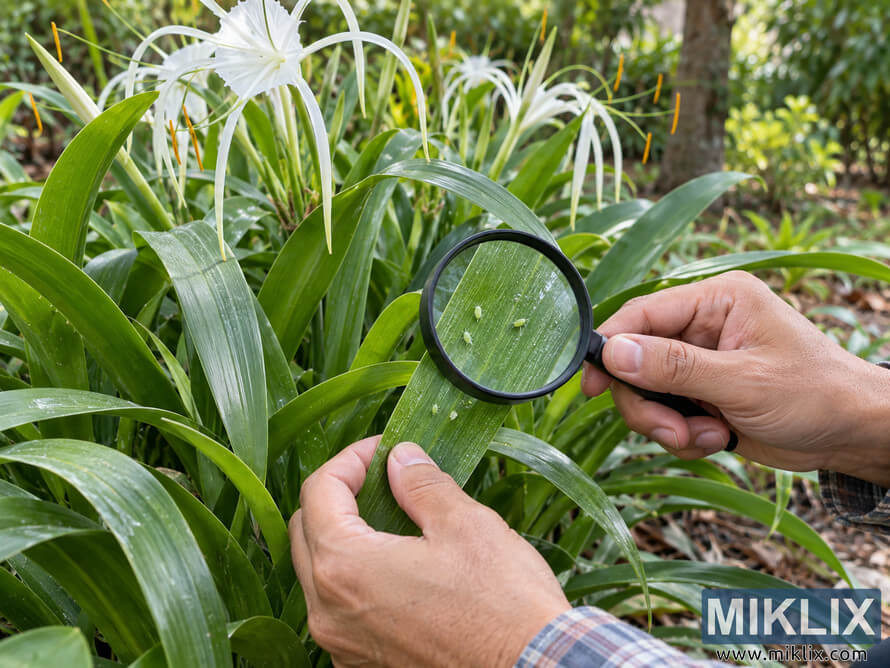
Watch for aphids, thrips, mealybugs, and bulb-feeding pests. Inspect new plants before placing them with established plants. A strong water spray can remove minor insect infestations. Use an appropriate labeled treatment when needed.
Good spacing, clean tools, sound bulbs, and careful watering help prevent fungal disease. Do not plant damaged bulbs or reuse soggy potting soil.
Click or tap the image for more information and higher resolutions.
Safety Around People and Pets
Hymenocallis bulbs and plant parts may be toxic if eaten. Keep bulbs away from children, dogs, cats, and other pets. Wear gloves when handling bulbs, wash hands afterward, and contact a medical or veterinary professional if ingestion is suspected.
Use the Plant in the Landscape
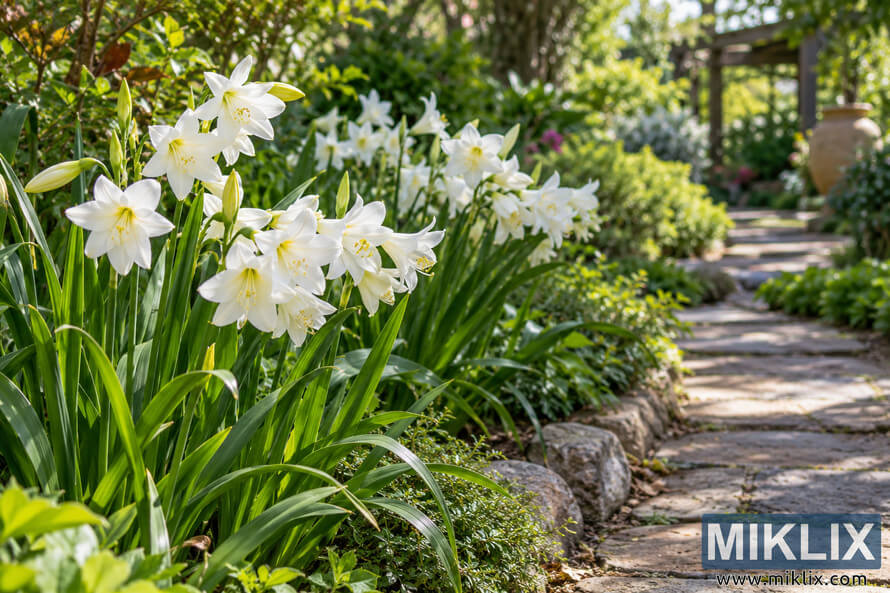
Plant Peruvian daffodils in groups along a border, near a path, or beside a patio where fragrance can be enjoyed. Containers make them useful for decks and small areas. Combine them with plants that enjoy similar light and moisture.
They can support a fragrance-focused garden and may attract visiting pollinators. Avoid crowding them with tall plants that block light or trap moisture around the leaves.
Click or tap the image for more information and higher resolutions.
Click or tap the image for more information and higher resolutions.
Seasonal Care Calendar
| Season | Care |
| Spring | Plant bulbs after frost, begin watering, and apply light fertilizer as shoots emerge. |
| Early summer | Maintain even moisture, enjoy flowers, remove spent blooms, and monitor pests. |
| Late summer | Let leaves mature, reduce feeding, and allow soil to dry gradually as growth slows. |
| Fall and winter | Lift bulbs in cold areas, store them dry, and protect outdoor plants from freezing weather. |
Click or tap the image for more information and higher resolutions.
Click or tap the image for more information and higher resolutions.
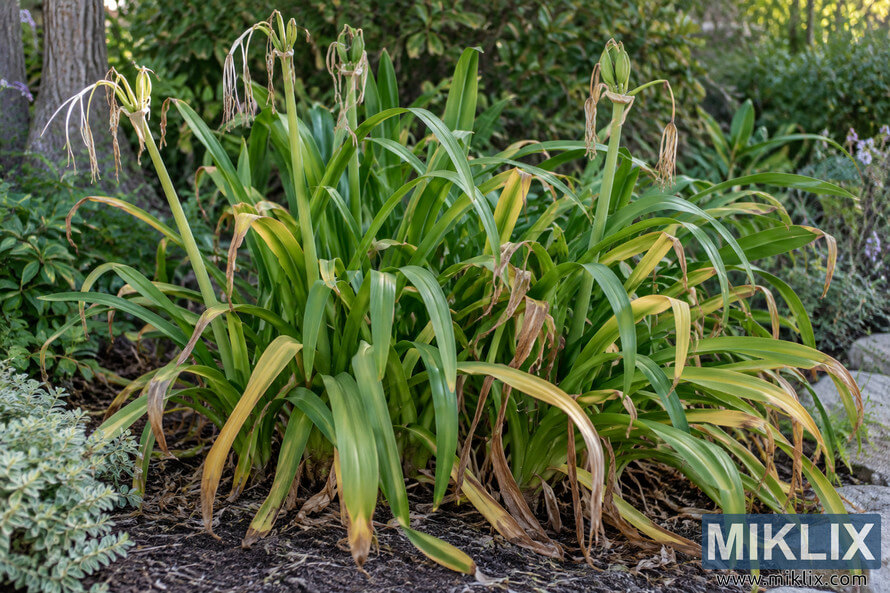
Click or tap the image for more information and higher resolutions.
Final Growing Checklist
- Select a warm location with full sun or suitable filtered light.
- Use fertile, well-drained soil and plant bulbs tip-up.
- Water evenly during growth, then reduce water in dormancy.
- Feed lightly and allow green leaves to mature naturally.
- Divide offsets only from healthy, established clumps.
- Lift and store bulbs where winter temperatures are too cold.
- Keep bulbs and plant parts away from pets and children.
Further Reading
If you enjoyed this post, you may also like these suggestions:
- A Guide to the Most Beautiful Tulip Varieties for Your Garden
- Growing Black Calla: A Practical Garden Guide
- A Complete Guide to Growing Night-Blooming Cereus in Your Own Garden