
Growing Black Calla: A Practical Garden Guide
Published: October 11, 2026 at 7:08:10 PM UTC
Growing Black Calla (Arum palaestinum) can bring dark, dramatic flowers and bold foliage to a quiet corner of your garden. Give this perennial plant sharp drainage, gentle light, and a careful winter plan, and it can return with fresh spring growth.
Click or tap the image for more information and higher resolutions.
How to identify Arum palaestinum
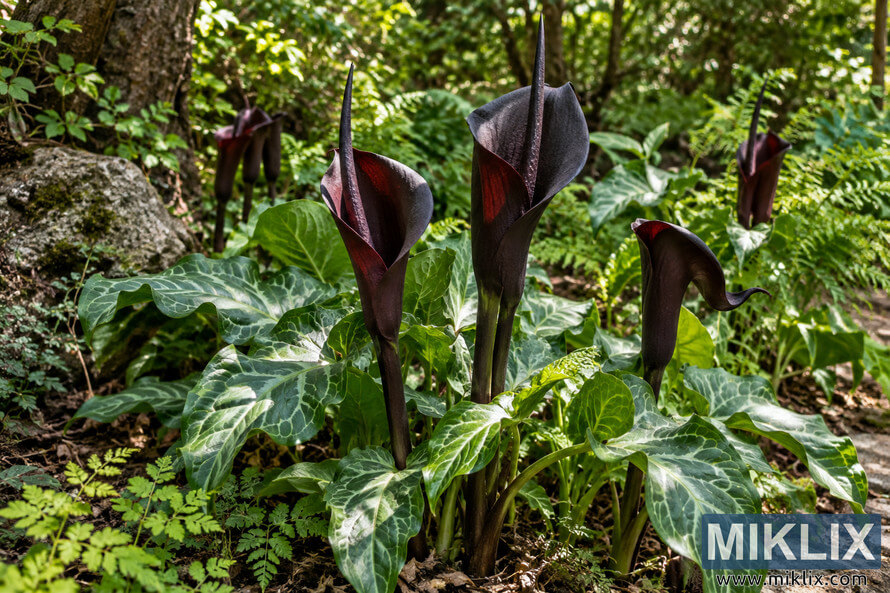
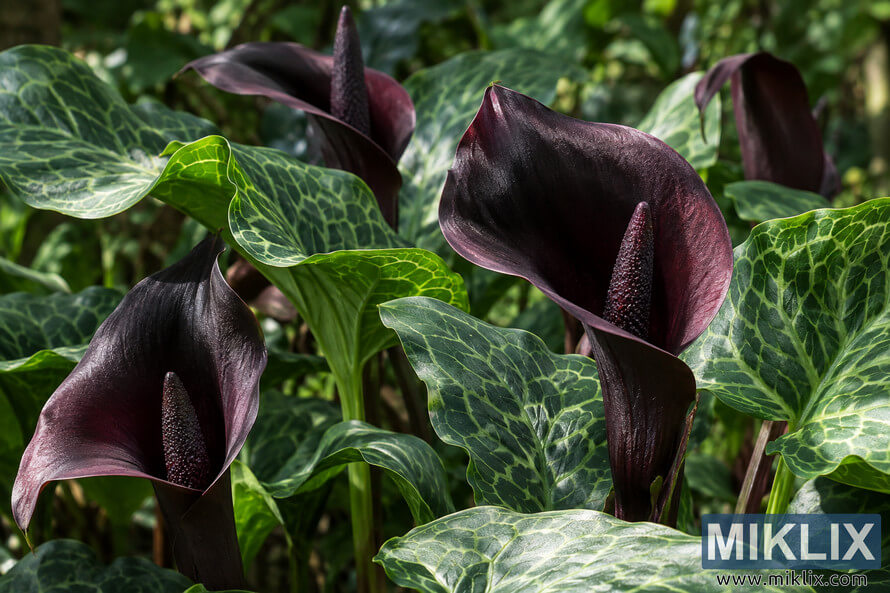
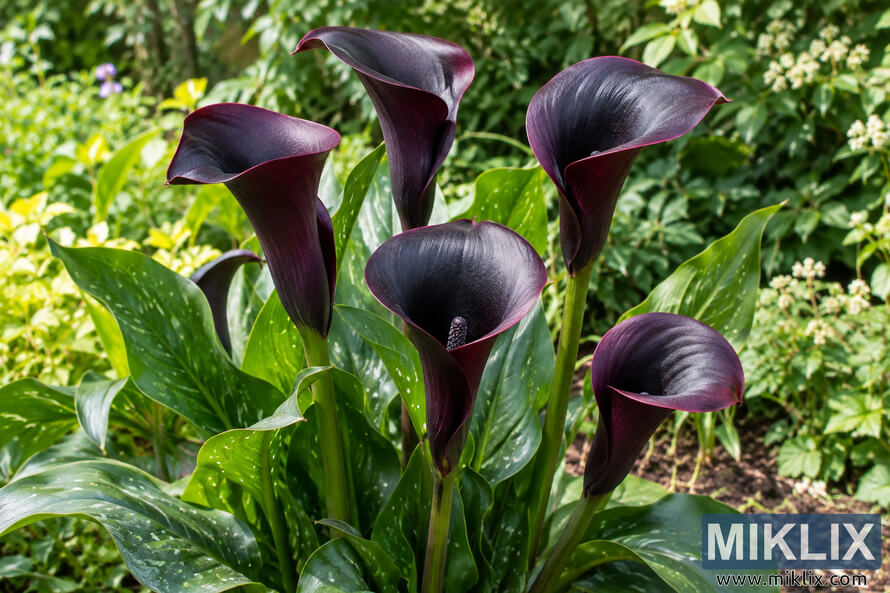
Arum palaestinum is also known as Black Calla or black calla lily. It belongs to the arum family, not the true lily family. Its deep purple to nearly black spathes surround a central spadix. The leaves are usually arrow-shaped and rich green.
Do not confuse it with Zantedeschia aethiopica, also known as white calla lily. Both plants have a similar flower form, but their growth habits and preferred conditions can differ. Check the plant name before planting.
Click or tap the image for more information and higher resolutions.
Choose the right location and light
Choose a place with morning sun and afternoon shade, or bright partial shade throughout the day. In cooler climates, more sun can support flowering. In hot areas, strong afternoon sun may scorch the leaves.
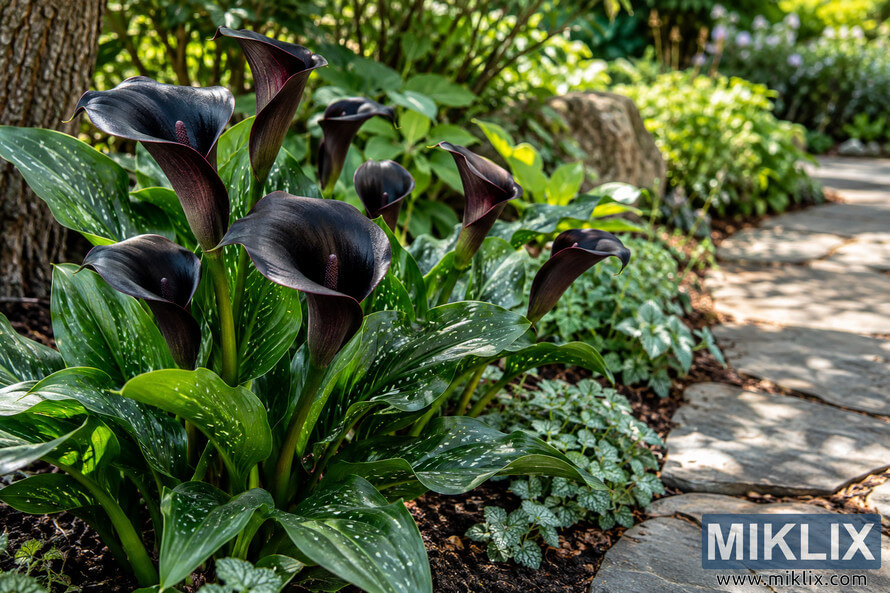
The best place is sheltered from drying wind. A woodland edge, patio border, or bright container area can work well. Leave enough space for mature foliage and easy access during the winter period.
Click or tap the image for more information and higher resolutions.
Prepare well-draining soil
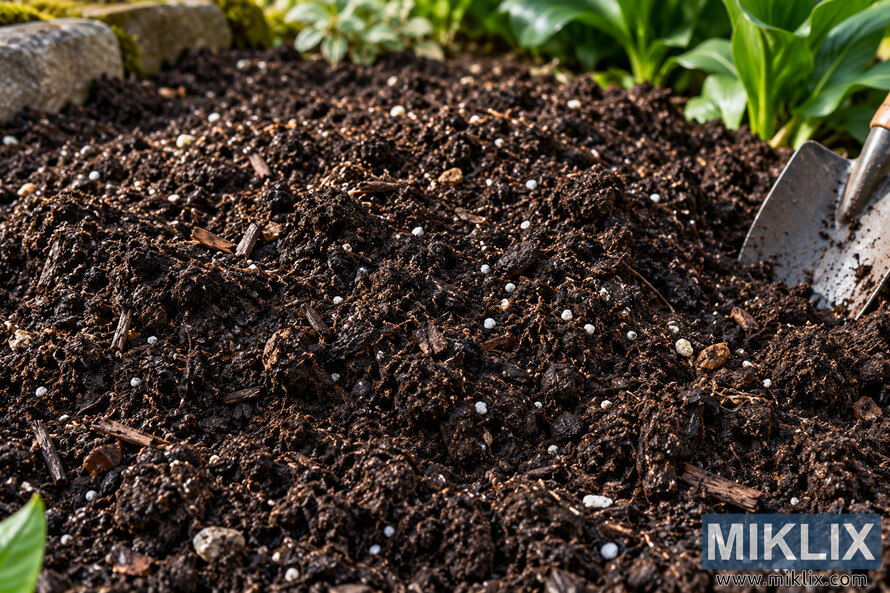
Black Calla needs soil that holds some moisture but never stays wet. Heavy clay can cause rhizomes to rot. Improve the bed with compost, leaf mold, and coarse material such as perlite or fine bark.
Work compost into the top 8 to 12 inches of ground. If water remains after rain, raise the bed or plant in a pot. A slightly acidic to neutral soil range is suitable. Avoid fresh manure, which can damage new roots.
Click or tap the image for more information and higher resolutions.
Plant bulbs or rhizomes step by step
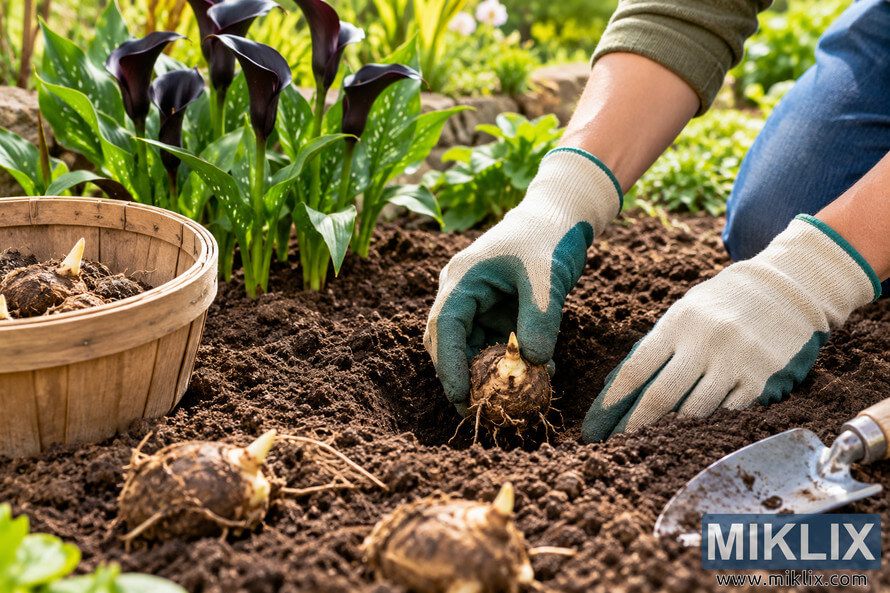
Plant dormant rhizomes in spring after hard frosts have passed. Set each rhizome horizontally, with buds or shoots facing upward. Cover it with about 1 to 2 inches of soil, then water lightly.
- Loosen the soil and remove stones.
- Set rhizomes with space for new shoots.
- Cover with a shallow layer of soil and compost.
- Water once, then wait until growth begins.
- New shoots may take several weeks to appear. Mark the planting place so dormant plants are not disturbed.
Click or tap the image for more information and higher resolutions.
Watering, humidity, and fertilizer
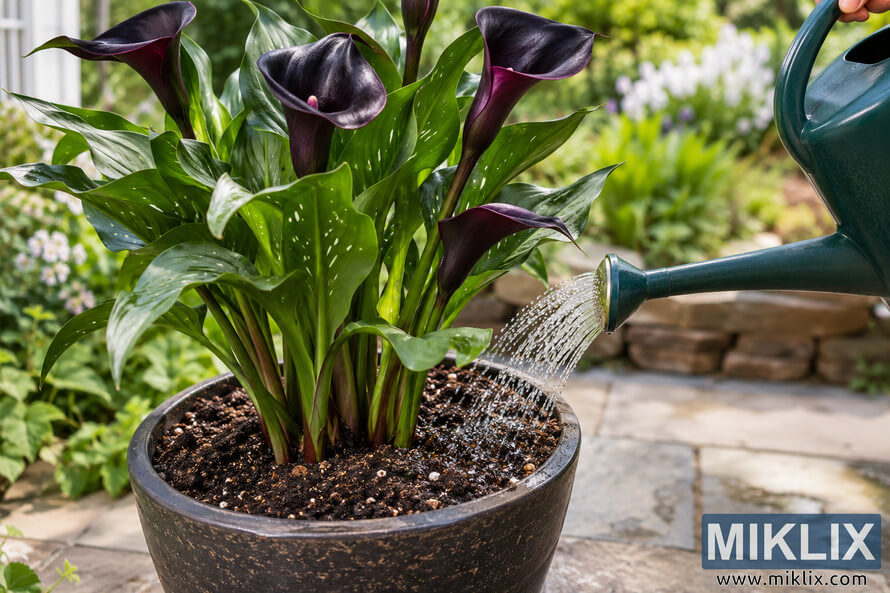
Water when the top inch of soil feels slightly dry. Keep steady moisture during active spring and summer growth, but empty standing water from a pot saucer. Reduce watering as leaves fade.
Average outdoor humidity is usually enough. Feed with a balanced, diluted fertilizer when shoots emerge and again during early flowering. Too much nitrogen creates leaves but fewer flowers.
Click or tap the image for more information and higher resolutions.
Seasonal care from spring through winter
Spring is the main planting and growth period. Protect new shoots from late frosts. During summer, keep the soil evenly damp and remove damaged leaves. Flowers often last longer when the plant has morning light and afternoon shade.
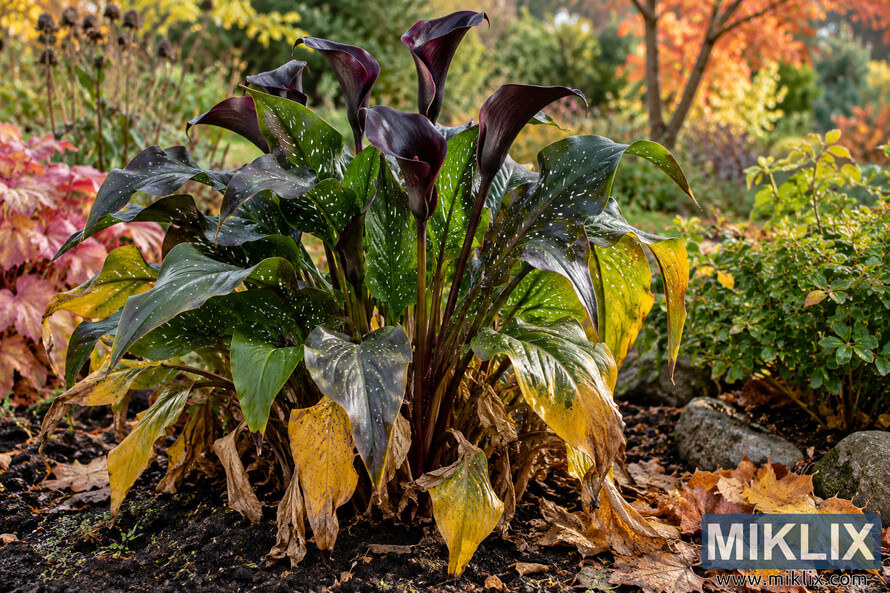
In fall, allow foliage to yellow naturally. This sends energy back to the rhizome. In colder regions, add a dry mulch after the ground cools, or lift the rhizomes before repeated hard frosts.
Click or tap the image for more information and higher resolutions.
Manage dormancy and overwintering
Black Calla may enter dormancy after flowering or during cold weather. Stop regular feeding when leaves fade. For ground plants, cover the area with dry mulch in mild climates.
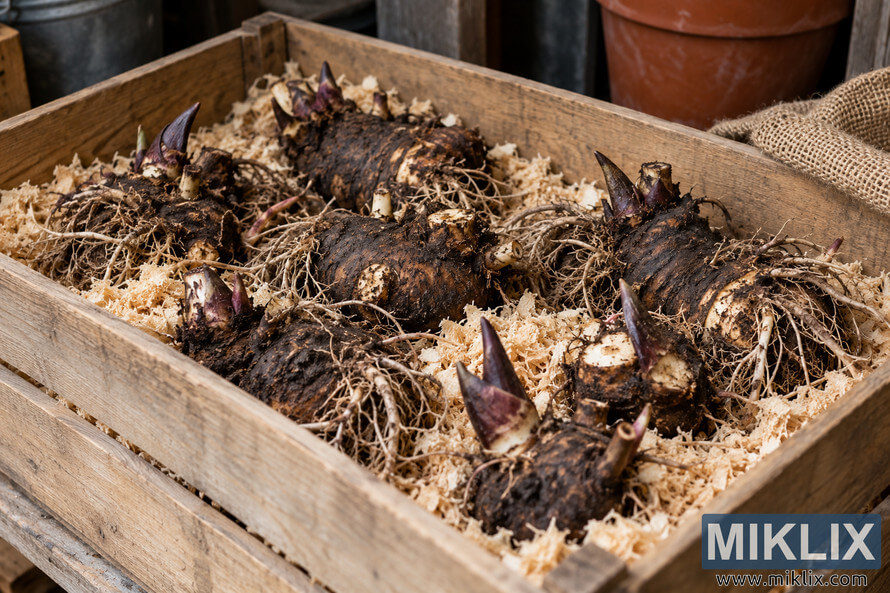
In colder zones, lift rhizomes after frost damages the foliage. Let them dry for a short period, remove loose soil, and store them in a cool, dark, dry place. Use a paper bag or ventilated box with dry peat or vermiculite. Inspect every few weeks for rot.
Click or tap the image for more information and higher resolutions.
Grow Black Calla in a pot
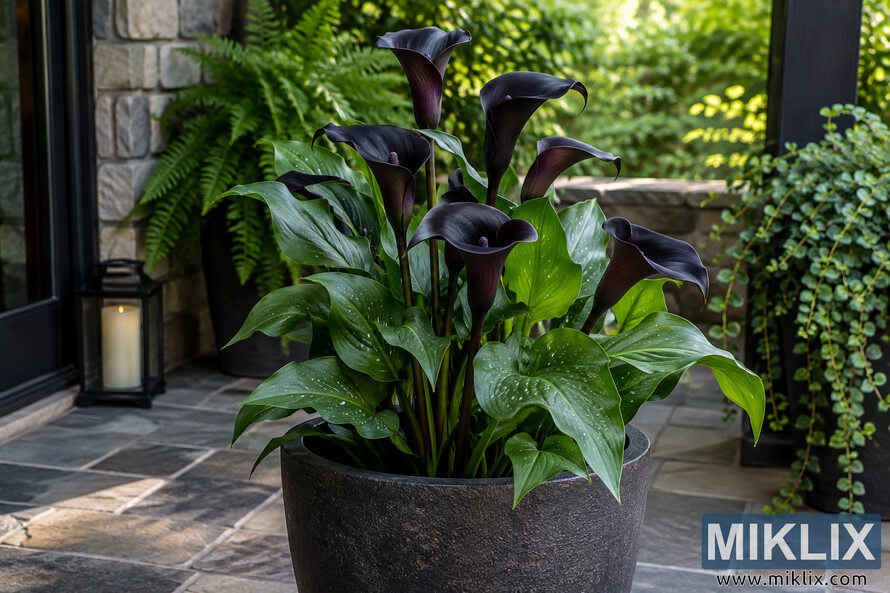
Choose a pot with drainage holes and room for root growth. A 10- to 14-inch pot suits one established plant. Use a quality container mix with compost and extra perlite. Keep the crown near the surface.
Place the pot in partial shade and rotate it every few weeks for even growth. Containers dry faster than ground beds, so check the soil often. Move the pot to a protected place before severe winter conditions.
Click or tap the image for more information and higher resolutions.
Propagation and better flowering
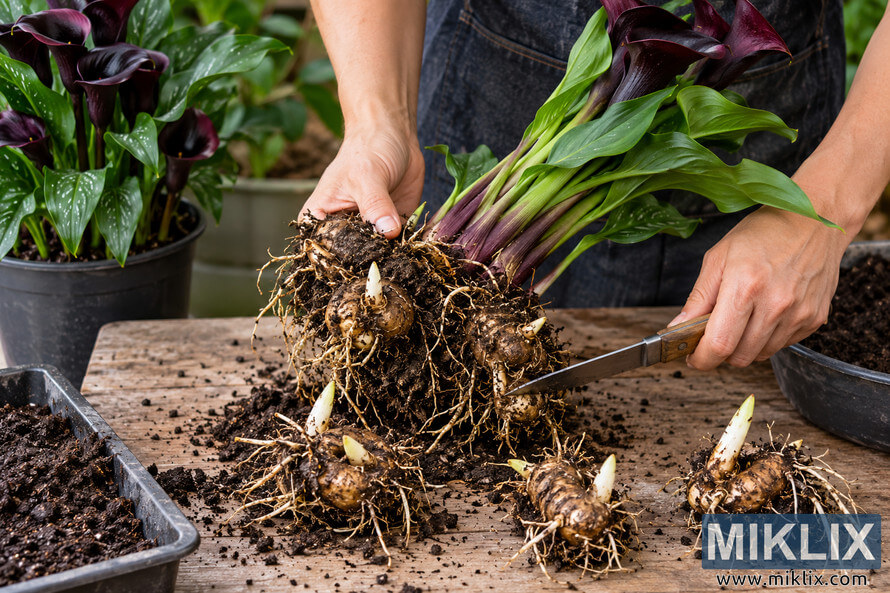
Divide mature rhizomes during dormancy or early spring. Separate sections only when each piece has a firm growth point and healthy roots. Allow cuts to dry briefly, then plant them in fresh soil.
Good flowering depends on light, drainage, and steady care. Give the plant bright partial shade, avoid excess nitrogen, and do not let the rhizomes sit in water. Remove spent flowers if you do not want seed development.
Click or tap the image for more information and higher resolutions.
Pests, diseases, problems, and safe handling
Common pests include aphids, spider mites, and fungus gnats. Rinse leaves, improve airflow, and avoid constantly wet soil. Yellow leaves can mean dormancy, overwatering, poor drainage, or low light. Few flowers often point to deep shade, excess fertilizer, or young rhizomes.
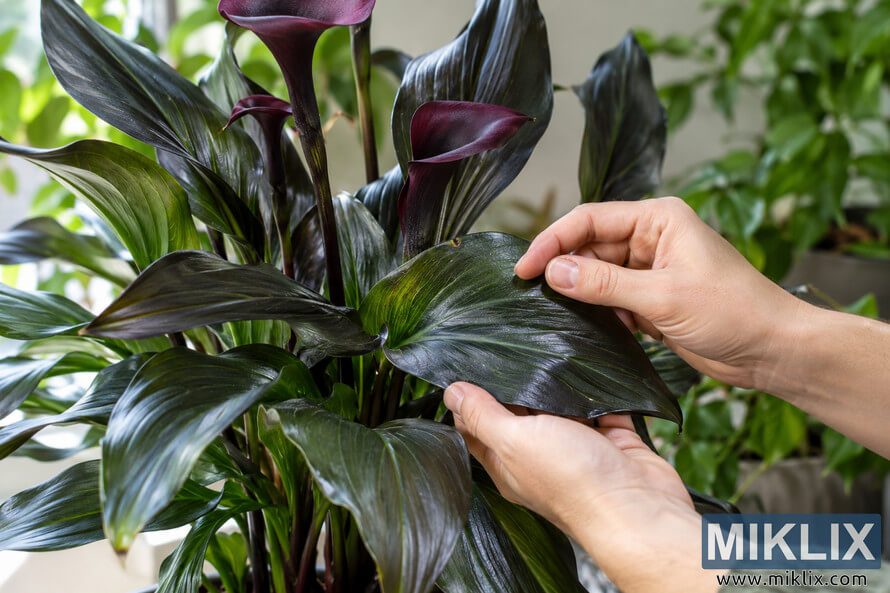
Arum palaestinum is toxic if eaten. Sap may irritate skin, mouth, and eyes. Wear gloves when dividing or pruning. Keep rhizomes, leaves, and flowers away from children and pets. Seek medical or veterinary advice if any part is swallowed.
Click or tap the image for more information and higher resolutions.
Black Calla care summary and final checklist
| Care area | Best practice | Warning sign |
| Light | Morning sun or partial shade | Scorched leaves or weak growth |
| Soil | Loose, rich, well-draining soil | Soft rhizomes or standing water |
| Water | Even moisture during growth | Yellow leaves with wet soil |
| Winter | Dry mulch or protected storage | Repeated hard frosts |
| Safety | Wear gloves and restrict access | Chewed leaves or exposed rhizomes |
With the right place, soil, and winter plan, Black Calla can become a dependable feature plant. Start with one healthy rhizome, watch the moisture closely, and adjust care to your local climate.
Click or tap the image for more information and higher resolutions.
Further Reading
If you enjoyed this post, you may also like these suggestions:
- Growing Crown Imperial: A Complete Garden Guide
- Blood Lily: A Complete Guide to Growing It in Your Own Garden
- A Guide to the Most Beautiful Zinnia Varieties to Grow in Your Garden