
Growing Fairy Lantern: A Practical Garden Guide
Published: October 20, 2026 at 5:49:28 PM UTC
Fairy Lantern (Calochortus albus) brings small, globe-shaped flowers to a spring garden. It rewards a patient gardener with the right light, sharp drainage, and a dry summer rest.
Click or tap the image for more information and higher resolutions.
Identify Fairy Lantern and Understand Its Native Habitat
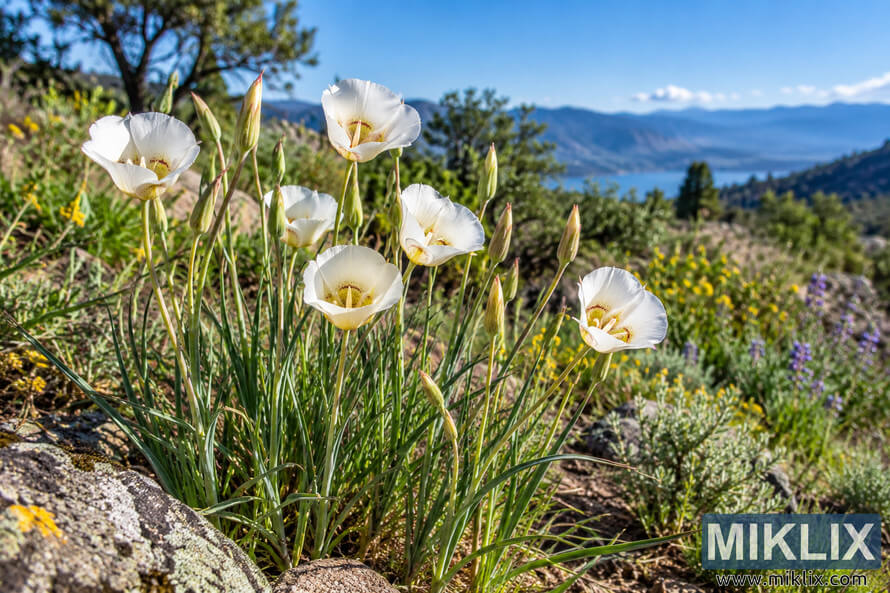
Fairy Lantern, or Calochortus albus, is also called white globe lily. It belongs to the genus Calochortus, a group of bulb-forming plants native to western North America. The species is known for nodding, rounded flowers that look like tiny lanterns.
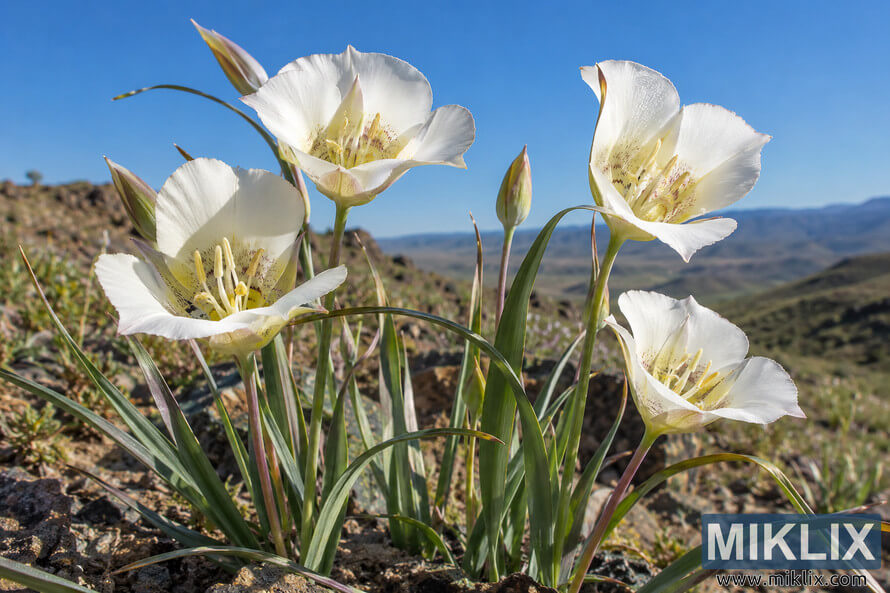
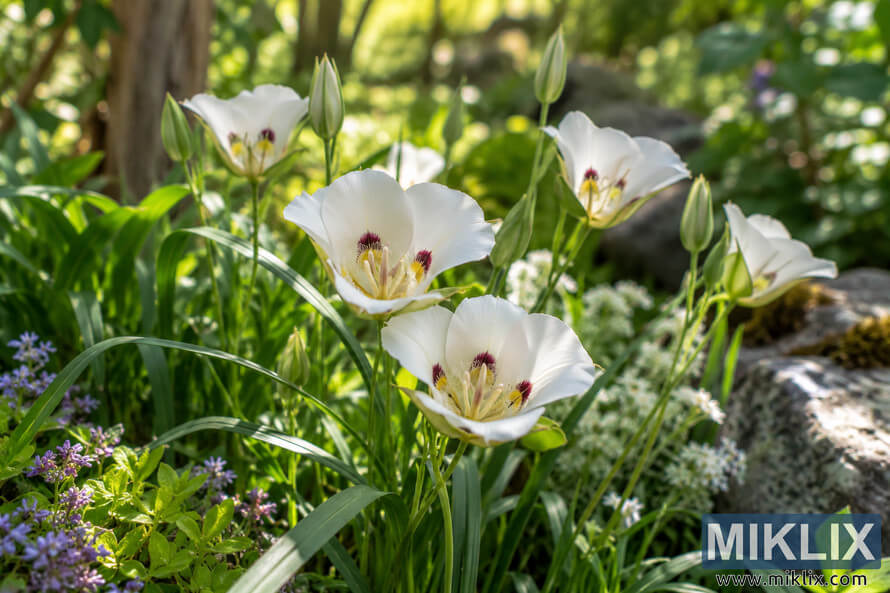
The flowers are usually white to pale pink, sometimes with a yellow area near the base. The petals can have fine hairs and a closed tip. Inside each flower is a nectary that helps distinguish many Calochortus species. The leaves are narrow and mostly basal, with smaller cauline leaves along the stem.
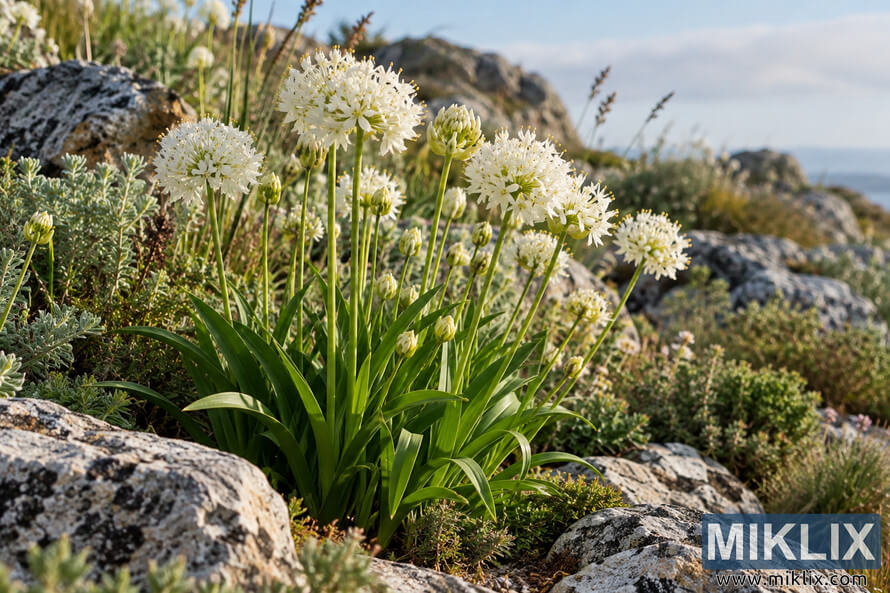
In the wild, this globe lily may grow in foothill woodlands, shady open woods, scrub, and partially shaded grasslands. It is often found in rocky places, including exposed coastal bluffs and yellow pine forests. Plant communities may range from San Francisco Bay woodlands to higher slopes near 5,000 feet, though local populations vary.
Do not collect wild bulbs. Buy nursery-grown stock or use legally sourced seeds. Wild populations can be small and slow to recover.

Click or tap the image for more information and higher resolutions.
Choose the Right Site, Soil, Light, and USDA Zones
Give Calochortus albus a site that copies its natural rhythm: bright spring light, moderate moisture while leaves grow, and dry soil during summer dormancy. Morning sun with afternoon shade works well in warm inland gardens. Coastal gardeners may use more sun if the soil stays cool and drains quickly.
- Use gritty, sandy, or loamy soil with fast drainage.
- Avoid heavy clay, low spots, and places where winter water stands.
- Work in mineral grit or fine gravel rather than rich, moisture-holding compost.
- Choose a rock garden, open woodland edge, or native-plant bed.
- Check local conditions within the likely USDA zones before planting.
Many gardeners grow this species in USDA zones 7 through 10, but hardiness depends on exposure, drainage, and the source of the bulb. Cold, wet soil is more dangerous than a brief frost. A protected slope can be safer than a flat bed.
Click or tap the image for more information and higher resolutions.
Plant Bulbs or Seeds at the Right Time
Growing Fairy Lantern (Calochortus albus) from Bulbs
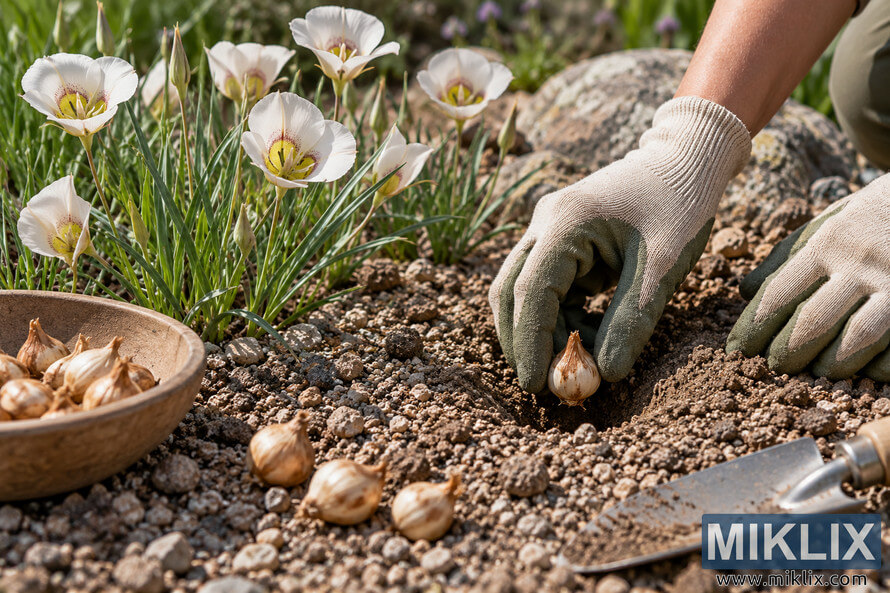
Plant dormant bulbs in autumn, before regular winter rain begins. Handle them gently because small bulbs can dry out or bruise. Set each bulb about two to three times its height deep, with the pointed growing end facing upward. Space bulbs so air can move between plants.
- Clear weeds and loosen a small planting area.
- Mix in grit if the soil drains slowly.
- Place the bulb on firm soil, not in a deep pocket of compost.
- Backfill lightly and water once to settle the soil.
- Mark the location so dormant bulbs are not disturbed.
Starting from Seeds
Seeds are slower and less predictable. Sow fresh seeds in autumn in a gritty mix. Keep the container outdoors where it receives natural winter temperatures, but protect it from saturated conditions. Germination may take more than one season. Transplant young seedlings only after they form a useful bulb.
Click or tap the image for more information and higher resolutions.
Bulbs need firm contact with gritty soil and a planting depth suited to their size.

Click or tap the image for more information and higher resolutions.
Seed growing suits patient gardeners who can protect young plants from excess moisture.
Click or tap the image for more information and higher resolutions.
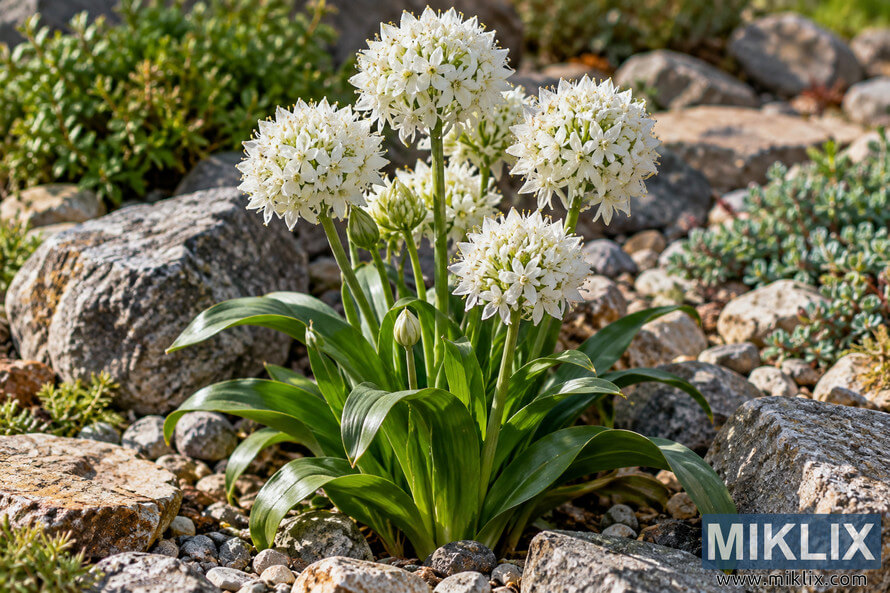
A marked planting spot prevents accidental digging during the winter and spring cycle.
Manage Water, Fertilizer, Flowering, and Dormancy
Water after autumn planting if rain is absent. During winter and spring, let rainfall do most of the work. Add water only when the upper soil dries and the plant is actively growing. Once the leaves yellow and flowers fade, reduce irrigation. Summer dormancy should be nearly dry.
Do not fertilize heavily. Very rich soil can produce leaves without improving flowers, and excess nutrients may weaken a bulb adapted to lean ground. If growth is poor, first check light, drainage, planting depth, and bulb quality.
Seasonal rhythm: autumn planting, winter roots, spring flowers and leaves, then a dry summer rest.
- Remove spent flowers if you do not want seed, but keep healthy leaves until they fade naturally.
- Use a thin gravel mulch to reduce mud without trapping moisture.
- Protect pots from constant winter rain.
- Do not dig dormant bulbs unless relocation is necessary.
Grow Fairy Lantern in Containers, Rock Gardens, and Native Beds
A container is useful when garden soil stays wet. Choose a pot with several drainage holes and fill it with a gritty mix. Keep the container outdoors through the cool season, but shield it from prolonged storms. A shallow pot can dry too quickly, so check it more often during active growth.
In a rock garden, place the bulb near stones that improve drainage but do not reflect intense heat onto the leaves. In a naturalistic planting, combine it with compatible California natives that accept dry summer soil. Avoid aggressive groundcovers that hide the leaves or hold water around the bulb.
Click or tap the image for more information and higher resolutions.
Click or tap the image for more information and higher resolutions.
Click or tap the image for more information and higher resolutions.
Troubleshoot Rot, Poor Flowers, Pests, and Safety
Rot is the most common cultivation problem. It usually follows wet soil, poor drainage, or summer watering. Lift and inspect a failing bulb only when the plant is dormant. Discard soft, foul-smelling material and improve the soil before replanting healthy tissue.
| Problem | Likely cause | Practical response |
| Few flowers | Low light, young bulb, or excess nitrogen | Improve spring light and avoid rich fertilizer |
| Soft bulb | Wet soil or damaged storage | Improve drainage and remove rot |
| Yellow leaves early | Stress, drought, or natural dormancy | Check moisture, then allow seasonal fading |
| Chewed leaves | Snails, slugs, or small mammals | Use barriers and remove hiding places |
Native pollinators may visit the flowers. Avoid broad insecticide use during bloom. The plant is not a food crop, so keep bulbs and seeds away from children and pets. Wear gloves when handling unknown plant material, and confirm local wildlife concerns before planting large numbers.
Fairy Lantern Care FAQ and Final Action
Does Fairy Lantern need full sun?
It usually prefers bright spring light, with partial shade in hot inland locations. Morning sun and afternoon shade can protect leaves and flowers.
Should I water it in summer?
Usually not. Once leaves fade, keep the bulb mostly dry unless extreme conditions threaten the plant or the container becomes dangerously hot.
Can I grow it in clay?
Clay is risky unless raised, amended with mineral material, and kept free of standing water. A container or raised rock pocket is often safer.
Why did my plant make leaves but no flowers?
The bulb may be young, too shaded, planted too deeply, or stressed by wet soil. Correct the site and allow a full seasonal cycle.
Click or tap the image for more information and higher resolutions.
Further Reading
If you enjoyed this post, you may also like these suggestions:
- Growing Buttonbush: A Complete Garden Guide
- A Complete Guide to Growing Desert Five-Spot in Your Own Garden
- 15 Most Beautiful Flowers to Grow in Your Garden