
Image: Common Pests Affecting Brussels Sprouts and Organic Control Methods
Published: December 21, 2025 at 10:20:00 PM UTC
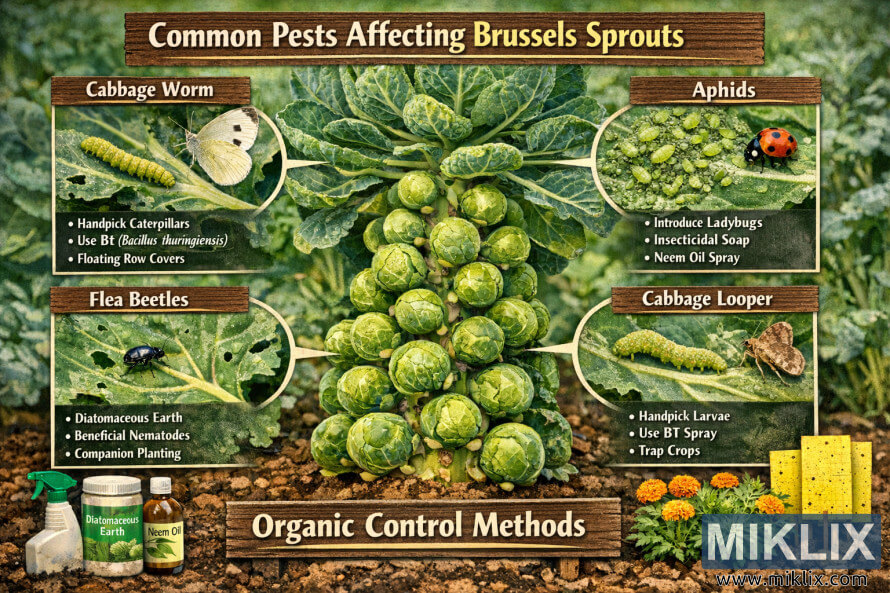
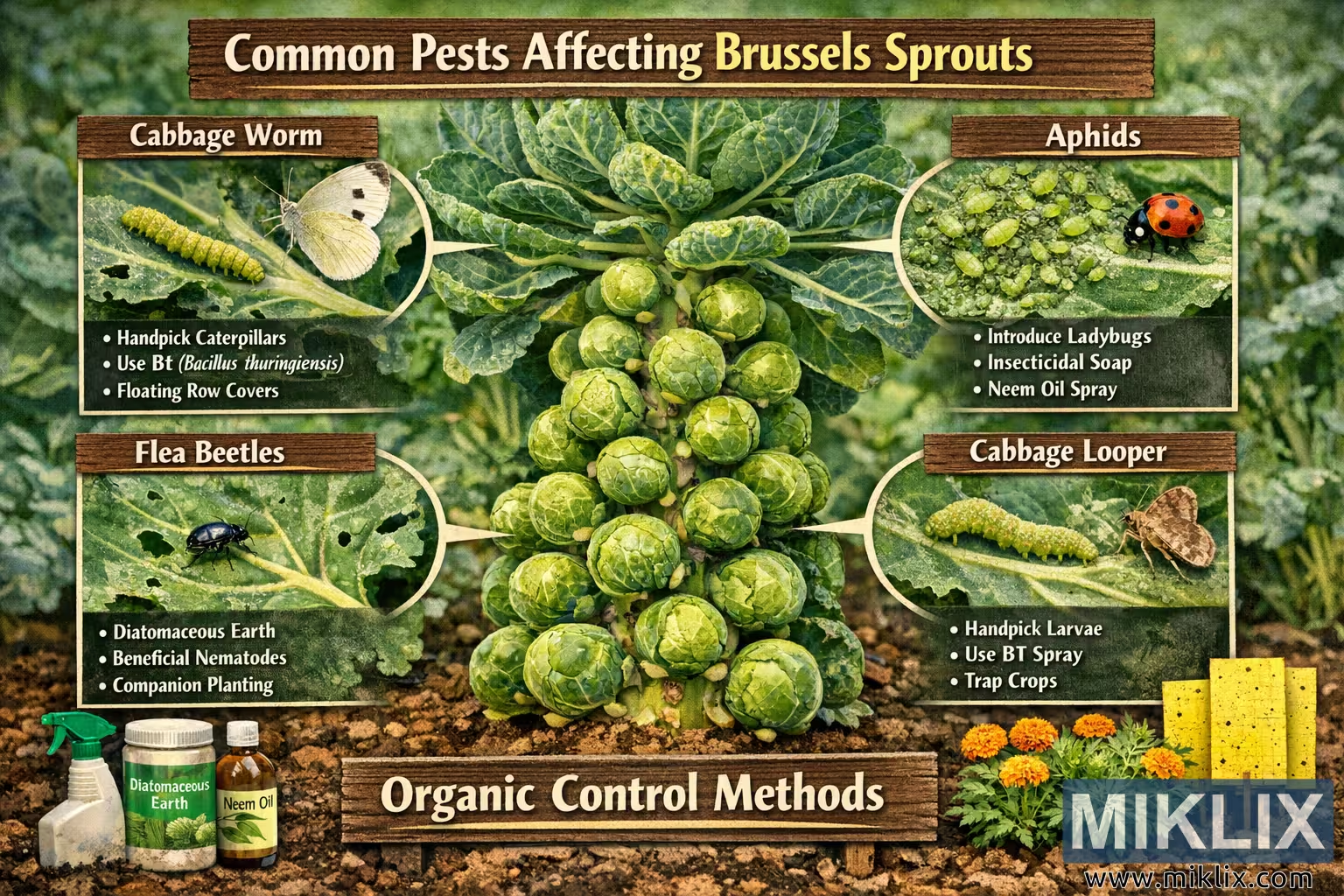
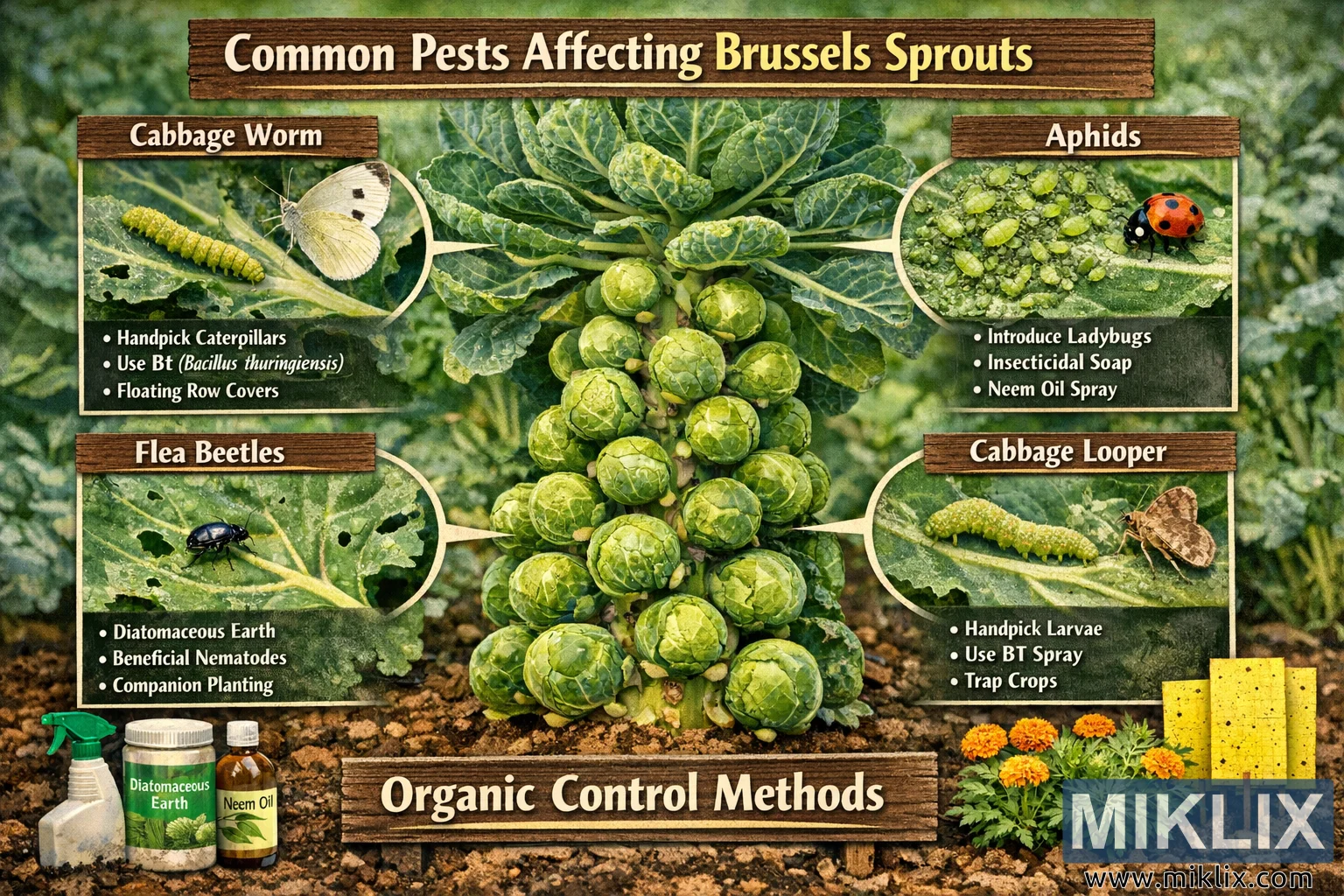
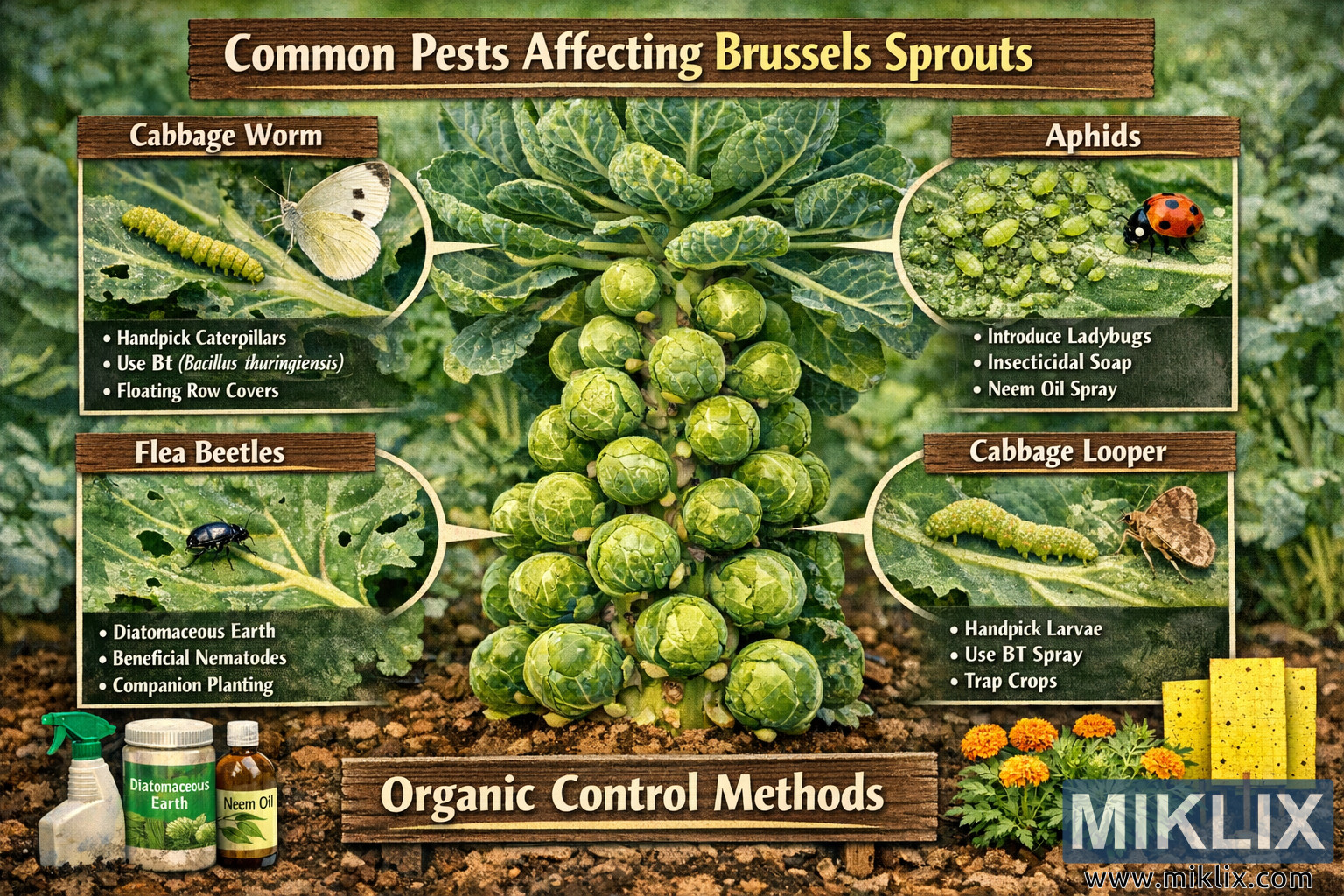
Educational infographic illustrating common pests that affect Brussels sprouts and practical organic control methods, including beneficial insects, neem oil, and row covers.
Available versions of this image
The image files available for download below are less compressed and higher resolution - and as a result of that, higher quality - than the images embedded in articles and pages on this website, which are more optimized for file size in order to reduce bandwidth consumption.
Regular size (1,536 x 1,024)
Large size (3,072 x 2,048)
Very large size (4,608 x 3,072)
Extra large size (6,144 x 4,096)
Comically large size (1,048,576 x 699,051)
- Still uploading... ;-)
Image description
The image is a high-resolution, landscape-oriented educational infographic focused on common pests that affect Brussels sprouts and organic methods used to control them. At the center of the composition is a large, healthy Brussels sprout plant growing upright in rich garden soil, with tightly packed green sprouts forming along the main stalk and broad, textured leaves extending outward. The background shows a softly blurred vegetable garden, reinforcing an outdoor, home-gardening context.
Across the top of the image, a rustic wooden-style banner displays the title "Common Pests Affecting Brussels Sprouts" in bold, light-colored lettering. Surrounding the central plant are four framed sections, each highlighting a specific pest. On the upper left, the section labeled "Cabbage Worm" shows a close-up of a green caterpillar on a leaf alongside a white cabbage butterfly, representing the pest’s life cycle. Below the image, bullet points list organic controls such as handpicking caterpillars, using Bacillus thuringiensis (Bt), and applying floating row covers.
On the upper right, the "Aphids" section features a detailed close-up of clustered green aphids feeding on a leaf, with a red-and-black ladybug nearby to emphasize natural predation. The accompanying text recommends introducing ladybugs, using insecticidal soap, and applying neem oil spray as organic management strategies.
The lower left section focuses on "Flea Beetles," illustrated by a small, dark beetle on a leaf riddled with tiny holes, a hallmark of flea beetle damage. The listed organic solutions include diatomaceous earth, beneficial nematodes, and companion planting to deter infestations.
On the lower right, the "Cabbage Looper" section displays a green looping caterpillar and a brown moth, visually linking larva and adult stages. Suggested controls include handpicking larvae, using Bt spray, and planting trap crops to draw pests away from Brussels sprouts.
At the bottom of the infographic, another wooden-style banner reads "Organic Control Methods." Nearby are realistic images of organic gardening supplies such as spray bottles labeled neem oil and diatomaceous earth, yellow sticky traps, and flowering companion plants like marigolds. Together, the visual elements combine photography and illustration to create a clear, approachable guide that helps gardeners identify common Brussels sprout pests and understand environmentally friendly ways to manage them.
The image is related to: A Complete Guide to Growing Brussels Sprouts Successfully