
A Complete Guide to Growing Brussels Sprouts Successfully
Published: December 21, 2025 at 10:20:00 PM UTC
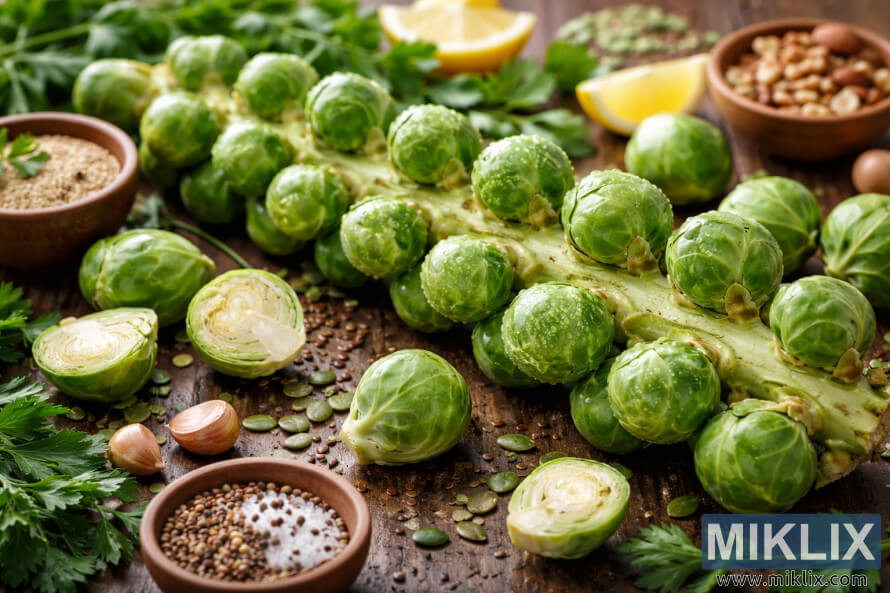
Brussels sprouts have made a remarkable culinary comeback in recent years. Gone are the days of mushy, bitter sprouts that haunted childhood dinner tables. Today's gardeners are discovering that homegrown Brussels sprouts offer an incredibly sweet, nutty flavor that store-bought varieties simply can't match.
Click or tap the image for more information and higher resolutions.
This cool-season crop might require some patience, but the reward of harvesting your own miniature cabbages from a stately plant is well worth the effort.
In this comprehensive guide, we'll walk through everything you need to know about growing Brussels sprouts successfully in your home garden. From selecting the right varieties to timing your harvest for the sweetest flavor, you'll discover why these nutritional powerhouses deserve a place in your garden beds.
Nutritional Benefits of Brussels Sprouts
Before diving into growing techniques, it's worth understanding why Brussels sprouts are such a valuable addition to your garden and diet. These miniature cabbage-like vegetables are nutritional powerhouses, packed with vitamins and minerals that support overall health.
A single cup of Brussels sprouts provides:
- Nearly 125% of your daily vitamin C needs
- Over 90% of your vitamin K requirements
- Significant amounts of vitamin A, folate, and manganese
- 4 grams of fiber to support digestive health
- High levels of antioxidants that may help reduce inflammation
Brussels sprouts are also members of the cruciferous vegetable family, alongside broccoli, cabbage, and kale. This family of vegetables contains compounds that have been studied for their potential cancer-fighting properties. Growing your own ensures you'll have the freshest, most nutritious sprouts possible.
Best Brussels Sprout Varieties for Home Gardens
Choosing the right variety is crucial for success with Brussels sprouts. Modern varieties have been bred for improved flavor, disease resistance, and better performance in different climates. Here are five excellent options for home gardeners:
'Jade Cross'
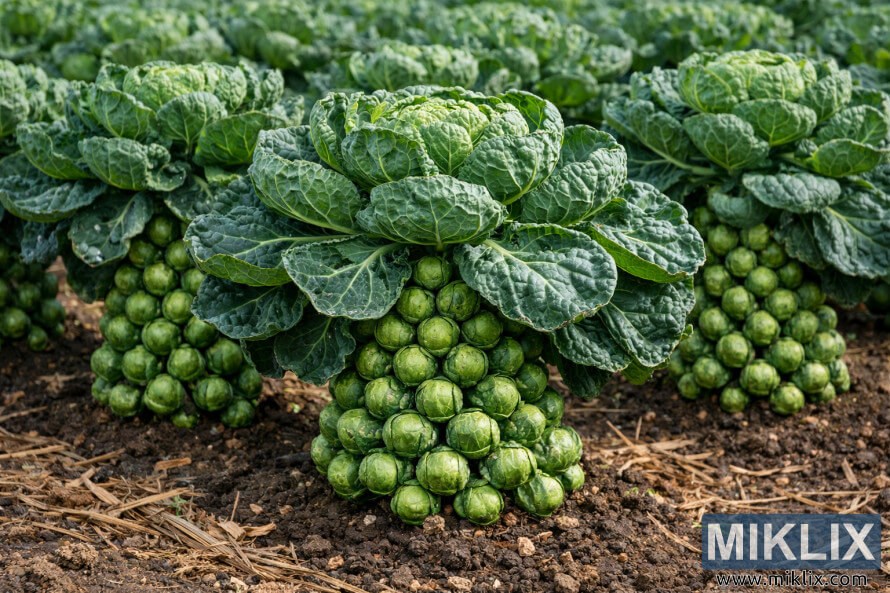
An All-America Selections winner, this compact variety grows to about 2 feet tall, making it perfect for smaller gardens or windy locations. The plants produce medium-sized sprouts with excellent flavor and are known for their disease resistance and heat tolerance. Matures in 85 days.
Click or tap the image for more information and higher resolutions.
'Churchill'
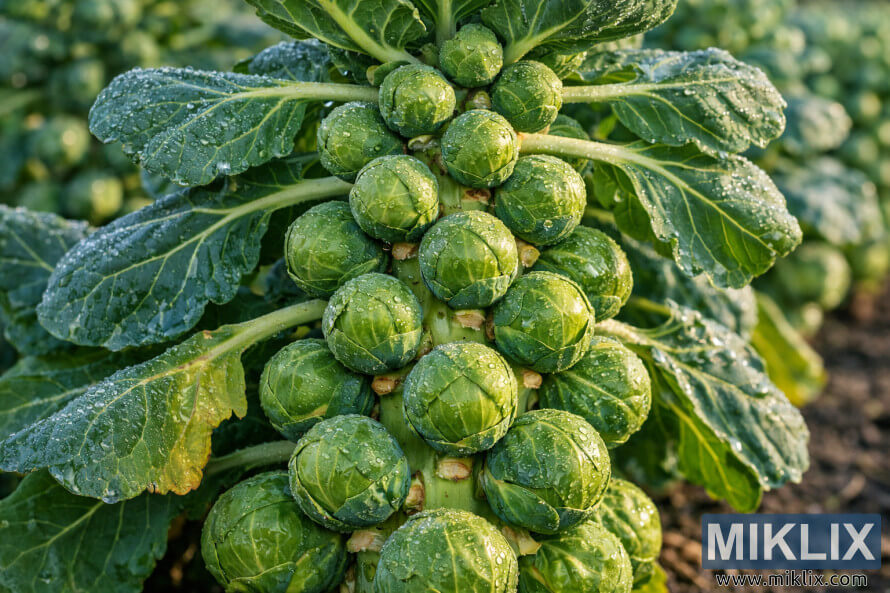
An early-maturing variety that's adaptable to most climates. 'Churchill' produces uniform, medium-sized sprouts with a sweet, mild flavor. The plants have good disease resistance and perform well even in less-than-ideal conditions. Matures in 90 days.
Click or tap the image for more information and higher resolutions.
'Diablo'
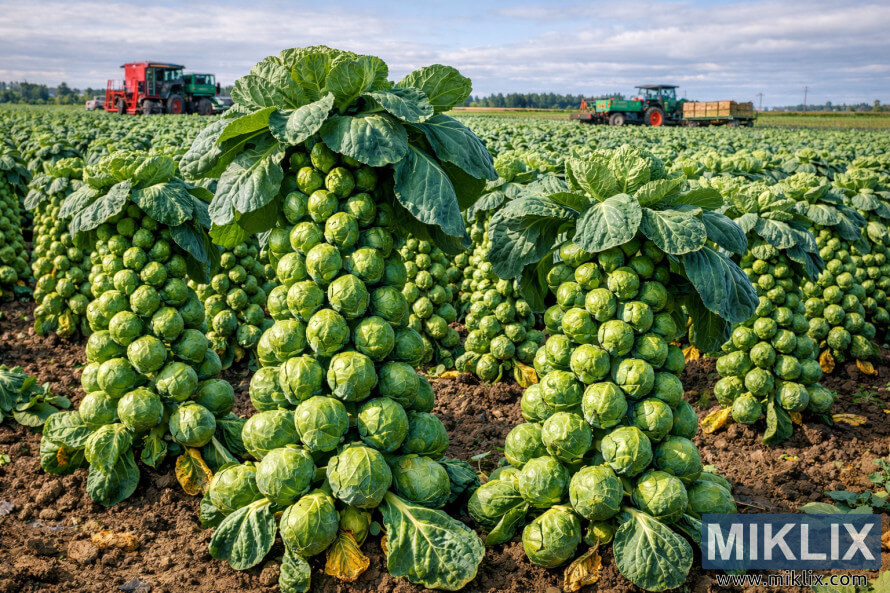
Known for its heavy production, 'Diablo' produces medium to large sprouts with excellent flavor. The plants are tall and sturdy, with good wind resistance. This hybrid variety has impressive disease resistance and produces sprouts that hold well in the garden. Matures in 110 days.
Click or tap the image for more information and higher resolutions.
'Falstaff'
Add some color to your garden with this striking red/purple variety. The sprouts maintain their beautiful color even after cooking and offer a slightly milder, nuttier flavor than green varieties. 'Falstaff' is a bit less productive than some hybrids but makes up for it with its unique appearance and flavor. Matures in 100 days.
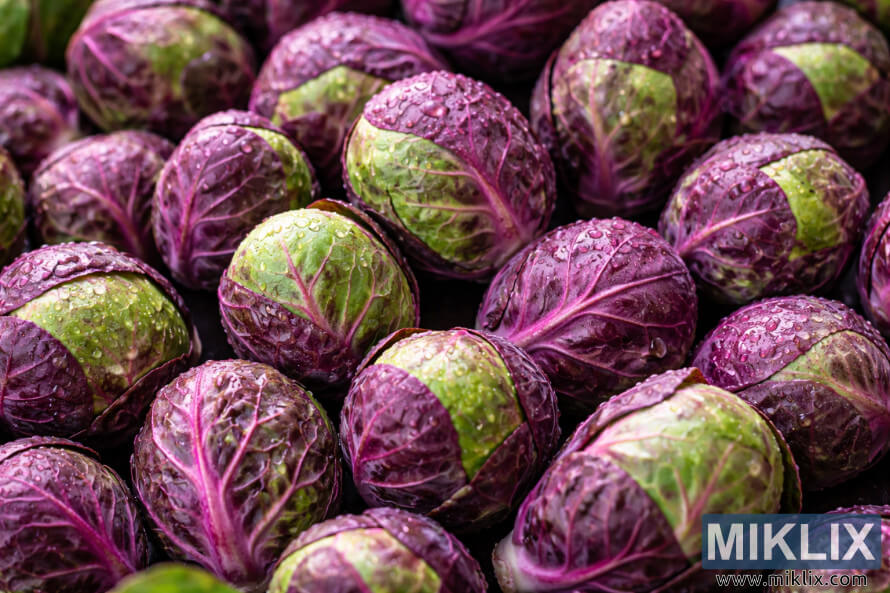
Click or tap the image for more information and higher resolutions.
'Long Island Improved'
This classic heirloom variety has been grown since the 1890s. It's a compact plant that produces small to medium-sized sprouts with excellent flavor, especially after exposure to frost. While not as disease-resistant as modern hybrids, it's a reliable producer in cooler climates. Matures in 90-100 days.
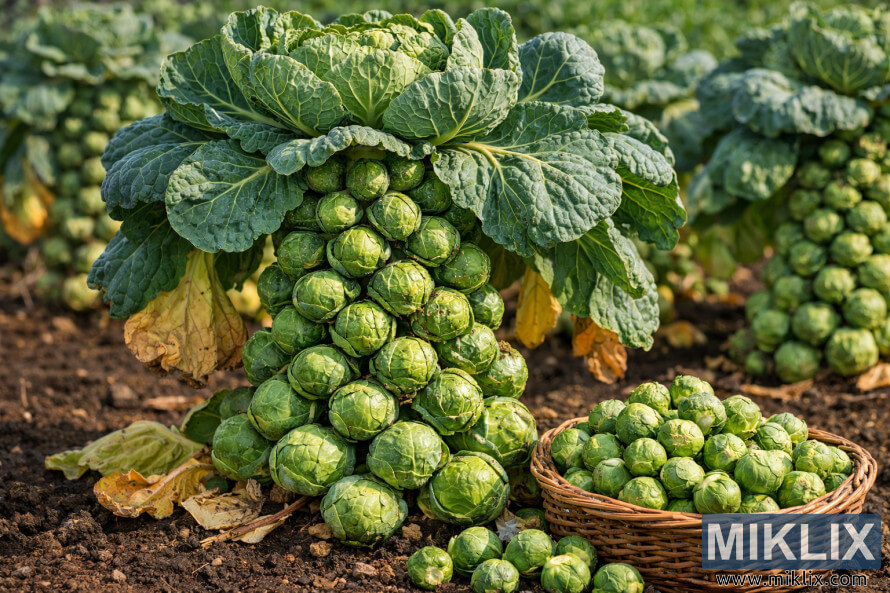
Click or tap the image for more information and higher resolutions.
When to Plant Brussels Sprouts
Brussels sprouts have a long growing season (typically 90-110 days from transplant to harvest) and prefer cool weather for maturing. The timing of your planting is crucial for success and varies by climate zone.
| USDA Zone | Spring Planting | Fall Planting | Expected Harvest |
| 3-4 | Start indoors 6-8 weeks before last frost; transplant after danger of hard frost | Not recommended | Late summer to early fall |
| 5-6 | Start indoors 6-8 weeks before last frost; transplant in April | Start indoors in May; transplant in July | Early fall or late fall to early winter |
| 7-8 | Start indoors in February; transplant in March | Start indoors in June; transplant in August | Early summer or late fall to winter |
| 9-10 | Not recommended (too hot) | Start indoors in August; transplant in September | Winter to early spring |
In most regions, fall harvests produce the best-tasting Brussels sprouts. The flavor improves dramatically after exposure to light frost, which converts starches to sugars and creates a sweeter taste.
Click or tap the image for more information and higher resolutions.
Soil Preparation and Requirements
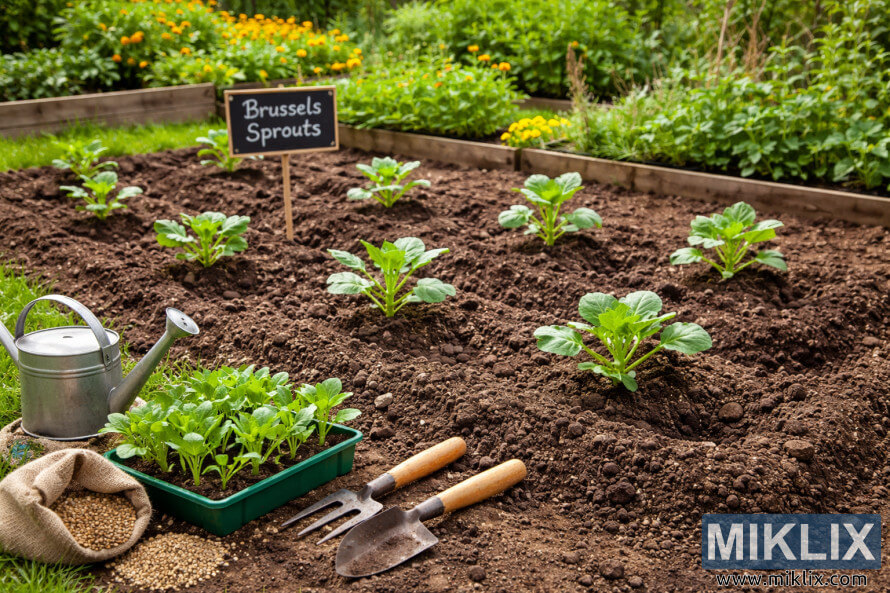
Brussels sprouts are heavy feeders that require nutrient-rich soil to produce a bountiful harvest. Taking the time to properly prepare your soil before planting will set the foundation for healthy, productive plants.
Soil pH and Composition
- Aim for a soil pH between 6.0 and 7.0 (slightly acidic to neutral)
- Brussels sprouts prefer loamy, well-draining soil with high organic matter
- Conduct a soil test before planting to determine pH and nutrient levels
- If your soil is acidic (below 6.0), add garden lime according to test recommendations
Soil Preparation Steps
- Remove all weeds and debris from the planting area
- Dig or till the soil to a depth of 12-15 inches
- Incorporate 2-4 inches of compost or well-rotted manure
- Add a balanced organic fertilizer according to package directions
- If your soil is heavy clay, add additional compost and consider raised beds for better drainage
- Allow the soil to settle for a week before planting
Click or tap the image for more information and higher resolutions.
Step-by-Step Planting Instructions
Starting from Seed Indoors
- Start seeds 6-8 weeks before your planned transplant date
- Use a sterile seed-starting mix in cell trays or small pots
- Plant seeds ¼ to ½ inch deep, with 2-3 seeds per cell
- Keep soil consistently moist but not waterlogged
- Provide plenty of light once seedlings emerge (14-16 hours daily)
- Thin to one seedling per cell when they develop their first true leaves
- Begin hardening off seedlings one week before transplanting by gradually exposing them to outdoor conditions
Transplanting Outdoors
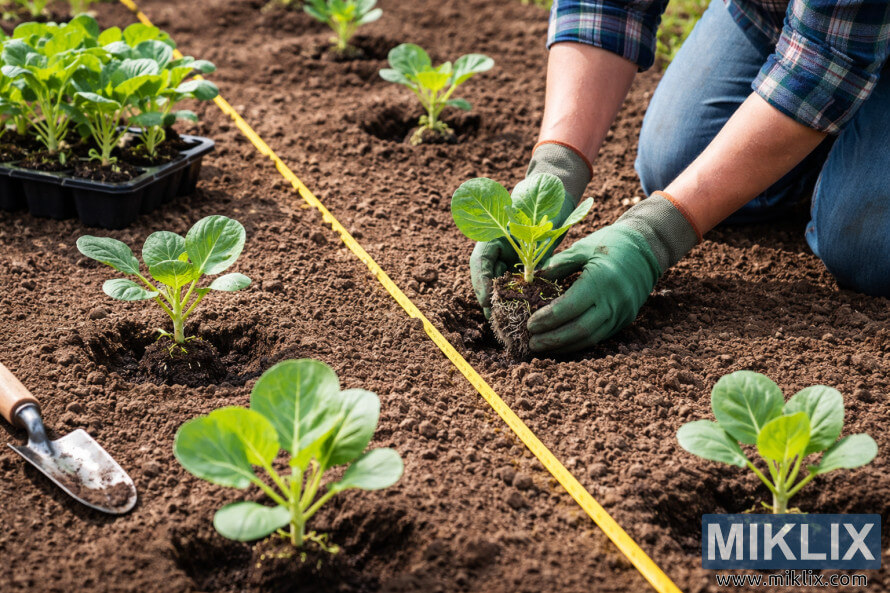
- Choose an overcast day or late afternoon to reduce transplant shock
- Dig holes slightly larger than the root ball of each seedling
- Space plants 18-24 inches apart in rows 24-36 inches apart
- Plant seedlings slightly deeper than they were growing in their containers
- Firm soil gently around the roots and water thoroughly
- Apply 2-3 inches of organic mulch around plants, keeping it away from stems
- Protect young plants with row covers if pest pressure is high in your area
Direct Sowing: While possible in some climates, starting Brussels sprouts indoors is generally recommended. If direct sowing, plant seeds ½ inch deep and 2-3 inches apart, then thin to final spacing when seedlings are 4-6 inches tall.
Click or tap the image for more information and higher resolutions.
Brussels Sprouts Care Guide
Watering Requirements
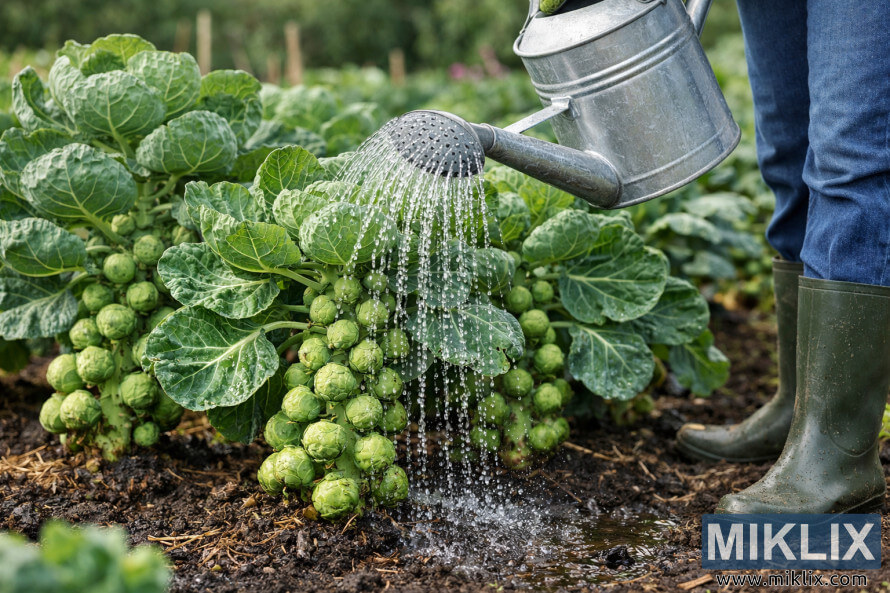
Consistent moisture is crucial for developing healthy, well-formed sprouts. Irregular watering can lead to bitter taste and poorly formed heads.
- Provide 1-1.5 inches of water per week, adjusting for rainfall
- Water deeply at the base of plants rather than overhead
- Maintain consistent soil moisture, especially during dry periods
- Increase watering during head formation if conditions are dry
- Apply mulch to help retain soil moisture and reduce watering frequency
Fertilization Schedule
Brussels sprouts are heavy feeders and benefit from regular fertilization throughout their long growing season:
- At planting: Incorporate a balanced organic fertilizer into the soil
- 3-4 weeks after transplanting: Side-dress with compost or a nitrogen-rich organic fertilizer
- When sprouts begin to form: Apply a balanced organic fertilizer
- Monthly: Apply compost tea or fish emulsion for continued nutrition
Click or tap the image for more information and higher resolutions.
Pest and Disease Management
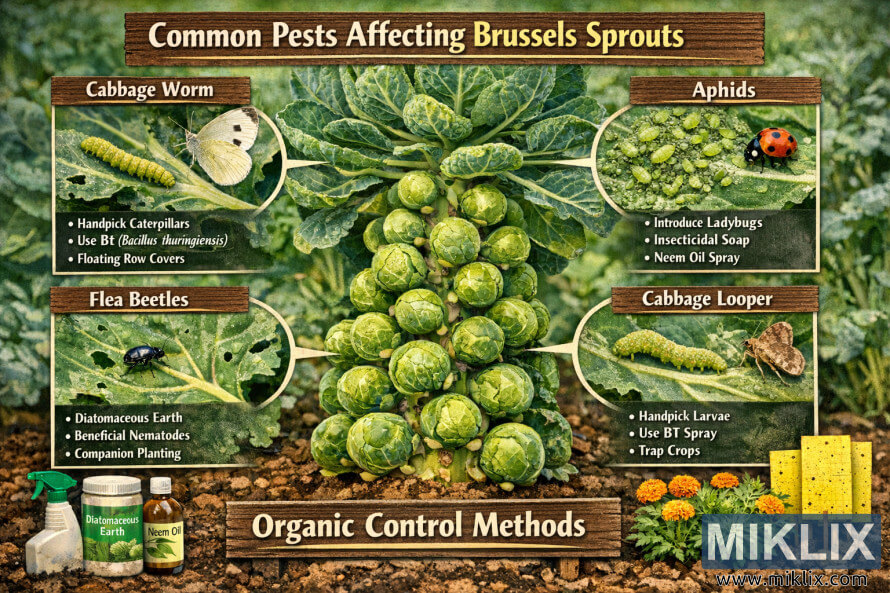
Brussels sprouts, like other brassicas, are susceptible to several pests and diseases. Fortunately, many can be managed with organic methods:
| Problem | Symptoms | Organic Solution |
| Cabbage worms | Green caterpillars, holes in leaves, frass (excrement) | Handpick, use row covers, apply Bacillus thuringiensis (Bt), plant aromatic herbs nearby |
| Aphids | Clusters of small insects, sticky residue, curled leaves | Strong water spray, insecticidal soap, neem oil, encourage beneficial insects |
| Flea beetles | Tiny holes in leaves, stunted growth | Row covers, sticky traps, diatomaceous earth, keep soil consistently moist |
| Clubroot | Wilting, yellowing, stunted growth, swollen roots | Maintain soil pH above 6.8, practice crop rotation, remove infected plants |
| Powdery mildew | White powdery spots on leaves | Improve air circulation, avoid overhead watering, apply milk spray or potassium bicarbonate |
Prevention is key! Use row covers immediately after planting to prevent insect pests from establishing. Remove covers temporarily during flowering if you need pollination for other nearby crops.
Click or tap the image for more information and higher resolutions.
Brussels Sprouts Growth Timeline
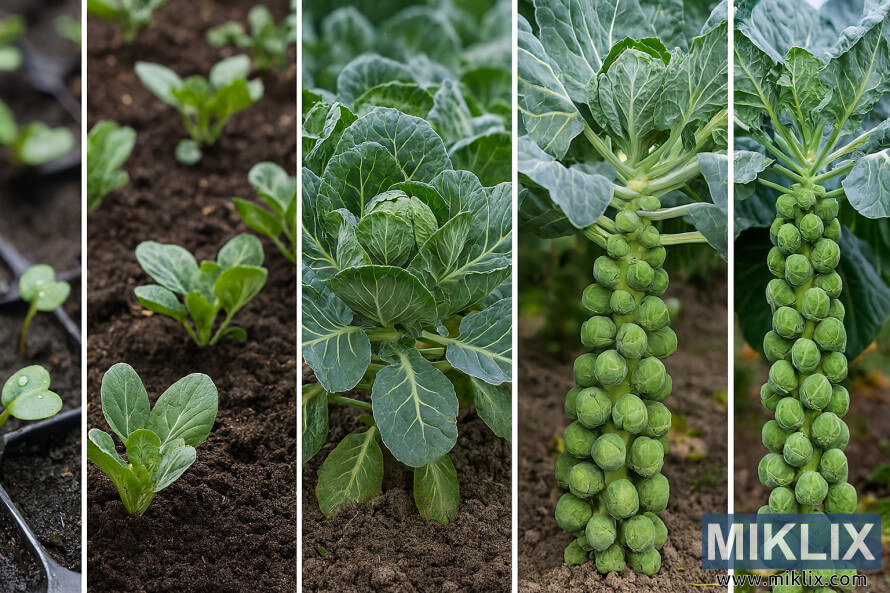
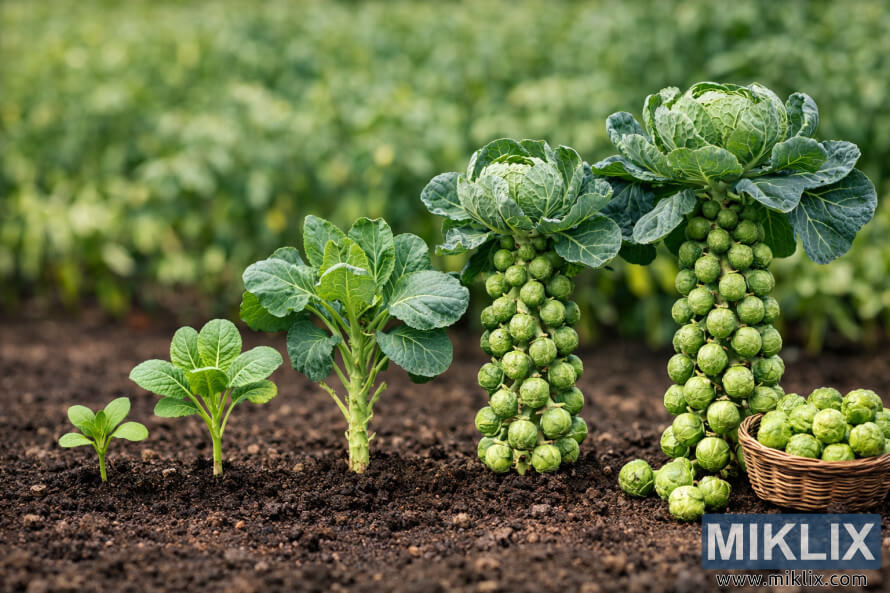
Understanding the growth stages of Brussels sprouts helps you anticipate their needs and know what to expect throughout the growing season:
| Growth Stage Timeline Plant Appearance Care Focus | Timeline | Plant Appearance | Care Focus |
| Seedling | 0-4 weeks | Small plants with 4-6 true leaves | Consistent moisture, protection from pests |
| Vegetative Growth | 4-12 weeks | Rapid leaf growth, plants reaching 1-2 feet tall | Regular fertilization, consistent watering |
| Stalk Elongation | 12-16 weeks | Plants reach full height (2-3 feet), lower leaves may yellow | Remove yellowing leaves, support if needed |
| Sprout Formation | 16-20 weeks | Small sprouts form in leaf axils, starting from bottom | Consistent moisture, balanced nutrition |
| Sprout Maturation | 20-24 weeks | Sprouts enlarge to 1-2 inches in diameter | Optional topping, protection from frost in cold regions |
| Harvest | 24+ weeks | Firm, tight sprouts of appropriate size | Harvest from bottom up as sprouts mature |
Click or tap the image for more information and higher resolutions.
Harvesting Brussels Sprouts
Knowing when and how to harvest your Brussels sprouts is crucial for the best flavor and texture. With proper timing, you'll be rewarded with sweet, tender sprouts that are nothing like their store-bought counterparts.
When to Harvest
- Brussels sprouts are ready to harvest when they reach 1-2 inches in diameter
- Sprouts should be firm and tightly closed
- Lower sprouts mature first, with maturity progressing up the stalk
- Flavor improves after exposure to light frost (28-32°F)
- In most regions, harvest begins in late fall and can continue through winter
Harvesting Techniques
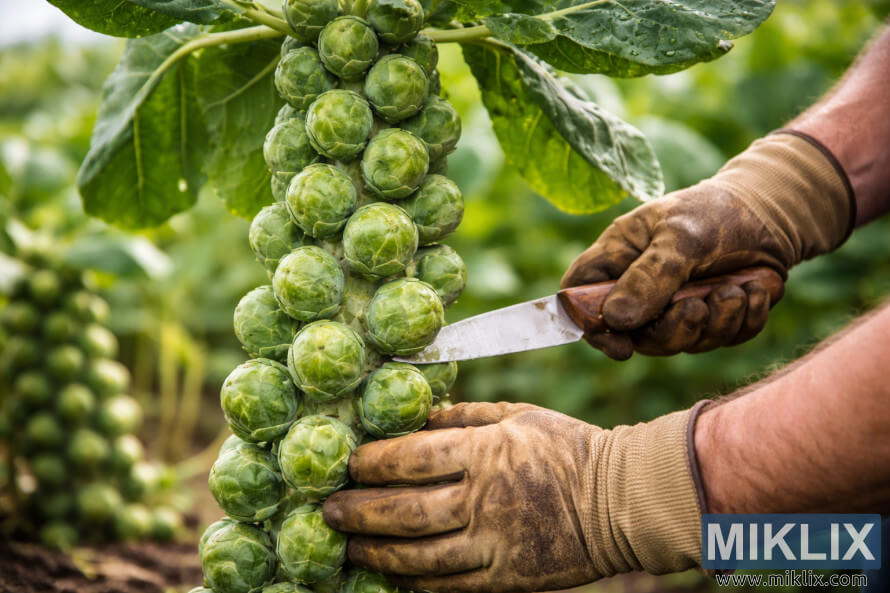
- Start harvesting from the bottom of the stalk, working upward as sprouts mature
- Twist sprouts until they break away from the stalk, or use a sharp knife
- Remove yellowing leaves as you harvest to improve air circulation
- For a one-time harvest, cut the entire stalk at soil level
- If desired, cut off the top growing point about a month before harvest to encourage all sprouts to mature at once
Frost Sweetening: For the sweetest flavor, wait to harvest until after the first light frost. The cold temperatures convert starches to sugars, dramatically improving taste. In cold regions, plants can remain in the garden until temperatures drop to about 20°F.
Click or tap the image for more information and higher resolutions.
Storage and Preservation
After investing months in growing your Brussels sprouts, proper storage ensures you'll enjoy your harvest for as long as possible.
Short-Term Storage
- Refrigerate unwashed sprouts in a perforated plastic bag
- Store in the vegetable crisper drawer at high humidity
- Fresh sprouts will keep for 3-5 weeks when properly stored
- For extended refrigerator storage, keep sprouts attached to the stalk
- Remove any damaged or yellowing outer leaves before storing
Long-Term Preservation
To enjoy your harvest beyond the fresh storage period, consider these preservation methods:
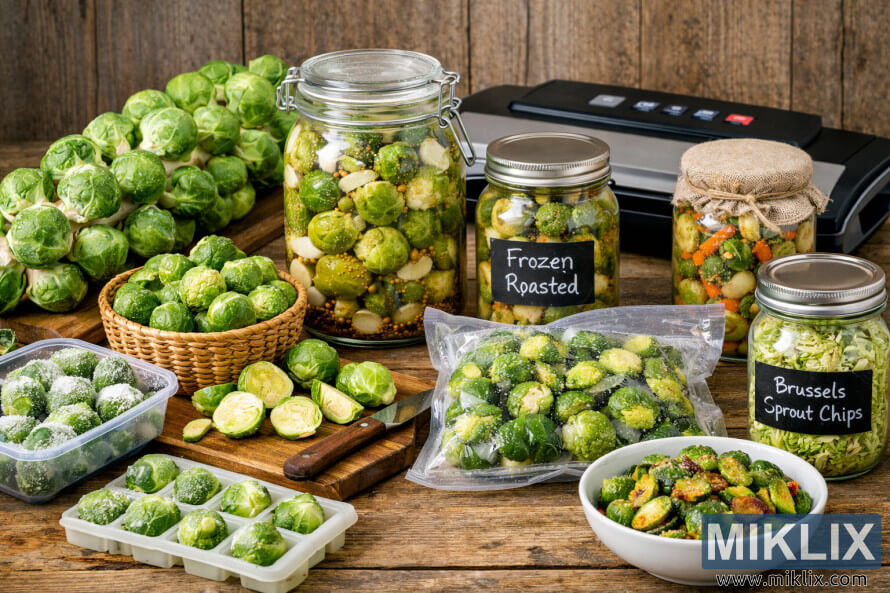
| Method | Preparation | Storage Life | Best Uses |
| Freezing | Blanch for 3-5 minutes, cool quickly, pack in freezer containers | 10-12 months | Roasting, sautéing, soups |
| Pickling | Blanch briefly, pack in jars with pickling brine | 12+ months | Appetizers, side dishes |
| Dehydrating | Blanch, slice thinly, dry at 125°F until crisp | 6-12 months | Snacks, soups, stews |
| Root Cellar | Keep sprouts on stalk, hang upside down | 4-6 weeks | Fresh eating |
Click or tap the image for more information and higher resolutions.
Troubleshooting Common Problems
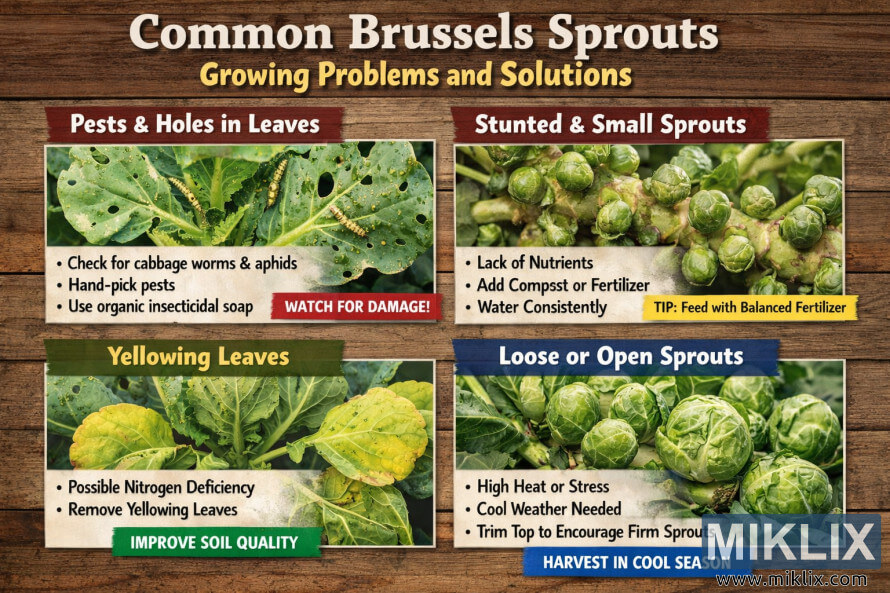
Why are my Brussels sprouts not forming tight heads?
Loose or open sprouts are usually caused by:
- High temperatures: Brussels sprouts need cool weather to form tight heads. In hot weather, they often remain loose or open.
- Inconsistent watering: Drought stress during sprout formation can cause loose heads.
- Nutrient deficiencies: Inadequate nitrogen or boron can affect sprout formation.
Solution: Plant for fall/winter harvest, maintain consistent soil moisture, and ensure adequate fertilization, especially with boron (add compost and balanced organic fertilizer).
Why are the lower leaves of my plants turning yellow?
Some yellowing of lower leaves is normal as plants mature. However, excessive yellowing may indicate:
- Nitrogen deficiency: Yellowing that starts with older leaves and moves upward
- Overwatering: Yellowing accompanied by wilting or soft stems
- Disease: Yellowing with spots, unusual patterns, or affecting multiple plants
Solution: Remove yellowing leaves promptly to improve air circulation. Apply nitrogen-rich fertilizer if deficiency is suspected. Adjust watering practices if soil is waterlogged.
My plants are tall but producing few sprouts. What's wrong?
This is typically caused by:
- Excessive nitrogen: Too much nitrogen promotes leaf growth at the expense of sprout production
- Improper timing: Plants started too late may not have enough time to form sprouts before winter
- Heat stress: Extended hot weather can delay or prevent sprout formation
Solution: Switch to a lower-nitrogen, higher-phosphorus fertilizer when plants reach about 2 feet tall. Ensure proper planting timing for your region. Consider "topping" plants (removing the growing point) about 4-6 weeks before expected harvest to encourage sprout development.
Why do my Brussels sprouts taste bitter?
Bitterness can be caused by:
- Heat stress: Maturing during hot weather increases bitter compounds
- Harvesting too late: Overmaturity leads to stronger flavor
- Variety selection: Some older varieties naturally have a stronger taste
Solution: Plant for fall/winter harvest when temperatures are cooler. Harvest sprouts when they're firm but not oversized. Try modern hybrid varieties bred for milder flavor. Expose plants to light frost before harvesting to increase sweetness.
How do I prevent my Brussels sprouts from falling over?
Toppling plants are usually caused by:
- Weak root systems: Often due to shallow planting or poor soil structure
- Top-heavy growth: Tall plants with heavy sprouts can become unstable
- Wind exposure: Strong winds can push over tall plants
Solution: Plant seedlings deeply, with the lowest leaves just above soil level. Mound soil around the base of plants as they grow. In windy areas, stake plants individually or provide windbreaks. Choose shorter varieties if wind is a persistent problem.
Click or tap the image for more information and higher resolutions.
Conclusion: Enjoying Your Homegrown Harvest
Growing Brussels sprouts requires patience and attention to detail, but the reward is well worth the effort. There's nothing quite like the sweet, nutty flavor of homegrown sprouts that have been kissed by frost and harvested at the peak of perfection.
While these miniature cabbages may take longer to mature than many other vegetables, they provide a welcome harvest during the leaner months of late fall and winter when fresh garden produce is scarce. Their impressive nutritional profile and versatility in the kitchen make them a valuable addition to any home garden.
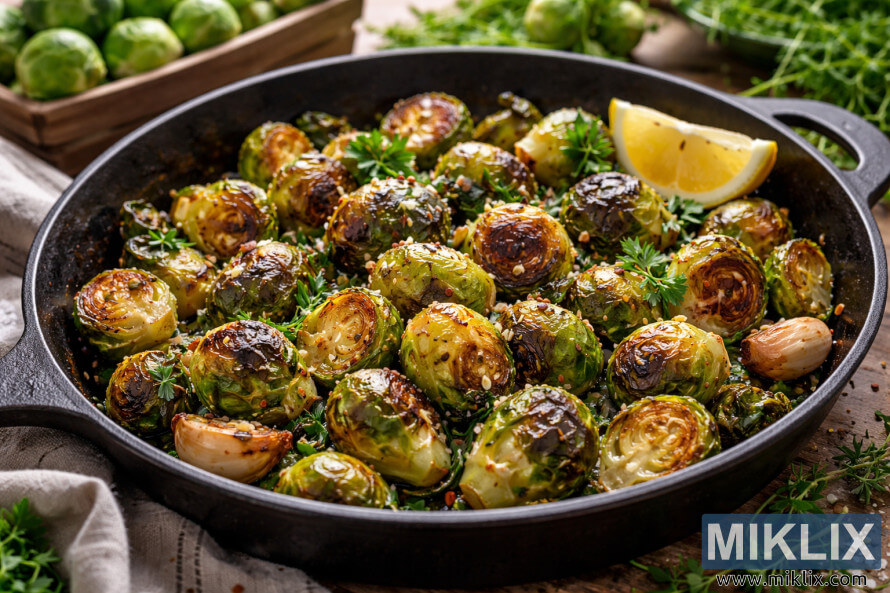
Whether you're roasting them with a drizzle of olive oil, shredding them into a winter slaw, or incorporating them into hearty soups and stews, your homegrown Brussels sprouts will deliver flavor that store-bought varieties simply can't match.
Click or tap the image for more information and higher resolutions.
Further Reading
If you enjoyed this post, you may also like these suggestions:
- A Guide to Growing Goji Berries in Your Home Garden
- How to Grow Your Own Endive: A Complete Beginner's Guide
- A Guide to Growing the Best Elderberries in Your Garden