
Image: Common Grapevine Trellis Systems: High Wire Cordon and Vertical Shoot Positioning
Published: December 24, 2025 at 12:05:41 PM UTC
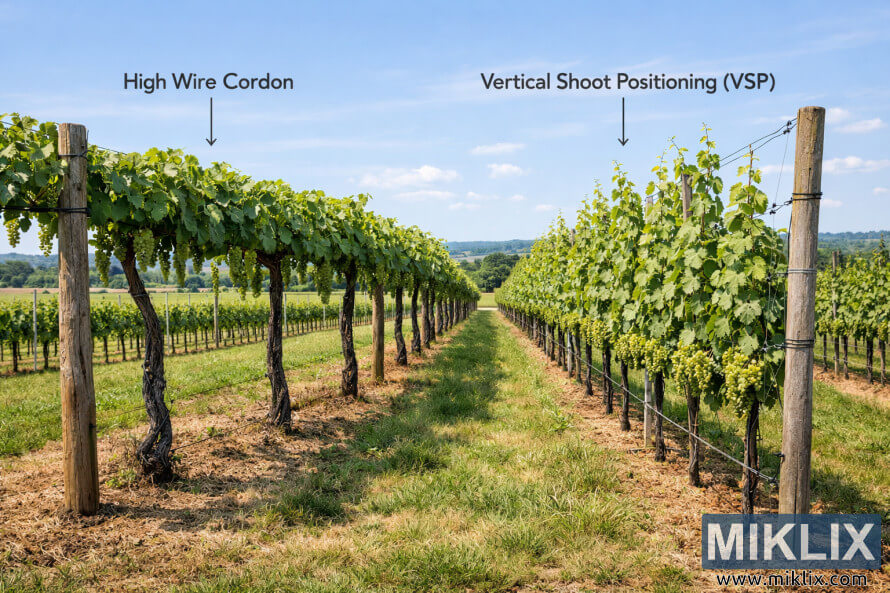
High-resolution vineyard image illustrating two common grape trellis systems—high wire cordon and vertical shoot positioning—shown side by side for comparison.
Available versions of this image
The image files available for download below are less compressed and higher resolution - and as a result of that, higher quality - than the images embedded in articles and pages on this website, which are more optimized for file size in order to reduce bandwidth consumption.
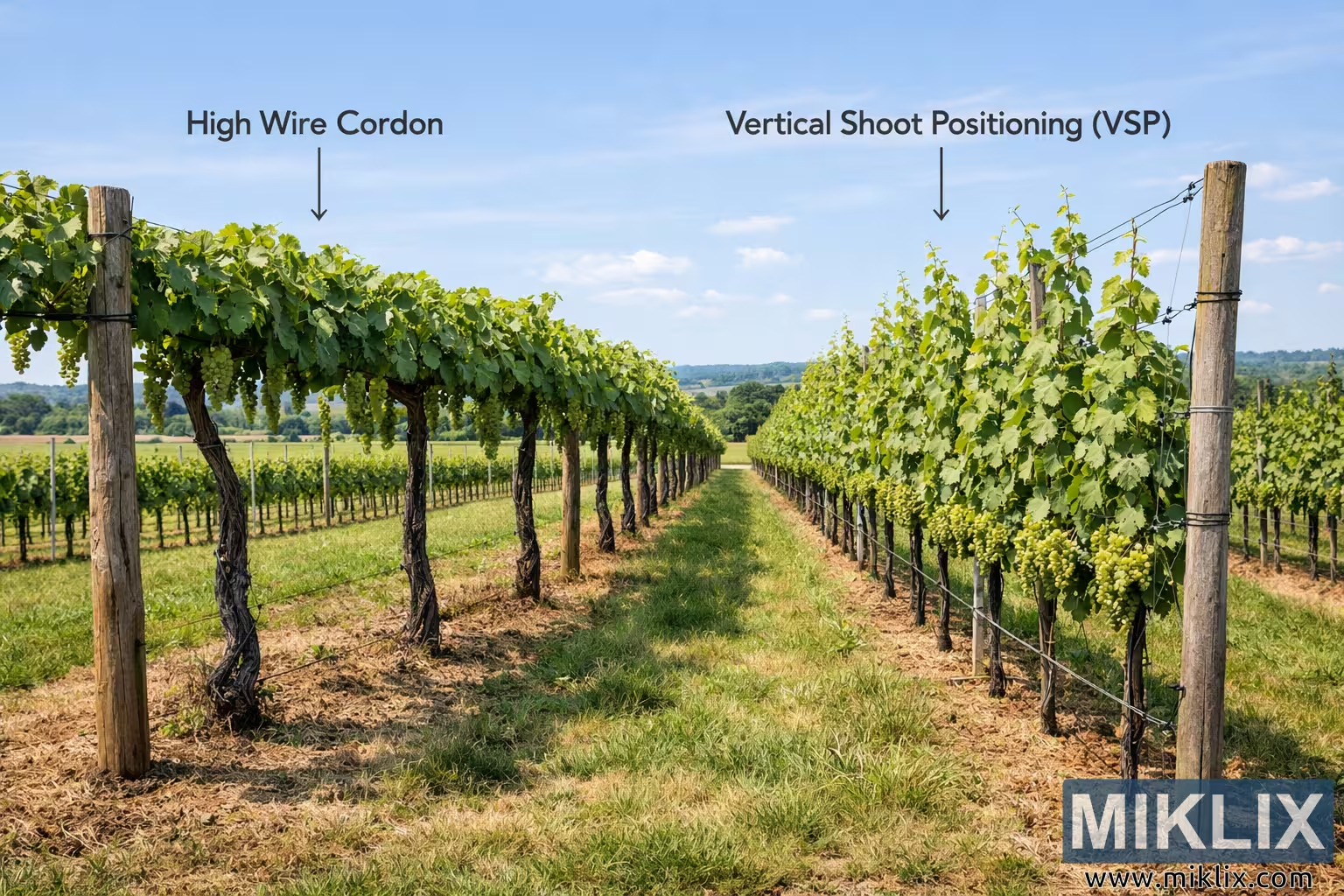
Regular size (1,536 x 1,024)
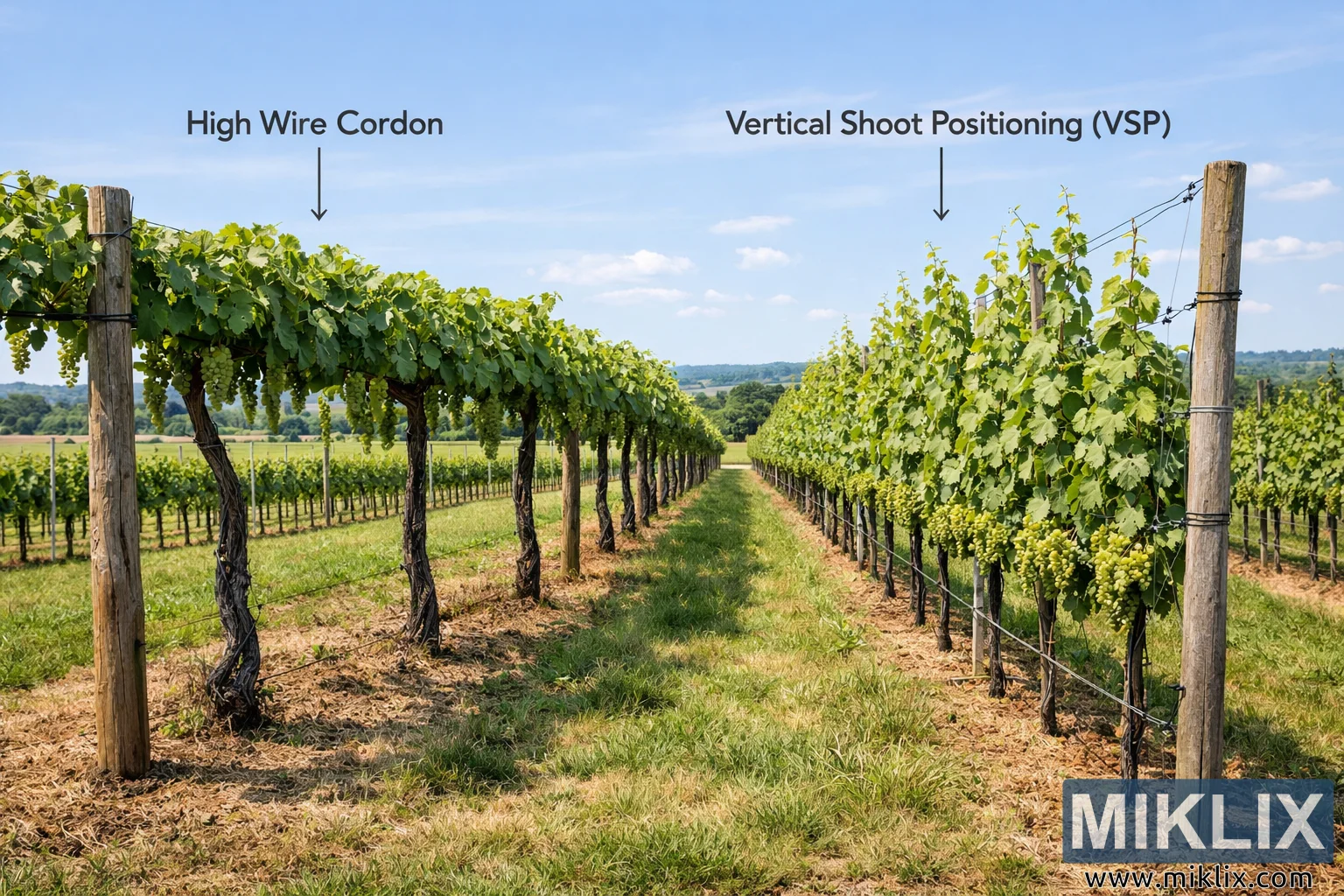
Large size (3,072 x 2,048)
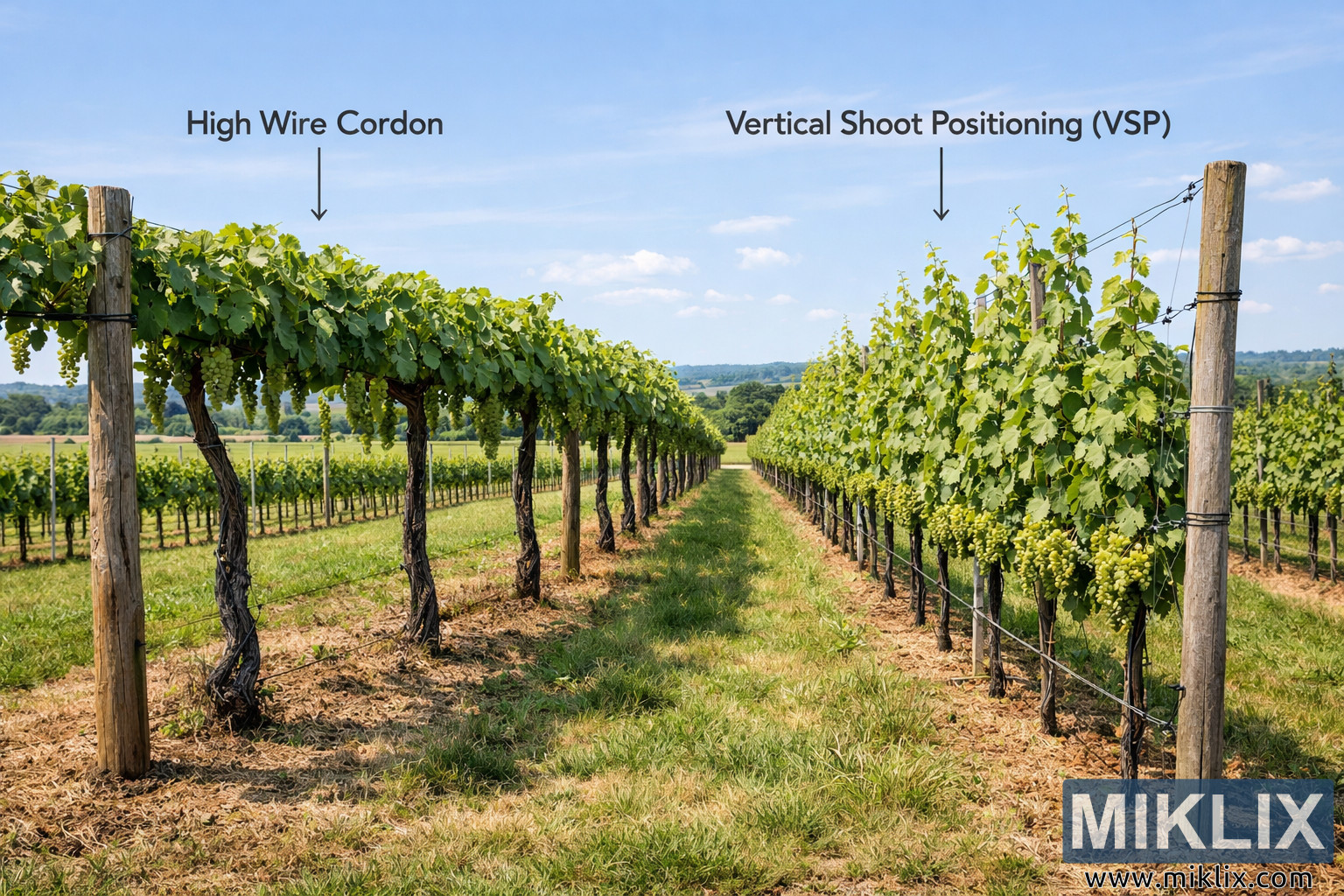
Very large size (4,608 x 3,072)
Extra large size (6,144 x 4,096)
Comically large size (1,048,576 x 699,051)
- Still uploading... ;-)
Image description
The image presents a wide, landscape-oriented view of a sunlit vineyard designed to visually compare two common grapevine trellis systems: the high wire cordon system on the left and the vertical shoot positioning (VSP) system on the right. The perspective is centered along a grassy access lane that runs straight down the middle of the vineyard, drawing the viewer’s eye toward distant rolling hills and agricultural fields beneath a bright, clear blue sky with soft, scattered clouds.
On the left side of the image, the high wire cordon system is clearly visible. Thick, weathered wooden posts support a single elevated horizontal wire positioned well above head height. Mature grapevine trunks rise vertically from the ground before branching outward along the high wire, forming a continuous canopy. The foliage is dense and drapes downward, creating a natural umbrella-like structure. Clusters of light green, unripe grapes hang freely beneath the leaf canopy, exposed and well-spaced. The vines appear robust, with gnarled trunks and a relaxed growth habit, emphasizing the simplicity and openness of the high wire cordon design.
On the right side, the vertical shoot positioning system contrasts sharply in structure and appearance. Here, the grapevines are trained upward in a narrow, orderly row. Multiple sets of parallel wires guide the shoots vertically, producing a neat, upright wall of foliage. The leaves are arranged in a more compact and disciplined manner, with shoots extending straight up between the wires. Grape clusters are positioned lower on the vine, closer to the fruiting zone, and are partially framed by the surrounding leaves. The posts and wires are more numerous and visually prominent, highlighting the precision and management intensity typical of VSP systems.
The ground beneath both trellis systems is dry and lightly tilled near the vine trunks, transitioning to green grass in the central lane. The symmetry of the rows, combined with the contrasting training methods, creates a clear educational comparison. Overall, the image functions both as an aesthetically pleasing vineyard landscape and as an informative visual reference for understanding how different trellis systems influence vine structure, canopy management, and grape presentation.
The image is related to: A Complete Guide to Growing Grapes in Your Home Garden