
Image: Common Grape Diseases and Pests Identification Guide
Published: December 24, 2025 at 12:05:41 PM UTC
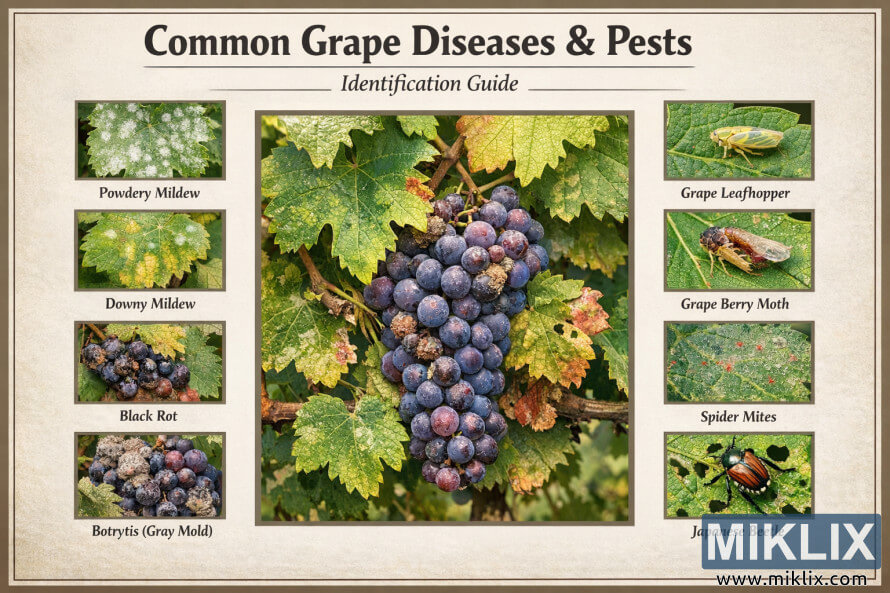
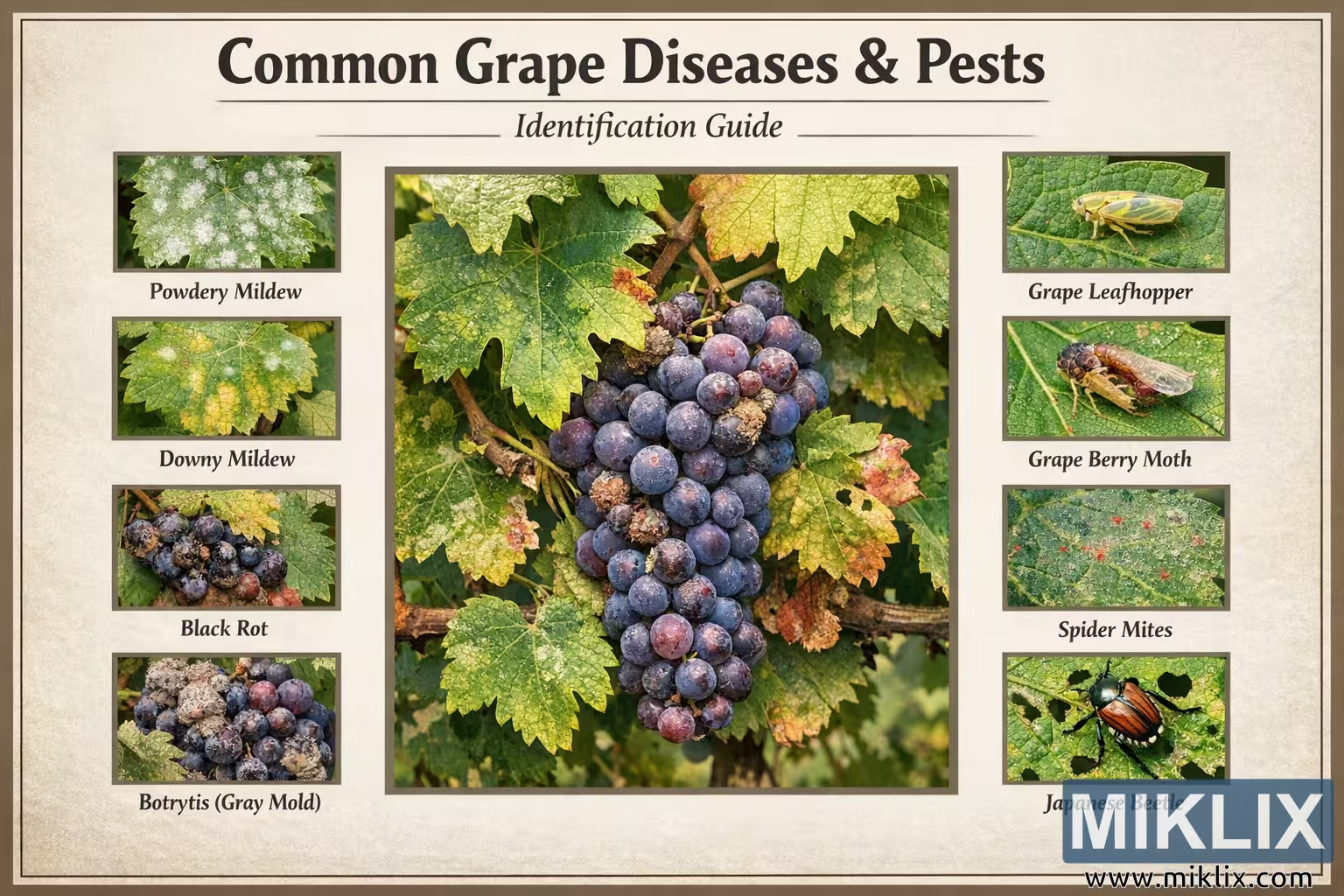
Landscape educational poster illustrating common grape diseases and pests with labeled photos for identification, including mildew, rot, mites, leafhoppers, and beetles.
Available versions of this image
The image files available for download below are less compressed and higher resolution - and as a result of that, higher quality - than the images embedded in articles and pages on this website, which are more optimized for file size in order to reduce bandwidth consumption.
Regular size (1,536 x 1,024)
Large size (3,072 x 2,048)
Very large size (4,608 x 3,072)
Extra large size (6,144 x 4,096)
Comically large size (1,048,576 x 699,051)
- Still uploading... ;-)
Image description
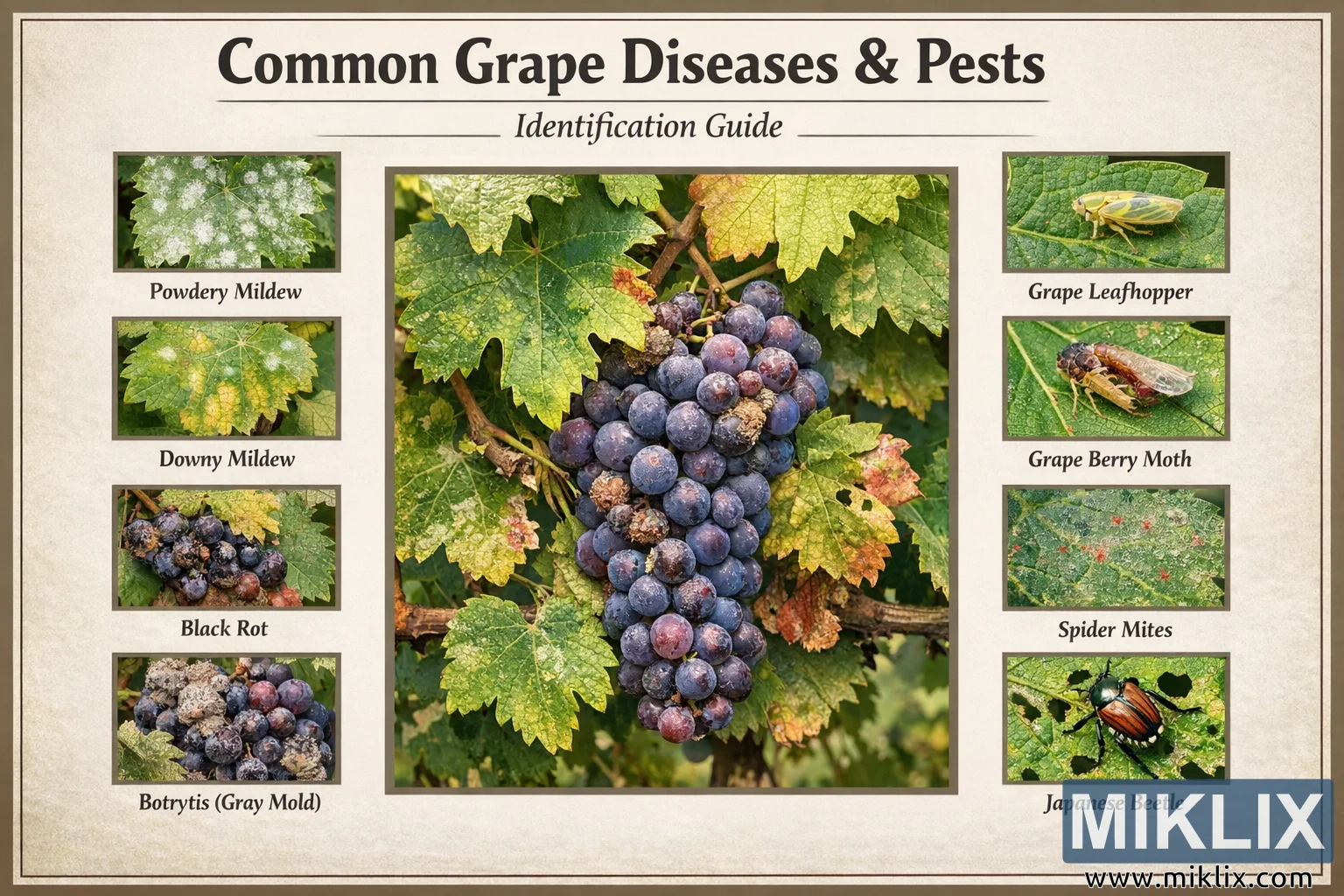
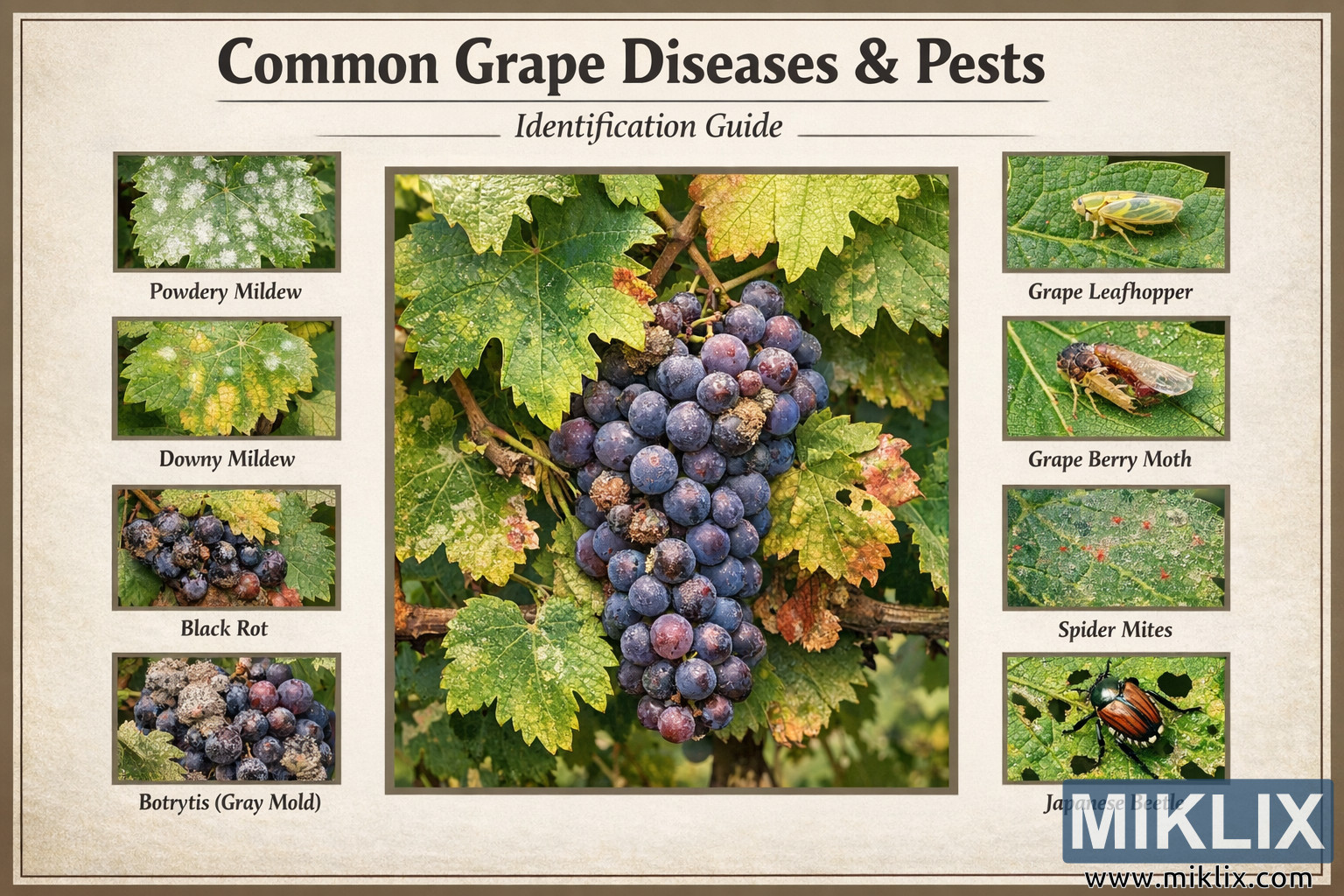
The image is a wide, landscape-oriented educational poster titled "Common Grape Diseases & Pests" with a subtitle reading "Identification Guide." It is designed in a clean, vintage-inspired style with a light parchment-colored background and thin decorative borders, giving it the appearance of a reference chart suitable for vineyards, classrooms, or agricultural extension materials. At the center of the composition is a large, high-resolution photograph of a mature grape cluster hanging from a vine. The grapes are dark purple to blue, with natural variation in color and bloom, and are surrounded by green grape leaves showing subtle signs of stress and discoloration. Some berries appear shriveled or spotted, visually reinforcing the theme of disease identification. Surrounding the central grape cluster are smaller rectangular image panels arranged symmetrically on the left and right sides. Each panel contains a close-up photograph illustrating a specific grape disease or pest, accompanied by a clear label beneath the image. On the left side, four disease examples are shown: Powdery Mildew, depicted as white, powder-like fungal growth on a grape leaf; Downy Mildew, shown as yellowing and blotchy lesions on leaf surfaces; Black Rot, illustrated by dark, shriveled berries and necrotic spots; and Botrytis (Gray Mold), characterized by fuzzy gray fungal growth affecting grape clusters. On the right side, four common grape pests are displayed: Grape Leafhopper, shown as a small pale green insect resting on a leaf; Grape Berry Moth, depicted as a small brownish insect associated with berry damage; Spider Mites, represented by stippled leaf damage with tiny red mites visible; and Japanese Beetle, shown as a metallic green and copper-colored beetle feeding on grape foliage. The typography is clear and legible, with disease and pest names presented in a bold serif font that contrasts well against the light background. The overall layout emphasizes visual comparison, enabling quick identification by matching symptoms on real vines to the photographic examples. The image functions as both an instructional aid and a practical field reference, combining scientific accuracy with an approachable, visually organized design.
The image is related to: A Complete Guide to Growing Grapes in Your Home Garden