
A Guide to Growing Celery in Your Own Garden
Published: January 27, 2026 at 10:55:45 PM UTC
Homegrown celery offers a flavor and crispness that store-bought varieties simply can't match. While celery has a reputation for being challenging to grow, with the right approach and a bit of patience, you can enjoy this versatile vegetable straight from your garden.
Click or tap the image for more information and higher resolutions.
This guide will walk you through everything you need to know about growing celery successfully, from selecting varieties to harvesting your crisp, flavorful stalks.
Understanding Celery Basics
Celery (Apium graveolens) is a cool-season biennial vegetable that's typically grown as an annual. It belongs to the Umbelliferae family, alongside carrots, fennel, parsley, and dill. Growing to a height of 18-24 inches, celery consists of leaf-topped stalks arranged in a cone shape, joined at a common base.
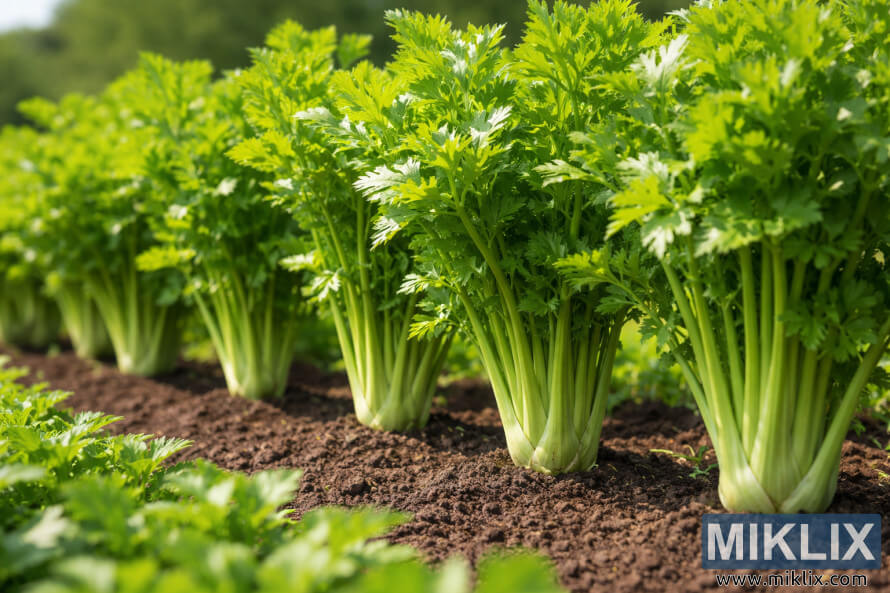
Healthy celery plants growing in a garden with proper spacing
Celery thrives in specific conditions and requires some key elements to grow successfully:
- Cool weather - Celery prefers temperatures between 55-65°F (13-18°C) and doesn't tolerate extreme heat
- Long growing season - Requires 120-140 days from seed to harvest
- Consistent moisture - Needs regular watering to prevent stringy, bitter stalks
- Rich soil - Demands fertile, well-draining soil with plenty of organic matter
- Patience - Slow to germinate and establish, requiring attentive care throughout its growth
Getting Started with Celery
Choosing Your Growing Method
There are several approaches to growing celery, each with its own advantages. Consider which method works best for your situation:
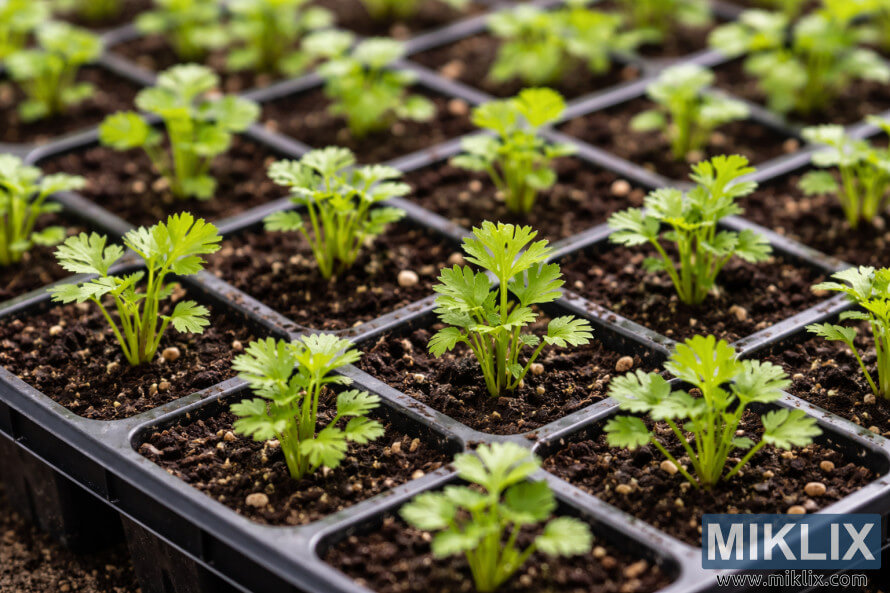
Starting from Seeds
Starting celery from seeds offers the widest variety selection and is the most economical approach. However, it requires the longest time commitment and careful attention during the germination phase.
Click or tap the image for more information and higher resolutions.
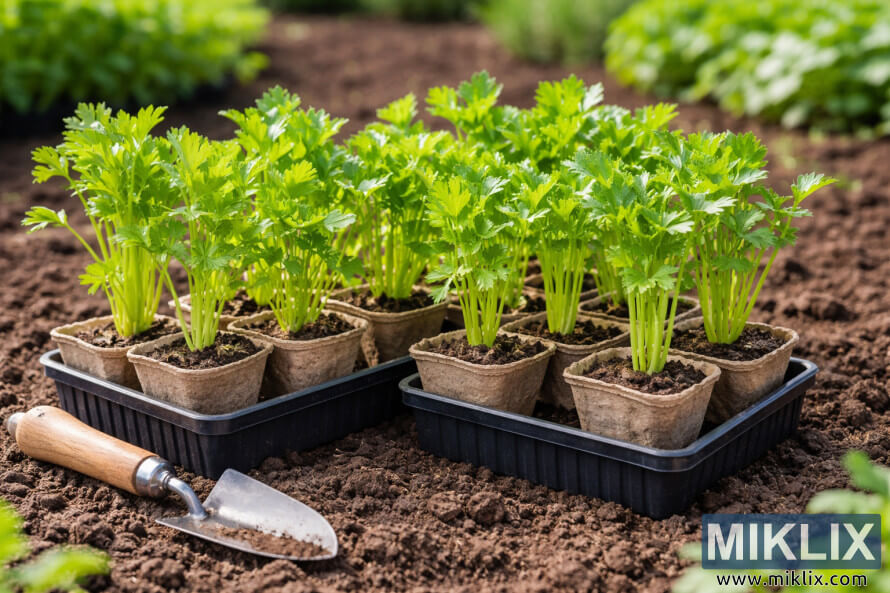
Using Transplants
Purchasing celery seedlings from a nursery gives you a head start on the growing season. While more expensive than seeds, transplants reduce the time to harvest and eliminate germination challenges.
Click or tap the image for more information and higher resolutions.
Selecting Celery Varieties
Choosing the right celery variety for your climate and growing conditions is crucial for success. Here are some recommended varieties for home gardens:
| Variety | Days to Maturity | Characteristics | Best For |
| Utah Tall | 125-130 | Tall, crisp stalks with good flavor | Traditional celery dishes, cooler climates |
| Tango | 100-110 | Compact growth, disease resistant | Small gardens, consistent producers |
| Golden Self-Blanching | 110-115 | Shorter stalks, self-blanching, stringless | Beginners, smaller spaces |
| Ventura | 115-120 | Heat tolerant, disease resistant | Warmer climates, summer growing |
| Conquistador | 90-100 | Tolerates heat and water stress | Challenging growing conditions |
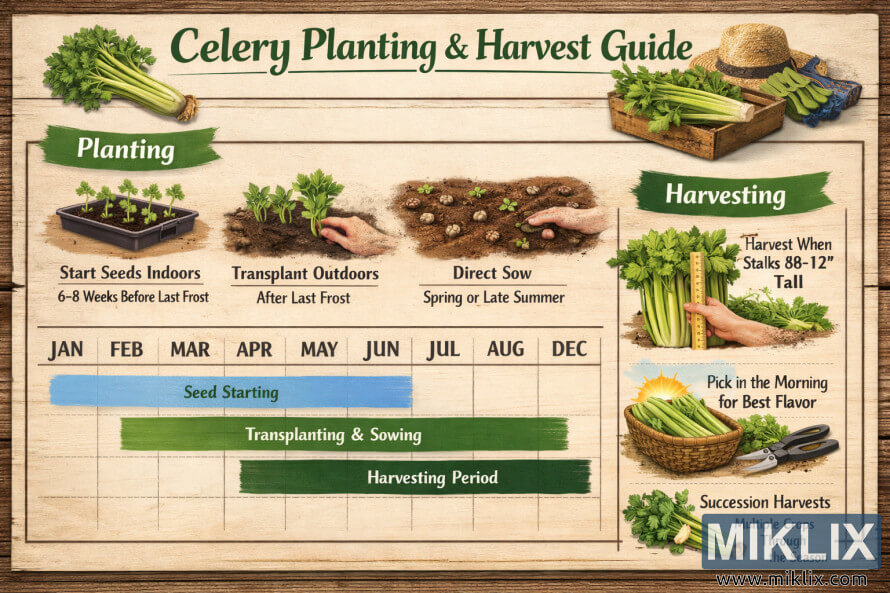
Timing Your Celery Planting
Timing is critical when growing celery due to its temperature preferences and long growing season:
Spring Crop
For a spring crop, start seeds indoors 10-12 weeks before your last spring frost date. This early start gives plants time to mature before summer heat arrives.
Fall Crop
For a fall harvest, start seeds 16-18 weeks before your first fall frost. This allows plants to mature during the cooling temperatures of autumn.
Click or tap the image for more information and higher resolutions.
Planting and Caring for Celery
Soil Preparation
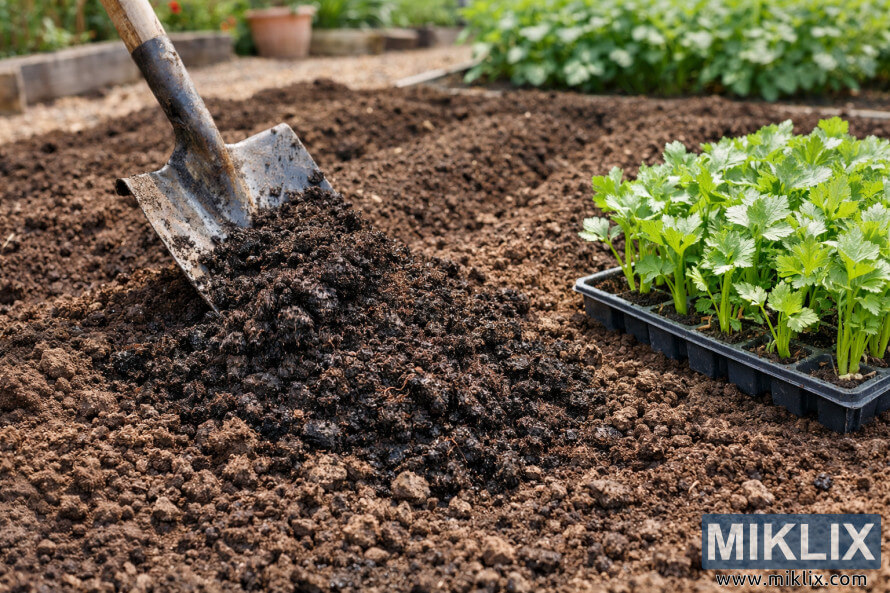
Celery is a heavy feeder with shallow roots, requiring nutrient-rich soil that retains moisture while still draining well:
- Test your soil pH - celery prefers slightly acidic to neutral soil (pH 6.0-7.0)
- Work 2-4 inches of aged compost or well-rotted manure into your planting area
- Loosen soil to a depth of 12-15 inches to accommodate celery's root system
- Consider adding a balanced fertilizer (like 5-10-10) before planting
- Ensure the soil can retain moisture but doesn't become waterlogged
Click or tap the image for more information and higher resolutions.
Planting Process
Starting Seeds Indoors
- Soak celery seeds in warm water overnight to improve germination
- Fill seed trays with quality seed-starting mix and gently firm the surface
- Press seeds onto the soil surface - do not cover them as they need light to germinate
- Cover trays with plastic wrap to maintain humidity
- Place in a warm location (70-75°F) until germination occurs (7-21 days)
- Once seedlings emerge, provide 16 hours of light daily using grow lights
- When seedlings reach 2 inches tall, transplant to individual pots
- Harden off seedlings for 7-10 days before transplanting outdoors
Transplanting Outdoors
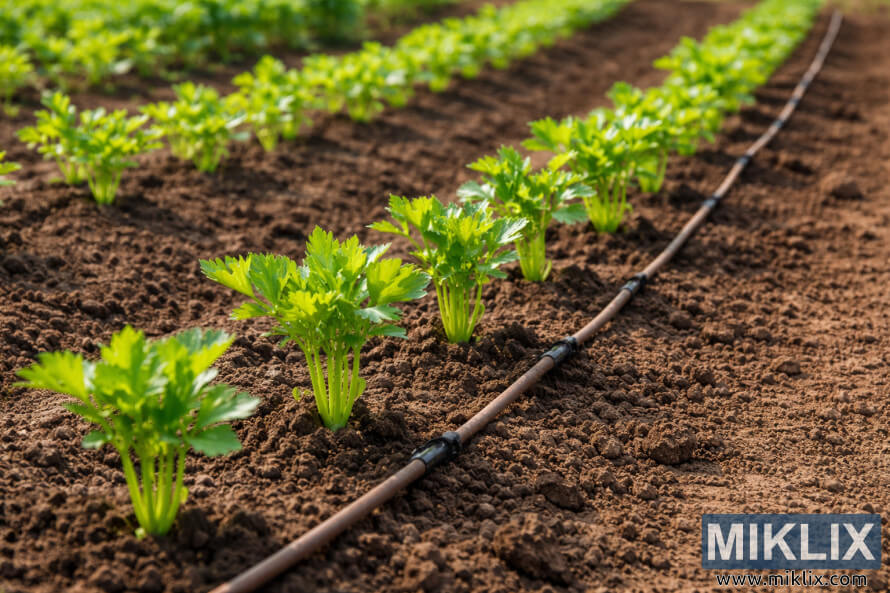
Transplant celery outdoors when soil temperatures reach at least 50°F and nighttime temperatures stay above 40°F:
- Space plants 8-10 inches apart in rows 18-24 inches apart
- Plant at the same depth as they were growing in their containers
- Water thoroughly after planting to help establish roots
- Apply a layer of mulch to retain moisture and suppress weeds
Click or tap the image for more information and higher resolutions.
Watering Requirements
Consistent watering is perhaps the most critical aspect of growing celery successfully:
Celery needs 1-2 inches of water per week to develop crisp, tender stalks. Inconsistent watering leads to stringy, tough celery with a bitter taste.
- Water deeply and consistently, keeping the soil evenly moist
- Consider drip irrigation for efficient, consistent moisture delivery
- Increase watering during hot, dry periods
- Apply a 2-3 inch layer of mulch to help retain soil moisture
- Water at the base of plants to keep foliage dry and prevent disease
Fertilizing Schedule
As a heavy feeder, celery benefits from regular fertilization throughout its growing season:
- At planting: Apply a balanced fertilizer worked into the soil
- 3-4 weeks after transplanting: Side-dress with nitrogen-rich fertilizer
- 6-8 weeks after transplanting: Apply a second side-dressing of balanced fertilizer
- Throughout the season: Consider applying compost tea every 2-3 weeks
Blanching (Optional)
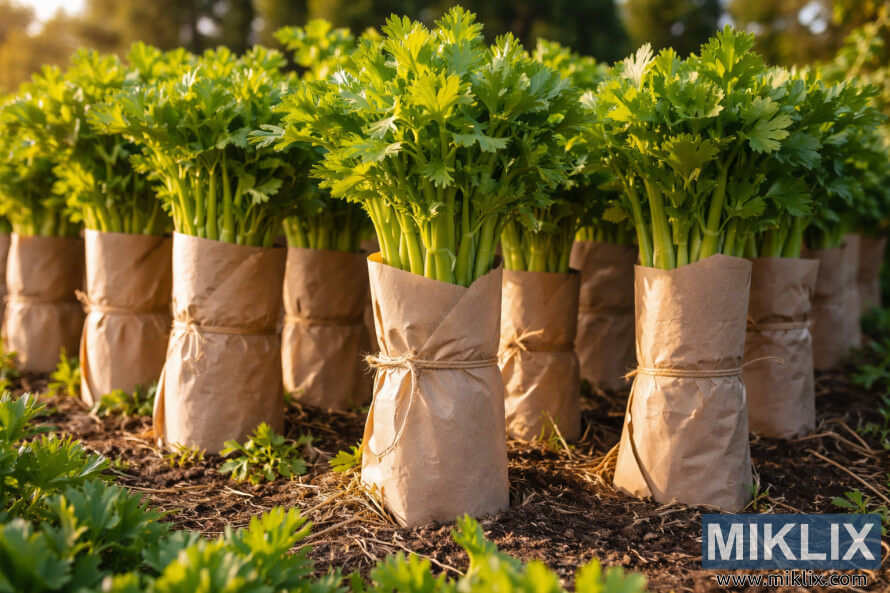
Blanching is the process of excluding light from the celery stalks to produce paler, milder-tasting celery:
Traditional Blanching
When plants are about 12 inches tall, wrap the lower portion of the stalks with paper, cardboard tubes, or mound soil around the base, leaving the leaves exposed. Maintain this covering for 2-3 weeks before harvest.
Self-Blanching Varieties
Some varieties, like Golden Self-Blanching, naturally produce lighter stalks without the need for covering, making them easier for beginners to grow.
Click or tap the image for more information and higher resolutions.
Common Celery Growing Problems
While celery can be challenging to grow, being aware of common issues helps you address them promptly:
Pests
| Pest | Symptoms | Organic Control Methods |
| Aphids | Curled leaves, sticky residue, small green or black insects on undersides of leaves | Strong water spray, insecticidal soap, introducing beneficial insects like ladybugs |
| Celery Leaf Miners | Winding tunnels or blotches in leaves | Remove and destroy affected leaves, use row covers early in the season |
| Slugs and Snails | Irregular holes in leaves, slime trails | Handpick at night, diatomaceous earth barriers, beer traps |
| Carrot Rust Flies | Tunnels in roots, wilted plants | Row covers, crop rotation, yellow sticky traps |
Diseases
| Disease | Symptoms | Prevention/Treatment |
| Early Blight | Yellow spots on leaves that turn brown with concentric rings | Proper spacing for air circulation, avoid overhead watering, organic fungicides |
| Fusarium Yellows | Yellowing leaves, stunted growth, brown discoloration in stalks | Plant resistant varieties, practice crop rotation, remove infected plants |
| Black Heart | Black discoloration in young leaves and heart of the plant | Consistent watering, calcium-rich fertilizers, proper soil pH |
| Powdery Mildew | White powdery patches on leaves | Good air circulation, avoid overhead watering, organic fungicides |
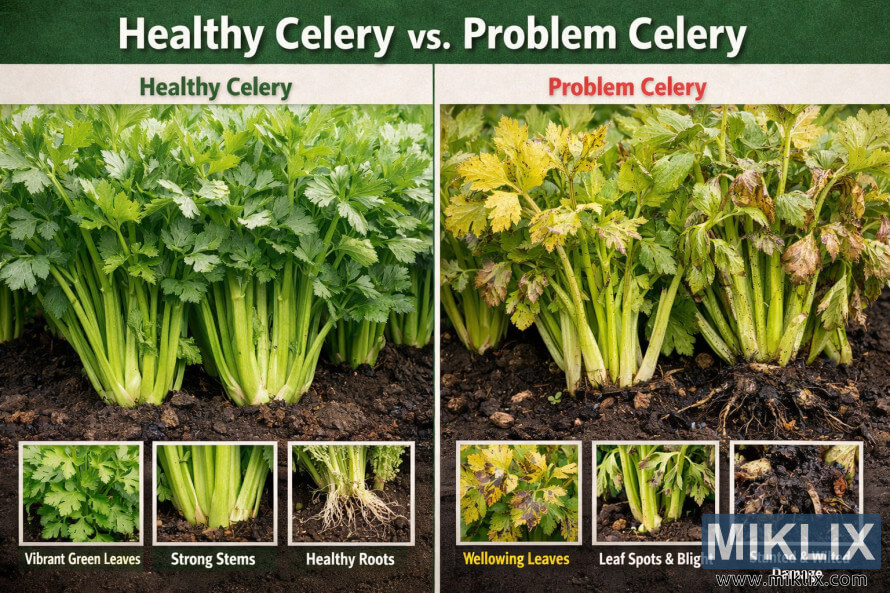
Growing Challenges
Recognizing problems early helps prevent crop loss
Prevention Tips
- Use row covers during early growth stages
- Practice crop rotation (don't plant where other Umbelliferae family crops grew recently)
- Maintain consistent watering schedule
- Ensure proper spacing for air circulation
- Remove plant debris promptly
Common Mistakes
- Inconsistent watering leading to stringy stalks
- Planting too late in spring (causing bolting in summer heat)
- Insufficient soil preparation
- Overcrowding plants
- Neglecting pest monitoring
Click or tap the image for more information and higher resolutions.
Harvesting and Storing Celery
When to Harvest
Celery is typically ready to harvest 120-140 days after planting seeds or 80-100 days after transplanting seedlings. You can harvest in two main ways:
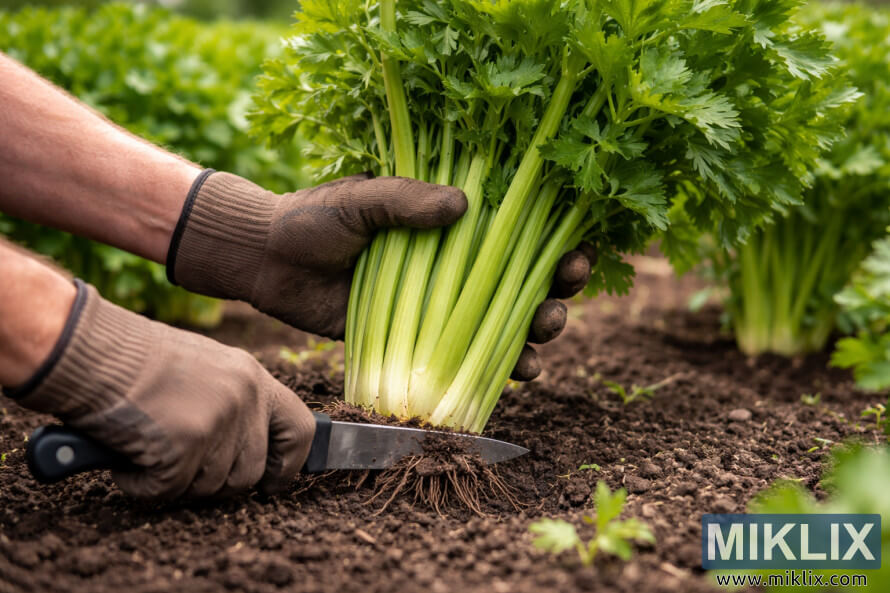
Whole Plant Harvest
Cut the entire plant at ground level when stalks are 8-10 inches tall and the plant has reached desired size, typically when the base diameter is about 3 inches.
Click or tap the image for more information and higher resolutions.
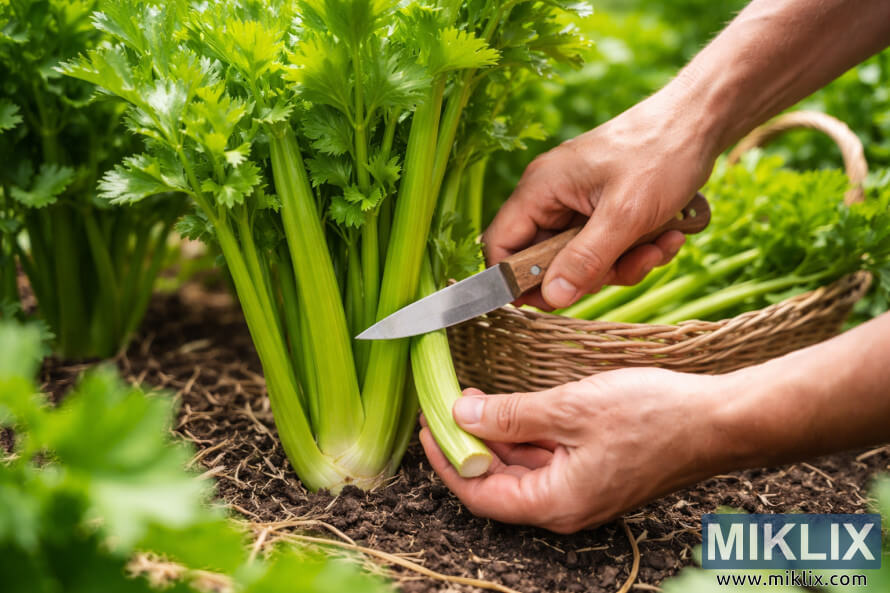
Individual Stalk Harvest
Remove outer stalks as needed, allowing the plant to continue growing. This extends your harvest period and allows inner stalks to develop further.
The darker the stalks become, the more nutrients they will contain. However, darker green stalks will also have a stronger flavor and tougher texture than lighter stalks.
Click or tap the image for more information and higher resolutions.
Storage Methods
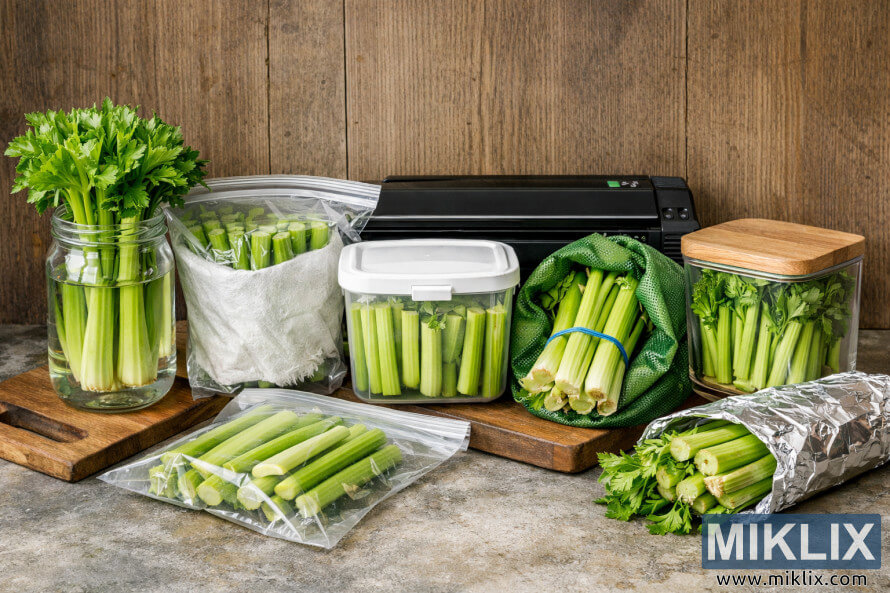
Properly stored celery can last for weeks, maintaining its crispness and flavor:
- Refrigerator: Wrap unwashed celery in aluminum foil or place in a plastic bag in the crisper drawer. Properly stored, it can last 2-4 weeks.
- Freezing: Blanch celery pieces for 3 minutes, cool in ice water, drain, and freeze in airtight containers. Best used in cooked dishes.
- Drying: Celery leaves can be dried for use as herbs in soups and stews.
- Root cellar: In cooler climates, celery can be stored with roots attached in moist sand in a root cellar.
Click or tap the image for more information and higher resolutions.
Reviving Limp Celery
If your celery becomes limp, you can often revive it by trimming the ends and placing the stalks in a glass of cold water for a few hours. Adding a few slices of potato to the water can help crisp limp celery even faster.
Conclusion
Growing celery requires patience and attention to detail, but the reward of crisp, flavorful stalks makes the effort worthwhile. By providing the right growing conditions—cool temperatures, consistent moisture, and nutrient-rich soil—you can successfully grow this versatile vegetable in your own garden.
Remember that homegrown celery may look different from store-bought varieties. It's often darker green, more slender, and more intensely flavored. These characteristics indicate a more nutritious product free from commercial pesticides and growing methods.
Whether you're adding crunch to salads, flavor to soups, or a healthy snack to your diet, there's nothing quite like the satisfaction of growing your own celery. Start with the right variety for your climate, provide attentive care throughout the growing season, and you'll be rewarded with a bountiful harvest of this kitchen staple.
Further Reading
If you enjoyed this post, you may also like these suggestions:
- Top 10 Healthiest Vegetables to Grow in Your Home Garden
- A Complete Guide to Growing Leeks at Home Successfully
- Growing Burdock: Your Complete Guide from Seed to Harvest