
Image: Before and After Proper Pruning of Elderberry Bushes
Published: November 11, 2025 at 9:12:17 PM UTC
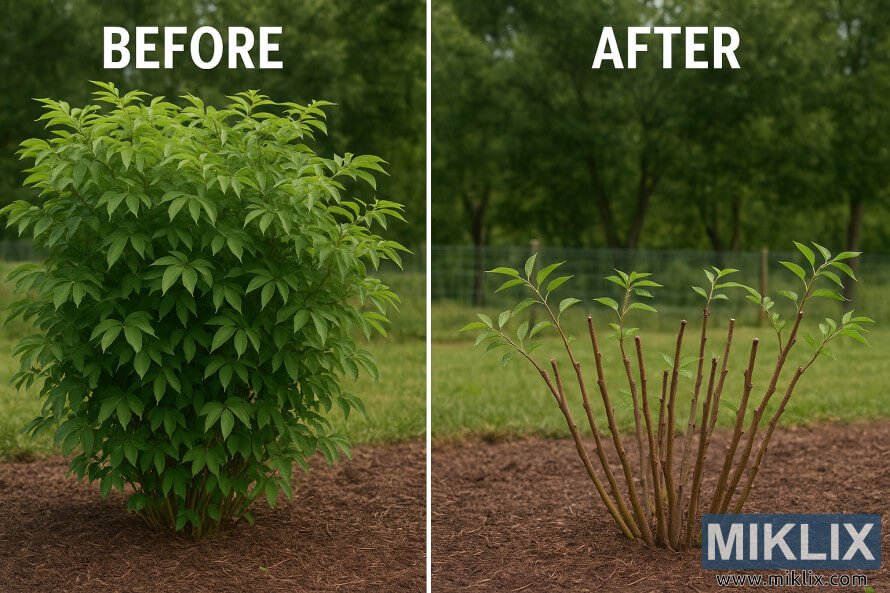
A detailed before-and-after photo comparison demonstrating proper pruning of elderberry bushes, showing how cutting back dense growth improves structure and health.
Available versions of this image
The image files available for download below are less compressed and higher resolution - and as a result of that, higher quality - than the images embedded in articles and pages on this website, which are more optimized for file size in order to reduce bandwidth consumption.
Regular size (1,536 x 1,024)
Large size (3,072 x 2,048)
Very large size (4,608 x 3,072)
Extra large size (6,144 x 4,096)
Comically large size (1,048,576 x 699,051)
- Still uploading... ;-)
Image description
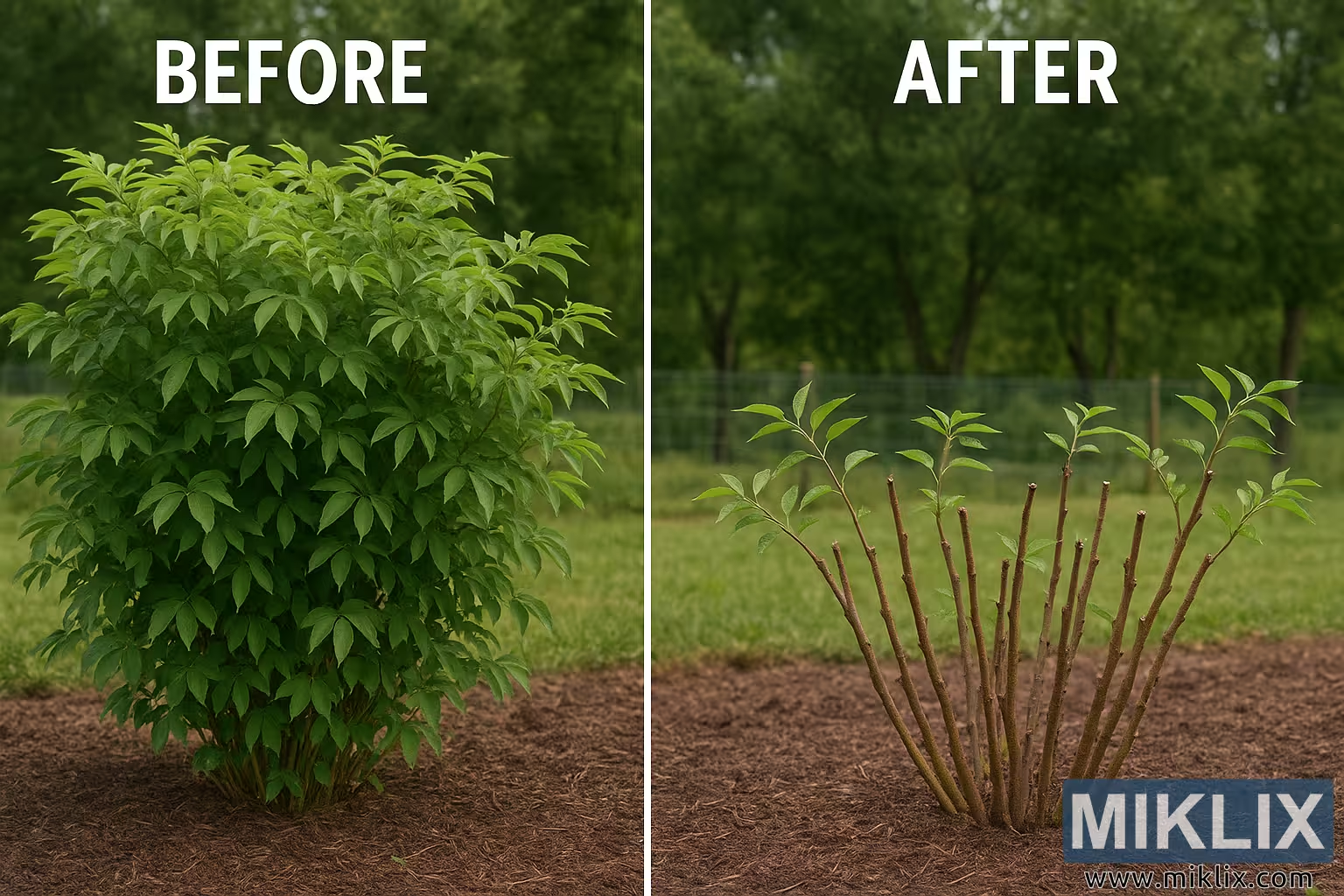
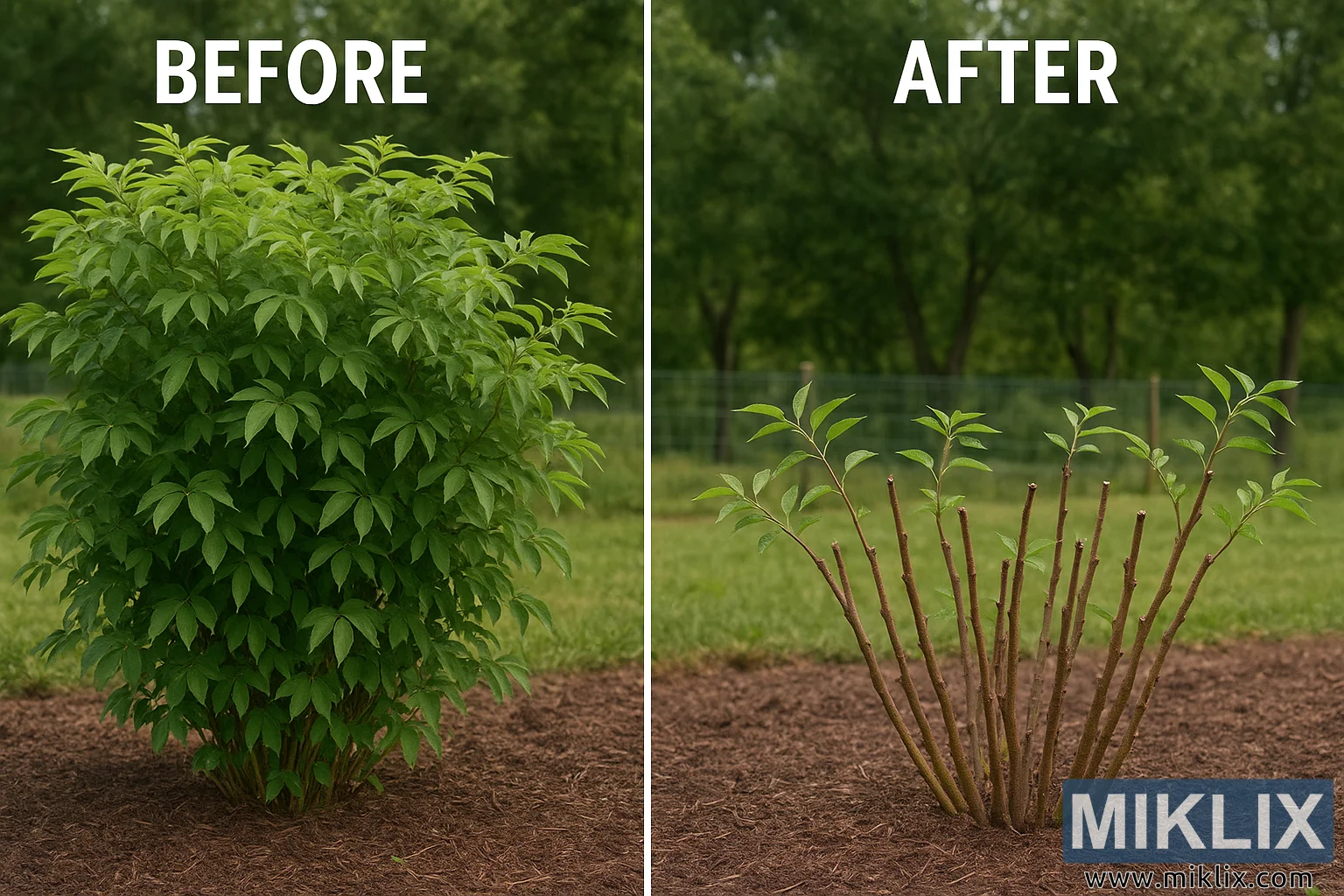
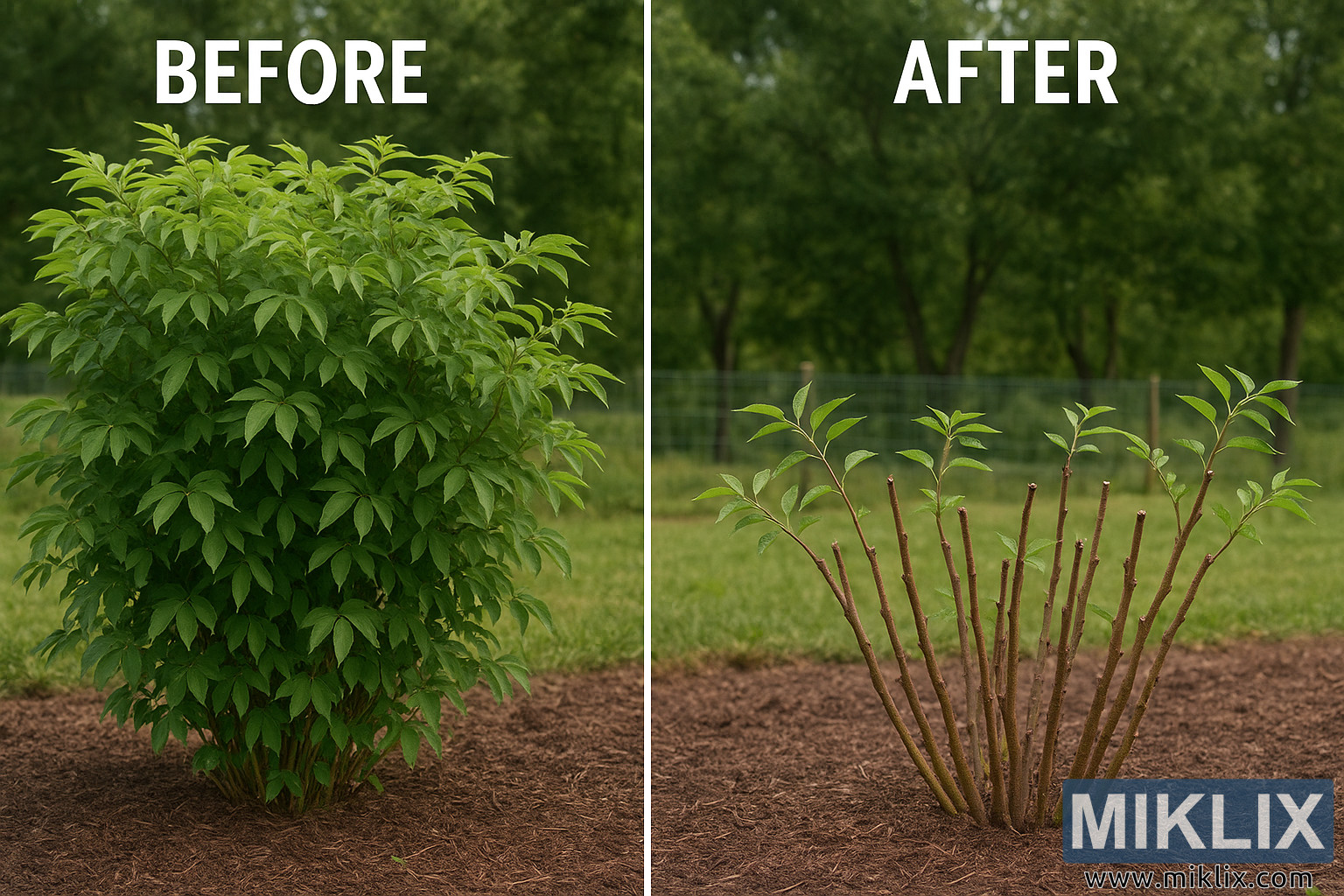
This landscape-oriented image presents a clear visual comparison of an elderberry bush before and after proper pruning, designed to illustrate best horticultural practices. The image is divided vertically into two equal halves, separated by a thin white line. The left half is labeled 'BEFORE' in bold, uppercase white text, while the right half reads 'AFTER' in the same style. Both sides share the same natural garden background, featuring a grassy lawn, a low wire fence, and a soft blur of mature trees in the distance. The lighting is natural and diffused, consistent with an overcast or softly lit afternoon, giving the entire composition a calm and realistic tone.
In the 'BEFORE' panel on the left, the elderberry bush appears full, lush, and densely packed with leaves. The foliage consists of medium-green, serrated leaflets arranged in opposite pairs along each stem. The bush’s shape is roughly oval, standing about chest height, with the leaves forming a thick, unbroken mass. The stems are largely hidden beneath the foliage, with only hints of the reddish-brown lower branches visible near the mulch-covered ground. The base of the plant is encircled by a neatly maintained area of brown mulch, contrasting gently with the surrounding green grass. This side of the image conveys a sense of vigorous but unmanaged growth — healthy but crowded, with minimal airflow or light penetration inside the plant.
On the right, the 'AFTER' image reveals the same elderberry bush after pruning has been properly completed. The change is striking: the bush has been opened up, with the majority of the dense top foliage removed. Approximately ten to twelve main canes remain, each trimmed to varying but generally uniform heights, creating a tidy, vase-like shape. The pruned stems are evenly spaced to promote airflow and future healthy regrowth. A few small clusters of new leaves emerge near the tips, indicating ongoing vitality and recovery. The reddish-brown color of the freshly cut stems contrasts with the green background, emphasizing the structural form of the plant. The same mulch bed is visible beneath the pruned bush, anchoring the scene in continuity with the 'BEFORE' shot.
The background elements—the wire fence, tree line, and soft greenery—remain consistent between the two images, underscoring that these are true before-and-after photographs taken in the same location. The visual narrative conveys both aesthetic and horticultural improvement: the pruning transforms an unruly, overgrown plant into a clean, balanced structure ready for renewed growth and higher fruit yield. The overall mood of the composition is instructional and professional, ideal for gardening guides, educational materials, or agricultural extension publications. The balanced framing, realistic lighting, and well-defined contrast between the two states make the image an effective visual aid for demonstrating correct pruning techniques for elderberry and similar shrub species.
The image is related to: A Guide to Growing the Best Elderberries in Your Garden