
Image: Asparagus with Fusarium Crown and Root Rot in Garden Soil
Published: December 12, 2025 at 10:05:46 PM UTC
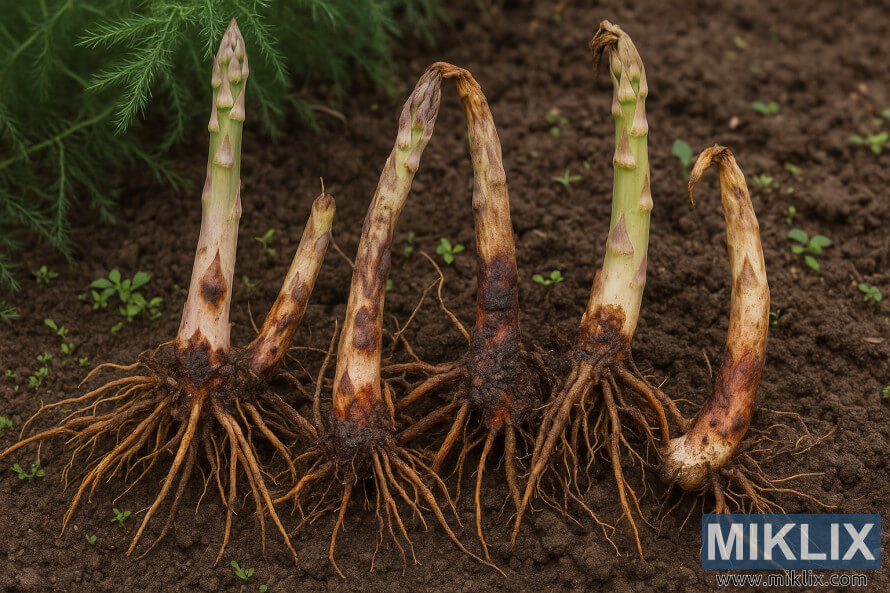
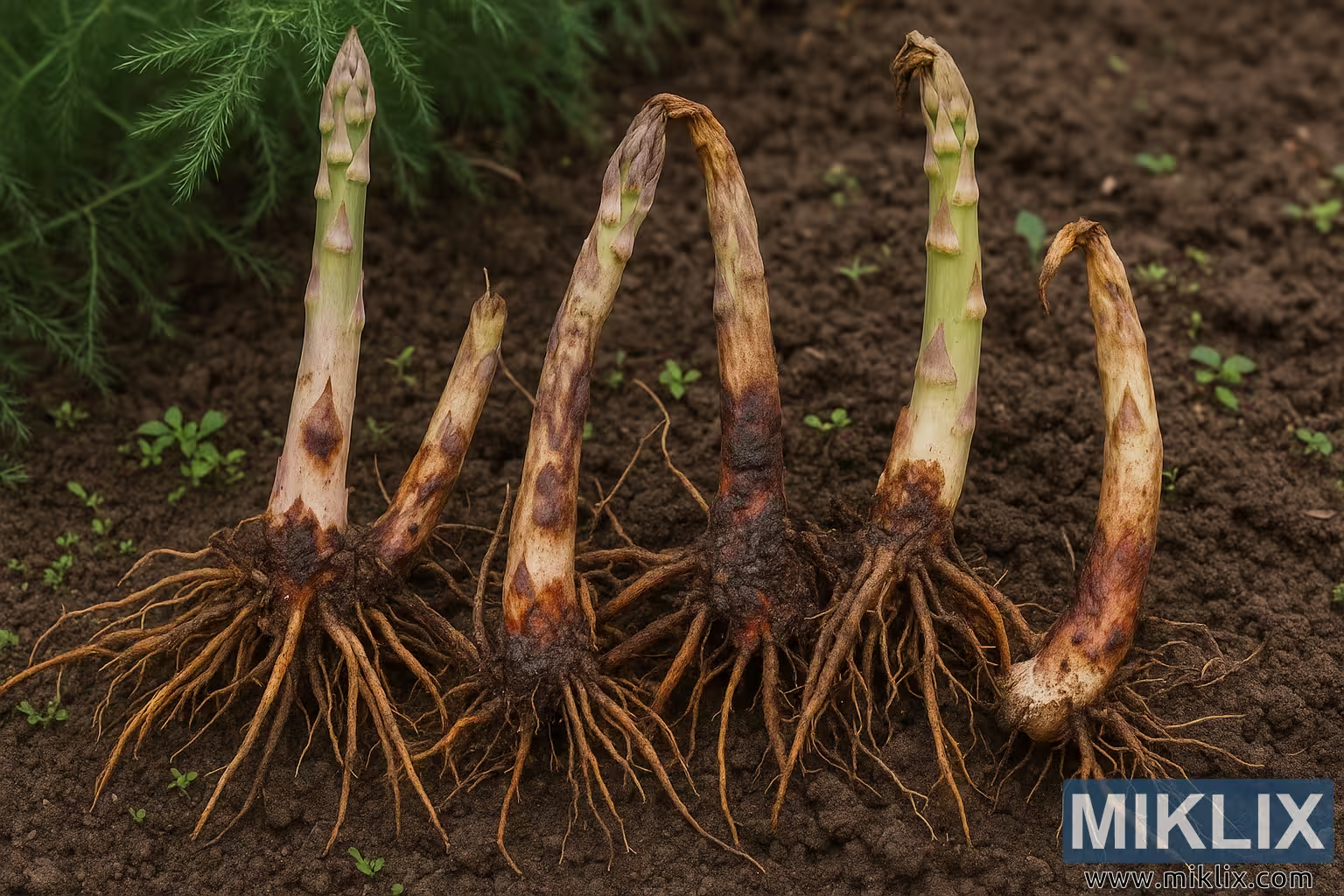
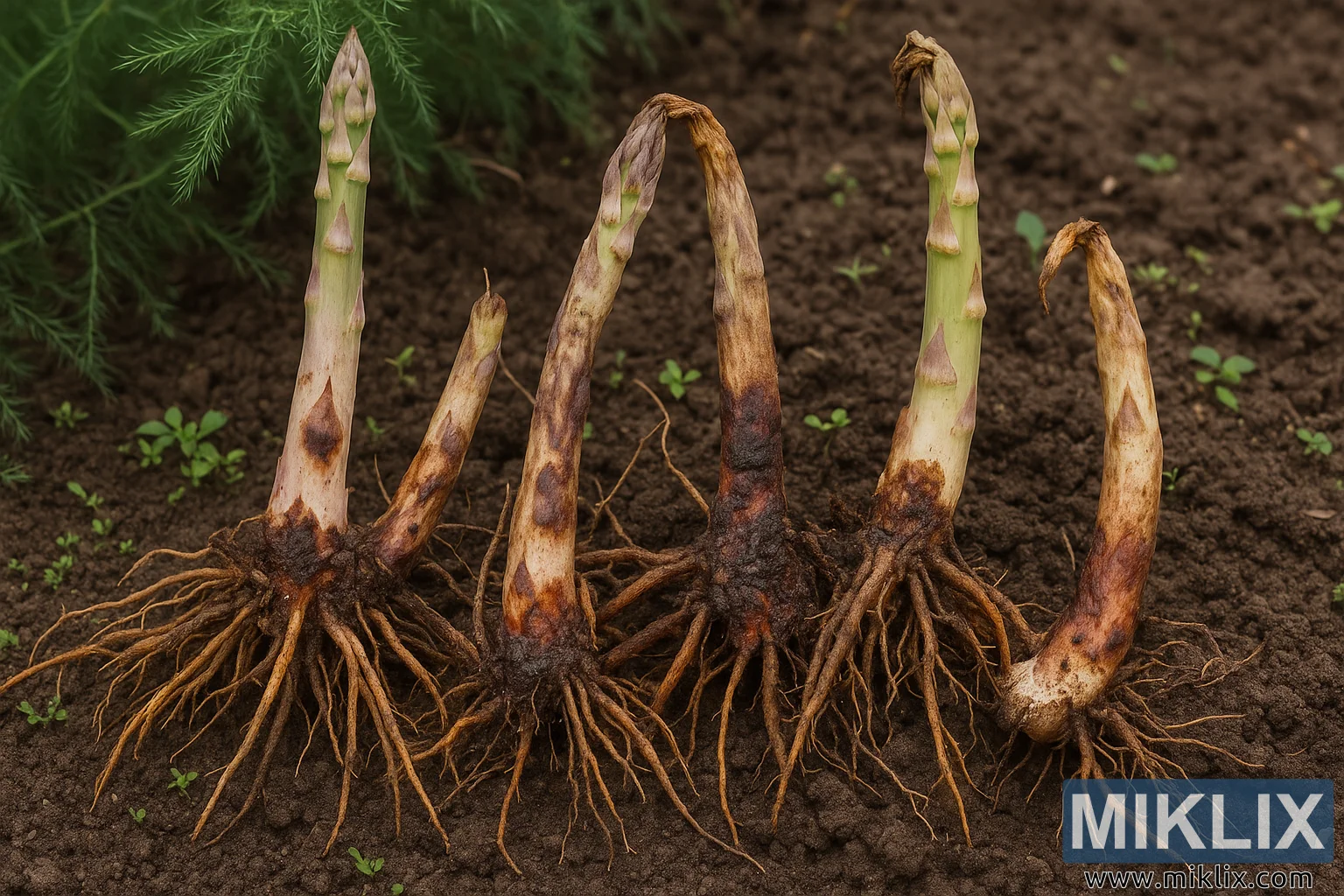
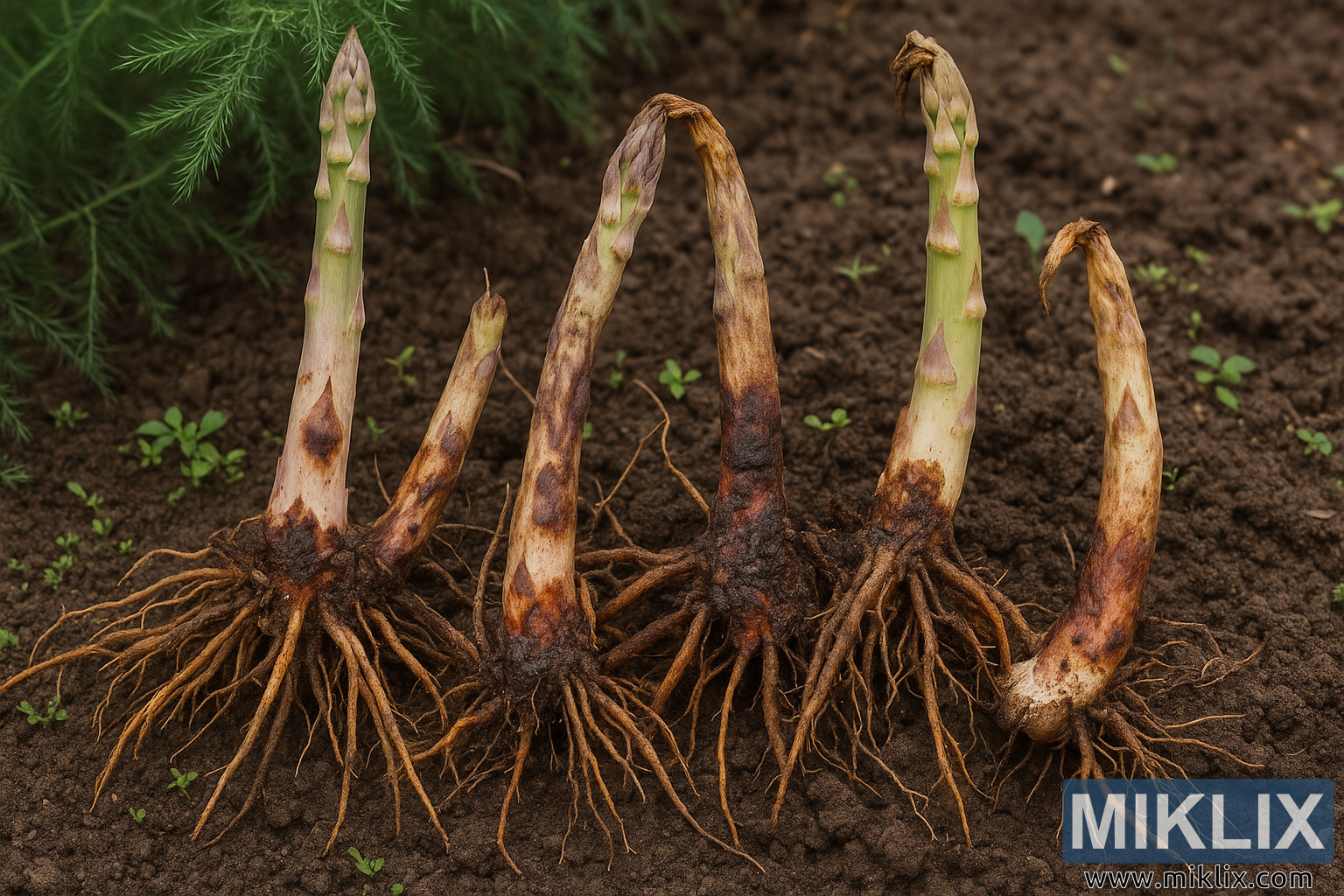
Close-up image of asparagus plants affected by Fusarium crown and root rot, displaying discolored spears and decayed roots in a garden bed.
Available versions of this image
The image files available for download below are less compressed and higher resolution - and as a result of that, higher quality - than the images embedded in articles and pages on this website, which are more optimized for file size in order to reduce bandwidth consumption.
Regular size (1,536 x 1,024)
Large size (3,072 x 2,048)
Very large size (4,608 x 3,072)
Extra large size (6,144 x 4,096)
Comically large size (1,048,576 x 699,051)
- Still uploading... ;-)
Image description
The image depicts a row of uprooted asparagus plants laid out horizontally on the surface of a garden bed, each displaying clear and advanced symptoms of Fusarium crown and root rot. The soil is dark, fine-textured, and moderately moist, with small scattered seedlings and weeds emerging across the bed. Behind the plants, a soft, blurred background reveals feathery green asparagus fern, providing a visual contrast to the diseased spears in the foreground.
Each asparagus crown shows significant discoloration, with deep reddish-brown to dark brown patches along the lower portion of the stems and spreading into the root zone. The roots appear thin, brittle, and darkened, displaying characteristic rot and tissue collapse associated with Fusarium infection. Some spears remain partially green in their upper regions, while others are wilted, shriveled, or bent over, indicating vascular decline. The lesions on the stems vary in size and shape, merging into larger necrotic areas that surround the base.
The arrangement emphasizes the contrast between symptoms: some spears still retain a firm structure and green pigmentation, although mottled with brown lesions, while others exhibit extensive softening and collapse. The crowns are visibly compromised, showing decay where healthy tissue should appear firm and pale. The roots radiate from the crowns in thin strands, many of which are discolored from infection.
Overall, the image provides a detailed, diagnostic view of Fusarium crown and root rot in asparagus. The combination of soil context, plant staging, and varied symptom severity offers a clear representation of how the disease affects both the above-ground spears and the critical crown and root tissues. This visual makes it easy to understand the impact of the pathogen: reduced vigor, discoloration, structural collapse, and progressive decay starting at the root zone and moving upward. It serves as a realistic example for growers, gardeners, and plant pathologists studying or identifying Fusarium-related decline in asparagus crops.
The image is related to: Growing Asparagus: A Complete Guide for Home Gardeners