
Image: Erect Blackberry Pruning Demonstration: Tipping and Lateral Pruning
Published: November 30, 2025 at 9:55:42 PM UTC
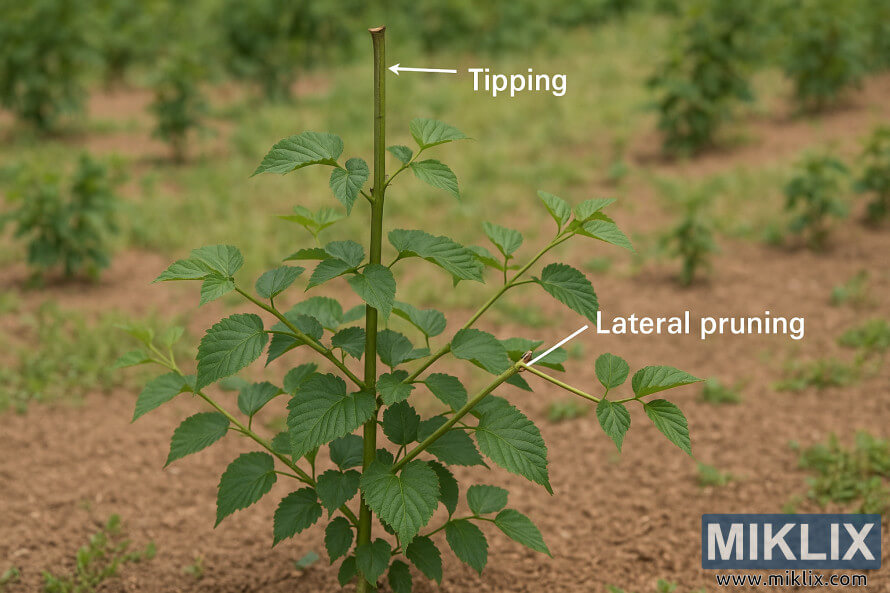
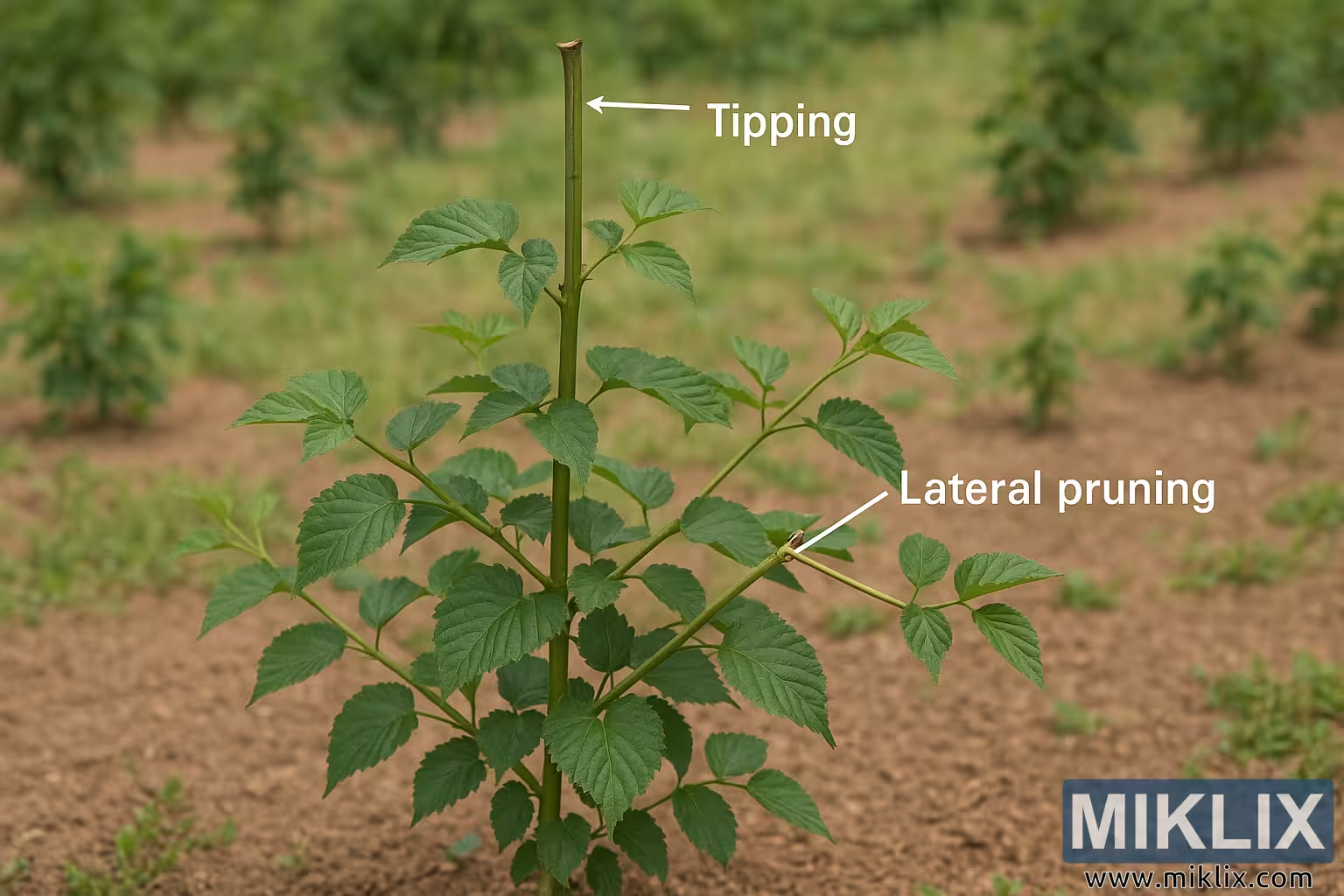
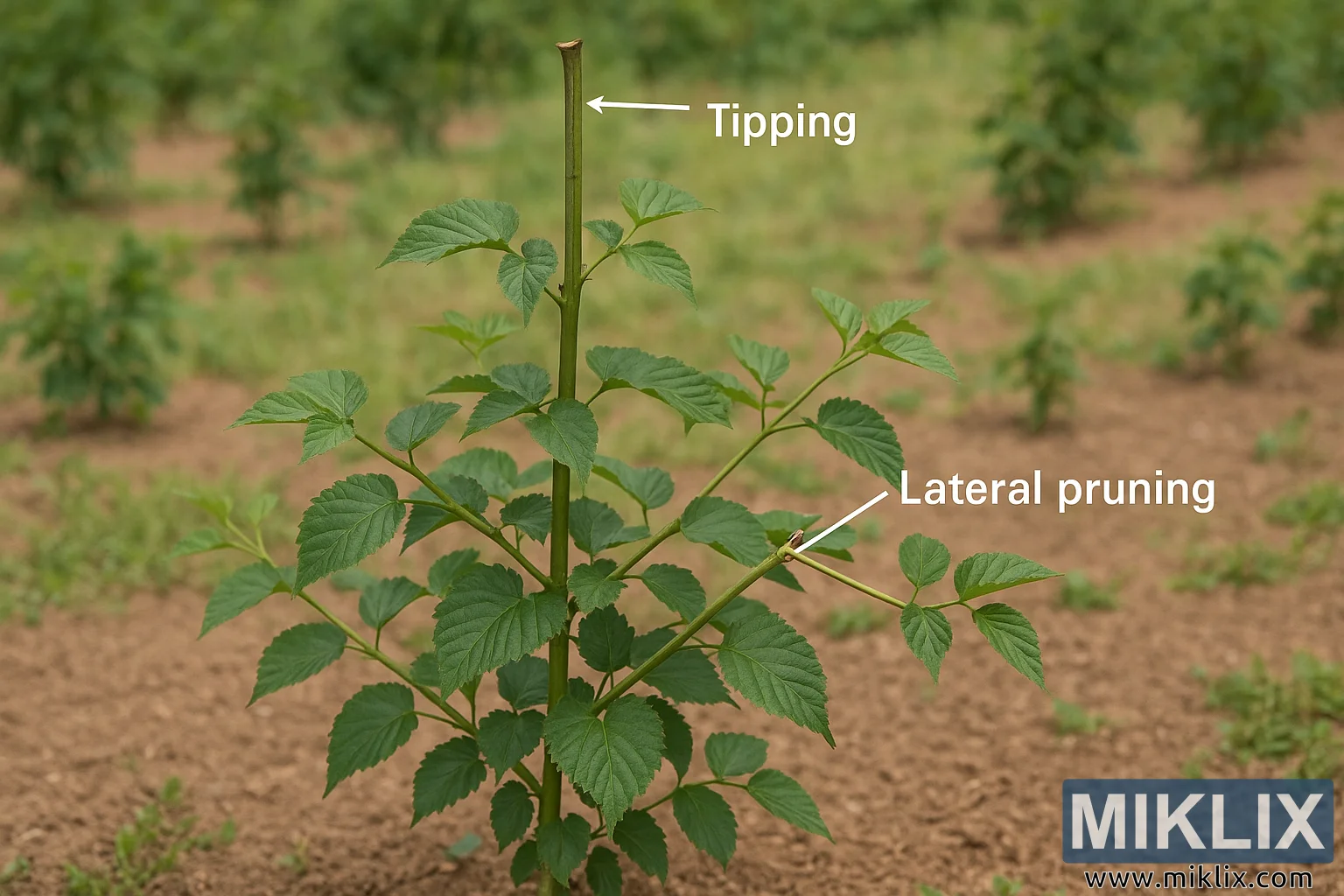
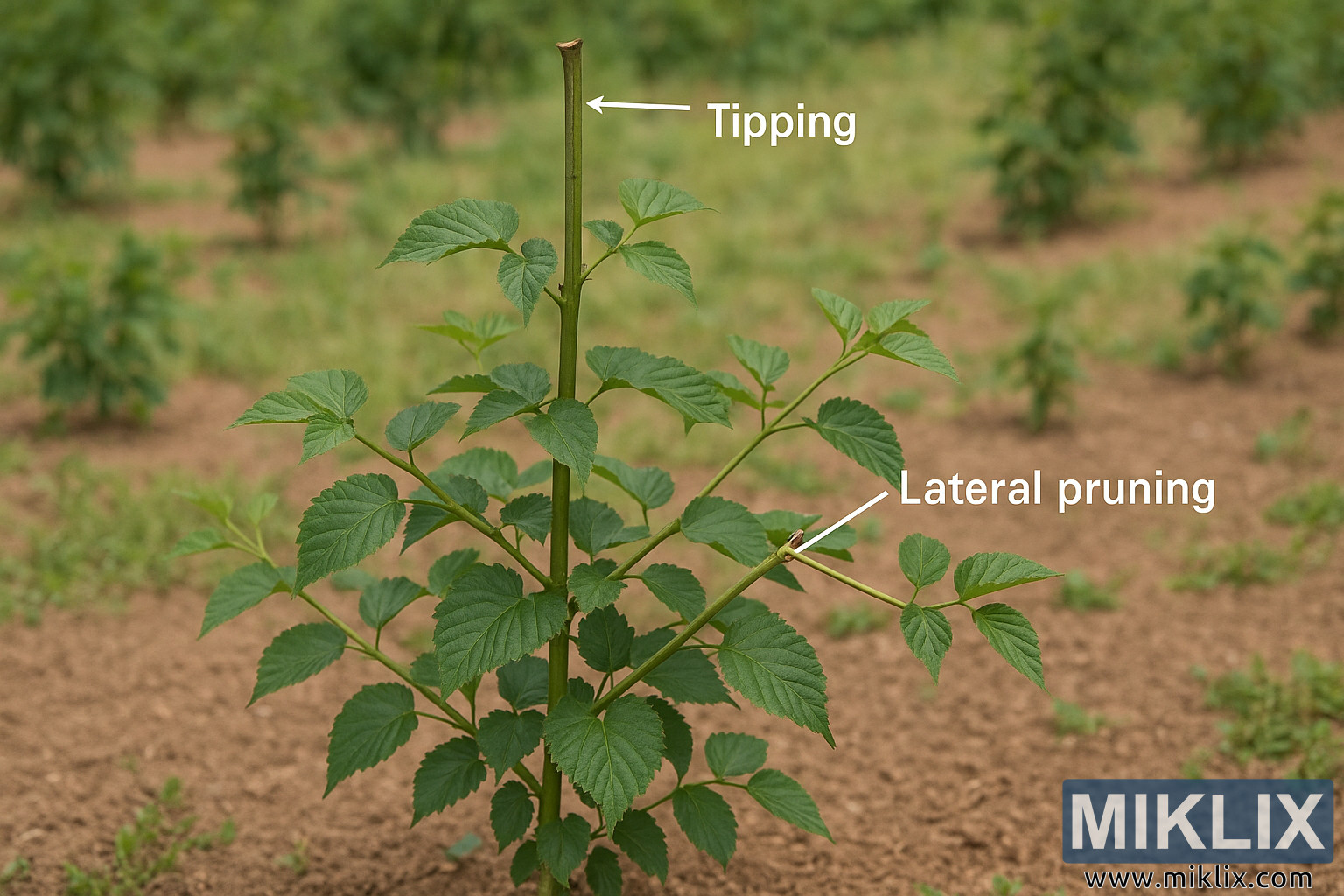
High-resolution photo illustrating erect blackberry pruning with clear labels for tipping and lateral pruning techniques, ideal for horticultural education and agricultural training.
Available versions of this image
The image files available for download below are less compressed and higher resolution - and as a result of that, higher quality - than the images embedded in articles and pages on this website, which are more optimized for file size in order to reduce bandwidth consumption.
Regular size (1,536 x 1,024)
Large size (3,072 x 2,048)
Very large size (4,608 x 3,072)
Extra large size (6,144 x 4,096)
Comically large size (1,048,576 x 699,051)
- Still uploading... ;-)
Image description
This high-resolution landscape photograph captures a clear, educational view of an erect blackberry plant undergoing pruning in an open agricultural field. The central subject is a single, upright blackberry cane standing in slightly tilled, reddish-brown soil, surrounded by a field of similar young plants receding into the softly focused background. The scene is illuminated by natural daylight, producing a calm, even lighting that highlights the vibrant green of the leaves and the healthy texture of the stems. The plant demonstrates two key horticultural practices essential for proper blackberry management: tipping and lateral pruning.
At the top of the plant, the main cane has been cut cleanly near its upper end. A white arrow, labeled 'Tipping,' points to this precise cut, which removes the growing tip of the cane to encourage lateral branching and stronger, more compact growth. The cut surface is visible and slightly lighter in color than the surrounding stem, showing a fresh pruning mark that exemplifies correct technique. Several sets of serrated, compound leaves grow along the stem below the tip, displaying the characteristic bright-to-deep green hues of a healthy blackberry plant.
Midway down the plant, another arrow labeled 'Lateral pruning' indicates a side branch that has also been pruned. This branch extends outward from the main cane and has been cut back to a shorter length, demonstrating how lateral pruning controls plant shape, improves air circulation, and directs the plant’s energy toward fruit-bearing shoots. The lateral pruning cut, like the tipping cut, is clean and deliberate, illustrating precision in horticultural maintenance.
The background field extends softly out of focus, showing rows of other blackberry plants spaced evenly across a cultivated plot. The soil is lightly compacted and appears moist enough for good root development, with patches of green vegetation breaking through in the distance. The gentle blur of the distant rows enhances the depth and focus of the central subject, emphasizing the instructional purpose of the photograph. The warm tones of the soil contrast harmoniously with the fresh greens of the foliage, creating a balanced and visually pleasing composition.
Overall, this image effectively communicates key aspects of blackberry pruning for educational and agricultural purposes. It serves as a practical visual guide for growers learning how to perform tipping and lateral pruning on erect blackberry varieties. The annotations and clarity of focus make it ideal for use in horticultural manuals, academic presentations, and training materials aimed at improving plant productivity and structure through correct pruning techniques.
The image is related to: Growing Blackberries: A Guide for Home Gardeners