
Image: Semi-Erect Blackberry Pruning on a Double T-Trellis System
Published: November 30, 2025 at 9:55:42 PM UTC
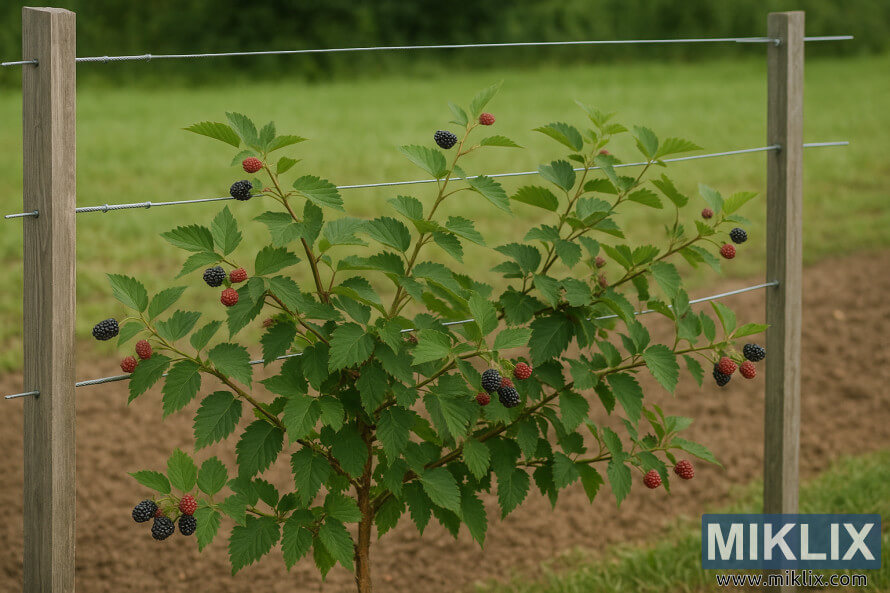
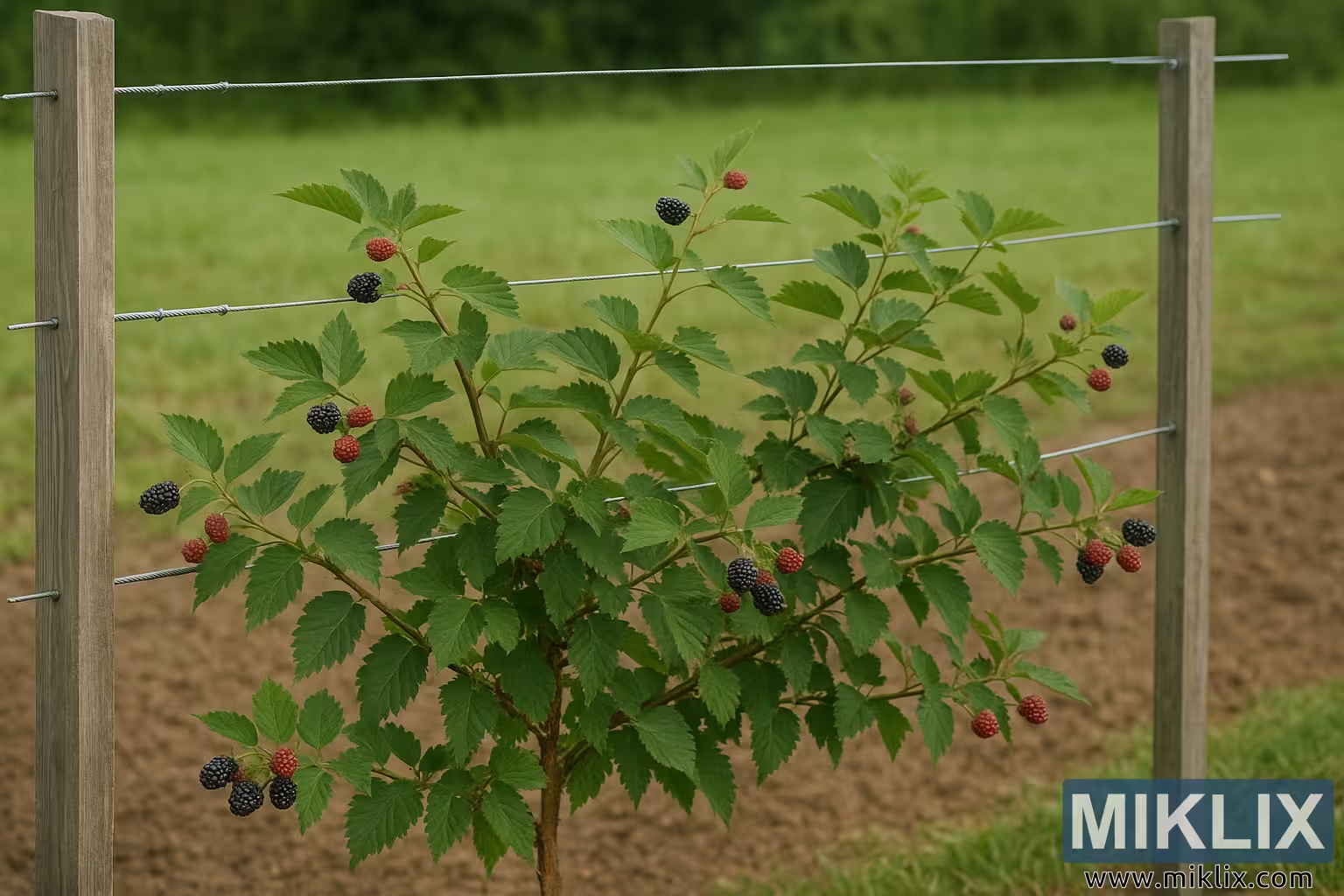
A detailed view of a semi-erect blackberry plant trained on a double T-trellis, showing precise pruning and healthy canes laden with ripening berries in a sunlit agricultural landscape.
Available versions of this image
The image files available for download below are less compressed and higher resolution - and as a result of that, higher quality - than the images embedded in articles and pages on this website, which are more optimized for file size in order to reduce bandwidth consumption.
Regular size (1,536 x 1,024)
Large size (3,072 x 2,048)
Very large size (4,608 x 3,072)
Extra large size (6,144 x 4,096)
Comically large size (1,048,576 x 699,051)
- Still uploading... ;-)
Image description
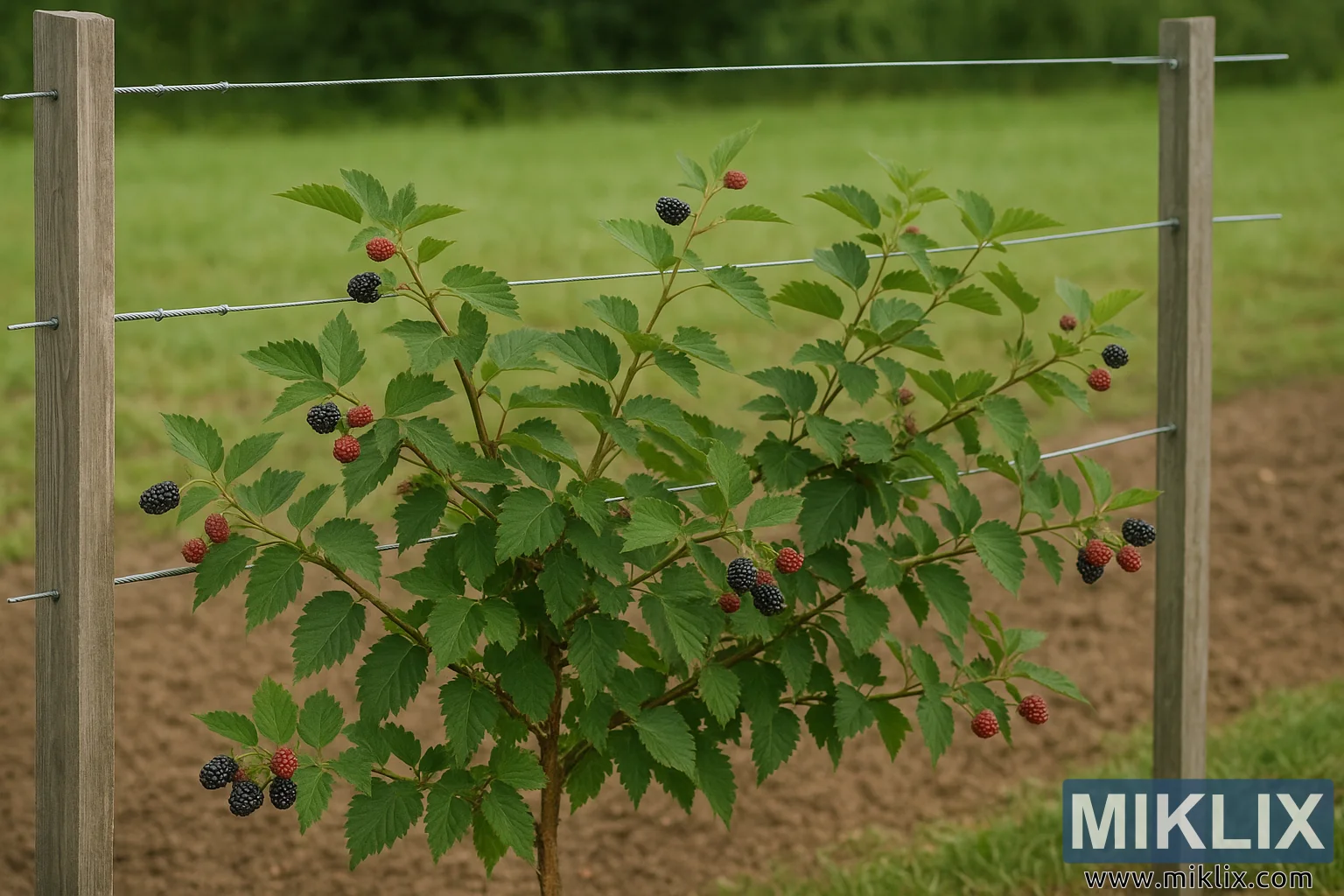
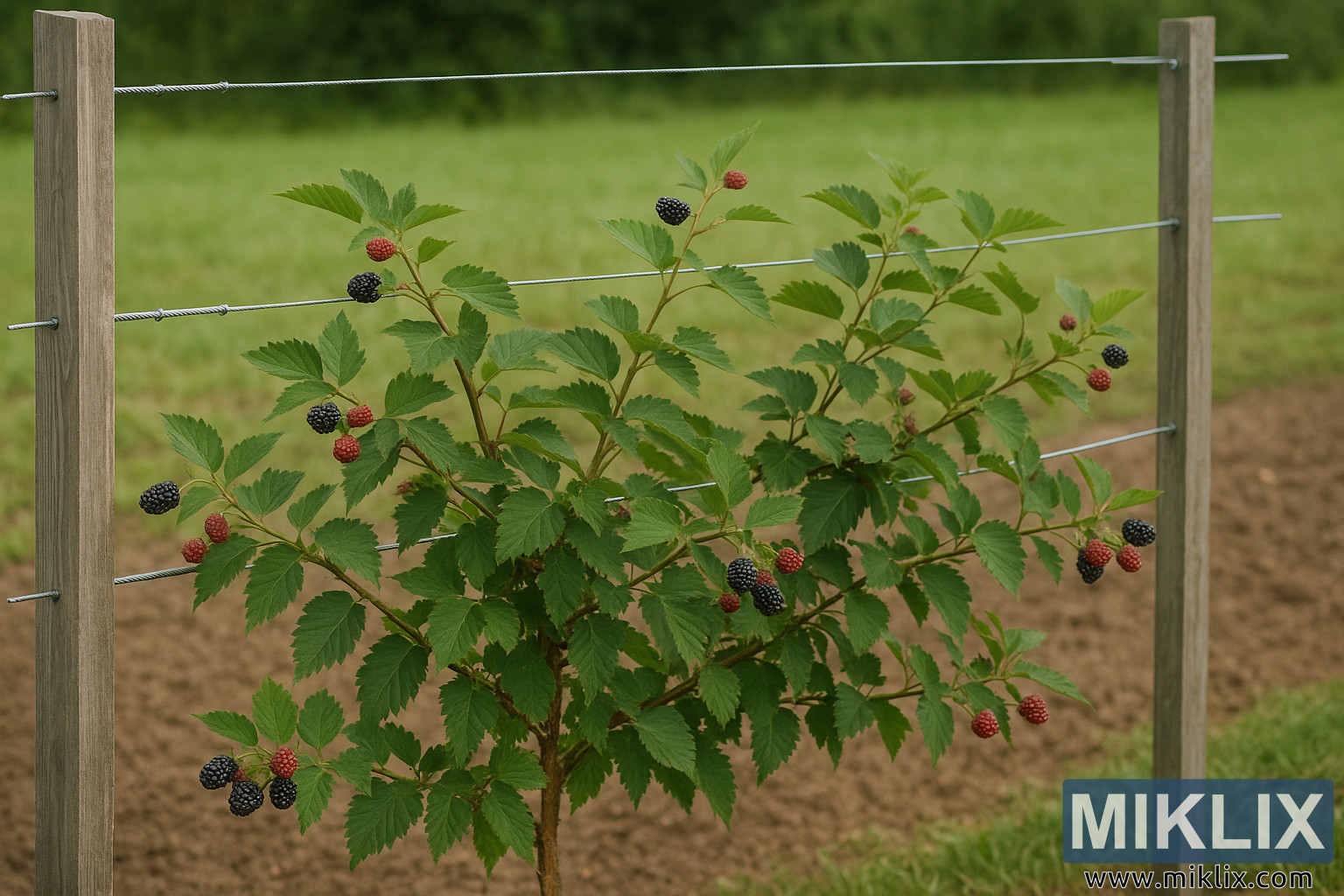
This image captures a meticulously maintained semi-erect blackberry plant (Rubus fruticosus) cultivated on a double T-trellis support system in a lush, open agricultural field. The photograph, taken in landscape orientation, depicts a horticulturally accurate representation of a well-managed berry planting during mid-season growth. The plant stands upright with two sturdy wooden posts set several feet apart, joined by three evenly spaced horizontal tension wires that form the double T-trellis structure. The semi-erect canes of the blackberry bush are neatly pruned and trained along these wires, demonstrating the proper spacing and structural balance essential for optimal fruit production and sunlight penetration.
The blackberry canes display vigorous, deep green foliage characterized by compound leaves with serrated edges and a healthy sheen, indicating effective nutrient management and disease control. The canes bear clusters of ripening fruit at various stages—some berries are still firm and red, while others have matured to a glossy black, ready for harvest. This gradient of ripeness illustrates the extended fruiting period typical of semi-erect blackberry cultivars, which are prized for their productivity and ease of management when supported by a trellis system.
The double T-trellis configuration—commonly used in commercial and research berry production—ensures that canes are evenly distributed and supported, preventing lodging and encouraging air circulation through the canopy. This structure not only facilitates efficient pruning and harvesting but also helps reduce fungal infections by minimizing humidity around the fruiting zone. The wires are secured tautly between the wooden posts, which are weathered but sturdy, blending naturally into the pastoral backdrop.
The surrounding environment enhances the agricultural realism of the image. The soil beneath the plant is finely tilled and free of weeds, reflecting disciplined field maintenance and good soil structure. A band of vibrant green grass borders the cultivated row, merging into a soft, blurred background of additional vegetation and distant trees, suggesting a well-managed orchard or farm setting. The lighting is soft and diffuse, likely from an overcast sky, which evenly illuminates the plant without harsh shadows, highlighting the contrast between the dark berries, green foliage, and earthy tones of the soil.
Overall, the image effectively conveys the principles of professional blackberry management—careful pruning, structural trellising, and attentive field hygiene. It serves as both a visual reference and an educational depiction of semi-erect blackberry cultivation practices, particularly for growers employing the double T-trellis method to maximize yield quality and plant longevity.
The image is related to: Growing Blackberries: A Guide for Home Gardeners