
Image: Common Blackberry Pests and Their Damage Patterns
Published: November 30, 2025 at 9:55:42 PM UTC
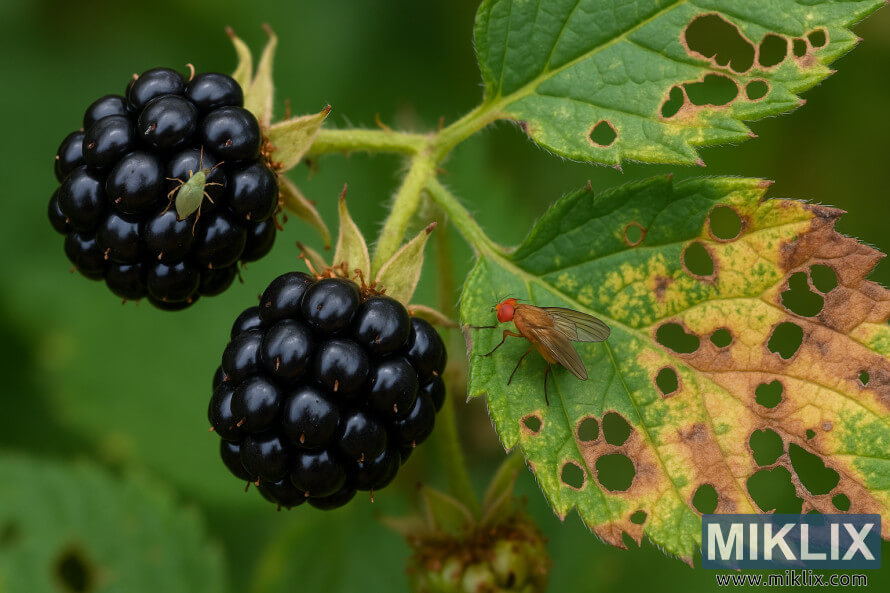
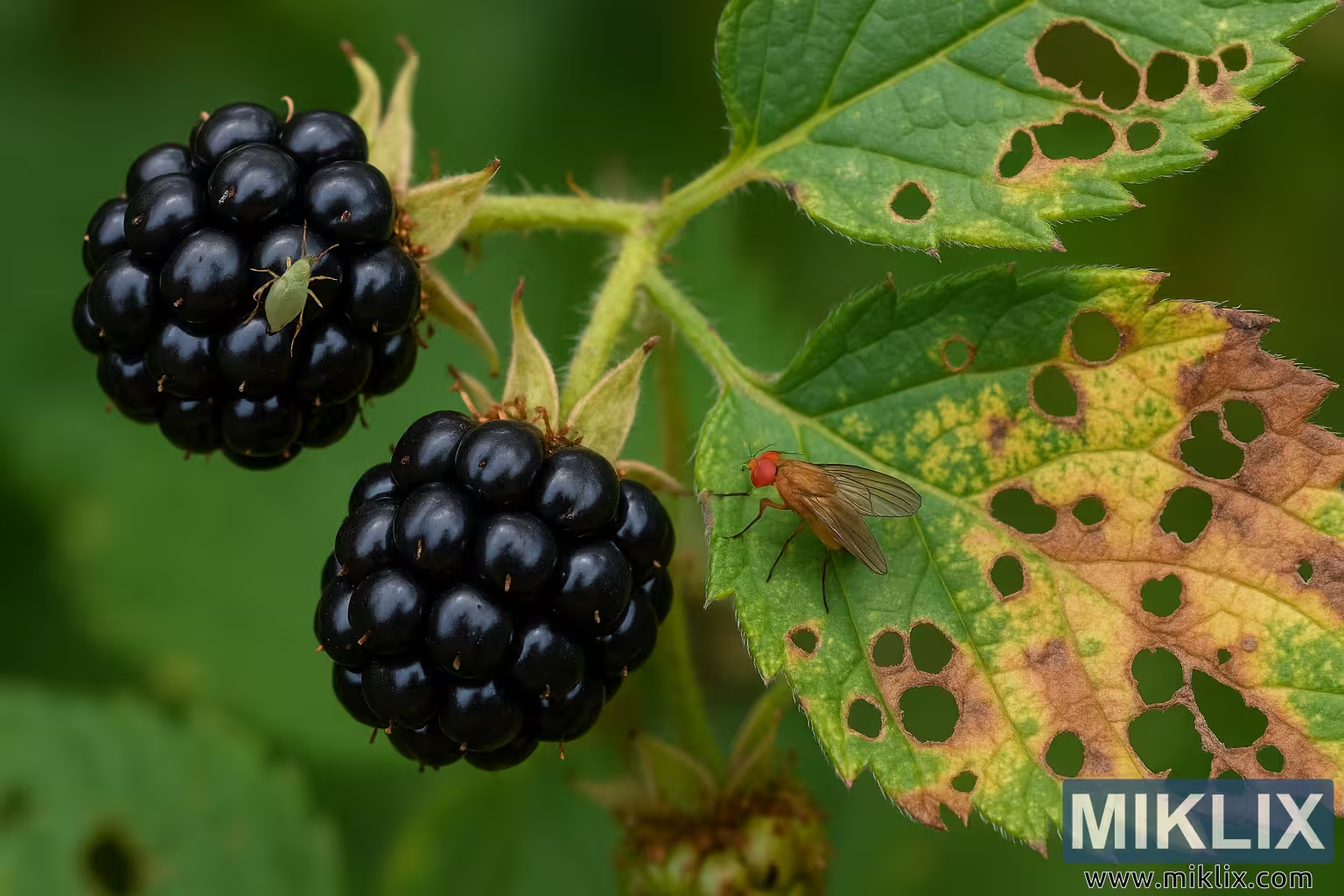
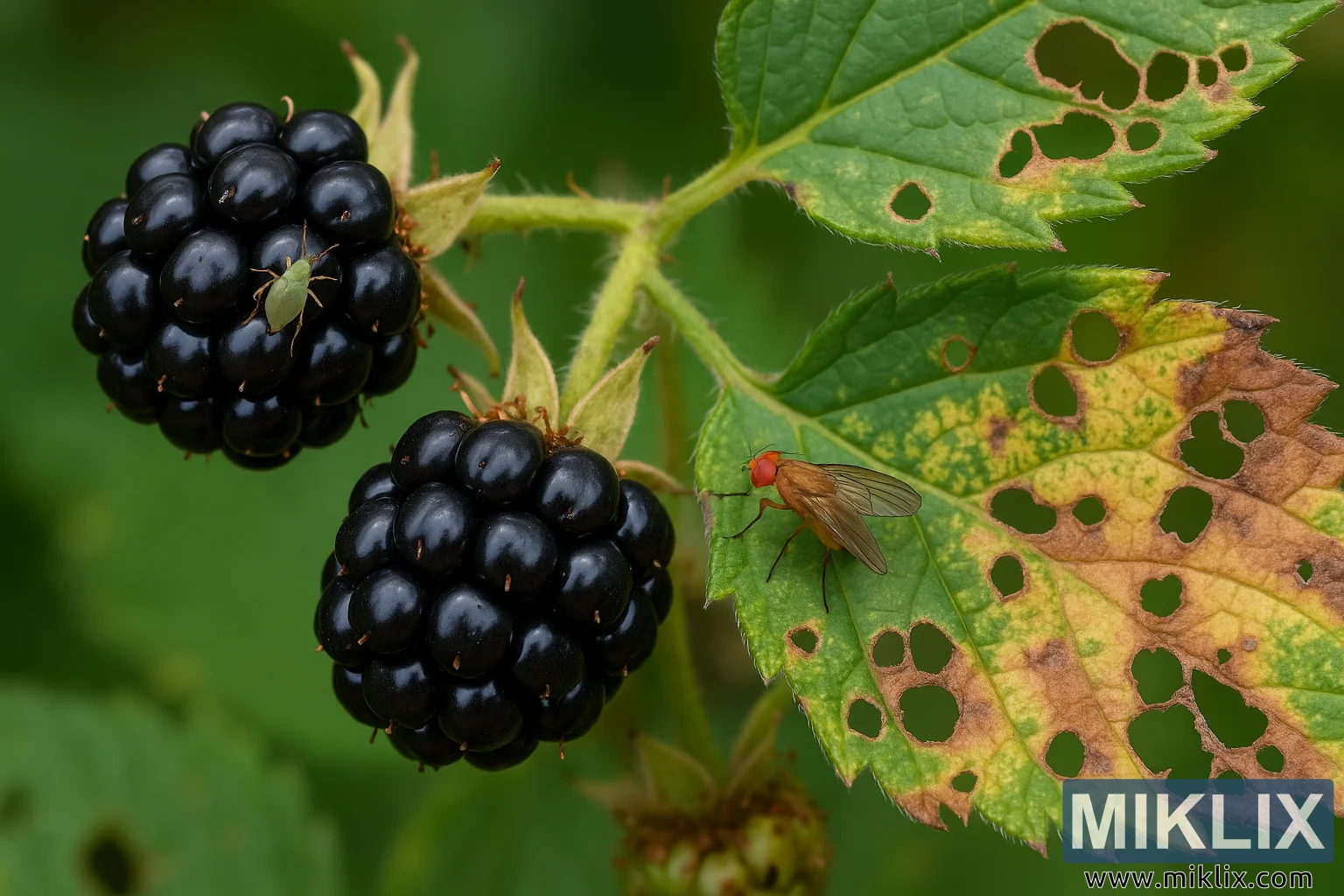
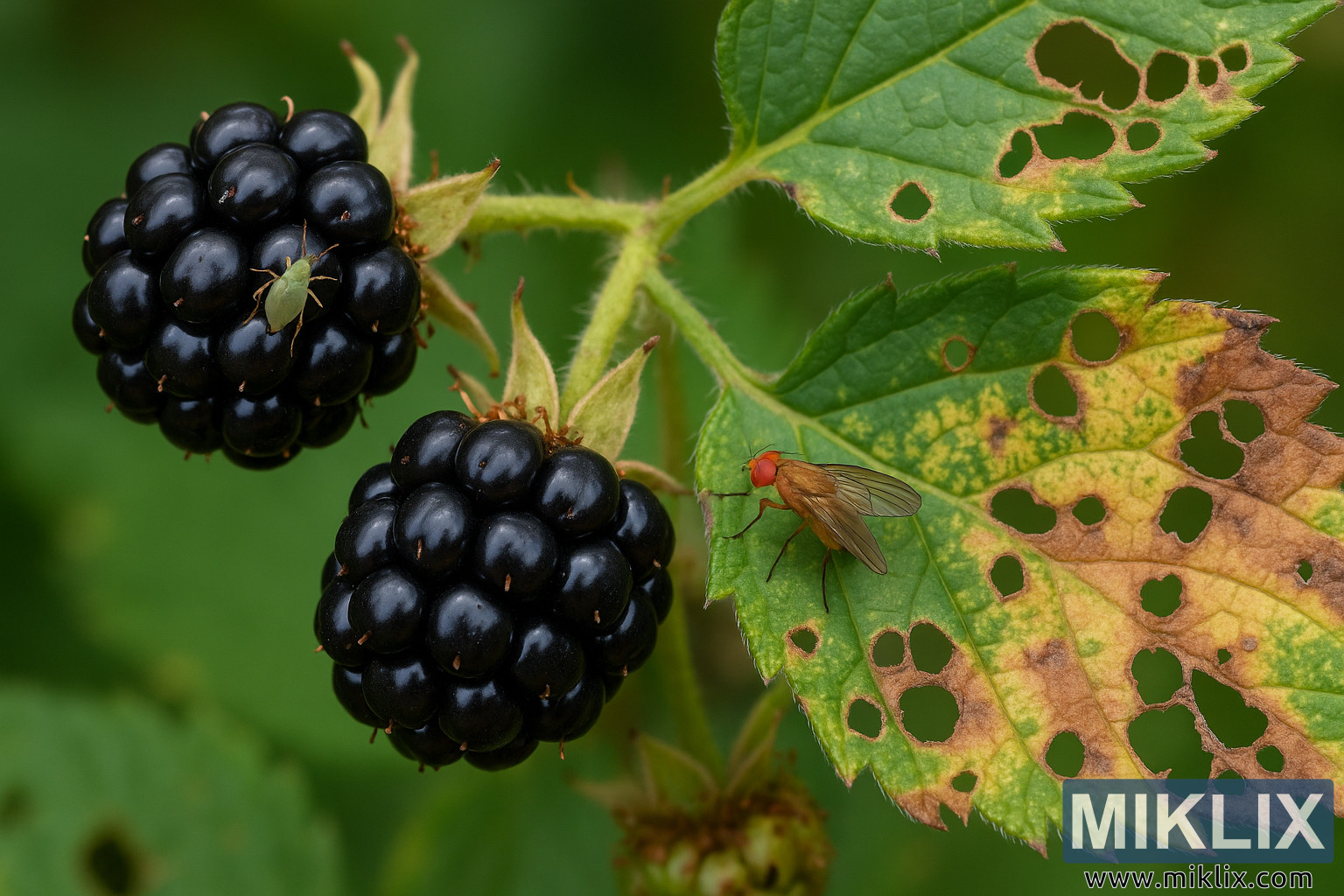
A detailed close-up photograph showing blackberries affected by common pests such as aphids and spotted wing drosophila, alongside leaf damage caused by insect feeding and disease, illustrating typical pest impact on blackberry crops.
Available versions of this image
The image files available for download below are less compressed and higher resolution - and as a result of that, higher quality - than the images embedded in articles and pages on this website, which are more optimized for file size in order to reduce bandwidth consumption.
Regular size (1,536 x 1,024)
Large size (3,072 x 2,048)
Very large size (4,608 x 3,072)
Extra large size (6,144 x 4,096)
Comically large size (1,048,576 x 699,051)
- Still uploading... ;-)
Image description
This high-resolution, landscape-oriented macro photograph vividly captures the intricate details of blackberry pests and the characteristic damage they cause to both fruit and foliage. In the foreground, two fully ripened blackberries glisten with a deep black-purple sheen, each drupelet reflecting the soft, natural light of the scene. Perched delicately on the upper berry is a small green aphid, its translucent body and fine legs sharply in focus. Nearby, on a serrated blackberry leaf, rests a spotted wing drosophila—a small fruit fly distinguished by its bright red eyes, amber-toned body, and delicate, veined wings. The insect's proximity to the fruit underscores its role as one of the most destructive pests of soft-skinned berries.
The surrounding leaves display a range of damage patterns typical of pest and disease stress. Jagged holes and irregular feeding patterns punctuate the leaf surfaces, indicating chewing by beetles and caterpillars. The edges of the leaves are browned and curled, while the tissue between veins shows mottled yellowing, a sign of chlorosis caused by sap-sucking insects or nutrient deficiency resulting from their activity. The texture of the leaf veins and trichomes (tiny hairs) is crisply rendered, contributing to the sense of realism and the tactile quality of the image.
The background is softly blurred, with gradients of green that suggest healthy vegetation beyond the focal plane. This shallow depth of field isolates the central elements—the berries, pests, and damaged leaves—drawing the viewer’s attention to the complex interaction between crop and pest. The composition balances visual appeal and scientific accuracy, making it suitable for agricultural education, pest management guides, and horticultural research materials.
In addition to the visible aphid and drosophila, the image alludes to broader categories of common blackberry pests: stink bugs that cause drupelet deformation, spider mites that leave fine webbing and stippling on leaves, and leaf miners that create winding trails within leaf tissue. The visible damage patterns provide diagnostic cues recognizable to growers and entomologists: the circular perforations from beetle feeding, the necrotic yellow-brown patches indicative of fungal secondary infections, and the subtle misshaping of berry clusters where pests have oviposited.
Lighting and color balance are naturalistic, evoking a late-morning outdoor environment with diffused sunlight filtering through surrounding foliage. The tone palette consists of rich greens, golden yellows, deep blacks, and hints of red and brown, symbolizing both vitality and decline. The overall aesthetic successfully combines scientific documentation with photographic artistry, illustrating the delicate yet destructive relationship between blackberry plants and their insect pests. This image serves as an educational and visually compelling representation of how pest infestation manifests in small fruit crops, emphasizing the importance of integrated pest management and close monitoring in sustainable berry production.
The image is related to: Growing Blackberries: A Guide for Home Gardeners