
Image: Honey Bees Pollinating Honeyberry Flowers
Published: December 2, 2025 at 9:54:38 PM UTC
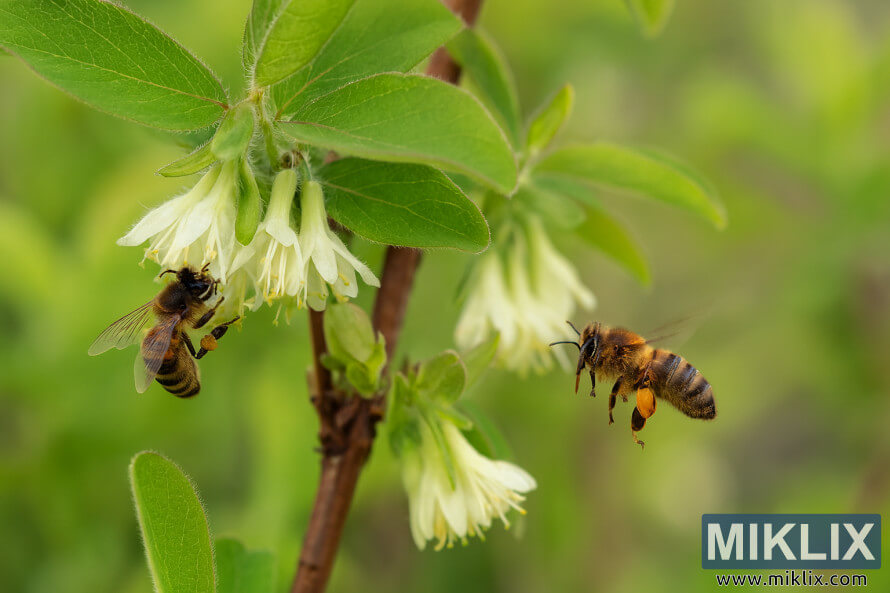
Close-up photograph of honey bees pollinating delicate white honeyberry flowers, showcasing the beauty of nature and the vital role of pollinators.
Available versions of this image
The image files available for download below are less compressed and higher resolution - and as a result of that, higher quality - than the images embedded in articles and pages on this website, which are more optimized for file size in order to reduce bandwidth consumption.
Regular size (1,536 x 1,024)
Large size (3,072 x 2,048)
Very large size (4,608 x 3,072)
Extra large size (6,144 x 4,096)
Comically large size (1,048,576 x 699,051)
- Still uploading... ;-)
Image description
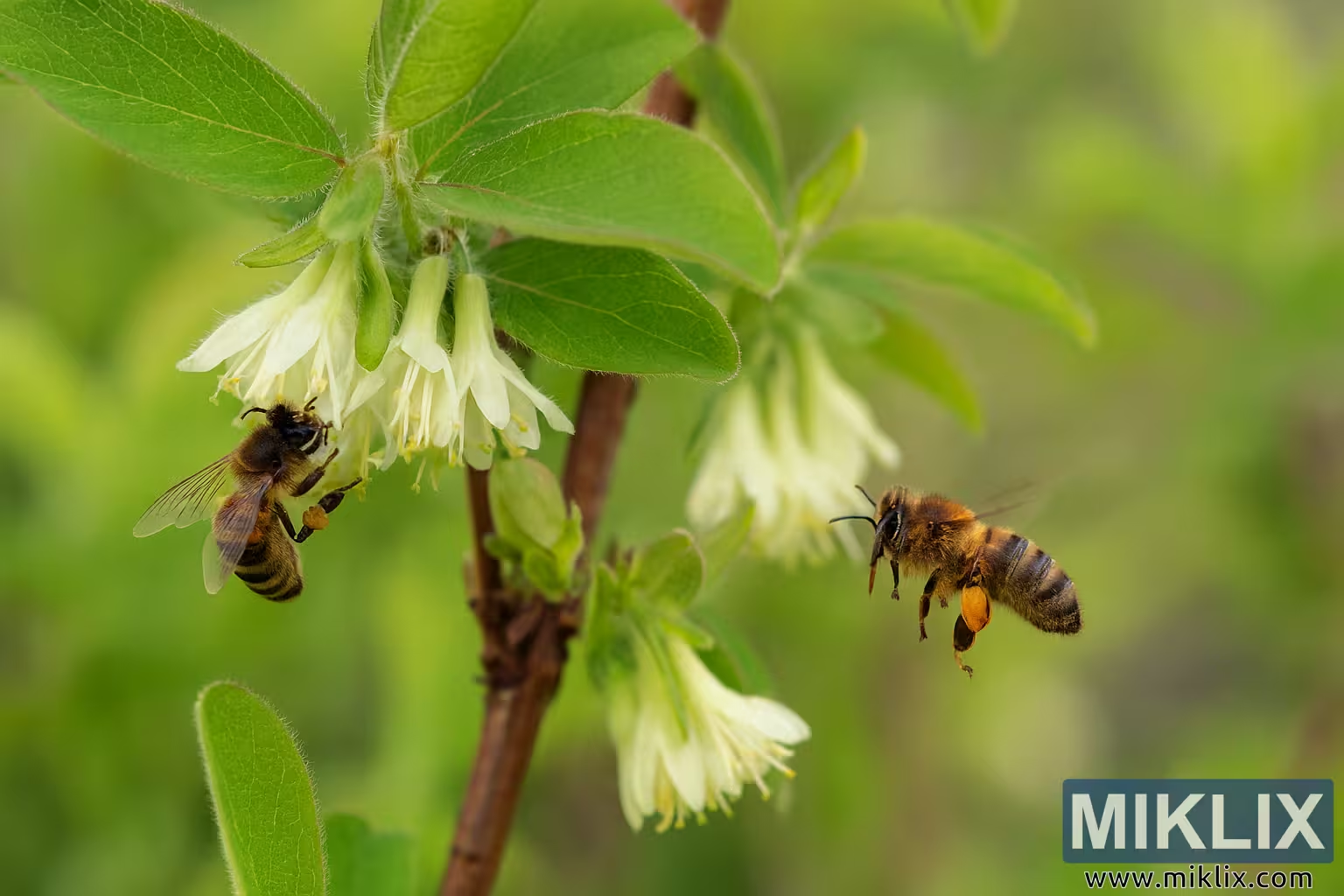
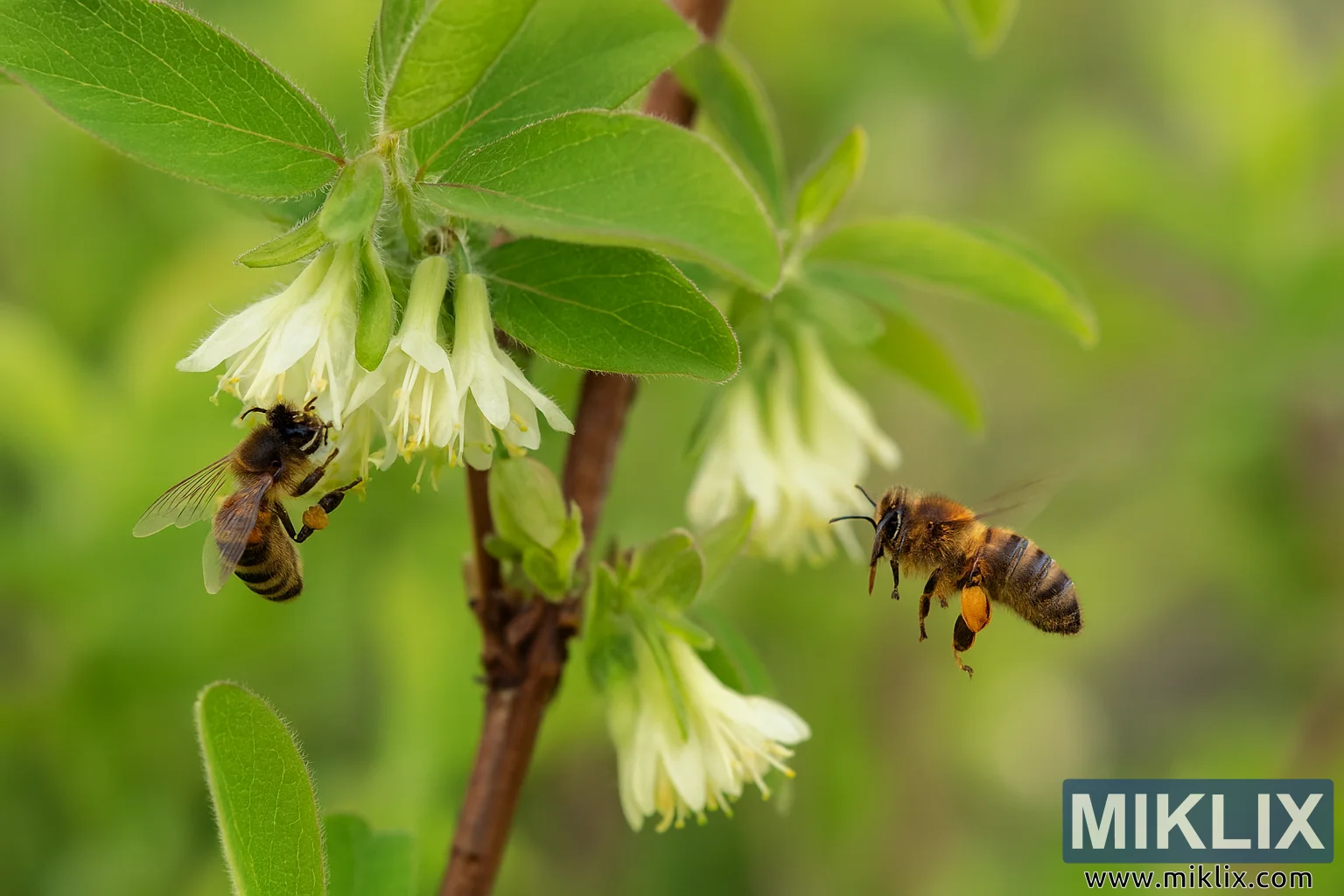
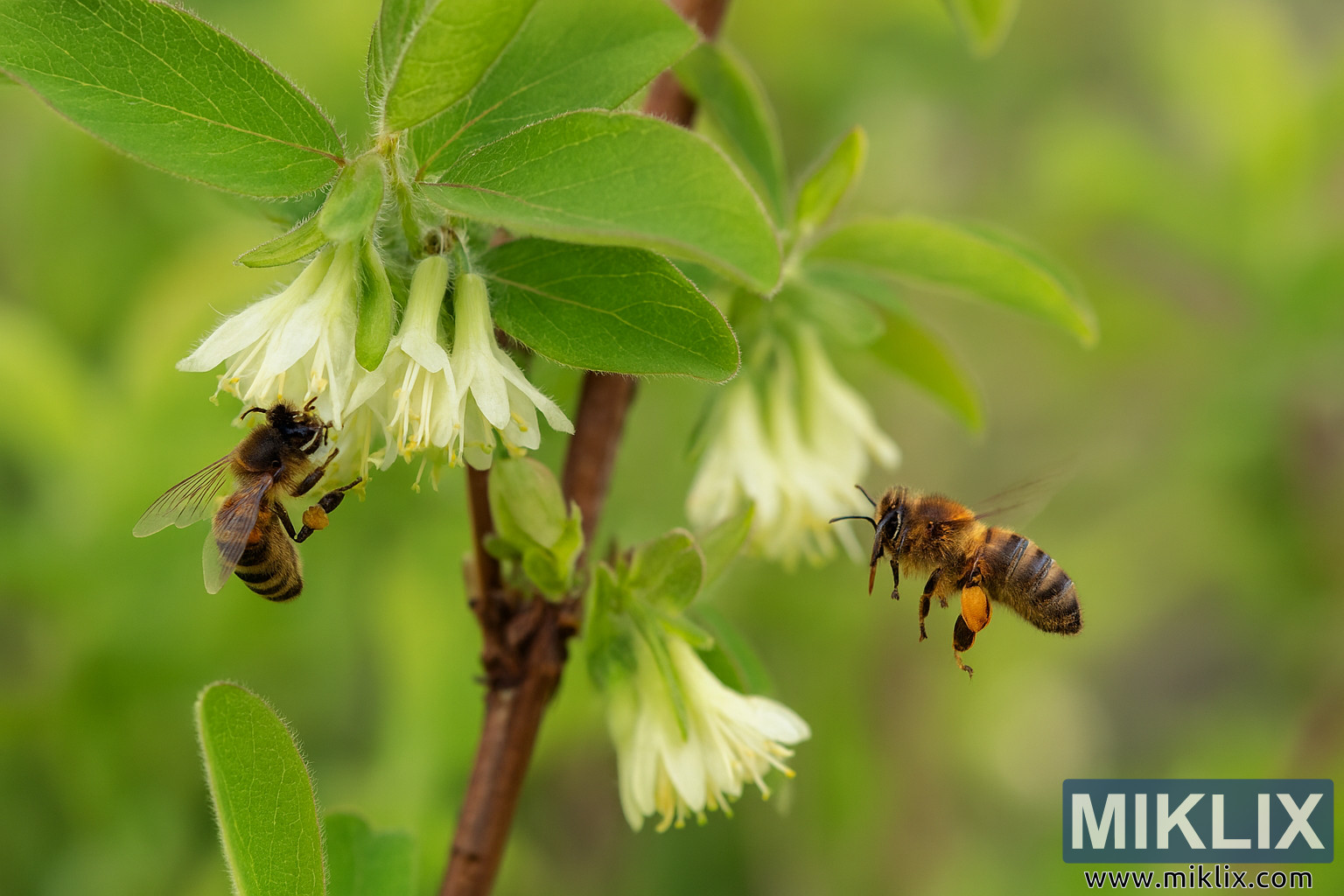
The image depicts a serene and detailed natural scene focused on the pollination process of honeyberry (Lonicera caerulea) flowers by honey bees (Apis mellifera). In the foreground, delicate white, bell-shaped blossoms hang in small clusters from slender, reddish-brown branches. Each flower has a tubular form with petals that flare slightly outward at the tips, revealing pale yellow-green stamens tipped with pollen-bearing anthers. The petals show a subtle translucence, allowing soft daylight to filter through and highlight their fragile texture. Surrounding the blossoms are vibrant green, oval-shaped leaves with slightly pointed tips. Their surfaces are faintly fuzzy, with a prominent central vein and a fine network of smaller veins branching outward, giving them a natural, textured appearance. The leaves alternate along the branches, creating a layered canopy that frames the flowers.
Two honey bees are the central focus of the composition. On the left, one bee clings firmly to a flower, its head buried deep inside the blossom as it collects nectar and pollen. Its body is covered in fine hairs, many of which are dusted with golden pollen grains. The abdomen displays alternating bands of dark brown and lighter golden-brown, while its semi-transparent wings are spread slightly outward, revealing a delicate network of veins. Its legs are bent and positioned to grasp the flower, with the hind legs showing the characteristic pollen baskets used to transport pollen back to the hive.
On the right, another bee is captured in mid-flight, approaching a nearby flower. Its wings beat rapidly, appearing slightly blurred to convey motion. Like the first bee, its body is covered in fine hairs with pollen clinging to them, and its abdomen is marked with alternating dark and golden-brown bands. Its legs are bent in preparation for landing, and its antennae are angled forward as it hovers close to the blossom.
The background is softly blurred, composed of varying shades of green foliage and hints of other plants in the garden. This shallow depth of field isolates the bees and flowers, drawing the viewer’s attention to the intricate details of the pollination process. The lighting is soft and diffused, casting a gentle glow across the scene. The interplay of light and shadow enhances the natural colors: the bright green of the leaves, the pure white of the flowers, and the warm brown and golden tones of the bees. The overall composition balances stillness and motion, with the grounded bee and the hovering bee creating a dynamic contrast. The image captures not only the beauty of honeyberry flowers but also the essential ecological role of bees in pollination, highlighting the delicate interdependence between plant and pollinator in a moment of quiet harmony.
The image is related to: Growing Honeyberries in Your Garden: A Guide to a Sweet Spring Harvest