
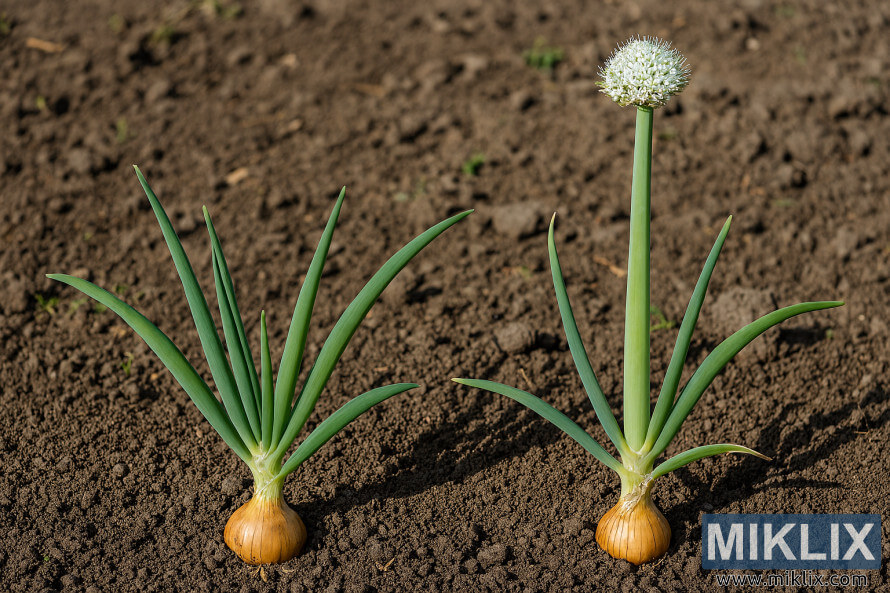
Image: Healthy vs bolted onion: side-by-side horticultural comparison
Published: December 16, 2025 at 9:15:20 PM UTC
High-resolution, landscape comparison of a healthy onion versus a bolted onion with a flowering scape, highlighting foliage, bulb, and soil details.
Available versions of this image
The image files available for download below are less compressed and higher resolution - and as a result of that, higher quality - than the images embedded in articles and pages on this website, which are more optimized for file size in order to reduce bandwidth consumption.
Regular size (1,536 x 1,024)
Large size (3,072 x 2,048)
Very large size (4,608 x 3,072)
Extra large size (6,144 x 4,096)
Comically large size (1,048,576 x 699,051)
- Still uploading... ;-)
Image description
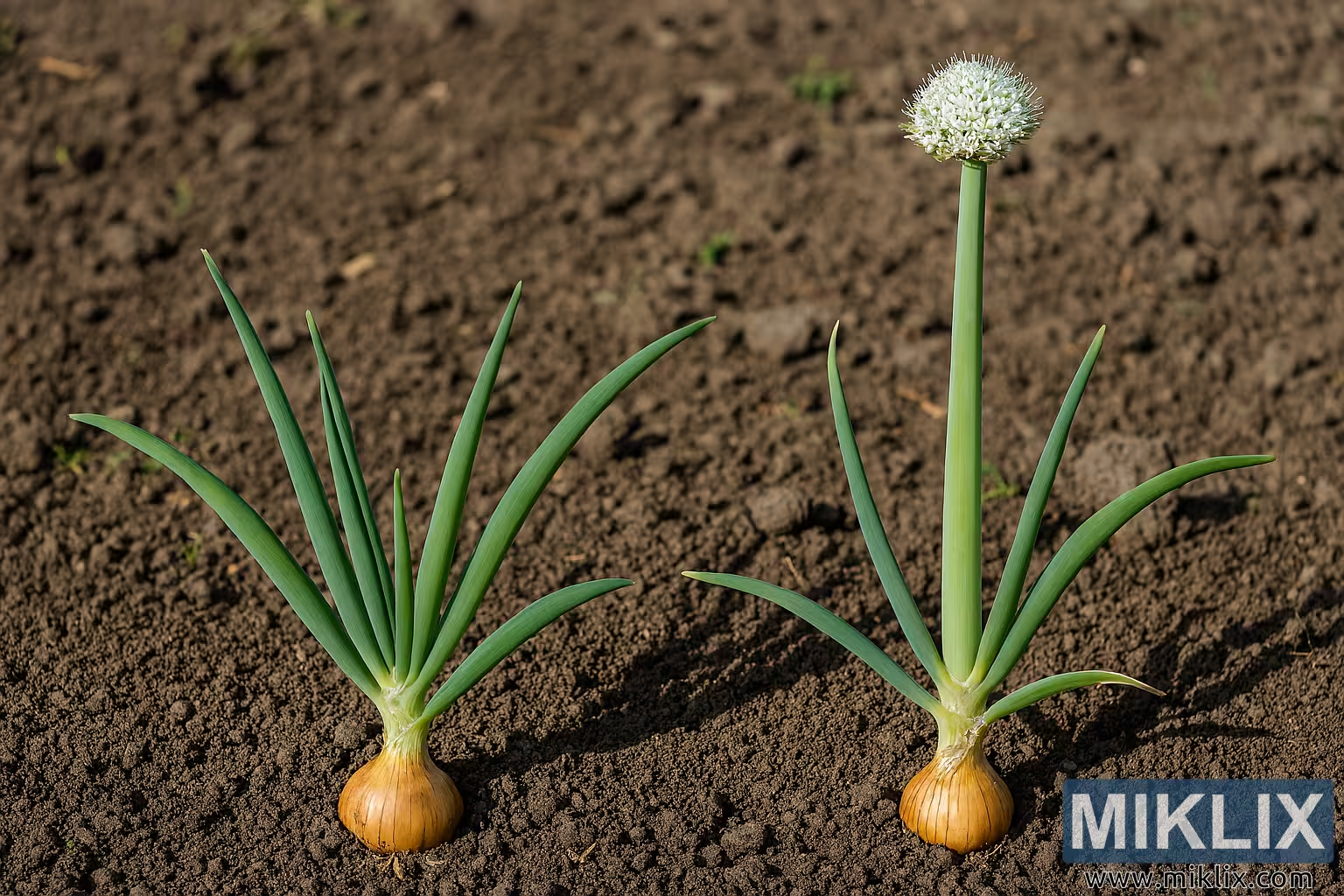
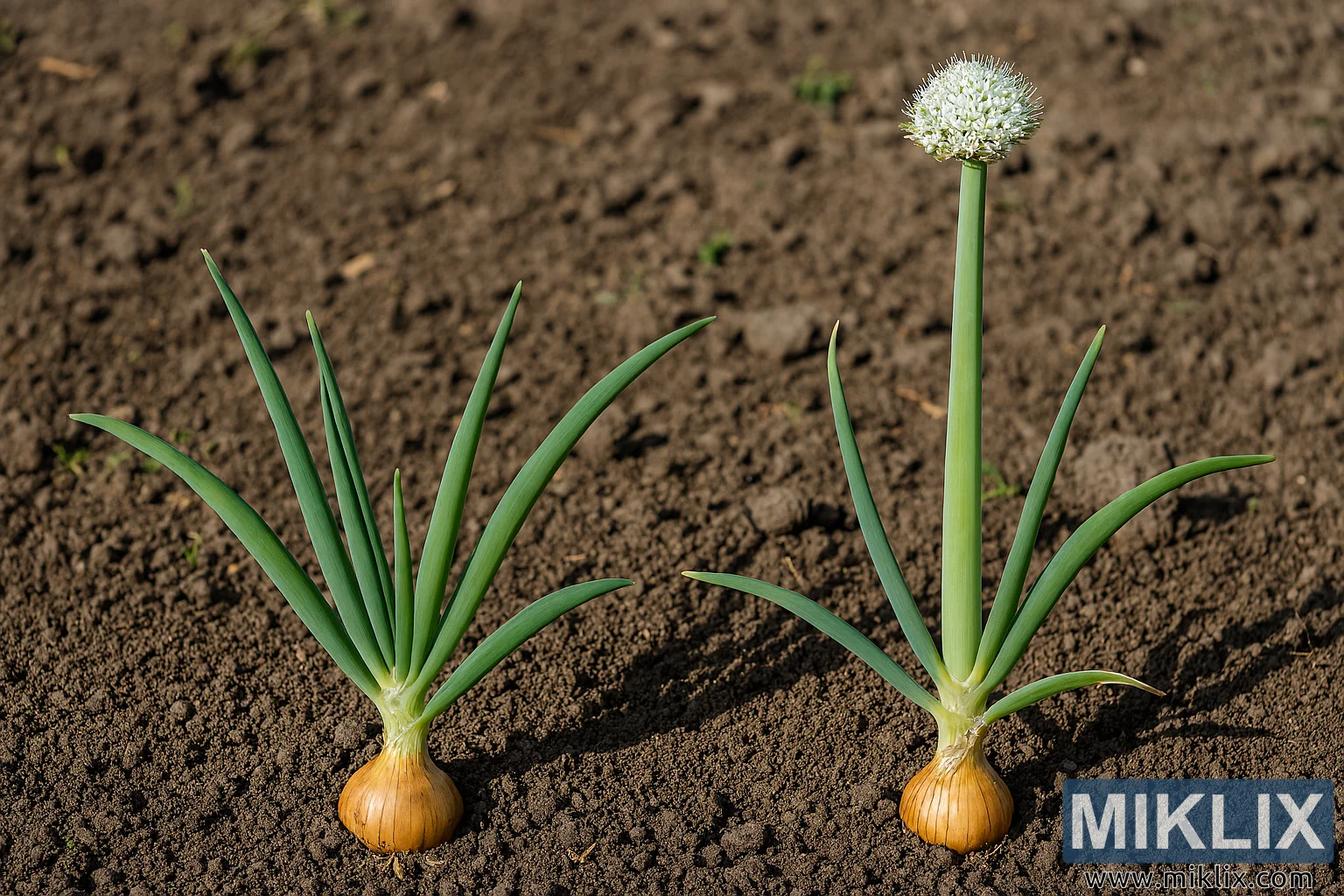
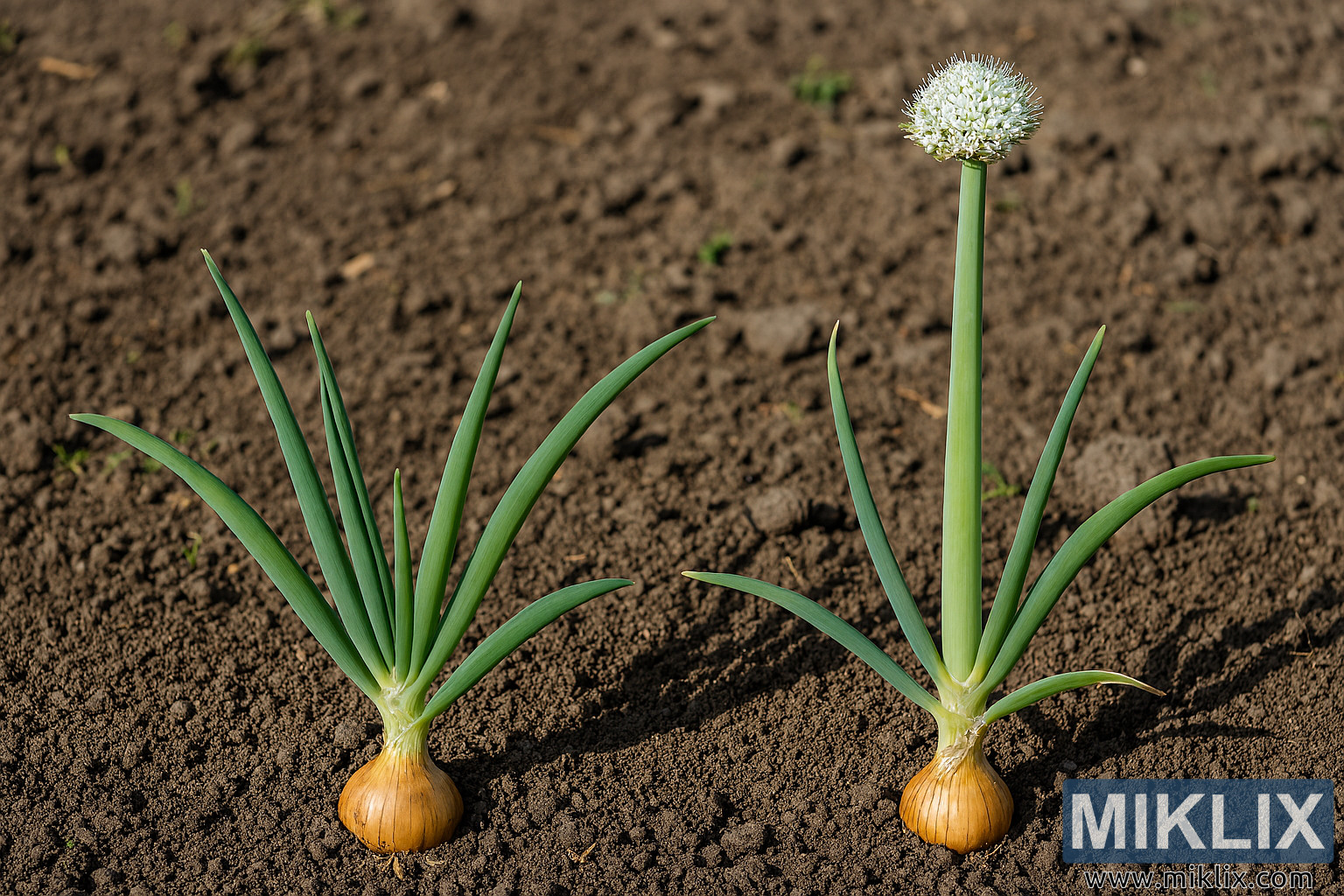
Landscape, high-resolution horticultural comparison featuring two onion plants (Allium cepa) side by side in a garden bed, captured in bright daytime natural light. The scene is composed with a clear left–right contrast: on the left, a healthy onion plant with vigorous foliage; on the right, a bolted onion exhibiting a prominent flower stalk terminating in a spherical inflorescence. The camera angle is low and close, emphasizing plant architecture, bulb exposure, leaf texture, and soil detail, while the background remains softly out of focus to keep attention on the subjects.
Left side (healthy onion): The plant displays multiple long, slender, smooth leaves emerging from the basal plate. They are vibrant, saturated green, lightly glaucous, and gently arch outward with pointed tips. Minor natural imperfections—tiny nicks and faint browning at a few tips—convey realism without suggesting disease. At the base, the bulb is partially exposed above the soil line, showing a golden-yellow outer layer with papery, dry tunics peeling back to reveal a more lustrous surface beneath. Fine rootlets are visible just below the bulb, threading into the soil and anchoring the plant. Leaf sheaths are tight and uniform, with no central thickening indicative of bolting, and the overall posture is compact and productive.
Right side (bolted onion): A thick, pale green scape (flower stalk) rises nearly vertically from the plant’s center, taller and more rigid than the leaves. The scape supports a dense, globe-shaped flower head composed of numerous tiny, white florets, each with six delicate tepals and pale green centers, creating a granular, textured look. The florets form an almost perfect sphere, with individual blooms discernible at the margin. The surrounding leaves are similarly long and slender but show slightly more wear—subtle curling and minor browning at some tips—consistent with energy redirected to flowering. The bulb is also partially exposed, sharing the healthy plant’s golden-yellow hue and layered, papery tunics. The scape’s base is clearly distinct from leaf sheaths, visually confirming bolting.
Soil and environment: The garden bed features dark brown, clumpy loam with small stones and scattered organic fragments. Its crumb structure and slight irregularity suggest good aeration and recent cultivation. Soft, directional sunlight creates gentle shadows that sculpt leaf contours and highlight surface textures on bulbs and soil aggregates. The background remains intentionally subdued: blurred soil clods and sparse green hints that avoid competing with the primary subjects.
Color and texture: Greens are clean and natural, ranging from deep leaf bases to lighter, sunlit edges. The flower head’s white pops against earthy browns, while the bulbs introduce warm golden tones. Textural contrast is central: smooth, waxy leaves; fibrous, parchment-like bulb tunics; the satin firmness of the scape; and the granular, tactile soil.
Educational focus: The composition explicitly communicates the physiological difference between a non-bolting, vegetatively focused onion and a bolting onion that has shifted resources to reproduction. Key identifiers include the absence versus presence of a central scape, leaf sheath uniformity versus scape emergence, and the spherical inflorescence characteristic of bolting. This visual pairing serves growers, students, and catalog users by clarifying diagnosis at a glance: healthy onion on the left, bolted onion with flowering scape on the right.
The image is related to: Growing Onions: A Complete Guide for Home Gardeners