
Growing Onions: A Complete Guide for Home Gardeners
Published: December 16, 2025 at 9:15:20 PM UTC
Onions are one of the most rewarding vegetables to grow in your home garden. Not only are they versatile kitchen staples used in countless recipes, but they're also relatively low-maintenance and can be stored for months after harvest.
Click or tap the image for more information and higher resolutions.
Whether you're a beginner or experienced gardener, growing your own onions provides the satisfaction of harvesting fresh, flavorful bulbs that often surpass store-bought varieties in taste and quality. This comprehensive guide will walk you through everything you need to know to successfully grow onions, from selecting the right varieties to proper harvesting and storage techniques.
Choosing the Right Onion Varieties
Before planting onions, it's important to understand that onions are photoperiodic, meaning they form bulbs in response to specific day lengths. Selecting the right type for your region is crucial for successful bulb development.
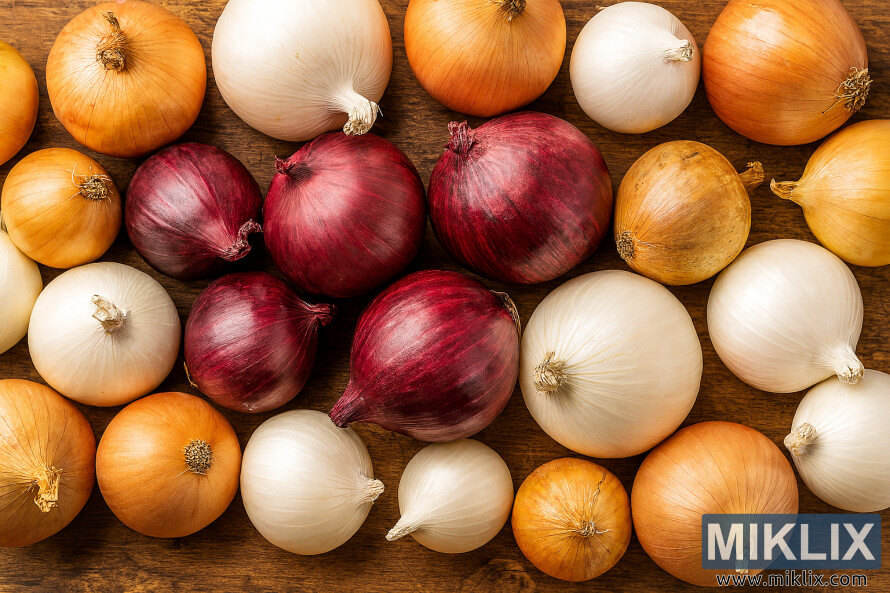
Different onion varieties: yellow, red, and white onions each offer unique flavors and uses in cooking.
Onion Types Based on Day Length
Short-Day Onions
Best for southern regions (zones 7 and higher), these onions form bulbs when daylight reaches 10-12 hours. Popular varieties include 'White Bermuda', 'Red Burgundy', and 'Yellow Granex' (Vidalia type).
Day-Neutral (Intermediate) Onions
Adaptable to most regions, especially zones 5-7. They form bulbs when daylight reaches 12-14 hours. Popular varieties include 'Candy', 'Super Star', and 'Red Stockton'.
Long-Day Onions
Ideal for northern regions (zones 6 and lower), these onions form bulbs when daylight reaches 14-16 hours. Popular varieties include 'Yellow Sweet Spanish', 'Walla Walla', and 'Red Florence'.
Popular Onion Varieties for Home Gardens
| Variety | Type | Color | Flavor Profile | Best Uses |
| Yellow Sweet Spanish | Long-day | Yellow | Mild, sweet | All-purpose, roasting |
| Walla Walla | Long-day | Yellow | Very sweet, mild | Fresh eating, grilling |
| Red Burgundy | Short-day | Red | Mild, sweet | Salads, sandwiches |
| Candy | Day-neutral | Yellow | Sweet, mild | All-purpose |
| White Bermuda | Short-day | White | Extremely mild | Fresh eating, pickling |
Planting Methods: Seeds vs. Sets
There are two main ways to grow onions: from seeds or from sets. Each method has its advantages and challenges.
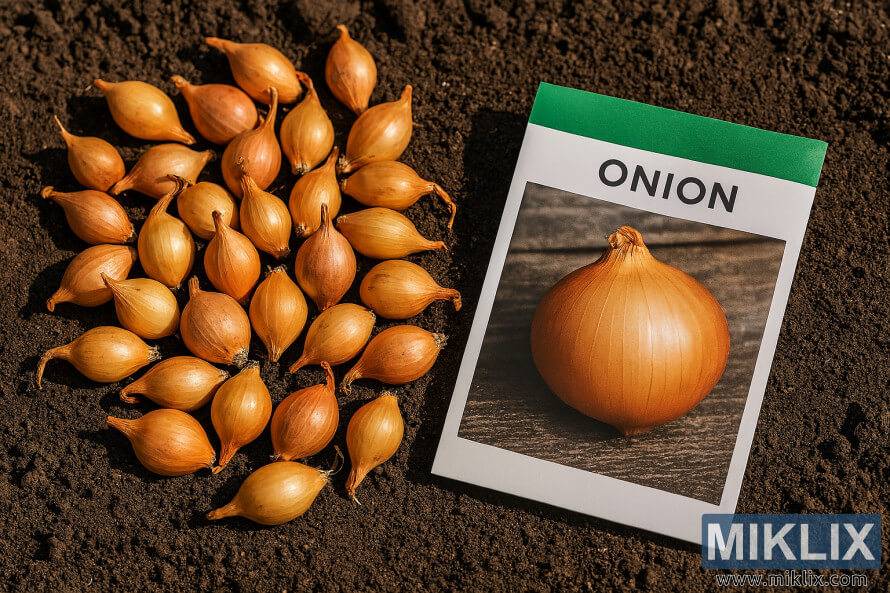
Onion sets (small bulbs) provide a head start compared to seeds, making them ideal for beginners.
Growing from Sets
Onion sets are small, immature bulbs grown from seed in the previous season. They're the easiest and most reliable method for beginners.
Advantages of Onion Sets:
- Faster growth and earlier harvest
- Higher success rate for beginners
- Less susceptible to disease
- Can be planted directly in the garden
- Requires minimal care to establish
Look for onion sets that are firm and about 1/2 to 3/4 inch in diameter. Larger sets tend to bolt (produce flowers) more quickly, which can reduce bulb size.
Growing from Seeds
Starting onions from seed requires more time and care but offers more variety choices and can produce larger bulbs.
Advantages of Onion Seeds:
- More variety options available
- Generally less expensive than sets
- Often produce larger bulbs
- Less likely to bolt than larger sets
- Seeds can be stored for future seasons
Onion seeds should be started indoors 8-10 weeks before your last expected spring frost date. They grow slowly at first, so patience is required.
Click or tap the image for more information and higher resolutions.
When to Plant Onions
Timing is crucial when planting onions. The right planting time depends on your climate and the type of onions you're growing.
Plant onion sets in early spring as soon as the soil can be worked for best results.
Planting Schedule by Region
| Climate Region | Onion Type | When to Start Seeds Indoors | When to Plant Sets/Transplants |
| Northern (Zones 3-5) | Long-day | January-February | April-May (2-4 weeks before last frost) |
| Mid-Atlantic (Zones 6-7) | Long-day or Day-neutral | February-March | March-April |
| Southern (Zones 8-10) | Short-day | September-October | October-November or January-February |
Pro Tip: In northern regions, plant as soon as the soil can be worked in spring. In southern regions, fall planting allows onions to develop during cooler months and be ready for harvest in late spring.
Click or tap the image for more information and higher resolutions.
Soil Preparation for Onions
Onions thrive in well-prepared soil with the right texture and nutrients. Taking time to prepare your soil properly will significantly improve your harvest.
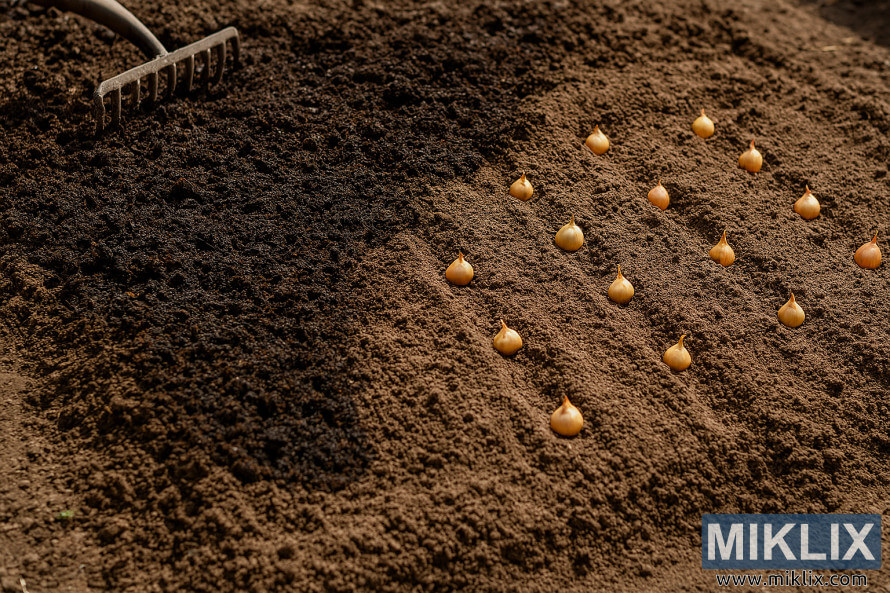
Well-prepared soil with added compost provides the nutrients onions need for optimal growth.
Soil Requirements
- Soil type: Loose, well-draining sandy loam or silt loam
- pH level: 6.0 to 6.8 (slightly acidic to neutral)
- Texture: Friable soil that doesn't compact easily
- Drainage: Excellent drainage to prevent bulb rot
Steps to Prepare Soil for Onions
- Test your soil pH with a soil testing kit. Adjust if necessary using lime to raise pH or sulfur to lower it.
- Remove all weeds, rocks, and debris from the planting area.
- Add 2-3 inches of well-aged compost or rotted manure to the top 6 inches of soil.
- Mix in a balanced organic fertilizer according to package directions.
- Till or turn the soil to a depth of 8-10 inches to create loose, friable soil.
- Rake the area smooth, breaking up any large clumps.
Onions are heavy feeders but have shallow roots, making it difficult for them to access nutrients deep in the soil. Enriching the top layer of soil is essential for good bulb development.
Click or tap the image for more information and higher resolutions.
How to Plant Onions
Proper planting technique ensures your onions get off to a strong start. Whether you're using sets or transplants, follow these steps for successful planting.
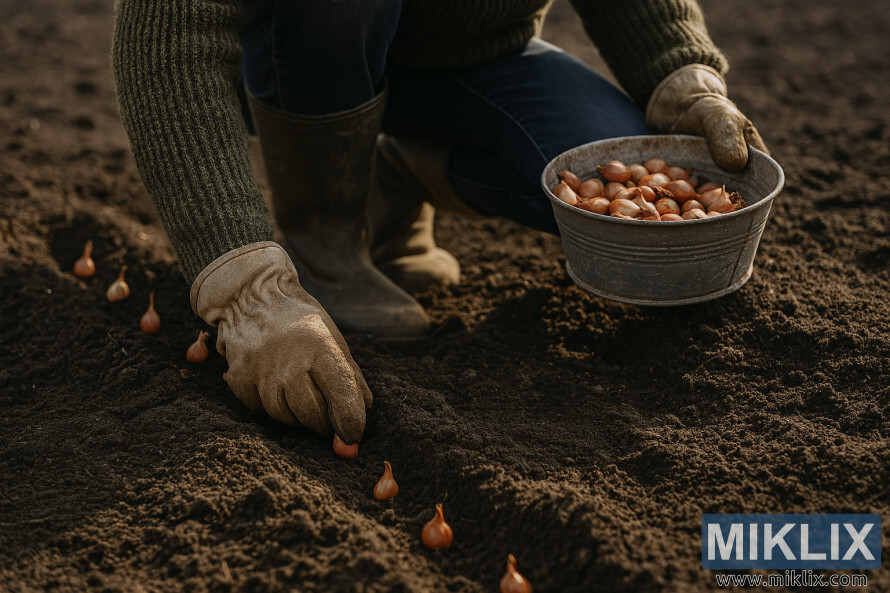
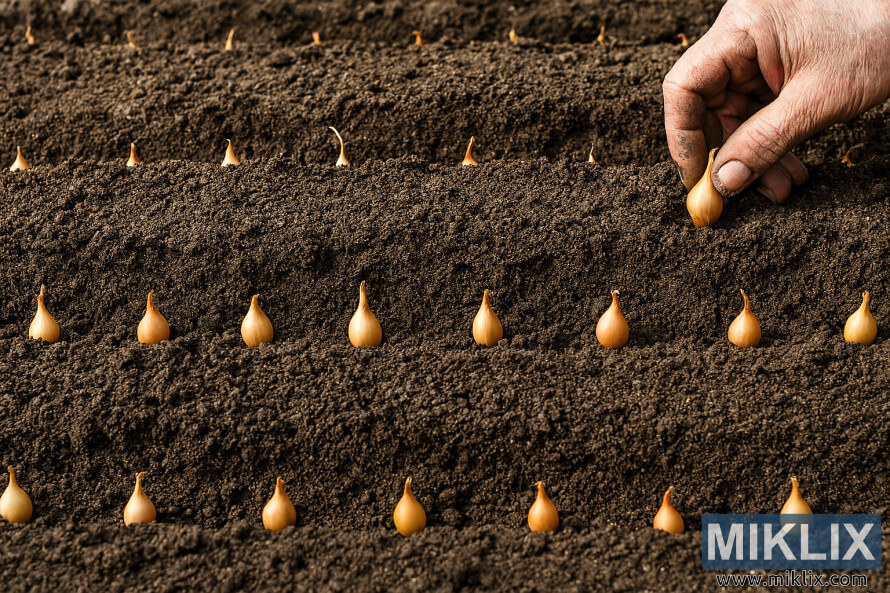
Plant onion sets with the pointed end up, leaving just the tip exposed above the soil surface.
Planting Onion Sets
- Create furrows about 1-2 inches deep in your prepared soil.
- Space the furrows 12-18 inches apart to allow room for bulb development.
- Place onion sets in the furrows, pointed end up, 4-6 inches apart.
- Cover with soil so that just the tip of the set is showing above ground.
- Water thoroughly but gently to avoid washing away the soil.
Click or tap the image for more information and higher resolutions.
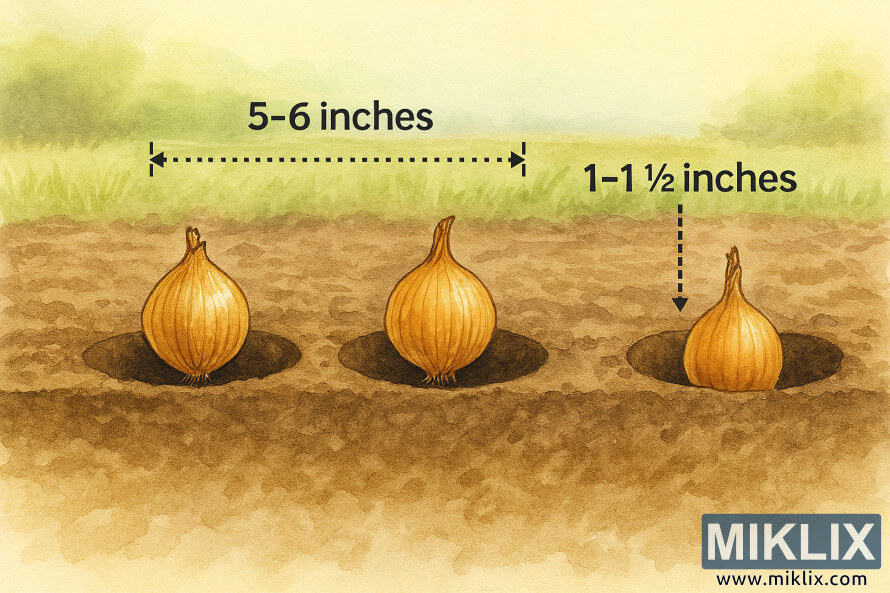
Planting Onion Seedlings
- Harden off seedlings by gradually exposing them to outdoor conditions over 7-10 days.
- Dig small holes 4-6 inches apart in rows 12-18 inches apart.
- Carefully remove seedlings from their containers, keeping root balls intact.
- Place seedlings in holes at the same depth they were growing in their containers.
- Firm soil gently around roots and water thoroughly.
Click or tap the image for more information and higher resolutions.
Container Planting
Onions can also thrive in containers, making them accessible for gardeners with limited space.
- Choose containers at least 10 inches deep with drainage holes.
- Fill with high-quality potting mix enriched with compost.
- Space onions 3-4 inches apart in all directions.
- A 5-gallon container can support 4-6 onion plants.
- Place containers in full sun and water consistently.
Caring for Growing Onions
Once planted, onions require regular care to develop into large, healthy bulbs. Follow these maintenance guidelines throughout the growing season.
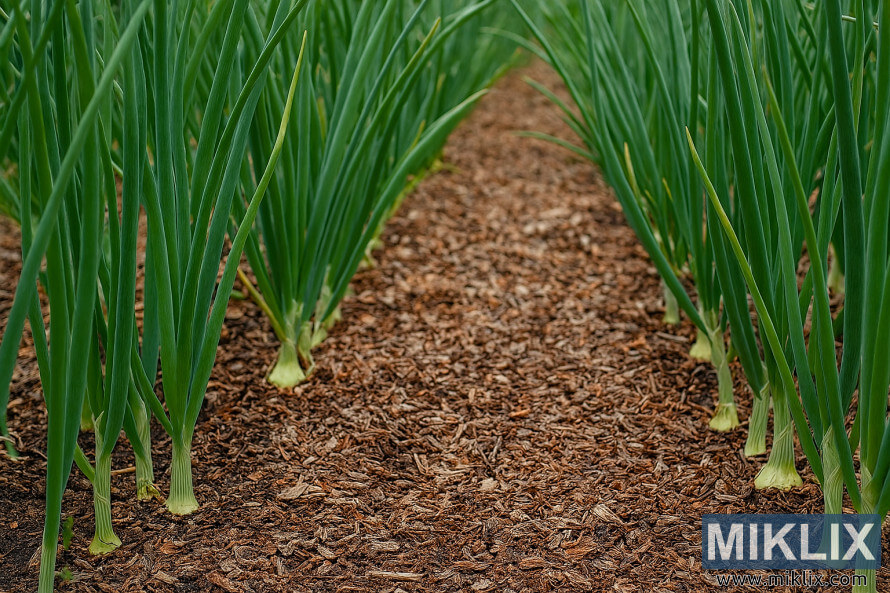
Healthy onion plants with straw mulch to suppress weeds and retain soil moisture.
Watering
Proper watering is crucial for onion development. Onions have shallow roots and need consistent moisture, especially during bulb formation.
- Water deeply once a week, providing about 1 inch of water.
- Increase watering during hot, dry periods.
- Reduce watering when tops begin to fall over and yellow (about 2-3 weeks before harvest).
- Water at the soil level to keep foliage dry and prevent disease.
Fertilizing
Onions are heavy feeders and benefit from regular fertilization throughout their growing cycle.
- Apply a nitrogen-rich fertilizer every 2-3 weeks until bulbs begin to form.
- Stop fertilizing once bulbs push the soil away and begin to emerge.
- Organic options include fish emulsion, blood meal, or compost tea.
- Avoid high-nitrogen fertilizers late in the season as they can delay maturity.
Weed Control
Weeds compete with onions for nutrients and can significantly reduce yields.
- Mulch around plants with straw or dried grass clippings (2-3 inches).
- Remove mulch from around bulbs as they mature to allow them to dry properly.
- Hand weed carefully to avoid disturbing shallow onion roots.
- Keep the onion bed consistently weeded throughout the growing season.
Never pile soil or mulch over emerging onion bulbs. Bulbs need exposure to air and sunlight as they mature.
Click or tap the image for more information and higher resolutions.
Common Onion Pests and Diseases
While onions are relatively pest-resistant compared to many garden vegetables, they can still face challenges. Identifying and addressing problems early is key to a successful harvest.
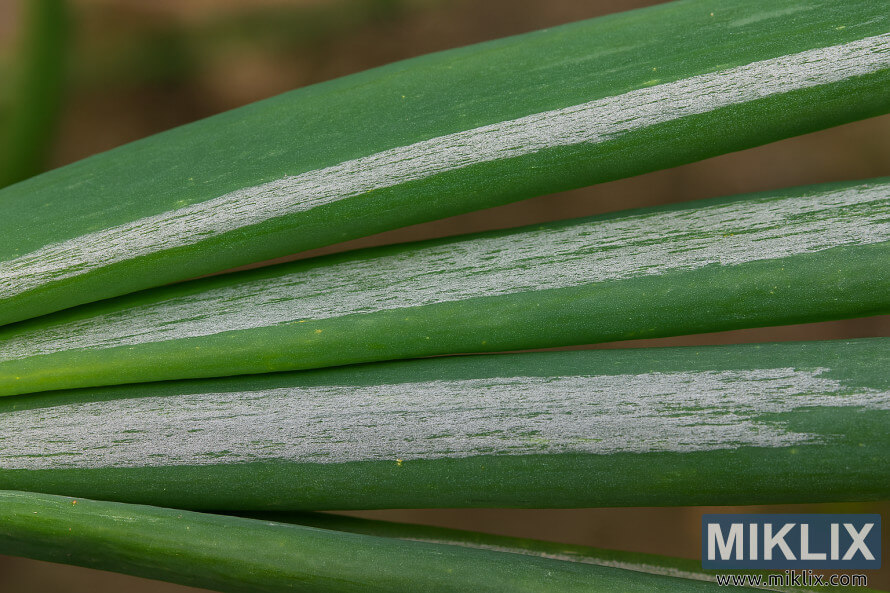
Onion thrips damage appears as silvery streaks on leaves and can significantly reduce yields if left untreated.
Common Pests
Onion Thrips
Signs: Silvery streaks on leaves, stunted growth
Control: Spray plants with insecticidal soap, introduce beneficial insects like ladybugs, use reflective mulch to deter thrips.
Onion Maggots
Signs: Wilting plants, yellowing leaves, tunnels in bulbs
Control: Rotate crops, use row covers, remove and destroy affected plants, practice good garden sanitation.
Common Diseases
Onion Neck Rot
Signs: Softening at neck, water-soaked tissue
Prevention: Ensure proper curing, avoid neck injuries during harvest, store in cool, dry conditions.
White Rot
Signs: Yellowing leaves, white fungal growth on bulb
Prevention: Use disease-free sets, practice crop rotation, avoid planting in infected soil for at least 4 years.
Downy Mildew
Signs: Pale spots on leaves, purplish-gray fuzzy growth
Prevention: Ensure good air circulation, avoid overhead watering, remove affected leaves promptly.
Crop rotation is one of the best preventive measures against onion diseases. Avoid planting onions or related crops (garlic, leeks, shallots) in the same location for at least 3 years.
Click or tap the image for more information and higher resolutions.
Companion Planting with Onions
Strategic companion planting can help deter pests and improve the growth of your onions and neighboring plants.
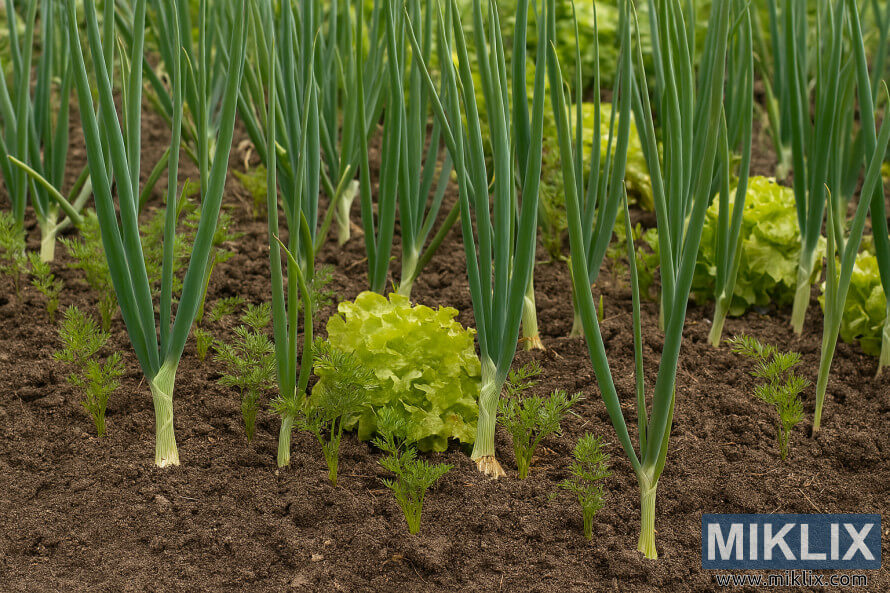
Interplanting onions with compatible companions can maximize garden space and reduce pest problems.
Good Companions for Onions
- Carrots: Onions repel carrot flies while carrots repel onion flies.
- Beets: Grow well together without competing for nutrients.
- Lettuce: Provides ground cover and helps retain soil moisture.
- Tomatoes: Onions help deter pests that attack tomatoes.
- Chamomile: Improves the flavor of onions and enhances growth.
- Strawberries: Onions help deter pests that damage strawberries.
Plants to Avoid Near Onions
- Beans and Peas: Onions inhibit their growth.
- Asparagus: Onions can stunt asparagus growth.
- Sage: Negatively affects onion development.
- Other Alliums: Garlic, leeks, and chives share the same pests and diseases.
Click or tap the image for more information and higher resolutions.
Harvesting Onions
Knowing when and how to harvest your onions is crucial for maximizing yield and storage potential.
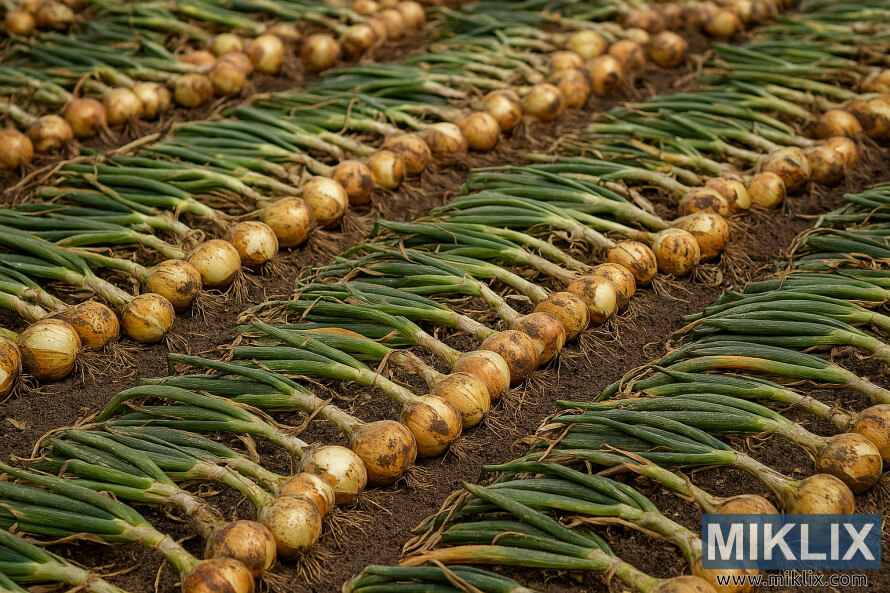
After harvesting, allow onions to cure in a single layer in a warm, dry location with good air circulation.
When to Harvest
Timing your onion harvest correctly ensures the best flavor and longest storage life.
- Harvest when 70-80% of the tops have fallen over and begun to yellow.
- Green onions can be harvested at any time when they reach the desired size.
- For storage onions, wait until tops naturally begin to fall over.
- Harvest during dry weather to facilitate proper curing.
How to Harvest
- Stop watering when tops begin to fall over (about 7-10 days before harvest).
- Gently loosen soil around bulbs with a garden fork if needed.
- Pull onions by the tops, being careful not to bruise them.
- Shake off excess soil but don't wash the bulbs.
- Leave tops attached for the curing process.
Click or tap the image for more information and higher resolutions.
Curing and Storing Onions
Proper curing and storage techniques can extend the shelf life of your onions for months, allowing you to enjoy your harvest well into winter.
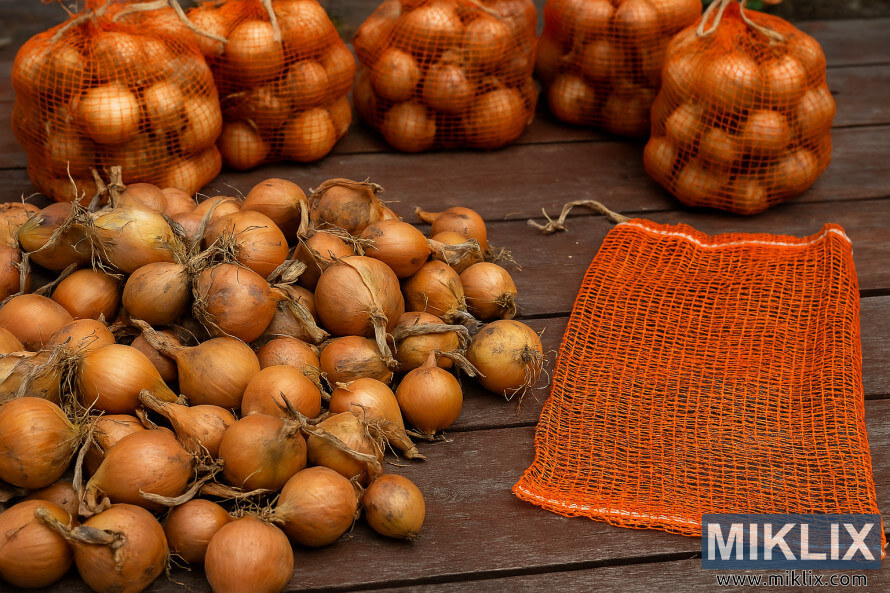
Store cured onions in mesh bags or braided strands in a cool, dry place with good air circulation.
Curing Process
Curing is the process of drying onions to prepare them for long-term storage.
- Spread harvested onions in a single layer in a warm, dry place with good air circulation.
- Ideal locations include a covered porch, garage, or barn protected from rain.
- Allow onions to cure for 2-3 weeks until the necks are completely dry and the outer skins are papery.
- After curing, trim tops to 1 inch above the bulb and trim roots.
- Remove any onions with soft spots, damage, or thick necks as these won't store well.
Click or tap the image for more information and higher resolutions.
Storage Methods
Properly stored onions can last 3-6 months or even longer depending on the variety.
- Store in mesh bags, braided strands, or open baskets that allow air circulation.
- Keep in a cool (32-40°F), dry place with humidity between 65-70%.
- Good locations include basements, root cellars, or cool pantries.
- Avoid storing near apples, potatoes, or other produce that releases ethylene gas.
- Check regularly and remove any that show signs of sprouting or rotting.
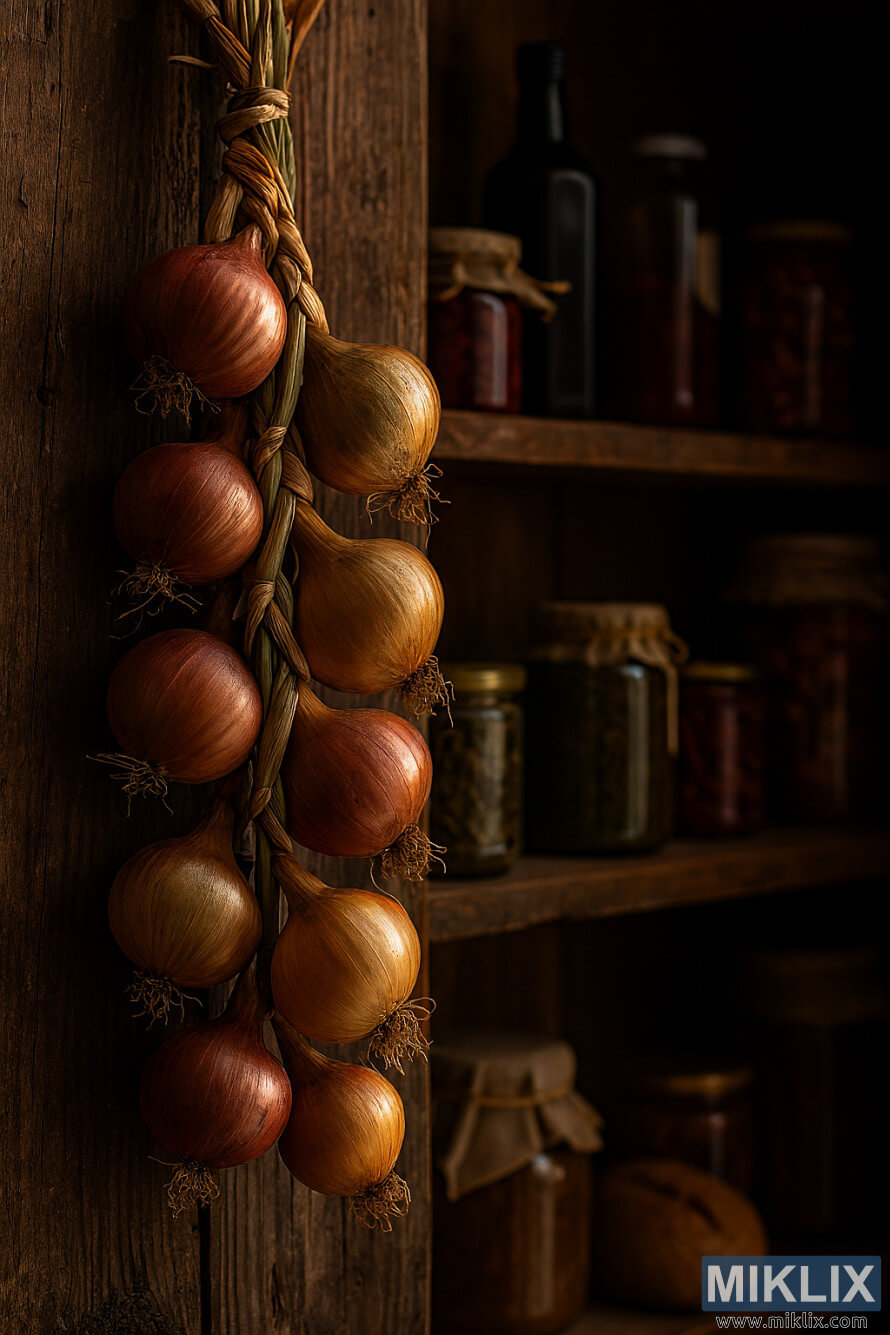
Braiding onions is not only practical for storage but adds a decorative touch to your kitchen or pantry.
Storage Tip: Sweet onion varieties generally don't store as long as pungent varieties. Use sweet onions first and save the more pungent ones for long-term storage.
Click or tap the image for more information and higher resolutions.
Troubleshooting Common Onion Growing Problems
Even experienced gardeners occasionally encounter issues when growing onions. Here are solutions to common problems.
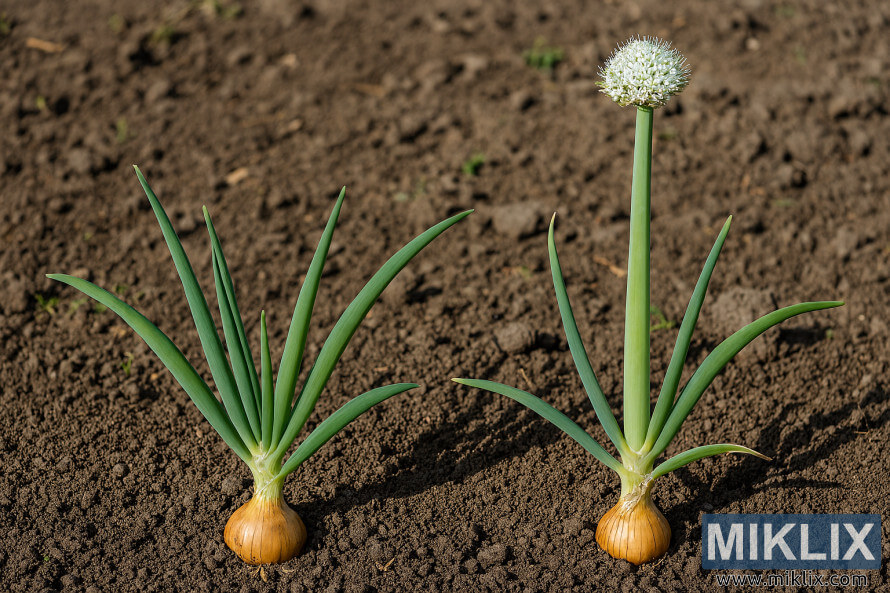
Bolting (flowering) in onions can be triggered by temperature fluctuations and reduces bulb size.
Why are my onions not forming bulbs?
This is often due to planting the wrong day-length variety for your region. Other causes include overcrowding, insufficient sunlight, or excessive nitrogen fertilizer. Ensure you're planting the appropriate variety for your latitude and providing at least 12 hours of sunlight daily.
Why are my onion plants bolting (flowering) prematurely?
Bolting is typically triggered by temperature fluctuations, especially cold followed by warm weather. Once an onion bolts, the bulb stops growing. To prevent bolting, plant at the right time for your region and use appropriately sized sets (smaller sets are less likely to bolt).
Why are my onion tops turning yellow too early?
Early yellowing can indicate overwatering, underwatering, pest infestation, or disease. Check for signs of pests like thrips or onion maggots. Ensure soil has proper drainage and that watering is consistent but not excessive.
Why are my onions rotting in the ground?
Rotting is usually caused by poor drainage or fungal diseases. Improve soil drainage by adding organic matter or growing in raised beds. Avoid overhead watering and practice crop rotation to prevent disease buildup in soil.
Why are my stored onions sprouting?
Sprouting in storage is typically caused by too much humidity or warmth. Ensure onions are properly cured before storage and keep them in a cool, dry place with good air circulation. Check stored onions regularly and use any that show signs of sprouting.
Click or tap the image for more information and higher resolutions.
Conclusion: Enjoying Your Onion Harvest
Growing onions in your home garden is a rewarding experience that provides you with fresh, flavorful bulbs that often surpass store-bought varieties. With proper planning, care, and storage techniques, you can enjoy your homegrown onions for many months after harvest.
Remember that successful onion growing starts with selecting the right varieties for your region and providing consistent care throughout the growing season. Whether you're a beginner starting with sets or an experienced gardener growing from seed, the satisfaction of harvesting your own onions is well worth the effort.
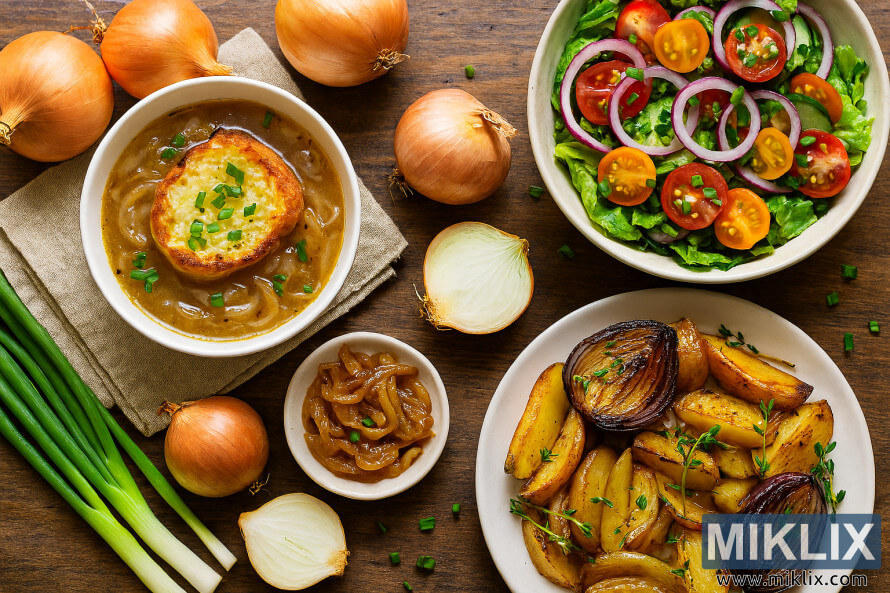
As you gain experience, don't be afraid to experiment with different varieties to discover new flavors and cooking possibilities. From sweet Vidalias to pungent storage types, each variety offers unique characteristics that can enhance your culinary creations.
Click or tap the image for more information and higher resolutions.
Further Reading
If you enjoyed this post, you may also like these suggestions:
- The Best Fruit Trees to Plant in Your Garden
- A Guide to Growing Lettuce in Your Own Garden
- The Best Tomato Varieties to Grow in Your Garden