
Image: Optimal companion planting layout for red cabbage
Published: December 17, 2025 at 10:40:04 PM UTC
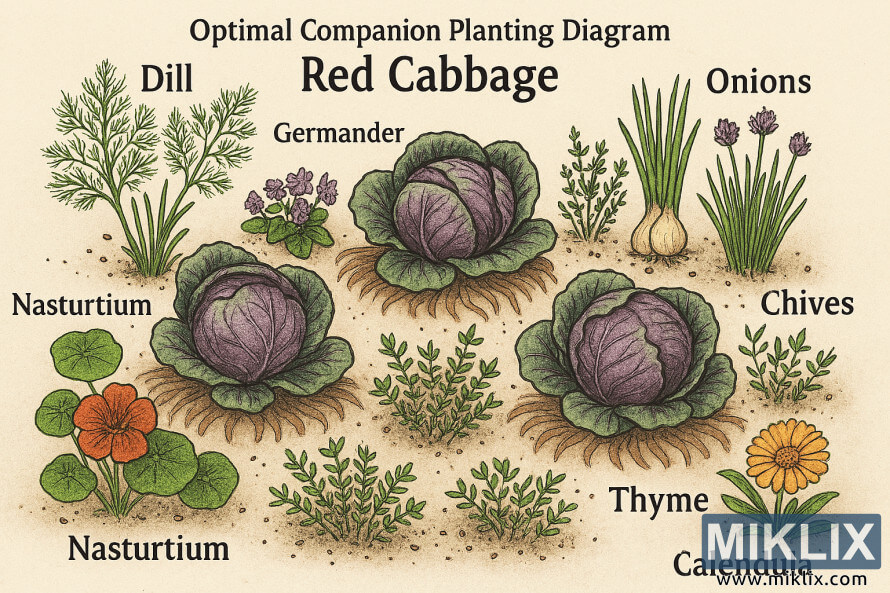
High-resolution, landscape companion planting diagram for red cabbage with dill, germander, onions, chives, nasturtium, thyme, and calendula. Clear labels, realistic plant depictions, and optimized spacing for pest control, pollinators, and healthy growth.
Available versions of this image
The image files available for download below are less compressed and higher resolution - and as a result of that, higher quality - than the images embedded in articles and pages on this website, which are more optimized for file size in order to reduce bandwidth consumption.
Regular size (1,536 x 1,024)
Large size (3,072 x 2,048)
Very large size (4,608 x 3,072)
Extra large size (6,144 x 4,096)
Comically large size (1,048,576 x 699,051)
- Still uploading... ;-)
Image description
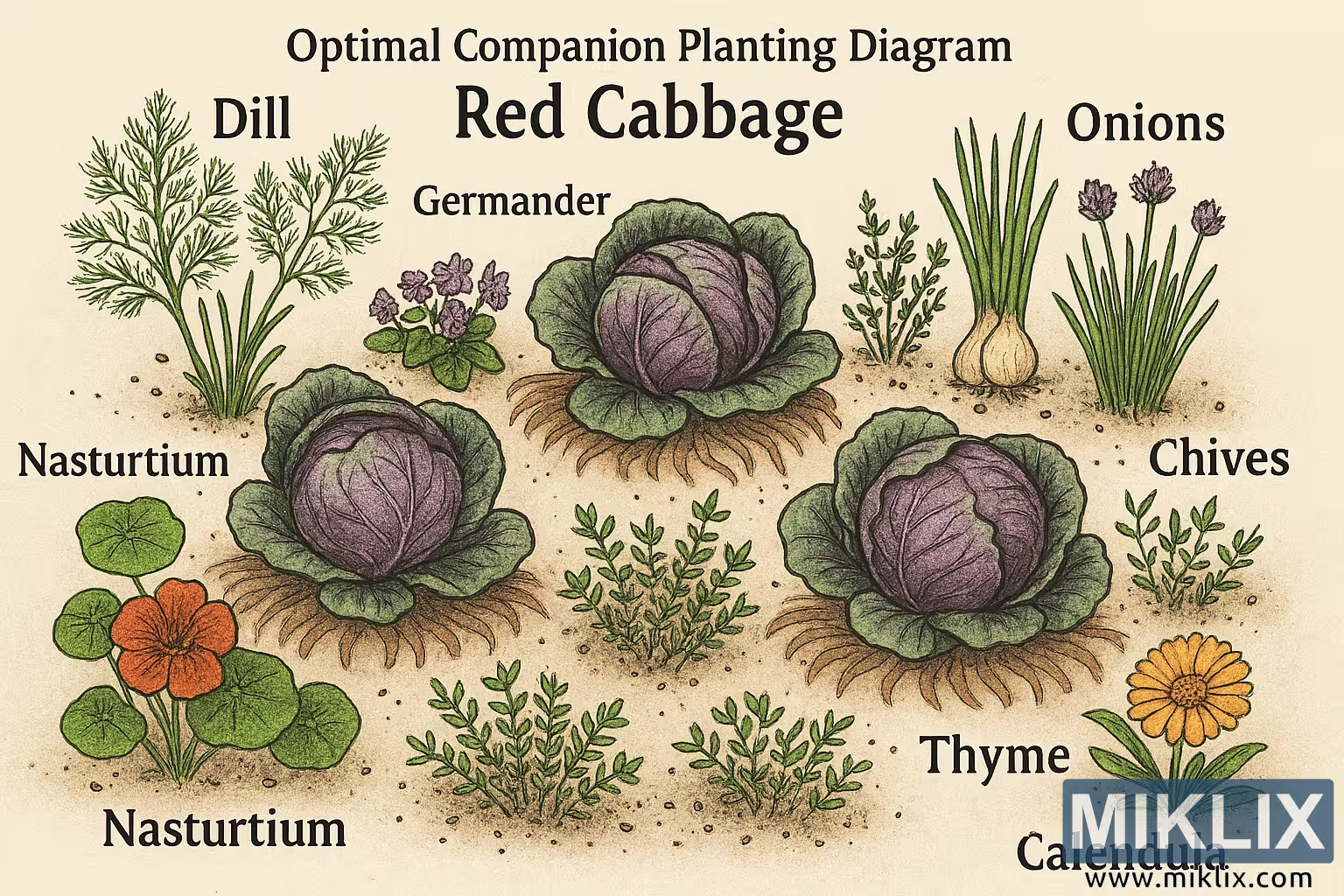
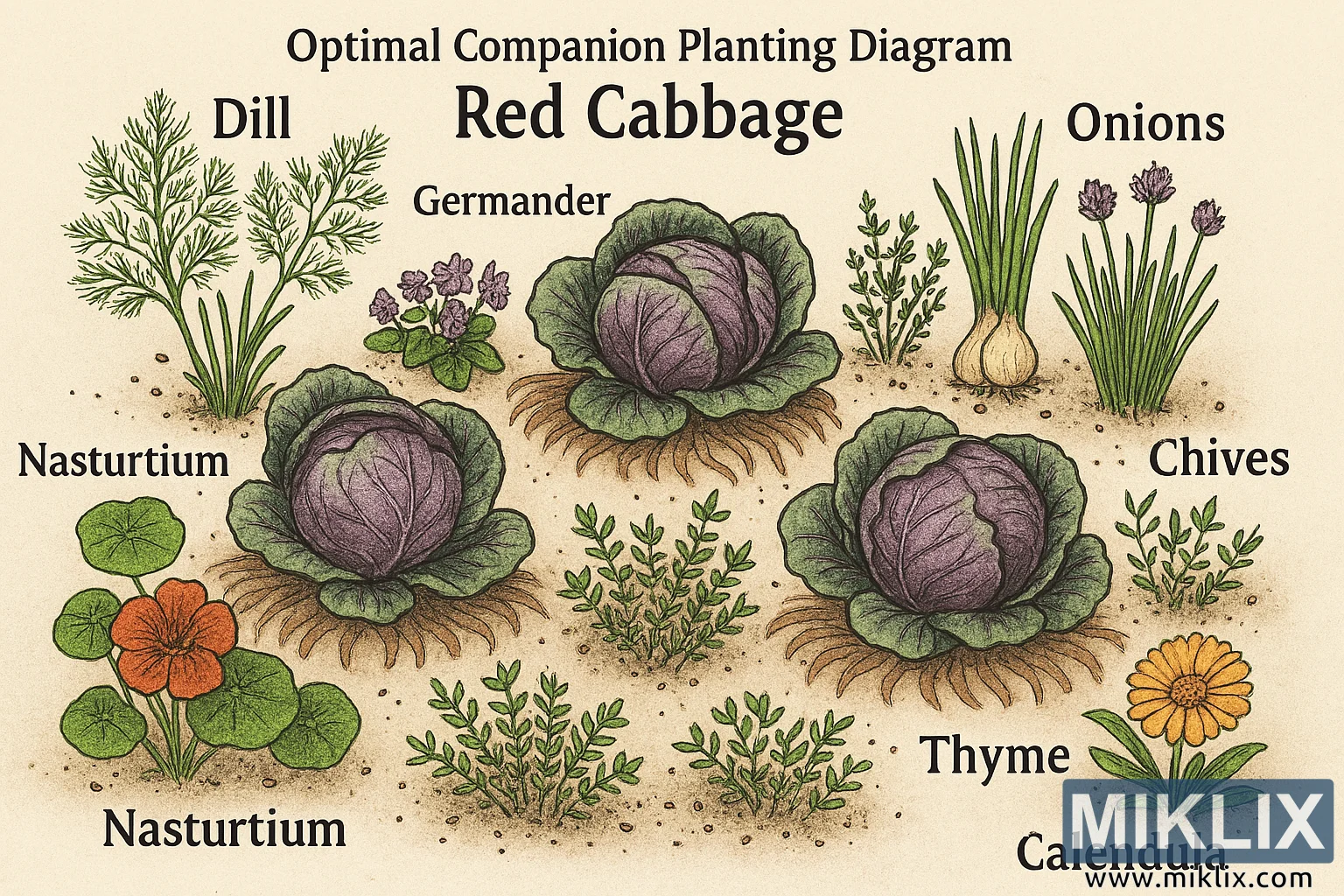
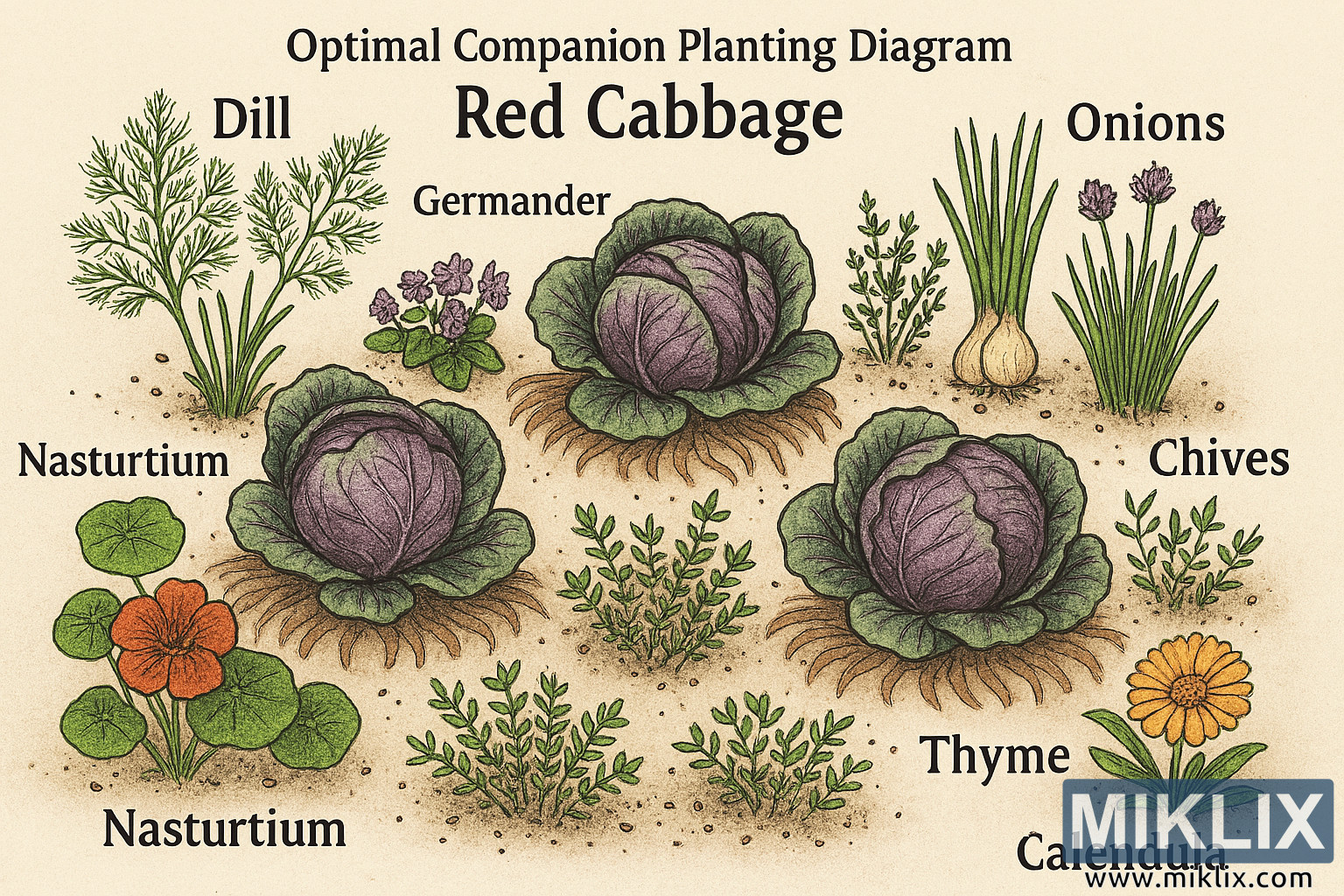
This high-resolution, landscape-oriented companion planting diagram presents an optimized garden layout centered on red cabbage, depicted as large, mature heads with tightly layered, purple-green leaves and fine, realistic veining. The composition uses a clean, top-down perspective on a cream-colored background, lending clarity and educational focus. Three prominent red cabbage plants form a subtle triangular arrangement in the middle of the diagram. Each cabbage sits on a ring of textured mulch indicated by wavy, brown contours, visually separating the cabbage crowns from surrounding soil and companion plants. The soil field is a warm, light brown tone speckled with darker flecks, suggesting a healthy, well-aerated bed.
Around the central cabbages, beneficial companion species are spaced to balance pest deterrence, pollinator attraction, and nutrient harmony. Labels appear in crisp, black, sans-serif text, placed near each plant without cluttering the visual flow. In the top-left quadrant, **Dill** features delicate, feathery green leaves on slender stems, its shape airy and umbrella-like, signaling its role in attracting predatory insects and beneficial pollinators. Near it, **Germander** is illustrated as tidy sprigs bearing small purple flowers along green stems, hinting at bloom-driven insect support and a compact habit that won’t overwhelm the cabbages.
To the right of the upper cabbage, **Onions** emerge from small, cream-colored bulbs with three upright, hollow green leaves, positioned to contribute mild pest suppression and a neutral root profile that coexists well with brassicas. Further to the right, **Chives** are shown as fine, hollow green blades topped with neat, spherical purple flower heads, reinforcing the allium family’s complementary pest-management effect while offering nectar bursts for pollinators.
In the bottom-left quadrant, **Nasturtium** displays large, shield-like green leaves with two vibrant orange-red flowers. Its trailing habit and colorful blossoms signal both groundcover utility and trap-crop potential—drawing pests away while fostering hoverflies and other allies. Adjacent to the lower-left cabbage, **Thyme** is portrayed as a compact, low-growing mound of tiny, aromatic green leaves on woody stems. Its prostrate form fills gaps without competing aggressively, providing nectar-rich micro-blooms that entice beneficial insects.
In the bottom-right, **Calendula** stands out with a bright yellow-orange composite flower and slightly serrated green leaves. Its cheery inflorescences improve pollinator presence and offer mild pest distraction, while the plant’s moderate footprint remains compatible with brassica spacing. The overall arrangement respects airflow and access: companions are set far enough to avoid crowding cabbage leaves, yet close enough for functional ecological synergy.
Typography reinforces clarity and purpose. At the top, the title reads "Optimal Companion Planting Diagram" in bold, black, sans-serif, with "Red Cabbage" below in a larger, black, serif font, distinguishing the focal crop from its supportive cast. Visual hierarchy emphasizes the cabbages first—deep purple cores and green outer leaves—then guides the eye outward along a gentle radial path to each companion group. Color choices are naturalistic: earthy browns, botanical greens, and lively accent hues from blossoms. Linework and shading model realistic plant morphology while maintaining diagrammatic simplicity suitable for educational use.
Functionally, this layout balances ecological roles: alliums (onions, chives) for gentle pest pressure reduction; flowering herbs (dill, thyme) for beneficial insect attraction; ornamentals with utility (nasturtium, calendula) for pollinators, cover, and trap-crop dynamics; and a compact perennial (germander) for bloom continuity. The spacing implicitly supports mulching, moisture retention, and clear maintenance pathways. The result is a coherent, visually intuitive guide to planting red cabbage with allies that enhance resilience, biodiversity, and garden productivity.
The image is related to: Growing Red Cabbage: A Complete Guide for Your Home Garden