
Growing Red Cabbage: A Complete Guide for Your Home Garden
Published: December 17, 2025 at 10:40:04 PM UTC
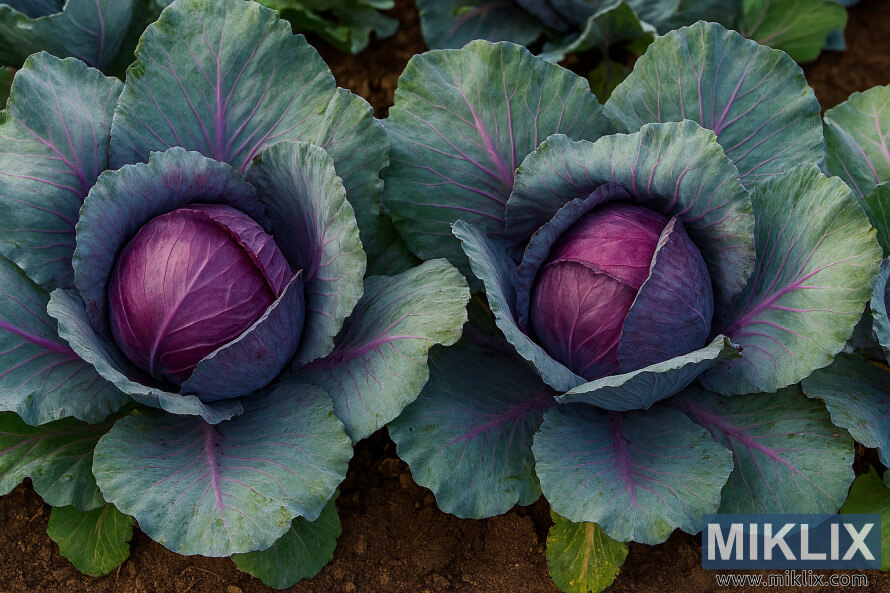
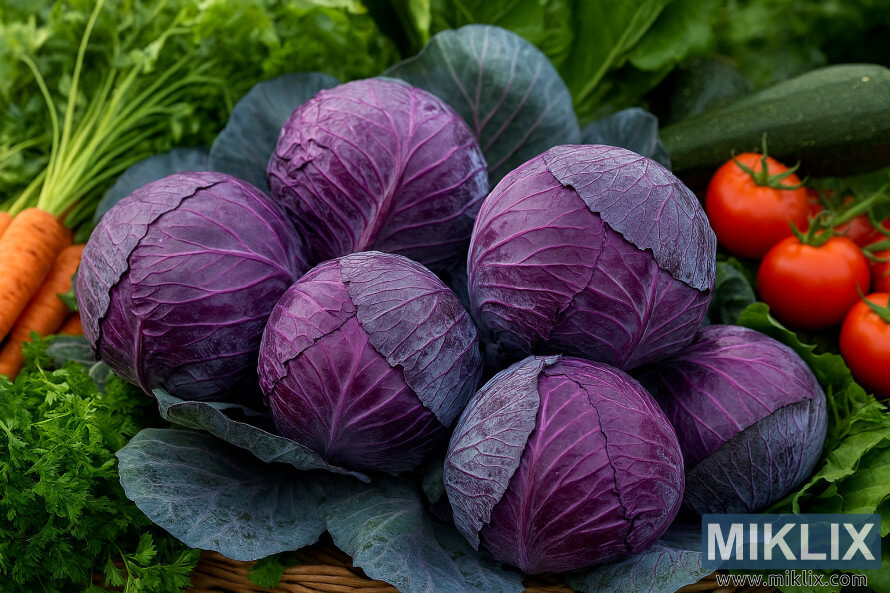
Red cabbage is a stunning, nutritious addition to any home garden. With its vibrant purple-red leaves and crisp texture, it's not only visually appealing but also packed with beneficial antioxidants and vitamins.
Click or tap the image for more information and higher resolutions.
Whether you're a beginner or experienced gardener, this guide will walk you through everything you need to know about growing red cabbage successfully. From selecting the right varieties to harvesting and storage, we'll cover all the essential steps to help you enjoy this versatile vegetable straight from your garden.
Nutritional Benefits of Red Cabbage
Before diving into growing techniques, let's explore why red cabbage deserves a spot in your garden. This colorful vegetable isn't just beautiful—it's a nutritional powerhouse that offers numerous health benefits.
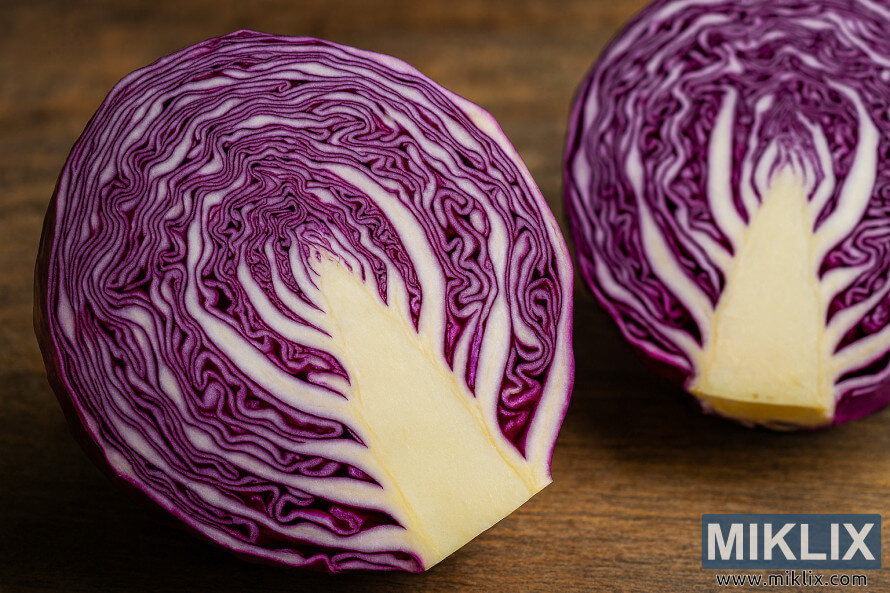
Red cabbage gets its distinctive color from anthocyanins, powerful antioxidants that help protect your cells from damage. These same compounds give red cabbage its impressive nutritional profile, making it even more beneficial than green cabbage varieties.
Key Nutritional Benefits:
- Rich in vitamins C, K, and B6
- High in dietary fiber for digestive health
- Contains potassium, manganese, and magnesium
- Low in calories but high in nutrients
- Contains compounds that may reduce inflammation
- Supports heart health and immune function
Red cabbage is incredibly versatile in the kitchen. You can enjoy it raw in salads and slaws for a crisp, peppery flavor, or cook it for a sweeter taste. It's perfect for fermenting into sauerkraut or kimchi, adding to stir-fries, or braising as a side dish. Growing your own ensures you'll have the freshest, most nutritious cabbage possible.
Click or tap the image for more information and higher resolutions.
Best Red Cabbage Varieties for Home Gardens
Choosing the right red cabbage variety is crucial for success in your garden. Different varieties offer varying maturation times, sizes, and resistance to pests and diseases. Here are some excellent options for home gardeners:
Early Season Varieties
- Ruby Ball - 70-75 days to maturity, compact 6-8 inch heads, excellent disease resistance
- Red Express - 62 days to maturity, small 2-4 pound heads, ideal for small gardens
- Amarant - 65-70 days to maturity, round medium-sized heads with short stalks
Mid-Season Varieties
- Ruby Perfection - 85 days to maturity, dense 6-8 inch heads, excellent flavor
- Granat - 80-90 days to maturity, fast-growing with good storage potential
- Red Rookie - 75-80 days to maturity, uniform heads with good bolt resistance
Late Season Varieties
- Mammoth Red Rock - 100-110 days to maturity, large 7-8 pound heads, excellent for storage
- Rodynda - 95-105 days to maturity, firm oval heads with sweet flavor, good for raw eating
- Red Drumhead - 95-100 days to maturity, large heads with excellent winter storage capability
Variety Selection Tips:
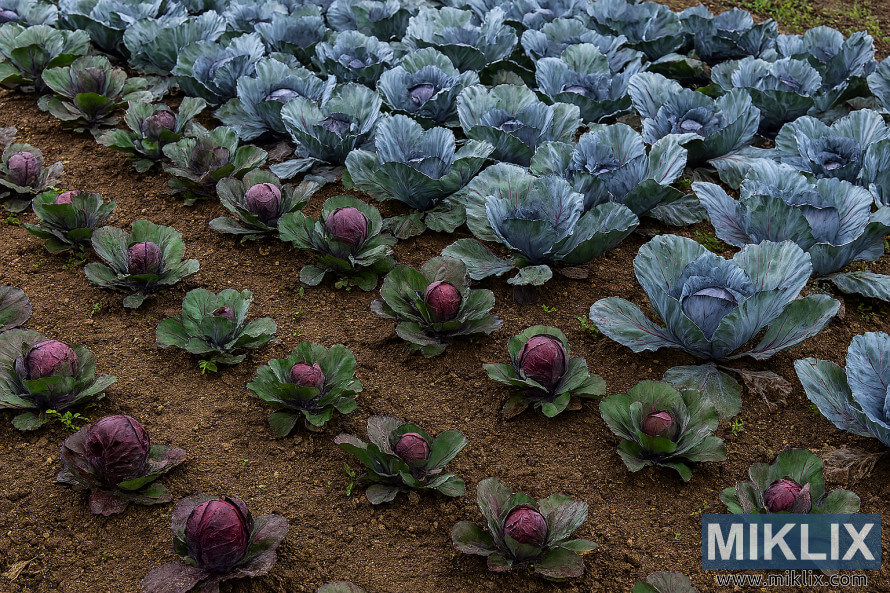
For a continuous harvest, plant a combination of early, mid, and late-season varieties. Early varieties produce smaller, tender heads perfect for fresh eating, while late varieties typically form larger heads better suited for storage and cooking.
Click or tap the image for more information and higher resolutions.
Soil Preparation and pH Requirements
Red cabbage thrives in well-prepared soil with the right pH level. Proper soil preparation is one of the most important factors for growing healthy, productive cabbage plants.
Ideal Soil Conditions
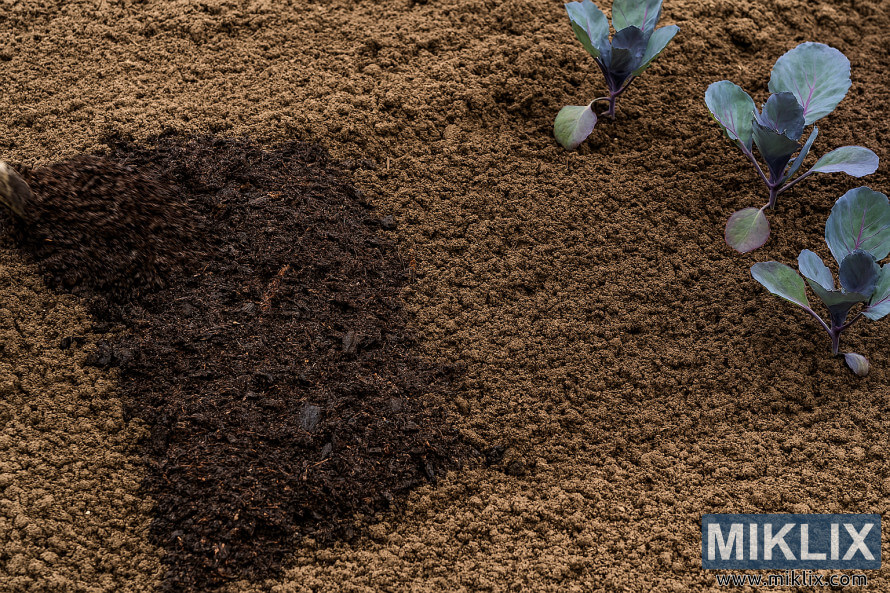
Red cabbage prefers loose, deep, and humus-rich soil that retains moisture while still draining well. As a heavy feeder, cabbage needs plenty of nutrients to form large, firm heads. The soil should be worked to a depth of at least 12 inches to allow proper root development.
pH Requirements
Red cabbage grows best in soil with a pH between 6.0 and 7.0. Interestingly, the soil pH affects not only growth but also the color of your red cabbage:
- In slightly acidic soil (pH 6.0-6.5): Cabbage develops a more bluish-purple color
- In neutral to slightly alkaline soil (pH 6.5-7.0): Cabbage develops a more reddish-purple color
Test your soil pH before planting and amend as needed with lime to raise pH or sulfur to lower it.
Soil Preparation Steps
- Test your soil pH and nutrient levels (ideally in fall before spring planting)
- Remove all weeds and debris from the planting area
- Add 2-3 inches of compost or well-rotted manure and work into the top 12 inches of soil
- For clay soils, add additional organic matter to improve drainage
- For sandy soils, add extra compost to improve water retention
- Adjust pH if necessary based on soil test results
- Allow soil amendments to integrate for at least 2-4 weeks before planting
Click or tap the image for more information and higher resolutions.
Crop Rotation Warning:
Never plant red cabbage where you've grown any brassica crops (cabbage, broccoli, cauliflower, kale, etc.) in the past 3-4 years. This helps prevent soil-borne diseases and pests that specifically target cabbage family plants.
Planting Timeline for Red Cabbage
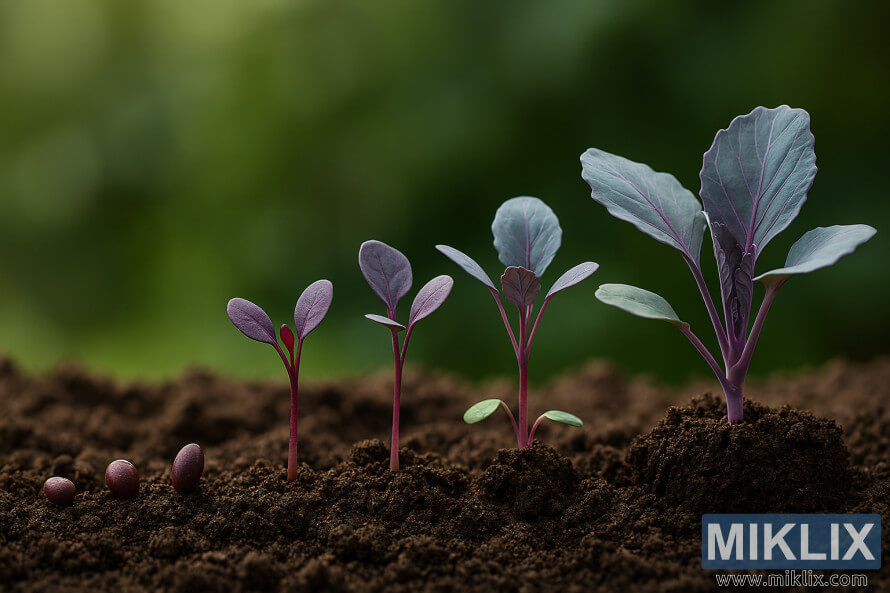
Timing is crucial when growing red cabbage. As a cool-season crop, red cabbage grows best when temperatures are between 45°F and 75°F (7°C to 24°C). Here's when to start seeds and transplant for optimal results:
Spring Planting (Summer Harvest)
- Start seeds indoors: 4-6 weeks before last spring frost date (typically early to mid-March)
- Seed germination temperature: 65-75°F (18-24°C)
- Seedling growing temperature: 60-65°F (15-18°C)
- Hardening off: 7-10 days before transplanting
- Transplant outdoors: 2-3 weeks before last frost date when seedlings have 4-6 true leaves
- Expected harvest: 70-110 days after transplanting (depending on variety)
Summer Planting (Fall/Winter Harvest)
- Direct sowing: 10-12 weeks before first fall frost (typically early to mid-July)
- Alternative method: Start seeds indoors in early June and transplant in July
- Planting depth: ¼ inch deep
- Row spacing: 24-30 inches
- Plant spacing: 18 inches apart
- Expected harvest: Late September through November
Fall Crop Advantage:
Fall crops often produce sweeter, more flavorful cabbage as the cooler temperatures concentrate sugars in the plant. Additionally, mature red cabbage can withstand light frosts, which actually improves flavor.
Click or tap the image for more information and higher resolutions.
Direct Sowing vs. Transplanting
| Method | Advantages | Disadvantages | Best For |
| Transplanting | Earlier harvest; stronger seedlings; better spacing control | More labor intensive; potential transplant shock | Spring planting; areas with short growing seasons |
| Direct Sowing | No transplant shock; less labor; stronger root systems | Vulnerable to pests; requires more seeds; longer time to maturity | Fall crops; areas with longer growing seasons |
Spacing and Sunlight Requirements
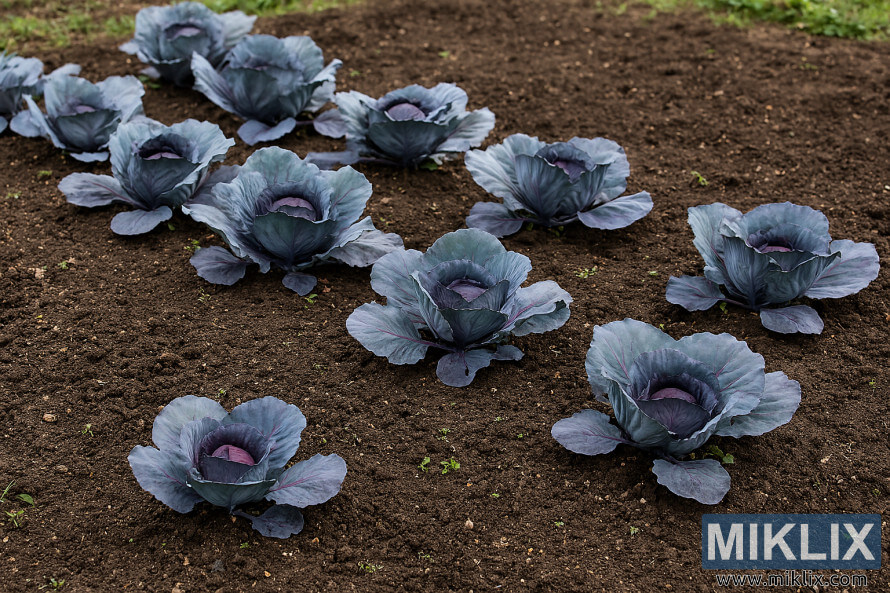
Proper spacing and adequate sunlight are essential for growing healthy red cabbage with well-formed heads. Crowded plants compete for nutrients and light, resulting in smaller heads and increased disease risk.
Optimal Spacing Guidelines
| Planting Method | Between Plants | Between Rows | Planting Depth |
| Traditional Garden Rows | 18-24 inches | 24-36 inches | ¼ inch (seeds) or same as container depth (transplants) |
| Raised Beds | 18 inches | 18-24 inches | ¼ inch (seeds) or same as container depth (transplants) |
| Containers | One plant per container | N/A | ¼ inch (seeds) or same as container depth (transplants) |
Click or tap the image for more information and higher resolutions.
Sunlight Requirements
Red cabbage grows best with 6-8 hours of direct sunlight daily. However, in hot climates, some afternoon shade can be beneficial, especially during summer months.
Location Considerations:
- Cool climates: Plant in full sun locations
- Hot climates: Choose locations with morning sun and afternoon shade
- Avoid: Areas with strong winds that can damage plants
- Consider: Northern exposure in very hot regions
Container Growing
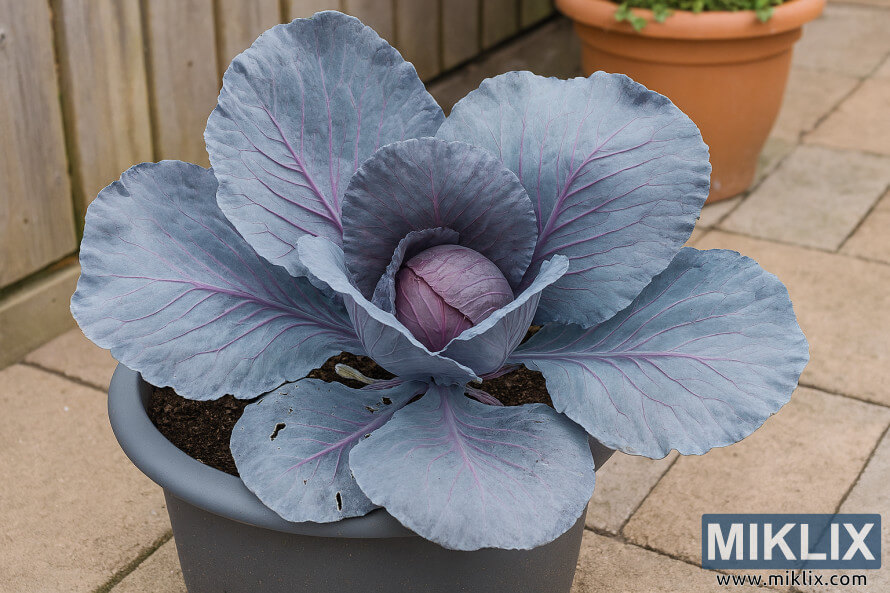
Red cabbage can be successfully grown in containers if you don't have garden space. Follow these guidelines for container growing:
- Use containers at least 12-18 inches deep and 16-20 inches in diameter
- Ensure containers have adequate drainage holes
- Use high-quality potting mix enriched with compost
- Place containers where they receive proper sunlight
- Water more frequently than garden-grown cabbage
- Choose compact varieties like 'Ruby Ball' or 'Red Express'
Click or tap the image for more information and higher resolutions.
Watering and Fertilization Schedule
Red cabbage requires consistent moisture and adequate nutrients to develop properly. As a heavy feeder, proper fertilization is essential for producing large, firm heads with good flavor and texture.
Watering Guidelines
Consistent moisture is crucial for red cabbage development. Irregular watering can lead to split heads, bitter flavor, and poor texture.
Watering Schedule:
- Seedlings: Keep soil consistently moist but not waterlogged
- Established plants: 1-1.5 inches of water per week
- During head formation: Increase to 2 inches per week if rainfall is insufficient
- Method: Water at the base of plants to keep leaves dry and prevent disease
- Timing: Water in the morning to allow foliage to dry before evening
Watering Warning:
Avoid overhead watering which can promote fungal diseases. If heads are nearing maturity and heavy rain is forecast, consider harvesting to prevent splitting.
Fertilization Schedule
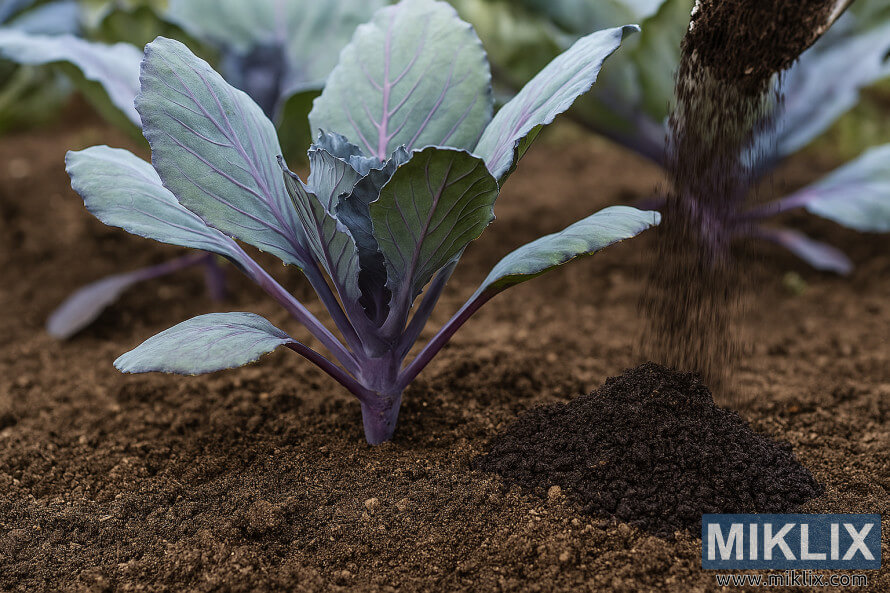
Red cabbage is a heavy feeder that requires adequate nutrients throughout its growth cycle. A balanced approach to fertilization ensures healthy growth without excessive nitrogen that can delay head formation.
Click or tap the image for more information and higher resolutions.
Fertilization Timeline:
- Before planting: Incorporate 2-3 inches of compost or aged manure into soil
- At transplanting: Apply balanced organic fertilizer (like 5-5-5) according to package directions
- 3 weeks after transplanting: Side-dress with nitrogen-rich fertilizer or compost tea
- 6 weeks after transplanting: Final side-dressing as heads begin to form
Organic Fertilizer Options
| Fertilizer Type | Application Rate | Best Used For | Notes |
| Compost | 2-3 inch layer worked into soil | Pre-planting soil preparation | Improves soil structure and provides slow-release nutrients |
| Compost Tea | Apply as a soil drench every 2-3 weeks | Throughout growing season | Quick nutrient boost without burning plants |
| Fish Emulsion | Dilute according to package, apply every 3-4 weeks | Early growth stages | High in nitrogen; excellent for leafy growth |
| Seaweed Extract | Dilute according to package, apply every 3-4 weeks | Throughout growing season | Rich in micronutrients and growth hormones |
Common Pests and Diseases with Organic Solutions
Red cabbage can be susceptible to various pests and diseases, but with vigilant monitoring and organic control methods, you can protect your crop effectively. Here are the most common issues you might encounter and how to address them organically:
Common Pests
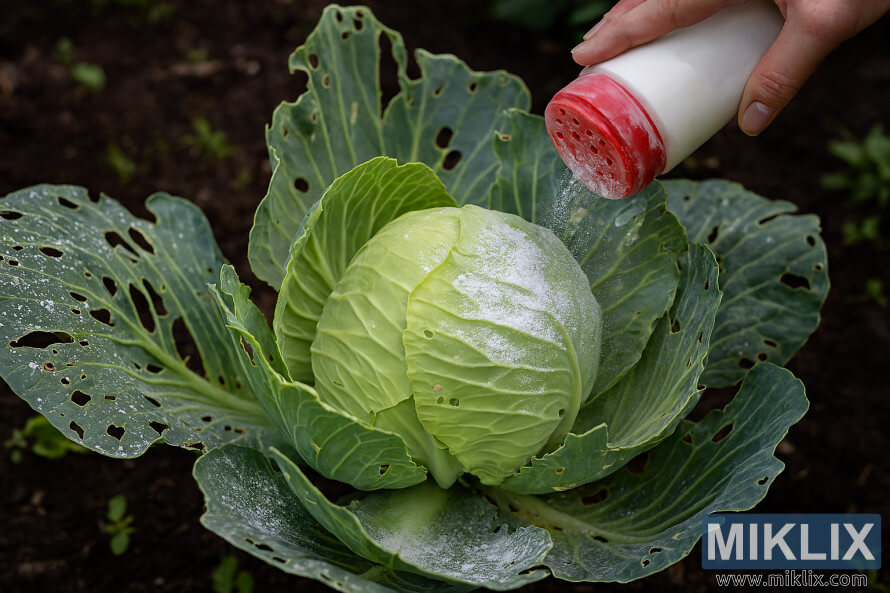
Cabbage Worms and Loopers
These green caterpillars chew holes in leaves and can quickly defoliate plants if left unchecked.
Organic solutions:
- Hand-pick caterpillars off plants regularly
- Apply Bacillus thuringiensis (Bt) spray, a natural bacteria that only affects caterpillars
- Cover plants with floating row covers to prevent butterflies from laying eggs
- Plant aromatic herbs like thyme, rosemary, and sage nearby to repel moths
Aphids
These small sap-sucking insects cluster on the undersides of leaves, causing distortion and weakening plants.
Organic solutions:
- Spray plants with strong water stream to dislodge aphids
- Apply insecticidal soap or neem oil solution
- Introduce beneficial insects like ladybugs and lacewings
- Make a garlic or hot pepper spray to deter aphids
Click or tap the image for more information and higher resolutions.
Common Diseases
Clubroot
This soil-borne fungal disease causes swollen, distorted roots and stunted growth.
Organic solutions:
- Maintain soil pH above 6.8, which inhibits the fungus
- Practice strict crop rotation (4+ years between brassica crops)
- Add lime to the soil to raise pH
- Plant resistant varieties when available
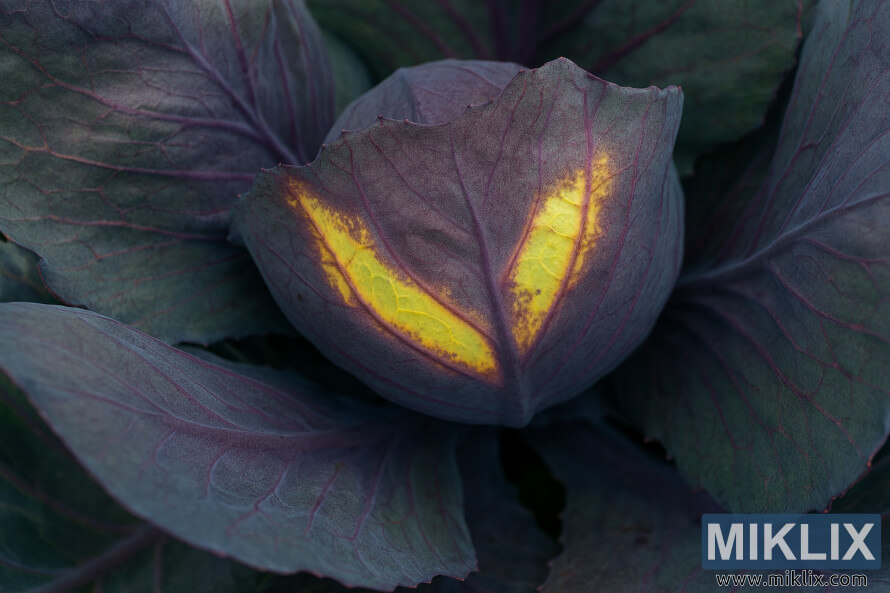
Black Rot
This bacterial disease causes yellow, V-shaped lesions on leaf edges that eventually turn brown and die.
Organic solutions:
- Use disease-free seeds and transplants
- Practice crop rotation
- Avoid overhead watering
- Remove and destroy infected plants immediately
- Apply copper-based fungicides as a preventative measure
Click or tap the image for more information and higher resolutions.
Preventative Measures
Best Practices
- Rotate crops, avoiding brassicas in the same spot for 3-4 years
- Use floating row covers during peak insect seasons
- Plant trap crops like nasturtiums to draw pests away
- Maintain healthy soil with proper pH and organic matter
- Water at the base of plants in the morning
- Clean tools between use to prevent disease spread
- Remove plant debris at the end of the season
Practices to Avoid
- Planting cabbage in the same location year after year
- Overhead watering, especially in the evening
- Overcrowding plants, which promotes disease
- Using broad-spectrum pesticides that kill beneficial insects
- Composting diseased plant material
- Ignoring early signs of pest or disease problems
- Working with plants when they're wet
Companion Planting for Red Cabbage
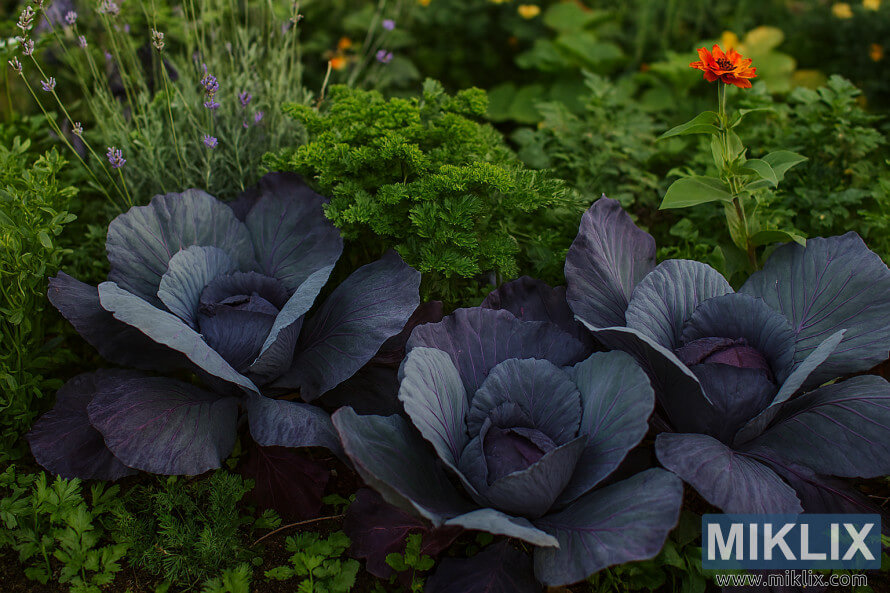
Companion planting is a strategic approach to garden planning that can help improve your red cabbage's growth, deter pests, and maximize garden space. By carefully selecting plants to grow alongside your cabbage, you can create a more balanced, productive garden ecosystem.
Beneficial Companions
These plants help deter pests, improve growth, or enhance the flavor of your red cabbage:
Aromatic Herbs
- Thyme - Repels cabbage worms and cabbage moths
- Rosemary - Deters cabbage moths with its strong scent
- Mint - Repels flea beetles and cabbage moths (best in containers to control spreading)
- Dill - Attracts beneficial wasps that prey on cabbage pests
- Chamomile - Improves the growth and flavor of cabbage
Vegetables
- Onions and Garlic - Repel many cabbage pests with their strong odor
- Celery - Deters cabbage white butterflies
- Beets - Use different soil nutrients, making them good neighbors
- Lettuce - Provides ground cover that helps retain soil moisture
Click or tap the image for more information and higher resolutions.
Plants to Avoid
Some plants can inhibit growth, compete for nutrients, or attract pests that damage red cabbage:
Poor Companions:
- Other Brassicas - Broccoli, cauliflower, kale, and other cabbage varieties compete for the same nutrients and attract the same pests
- Strawberries - Can stunt cabbage growth
- Tomatoes - Inhibit cabbage growth and vice versa
- Pole Beans - Compete with cabbage for nutrients
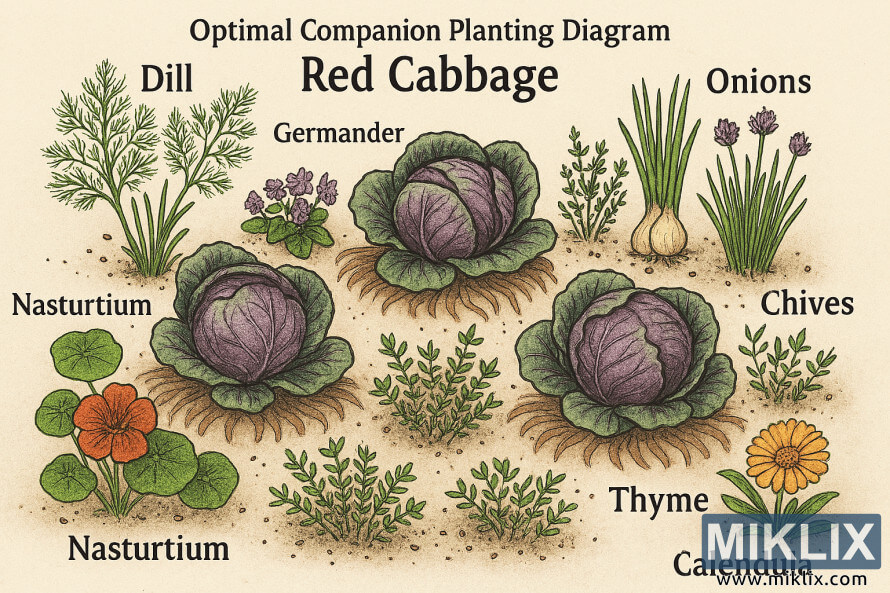
Companion Planting Layout
For optimal results, consider this companion planting arrangement:
- Plant red cabbage in the center of a bed or row
- Surround with aromatic herbs like thyme and rosemary to repel pests
- Plant onions or garlic as a border around the cabbage area
- Intersperse with nasturtiums as trap crops for aphids
- Plant lettuce or spinach between cabbage plants to maximize space
Click or tap the image for more information and higher resolutions.
Harvesting Red Cabbage: Timeline and Techniques
Knowing when and how to harvest your red cabbage is crucial for getting the best flavor, texture, and storage potential. Red cabbage is typically ready to harvest 70-110 days after transplanting, depending on the variety and growing conditions.
When to Harvest
The timing of your harvest depends on several factors:
Signs of Readiness:
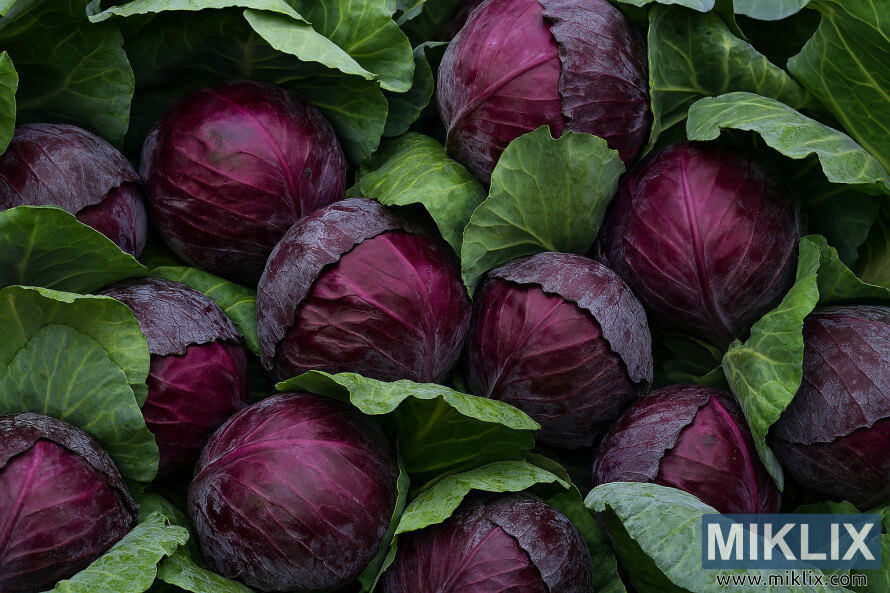
- Heads feel firm and solid when gently squeezed
- Outer leaves have a deep purple-red color
- Cabbage has reached the expected size for its variety
- Early varieties: harvest when heads are 4-6 inches in diameter
- Late varieties: harvest when heads are 6-8 inches in diameter
Click or tap the image for more information and higher resolutions.
Harvest Timing Tip:
For the best flavor, harvest red cabbage in the morning when temperatures are cool and the plants are well-hydrated. This ensures maximum crispness and sweetness.
Weather Considerations:
- Harvest before extended periods of rain to prevent splitting
- Mature cabbage can withstand light frosts, which can actually improve flavor
- Harvest before hard freezes (below 25°F/-4°C)
How to Harvest
Proper harvesting techniques help maximize storage life and prevent damage:
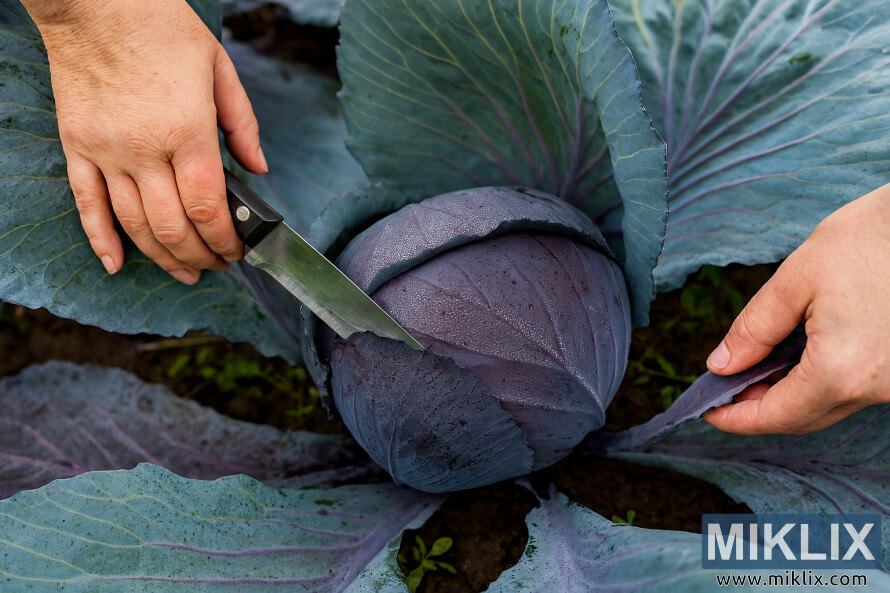
- Use a sharp knife to cut the head at the base, leaving a short stem
- Leave a few outer leaves attached to protect the head if storing
- Cut at an angle to prevent water collection on the remaining stem
- For multiple harvests from one plant, cut the head but leave the stem and roots
- Remove any damaged or diseased leaves before storage
Click or tap the image for more information and higher resolutions.
Extended Harvesting
To prevent all your cabbage from maturing at once:
- Plant different varieties with varying maturation times
- Stagger planting dates by 2-3 weeks
- Twist mature heads a quarter turn to slow growth while still in the garden
- Cut a shallow slice through part of the root system to slow growth
Storage and Preservation Methods
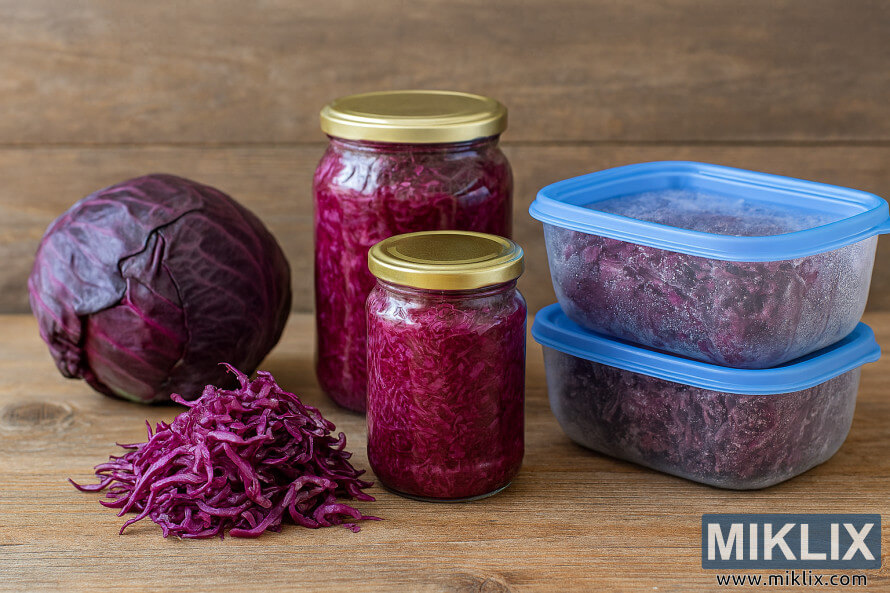
Red cabbage can be stored and preserved in several ways, allowing you to enjoy your harvest for months after it's picked. The vibrant color and flavor make it excellent for both fresh storage and preservation through fermentation or freezing.
Click or tap the image for more information and higher resolutions.
Fresh Storage
With proper conditions, whole red cabbage heads can be stored for 3-6 months:
Optimal Storage Conditions:
- Temperature: 32-40°F (0-4°C)
- Humidity: 90-95% relative humidity
- Ventilation: Good air circulation to prevent mold
- Separation: Keep away from ethylene-producing fruits like apples
Storage Methods:
- Root cellar: Wrap heads in newspaper and place on shelves
- Refrigerator: Wrap loosely in plastic and store in crisper drawer (lasts 1-2 months)
- Garden storage: In cold climates, leave late-season cabbage in the garden with extra mulch protection
- Cold storage: Hang whole plants upside down in a cool basement or garage
Preservation Methods
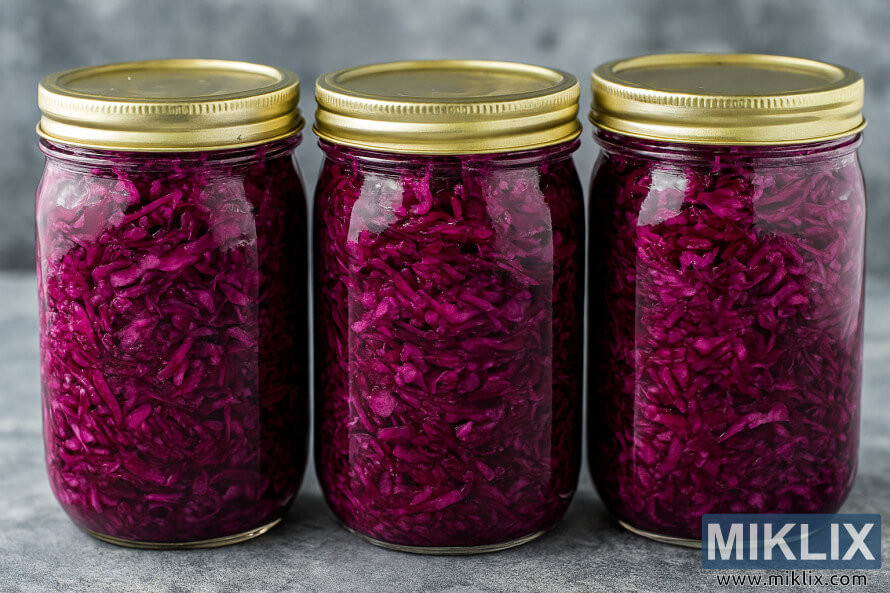
Fermentation (Sauerkraut)
Fermentation preserves cabbage while creating beneficial probiotics:
- Shred cabbage finely
- Add 1-2 tablespoons salt per 5 pounds of cabbage
- Massage salt into cabbage until juices release
- Pack tightly into fermentation vessel
- Ensure cabbage stays submerged under its brine
- Ferment at room temperature for 1-4 weeks
- Store finished sauerkraut in refrigerator for up to 6 months
Click or tap the image for more information and higher resolutions.
Freezing
Freezing preserves texture and flavor for cooked applications:
- Shred or chop cabbage
- Blanch for 1.5 minutes in boiling water
- Cool immediately in ice water
- Drain thoroughly and pat dry
- Pack in freezer bags, removing as much air as possible
- Label with date and store for up to 9 months
Conclusion: Enjoying Your Red Cabbage Harvest
Growing red cabbage in your home garden is a rewarding experience that provides you with nutritious, versatile vegetables that can be enjoyed fresh or preserved for later use. With proper planning, care, and attention to the guidelines in this guide, you'll be well on your way to harvesting beautiful, flavorful red cabbage heads.
Remember that gardening is a continuous learning process. Each season brings new insights and opportunities to refine your techniques. Don't be discouraged by occasional setbacks—even experienced gardeners face challenges with weather, pests, or disease. The key is to observe your plants closely, respond to their needs, and enjoy the process of nurturing them from seed to harvest.
Whether you're planning to enjoy your red cabbage in fresh salads, traditional braised dishes, or fermented as sauerkraut, there's something deeply satisfying about bringing homegrown produce to your table. The vibrant color, crisp texture, and complex flavor of garden-fresh red cabbage simply can't be matched by store-bought alternatives.
So get your seeds or transplants ready, prepare your soil, and embark on the rewarding journey of growing red cabbage in your own garden. Your efforts will be rewarded with beautiful plants, nutritious harvests, and the pride that comes from growing your own food.
Click or tap the image for more information and higher resolutions.
Further Reading
If you enjoyed this post, you may also like these suggestions:
- The Complete Guide to Growing Okra in Your Home Garden
- A Guide to Growing the Best Mangoes in Your Home Garden
- Growing Honeyberries in Your Garden: A Guide to a Sweet Spring Harvest