
Image: Safety & Precautions for Mustard Consumption Infographic
Published: May 30, 2026 at 5:18:35 PM UTC
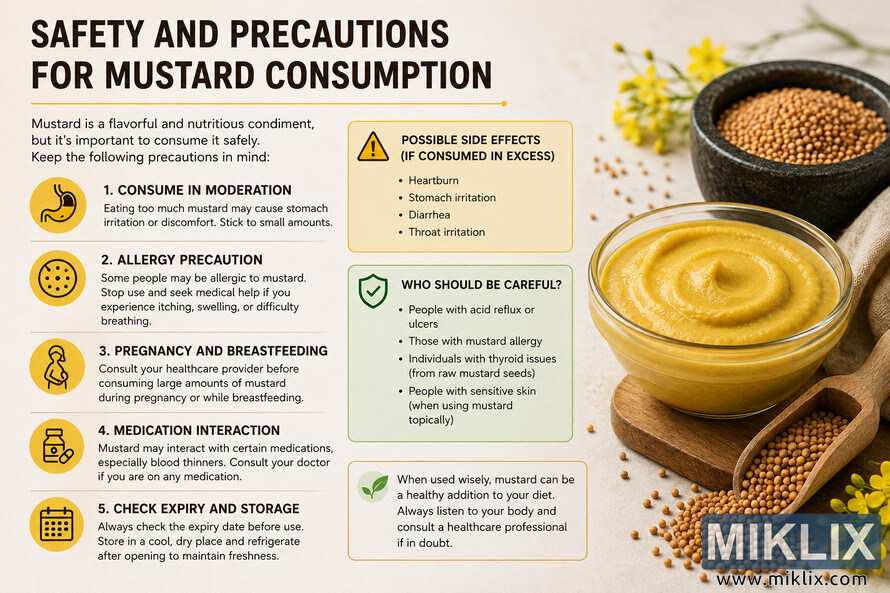
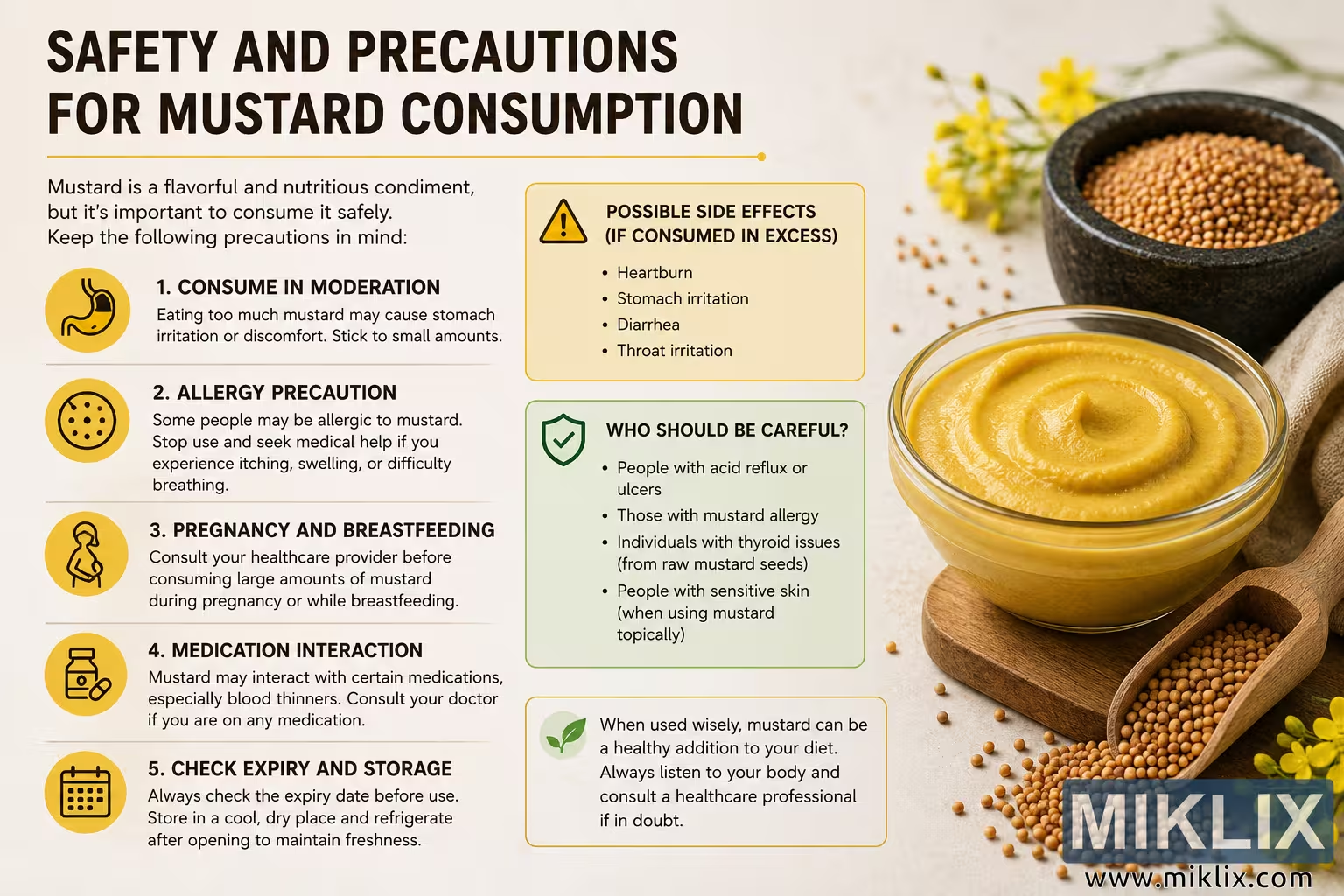
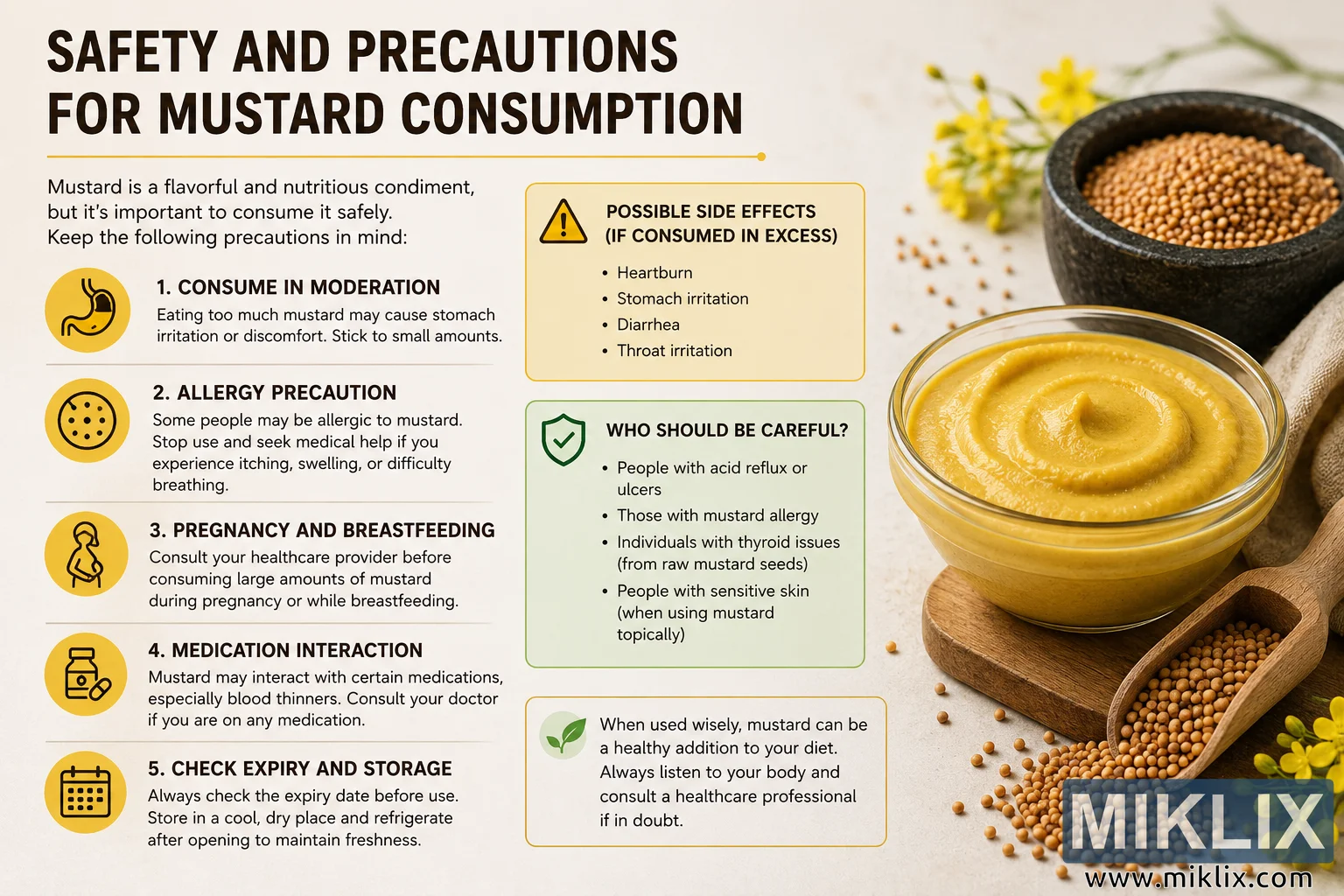
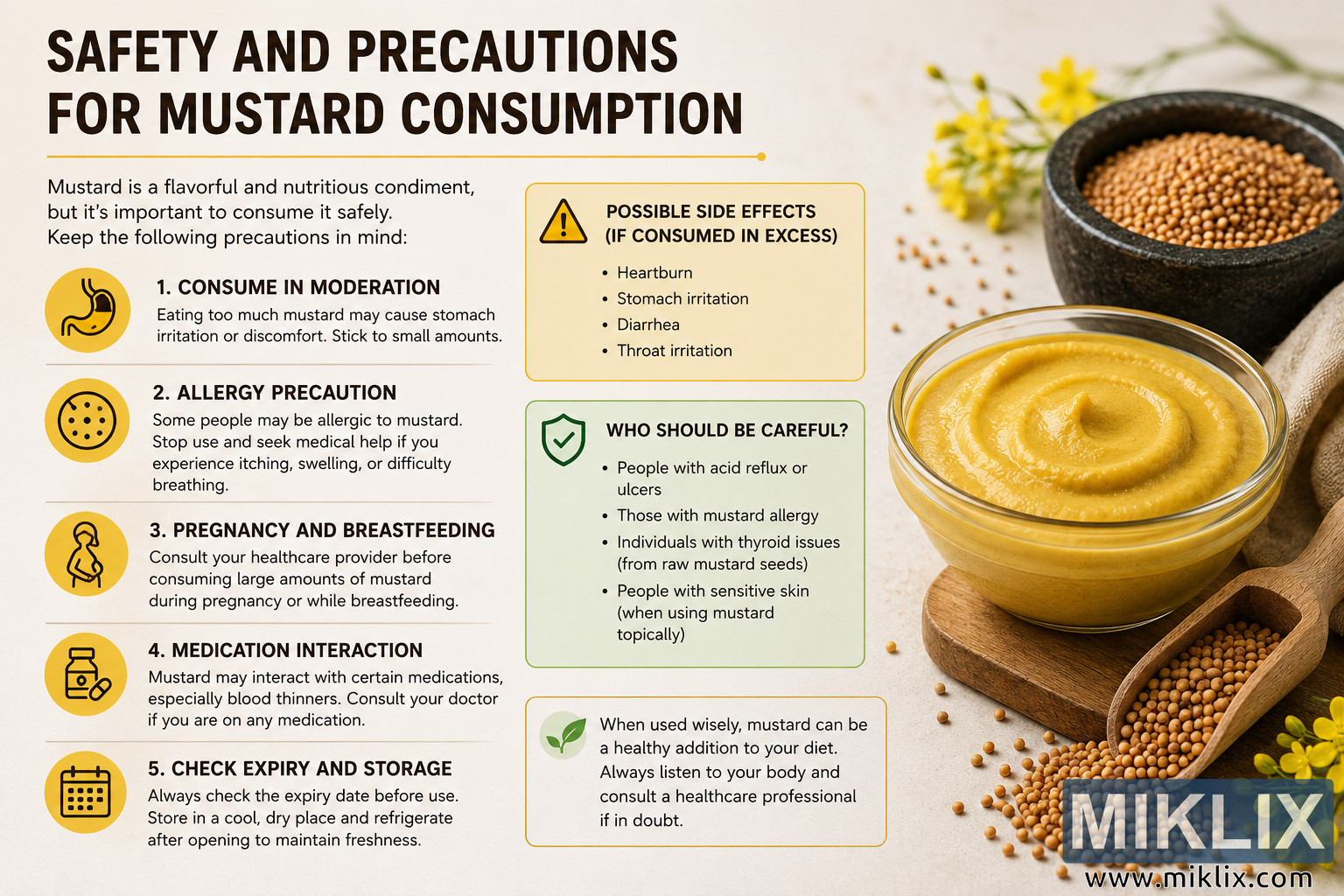
Informative mustard consumption safety infographic explaining precautions, allergy risks, storage recommendations, medication interactions, and moderation tips alongside a food photography scene with mustard and mustard seeds.
Available versions of this image
The image files available for download below are less compressed and higher resolution - and as a result of that, higher quality - than the images embedded in articles and pages on this website, which are more optimized for file size in order to reduce bandwidth consumption.
Regular size (1,536 x 1,024)
Large size (3,072 x 2,048)
Very large size (4,608 x 3,072)
Extra large size (6,144 x 4,096)
Comically large size (1,048,576 x 699,051)
- Still uploading... ;-)
Image description
This landscape-oriented infographic presents comprehensive safety and precaution information related to mustard consumption in a visually warm and educational format. The design combines informative text panels with high-quality food photography, using a soft golden-yellow and beige color palette inspired by mustard tones. The overall composition is divided into two major sections: an information-heavy educational layout on the left and a large food-themed photographic scene on the right.
At the top of the infographic, a bold headline reads “SAFETY & PRECAUTIONS FOR MUSTARD CONSUMPTION.” The typography is large, modern, and highly legible, with emphasis placed on the word “MUSTARD” through a contrasting mustard-yellow accent color. Beneath the title is a short introductory paragraph explaining that mustard is a flavorful and nutritious condiment, but should be consumed responsibly and safely.
The left side of the image contains several educational content blocks arranged in a clean grid layout. Each section includes a circular yellow icon with black illustrative symbols and accompanying explanatory text. The first panel focuses on moderation and advises that excessive mustard consumption may cause irritation, heartburn, or stomach discomfort. It recommends limiting portions to small servings.
The second information block addresses allergy concerns. The icon resembles mustard seeds or allergy-related particles, while the accompanying text explains that mustard seeds are a common allergen. It warns individuals with mustard allergies to avoid consumption entirely and to read ingredient labels carefully.
A third panel discusses pregnancy and breastfeeding precautions. An icon depicting a pregnant person appears beside text stating that mustard is generally safe in normal food quantities but excessive intake should be avoided during pregnancy and breastfeeding unless approved by a healthcare provider.
Another section covers sensitive stomachs and digestive concerns. The infographic warns that people with gastritis, acid reflux, ulcers, or irritable bowel syndrome may experience discomfort when consuming mustard. It suggests moderation or avoidance if symptoms worsen.
One additional panel focuses on medication interactions. The visual icon resembles capsules or medication tablets. The text explains that large amounts of mustard may interact with blood thinners or certain medications and recommends consulting a doctor when unsure.
The infographic also contains guidance regarding children and mustard consumption. This section recommends introducing mustard gradually in small amounts and avoiding strong or spicy mustard varieties for young children.
Near the bottom of the educational area are additional safety and quality recommendation boxes. One discusses proper storage, advising users to refrigerate mustard after opening and store it in a cool, dry place with a tightly sealed lid. Another panel reminds viewers to check expiry dates before consumption and avoid mustard products with unusual smell, color, or taste. A final recommendation encourages choosing high-quality mustard products or seeds while minimizing products with excessive sodium or artificial preservatives.
At the very bottom of the infographic is a dark horizontal disclaimer banner with a warning icon. The disclaimer states that the information is intended for general educational purposes only and should not replace professional medical advice. It encourages viewers with specific health concerns to consult a healthcare professional.
The right side of the composition features an elegant food photography arrangement centered around mustard and mustard seeds. A large ceramic bowl filled with smooth golden-yellow mustard sits prominently on a textured burlap cloth. The mustard has a glossy appearance with visible swirls and a raised peak in the center, emphasizing freshness and creamy texture.
Surrounding the bowl are scattered mustard seeds and wooden serving utensils, including a rustic spoon filled with seeds. In the upper-right corner, a wooden bowl overflowing with mustard seeds adds texture and visual balance. Bright yellow mustard flowers appear softly blurred in the background, contributing a natural and fresh agricultural atmosphere.
The lighting throughout the image is soft and warm, creating a welcoming and organic feel. Shadows are subtle and realistic, while the overall color harmony reinforces themes of health, food awareness, and culinary education. No visible commercial branding, product labels, or trademarks appear anywhere in the image.
The infographic overall communicates a professional yet approachable tone, blending nutrition education with attractive food styling. The clean layout, warm colors, bold typography, and clear iconography make the information accessible and easy to understand for a broad audience.
The image is related to: A Complete Guide to the Health Benefits of Mustard