
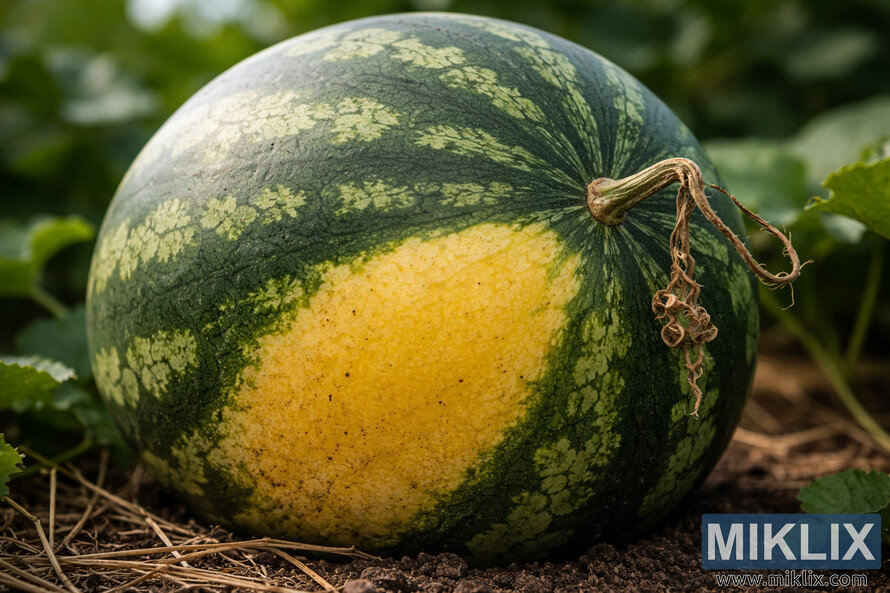
Mynd: Ripe Watermelon with Yellow Ground Spot and Dried Tendril
Birt:
Síðast uppfært: 27. mars 2026 kl. 17:52:01 UTC
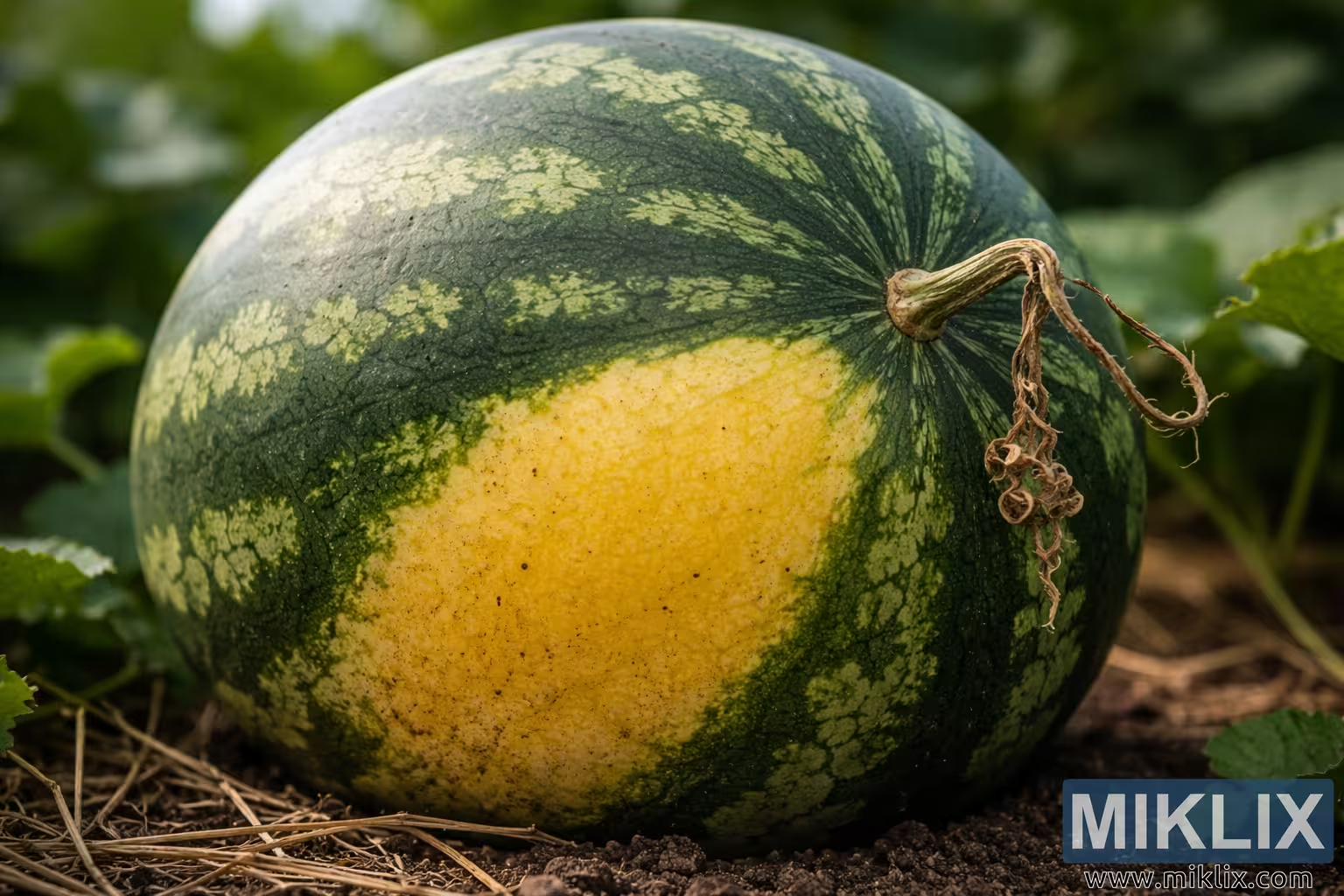
Close-up garden photograph of a ripe watermelon featuring a deep yellow ground spot and a dried tendril, classic visual signs that the fruit is ready for harvest.
Ripe Watermelon with Yellow Ground Spot and Dried Tendril
Tiltækar útgáfur af þessari mynd
Myndaskrárnar sem hægt er að hlaða niður hér að neðan eru minna þjappaðar og í hærri upplausn - og þar af leiðandi í hærri gæðum - en myndirnar sem eru felldar inn í greinar og síður á þessari vefsíðu, sem eru betur fínstilltar fyrir skráarstærð til að draga úr bandvíddarnotkun.
Venjuleg stærð (1,536 x 1,024)
Stór stærð (3,072 x 2,048)
Mjög stór stærð (4,608 x 3,072)
Mjög stór stærð (6,144 x 4,096)
Kómískt stór stærð (1,048,576 x 699,051)
- Er enn að hlaða inn... ;-)
Lýsing myndar
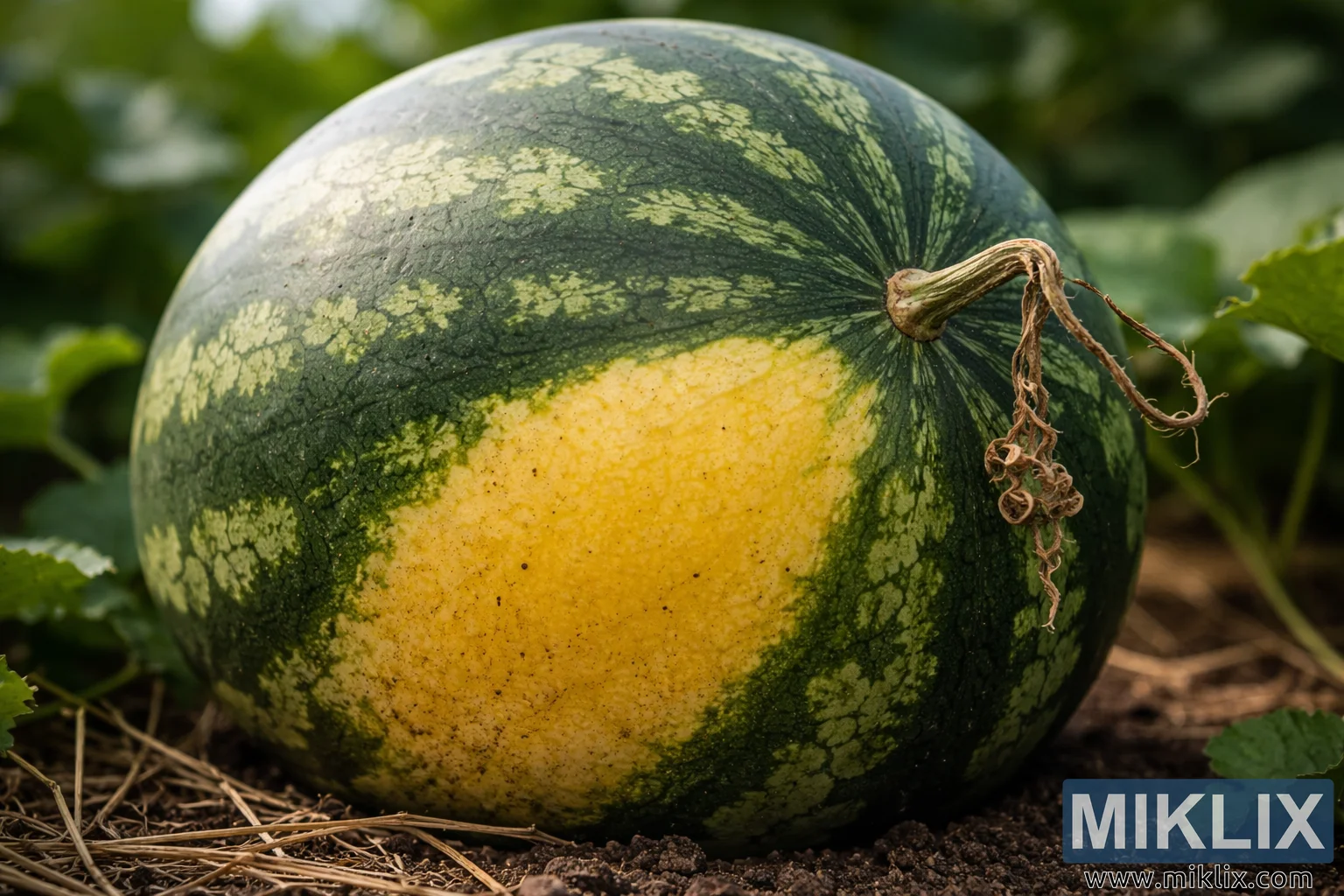
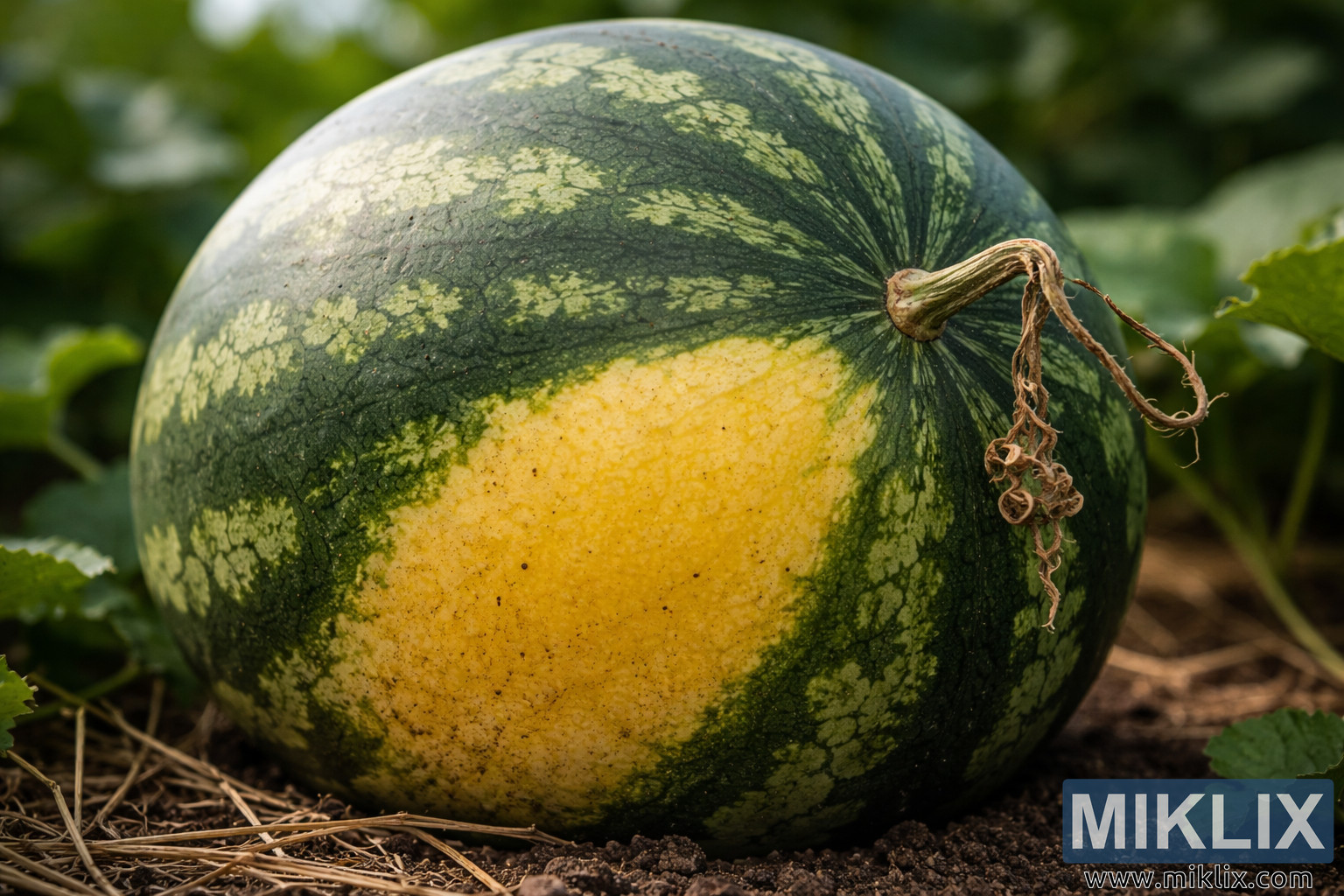
This high-resolution landscape photograph presents a close-up view of a ripe watermelon resting directly on dark garden soil among green vine leaves. The fruit fills most of the frame, emphasizing the characteristic visual indicators used by gardeners and farmers to determine ripeness. The watermelon’s rind displays a rich pattern of deep green and lighter green mottling, typical of many cultivated watermelon varieties. Its rounded shape appears full and heavy, suggesting a mature fruit that has completed its growing cycle on the vine.
Dominating the lower side of the watermelon is a large, well-defined yellow ground spot. This patch is the area where the fruit rested on the soil as it matured. The color is a warm golden yellow rather than pale white, a detail often recognized as a sign that the melon has remained on the vine long enough to ripen properly. The surface texture within this patch is slightly matte and speckled with tiny natural marks from contact with the ground, reinforcing the authenticity of the garden setting.
Near the upper right portion of the melon, the stem emerges from the rind. Attached to it is a dried, curled tendril—thin, twisted, and brown in color. The tendril loops and spirals downward in delicate coils, clearly dehydrated and brittle in appearance. In watermelon cultivation, this dried tendril is another widely recognized indicator that the fruit is ready to harvest, as tendrils near mature fruit typically dry out when ripening is complete.
The surrounding environment provides additional context for the scene. The watermelon lies on loose, dark brown soil mixed with small clumps and fragments of straw or dried plant material. Around it, the watermelon vine spreads outward with broad, lobed green leaves. Some leaves are slightly blurred due to the shallow depth of field, which helps keep the viewer’s attention focused on the fruit itself.
Soft natural light illuminates the scene, highlighting the subtle texture of the rind and the gentle color transition between the dark green stripes and the yellow ground spot. The lighting appears diffused, likely from an overcast sky or shaded garden environment, preventing harsh shadows and allowing the surface details to remain clearly visible.
Overall, the image functions both as an appealing agricultural photograph and as an educational visual reference. It clearly illustrates two classic signs of watermelon ripeness—the deep yellow ground spot and the dried tendril—making it useful for gardeners, farmers, and home growers who want to recognize when a watermelon is ready to be harvested from the vine.
Myndin tengist: Growing Watermelons: Your Complete Guide to Juicy, Homegrown Success