
Mynd: Ruby Red Swiss Chard Growing in a Lush Vegetable Garden
Birt:
Síðast uppfært: 16. apríl 2026 kl. 19:42:06 UTC
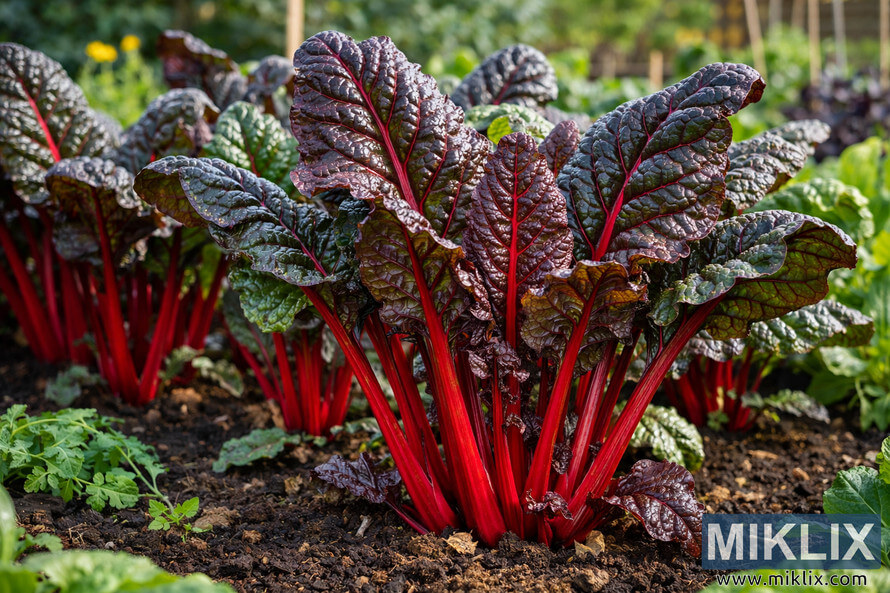
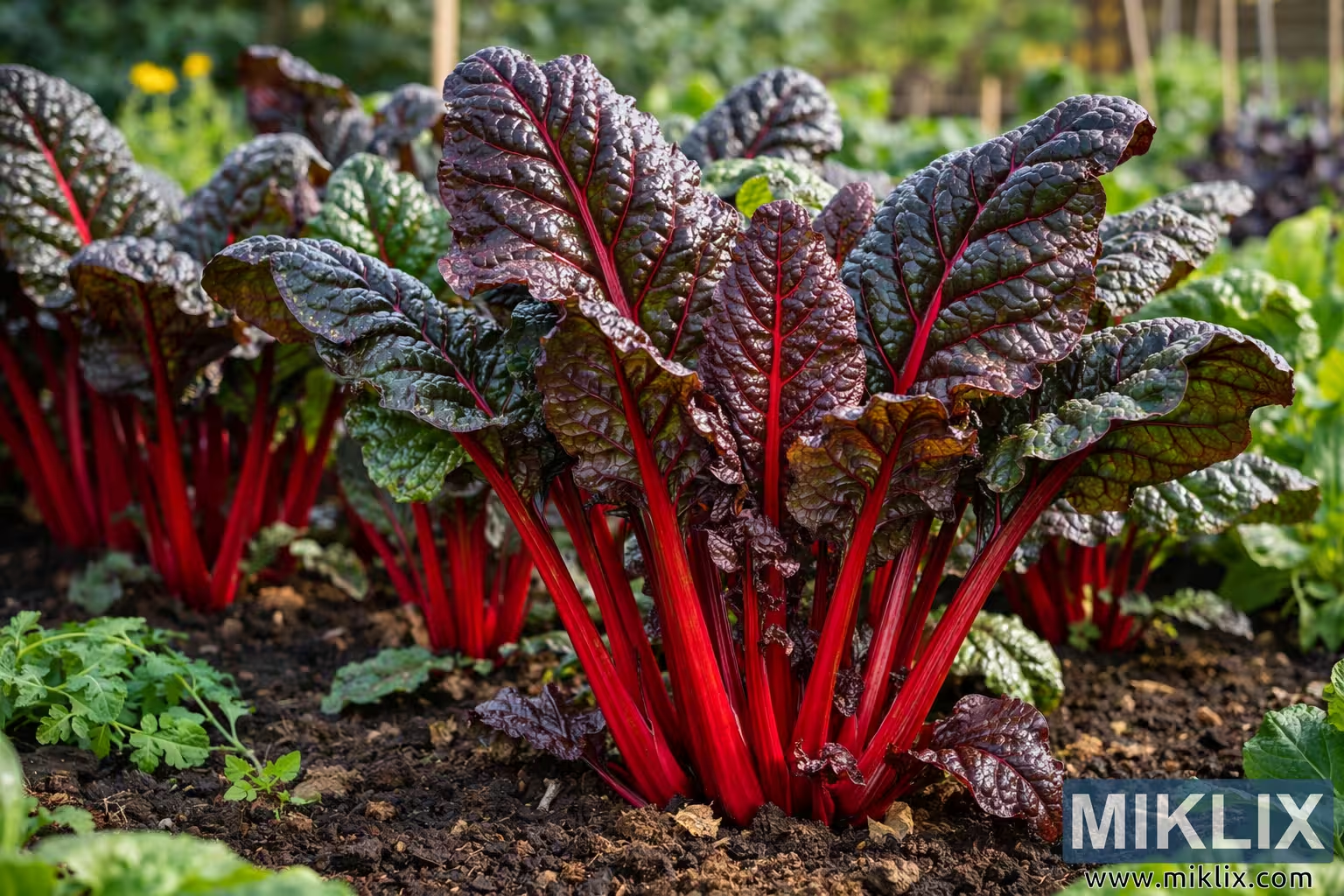
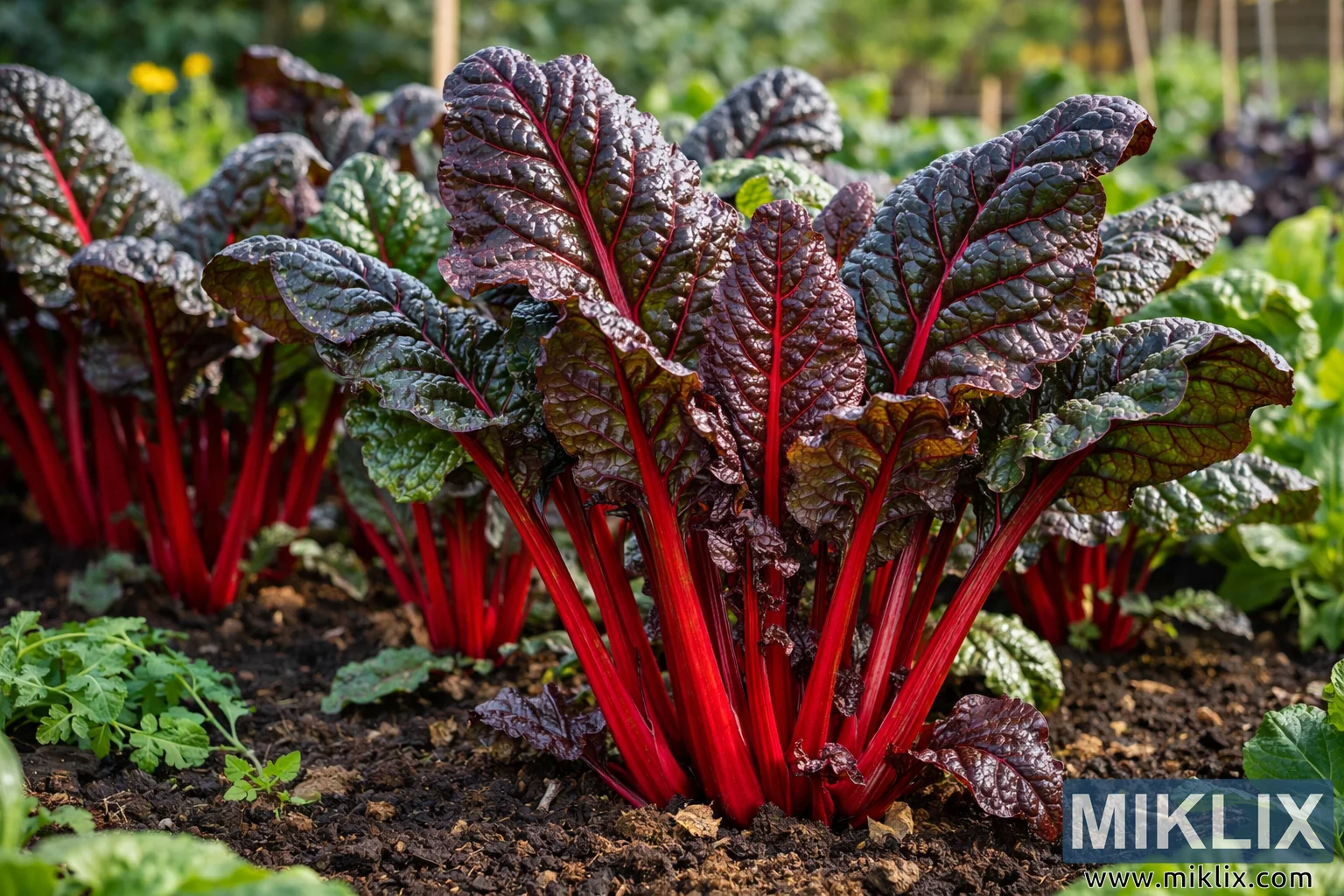
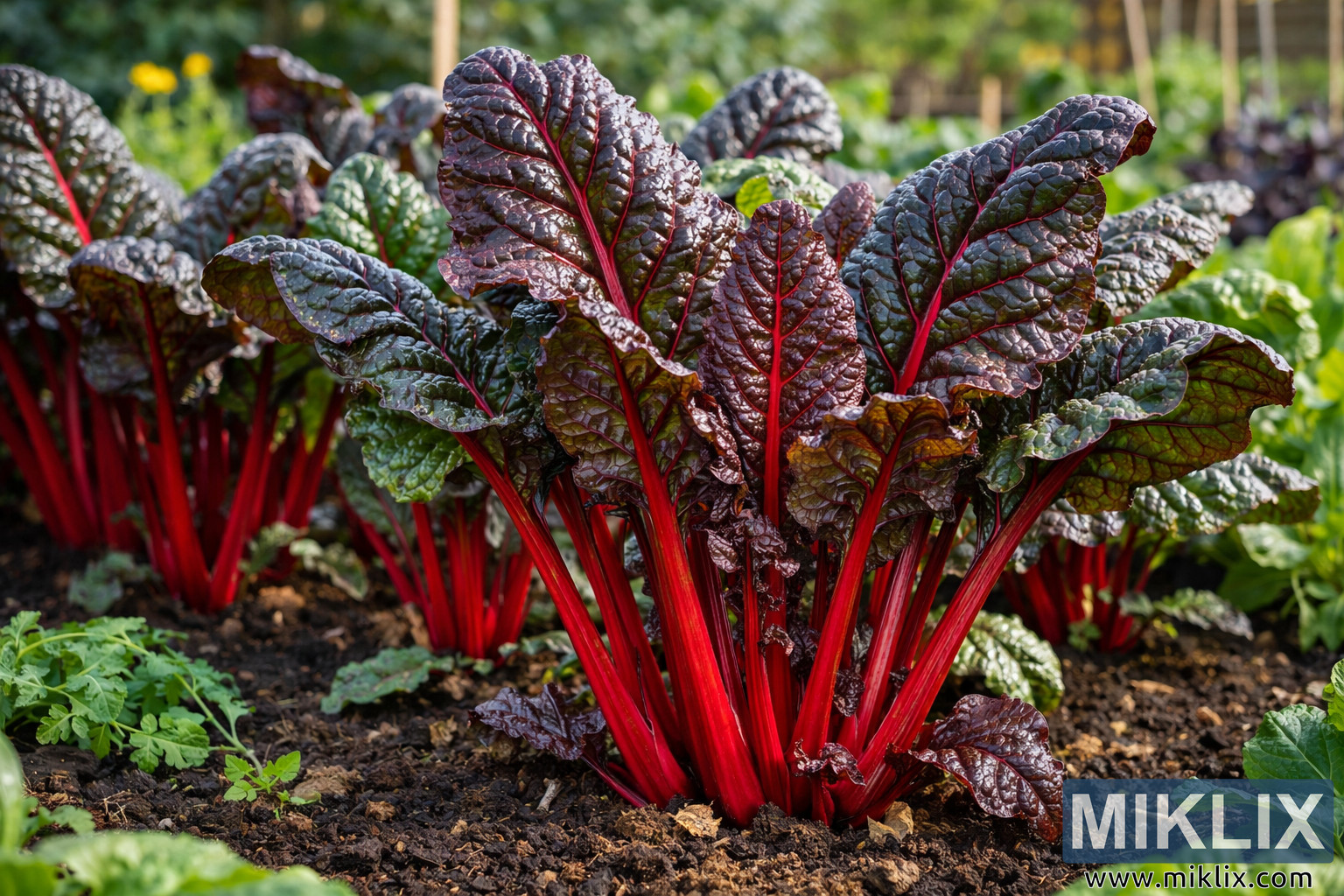
High-resolution landscape photo of ruby red Swiss chard with vivid crimson stems and dark green leaves growing in rich garden soil.
Ruby Red Swiss Chard Growing in a Lush Vegetable Garden
Tiltækar útgáfur af þessari mynd
Myndaskrárnar sem hægt er að hlaða niður hér að neðan eru minna þjappaðar og í hærri upplausn - og þar af leiðandi í hærri gæðum - en myndirnar sem eru felldar inn í greinar og síður á þessari vefsíðu, sem eru betur fínstilltar fyrir skráarstærð til að draga úr bandvíddarnotkun.
Venjuleg stærð (1,536 x 1,024)
Stór stærð (3,072 x 2,048)
Mjög stór stærð (4,608 x 3,072)
Mjög stór stærð (6,144 x 4,096)
Kómískt stór stærð (1,048,576 x 699,051)
- Er enn að hlaða inn... ;-)
Lýsing myndar
A high-resolution landscape photograph shows a thriving cluster of ruby red Swiss chard growing in a well-kept vegetable garden. The plants dominate the foreground, rising from dark, moist soil that appears freshly cultivated and rich with organic matter. The Swiss chard’s most striking feature is its thick, luminous crimson stems, which emerge from the earth in tight clusters and extend upward to support large, textured leaves. The stems glow with a saturated ruby tone that contrasts dramatically with the deep greens and burgundy hues of the foliage above.
Each leaf is broad and slightly crinkled, with prominent veins branching outward from the central red rib. The surface of the leaves reflects soft sunlight, creating subtle highlights that reveal their glossy texture and healthy condition. The coloration transitions from dark emerald green to deep maroon in places, giving the foliage a layered, almost iridescent appearance. The edges of the leaves curl gently, adding dimension and a sense of movement, as though a light breeze might be passing through the garden.
The chard plants are arranged in a small row or cluster, suggesting they were intentionally planted as part of a productive kitchen garden. At the base of the plants, the soil is dark brown and slightly clumpy, with small bits of organic material visible throughout. Tiny green seedlings and low garden plants appear scattered nearby, hinting at companion planting or a diverse vegetable bed.
In the background, the garden softens into a pleasant blur due to shallow depth of field. Out-of-focus greenery and other leafy vegetables create a lush, vibrant backdrop. Occasional hints of yellow flowers and wooden garden supports can be seen among the foliage, reinforcing the impression of a lively, well-tended garden space. The soft bokeh effect isolates the Swiss chard as the main subject while still conveying the abundance of the surrounding garden environment.
Natural sunlight illuminates the scene from above and slightly to one side, casting gentle shadows across the leaves and soil. This lighting accentuates the sculptural quality of the stems and the complex textures of the foliage. The overall mood of the image is fresh, vibrant, and earthy, celebrating the beauty of edible plants growing in their natural garden setting.
The composition emphasizes the vivid red stems rising from the soil like a bouquet of natural color, framed by surrounding greenery. The result is a visually rich portrait of ruby red Swiss chard at peak vitality, highlighting both the aesthetic beauty and the agricultural productivity of a healthy vegetable garden.
Myndin tengist: How to Grow Swiss Chard: A Complete Beginner's Guide