
Mynd: Healthy vs Problem Turnip Plants Comparison
Birt:
Síðast uppfært: 19. apríl 2026 kl. 21:37:46 UTC
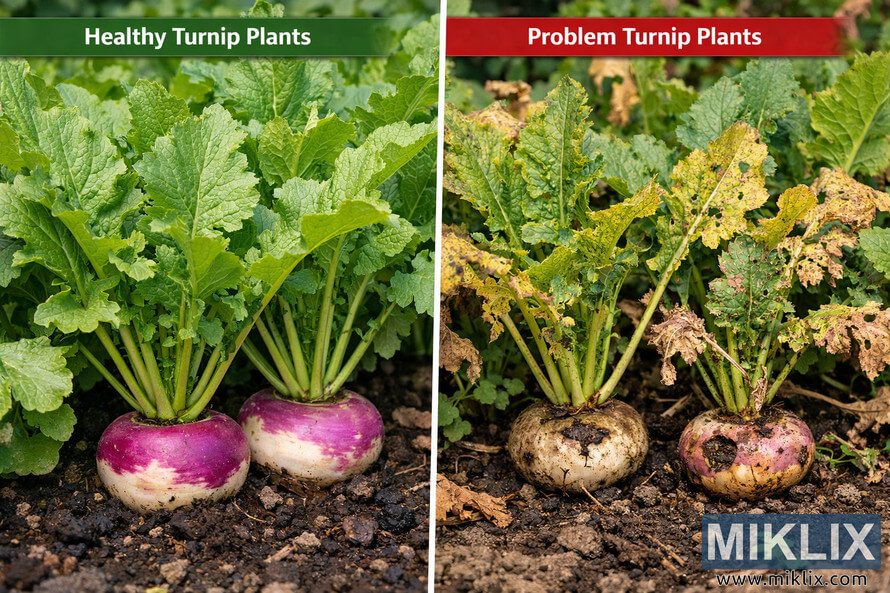
Visual comparison of healthy turnip plants and unhealthy turnips showing leaf damage, yellowing foliage, and deteriorated roots for gardening and plant health identification.
Healthy vs Problem Turnip Plants Comparison
Tiltækar útgáfur af þessari mynd
Myndaskrárnar sem hægt er að hlaða niður hér að neðan eru minna þjappaðar og í hærri upplausn - og þar af leiðandi í hærri gæðum - en myndirnar sem eru felldar inn í greinar og síður á þessari vefsíðu, sem eru betur fínstilltar fyrir skráarstærð til að draga úr bandvíddarnotkun.
Venjuleg stærð (1,536 x 1,024)
Stór stærð (3,072 x 2,048)
Mjög stór stærð (4,608 x 3,072)
Mjög stór stærð (6,144 x 4,096)
Kómískt stór stærð (1,048,576 x 699,051)
- Er enn að hlaða inn... ;-)
Lýsing myndar
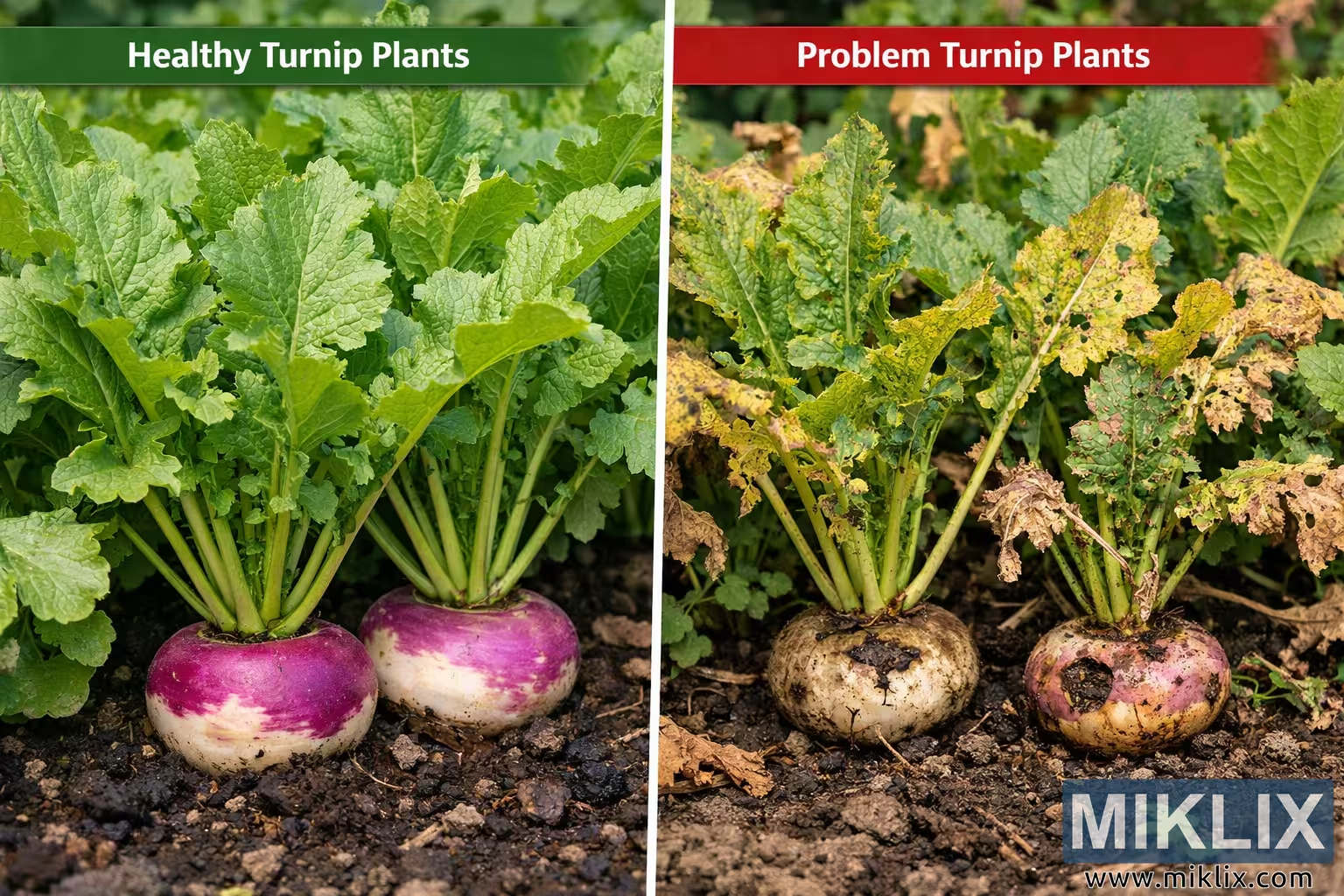
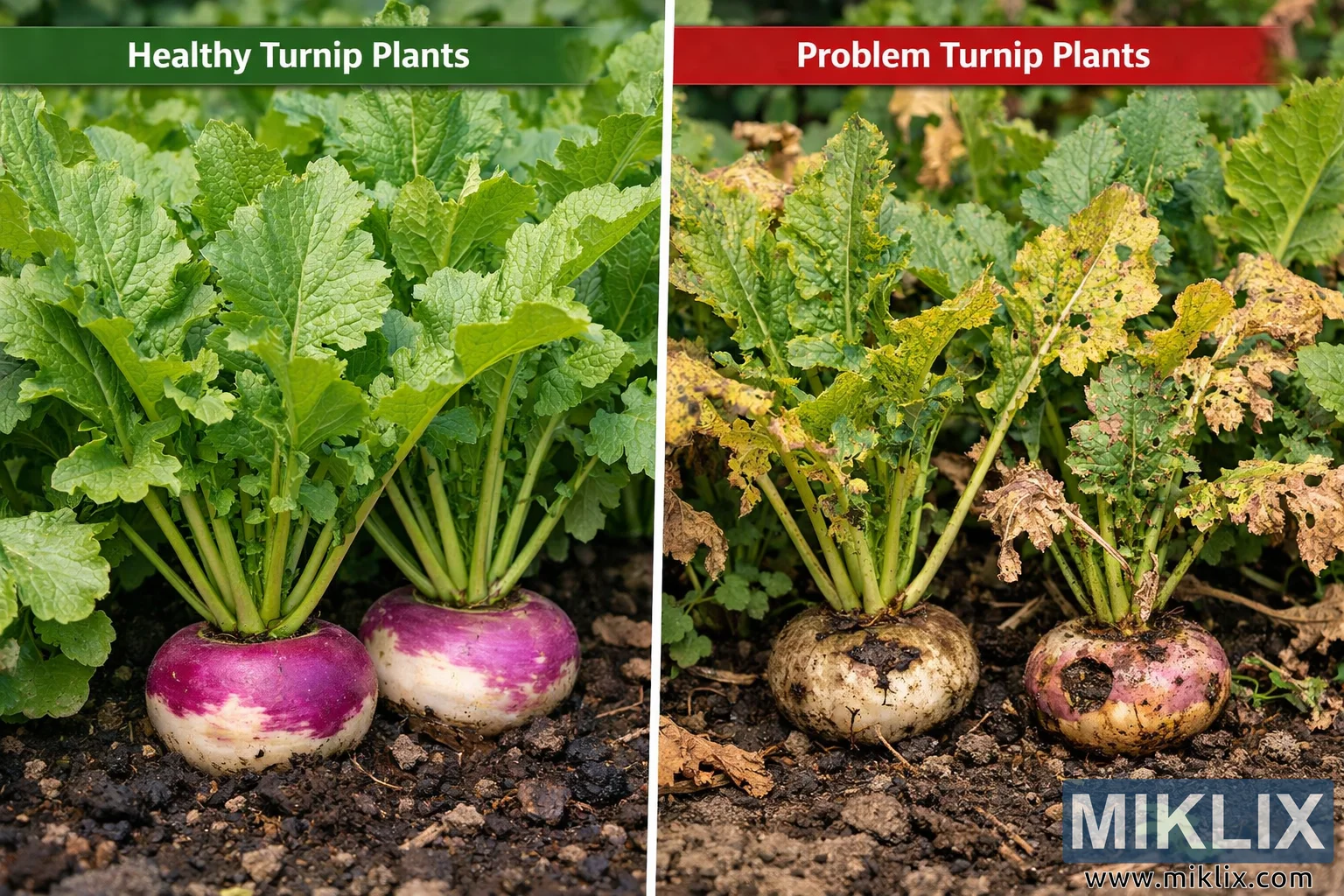
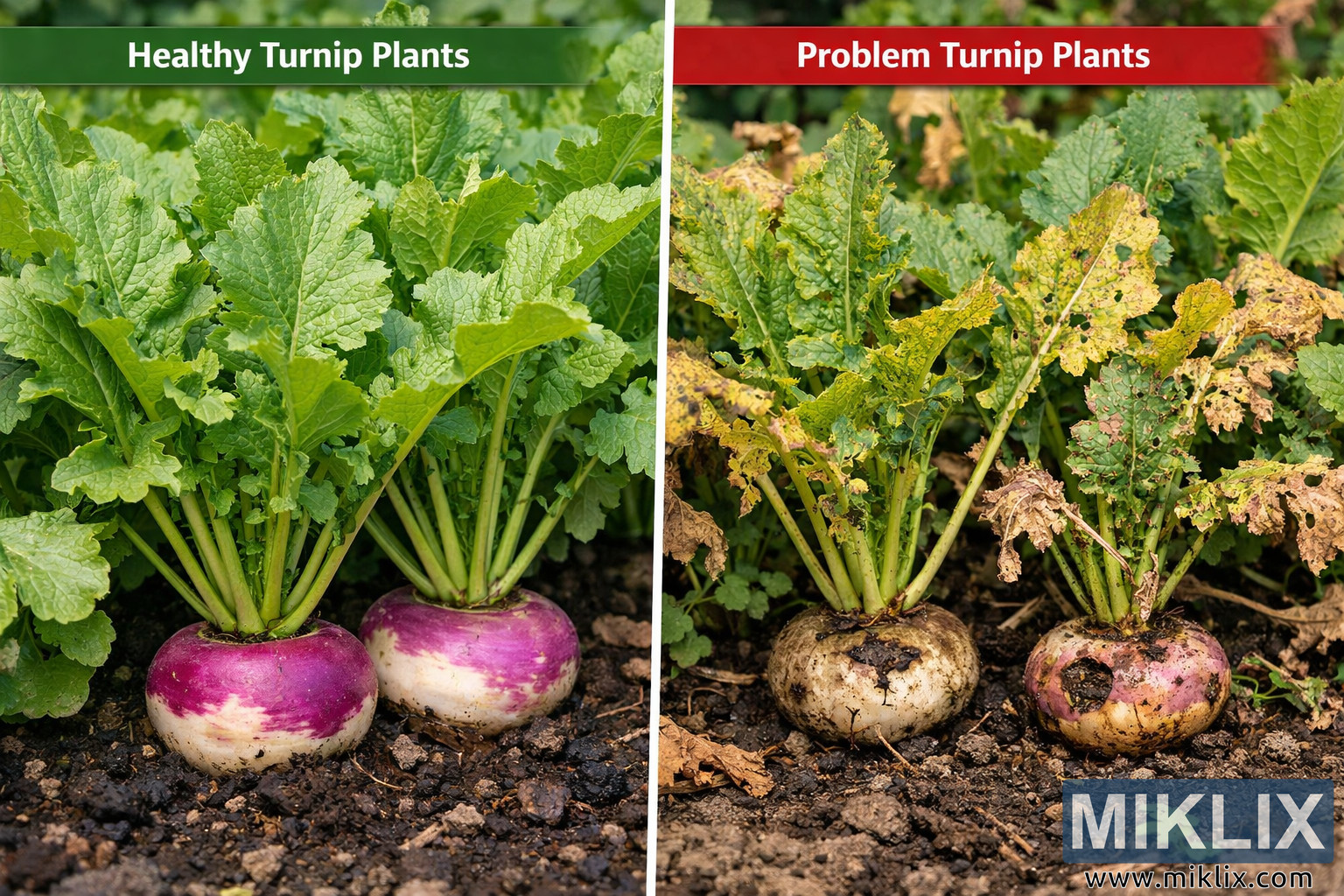
This landscape-oriented comparison image presents two groups of turnip plants growing in soil, visually contrasting healthy specimens with plants suffering from significant problems. The image is split vertically down the center by a white dividing line, creating a clear side-by-side comparison. The left half of the image is labeled "Healthy Turnip Plants" in bold white text displayed on a green banner at the top, while the right half is labeled "Problem Turnip Plants" in white text on a red banner.
On the left side, the healthy turnip plants appear vigorous and well-developed. Their leaves are dense, upright, and richly colored in vibrant shades of green. The leaf surfaces look smooth and intact with no visible signs of discoloration, pest damage, or disease. The stems are sturdy and emerge from the top of the turnip roots with a fresh, hydrated appearance. Beneath the foliage, the round turnip bulbs are partially visible above the soil surface. They are firm, smooth, and clean, displaying a typical purple-and-white coloration with glossy skin. The surrounding soil looks dark, moist, and crumbly, suggesting favorable growing conditions and proper plant health.
On the right side, the problematic turnip plants show clear visual signs of stress and damage. Their leaves appear yellowed, wilted, and uneven in color, with brown patches and areas that look chewed or deteriorated. Some leaves are curled or drooping, and the overall plant structure appears weaker and less vigorous than the healthy plants on the left. The stems are thinner and less upright, contributing to the overall impression of poor plant health.
The turnip roots on the problem side are visibly degraded compared to the healthy examples. Instead of smooth and glossy skin, the bulbs look dirty, rough, and damaged. Dark spots, rot-like discoloration, and irregular surface texture suggest disease, pest activity, or unfavorable soil conditions. The surrounding soil appears drier and more compact, reinforcing the visual contrast between thriving and struggling plants.
Together, the two halves of the image provide a clear visual guide for identifying the difference between healthy turnip growth and plants suffering from common problems such as disease, pests, or environmental stress. The contrast in leaf color, plant posture, and root condition highlights the key indicators gardeners and growers can use to assess the health of turnip crops in the field.
Myndin tengist: How to Grow Turnips: Your Complete Growing Guide