
Mynd: Ancient Herbal Medicine Books and Traditional Dill Remedies
Birt:
Síðast uppfært: 23. júlí 2026 kl. 18:43:44 UTC
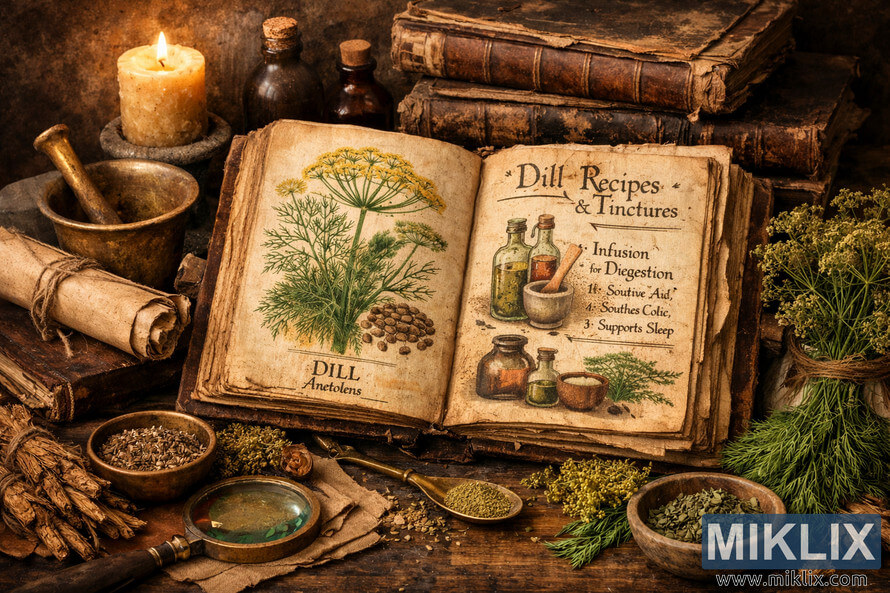
Explore the timeless beauty of ancient herbal medicine books depicting traditional dill uses. This detailed image captures aged manuscripts, botanical illustrations, and herbal artifacts in a warm, atmospheric setting.
Ancient Herbal Medicine Books and Traditional Dill Remedies
Tiltækar útgáfur af þessari mynd
Myndaskrárnar sem hægt er að hlaða niður hér að neðan eru minna þjappaðar og í hærri upplausn - og þar af leiðandi í hærri gæðum - en myndirnar sem eru felldar inn í greinar og síður á þessari vefsíðu, sem eru betur fínstilltar fyrir skráarstærð til að draga úr bandvíddarnotkun.
Venjuleg stærð (1,536 x 1,024)
Stór stærð (3,072 x 2,048)
Mjög stór stærð (4,608 x 3,072)
Mjög stór stærð (6,144 x 4,096)
Kómískt stór stærð (1,048,576 x 699,051)
- Er enn að hlaða inn... ;-)
Lýsing myndar
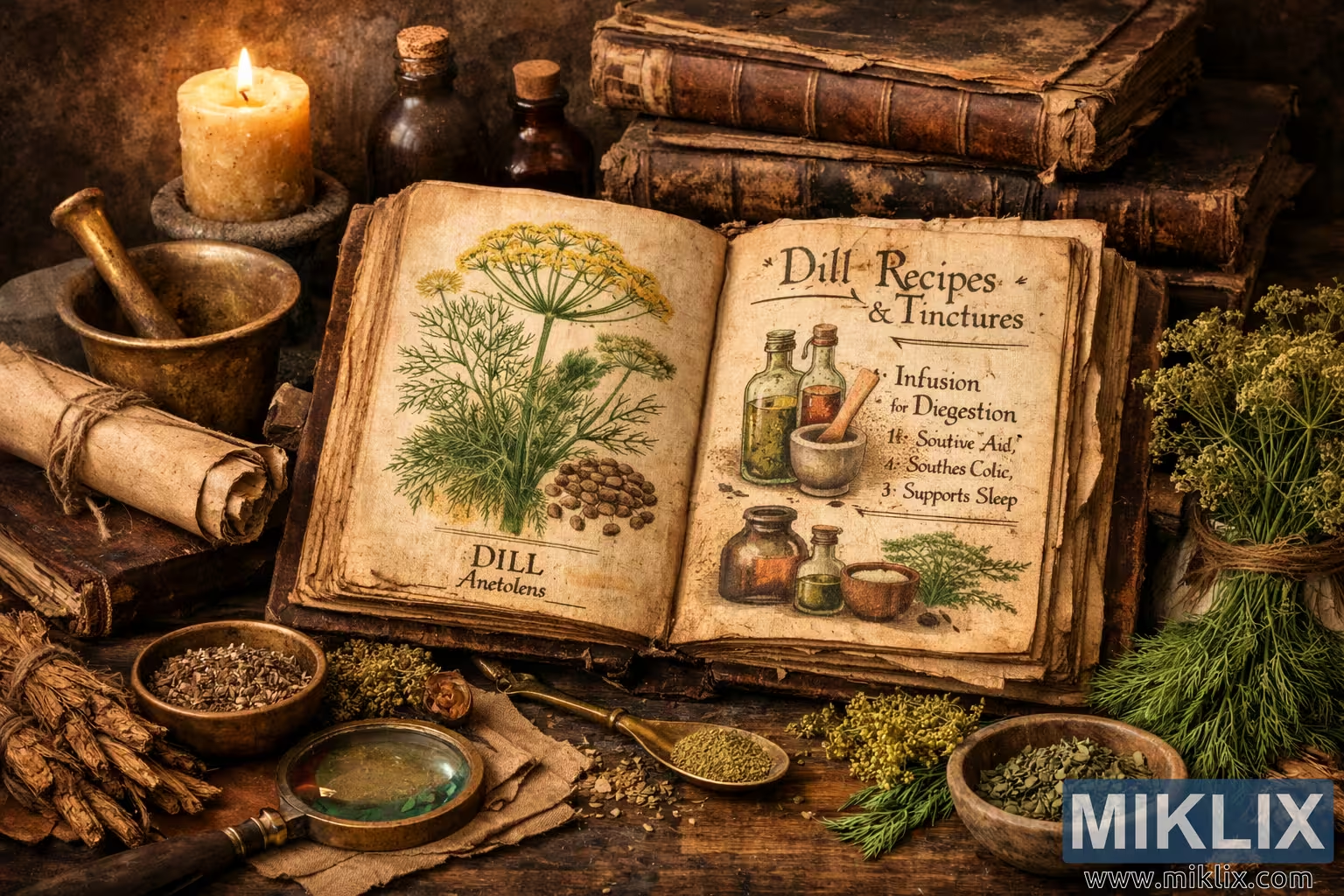
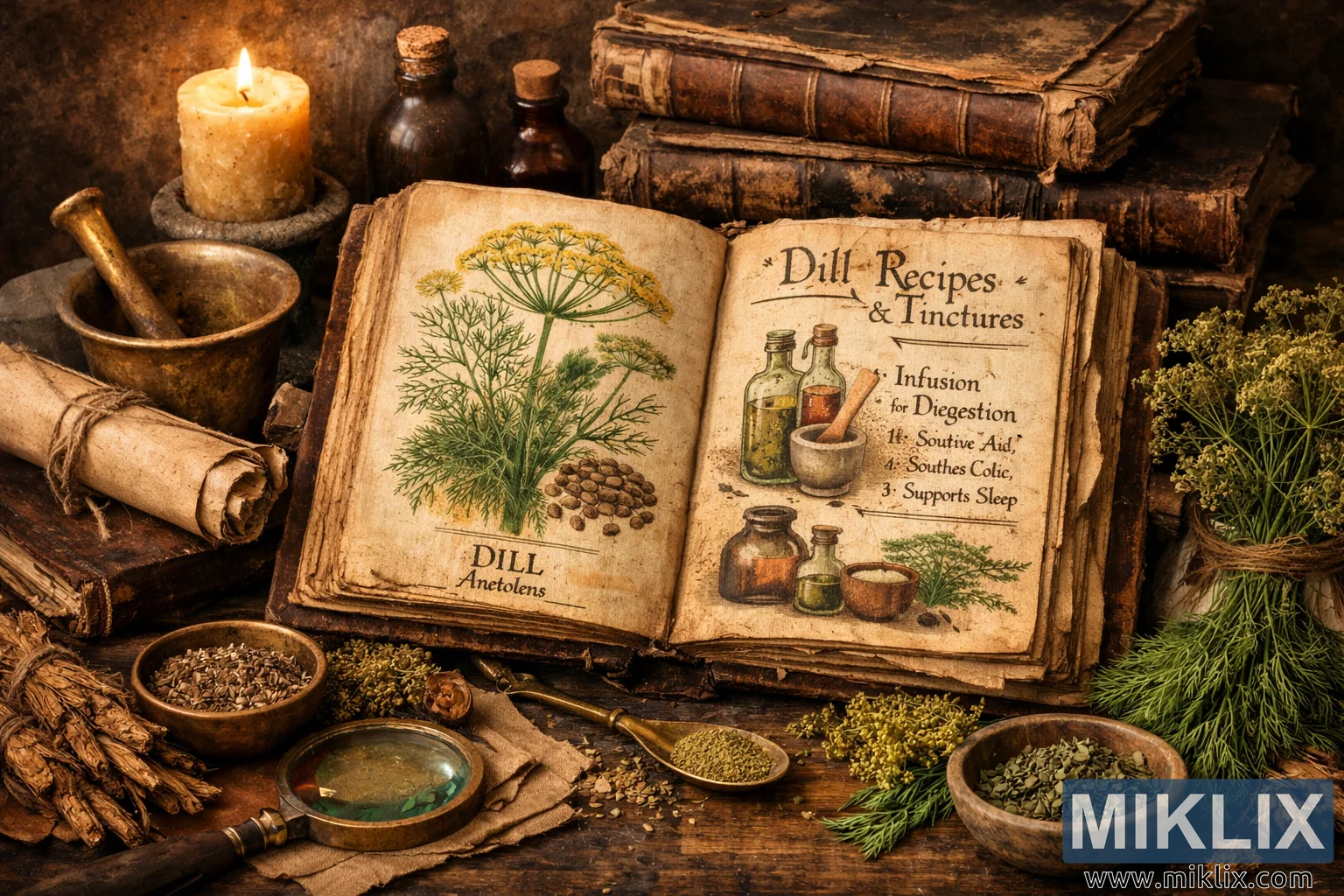
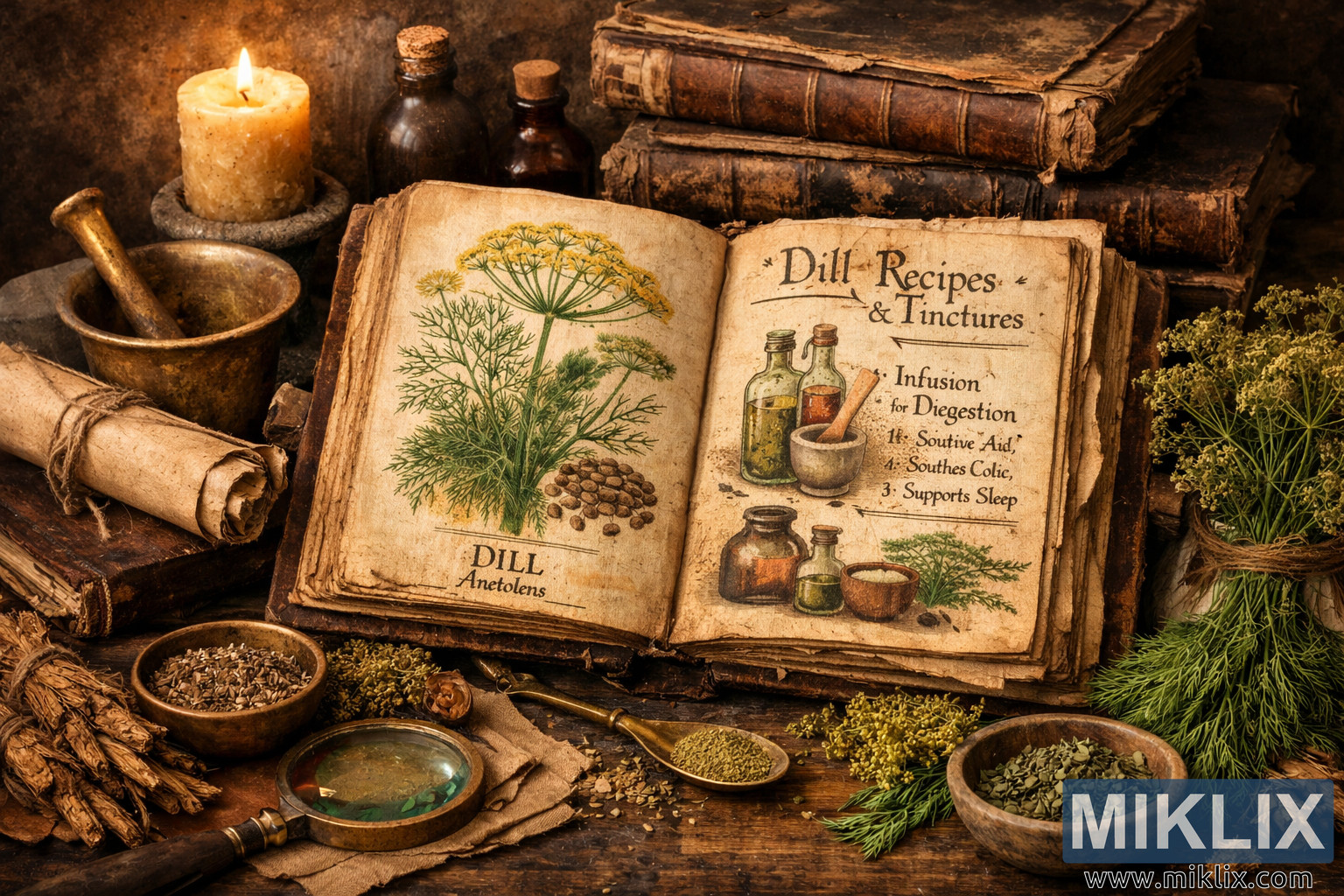
The image presents a richly detailed and immersive scene that evokes the atmosphere of an ancient apothecary or herbalist’s study. At its center lie two open books, their pages yellowed and frayed with age, resting on a weathered wooden surface that bears the marks of centuries of use. The book on the left displays a hand-colored botanical illustration of dill (Anethum graveolens), rendered with exquisite precision. The delicate feathery leaves, slender stems, and umbrella-shaped clusters of yellow flowers are depicted in naturalistic tones, while the opposite page contains a drawing of glass bottles filled with herbal extracts and a mortar and pestle. Beneath these illustrations, faded ink inscriptions describe dill’s medicinal properties: “Digestive Aid,” “Soothes Colic,” and “Supports Sleep.” The script is elegant yet worn, suggesting that countless hands have turned these pages over generations.
To the right, another manuscript lies open to a page titled “Dill Recipes & Tinctures.” The handwriting is ornate and slightly uneven, as if penned by candlelight. The text lists preparations such as “Infusion for Digestion” and “Soothing Elixir,” accompanied by small sketches of ceramic bottles and cups. Around the books, bundles of dried dill flowers and fresh sprigs are scattered, their green hues contrasting beautifully with the warm browns and golds of the parchment and wood. The herbs appear freshly gathered, some tied with twine, others resting loosely across the pages, as though the herbalist has just paused mid-study.
To the left of the books, a rolled parchment scroll tied with twine sits beside an antique brass mortar and pestle, symbols of traditional herbal preparation. Nearby, amber and brown glass bottles with cork stoppers catch the soft glow of candlelight, their surfaces reflecting subtle highlights. A brass magnifying glass rests atop the left book, suggesting careful examination of the botanical drawings. A small wooden bowl filled with dill seeds sits beside a brass spoon containing powdered herbs, while a bundle of dried roots tied with twine lies close by. Each object contributes to the sense of authenticity and historical continuity, as if the viewer has stepped into a preserved moment from centuries past.
A lit beeswax candle on an aged stone holder casts a gentle, flickering light across the scene, illuminating the textures of the parchment and the grain of the wood. The flame’s glow creates a warm, amber atmosphere that enhances the sense of intimacy and reverence for ancient knowledge. A feather quill and a brass-handled magnifying glass rest nearby, tools of study and documentation. To the lower right, a small ceramic bowl contains finely crushed green herbs, while a brass spoon filled with dill seeds lies beside it, ready for use in tinctures or infusions.
In the background, stacks of weathered books with cracked leather bindings and frayed pages rise like monuments to accumulated wisdom. Their spines bear faint inscriptions in Latin and old herbal languages, further emphasizing the scholarly nature of the setting. The lighting throughout the composition is warm and directional, highlighting the central books while allowing the surrounding artifacts to fade gently into shadow. This interplay of light and texture creates a sense of depth and timelessness, inviting the viewer to linger and explore every detail.
The overall color palette is dominated by earthy browns, muted greens, and golden ambers, evoking the natural materials from which these objects were made. The scene feels both intimate and grand, a tribute to the enduring legacy of herbal medicine and the meticulous documentation of plant-based remedies. The focus on dill underscores its historical importance as a versatile herb used for digestion, relaxation, and general well-being. The image captures not only the physical beauty of the artifacts but also the spirit of curiosity and respect for nature that defined early herbalists.
Every element—from the handwritten notes to the scattered seeds—contributes to a narrative of discovery and preservation. The viewer can almost sense the faint aroma of dried herbs and the quiet rustle of parchment as the candle flickers. This composition stands as a visual homage to the wisdom of ancient healers, blending artistry, science, and spirituality into a single, harmonious tableau.
Myndin tengist: Health Benefits of Dill: Your Complete Guide to This Powerful Herb