
Mynd: FODMAP-Friendly Pumpkin Portion Guide
Birt:
Síðast uppfært: 7. september 2026 kl. 06:33:52 UTC
Discover the FODMAP-friendly pumpkin portion guide with clear visual examples of safe, moderate, and high FODMAP servings. Learn how to enjoy pumpkin while managing digestive comfort and portion control.
FODMAP-Friendly Pumpkin Portion Guide
Tiltækar útgáfur af þessari mynd
Myndaskrárnar sem hægt er að hlaða niður hér að neðan eru minna þjappaðar og í hærri upplausn - og þar af leiðandi í hærri gæðum - en myndirnar sem eru felldar inn í greinar og síður á þessari vefsíðu, sem eru betur fínstilltar fyrir skráarstærð til að draga úr bandvíddarnotkun.
Venjuleg stærð (1,536 x 1,024)

Stór stærð (3,072 x 2,048)
Mjög stór stærð (4,608 x 3,072)
Mjög stór stærð (6,144 x 4,096)
Kómískt stór stærð (1,048,576 x 699,051)
- Er enn að hlaða inn... ;-)
Lýsing myndar
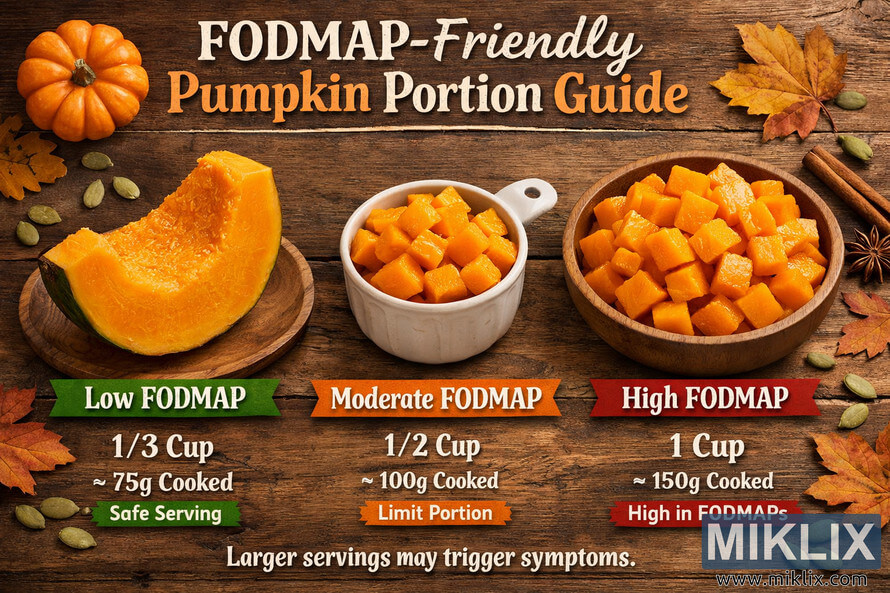
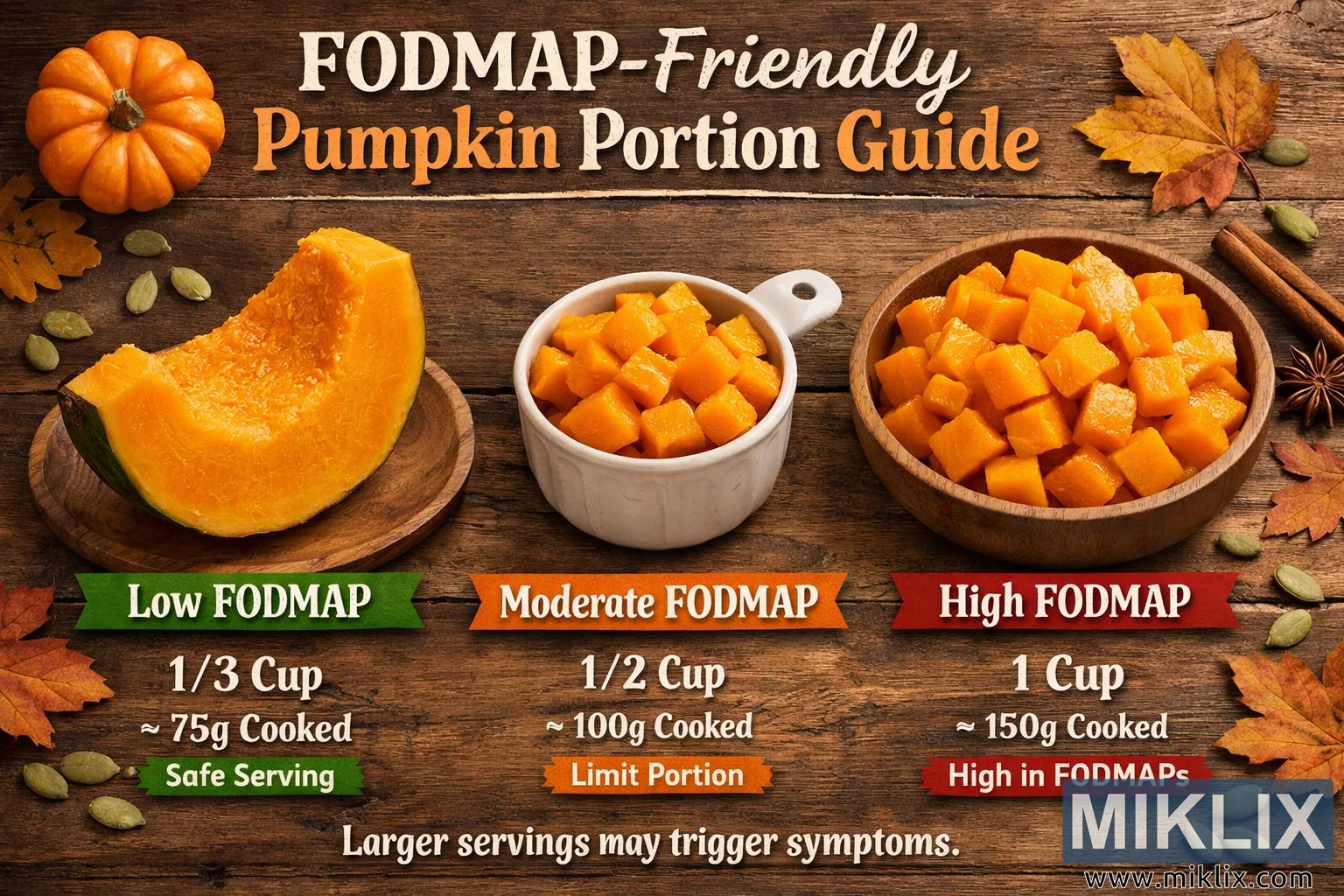
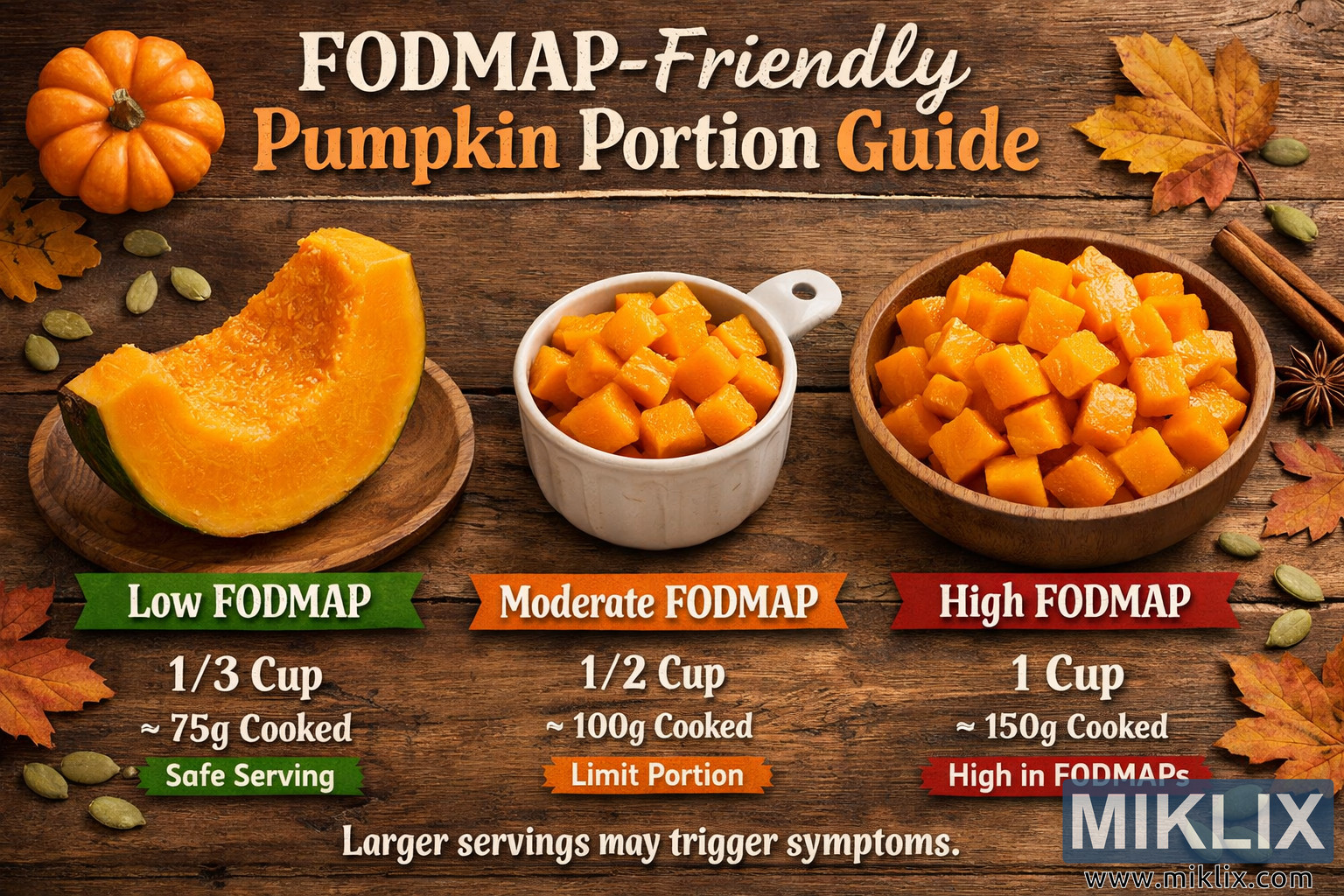
The image titled "FODMAP-Friendly Pumpkin Portion Guide" is a visually rich and educational infographic designed to help viewers understand how different serving sizes of pumpkin affect FODMAP levels. The composition is arranged horizontally in landscape orientation, with a warm, rustic aesthetic that evokes the feeling of autumn harvest and wholesome nutrition. The background is a textured wooden surface, reminiscent of a farmhouse kitchen table, scattered with decorative fall elements such as small pumpkins, dried leaves, pumpkin seeds, cinnamon sticks, and star anise. These details create a cozy, natural atmosphere that complements the theme of digestive wellness and seasonal eating.
At the top of the image, the title "FODMAP-Friendly Pumpkin Portion Guide" is prominently displayed in large, rustic lettering. The words are colored in shades of white and orange, harmonizing with the pumpkin hues below. The typography has a handcrafted feel, suggesting warmth and approachability. Beneath the title, three distinct sections illustrate different portion sizes of cooked pumpkin, each labeled according to its FODMAP classification: Low, Moderate, and High.
On the left side, the "Low FODMAP" section features a single wedge of cooked pumpkin placed on a small wooden plate. The wedge is bright orange, glistening slightly to indicate tenderness and freshness. A green banner beneath it reads "Low FODMAP," symbolizing safety and digestive comfort. Below the banner, white text specifies the portion size as "1/3 Cup" and "≈ 75g Cooked," followed by the phrase "Safe Serving." This section communicates that small servings of pumpkin can be enjoyed without triggering typical FODMAP-related symptoms.
In the center, the "Moderate FODMAP" section shows a white ceramic measuring cup filled with diced, cooked pumpkin pieces. The cubes are evenly cut and have a rich orange tone, suggesting they were steamed or roasted. An orange banner beneath the cup reads "Moderate FODMAP," and the accompanying text below states "1/2 Cup" and "≈ 100g Cooked," followed by "Limit Portion." This middle section serves as a cautionary guide, indicating that moderate servings may be tolerated by some individuals but could cause discomfort for others depending on sensitivity. The orange color of the banner bridges the visual transition between the green and red sections, reinforcing the idea of moderation.
On the right side, the "High FODMAP" section displays a larger wooden bowl filled with diced pumpkin pieces. The bowl is full, emphasizing abundance and excess. A red banner beneath it reads "High FODMAP," and the text below specifies "1 Cup" and "≈ 150g Cooked," followed by "High in FODMAPs." The red color immediately signals caution, warning viewers that larger servings of pumpkin are likely to contain higher levels of fermentable carbohydrates that may trigger digestive symptoms. The visual contrast between the small wedge on the left and the full bowl on the right effectively communicates the relationship between portion size and FODMAP content.
At the bottom of the image, a concise message in white text reads, "Larger servings may trigger symptoms." This line reinforces the educational purpose of the infographic, reminding viewers that portion control is key to maintaining digestive comfort. The message is placed directly on the wooden background, maintaining visual consistency and ensuring readability.
Throughout the composition, the lighting is soft and even, highlighting the natural textures of the pumpkin flesh, wood grain, and ceramic surfaces. The color palette is dominated by warm oranges, browns, and yellows, balanced by the green and red banners that provide clear visual cues for safety and caution. The overall design is both informative and aesthetically pleasing, making it suitable for use in dietary education materials, nutrition blogs, or wellness guides.
The image successfully combines scientific accuracy with visual appeal. It translates complex dietary information into an accessible format that can be quickly understood at a glance. The clear labeling, proportional arrangement, and harmonious color scheme ensure that viewers can easily distinguish between safe and risky portion sizes. The rustic styling and autumnal motifs evoke feelings of comfort and natural health, aligning with the broader message of mindful eating and digestive balance.
In essence, this infographic is more than a simple chart—it is a thoughtfully crafted visual guide that empowers individuals following a low-FODMAP diet to make informed choices about pumpkin consumption. By presenting the information in a warm, inviting, and visually structured manner, it bridges the gap between nutritional science and everyday cooking, encouraging both awareness and enjoyment of food.
Myndin tengist: Pumpkins: The Nutrient-Packed Superfood You Should Eat Year-Round